
Stress Chronic Stress by Age Stress the process
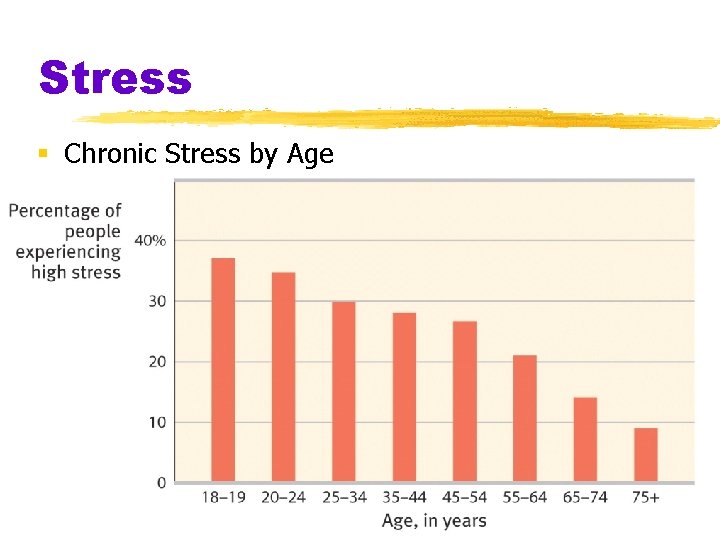
Stress § Chronic Stress by Age
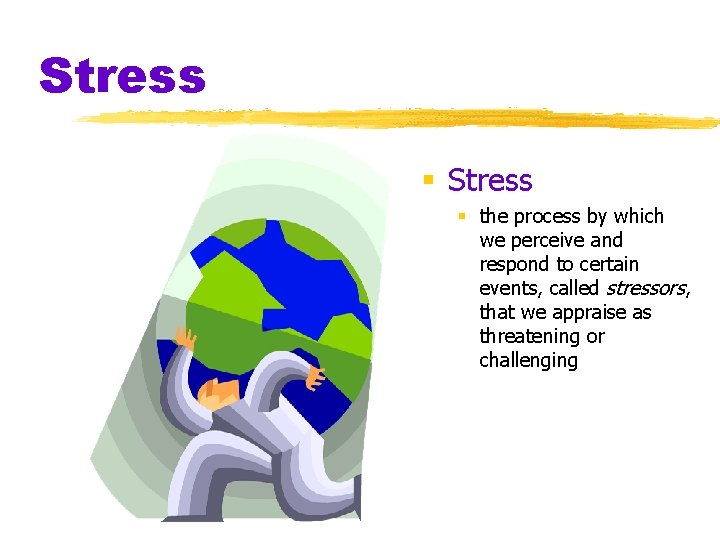
Stress § the process by which we perceive and respond to certain events, called stressors, that we appraise as threatening or challenging

Stressors § § § Catastrophic Events Life Changes Chronic Stressors Daily Hassles Conflicts
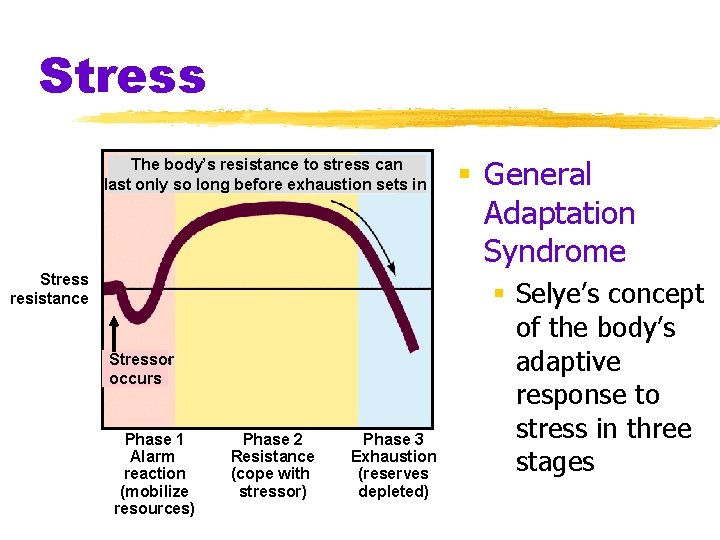
Stress The body’s resistance to stress can last only so long before exhaustion sets in Stress resistance Stressor occurs Phase 1 Alarm reaction (mobilize resources) Phase 2 Resistance (cope with stressor) Phase 3 Exhaustion (reserves depleted) § General Adaptation Syndrome § Selye’s concept of the body’s adaptive response to stress in three stages
Stress and Disease § Psychophysiological Illness § mind-body” illness § any stress-related physical illness § some forms of hypertension § some headaches § Cardiovascular Disease § Reduced immune defense § Negative Emotions
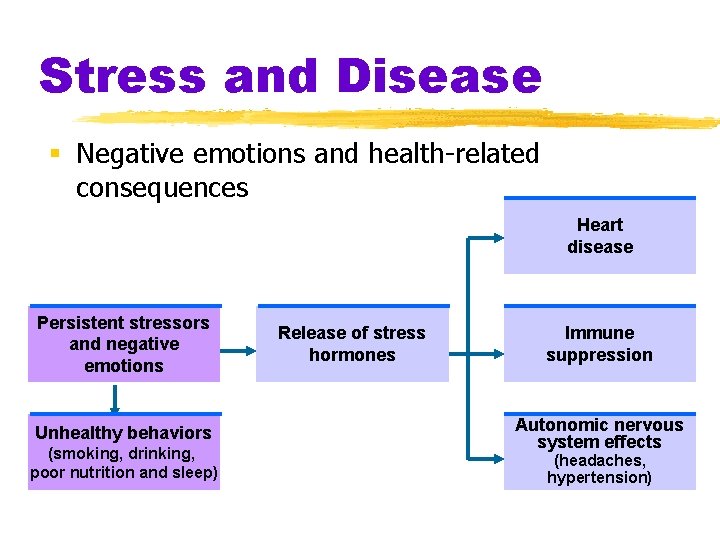
Stress and Disease § Negative emotions and health-related consequences Heart disease Persistent stressors and negative emotions Unhealthy behaviors (smoking, drinking, poor nutrition and sleep) Release of stress hormones Immune suppression Autonomic nervous system effects (headaches, hypertension)
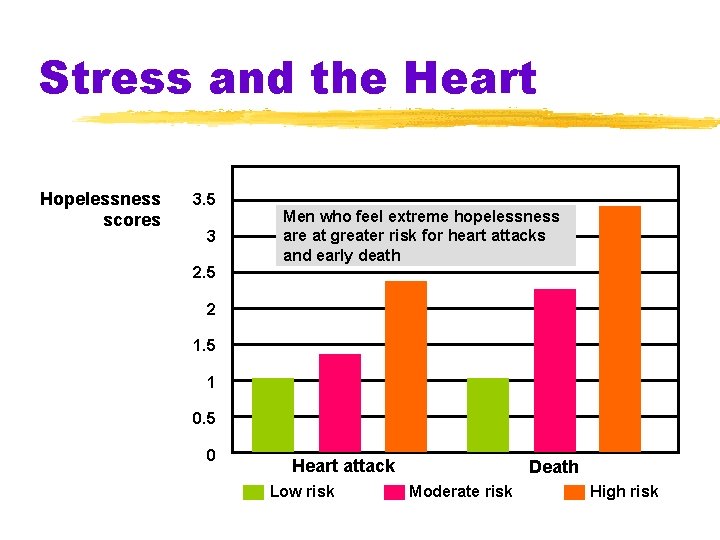
Stress and the Heart Hopelessness scores 3. 5 3 2. 5 Men who feel extreme hopelessness are at greater risk for heart attacks and early death 2 1. 5 1 0. 5 0 Heart attack Low risk Death Moderate risk High risk
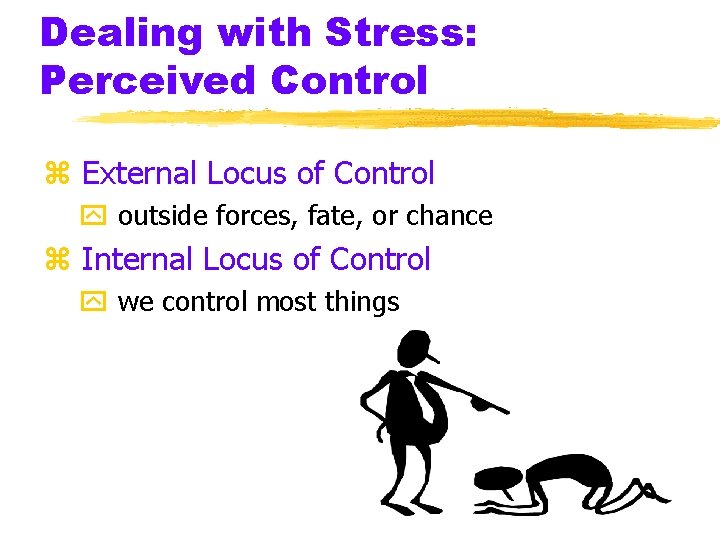
Dealing with Stress: Perceived Control z External Locus of Control y outside forces, fate, or chance z Internal Locus of Control y we control most things
Serenity Prayer God, grant me the serenity: To accept the things I cannot change, The courage to change things I can, And the wisdom to know the difference.

Dealing with Stress z Problem-focused Coping: y directly changing or managing stressors z. Emotion-focused Coping: y changing the way we view a stressor

Emotion-focused Coping & Stress Appraisal Response Threat (“Yikes! This is beyond me!”) Panic, freeze up Challenge (“I’ve got to apply all I know”) Aroused, focused Stressful event (tough math test)
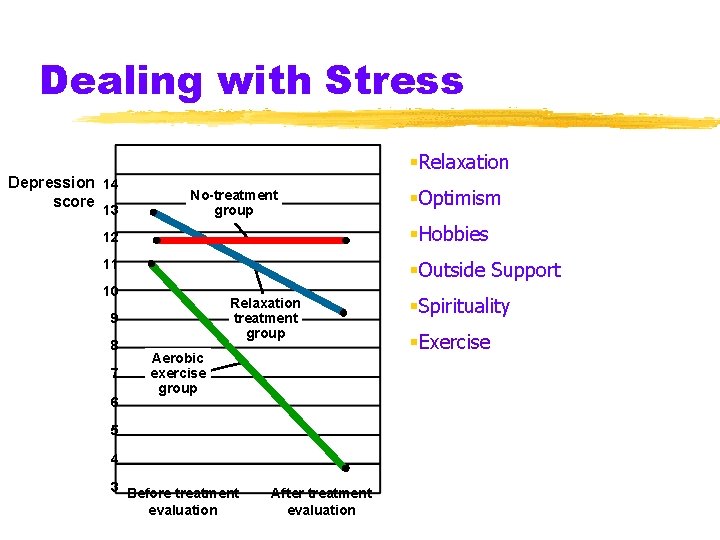
Dealing with Stress §Relaxation Depression 14 score 13 No-treatment group §Optimism 12 §Hobbies 11 §Outside Support 10 Relaxation treatment group 9 8 7 6 Aerobic exercise group 5 4 3 Before treatment evaluation After treatment evaluation §Spirituality §Exercise
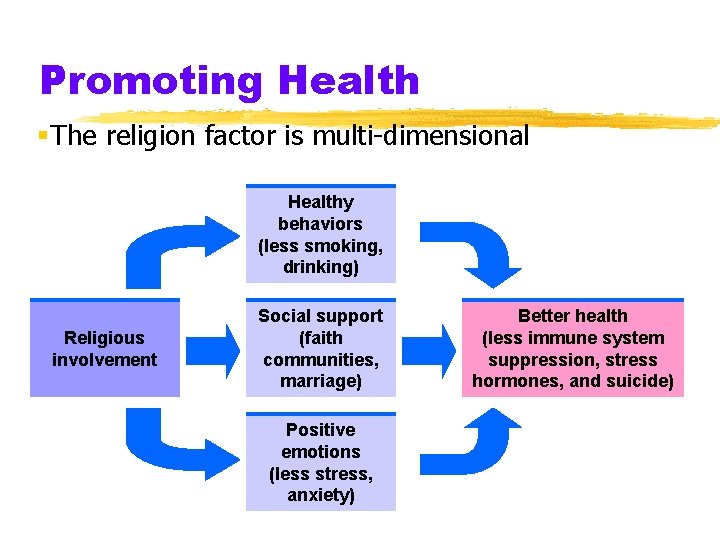
Promoting Health §The religion factor is multi-dimensional Healthy behaviors (less smoking, drinking) Religious involvement Social support (faith communities, marriage) Positive emotions (less stress, anxiety) Better health (less immune system suppression, stress hormones, and suicide)
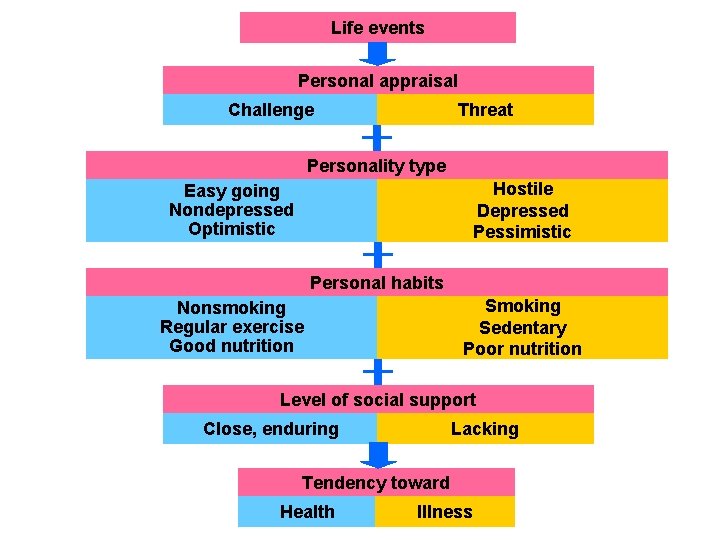
Life events Personal appraisal Challenge Threat Personality type Hostile Depressed Pessimistic Easy going Nondepressed Optimistic Personal habits Smoking Sedentary Poor nutrition Nonsmoking Regular exercise Good nutrition Level of social support Close, enduring Lacking Tendency toward Health Illness
- Slides: 14