
Stress at Work International Organizational Behavior January 21
Stress at Work International Organizational Behavior January 21, 2019
“There is more to life than increasing its speed. ” Mohandas K. Gandhi
What is Stress? • General Adaptation Syndrome (GAS) • Stages of stress – Alarm – Resistance – Exhaustion
Hans Selye • Father of the modern concept of stress – Was the first to propose “eustress” • His points: – Stress is not merely nervous tension – Stress can have positive consequences – Stress is not something to be avoided – The complete absence of stress is death
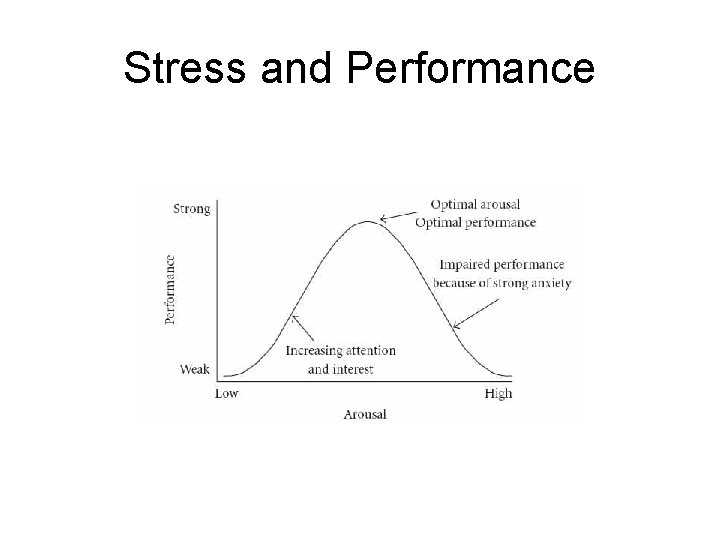
Stress and Performance
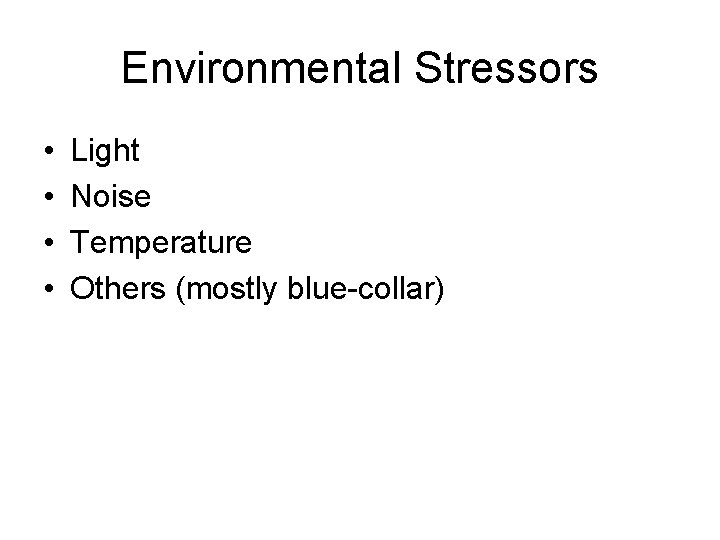
Environmental Stressors • • Light Noise Temperature Others (mostly blue-collar)
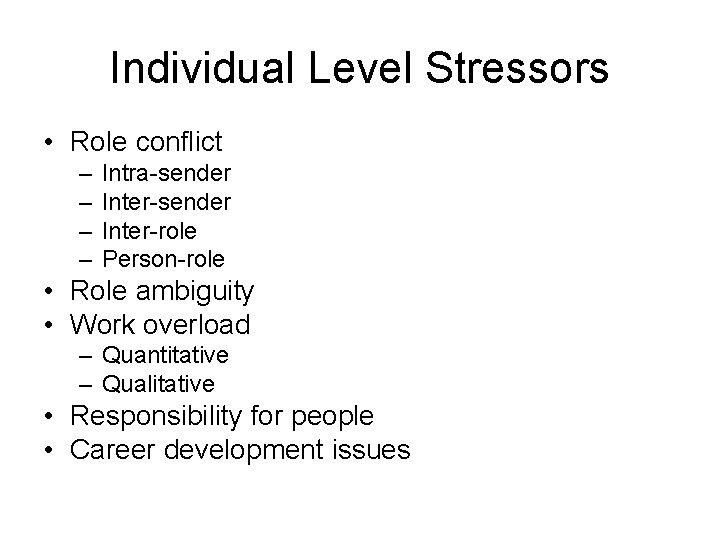
Individual Level Stressors • Role conflict – – Intra-sender Inter-role Person-role • Role ambiguity • Work overload – Quantitative – Qualitative • Responsibility for people • Career development issues
Some individual level stress is due to factors in the person Specifically, Type A and Type B personalities
Type A Behavior Pattern • This “syndrome” was first identified by two cardiologists (Meyer Friedman and Ray Rosenman) in the 1950 s • Is a pattern of aggressive behavior where a person is in a chronic, incessant struggle to achieve more and more in less and less time, with fewer resources, and if necessary in opposition to countering pressures from others in a person’s environment
What Are the Behaviors? • Hurried speech, explosive accentuation of key words • Tendency to walk, move and eat rapidly • Constant impatience with the rate at which most events take place (irritation with slow -moving traffic, getting upset with slowtalking and slow-to-act people) • Tendency to be oblivious to surroundings during normal daily activities
What Are the Behaviors? (continued) • Strong preference for thinking of or doing two or more things at once • Tendency to turn conversations around to personally meaningful subjects or themes • Tendency to interrupt when others are speaking to make your point, or to complete their train of thought in his or her own words • Feelings of guilt during periods of relaxation or leisure
What Are the Behaviors? (continued) • Greater concern for things worth having than with things worth being • Tendency to schedule more and more things in less and less time; a chronic sense of time urgency • Feelings of competition rather than compassion when confronted with another Type A person
What Are the Behaviors? (continued) • Development of nervous tics or characteristic gestures • A firm belief that success is due to the ability to get things done faster than the other person • A tendency to view and evaluate personal activities and the activities of other people in terms of “numbers” (e. g. , the number of meetings attended, telephone calls made, visitors received)
Is Type A behavior all bad?
Group Stressors • Lack of group cohesiveness • Group conflicts – Intra-group – Inter-group
Organizational Stressors • Organizational climate or culture • Organizational structure
Extra-Organizational Stressors • • Family Relocation Economic Residential
Results • Physical health – Hypertension – Ulcers – Diabetes – Headaches • Mental health • Motivation/performance
Managing Stress • Organizational methods – Role analysis/clarification – Alter climate/culture – MBO – Physical environment – Training • Individual methods – Relaxation – Exercise
- Slides: 19