
Stress and Stress Management By Laura Chng and
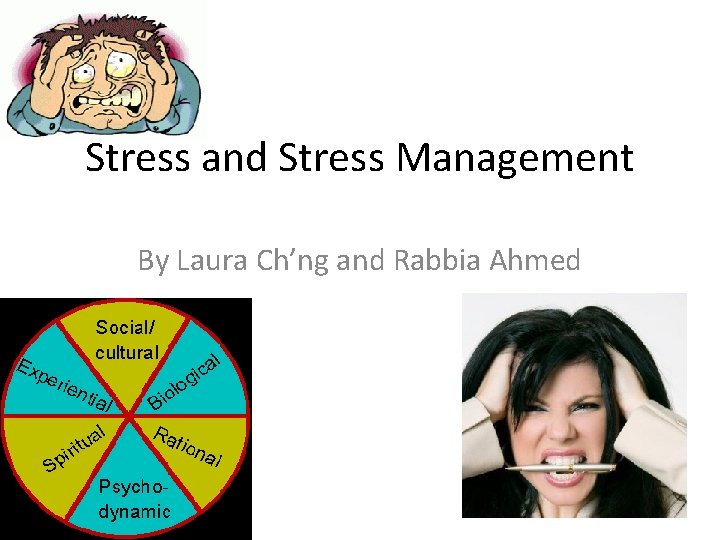
Stress and Stress Management By Laura Ch’ng and Rabbia Ahmed
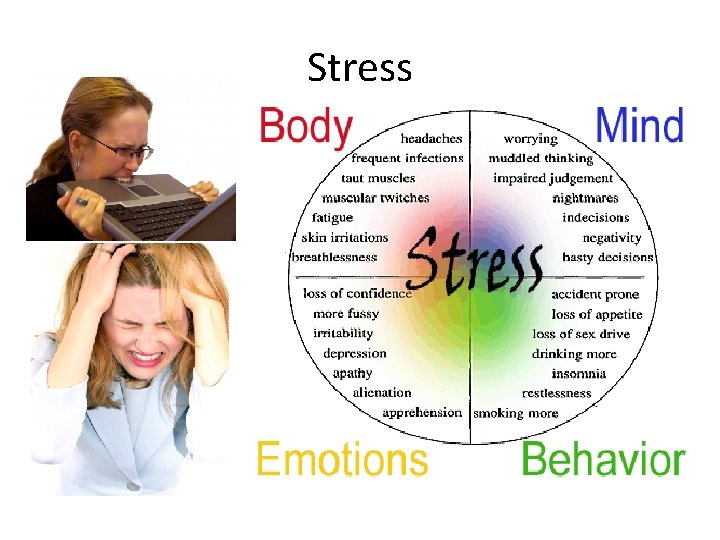
Stress
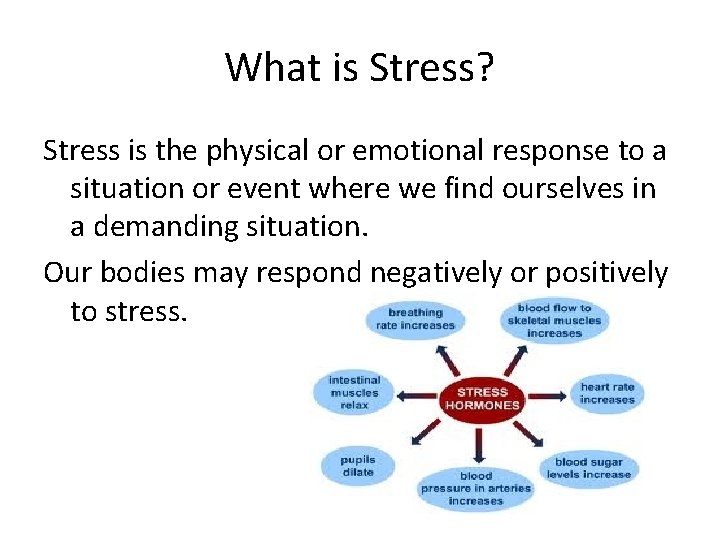
What is Stress? Stress is the physical or emotional response to a situation or event where we find ourselves in a demanding situation. Our bodies may respond negatively or positively to stress.
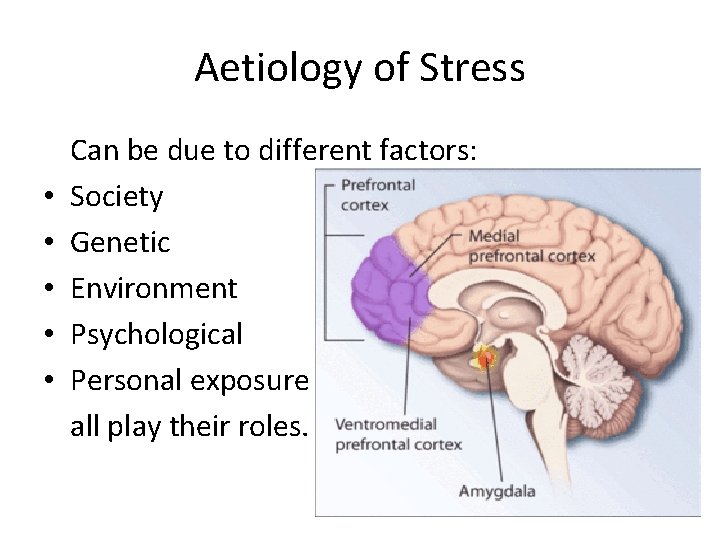
Aetiology of Stress • • • Can be due to different factors: Society Genetic Environment Psychological Personal exposure all play their roles.
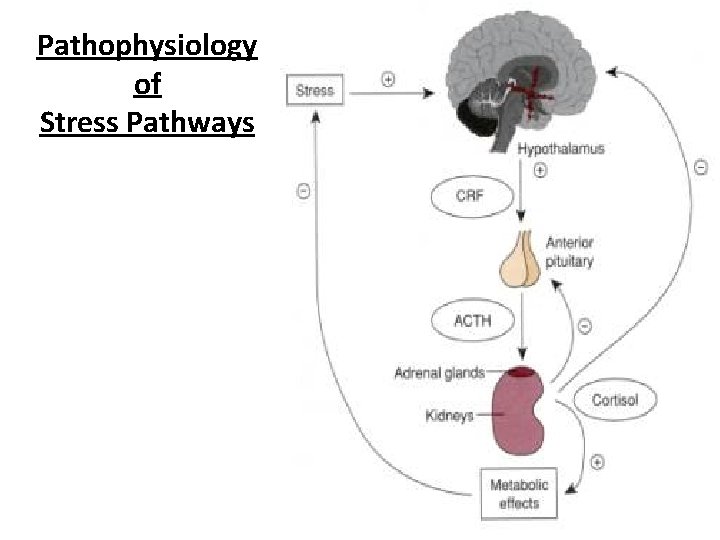
Pathophysiology of Stress Pathways
Aetiology mostly depends on how people deal with stress Women report that: • • Eat more Talk to others Go out Meet friends Men report that: • • Drink Alcohol Avoid others Remain isolated Avoid friends
Rate of stress • Worldwide frequency is not known. • In children rates are much higher especially in foster care. • Women experience stress more than men.
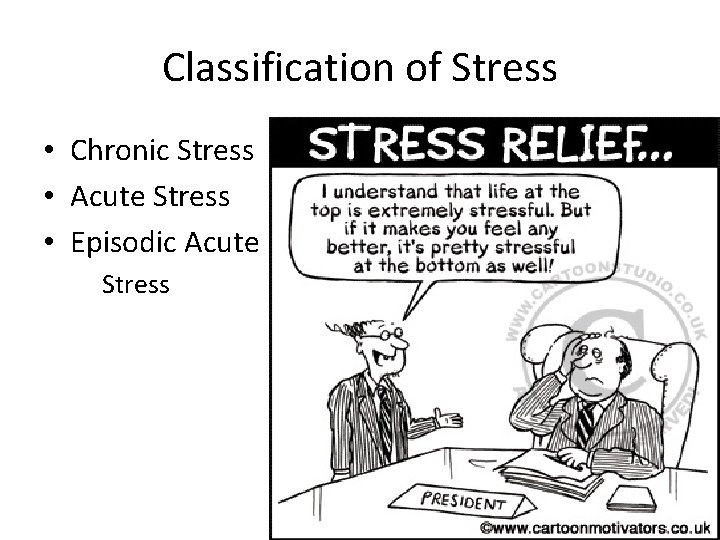
Classification of Stress • Chronic Stress • Acute Stress • Episodic Acute Stress
Reactions of Stress • Physical stress • Behavioural stress • Psychological stress
Physical implications of stress • • • Stress can make us physically sick Dampens the immune system Dries out digestive tract Impairs memory Fuels anxiety
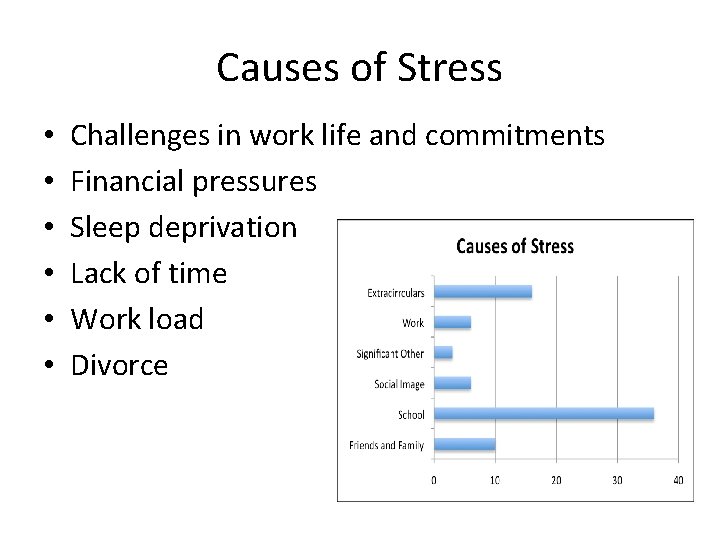
Causes of Stress • • • Challenges in work life and commitments Financial pressures Sleep deprivation Lack of time Work load Divorce
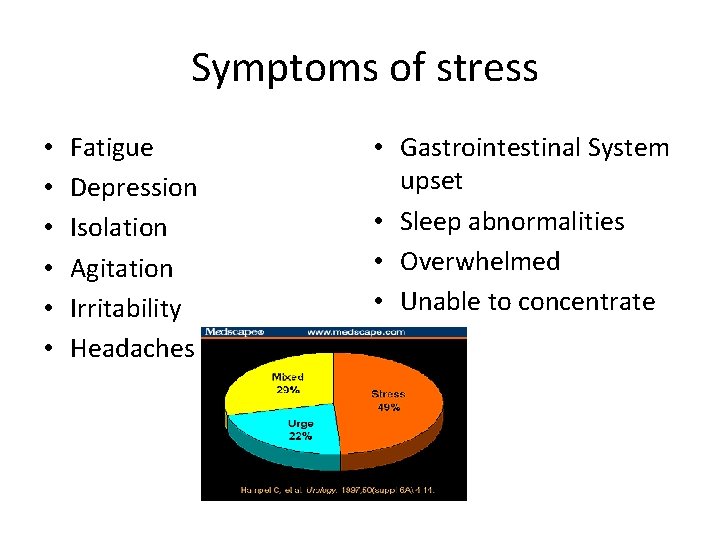
Symptoms of stress • • • Fatigue Depression Isolation Agitation Irritability Headaches • Gastrointestinal System upset • Sleep abnormalities • Overwhelmed • Unable to concentrate
Stress The idea is to have right amount of stress There is no uniform right amount of stress Each of us has a different stress As stress in appropriate amount keeps us engaged with the world • A goal is not a life without stress threshold • •
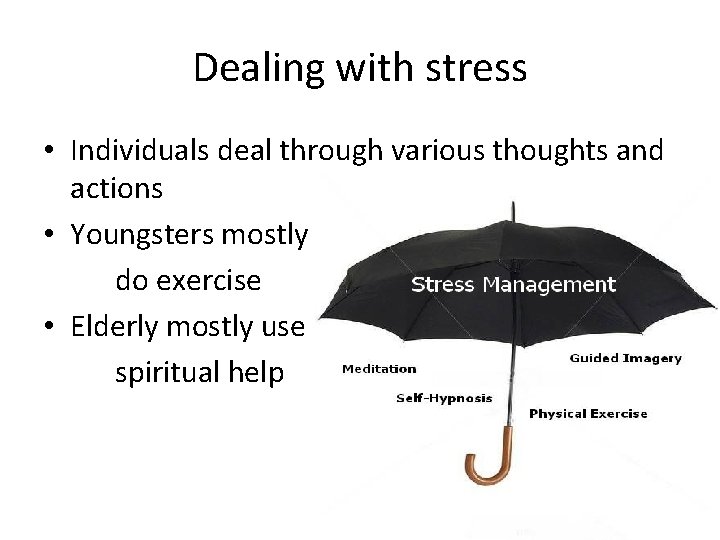
Dealing with stress • Individuals deal through various thoughts and actions • Youngsters mostly do exercise • Elderly mostly use spiritual help
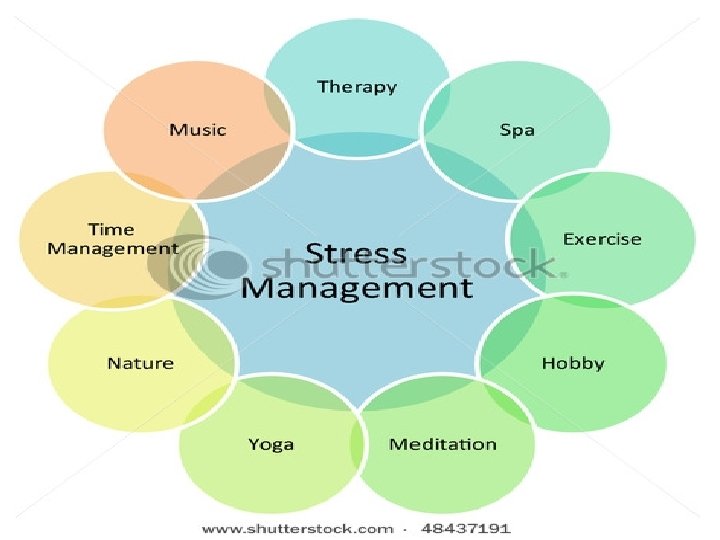
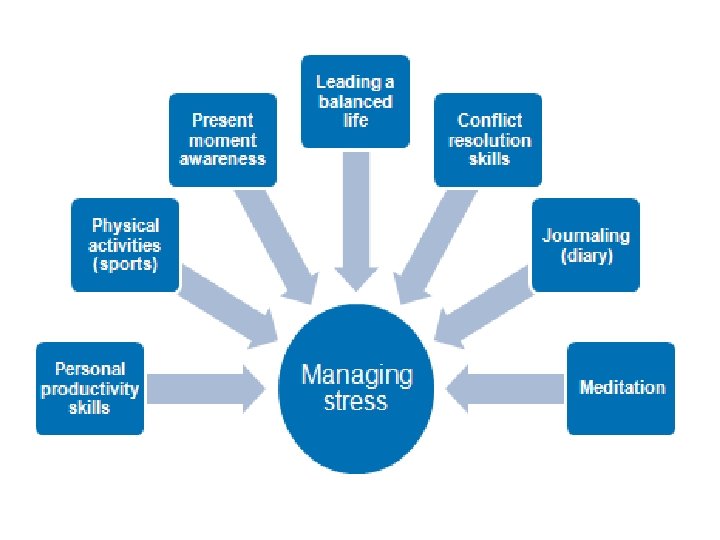
Managing stress • • Progressive muscle relaxant (PMR) Autogenic training (AT) Emotional freedom technique (EFT) Diaphragmatic breathing origin Cognitive behavioural therapy (CBT) Transcendental mediation history (TM) Mindfulness-based stress reduction (MBSR)
Stress & Nurses • Assess, identify and manage • Physical assessment from head to toe • Give patients time to talk and express their feelings. • Open questions should be asked. • Avoid questions that have answers in them. • Responds should be recorded in notes.
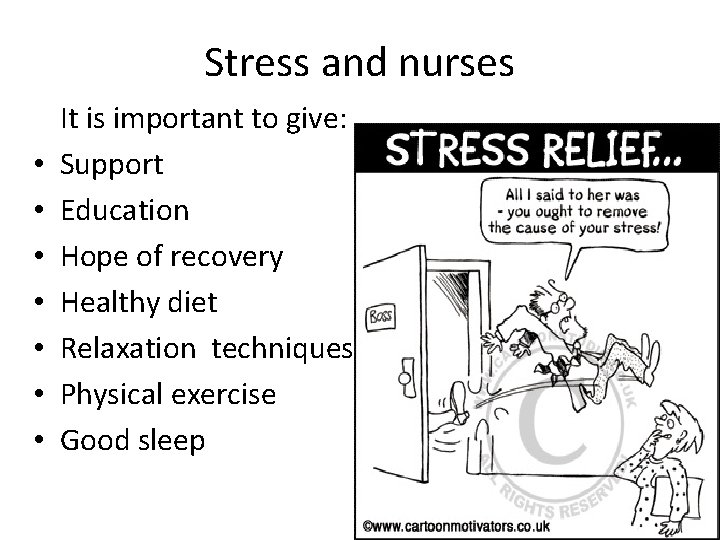
Stress and nurses • • It is important to give: Support Education Hope of recovery Healthy diet Relaxation techniques Physical exercise Good sleep
Resources • • • Archer, C. (2004). Stress Management for Carer’s of Young Children. Childcare and children's health, 17(6), 1 -4. Brunero, S. , Cowan, D. , Grochulski, A. , & Gravey, A. (2006, August 6). Stress Management for Nurses. New South Wales Nurse’s Association. Retrieved March 15, 2012, from www. nswnurses. asn. au/multiattachments/5695/Document. Name/Nurses_Stress_Management_Bo oklet. pdf Department of Health and Human Services. (2008). Exposure to Stress: Occupational Hazards in Hospitals. Department of Health and Human Services, 136, ii - Section 2: 14. Lumpkin, M. (2007, June 1). The Pathophysiology of Stress. The Middle East Cancer Consortium. Retrieved March 15, 2012, from mecc. cancer. gov/larnaca/1_m_lumpkin. pdf Psychological Society. (2012, January 1). Understanding and Managing Stress. Australian Psychological Society. Retrieved March 15, 2012, from www. psychologyweek. com. au/Assets/Files/Stress. Tip. Sheet. pdf The Better Health Channel. (2011, August 1). Work Related Stress. The Better Health Channel. Retrieved March 23, 2012, from www. betterhealth. vic. gov. au/bhcv 2/bhcarticles. nsf/pages/Workrelated_stress
Resources • Grogan, S. , & Murphy, K. (2011). Anticipatory Stress Response in PTSD: Extreme Stress in Children. Journal Of Child & Adolescent Psychiatric Nursing, 24(1), 58 -71. doi: 10. 1111/j. 17446171. 2010. 00266. x • Jian. Li, W. , Keown, L. , Patten, S. B. , Williams, J. A. , Currie, S. R. , Beck, C. A. , &. . . El-Guebaly, N. A. (2009). A population-based study on ways of dealing with daily stress: comparisons among individuals with mental disorders, with long-term general medical conditions and healthy people. Social Psychiatry & Psychiatric Epidemiology, 44(8), 666 -674. doi: 10. 1007/s 00127 -008 -0482 -2 • Varvogli, L. , & Darviri, C. (2011). Stress Management Techniques: evidence-based procedures that reduce stress and promote health. Health Science Journal, 5(2), 74 -89. • Horiuchi, S. , Tsuda, A. , Kim, E. , Hong, K. , Park, Y. , & Kim, U. (2010). Relationships between stage of change for stress management behaviour and perceived stress and coping S. Japanese Psychological Research, 52(4), 291 -297. doi: 10. 1111/j. 1468 -5884. 2010. 00444. x Singer, T. (2012). The Perfect Amount. Psychology Today, 45(2), 78 -85. •
- Slides: 23