
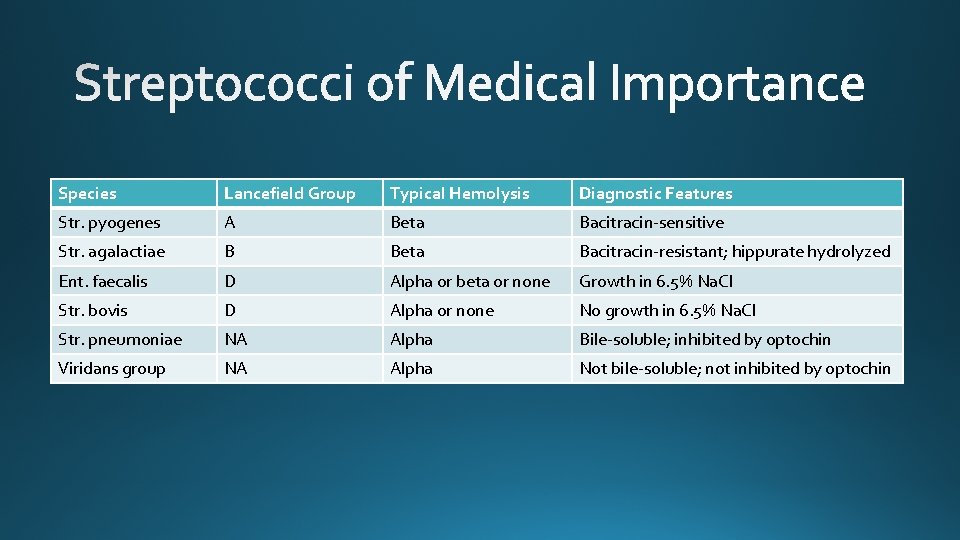
STREPTOCOCCUS Species Lancefield Group Typical Hemolysis Diagnostic Features













- Slides: 31
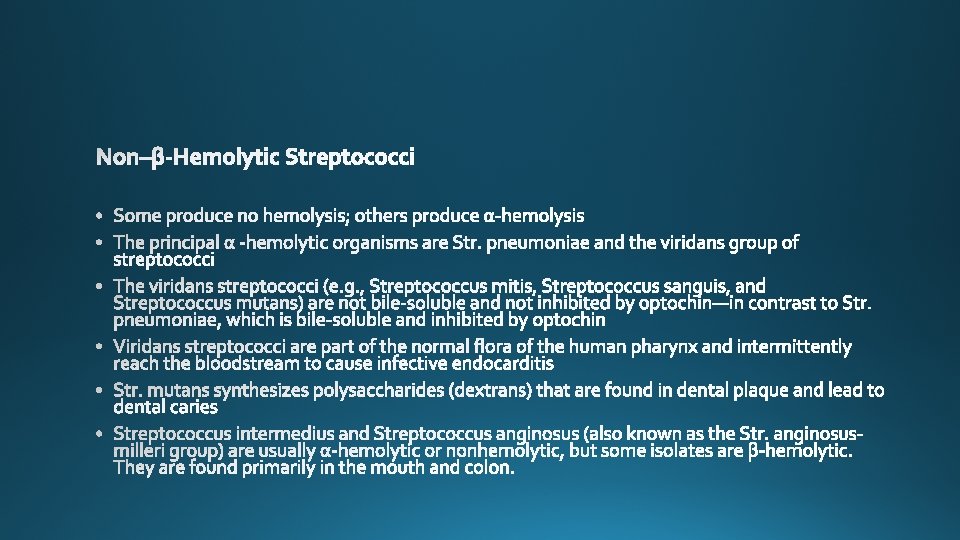
STREPTOCOCCUS
Species Lancefield Group Typical Hemolysis Diagnostic Features Str. pyogenes A Beta Bacitracin-sensitive Str. agalactiae B Beta Bacitracin-resistant; hippurate hydrolyzed Ent. faecalis D Alpha or beta or none Growth in 6. 5% Na. Cl Str. bovis D Alpha or none No growth in 6. 5% Na. Cl Str. pneumoniae NA Alpha Bile-soluble; inhibited by optochin Viridans group NA Alpha Not bile-soluble; not inhibited by optochin
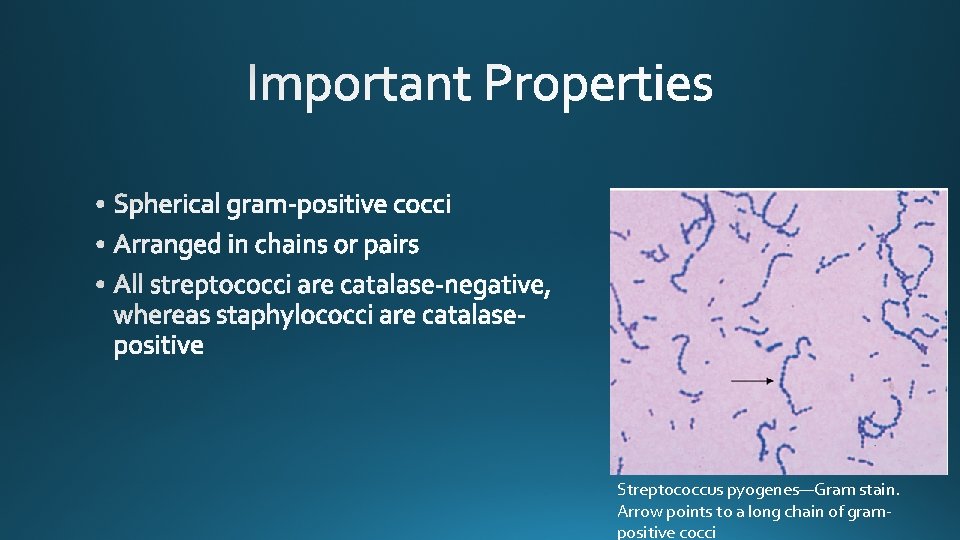
Streptococcus pyogenes—Gram stain. Arrow points to a long chain of grampositive cocci
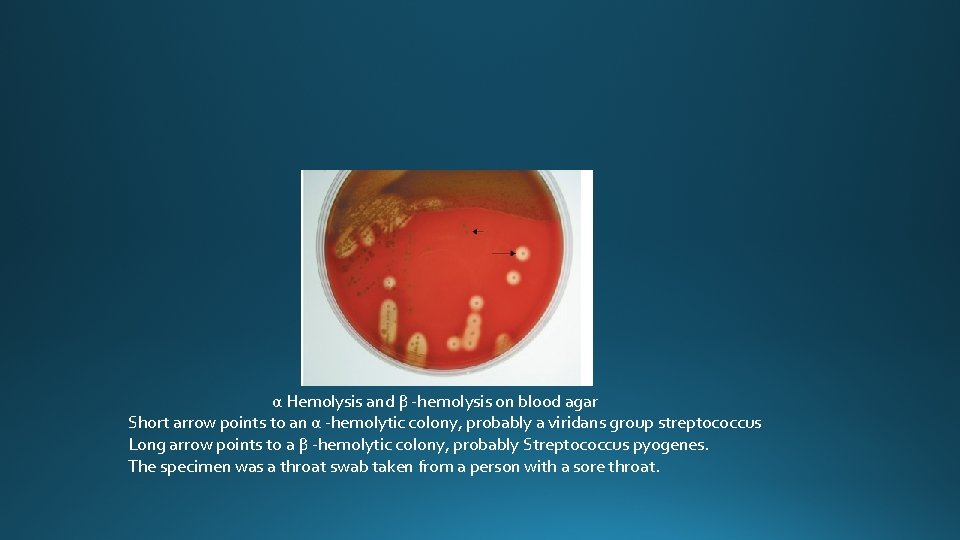
α Hemolysis and β -hemolysis on blood agar Short arrow points to an α -hemolytic colony, probably a viridans group streptococcus Long arrow points to a β -hemolytic colony, probably Streptococcus pyogenes. The specimen was a throat swab taken from a person with a sore throat.
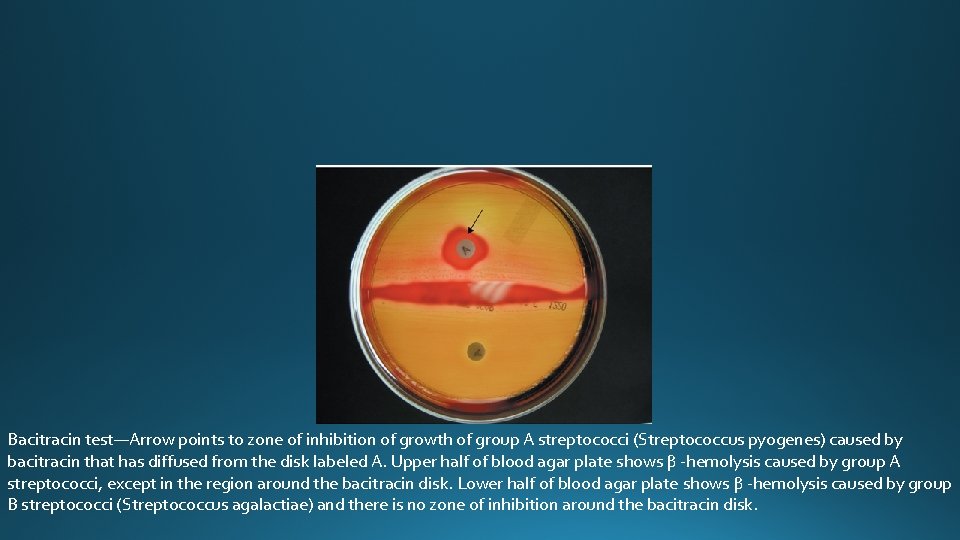
Bacitracin test—Arrow points to zone of inhibition of growth of group A streptococci (Streptococcus pyogenes) caused by bacitracin that has diffused from the disk labeled A. Upper half of blood agar plate shows β -hemolysis caused by group A streptococci, except in the region around the bacitracin disk. Lower half of blood agar plate shows β -hemolysis caused by group B streptococci (Streptococcus agalactiae) and there is no zone of inhibition around the bacitracin disk.