
Streptococcus pyogenes Characteristics Symptoms v Gram Positive v
- Slides: 1
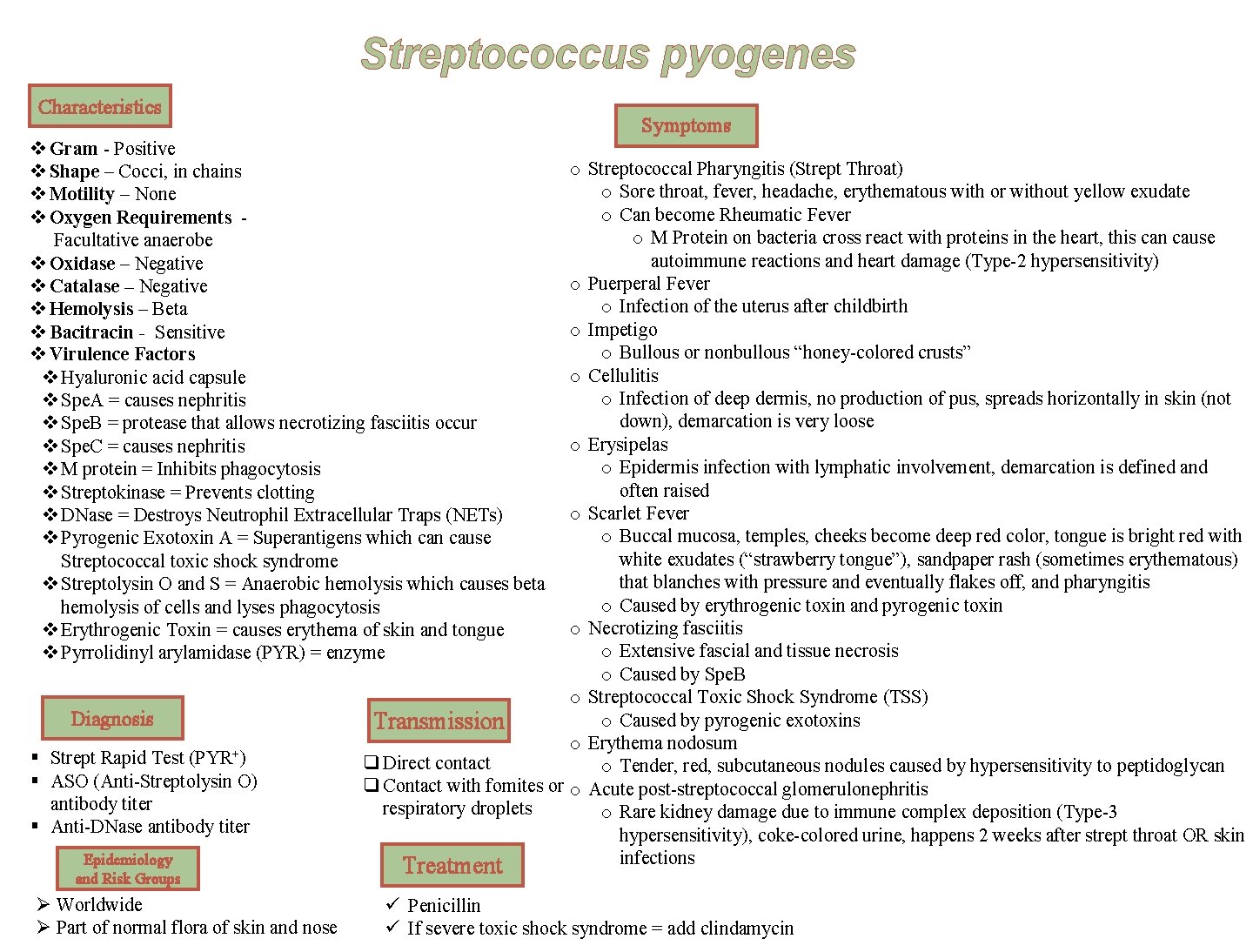
Streptococcus pyogenes Characteristics Symptoms v Gram - Positive v Shape – Cocci, in chains v Motility – None v Oxygen Requirements Facultative anaerobe v Oxidase – Negative v Catalase – Negative v Hemolysis – Beta v Bacitracin - Sensitive v Virulence Factors v Hyaluronic acid capsule v Spe. A = causes nephritis v Spe. B = protease that allows necrotizing fasciitis occur v Spe. C = causes nephritis v M protein = Inhibits phagocytosis v Streptokinase = Prevents clotting v DNase = Destroys Neutrophil Extracellular Traps (NETs) v Pyrogenic Exotoxin A = Superantigens which can cause Streptococcal toxic shock syndrome v Streptolysin O and S = Anaerobic hemolysis which causes beta hemolysis of cells and lyses phagocytosis v Erythrogenic Toxin = causes erythema of skin and tongue v Pyrrolidinyl arylamidase (PYR) = enzyme Diagnosis § Strept Rapid Test (PYR+) § ASO (Anti-Streptolysin O) antibody titer § Anti-DNase antibody titer Epidemiology and Risk Groups Ø Worldwide Ø Part of normal flora of skin and nose o Streptococcal Pharyngitis (Strept Throat) o Sore throat, fever, headache, erythematous with or without yellow exudate o Can become Rheumatic Fever o M Protein on bacteria cross react with proteins in the heart, this can cause autoimmune reactions and heart damage (Type-2 hypersensitivity) o Puerperal Fever o Infection of the uterus after childbirth o Impetigo o Bullous or nonbullous “honey-colored crusts” o Cellulitis o Infection of deep dermis, no production of pus, spreads horizontally in skin (not down), demarcation is very loose o Erysipelas o Epidermis infection with lymphatic involvement, demarcation is defined and often raised o Scarlet Fever o Buccal mucosa, temples, cheeks become deep red color, tongue is bright red with white exudates (“strawberry tongue”), sandpaper rash (sometimes erythematous) that blanches with pressure and eventually flakes off, and pharyngitis o Caused by erythrogenic toxin and pyrogenic toxin o Necrotizing fasciitis o Extensive fascial and tissue necrosis o Caused by Spe. B o Streptococcal Toxic Shock Syndrome (TSS) o Caused by pyrogenic exotoxins Transmission o Erythema nodosum q Direct contact o Tender, red, subcutaneous nodules caused by hypersensitivity to peptidoglycan q Contact with fomites or o Acute post-streptococcal glomerulonephritis respiratory droplets o Rare kidney damage due to immune complex deposition (Type-3 hypersensitivity), coke-colored urine, happens 2 weeks after strept throat OR skin infections Treatment ü Penicillin ü If severe toxic shock syndrome = add clindamycin