
Strengthening Kenya National Food Fortification Program Prof Daniel


- Slides: 13
Strengthening Kenya National Food Fortification Program Prof. Daniel Ndaka Sila Project Manager: EU funded fortification project Jomo Kenyatta University of Agriculture and Technology P. O Box 62000 -00200, Nairobi Email: dsila@jkuat. ac. ke
Eating Pattern In Kenya -Starchy Staples Githeri Ugali Chapati Rice Most Starchy staples: Poor in proteins, micronutrients and vitamins
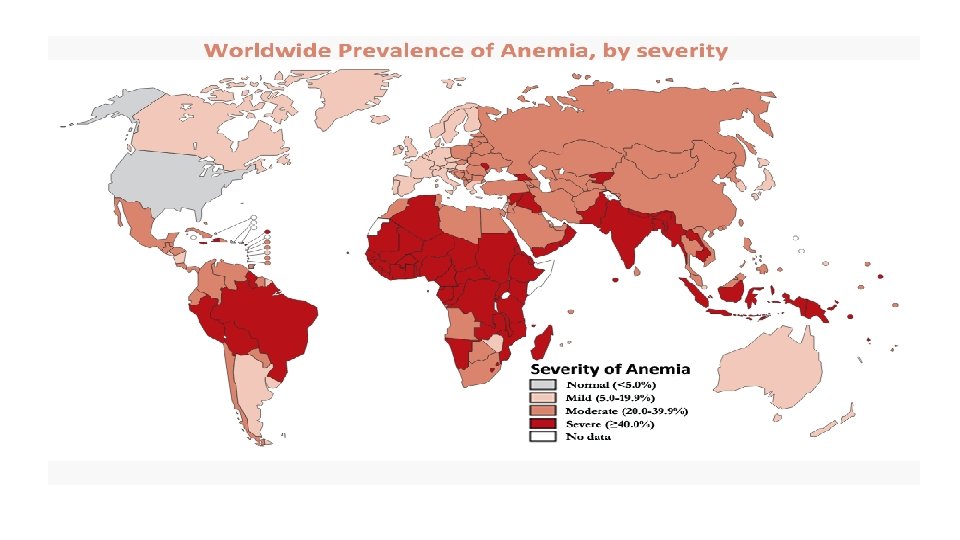
Nutrition Situation in Kenya (KDHS, 2014) Percentage level and severity of malnutrition by indicator
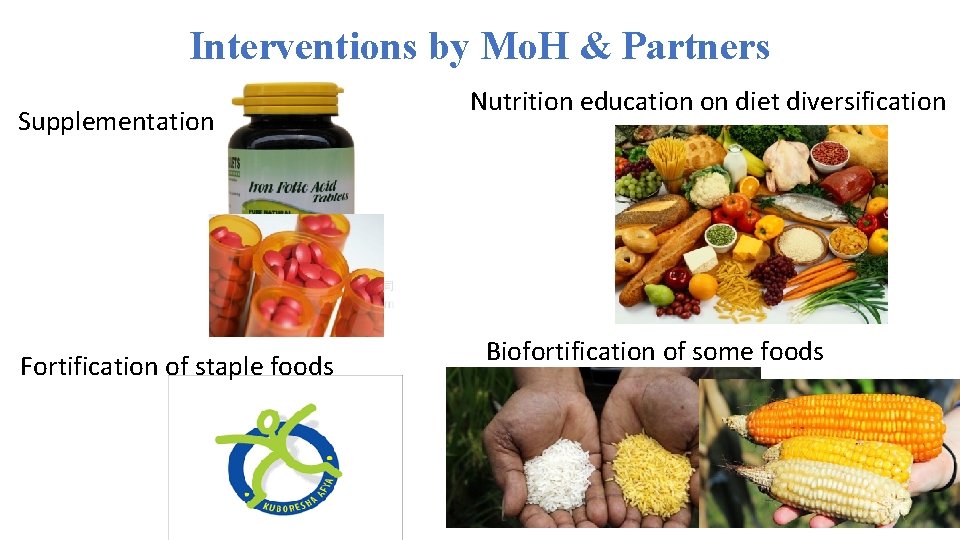
Interventions by Mo. H & Partners Supplementation Fortification of staple foods Nutrition education on diet diversification Biofortification of some foods
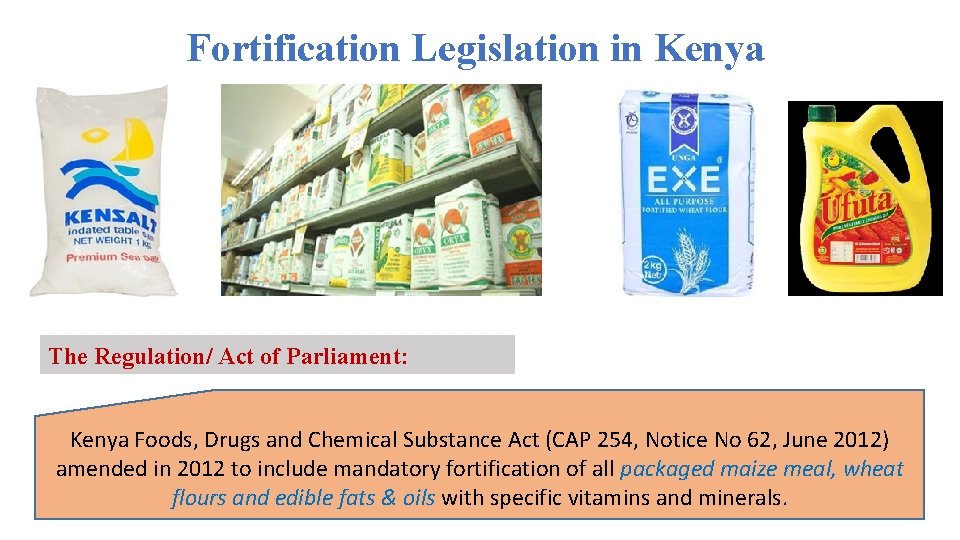
Fortification Legislation in Kenya The Regulation/ Act of Parliament: Kenya Foods, Drugs and Chemical Substance Act (CAP 254, Notice No 62, June 2012) amended in 2012 to include mandatory fortification of all packaged maize meal, wheat flours and edible fats & oils with specific vitamins and minerals.
Strategic objective 1. Creating an enabling environment (policies and strategies) 2. Scaling up the current national food fortification 3. Improving the implementation of existing and new food fortification programmes in Kenya 4. Raising awareness on consumption of fortified foods 5. Improving monitoring and evaluation of existing and new programmes
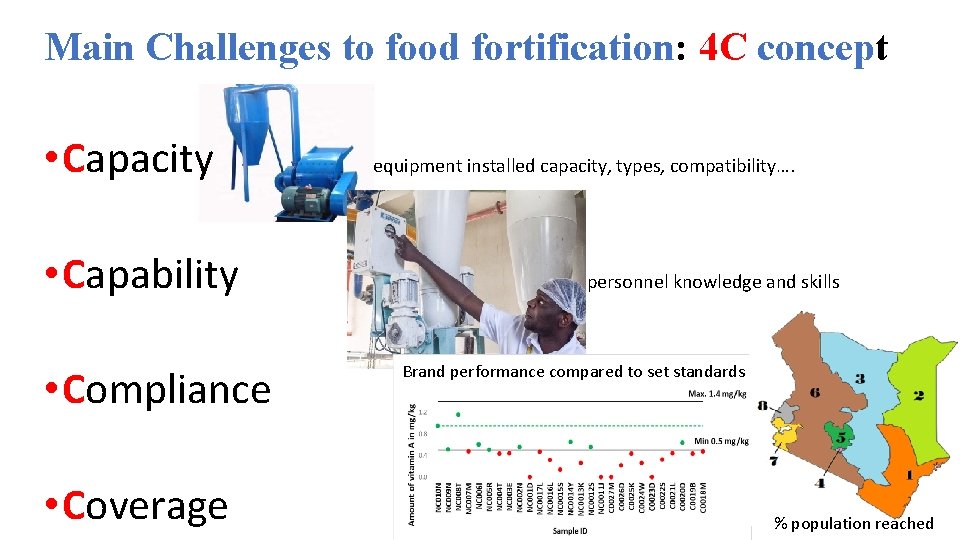
Main Challenges to food fortification: 4 C concept • Capacity • Capability • Compliance • Coverage equipment installed capacity, types, compatibility…. personnel knowledge and skills Brand performance compared to set standards % population reached
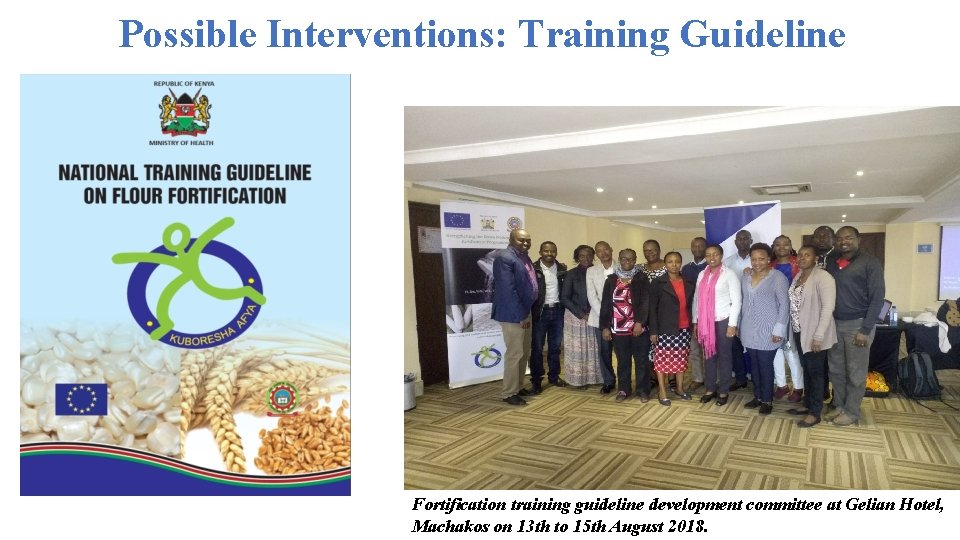
Possible Interventions: Training Guideline Fortification training guideline development committee at Gelian Hotel, Machakos on 13 th to 15 th August 2018.
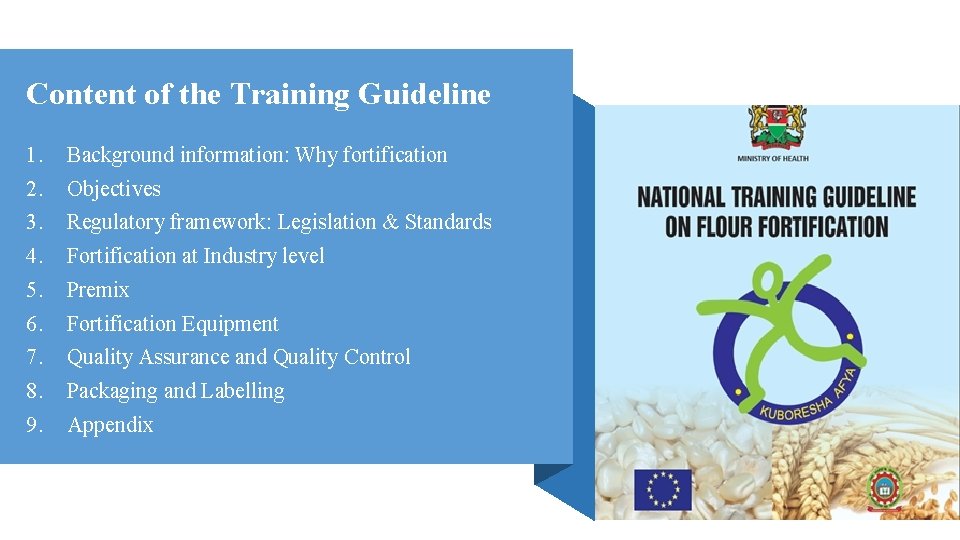
Purpose of the training guide • Goal: to provide the necessary technical knowledge and skills to flour fortification stakeholders to improve efficiency and compliance with the national and regional food fortification requirements • Objectives 1. To improve the level of knowledge and awareness on the national food fortification program in Kenya. 2. To enhance the competence and skills for implementing flour fortification among industry (millers), equipment fabricators, regulators, and other relevant stakeholders. 3. To improve the knowledge and skills in QA/QC to ensure safety of fortified foods and assure a consistent quality throughout the production process.
Content of the Training Guideline 1. Background information: Why fortification 2. Objectives 3. Regulatory framework: Legislation & Standards 4. Fortification at Industry level 5. Premix 6. Fortification Equipment 7. Quality Assurance and Quality Control 8. Packaging and Labelling 9. Appendix
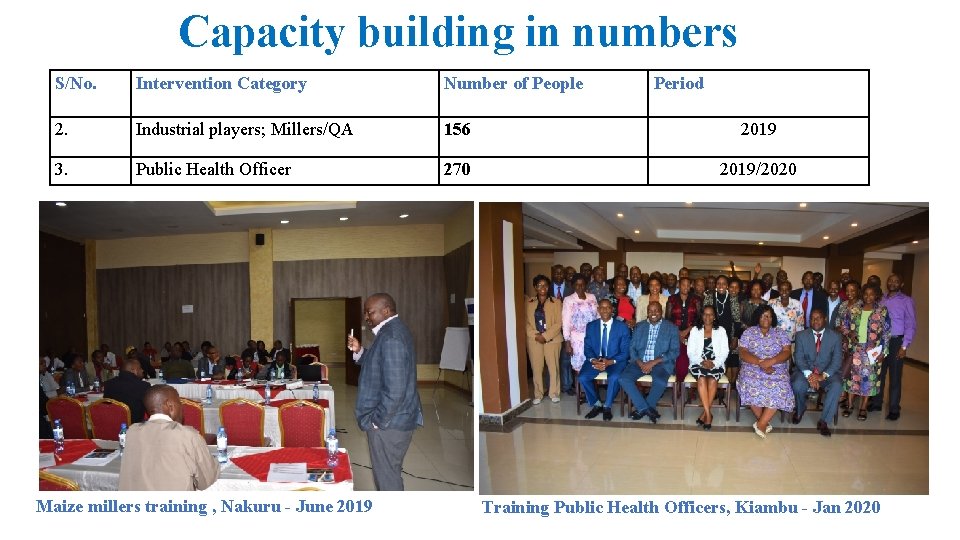
Capacity building in numbers S/No. Intervention Category Number of People 2. Industrial players; Millers/QA 156 2019 3. Public Health Officer 270 2019/2020 Maize millers training , Nakuru - June 2019 Period Training Public Health Officers, Kiambu - Jan 2020
The European Union Representatives from Industry Asante Sana