
Strengthening Forensic Science in the United States An
- Slides: 40
Strengthening Forensic Science in the United States: An Update on National Efforts in Forensic Science and Research & Development 2015 ASCLD Symposium Washington, DC April 29, 2015 Gerry La. Porte Director National Institute of Justice Office of Investigative and Forensic Sciences
National Institute of Justice: Office of Investigative and Forensic Science • The lead federal agency forensic science research and development as well as the administration of programs to improve laboratory efficiency, reduce backlogs, and provide technical assistance
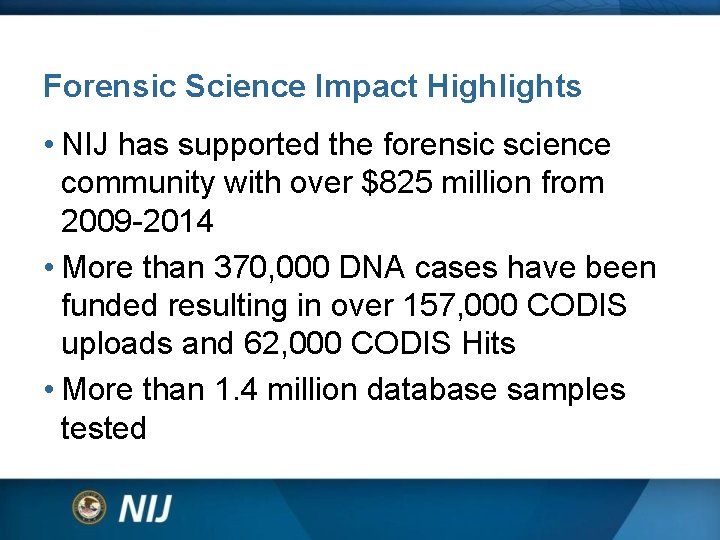
Forensic Science Impact Highlights • NIJ has supported the forensic science community with over $825 million from 2009 -2014 • More than 370, 000 DNA cases have been funded resulting in over 157, 000 CODIS uploads and 62, 000 CODIS Hits • More than 1. 4 million database samples tested
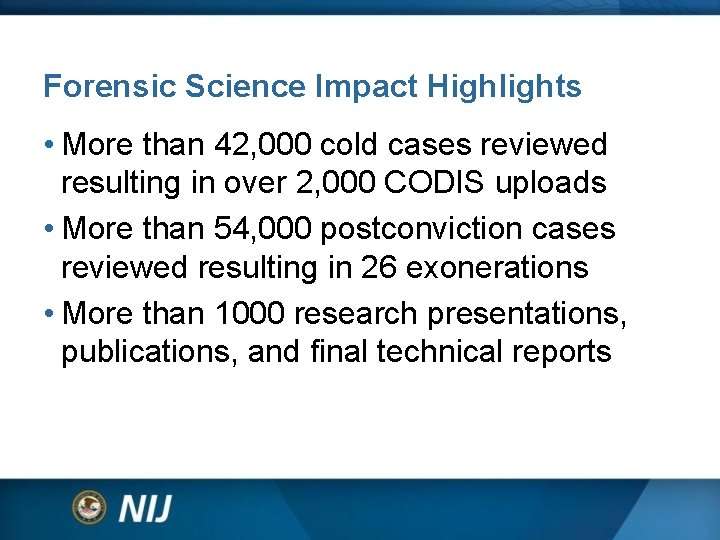
Forensic Science Impact Highlights • More than 42, 000 cold cases reviewed resulting in over 2, 000 CODIS uploads • More than 54, 000 postconviction cases reviewed resulting in 26 exonerations • More than 1000 research presentations, publications, and final technical reports
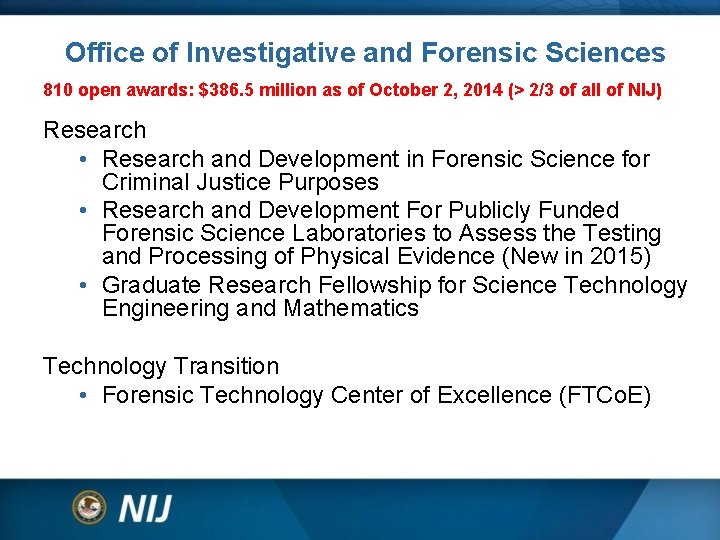
Office of Investigative and Forensic Sciences 810 open awards: $386. 5 million as of October 2, 2014 (> 2/3 of all of NIJ) Research • Research and Development in Forensic Science for Criminal Justice Purposes • Research and Development For Publicly Funded Forensic Science Laboratories to Assess the Testing and Processing of Physical Evidence (New in 2015) • Graduate Research Fellowship for Science Technology Engineering and Mathematics Technology Transition • Forensic Technology Center of Excellence (FTCo. E)
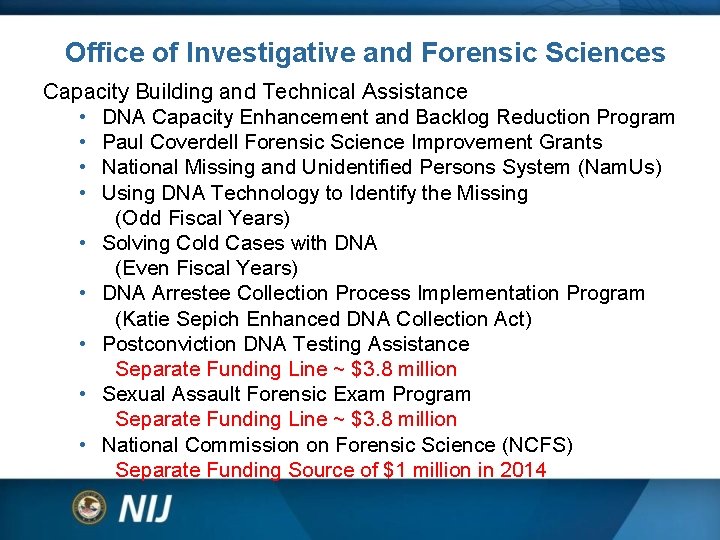
Office of Investigative and Forensic Sciences Capacity Building and Technical Assistance • DNA Capacity Enhancement and Backlog Reduction Program • Paul Coverdell Forensic Science Improvement Grants • National Missing and Unidentified Persons System (Nam. Us) • Using DNA Technology to Identify the Missing (Odd Fiscal Years) • Solving Cold Cases with DNA (Even Fiscal Years) • DNA Arrestee Collection Process Implementation Program (Katie Sepich Enhanced DNA Collection Act) • Postconviction DNA Testing Assistance Separate Funding Line ~ $3. 8 million • Sexual Assault Forensic Exam Program Separate Funding Line ~ $3. 8 million • National Commission on Forensic Science (NCFS) Separate Funding Source of $1 million in 2014
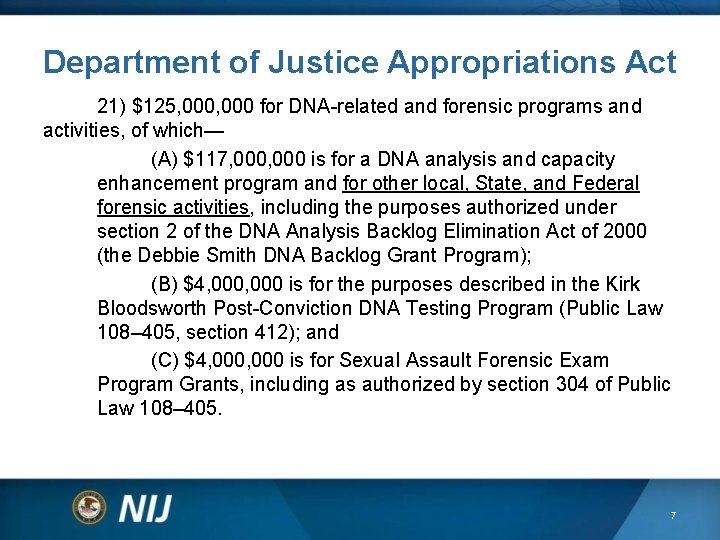
Department of Justice Appropriations Act 21) $125, 000 for DNA-related and forensic programs and activities, of which— (A) $117, 000 is for a DNA analysis and capacity enhancement program and for other local, State, and Federal forensic activities, including the purposes authorized under section 2 of the DNA Analysis Backlog Elimination Act of 2000 (the Debbie Smith DNA Backlog Grant Program); (B) $4, 000 is for the purposes described in the Kirk Bloodsworth Post-Conviction DNA Testing Program (Public Law 108– 405, section 412); and (C) $4, 000 is for Sexual Assault Forensic Exam Program Grants, including as authorized by section 304 of Public Law 108– 405. 7
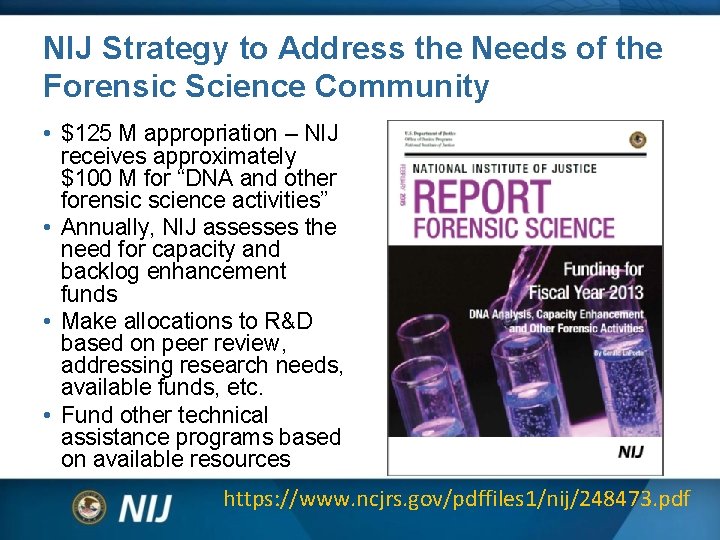
NIJ Strategy to Address the Needs of the Forensic Science Community • $125 M appropriation – NIJ receives approximately $100 M for “DNA and other forensic science activities” • Annually, NIJ assesses the need for capacity and backlog enhancement funds • Make allocations to R&D based on peer review, addressing research needs, available funds, etc. • Fund other technical assistance programs based on available resources https: //www. ncjrs. gov/pdffiles 1/nij/248473. pdf
Other Sources of Funding for Forensic Laboratories • Paul Coverdell Forensic Science Improvement Grants Approximately $10. 5 million in FY 2015 • Bureau of Justice Assistance (BJA) National Sexual Assault Kit Initiative (SAKI) https: //www. bja. gov/Funding/15 SAKIsol. pdf • The New York County District Attorney’s Sexual Assault Kit Backlog Elimination Program http: //manhattanda. org/sites/default/files/Manhattan%20 DA%20 Backlog%20 Eli mination%20 Grant%20 Program%20 RFP. pdf
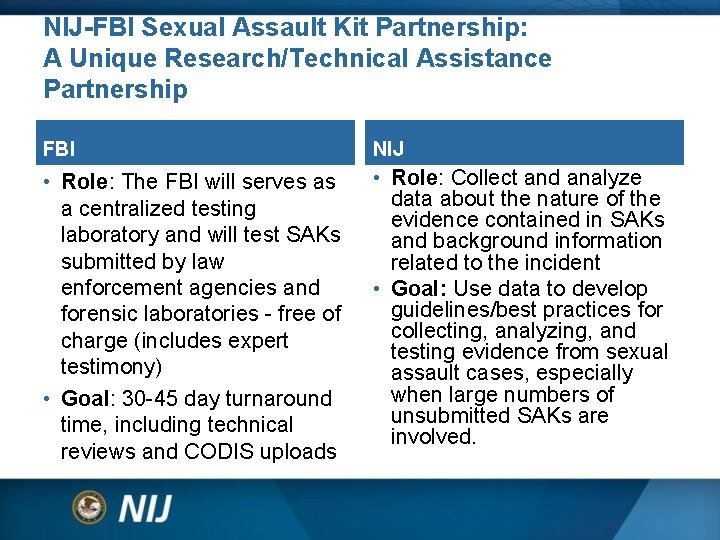
NIJ-FBI Sexual Assault Kit Partnership: A Unique Research/Technical Assistance Partnership FBI NIJ • Role: The FBI will serves as a centralized testing laboratory and will test SAKs submitted by law enforcement agencies and forensic laboratories - free of charge (includes expert testimony) • Goal: 30 -45 day turnaround time, including technical reviews and CODIS uploads • Role: Collect and analyze data about the nature of the evidence contained in SAKs and background information related to the incident • Goal: Use data to develop guidelines/best practices for collecting, analyzing, and testing evidence from sexual assault cases, especially when large numbers of unsubmitted SAKs are involved.
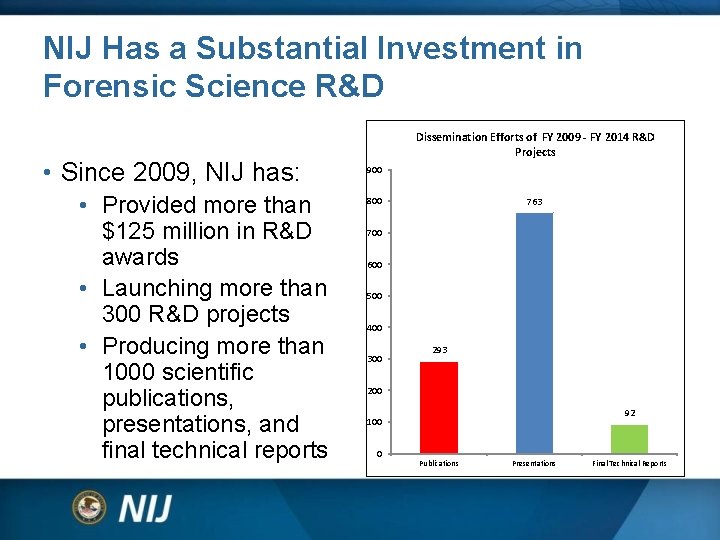
NIJ Has a Substantial Investment in Forensic Science R&D • Since 2009, NIJ has: • Provided more than $125 million in R&D awards • Launching more than 300 R&D projects • Producing more than 1000 scientific publications, presentations, and final technical reports Dissemination Efforts of FY 2009 - FY 2014 R&D Projects 900 800 763 700 600 500 400 300 293 200 92 100 0 Publications Presentations Final Technical Reports
NIJ Data • The number of scientific publications resulting from NIJ supported research and development increased over 300% from projects awarded in 2007 compared to those awarded in 2012. • The number of scientific presentations resulting from NIJ supported research and development increased over 400% from projects awarded in 2007 compared to those awarded in 2012.
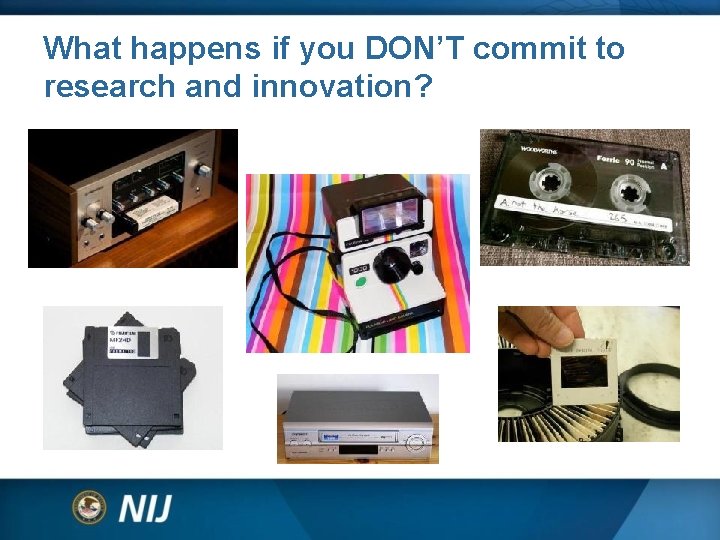
What happens if you DON’T commit to research and innovation?
Benefits of the Coverdell Program from an Innovations Perspective • Source to implement new technologies • Source to validate and implement new methods • Source to train forensic scientists to use new technologies (including competency and proficiency testing) • Support implementation of NCFS recommendations and OSAC products • Relieve strained scientists to do all of the above
Impact of Forensic Science Research: A Retroactive Perspective • Investment in DNA has revolutionized how crimes are investigated, solved, and prosecuted (e. g. , sexual assault kit testing, cold cases, identifying the missing, and exonerations) • DNA technology has advanced with respect to sensitivity, speed, and automation • Instrumental analysis e. g. , HPLC LC/MS; GC (FID) GC/MS • Latent print visualization techniques e. g. , 1, 2 -Indanediones, hyperspectral imaging, nanoparticles 15
Example of where we were and where we are going. 1990 2010 • Previous case work research by ? indicated that positive GSR test results were encountered in suicides 62% of the time using various combinations of neutron activation analysis (NAA) and atomic absorption spectrophotometry (AAS). • Aspects of both inorganic and organic GSR are discussed, from formation and distribution, to sample collection, preparation, and analysis using a variety of techniques.
EXAMPLES OF CURRENT RESEARCH
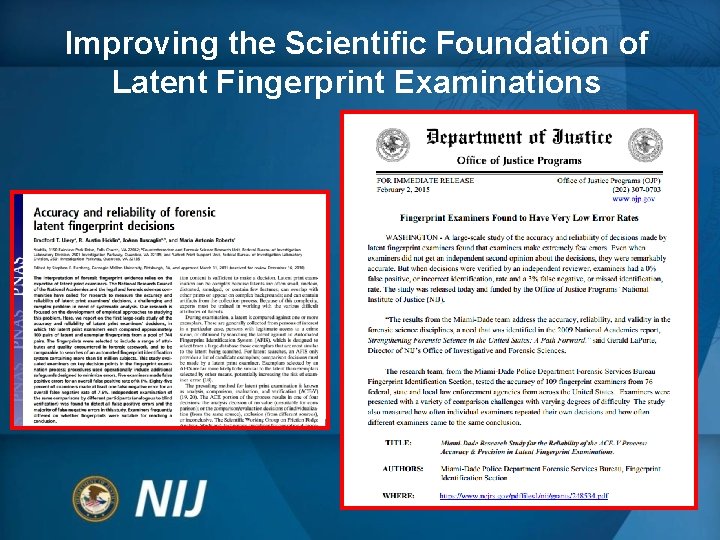
Improving the Scientific Foundation of Latent Fingerprint Examinations
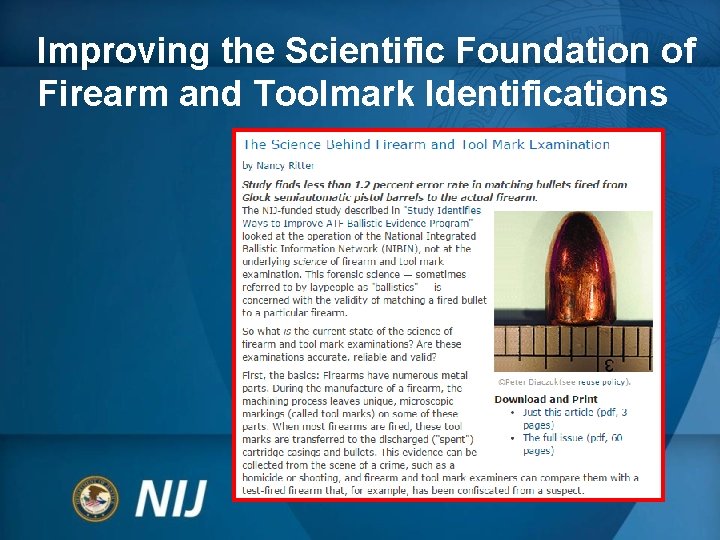
Improving the Scientific Foundation of Firearm and Toolmark Identifications
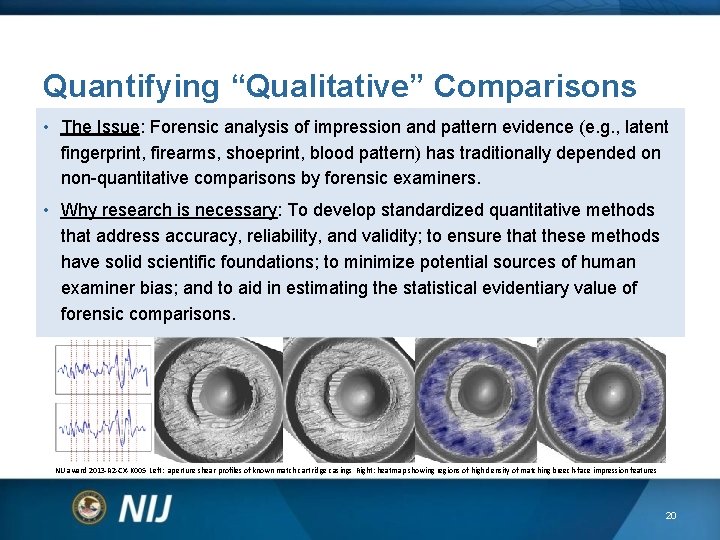
Quantifying “Qualitative” Comparisons • The Issue: Forensic analysis of impression and pattern evidence (e. g. , latent fingerprint, firearms, shoeprint, blood pattern) has traditionally depended on non-quantitative comparisons by forensic examiners. • Why research is necessary: To develop standardized quantitative methods that address accuracy, reliability, and validity; to ensure that these methods have solid scientific foundations; to minimize potential sources of human examiner bias; and to aid in estimating the statistical evidentiary value of forensic comparisons. NIJ award 2013 -R 2 -CX-K 005 Left: aperture shear profiles of known match cartridge casings Right: heatmap showing regions of high density of matching breech-face impression features 20
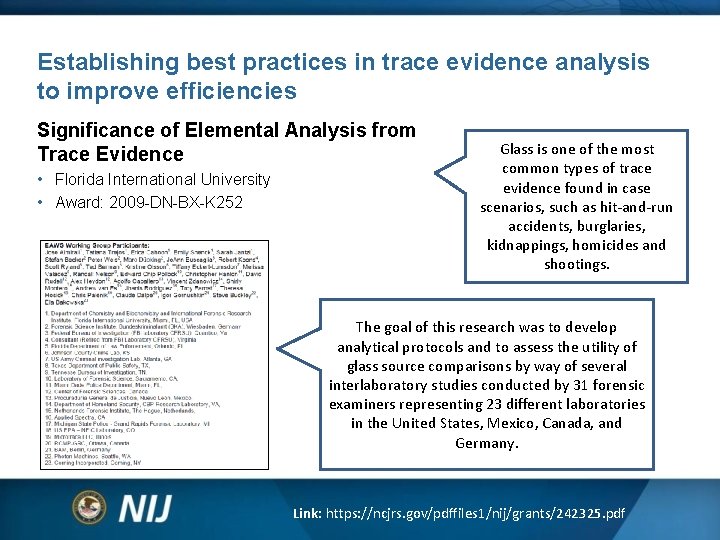
Establishing best practices in trace evidence analysis to improve efficiencies Significance of Elemental Analysis from Trace Evidence • Florida International University • Award: 2009 -DN-BX-K 252 Glass is one of the most common types of trace evidence found in case scenarios, such as hit-and-run accidents, burglaries, kidnappings, homicides and shootings. The goal of this research was to develop analytical protocols and to assess the utility of glass source comparisons by way of several interlaboratory studies conducted by 31 forensic examiners representing 23 different laboratories in the United States, Mexico, Canada, and Germany. Link: https: //ncjrs. gov/pdffiles 1/nij/grants/242325. pdf
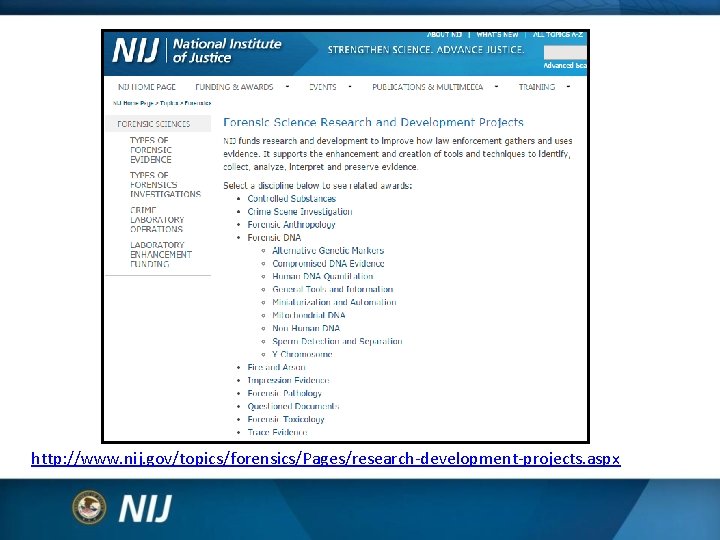
http: //www. nij. gov/topics/forensics/Pages/research-development-projects. aspx
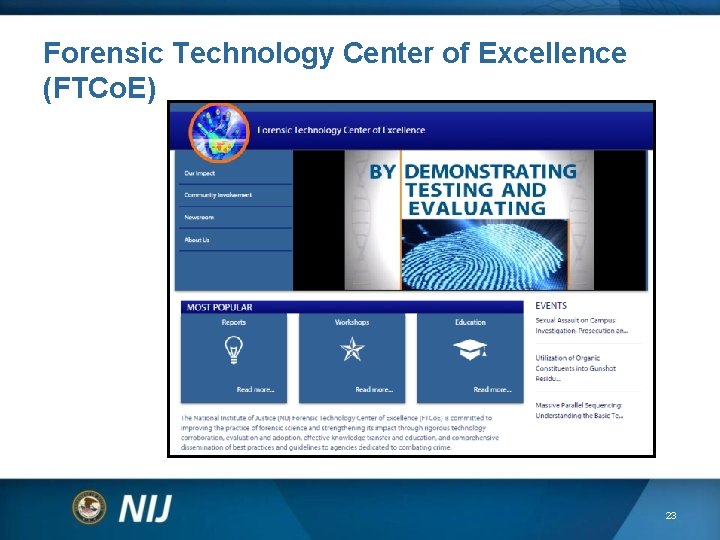
Forensic Technology Center of Excellence (FTCo. E) 23
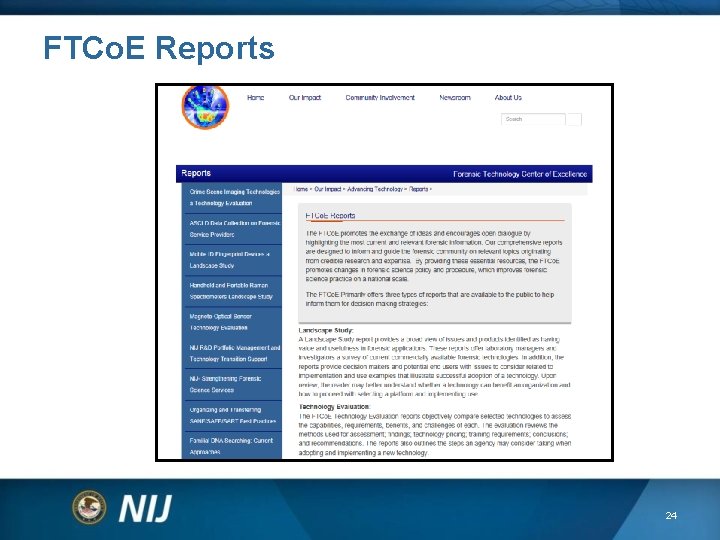
FTCo. E Reports 24
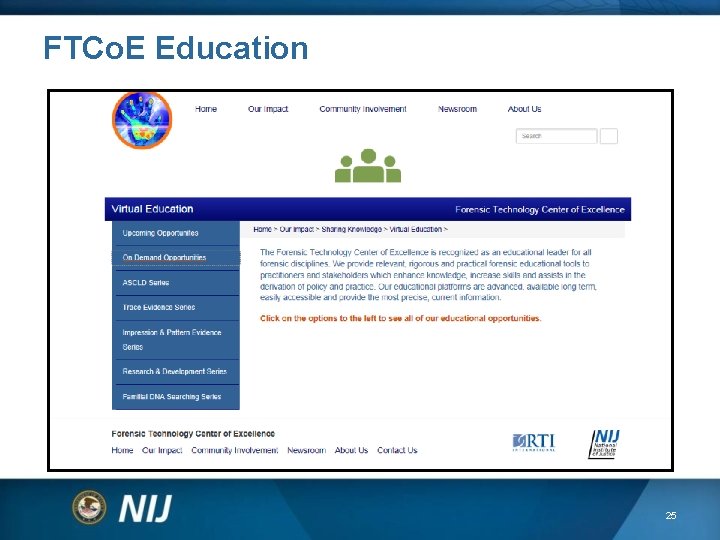
FTCo. E Education 25
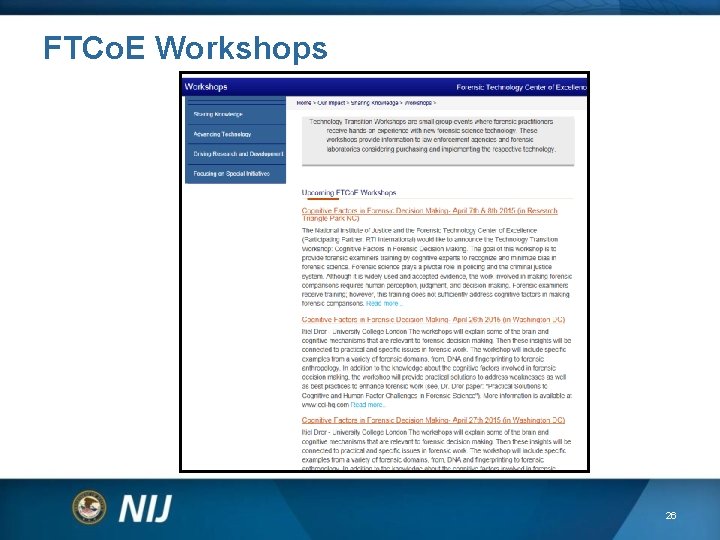
FTCo. E Workshops 26
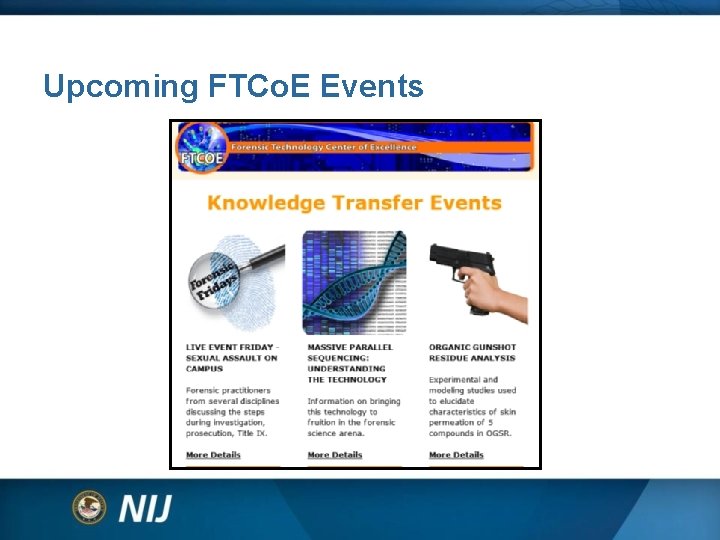
Upcoming FTCo. E Events
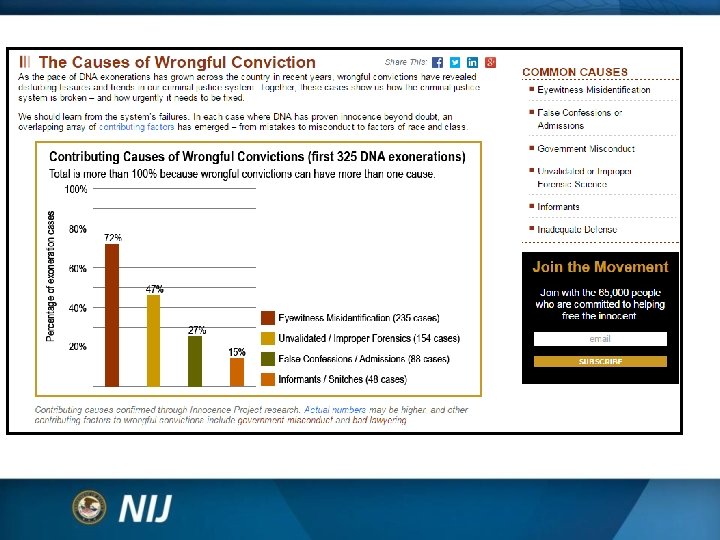
FORENSIC SCIENCE: LEARNING FROM THE PAST AND MAKING IT BETTER!
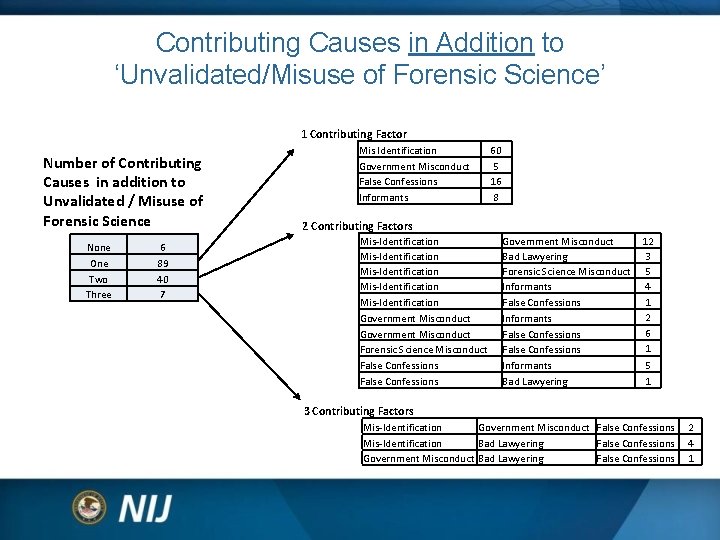
Contributing Causes in Addition to ‘Unvalidated/Misuse of Forensic Science’ 1 Contributing Factor Number of Contributing Causes in addition to Unvalidated / Misuse of Forensic Science None One Two Three 6 89 40 7 Mis Identification Government Misconduct False Confessions Informants 60 5 16 8 2 Contributing Factors Mis-Identification Mis-Identification Government Misconduct Forensic Science Misconduct False Confessions Government Misconduct Bad Lawyering Forensic Science Misconduct Informants False Confessions Informants Bad Lawyering 12 3 5 4 1 2 6 1 5 1 3 Contributing Factors Mis-Identification Government Misconduct False Confessions Mis-Identification Bad Lawyering False Confessions Government Misconduct Bad Lawyering False Confessions 2 4 1
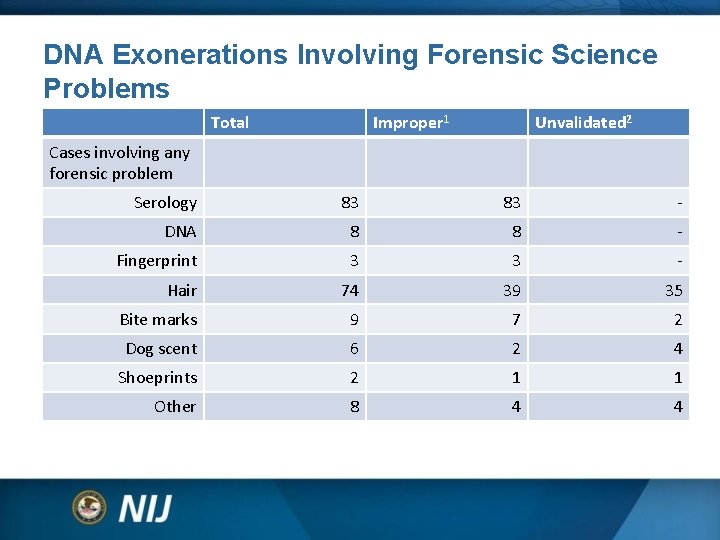
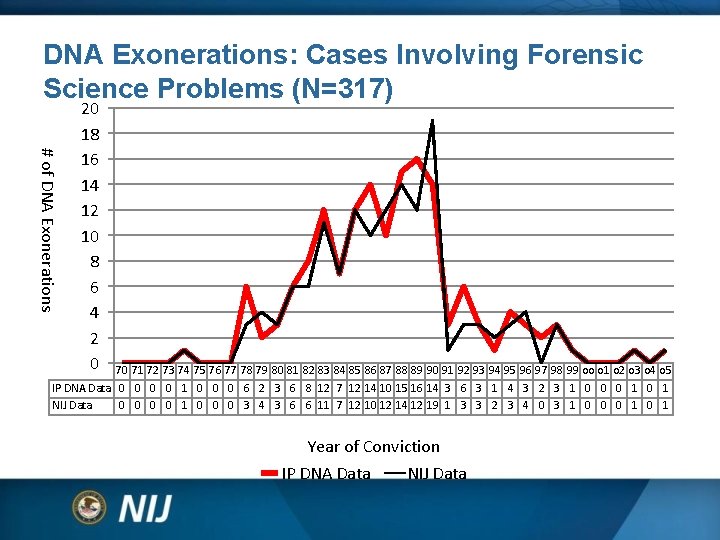
DNA Exonerations Involving Forensic Science Problems Total Improper 1 Unvalidated 2 Cases involving any forensic problem Serology 83 83 - DNA 8 8 - Fingerprint 3 3 - Hair 74 39 35 Bite marks 9 7 2 Dog scent 6 2 4 Shoeprints 2 1 1 Other 8 4 4
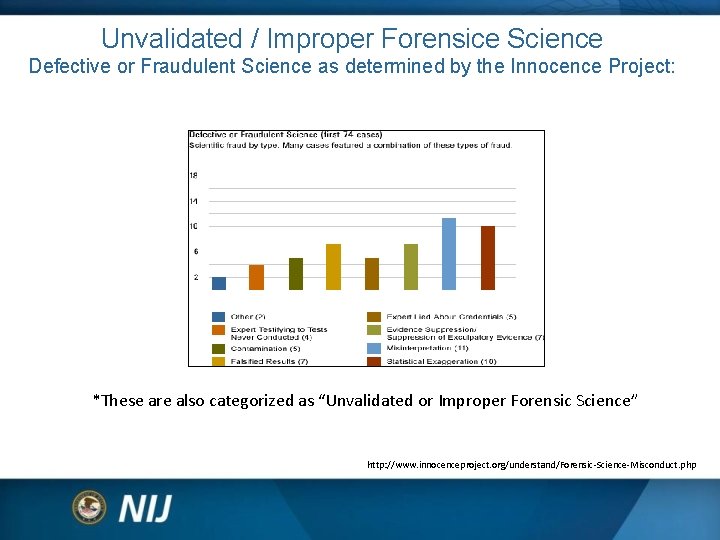
Unvalidated / Improper Forensice Science Defective or Fraudulent Science as determined by the Innocence Project: *These are also categorized as “Unvalidated or Improper Forensic Science” http: //www. innocenceproject. org/understand/Forensic-Science-Misconduct. php
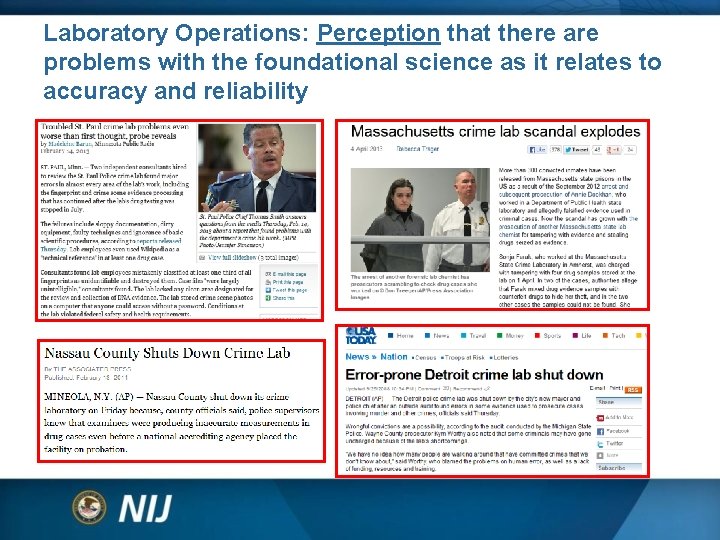
Laboratory Operations: Perception that there are problems with the foundational science as it relates to accuracy and reliability
DNA Exonerations: Cases Involving Forensic Science Problems (N=317) # of DNA Exonerations 20 18 16 14 12 10 8 6 4 2 0 70 71 72 73 74 75 76 77 78 79 80 81 82 83 84 85 86 87 88 89 90 91 92 93 94 95 96 97 98 99 oo o 1 o 2 o 3 o 4 o 5 IP DNA Data 0 0 1 0 0 0 6 2 3 6 8 12 7 12 14 10 15 16 14 3 6 3 1 4 3 2 3 1 0 0 0 1 NIJ Data 0 0 1 0 0 0 3 4 3 6 6 11 7 12 10 12 14 12 19 1 3 3 2 3 4 0 3 1 0 0 0 1 Year of Conviction IP DNA Data NIJ Data
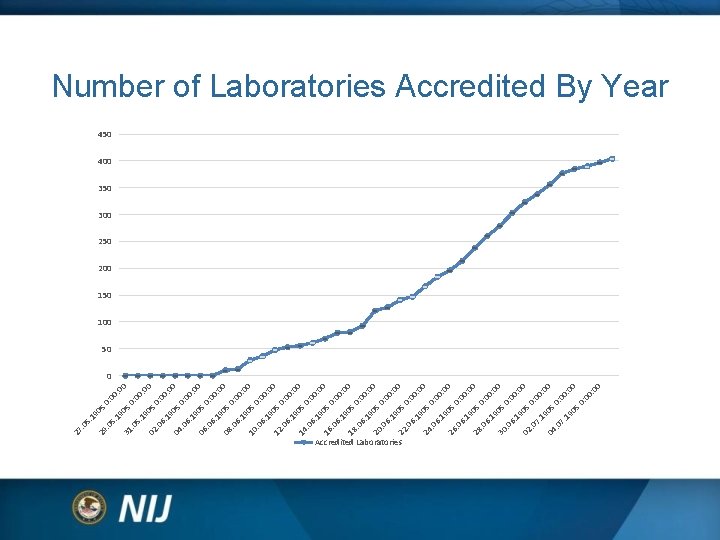
Accredited Laboratories 05 05 05 7. 19. 0 04 . 0 02 05 05 19 6. 19 . 0 30 6. . 0 28 6. 19 05 05 05 6. 19. 0 26 . 0 24 . 0 22 6. 19 . 0 20 6. 19 . 0 18 05 05 6. 19 . 0 16 . 0 14 6. 19 . 0 12 05 05 19 6. 19 . 0 10 05 05 05 6. 19 . 0 08 6. 19 . 0 06 . 0 04 6. 19 . 0 02 05 05 5. 19 . 0 31 5. 19 . 0 29 . 0 27 0 : 0 0 00 0: 00 : 0 0 0: 00 0 : 0 00 0: 00 : 0 0 0: 00 : 0 0 0: 00 0 : 0 0 0: 00 : 0 00 0: : 0 0 0: 00 : 0 0 0: 00 Number of Laboratories Accredited By Year 450 400 350 300 250 200 150 100 50 0
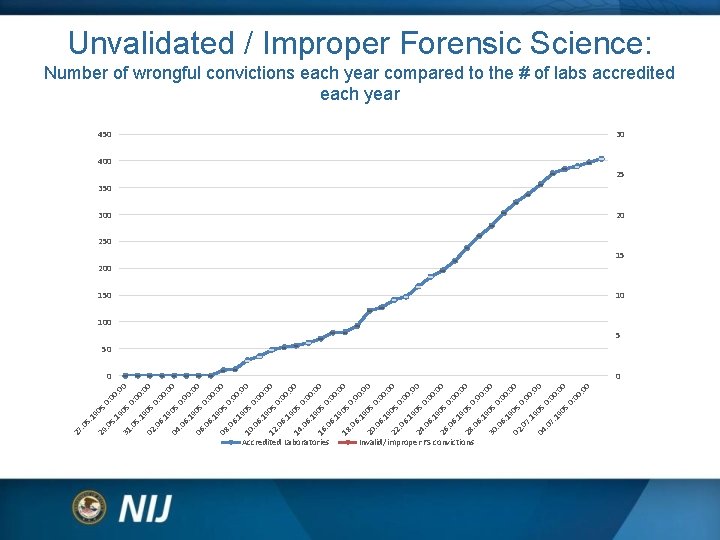
Accredited Laboratories 05 05 : 0 0 0: 00 : 0 0 0: 00 0 : 0 0 00 : 0 0: 00 : 0 0 0: 00 . 0 26 05 : 0 0 0: 00 6. 19 : 0 0 05 28 0: . 0 00 6. 19 : 0 0 05 30 0: . 0 00 6. 19 : 0 0 05 02 0: . 0 00 7. 19 : 0 0 05 04 0: . 0 0 7. 0: 19 00 05 0: 00 : 0 0 6. 19 . 0 24 05 05 05 6. 19 . 0 22 6. 19 . 0 20 . 0 18 . 0 16 6. 19 . 0 14 6. 19 . 0 12 05 05 05 6. 19 . 0 10 . 0 08 6. 19 . 0 06 6. 19 . 0 04 6. 19 5. 19 . 0 02 . 0 31 5. 19 . 0 29 . 0 27 Unvalidated / Improper Forensic Science: Number of wrongful convictions each year compared to the # of labs accredited each year 450 30 400 350 25 300 20 250 200 15 150 10 100 50 5 0 0 Invalid/improper FS convictions
Takeaways • Be cautious in how we interpret and learn from historical data • If quantitative data are developed in impression and pattern evidence examinations, they must be evaluated and interpreted with caution (e. g. , ABO Blood Typing) - Re-training to express statistical conclusions? Current practices of using “inconclusive” may be a means to derive conservative conclusions and give the ‘benefit of the doubt’ to a suspect
Takeaways • Bad practice and bad science administered by an individual(s) is not the same as unvalidated forensic science Indicates a need for better training and implementation of standards, best practices, and universal guidelines; Accreditation should mitigate bad practice • Innocence Project data is ongoing and we may see different trends in the future since the current focus is on cases in the ‘pre-DNA era’ • Therefore, forensic science research and development to ascertain accuracy and reliability should not cease
Social Media Twitter Facebook 39
GERRY LAPORTE DIRECTOR NATIONAL INSTITUTE OF JUSTICE OFFICE OF INVESTIGATIVE & FORENSIC SCIENCES GERALD. LAPORTE@USDOJ. GOV