
Streams 85 sediment transport glaciers 7 waves 1
- Slides: 50
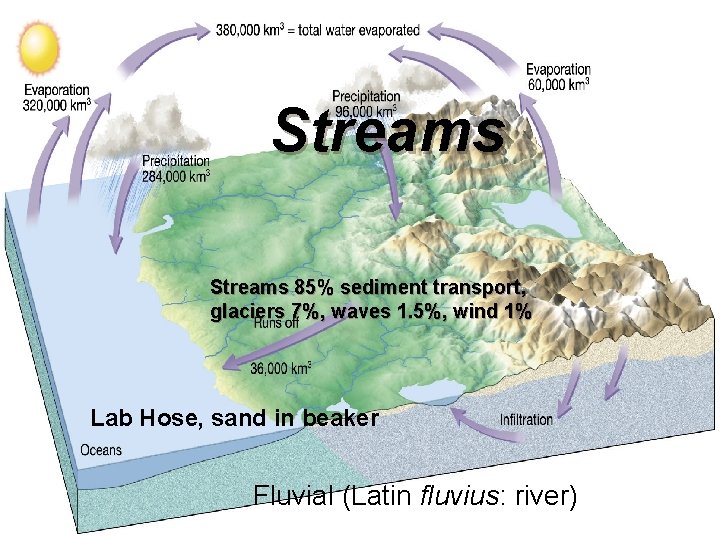
Streams 85% sediment transport, glaciers 7%, waves 1. 5%, wind 1% Lab Hose, sand in beaker Fluvial (Latin fluvius: river)
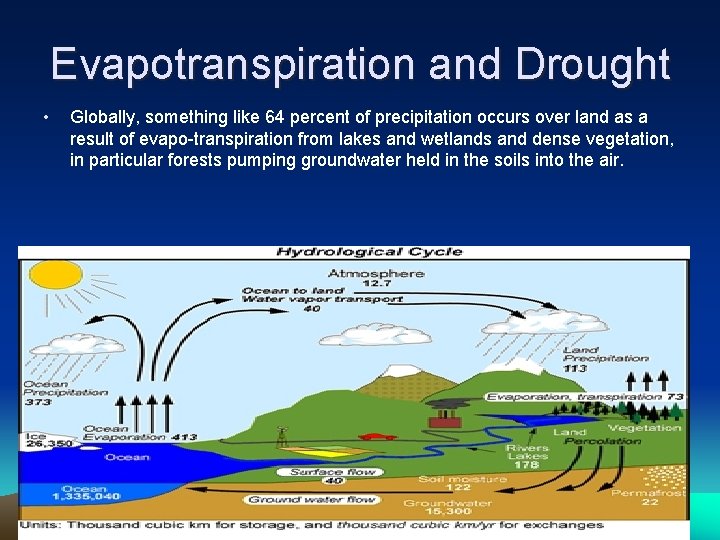
Evapotranspiration and Drought • Globally, something like 64 percent of precipitation occurs over land as a result of evapo-transpiration from lakes and wetlands and dense vegetation, in particular forests pumping groundwater held in the soils into the air.
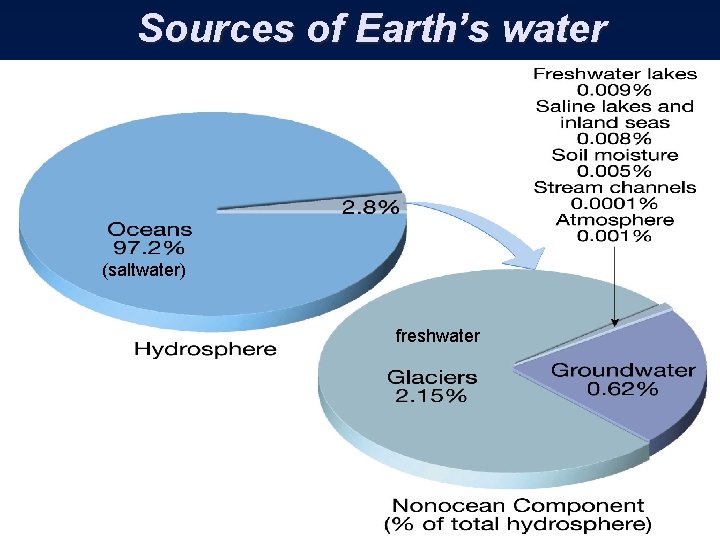
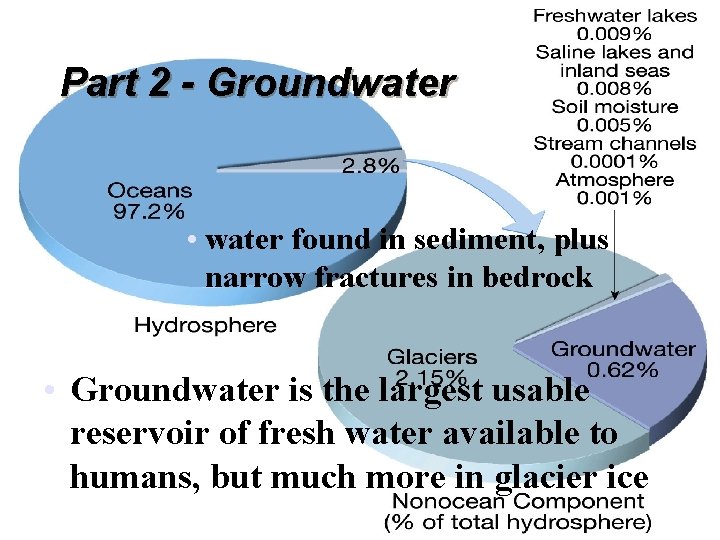
Sources of Earth’s water (saltwater) freshwater
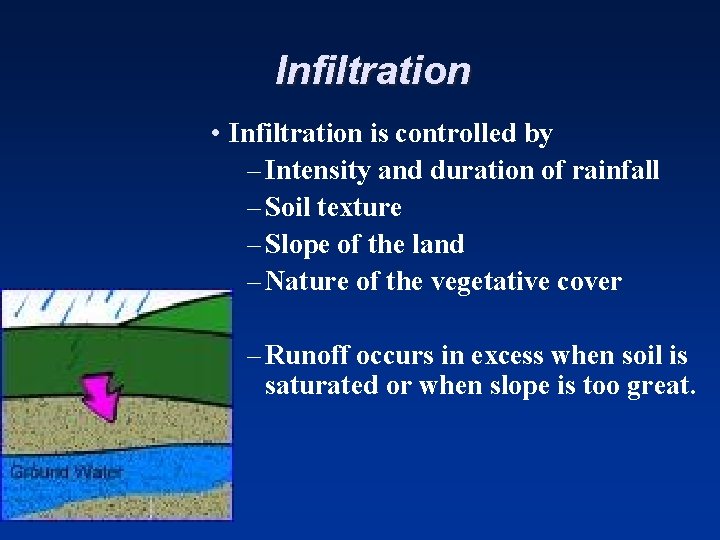
Infiltration • Infiltration is controlled by – Intensity and duration of rainfall – Soil texture – Slope of the land – Nature of the vegetative cover – Runoff occurs in excess when soil is saturated or when slope is too great.
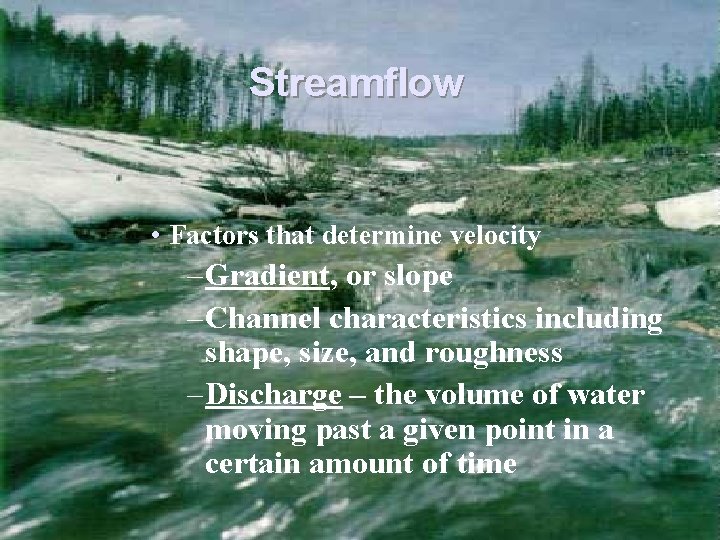
Streamflow • Factors that determine velocity – Gradient, or slope – Channel characteristics including shape, size, and roughness – Discharge – the volume of water moving past a given point in a certain amount of time
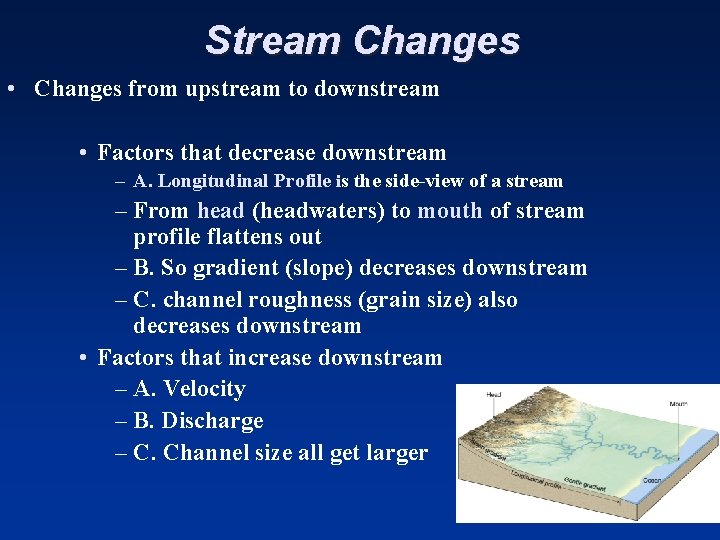
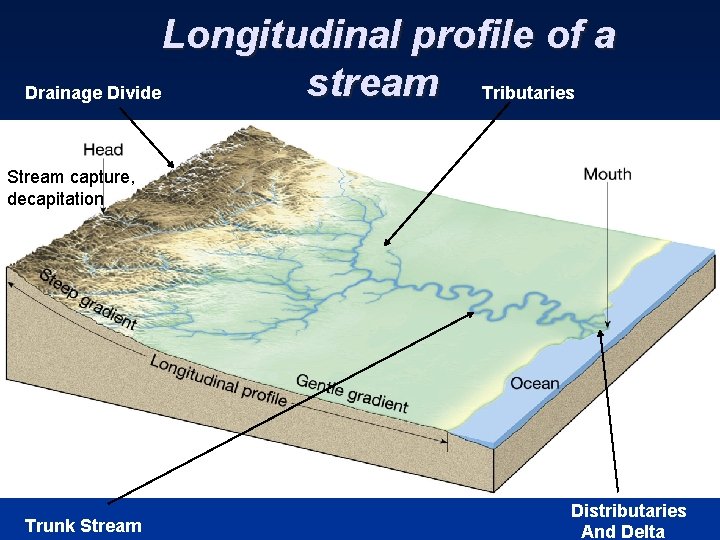
Stream Changes • Changes from upstream to downstream • Factors that decrease downstream – A. Longitudinal Profile is the side-view of a stream – From head (headwaters) to mouth of stream profile flattens out – B. So gradient (slope) decreases downstream – C. channel roughness (grain size) also decreases downstream • Factors that increase downstream – A. Velocity – B. Discharge – C. Channel size all get larger
Longitudinal profile of a stream Tributaries Drainage Divide Stream capture, decapitation Trunk Stream Distributaries And Delta
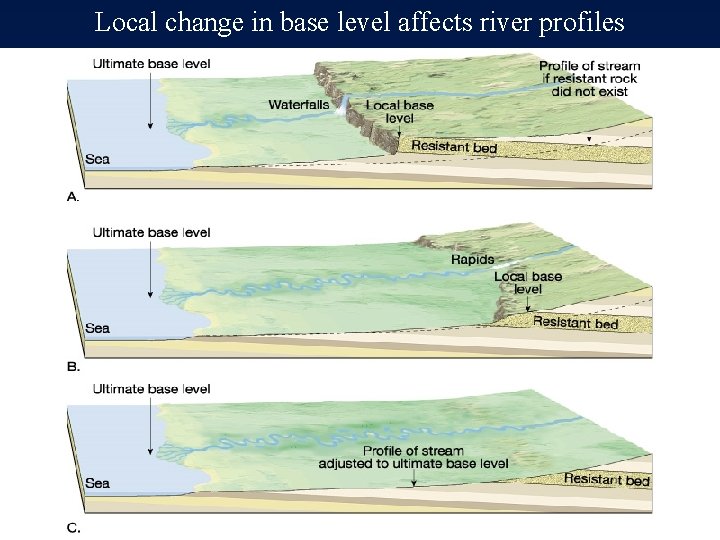
Base Level • Elevation below which a stream cannot erode • Local and ultimate
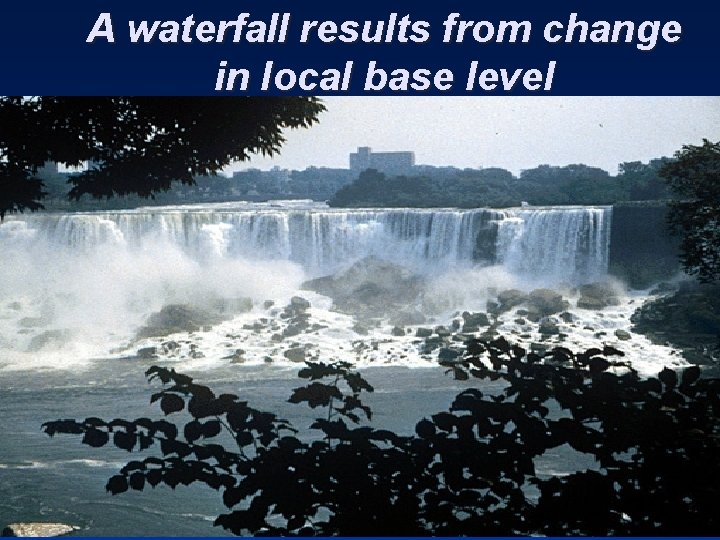
A waterfall results from change in local base level
Local change in base level affects river profiles
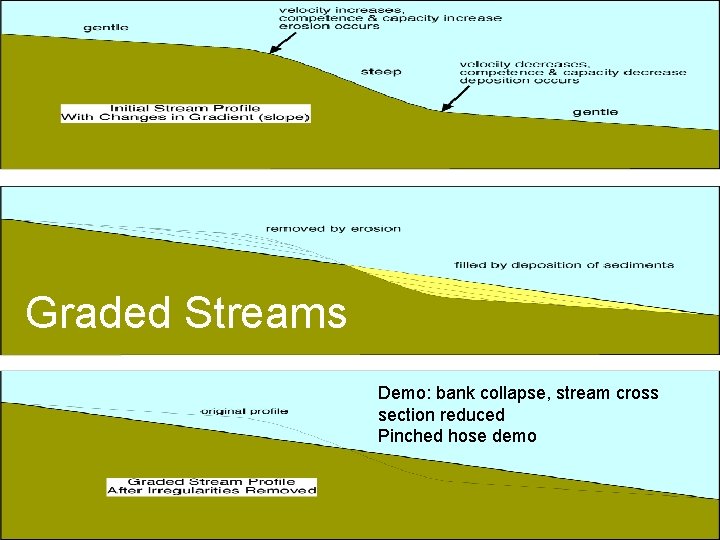
Graded Streams Demo: bank collapse, stream cross section reduced Pinched hose demo
Graded Streams • Erosion and Deposition Equal • When local conditions in a graded stream are disrupted, velocity changes. • Original conditions are restored. • DEMOS • Pinched hose demo, change in velocity at restrictions • Hose and sand demo: faster water is better at erosion
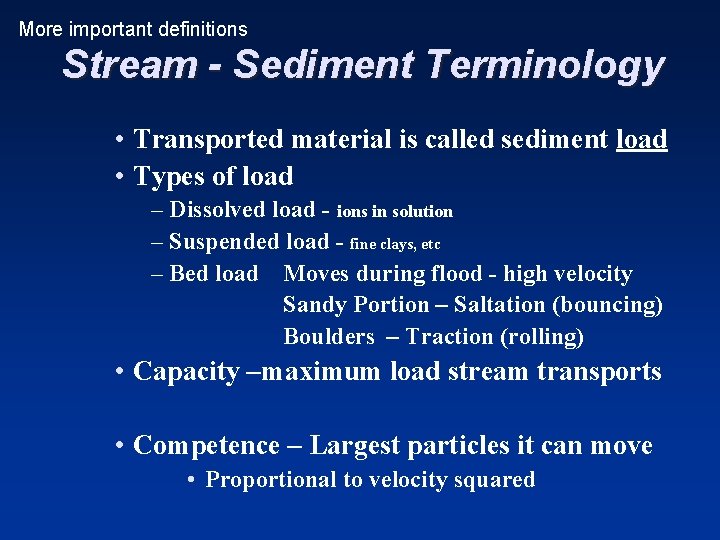
More important definitions Stream - Sediment Terminology • Transported material is called sediment load • Types of load – Dissolved load - ions in solution – Suspended load - fine clays, etc – Bed load Moves during flood - high velocity Sandy Portion – Saltation (bouncing) Boulders – Traction (rolling) • Capacity –maximum load stream transports • Competence – Largest particles it can move • Proportional to velocity squared
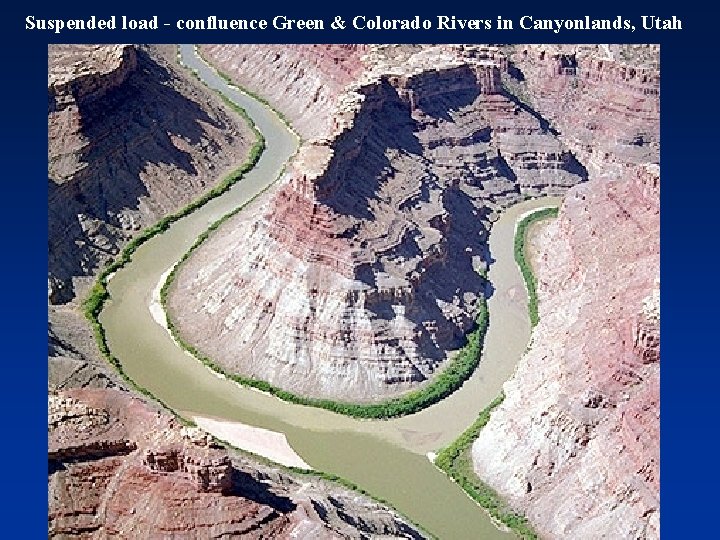
Suspended load - confluence Green & Colorado Rivers in Canyonlands, Utah
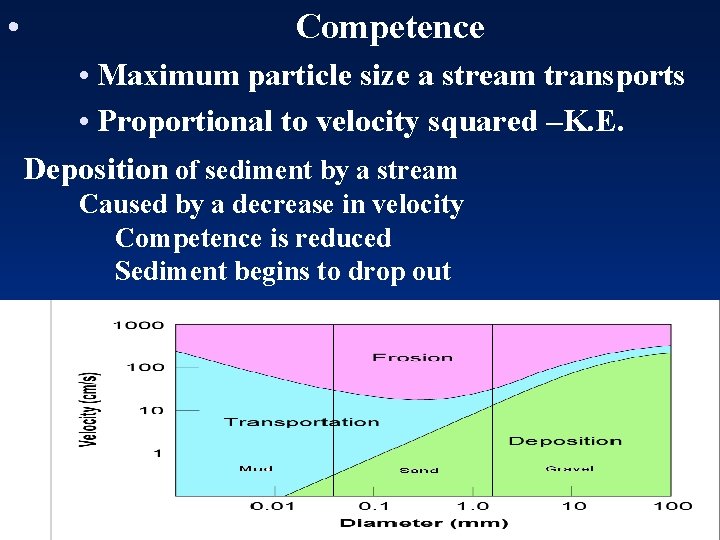
• Competence • Maximum particle size a stream transports • Proportional to velocity squared –K. E. Deposition of sediment by a stream Caused by a decrease in velocity Competence is reduced Sediment begins to drop out
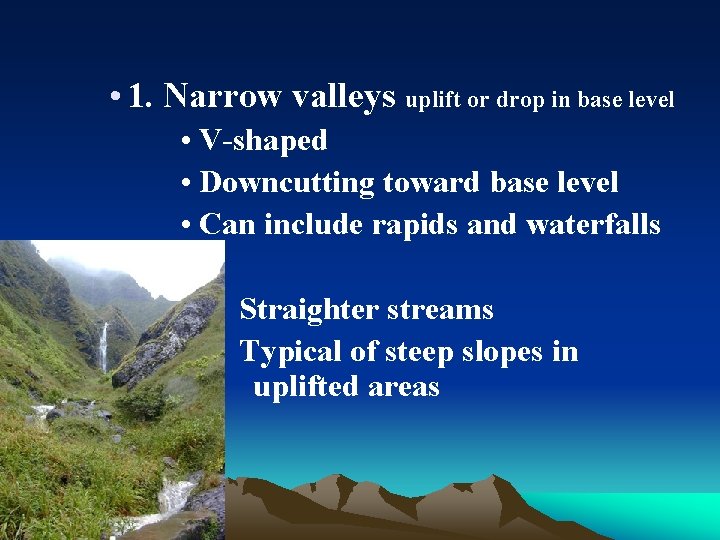
• 1. Narrow valleys uplift or drop in base level • V-shaped • Downcutting toward base level • Can include rapids and waterfalls • • Straighter streams Typical of steep slopes in uplifted areas
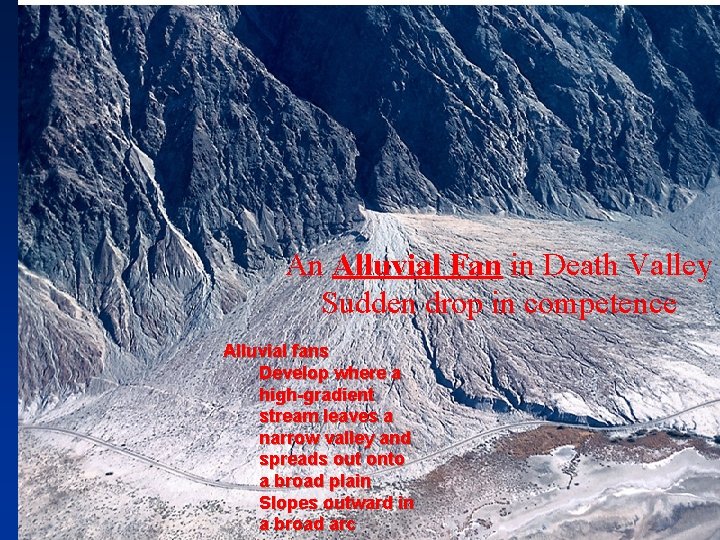
An Alluvial Fan in Death Valley Sudden drop in competence Alluvial fans Develop where a high-gradient stream leaves a narrow valley and spreads out onto a broad plain Slopes outward in a broad arc
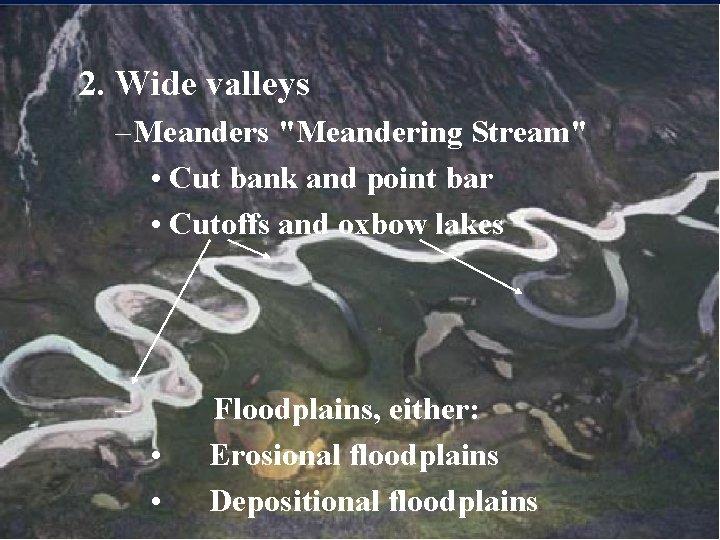
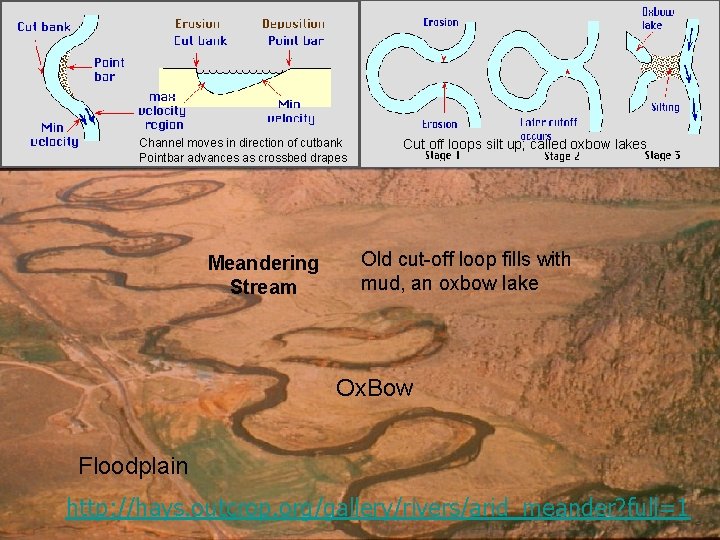
2. Wide valleys – Meanders "Meandering Stream" • Cut bank and point bar • Cutoffs and oxbow lakes – • • Floodplains, either: Erosional floodplains Depositional floodplains
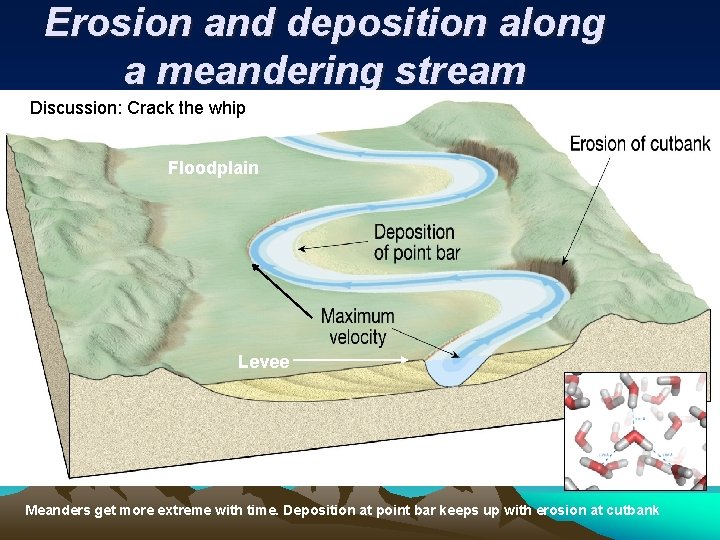
Erosion and deposition along a meandering stream Discussion: Crack the whip Floodplain Levee Meanders get more extreme with time. Deposition at point bar keeps up with erosion at cutbank
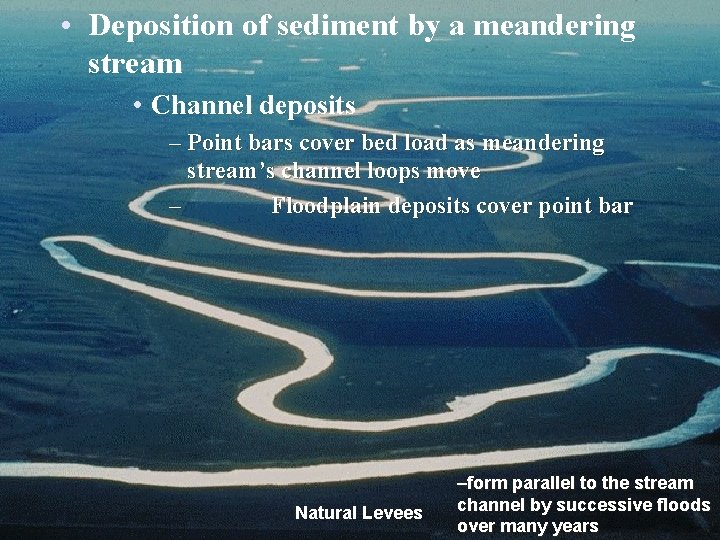
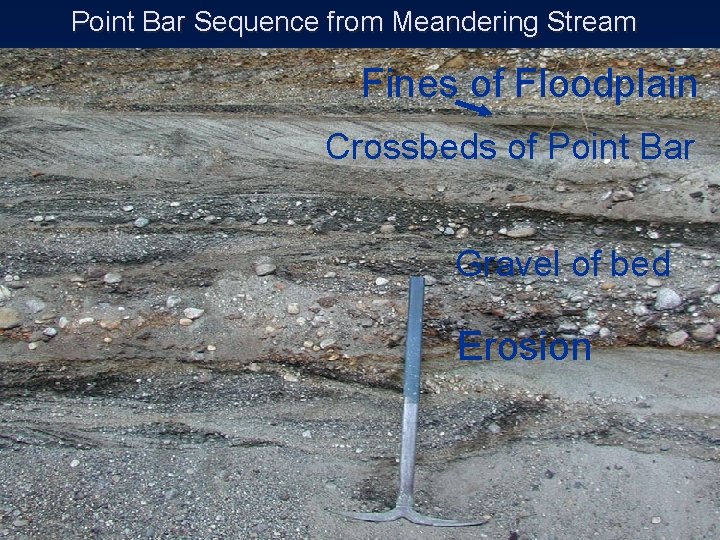
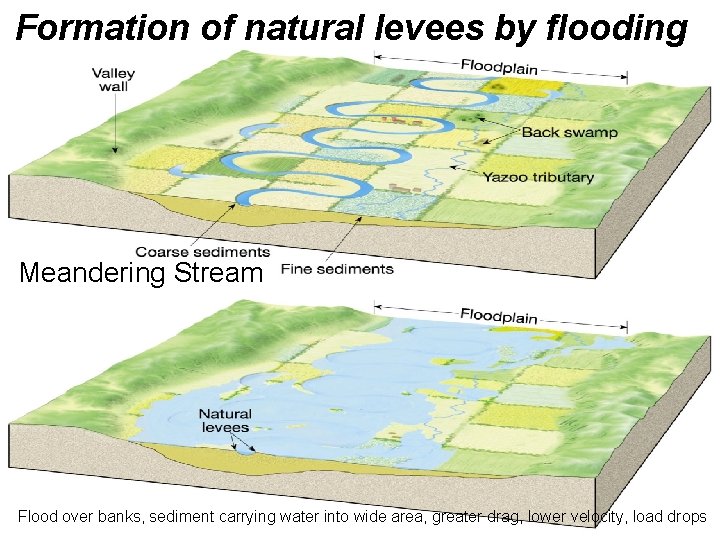
• Deposition of sediment by a meandering stream • Channel deposits – Point bars cover bed load as meandering stream’s channel loops move – Floodplain deposits cover point bar Natural Levees –form parallel to the stream channel by successive floods over many years
Channel moves in direction of cutbank Pointbar advances as crossbed drapes Meandering Stream Cut off loops silt up; called oxbow lakes Old cut-off loop fills with mud, an oxbow lake Ox. Bow Floodplain http: //hays. outcrop. org/gallery/rivers/arid_meander? full=1
Point Bar Sequence from Meandering Stream Fines of Floodplain Crossbeds of Point Bar Gravel of bed Erosion
Formation of natural levees by flooding Meandering Stream Flood over banks, sediment carrying water into wide area, greater drag, lower velocity, load drops
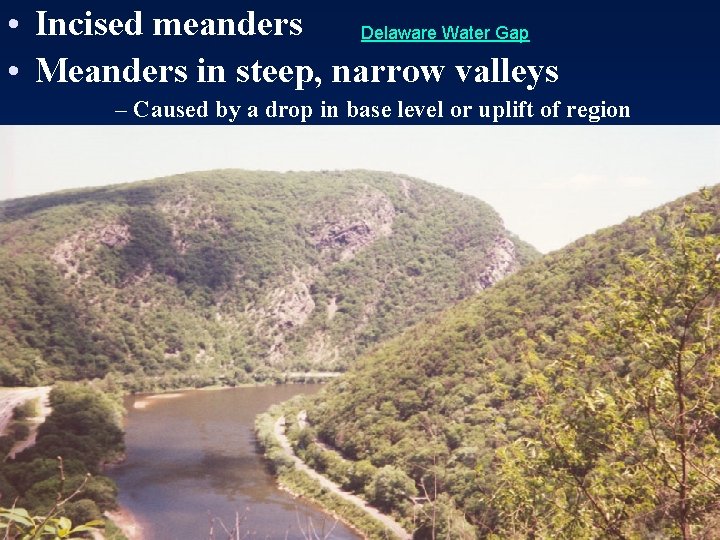
• Incised meanders Delaware Water Gap • Meanders in steep, narrow valleys – Caused by a drop in base level or uplift of region
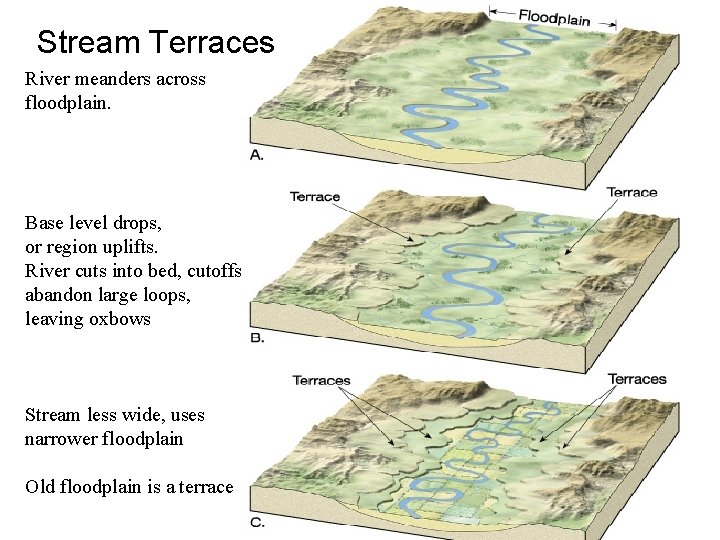
Stream Terraces River meanders across floodplain. Base level drops, or region uplifts. River cuts into bed, cutoffs abandon large loops, leaving oxbows Stream less wide, uses narrower floodplain Old floodplain is a terrace
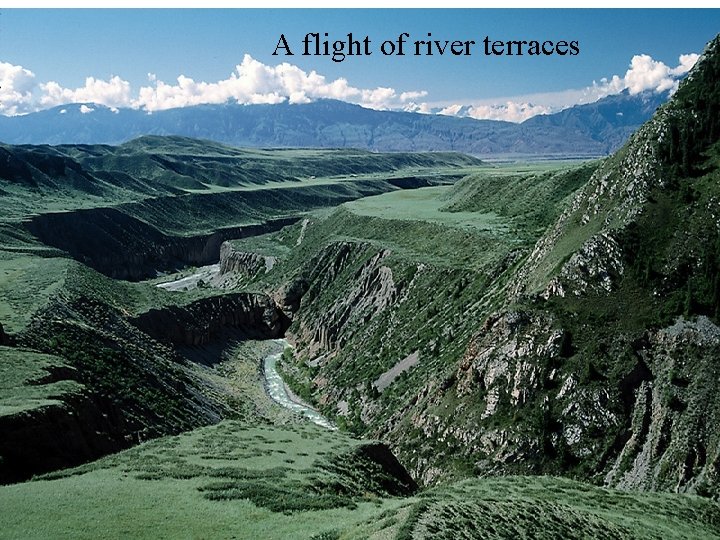
A flight of river terraces
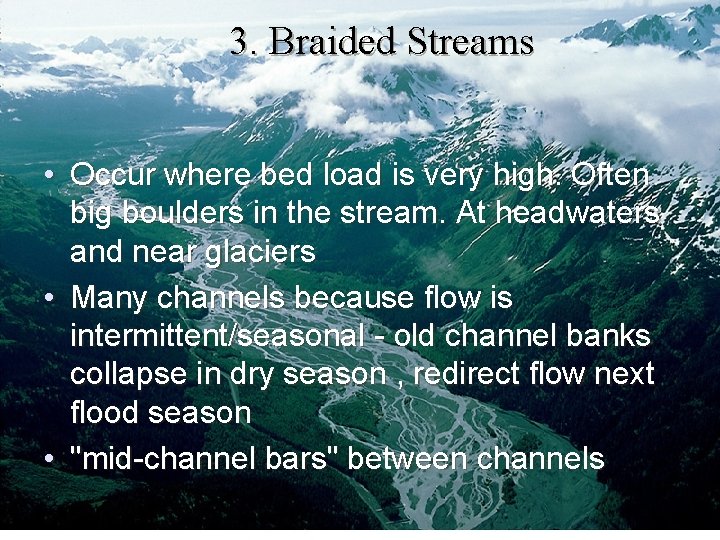
3. Braided Streams • Occur where bed load is very high. Often big boulders in the stream. At headwaters and near glaciers • Many channels because flow is intermittent/seasonal - old channel banks collapse in dry season , redirect flow next flood season • "mid-channel bars" between channels
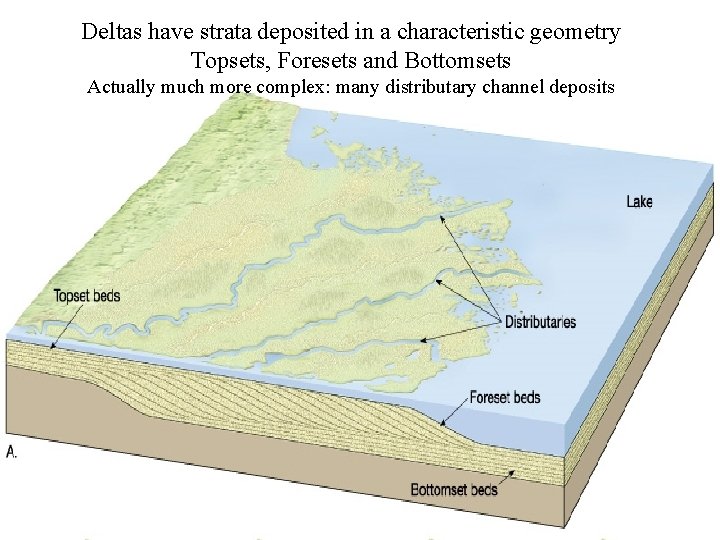
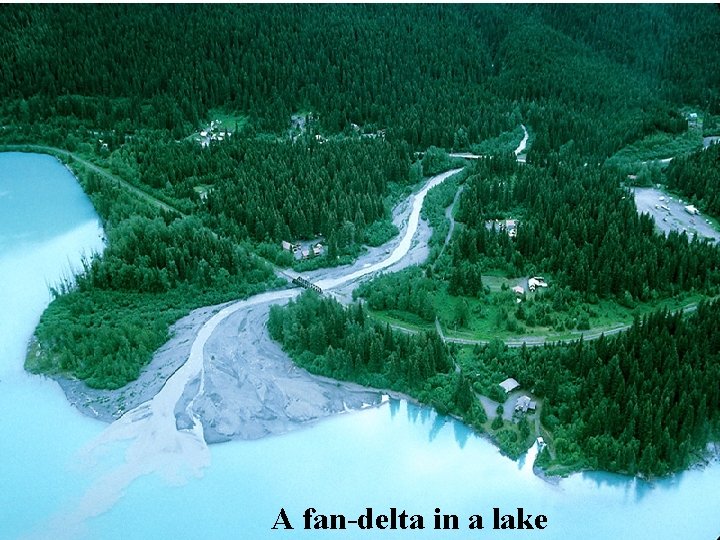
Deltas • Occur where stream hits slow water • Velocity, competence, bedload drop • Deposits build out into lake or sheltered sea, extending the length of the river • Consists of three types of beds Topset beds Foreset beds Bottomset beds
Deltas have strata deposited in a characteristic geometry Topsets, Foresets and Bottomsets Actually much more complex: many distributary channel deposits
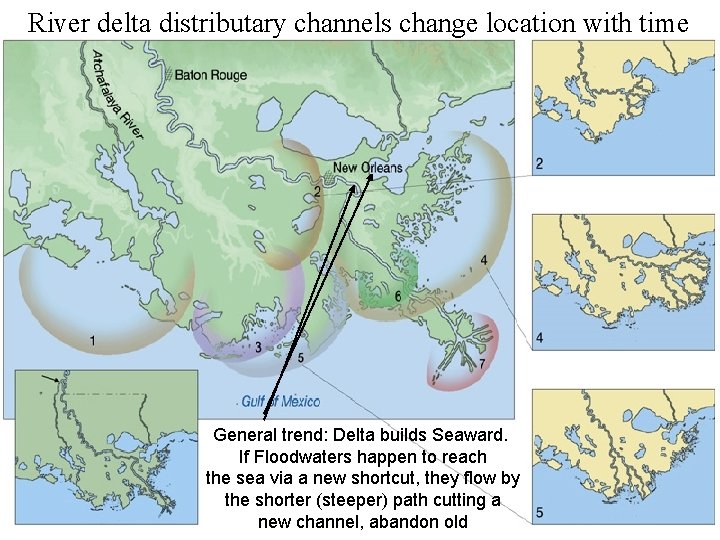
River delta distributary channels change location with time General trend: Delta builds Seaward. If Floodwaters happen to reach the sea via a new shortcut, they flow by the shorter (steeper) path cutting a new channel, abandon old
A fan-delta in a lake
Part 2 - Groundwater • water found in sediment, plus narrow fractures in bedrock • Groundwater is the largest usable reservoir of fresh water available to humans, but much more in glacier ice
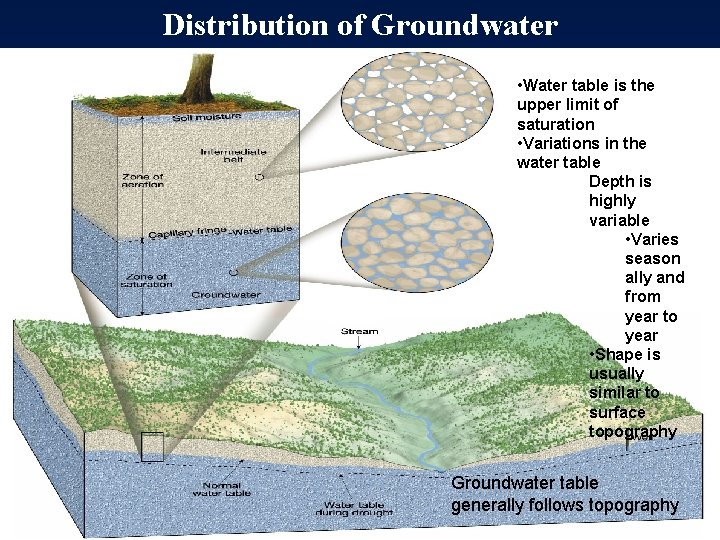
Distribution of Groundwater • Water table is the upper limit of saturation • Variations in the water table Depth is highly variable • Varies season ally and from year to year • Shape is usually similar to surface topography Groundwater table generally follows topography
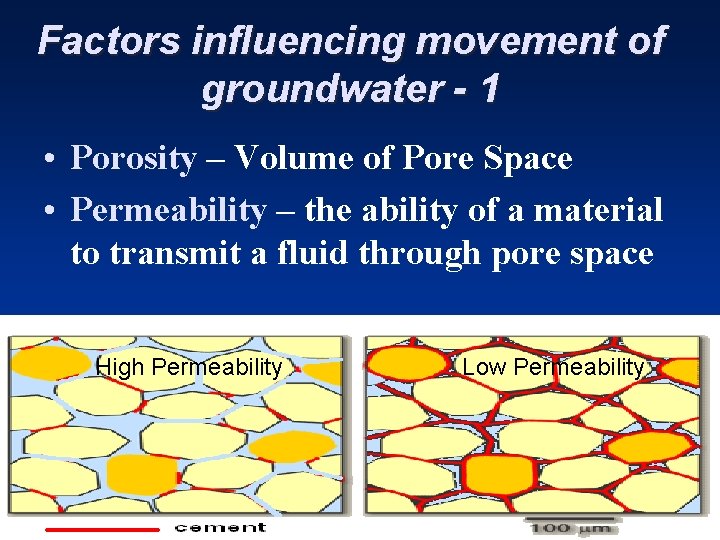
Factors influencing movement of groundwater - 1 • Porosity – Volume of Pore Space • Permeability – the ability of a material to transmit a fluid through pore space High Permeability Low Permeability
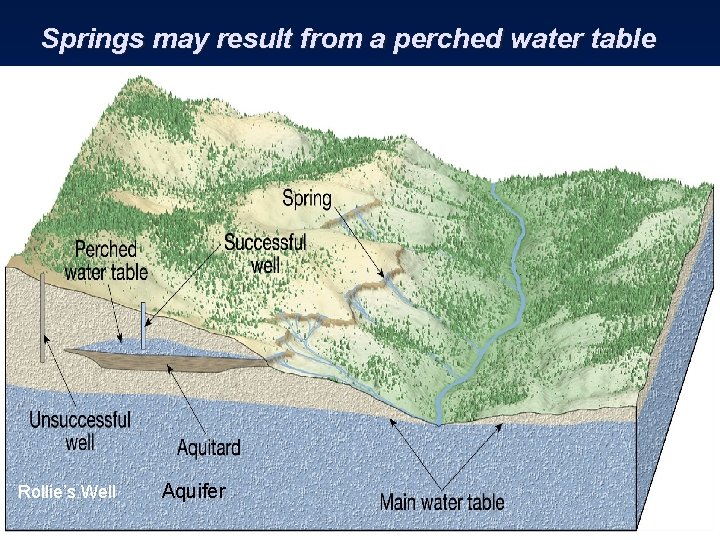
Factors influencing movement of groundwater - 2 • Aquifer – a permeable rock layer or a sediment that transmits groundwater freely (such as sands and gravels) • Aquitard – an impermeable layer that hinders water movement (such as mudstone - clay)
Springs may result from a perched water table Rollie’s Well Aquifer
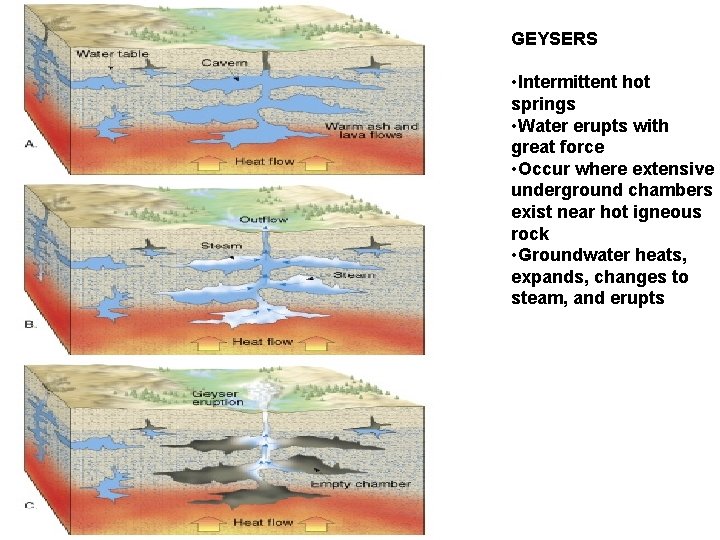
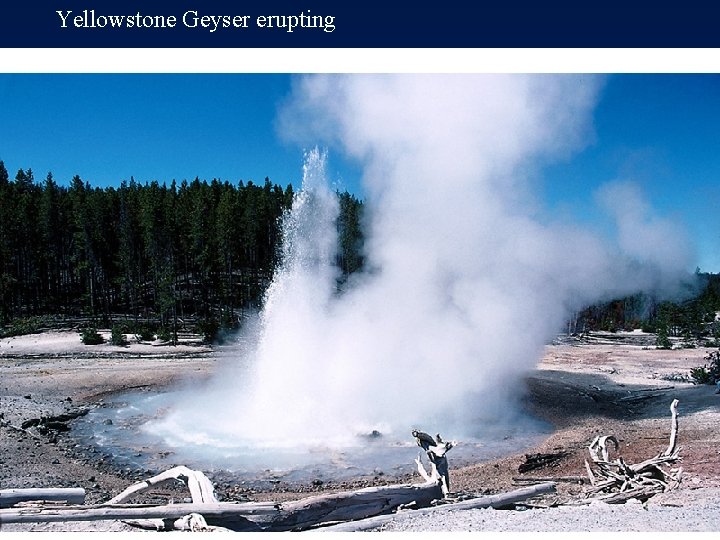
GEYSERS • Intermittent hot springs • Water erupts with great force • Occur where extensive underground chambers exist near hot igneous rock • Groundwater heats, expands, changes to steam, and erupts
Yellowstone Geyser erupting
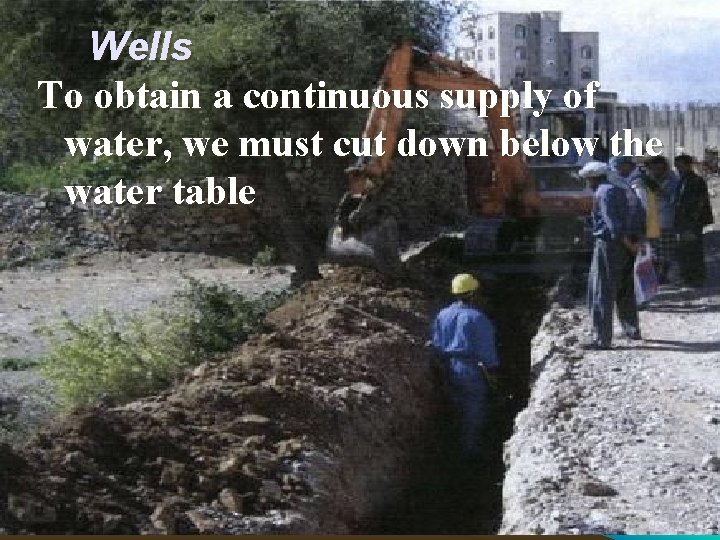
Wells To obtain a continuous supply of water, we must cut down below the water table
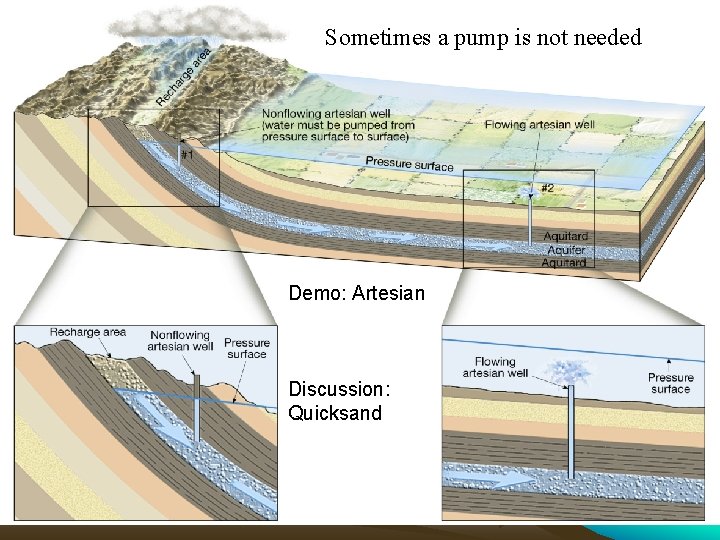
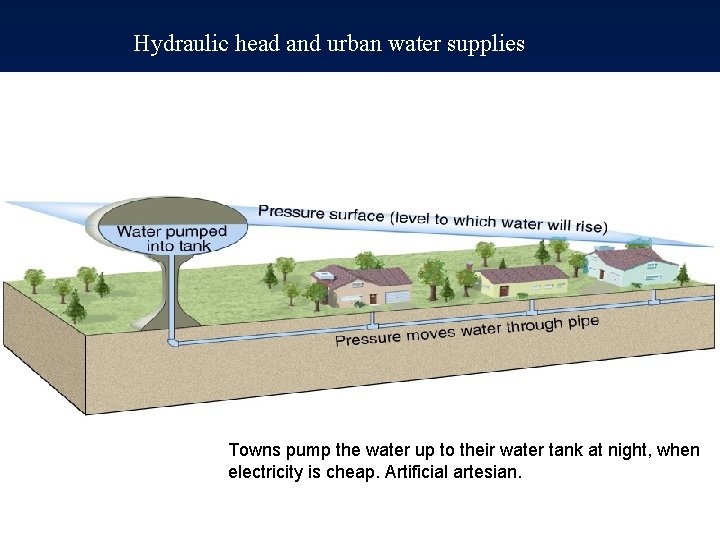
Sometimes a pump is not needed Demo: Artesian Discussion: Quicksand
Hydraulic head and urban water supplies Just. Towns like anpump artesian, the water savesup money to their water tank at night, when electricity is cheap. Artificial artesian.
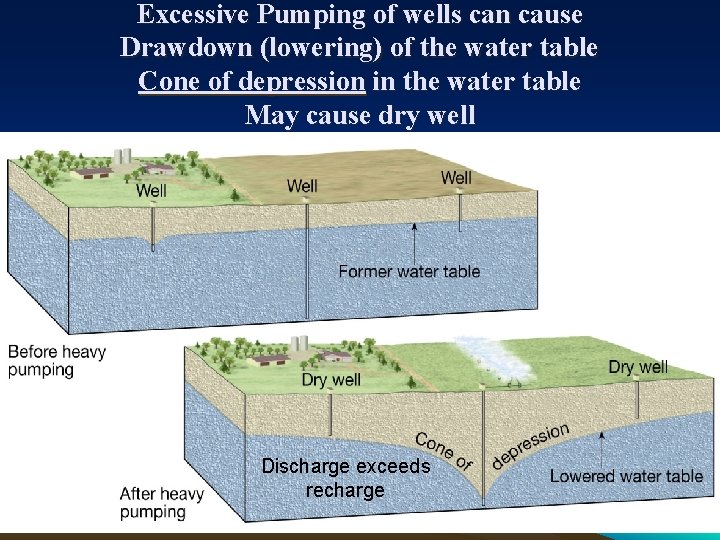
Excessive Pumping of wells can cause Drawdown (lowering) of the water table Cone of depression in the water table May cause dry well Discharge exceeds recharge
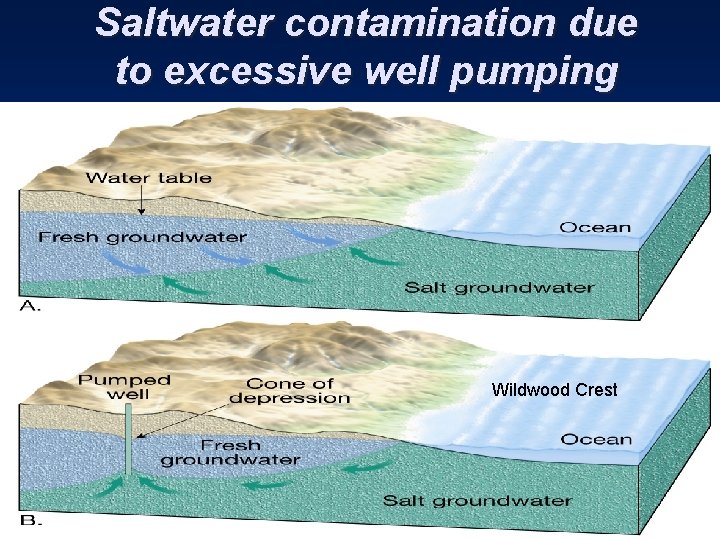
Saltwater contamination due to excessive well pumping Wildwood Crest
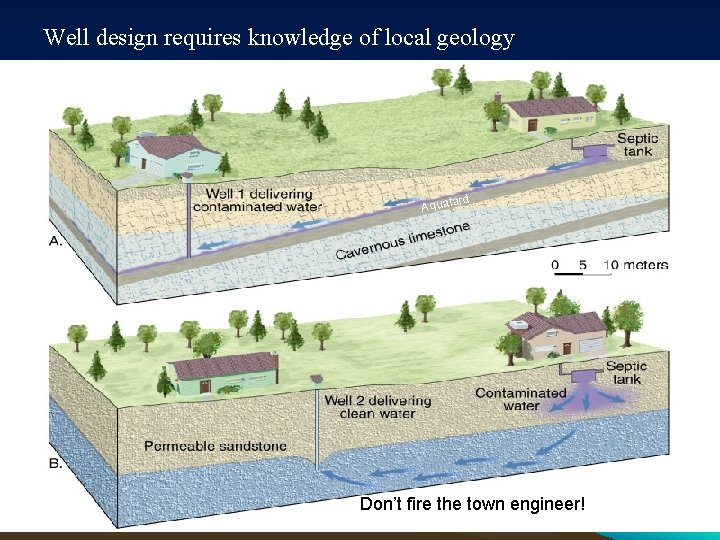
Well design requires knowledge of local geology rd Aquata Don’t fire the town engineer!
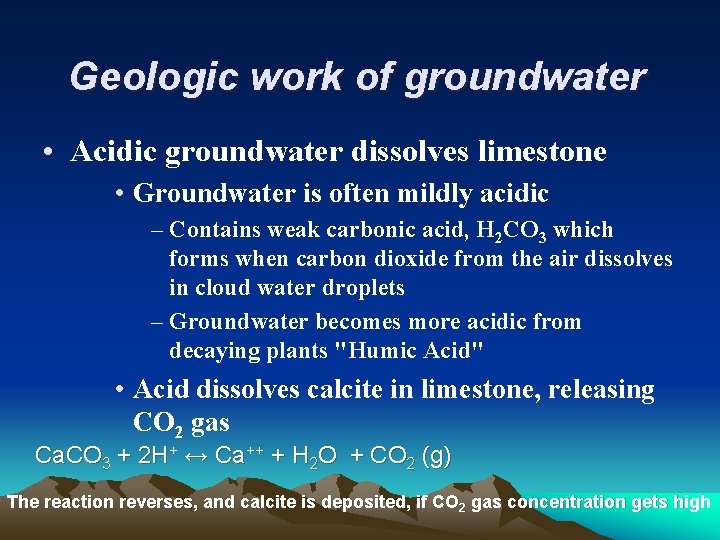
Geologic work of groundwater • Acidic groundwater dissolves limestone • Groundwater is often mildly acidic – Contains weak carbonic acid, H 2 CO 3 which forms when carbon dioxide from the air dissolves in cloud water droplets – Groundwater becomes more acidic from decaying plants "Humic Acid" • Acid dissolves calcite in limestone, releasing CO 2 gas Ca. CO 3 + 2 H+ ↔ Ca++ + H 2 O + CO 2 (g) The reaction reverses, and calcite is deposited, if CO 2 gas concentration gets high
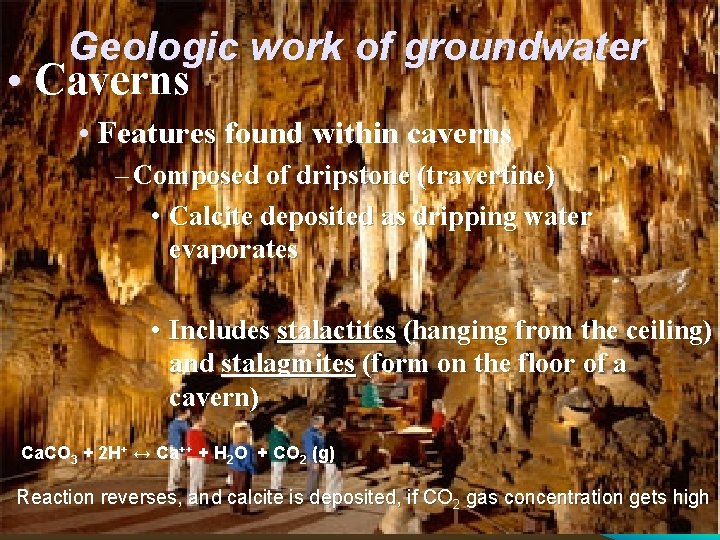
Geologic work of groundwater • Caverns • Features found within caverns – Composed of dripstone (travertine) • Calcite deposited as dripping water evaporates • Includes stalactites (hanging from the ceiling) and stalagmites (form on the floor of a cavern) Ca. CO 3 + 2 H+ ↔ Ca++ + H 2 O + CO 2 (g) Reaction reverses, and calcite is deposited, if CO 2 gas concentration gets high
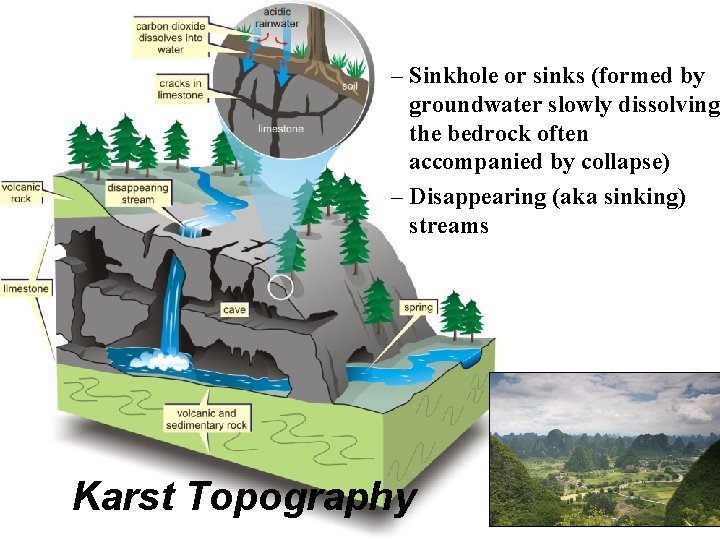
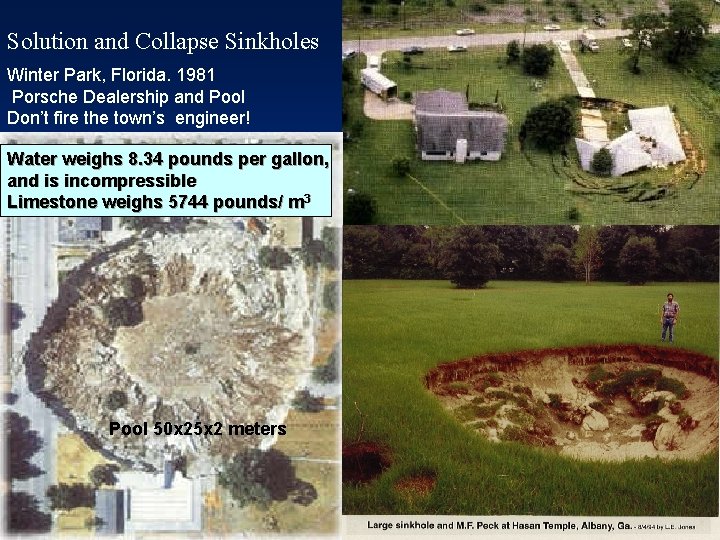
– Sinkhole or sinks (formed by groundwater slowly dissolving the bedrock often accompanied by collapse) – Disappearing (aka sinking) streams Karst Topography
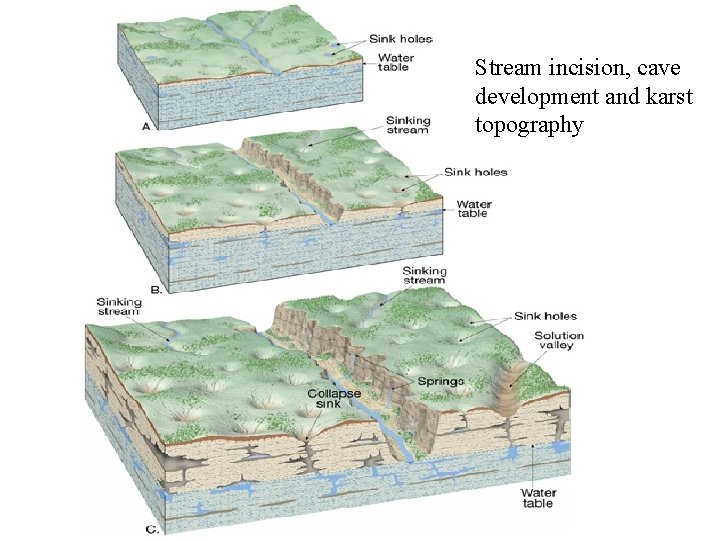
Stream incision, cave development and karst topography
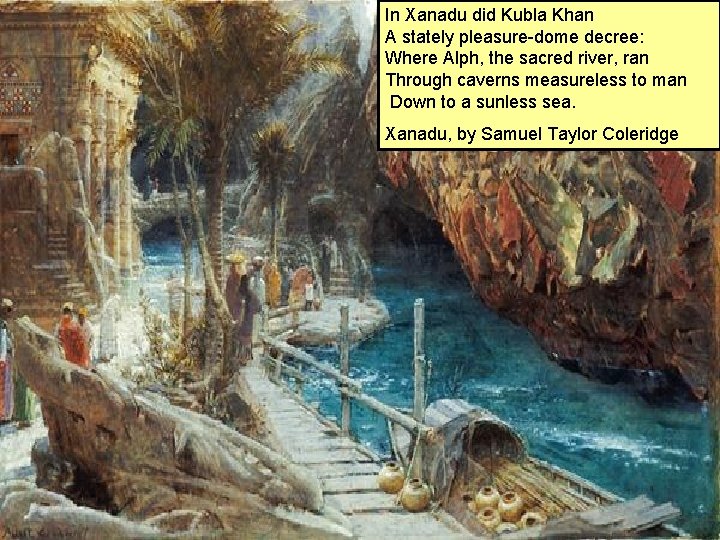
In Xanadu did Kubla Khan A stately pleasure-dome decree: Where Alph, the sacred river, ran Through caverns measureless to man Down to a sunless sea. Xanadu, by Samuel Taylor Coleridge
Solution and Collapse Sinkholes Winter Park, Florida. 1981 Porsche Dealership and Pool Don’t fire the town’s engineer! Water weighs 8. 34 pounds per gallon, and is incompressible Limestone weighs 5744 pounds/ m 3 Pool 50 x 25 x 2 meters