
Stream Classification Stream Classification What factors affect stream


- Slides: 110
Stream Classification
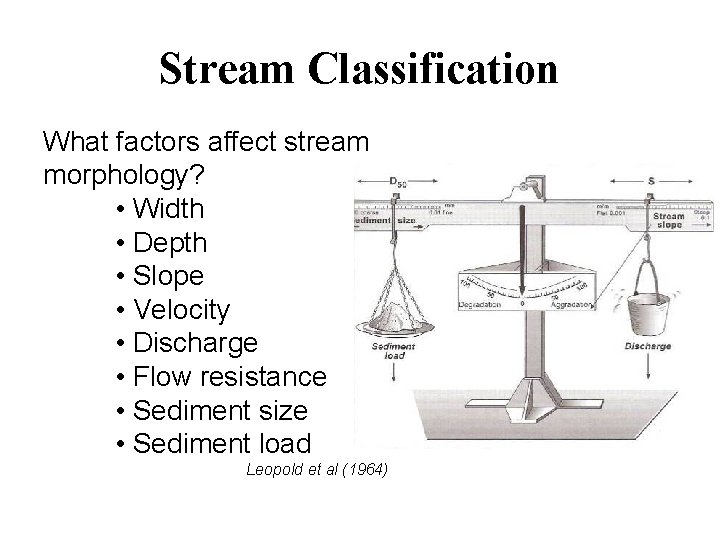
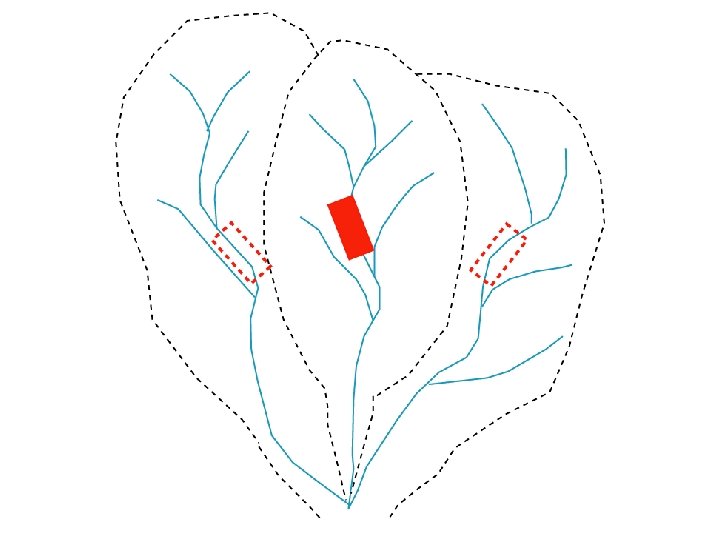
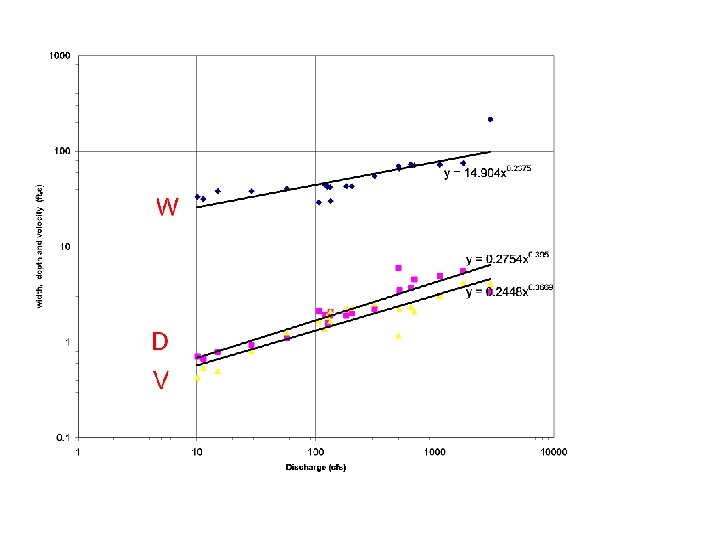
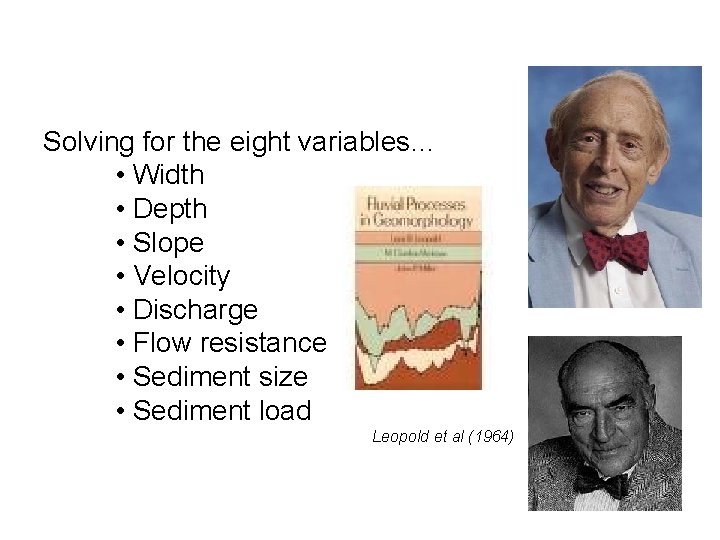
Stream Classification What factors affect stream morphology? • Width • Depth • Slope • Velocity • Discharge • Flow resistance • Sediment size • Sediment load Leopold et al (1964)
Why classify?
Why classify? • • • Communication Tool Describe Existing Conditions & Trends Describe Restoration Goals Stream Classification Research Tool
Classification Schemes • Wolman, Leopold and Miller/Schumm Method • Montgomery and Buffington Method • Rosgen Method
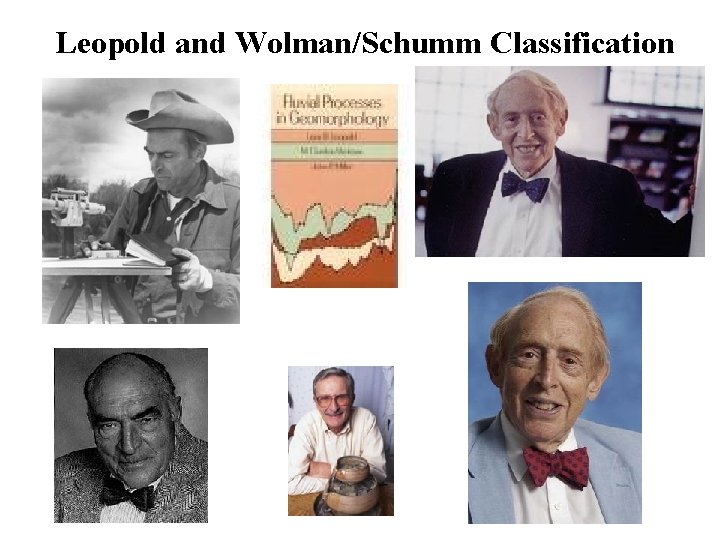
Leopold and Wolman/Schumm Classification
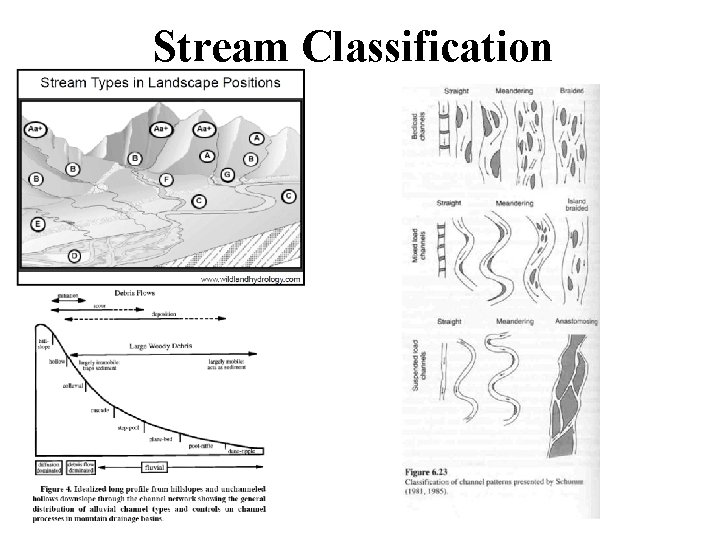
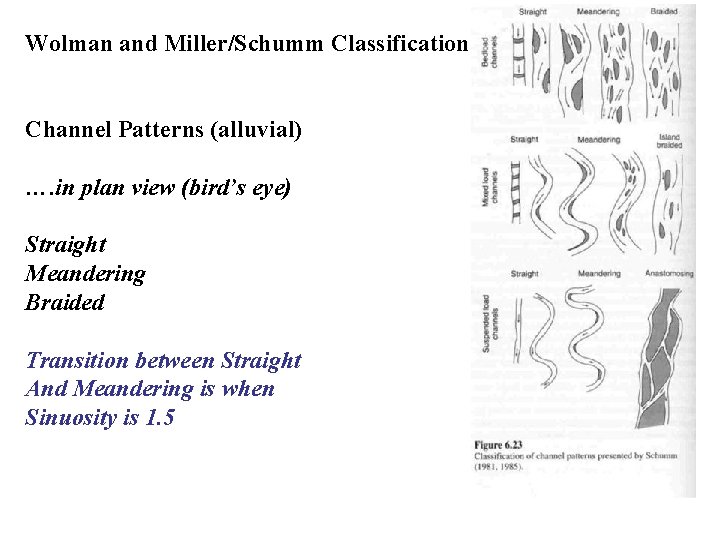
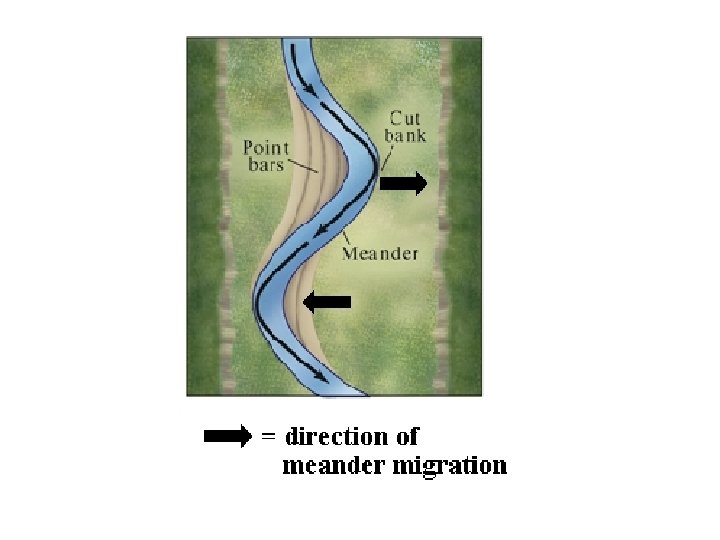
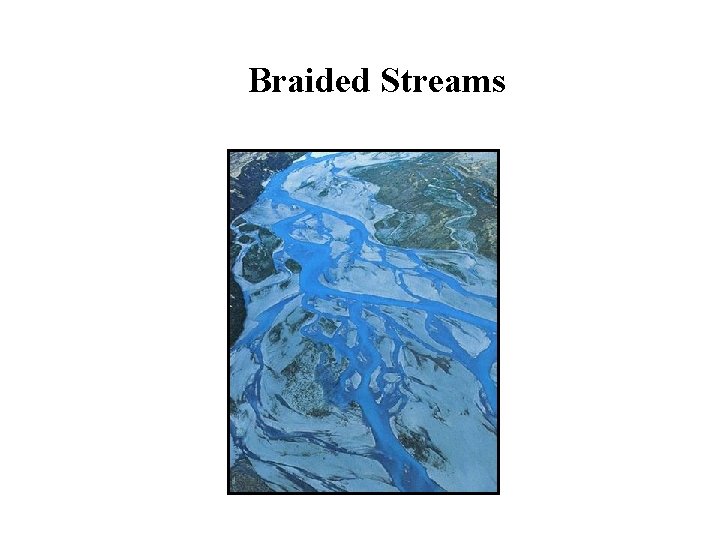
Wolman and Miller/Schumm Classification Channel Patterns (alluvial) …. in plan view (bird’s eye) Straight Meandering Braided Transition between Straight And Meandering is when Sinuosity is 1. 5
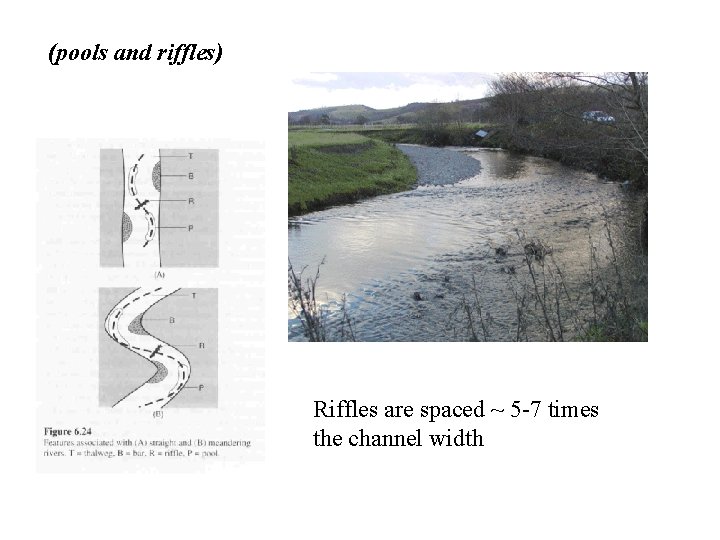
(pools and riffles) Riffles are spaced ~ 5 -7 times the channel width
Montgomery and Buffington Method
Montgomery and Buffington Method “Process-Based Approach”
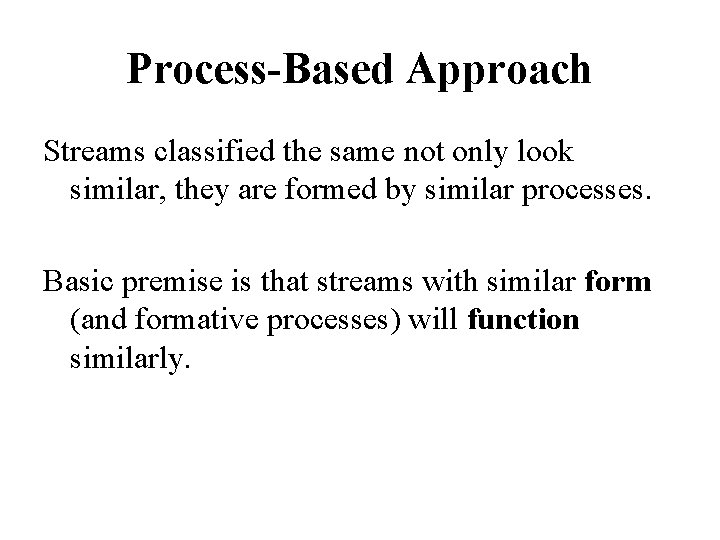
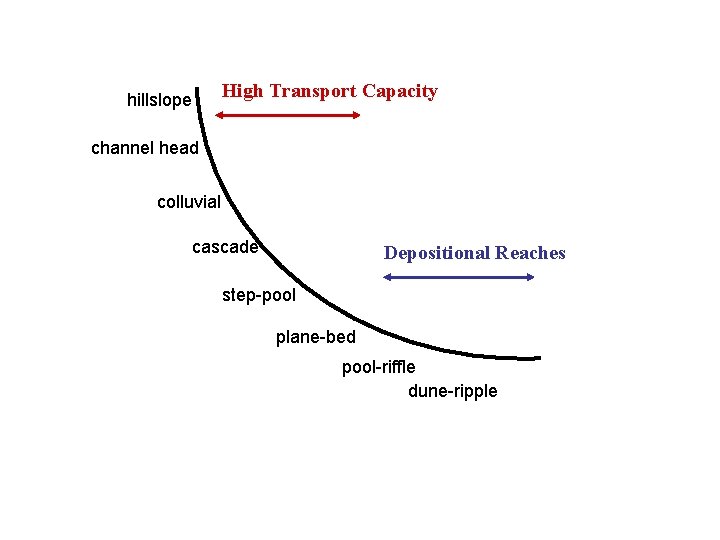
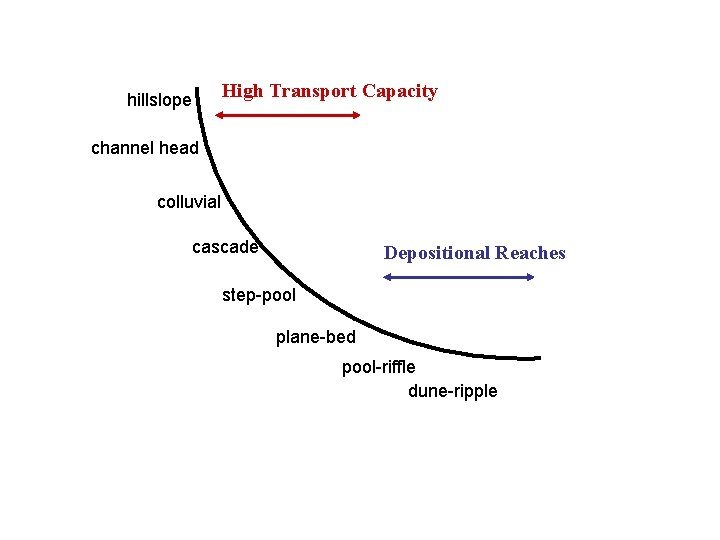
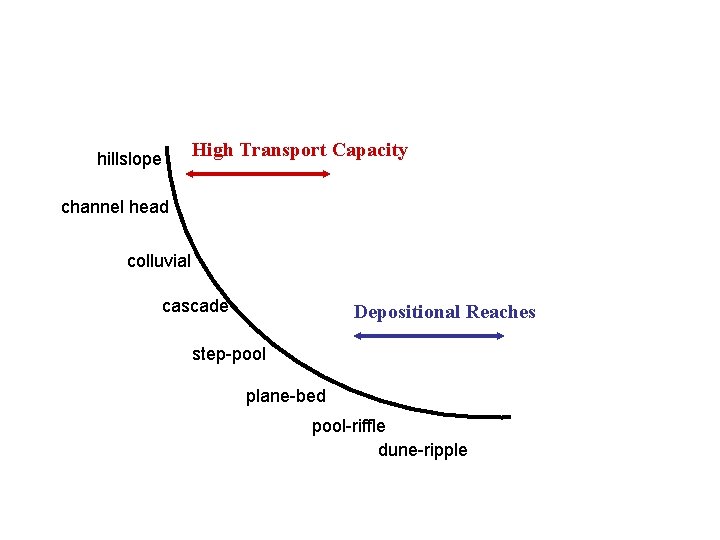
Process-Based Approach Streams classified the same not only look similar, they are formed by similar processes. Basic premise is that streams with similar form (and formative processes) will function similarly.
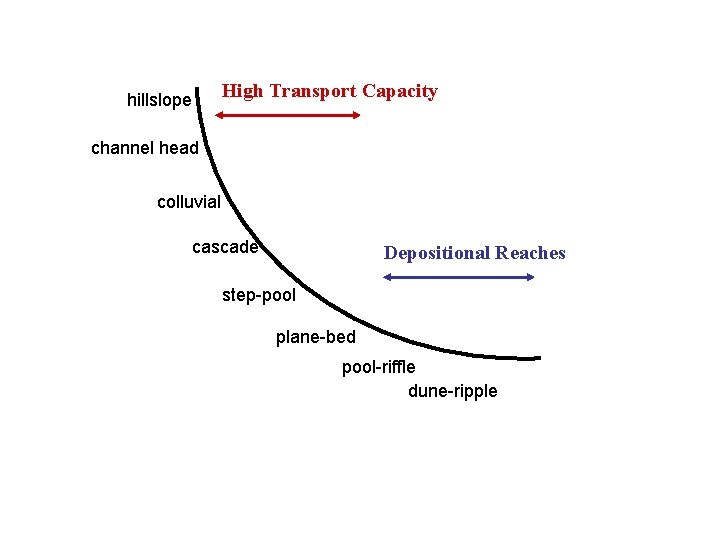
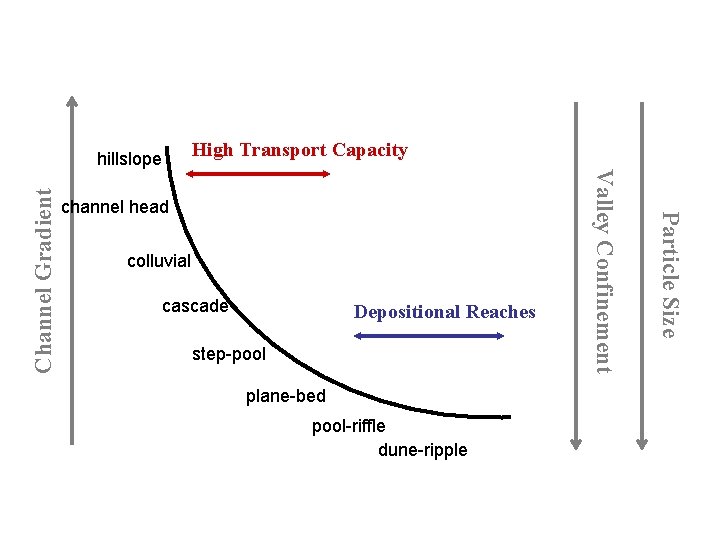
hillslope High Transport Capacity channel head colluvial cascade Depositional Reaches step-pool plane-bed pool-riffle dune-ripple Montgomery and Buffington, 1997
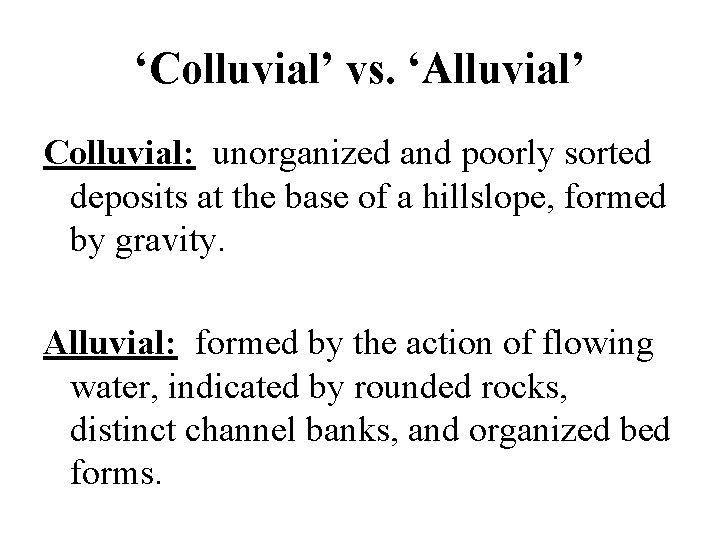
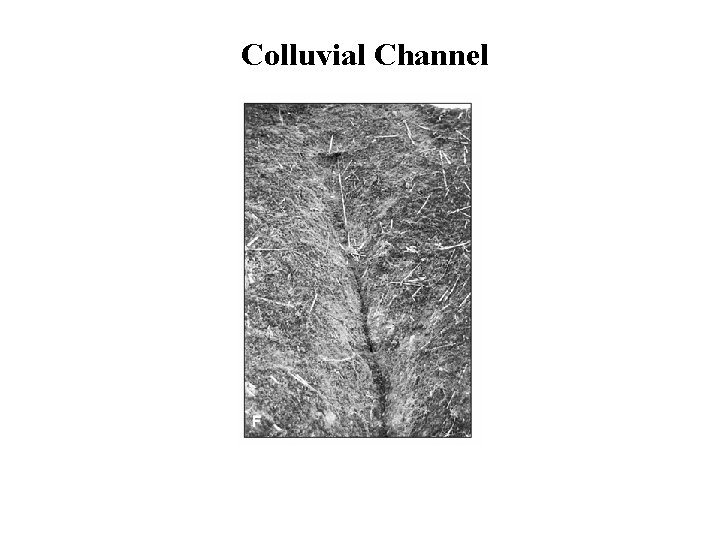
‘Colluvial’ vs. ‘Alluvial’ Colluvial: unorganized and poorly sorted deposits at the base of a hillslope, formed by gravity. Alluvial: formed by the action of flowing water, indicated by rounded rocks, distinct channel banks, and organized bed forms.
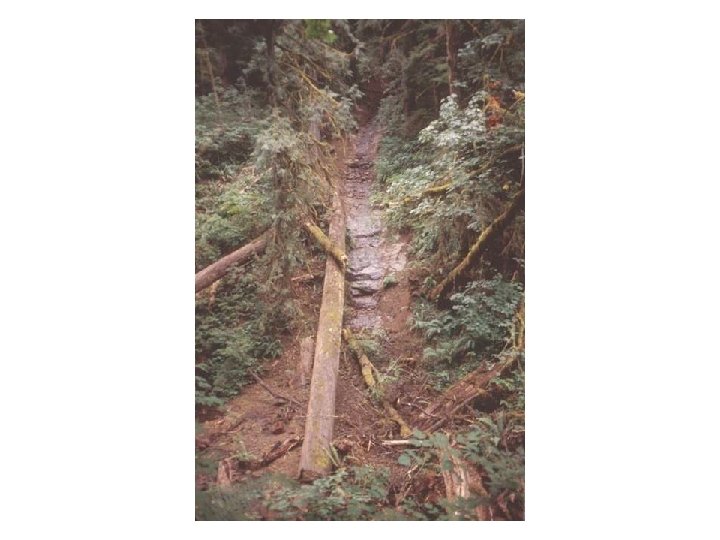
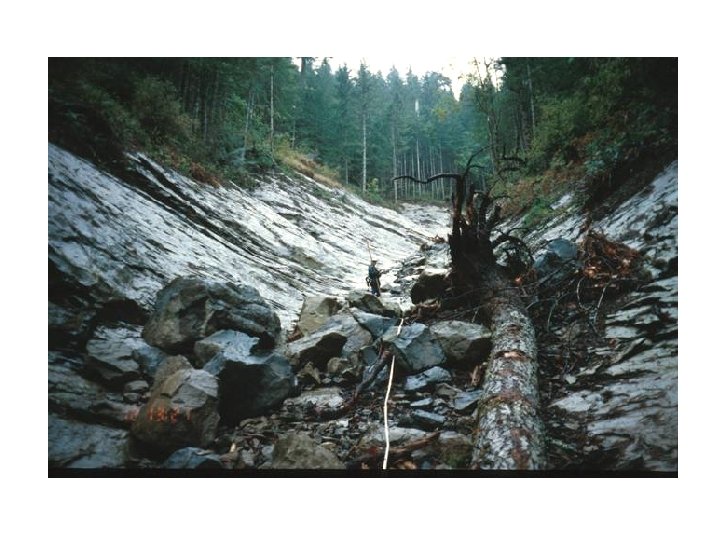
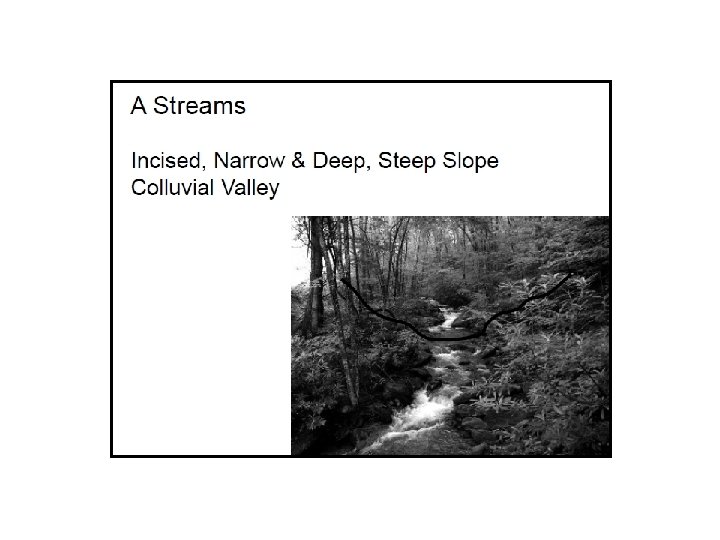
Colluvial Channel
Why are colluvial channels important for alluvial river ecosystems?
Why are colluvial channels important for alluvial river ecosystems? • Comprise >80% of the channel network • Major pathway for the routing of water, sediment, organic matter, and thermal energy to downstream areas • Unique and/or predator-free habitats for numerous amphibians and invertebrates
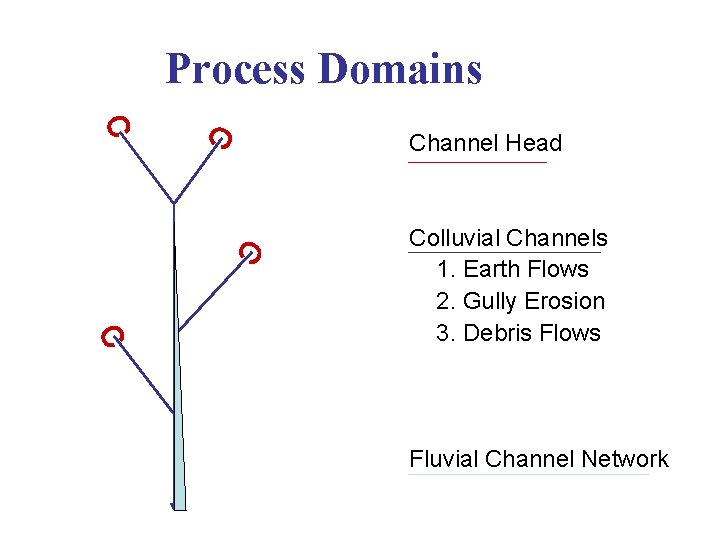
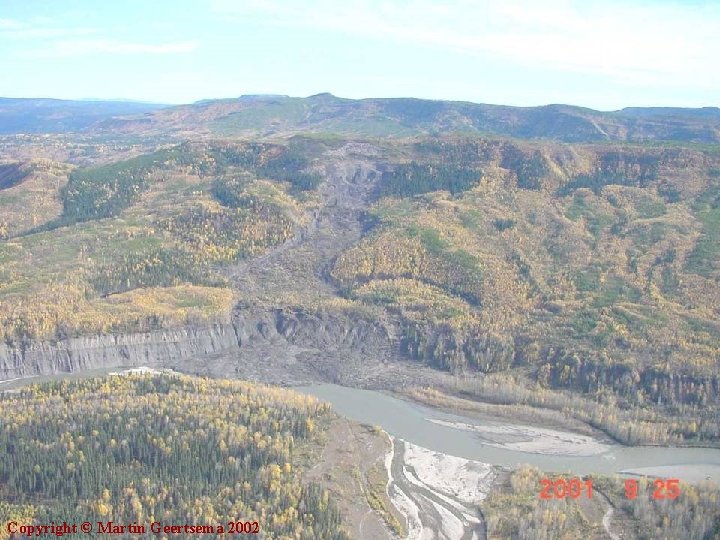
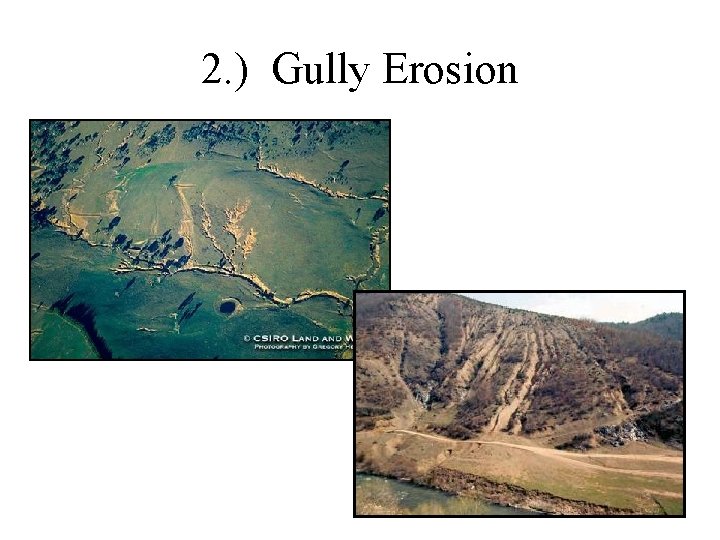
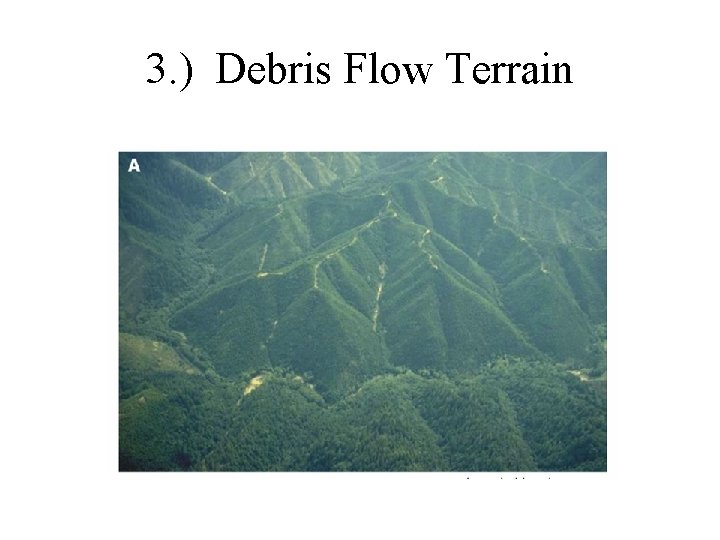
Process Domains C C Channel Head C C Colluvial Channels 1. Earth Flows 2. Gully Erosion 3. Debris Flows Fluvial Channel Network
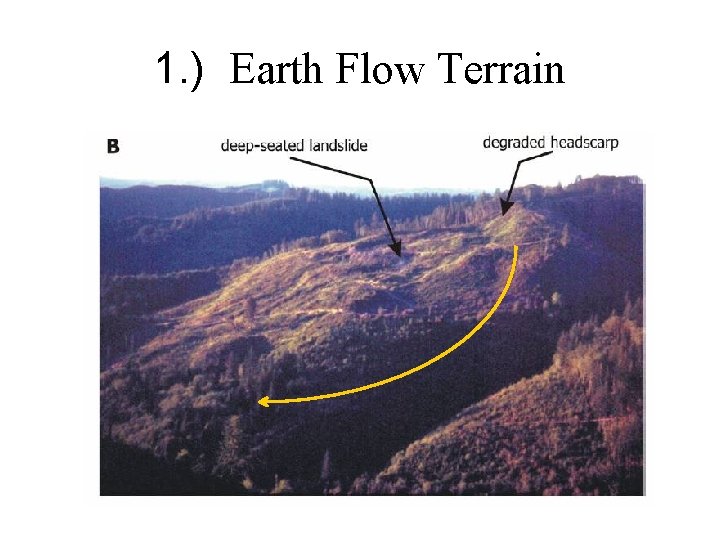
1. ) Earth Flow Terrain
Copyright © Martin Geertsema 2002
2. ) Gully Erosion
3. ) Debris Flow Terrain
hillslope High Transport Capacity channel head colluvial cascade Depositional Reaches step-pool plane-bed pool-riffle dune-ripple Montgomery and Buffington, 1997
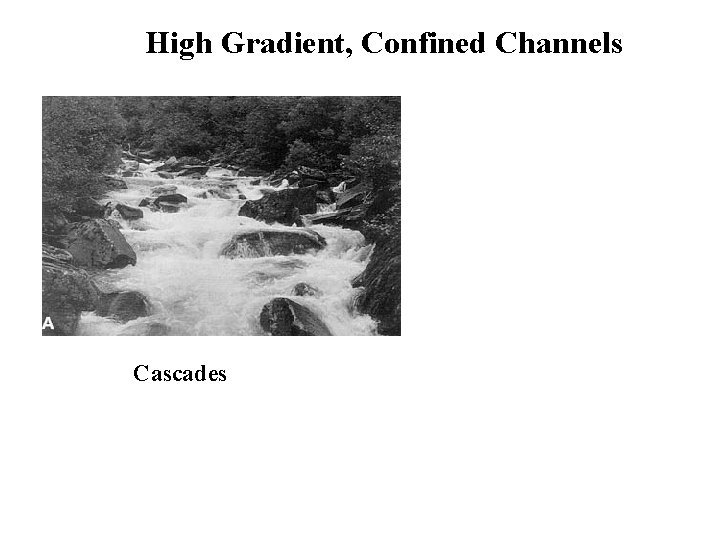
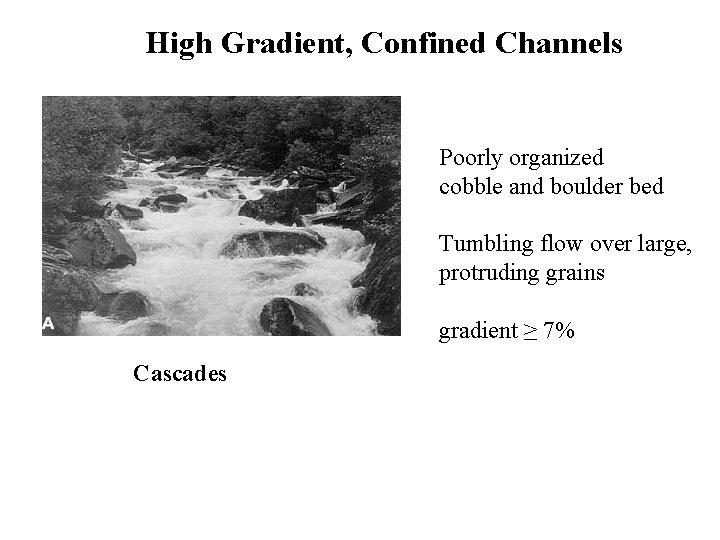
High Gradient, Confined Channels Cascades
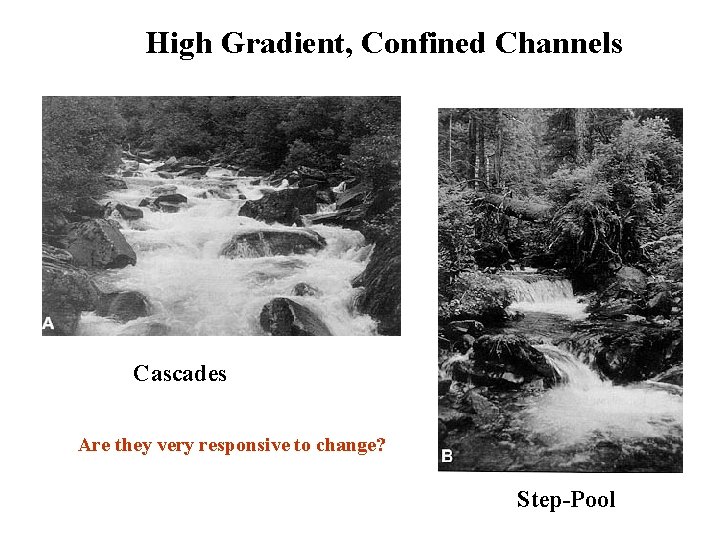
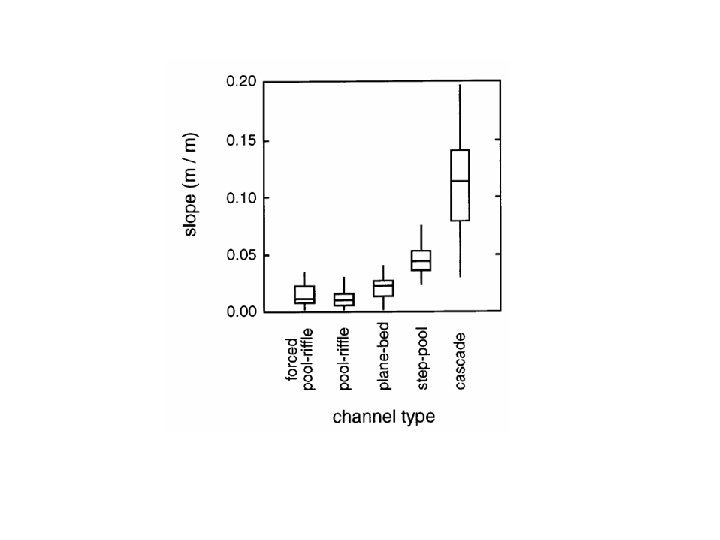
High Gradient, Confined Channels Poorly organized cobble and boulder bed Tumbling flow over large, protruding grains gradient ≥ 7% Cascades
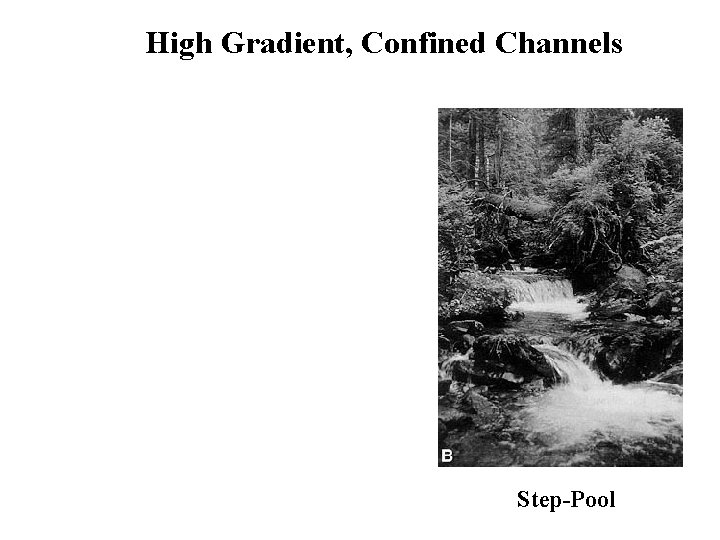
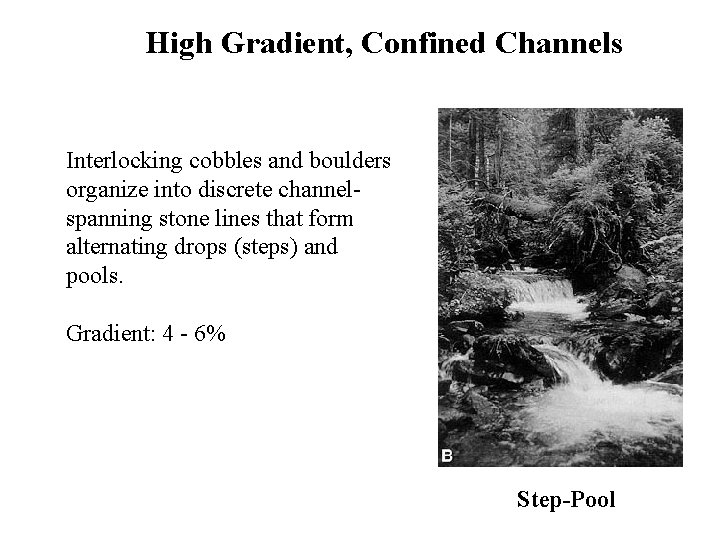
High Gradient, Confined Channels Step-Pool
High Gradient, Confined Channels Interlocking cobbles and boulders organize into discrete channelspanning stone lines that form alternating drops (steps) and pools. Gradient: 4 - 6% Step-Pool
High Gradient, Confined Channels Cascades Are they very responsive to change? Step-Pool
hillslope High Transport Capacity channel head colluvial cascade Depositional Reaches step-pool plane-bed pool-riffle dune-ripple Montgomery and Buffington, 1997
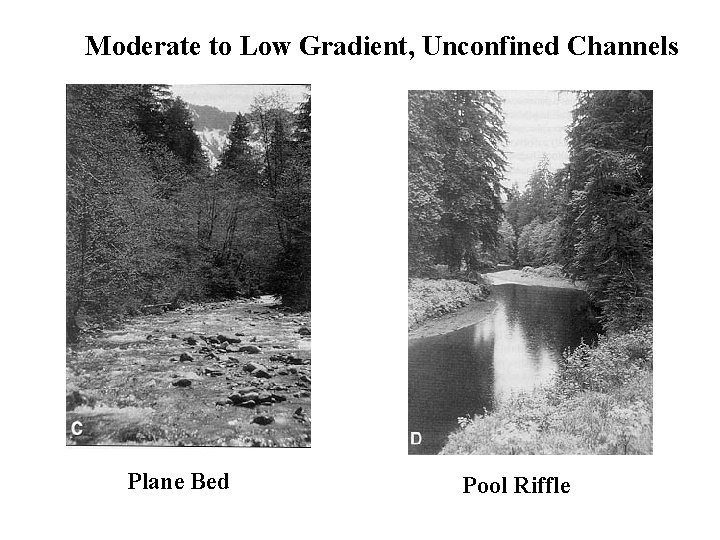
Moderate to Low Gradient, Unconfined Channels Plane Bed Pool Riffle
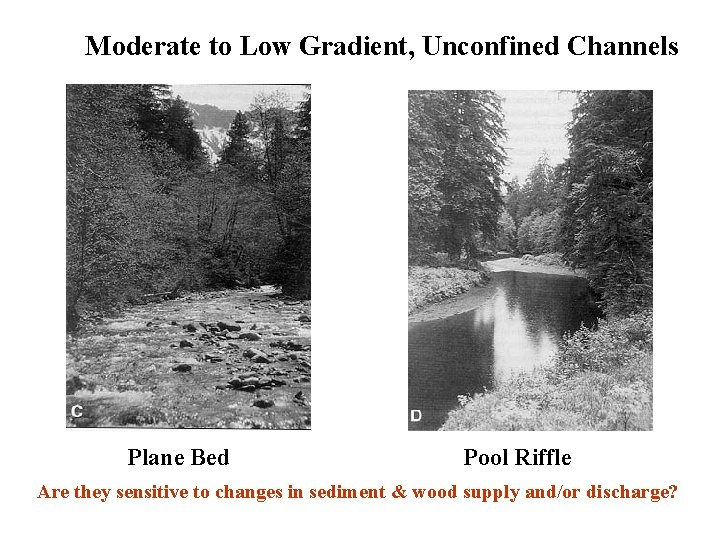
Moderate to Low Gradient, Unconfined Channels Plane Bed Pool Riffle Are they sensitive to changes in sediment & wood supply and/or discharge? How / where do organisms seek refuge during floods?
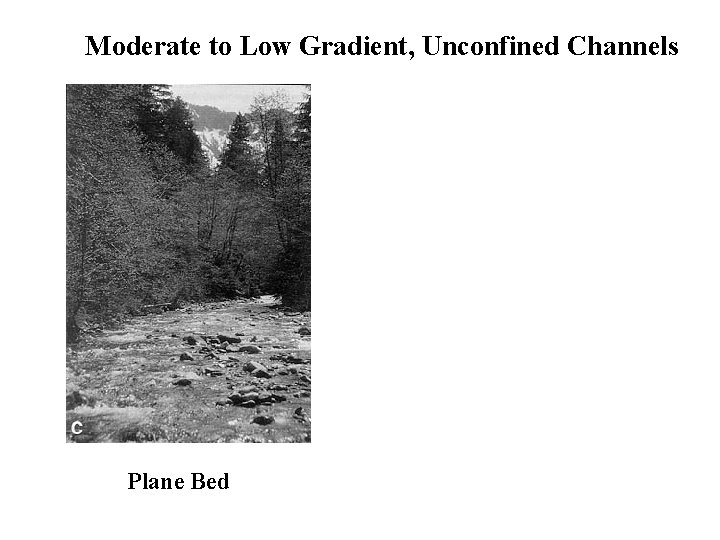
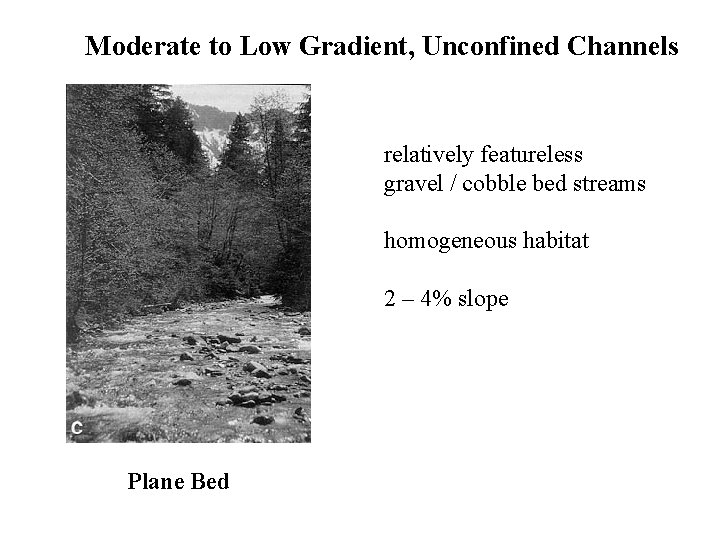
Moderate to Low Gradient, Unconfined Channels Plane Bed
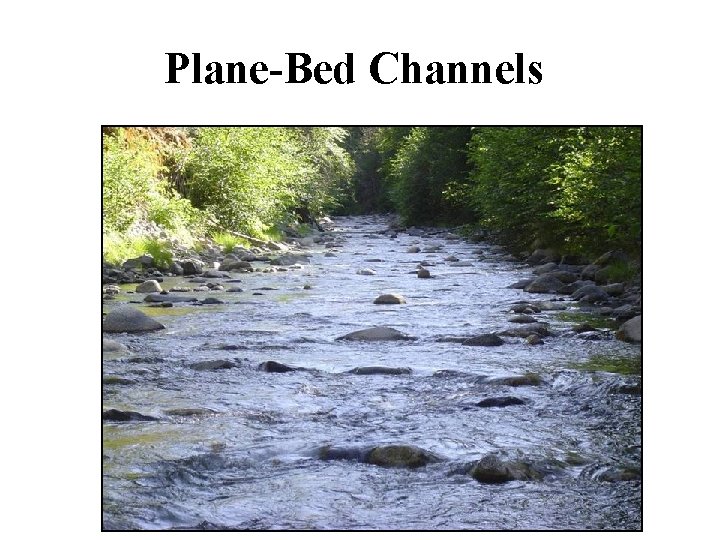
Moderate to Low Gradient, Unconfined Channels relatively featureless gravel / cobble bed streams homogeneous habitat 2 – 4% slope Plane Bed
Plane-Bed Channels
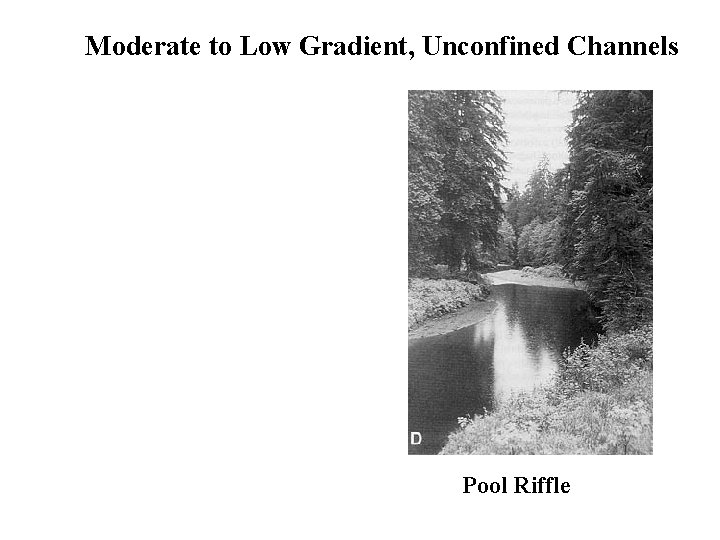
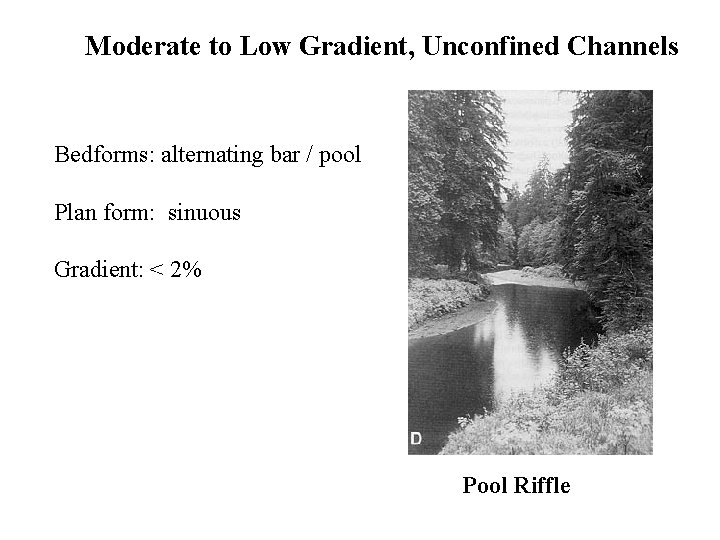
Moderate to Low Gradient, Unconfined Channels Pool Riffle
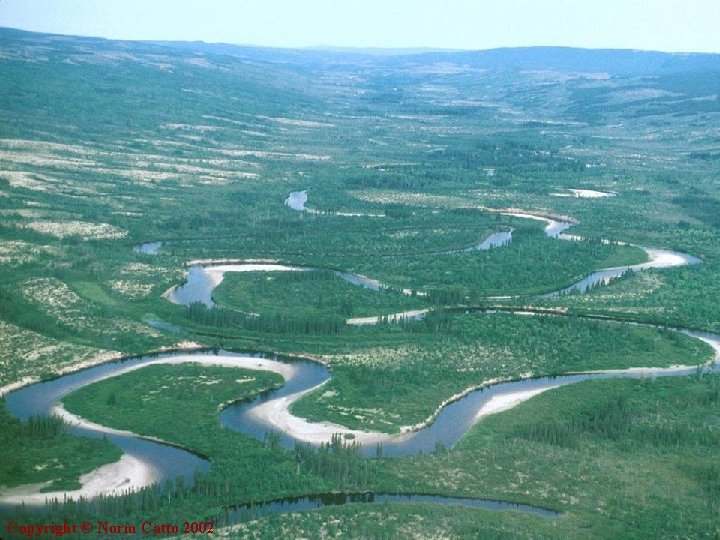
Moderate to Low Gradient, Unconfined Channels Bedforms: alternating bar / pool Plan form: sinuous Gradient: < 2% Pool Riffle
Copyright © Norm Catto 2002
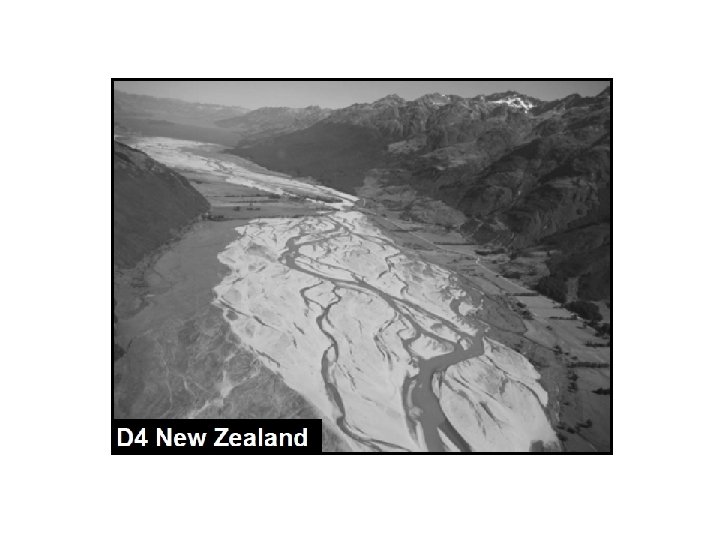
Braided Streams
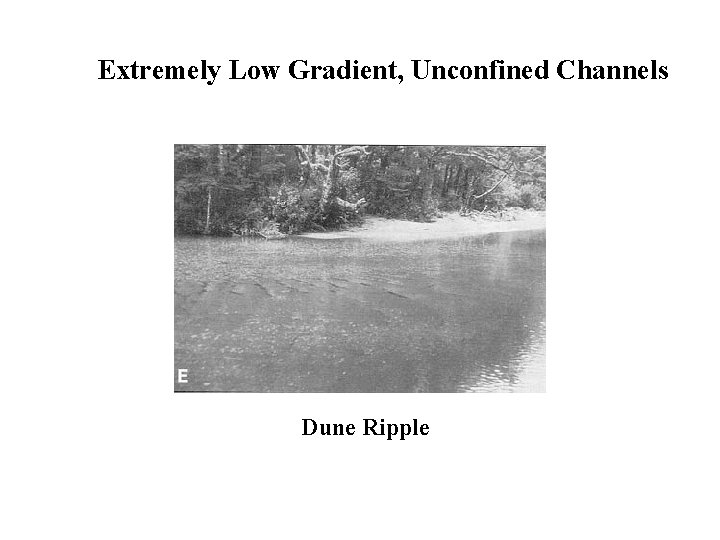
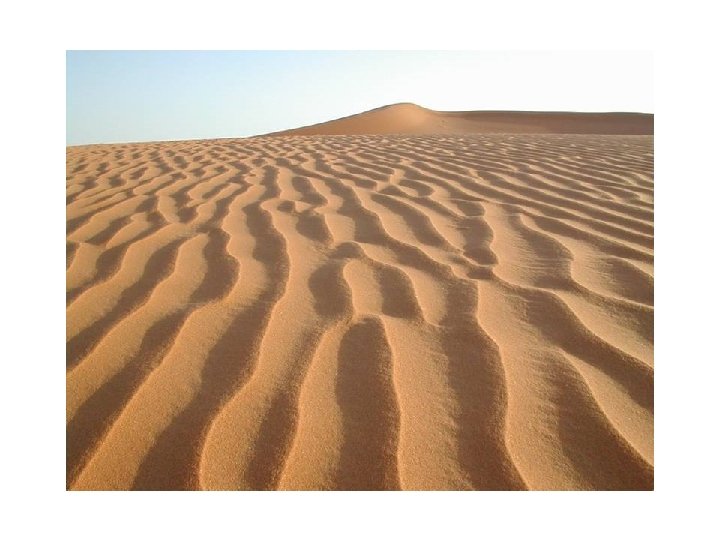
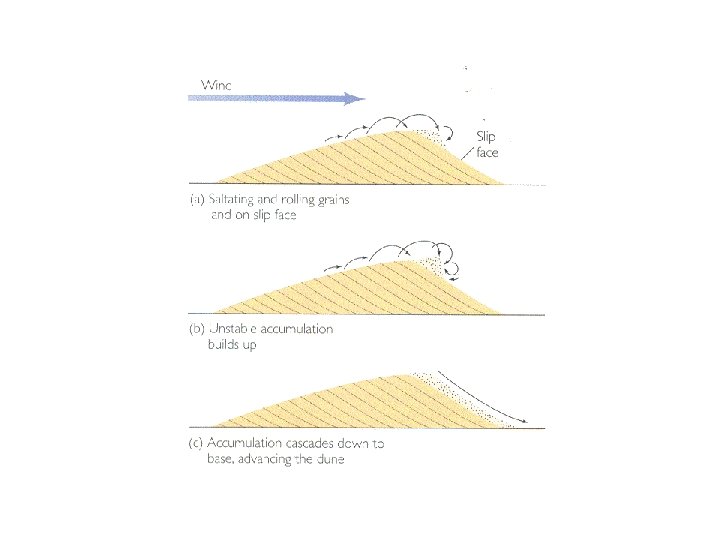
Extremely Low Gradient, Unconfined Channels Dune Ripple
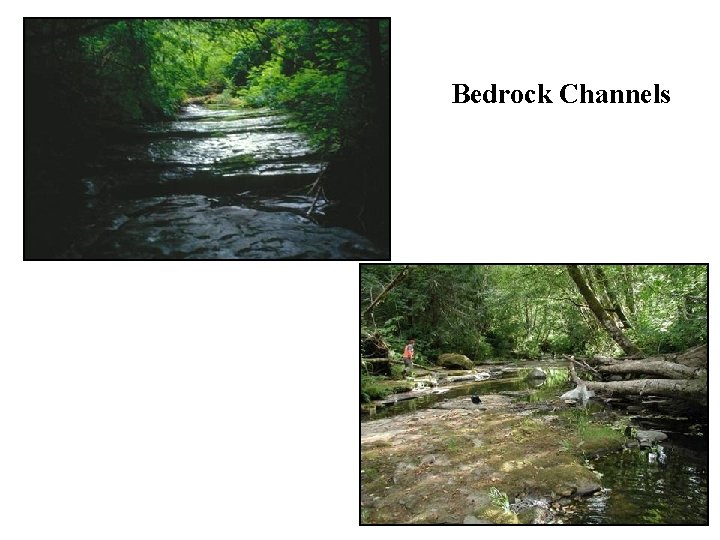
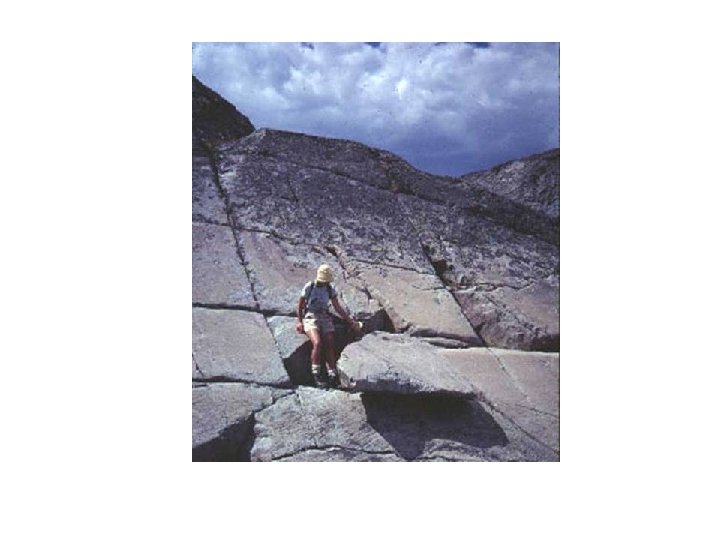
Bedrock Channels
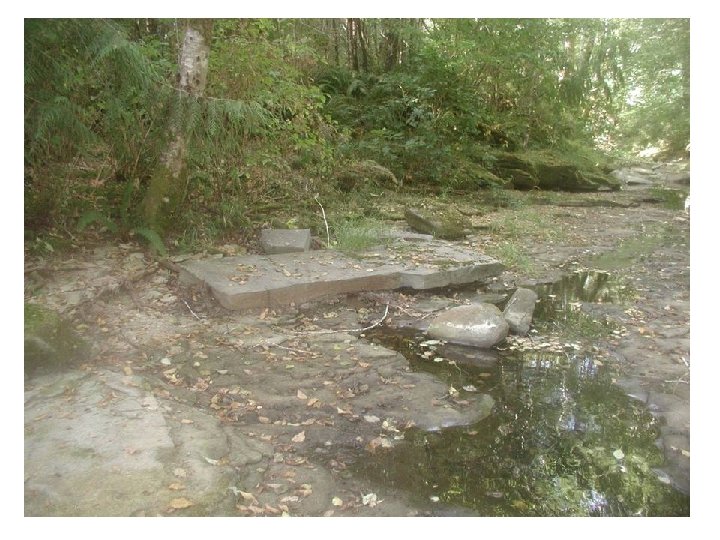
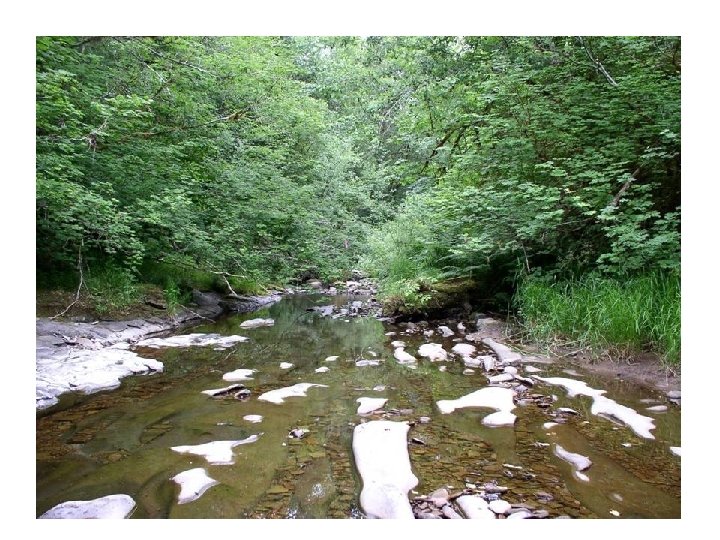
Why are there bedrock channels?
Why are there bedrock channels? Sediment transport exceeds sediment supply Grain size of sediment is small relative to the transport capacity (channel slope * drainage area)
hillslope High Transport Capacity channel head colluvial cascade Depositional Reaches step-pool plane-bed pool-riffle dune-ripple Montgomery and Buffington, 1997
High Transport Capacity colluvial cascade Depositional Reaches step-pool Particle Size channel head Valley Confinement Channel Gradient hillslope plane-bed pool-riffle dune-ripple Montgomery and Buffington, 1997
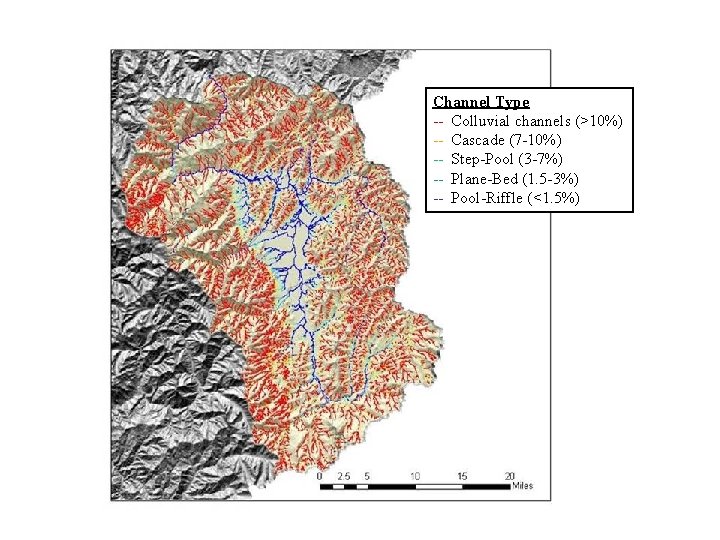
Channel Type -- Colluvial channels (>10%) -- Cascade (7 -10%) -- Step-Pool (3 -7%) -- Plane-Bed (1. 5 -3%) -- Pool-Riffle (<1. 5%)
Channel Types & Bed Mobility Cascade and Step Pool channels typically have an abundance of large, interlocking boulders that limit bed mobility. Benthic organisms can seek shelter in interstitial spaces. Plane Bed and Pool Riffle channels typically have mobile beds during large floods. Benthic organisms can seek shelter in less mobile areas of the channel. Dune Ripple channels are fully mobile during most storms. Benthic organisms may be limited to wood.
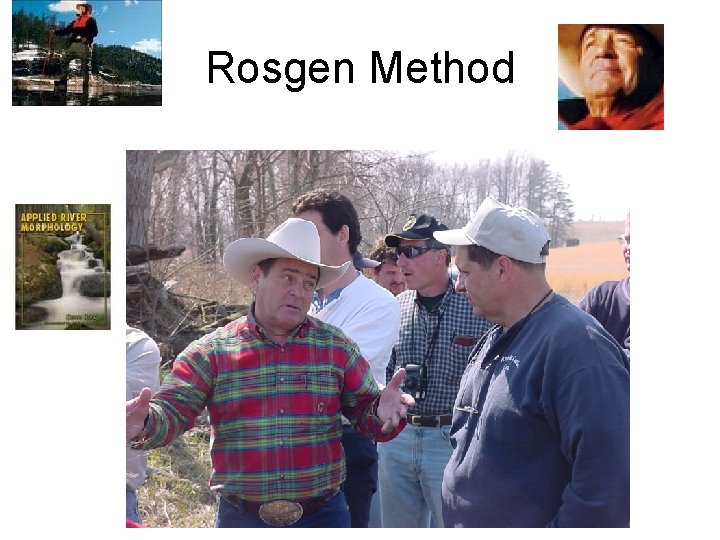
Rosgen Method
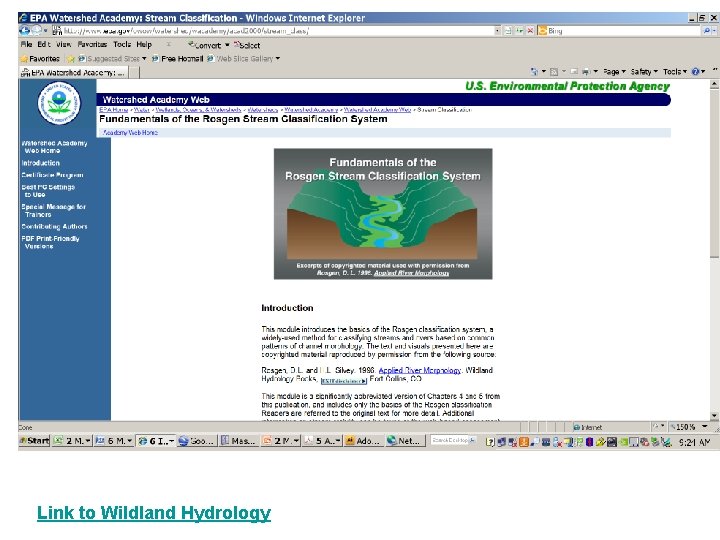
Link to Wildland Hydrology
Link to website:
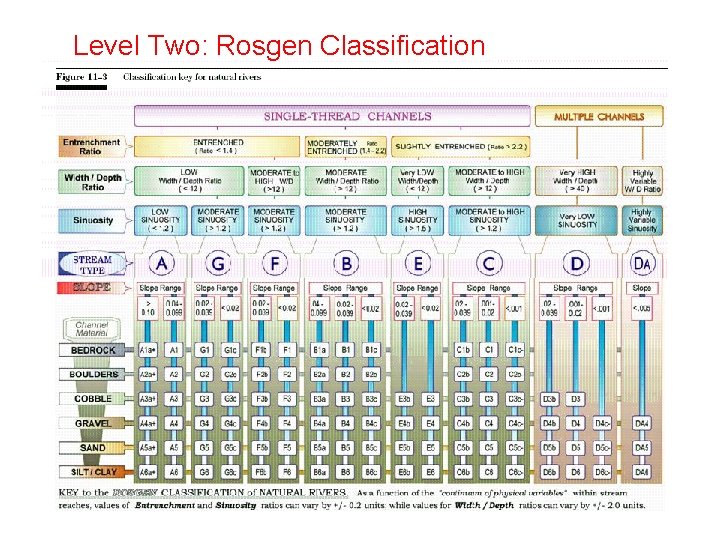
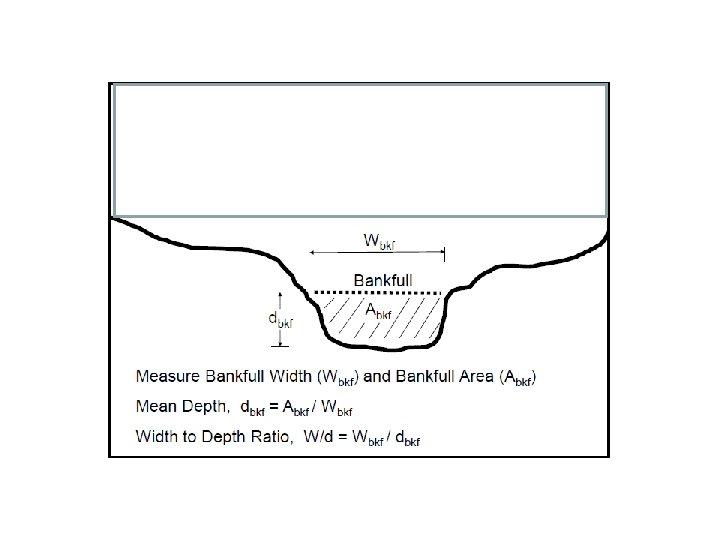
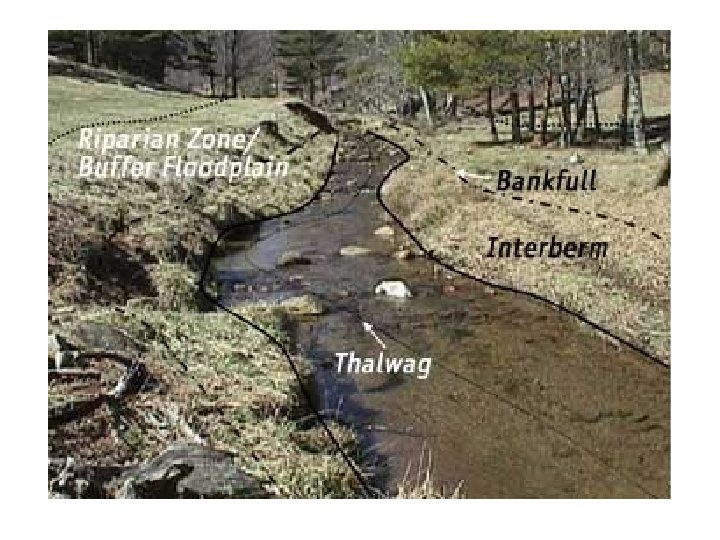
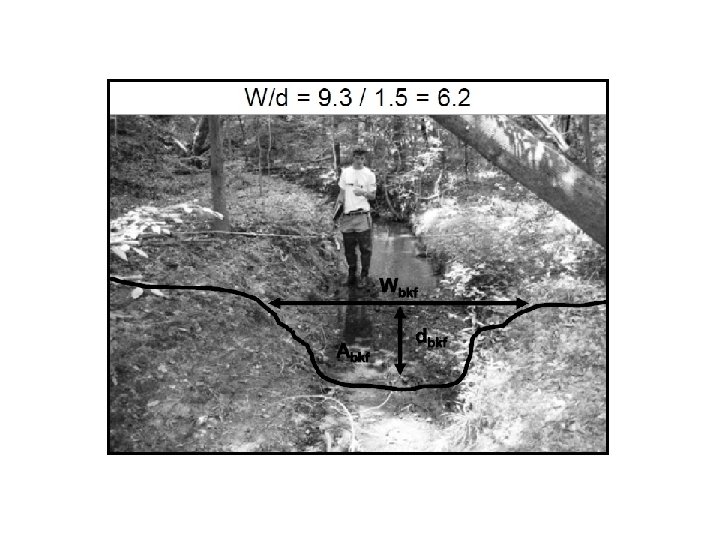
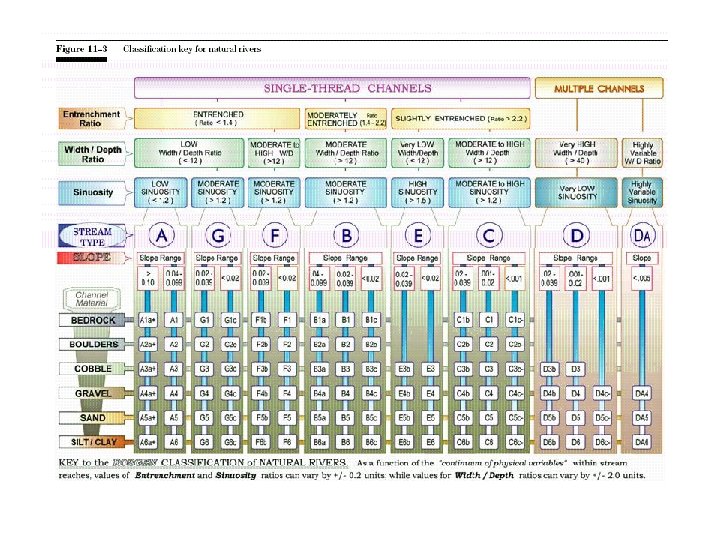
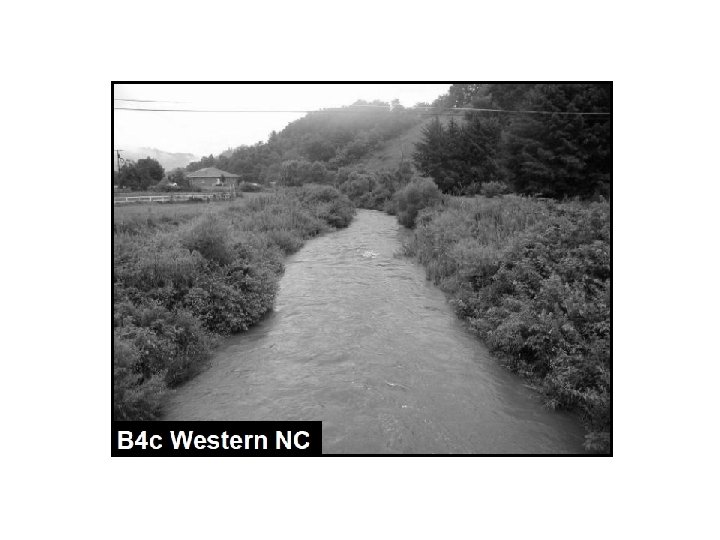
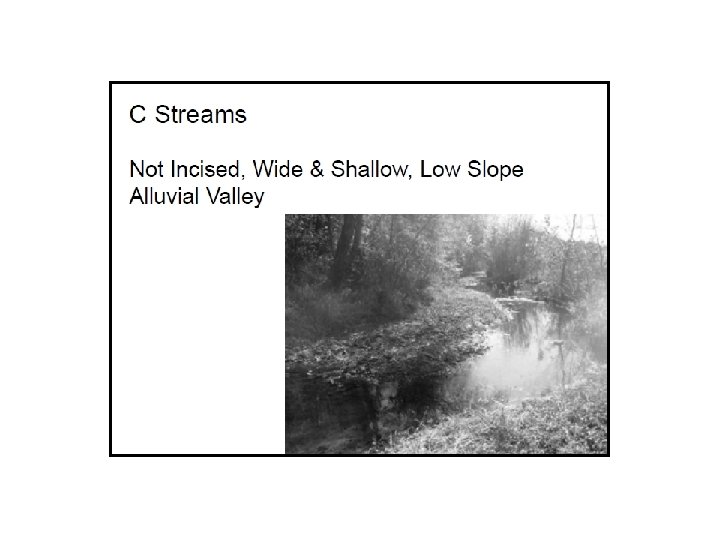
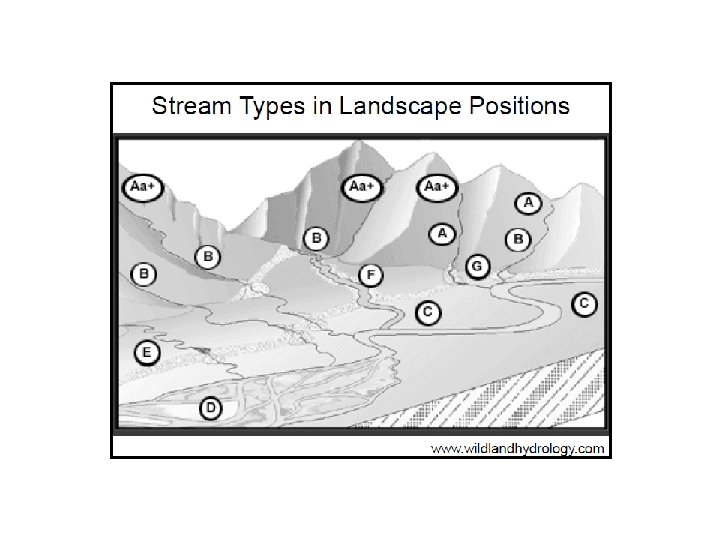
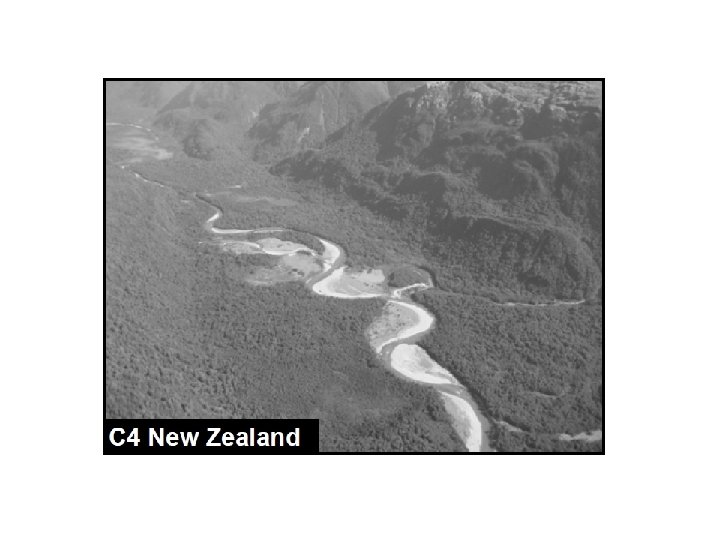
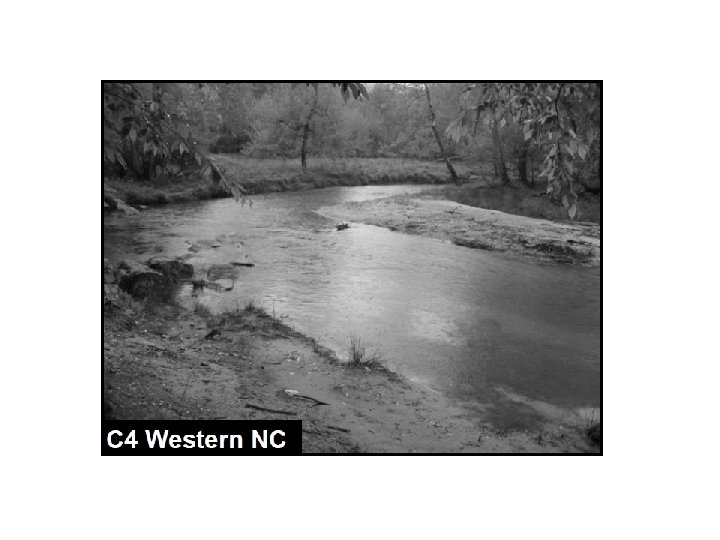
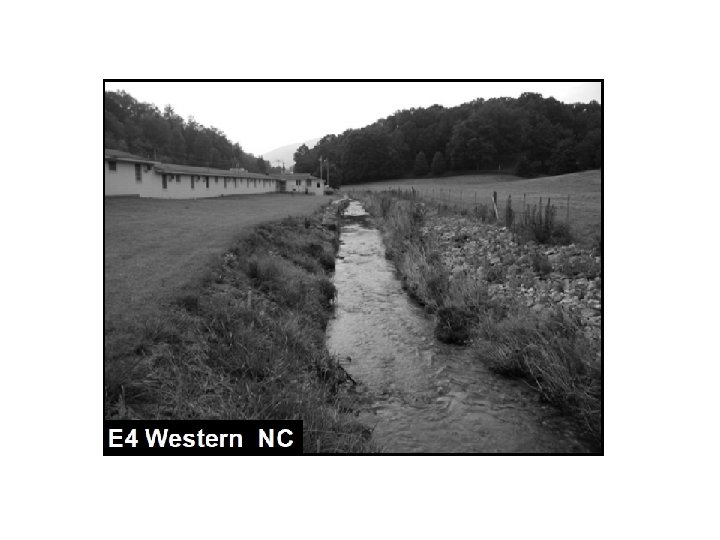
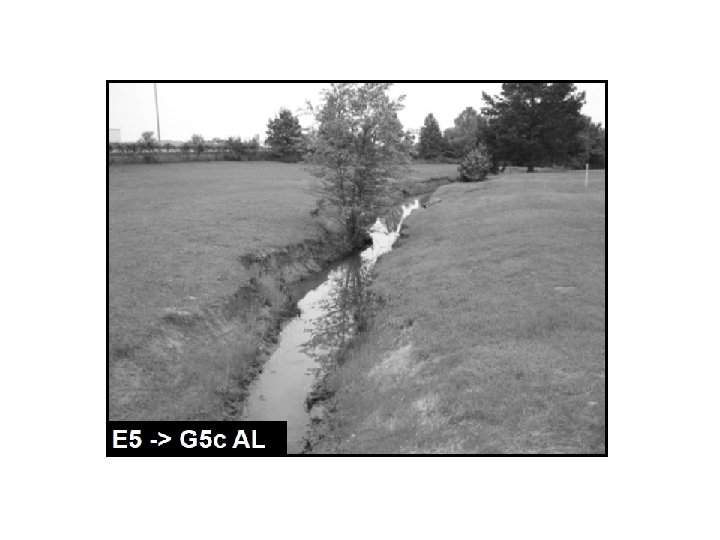
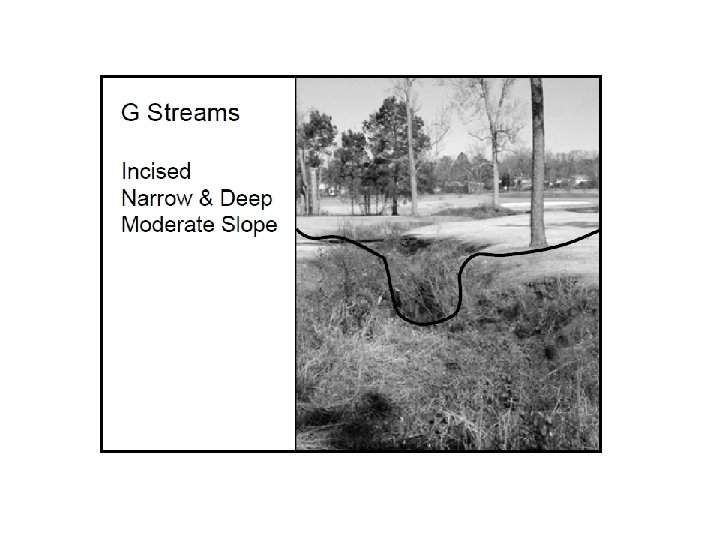
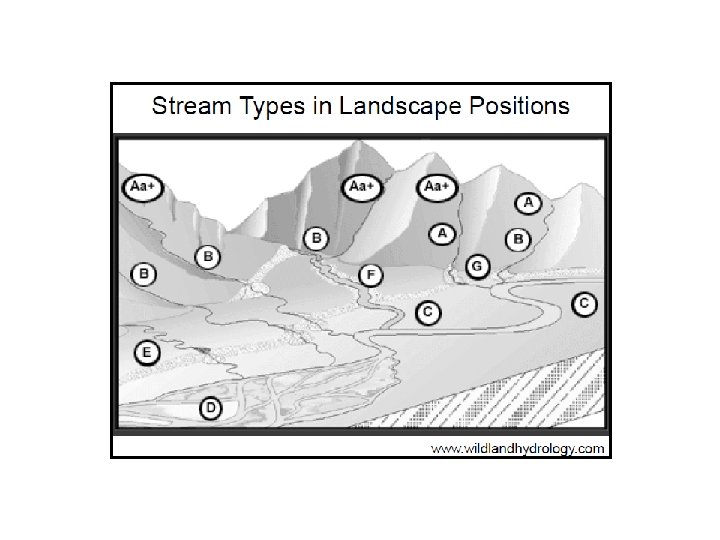
Rosgen Classification of Natural Rivers • Based on physical characteristics (empirical) • Requires field measurements • Requires bankfull dimensions
Solving for the eight variables… • Width • Depth • Slope • Velocity • Discharge • Flow resistance • Sediment size • Sediment load Leopold et al (1964)
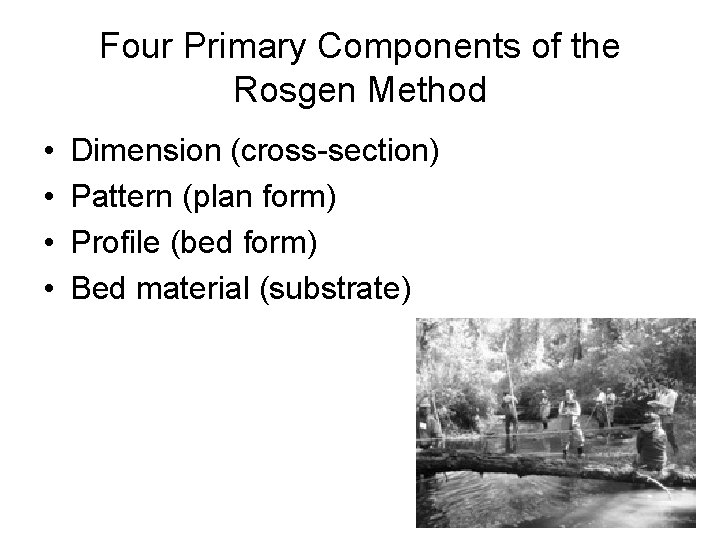
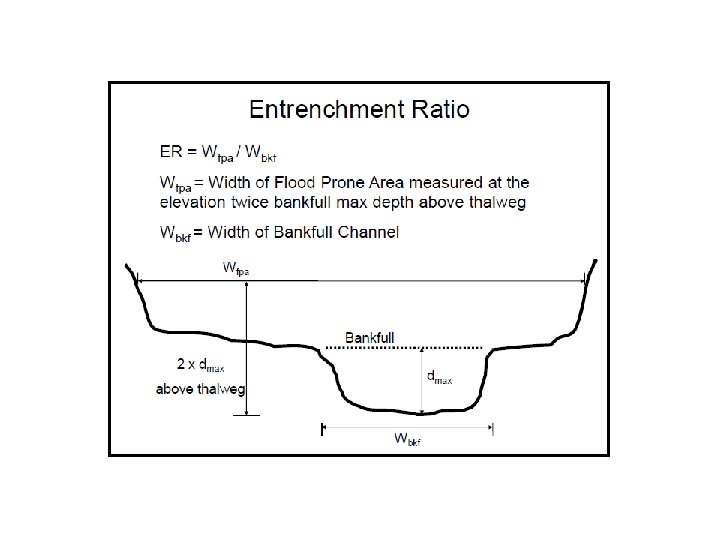
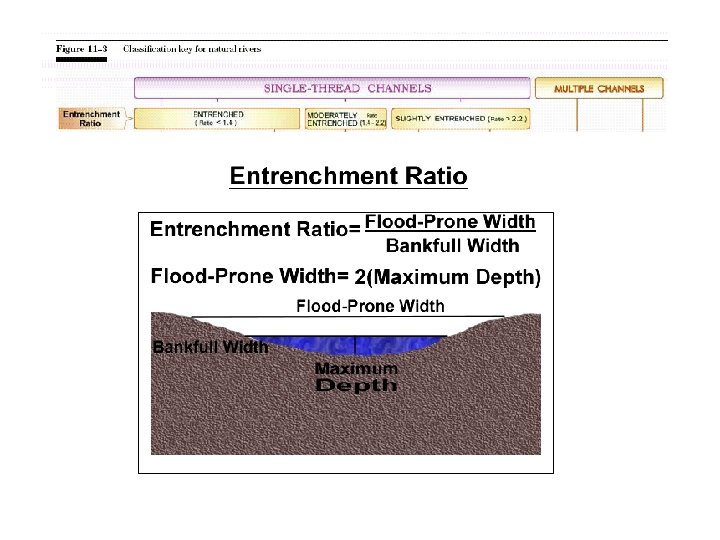
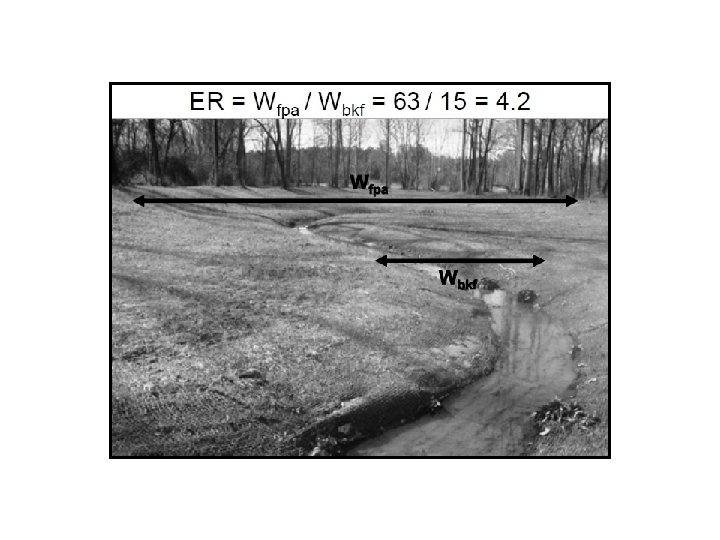
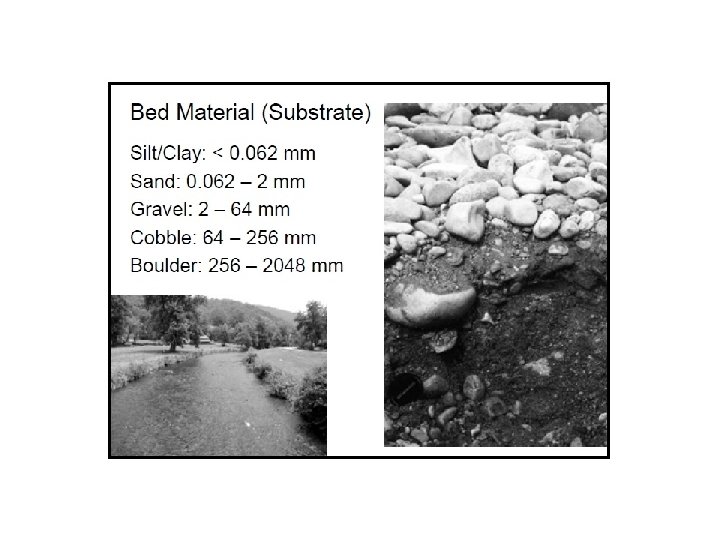
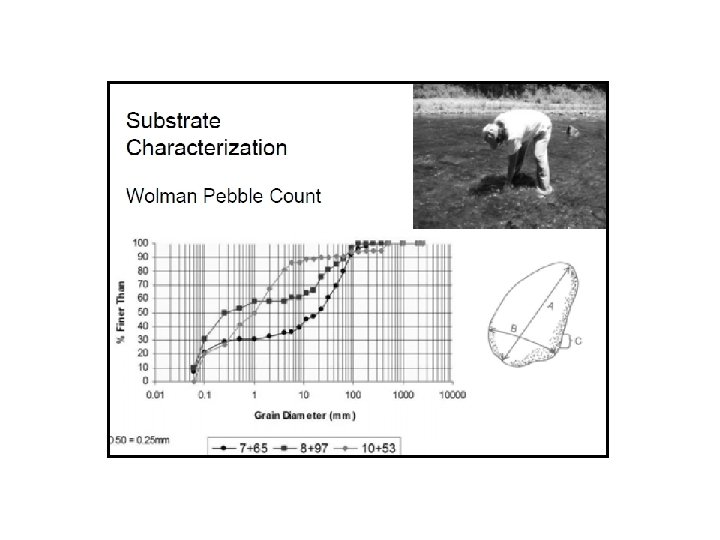
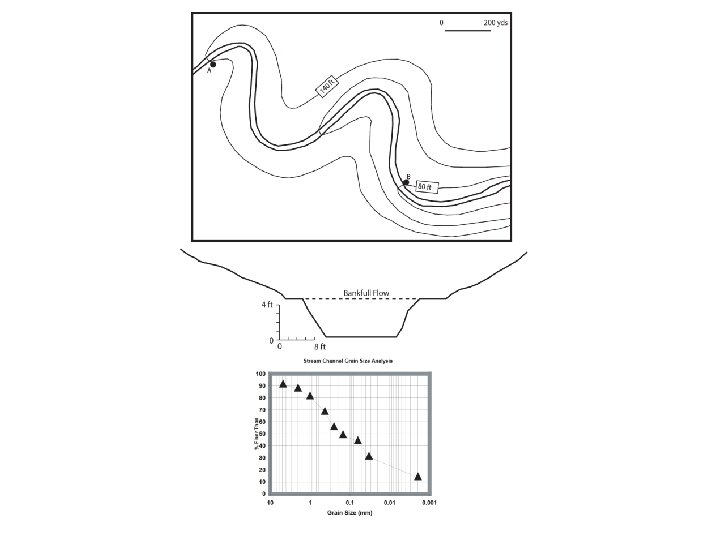
Four Primary Components of the Rosgen Method • • Dimension (cross-section) Pattern (plan form) Profile (bed form) Bed material (substrate)
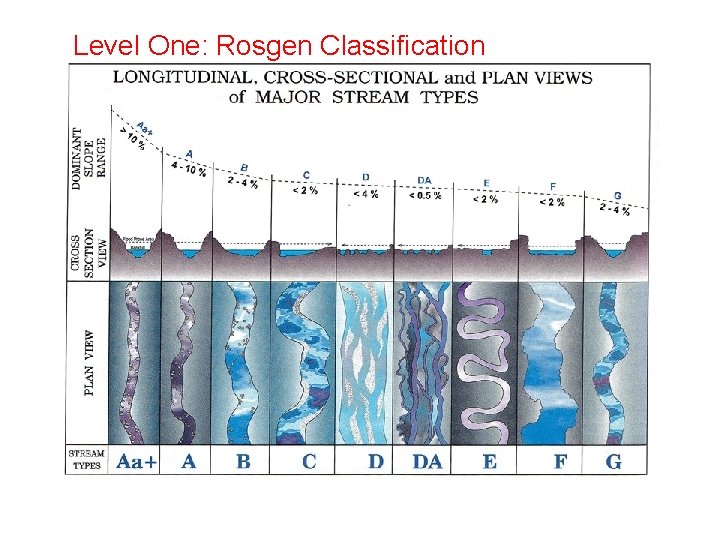
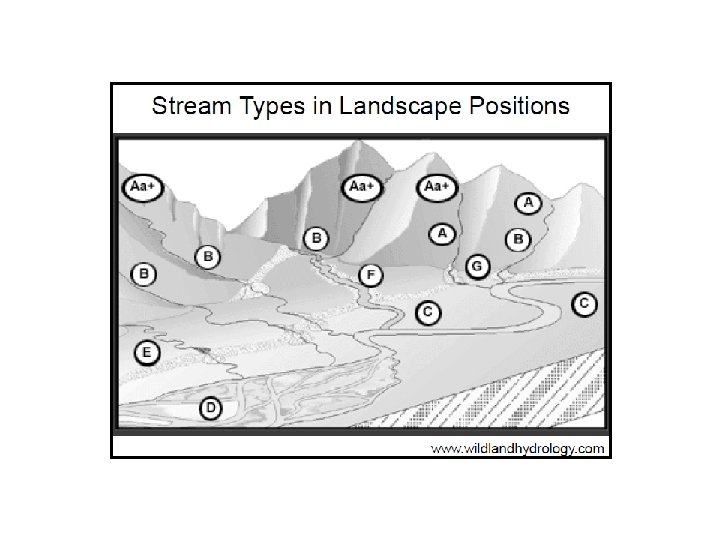
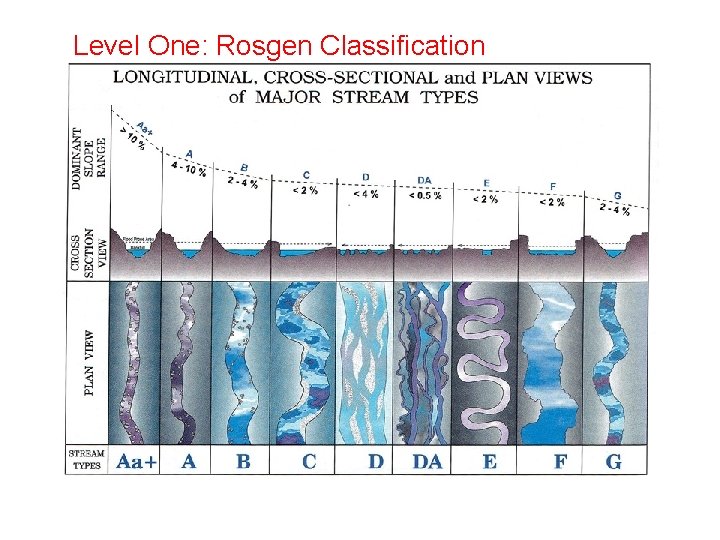
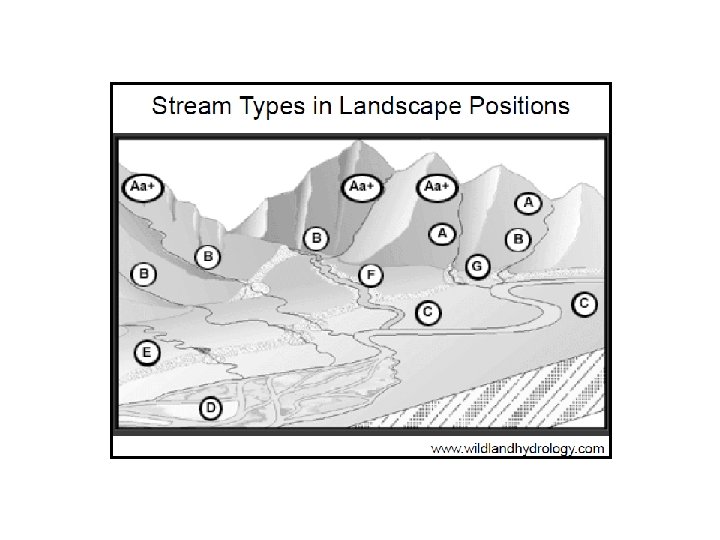
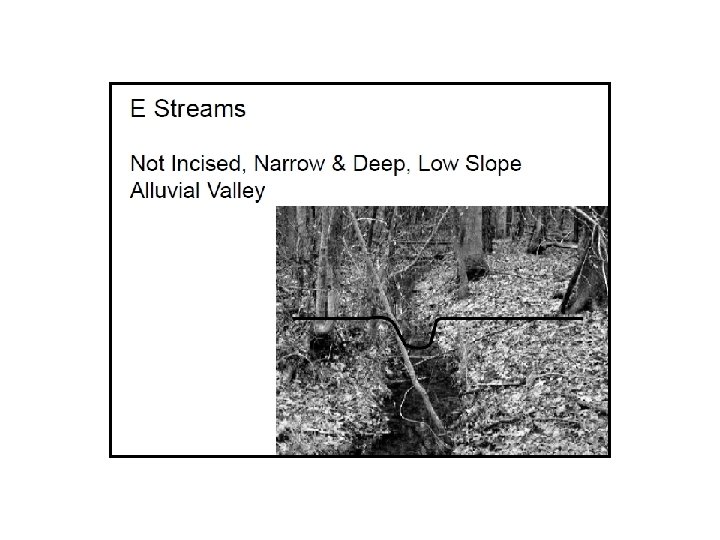
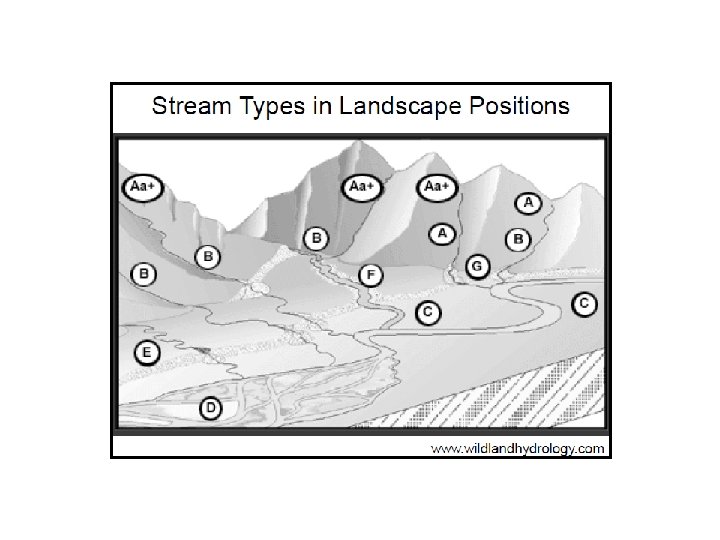
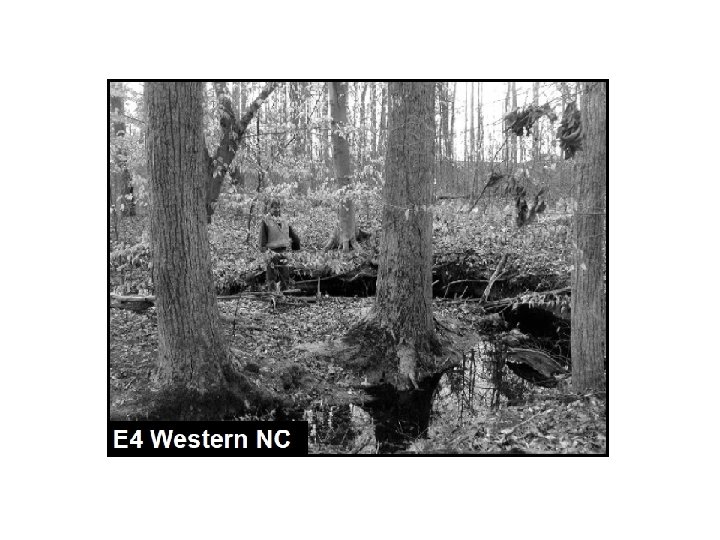
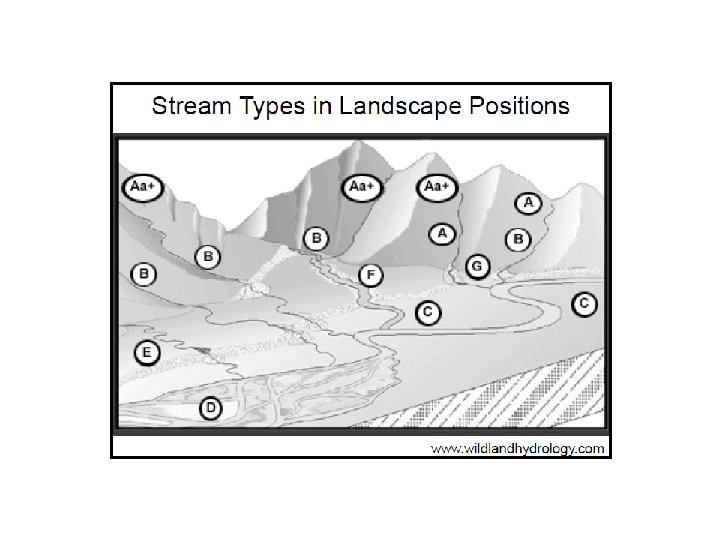
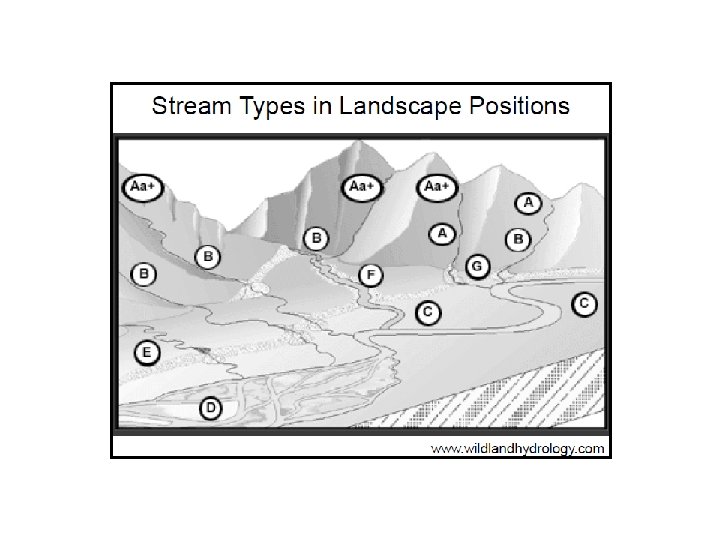
Level One: Rosgen Classification
Level Two: Rosgen Classification
Level One: Rosgen Classification
Strengths and Weaknesses of Rosgen Method…. .
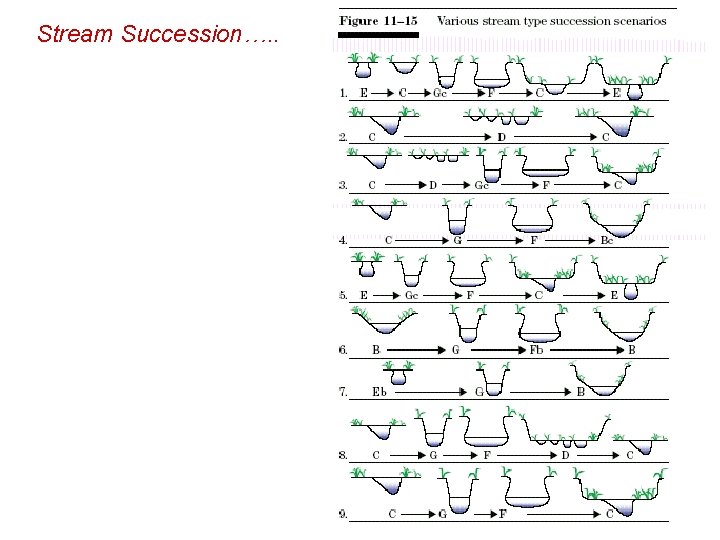
Stream Succession…. .