
Strawberry Disease Monitoring and Forecasting System Clyde Fraisse
Strawberry Disease Monitoring and Forecasting System Clyde Fraisse Willigthon Pavan Natália Peres University of Florida Climate Prediction Applications Workshop Norman, Oklahoma March 24 -27, 2009
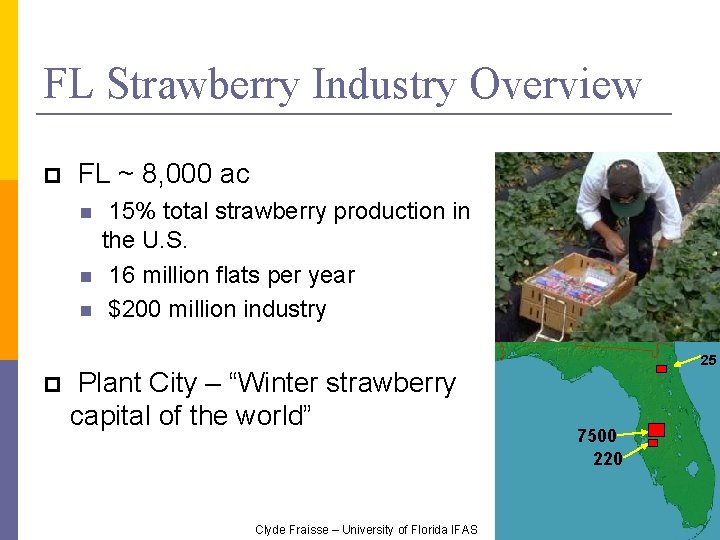
FL Strawberry Industry Overview FL ~ 8, 000 ac 15% total strawberry production in the U. S. 16 million flats per year $200 million industry Plant City – “Winter strawberry capital of the world” Clyde Fraisse – University of Florida IFAS 25 7500 220

Strawberry Production Cycle in West Central Florida Peak harvest periods Peak bloom periods Land prep / planting Cropping season is affected by El Niño - Southern Oscillation (ENSO) cycles
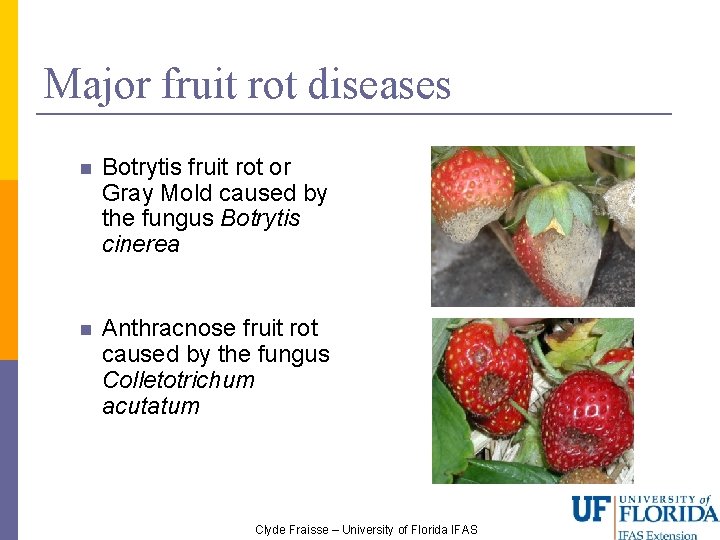
Major fruit rot diseases Botrytis fruit rot or Gray Mold caused by the fungus Botrytis cinerea Anthracnose fruit rot caused by the fungus Colletotrichum acutatum Clyde Fraisse – University of Florida IFAS
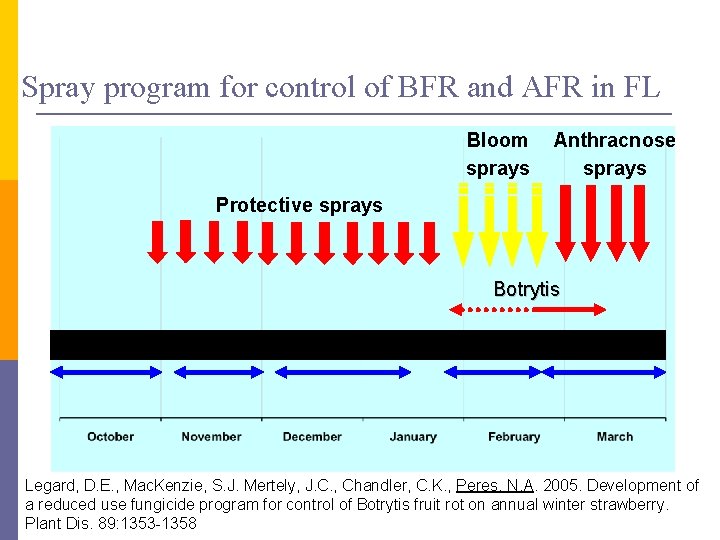
Spray program for control of BFR and AFR in FL Bloom sprays Anthracnose sprays Protective sprays Botrytis Planting 1 st Bloom 1 st Harvest 2 nd Bloom 2 nd Harvest Legard, D. E. , Mac. Kenzie, S. J. Mertely, J. C. , Chandler, C. K. , Peres, N. A. 2005. Development of a reduced use fungicide program for control of Botrytis fruit rot on annual winter strawberry. Plant Dis. 89: 1353 -1358
Calendar vs Predictive System Disease management currently relies on calendar-based protective applications of fungicides Disease management with predictive system, application of fungicides are made only when necessary (requires a good understanding of the conditions suitable for disease development, i. e. , host, pathogen, environment) Clyde Fraisse – University of Florida IFAS
Objectives Develop/adapt disease models by correlating weather data and disease incidence from past seasons or based on laboratory studies (growth chambers) Models require leaf wetness duration and temperature Develop a decision support system to help producers decide when to apply fungicides Weather monitoring combined with short-term forecast Develop a system to predict seasonal disease pressure based on ENSO forecast Clyde Fraisse – University of Florida IFAS
Objectives Develop/adapt disease models by correlating weather data and disease incidence from past seasons or based on laboratory studies (growth chambers) Models require leaf wetness duration and temperature Develop a decision support system to help producers decide when to apply fungicides Weather monitoring combined with short-term forecast Develop a system to predict seasonal disease pressure based on ENSO forecast Clyde Fraisse – University of Florida IFAS
Objectives Develop/adapt disease models by correlating weather data and disease incidence from past seasons or based on laboratory studies (growth chambers) Models require leaf wetness duration and temperature Develop a decision support system to help producers decide when to apply fungicides Weather monitoring combined with short-term forecast Develop a system to predict seasonal disease pressure based on ENSO forecast Clyde Fraisse – University of Florida IFAS
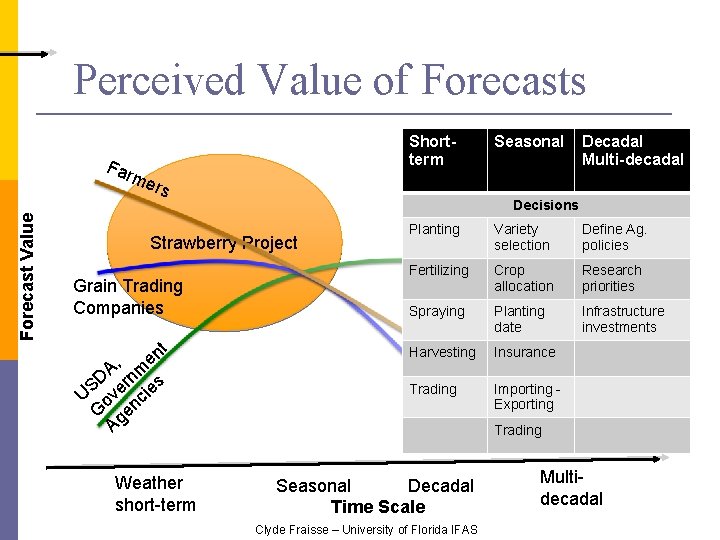
Perceived Value of Forecasts Far Shortterm Forecast Value me rs t en , A nm D S ver ies U o nc G ge A Weather short-term Decadal Multi-decadal Decisions Strawberry Project Grain Trading Companies Seasonal Planting Variety selection Define Ag. policies Fertilizing Crop allocation Research priorities Spraying Planting date Infrastructure investments Harvesting Insurance Trading Importing Exporting Trading Seasonal Decadal Time Scale Clyde Fraisse – University of Florida IFAS Multidecadal
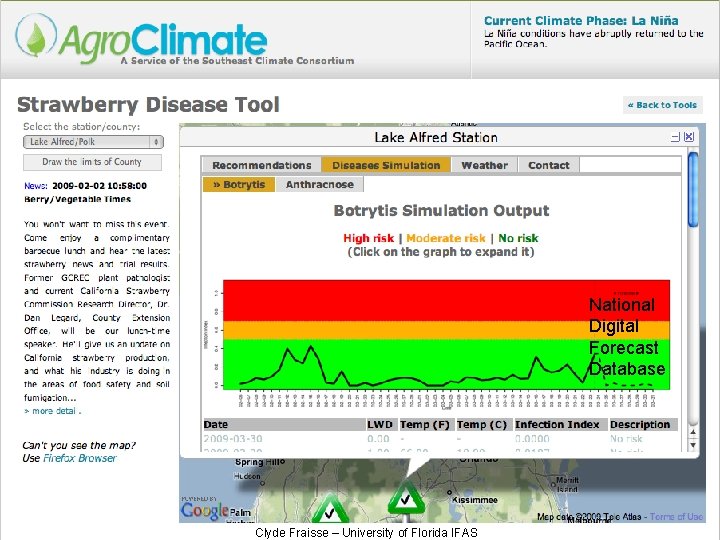
Status of the project National Digital Forecast Database Clyde Fraisse – University of Florida IFAS
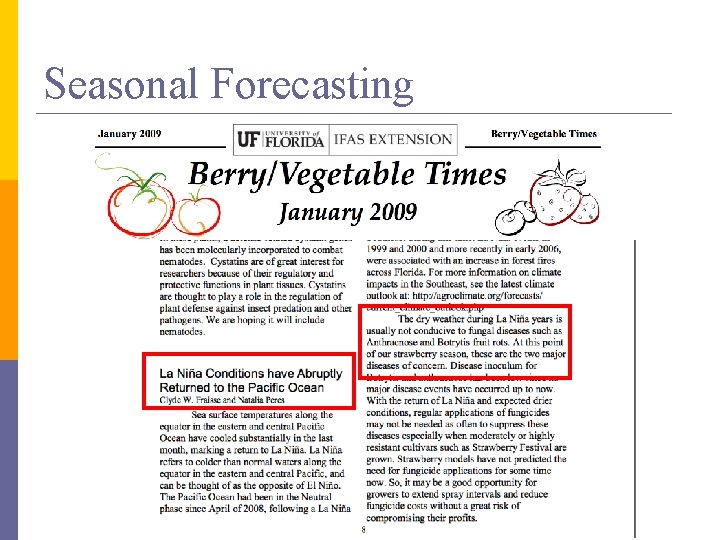
Seasonal Forecasting
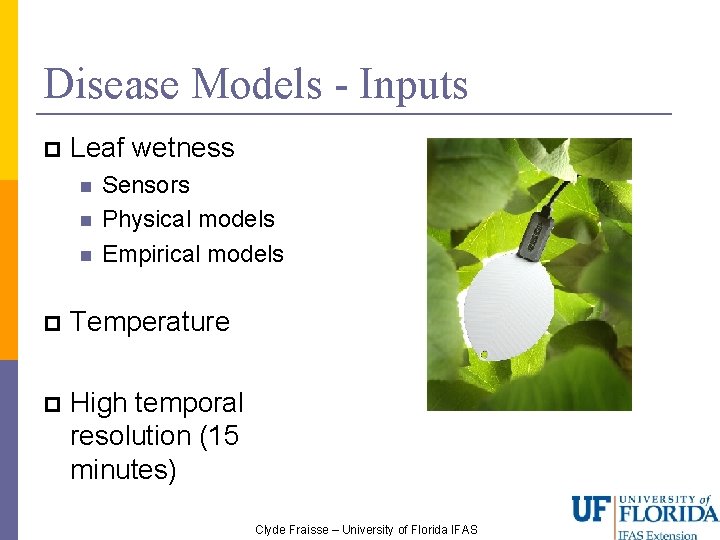
Disease Models - Inputs Leaf wetness Sensors Physical models Empirical models Temperature High temporal resolution (15 minutes) Clyde Fraisse – University of Florida IFAS
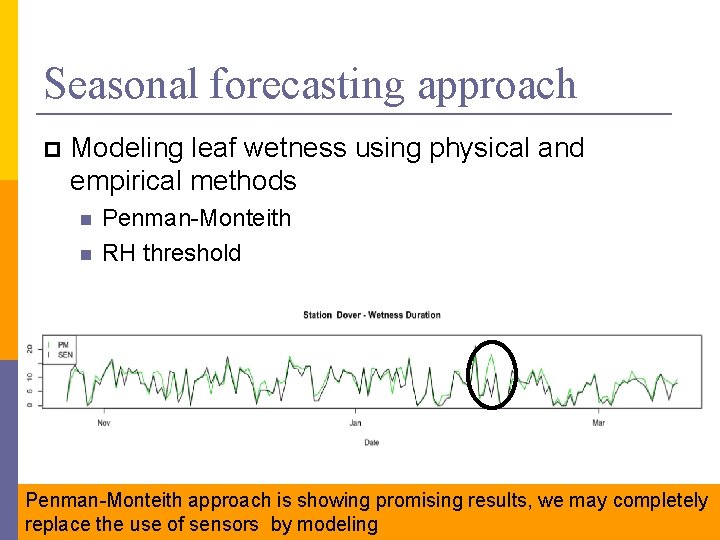
Seasonal forecasting approach Modeling leaf wetness using physical and empirical methods Penman-Monteith RH threshold Penman-Monteith approach is showing promising results, we may completely replace the use of sensors by modeling
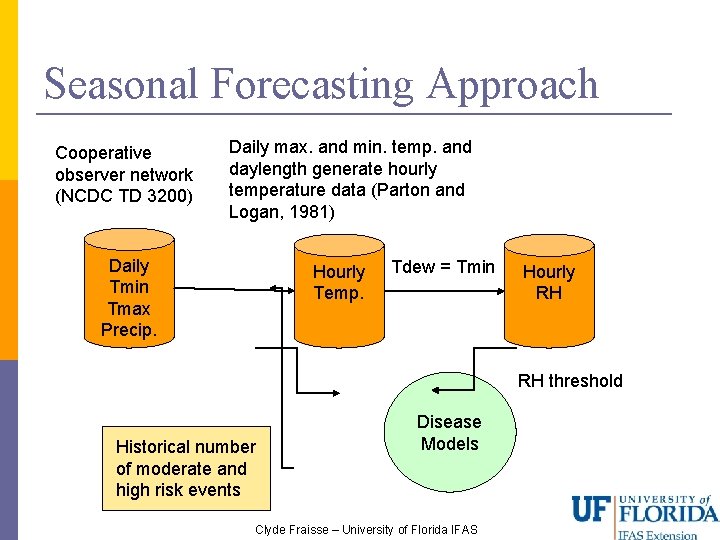
Seasonal Forecasting Approach Cooperative observer network (NCDC TD 3200) Daily max. and min. temp. and daylength generate hourly temperature data (Parton and Logan, 1981) Daily Tmin Tmax Precip. Hourly Temp. Tdew = Tmin Hourly RH RH threshold Historical number of moderate and high risk events Disease Models Clyde Fraisse – University of Florida IFAS
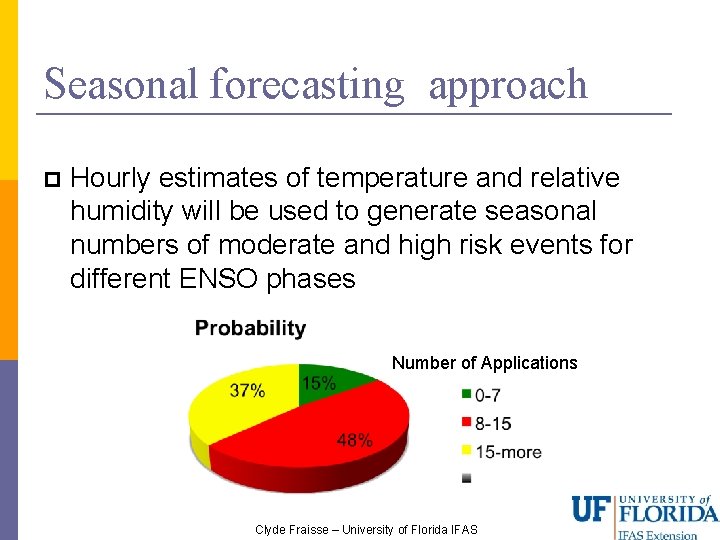
Seasonal forecasting approach Hourly estimates of temperature and relative humidity will be used to generate seasonal numbers of moderate and high risk events for different ENSO phases Number of Applications Clyde Fraisse – University of Florida IFAS
- Slides: 17