
Stratification February 24 2020 Nadi Fiji Stratified sampling

Stratification February 24, 2020 Nadi, Fiji
Stratified sampling • Technique of organizing sample frame into sub-groupings – strata – and to select separate samples in the strata to ensure sample selection is “spread” across important population sub-groups
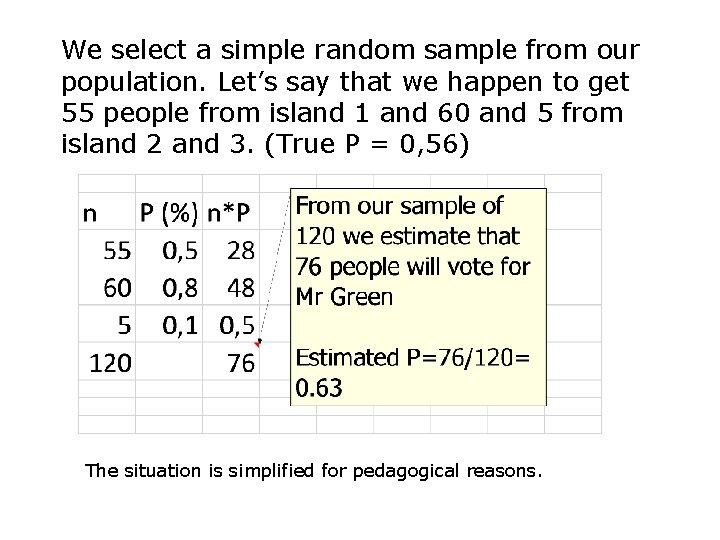
We select a simple random sample from our population. Let’s say that we happen to get 55 people from island 1 and 60 and 5 from island 2 and 3. (True P = 0, 56) The situation is simplified for pedagogical reasons.
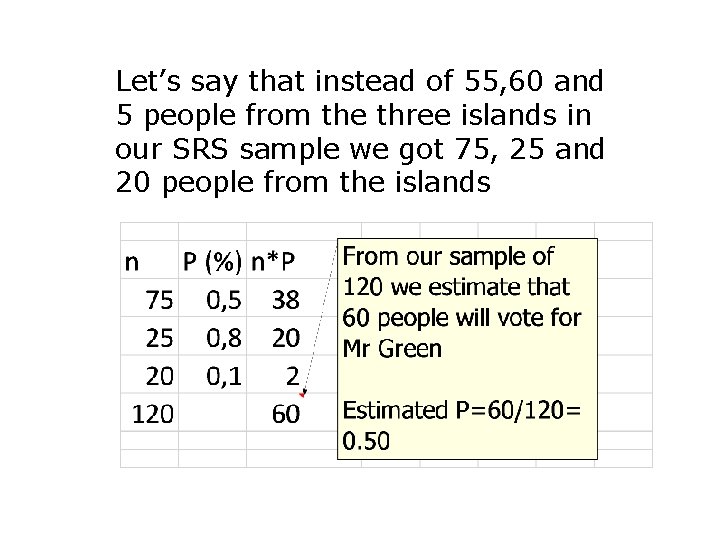
Let’s say that instead of 55, 60 and 5 people from the three islands in our SRS sample we got 75, 25 and 20 people from the islands
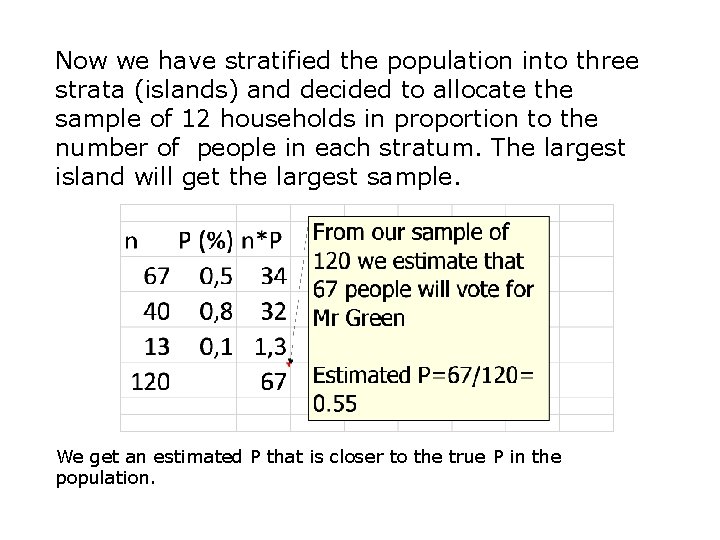
Now we have stratified the population into three strata (islands) and decided to allocate the sample of 12 households in proportion to the number of people in each stratum. The largest island will get the largest sample. We get an estimated P that is closer to the true P in the population.
Reasons for stratification • To potentially reduce sampling error by gaining greater control over the composition of the sample. • To ensure that particular groups within a population are adequately represented in the sample. Reduce the chance of being unlucky and getting too few sample units selected from a sub-group that is important for the analysis.
• In nationwide household surveys the primary strata are always geographical or administrative areas (province, region, district) • The primary strata are often divided into urban and rural areas
Stratification Establishment survey • Stratification of establishments by economic activity and employment size National household survey • Geographic domains – regions, provinces • Urban/rural • Socio-economic groups Agricultural survey • Agro-ecological zones • Land use • Farm size
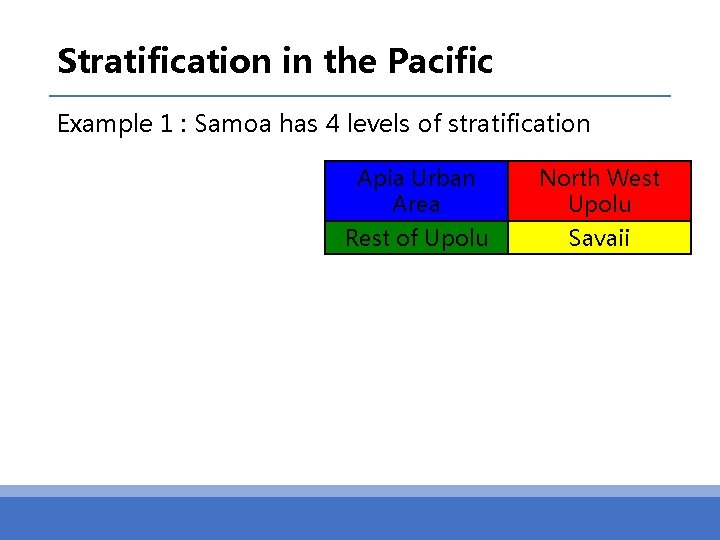
Stratification in the Pacific Example 1 : Samoa has 4 levels of stratification Apia Urban Area North West Upolu Rest of Upolu Savaii
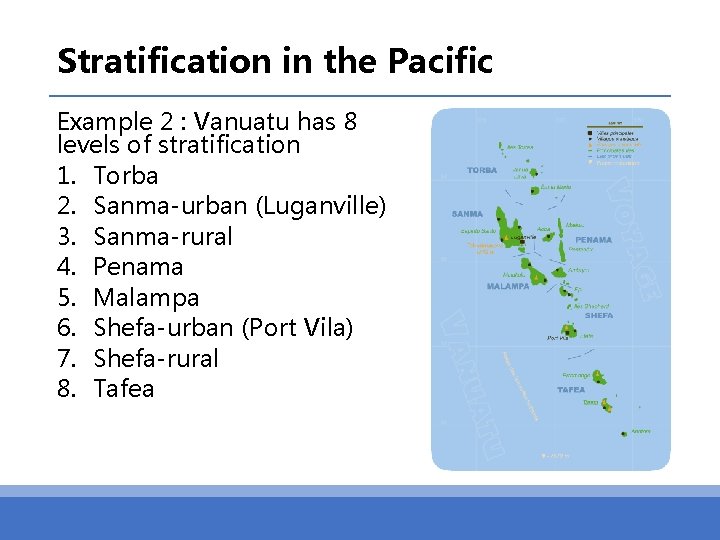
Stratification in the Pacific Example 2 : Vanuatu has 8 levels of stratification 1. Torba 2. Sanma-urban (Luganville) 3. Sanma-rural 4. Penama 5. Malampa 6. Shefa-urban (Port Vila) 7. Shefa-rural 8. Tafea
Stratification Common examples of sample allocation among the strata: • Proportional allocation • Equal allocation • Square root allocation • “Optimum” allocation • Practical allocation
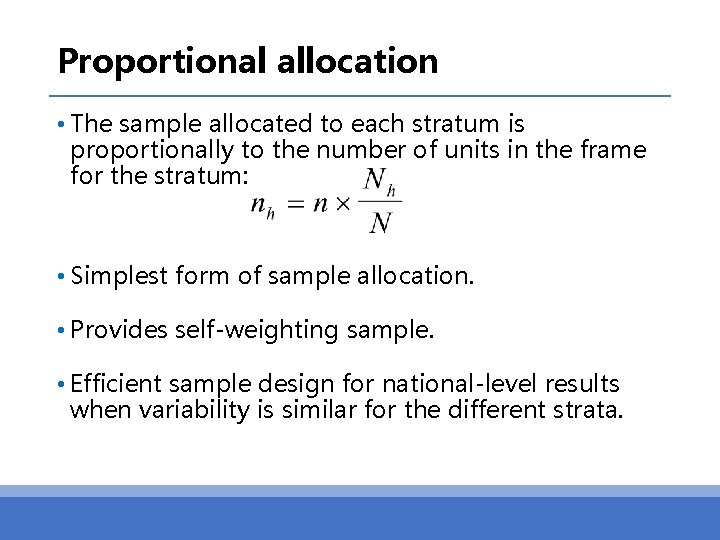
Proportional allocation • The sample allocated to each stratum is proportionally to the number of units in the frame for the stratum: • Simplest form of sample allocation. • Provides self-weighting sample. • Efficient sample design for national-level results when variability is similar for the different strata.
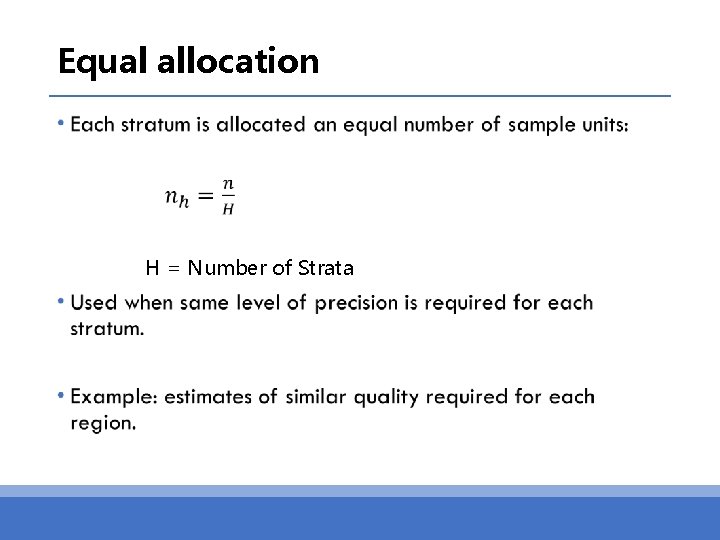
Equal allocation • H = Number of Strata
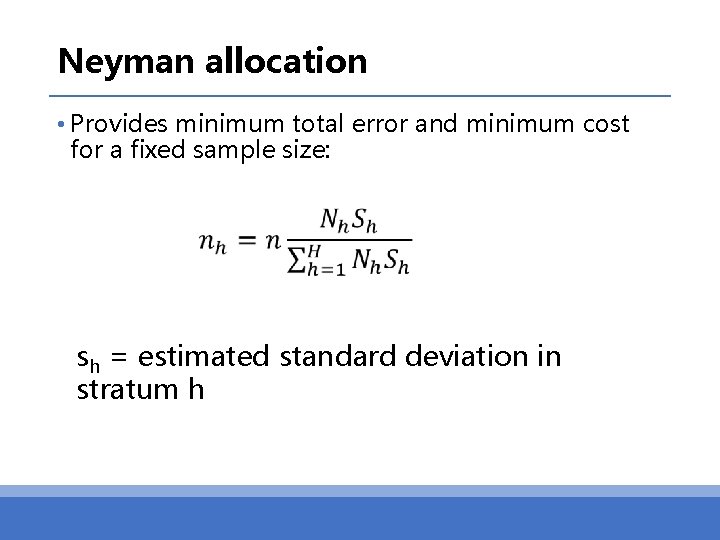
Neyman allocation • Provides minimum total error and minimum cost for a fixed sample size: sh = estimated standard deviation in stratum h
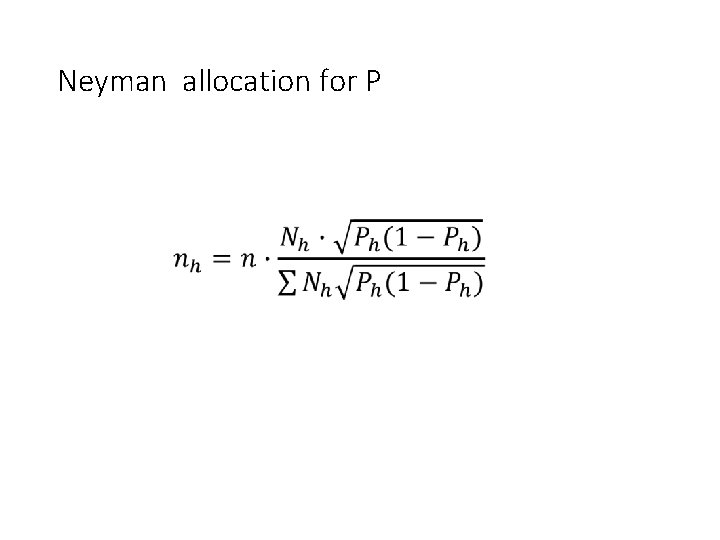
Neyman allocation for P
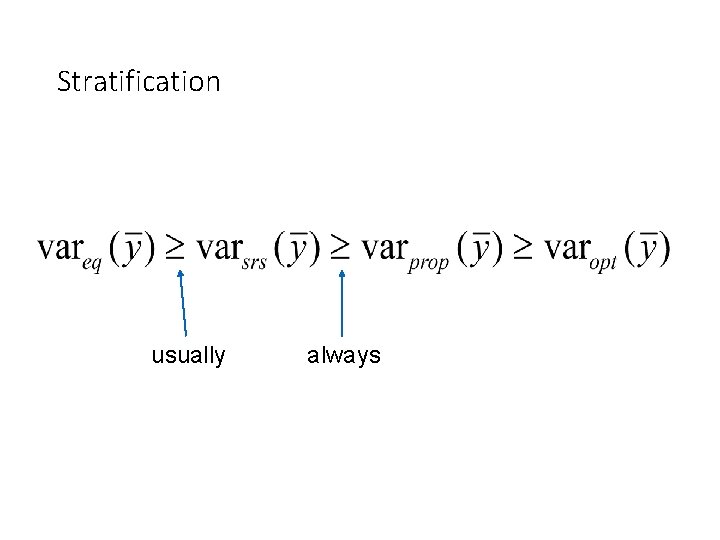
Stratification usually always
Practical allocation criteria • For national household surveys, sometimes allocation is a compromise between proportional, equal and Neyman allocation; e. g. we start with a proportional allocation and then we increase the sample size in the smaller regions. • In countries with high proportion of rural population, sometimes a higher sampling rate is used for the urban stratum, to increase the urban sample size and because of the lower cost of data collection in urban areas.
Implicit Stratification • Sort the sampling frame within each explicit stratum by lower-level geographic areas, such as districts, municipalities, wards and EA codes, then select a systematic sample within each stratum. • Ensures a representative sample for each subgroup • Automatically provides proportional allocation by size of subgroup
Second Stage Stratification • Sometimes it is desirable to stratify the sample in the last stage (household or individual level). • Examples: male/female headed households, program beneficiaries, households with orphans and vulnerable children (OVCs). • Beware of the dangers. Second stage stratification increases the need for close supervision of field teams.
Weighting under stratified sample designs • A proportionally allocated sample is self-weighted. • In non-proportionally allocated samples, we must use weights to account for different sampling fractions by stratum.

Exercise #2
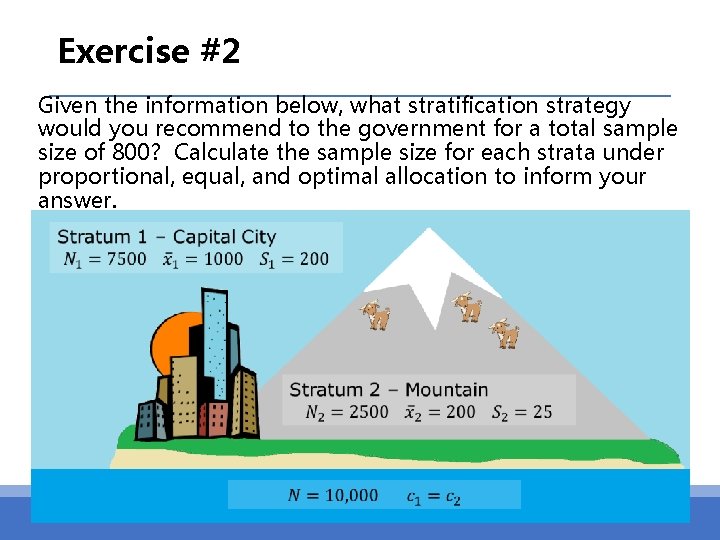
Exercise #2 Given the information below, what stratification strategy would you recommend to the government for a total sample size of 800? Calculate the sample size for each strata under proportional, equal, and optimal allocation to inform your answer.
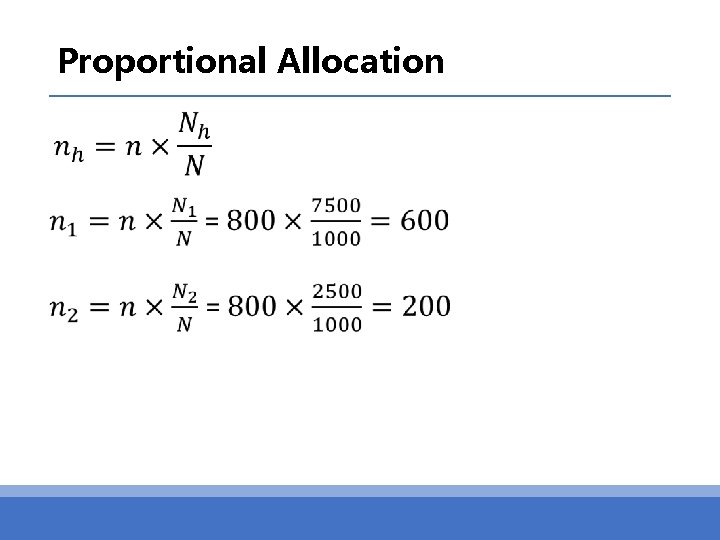
Proportional Allocation
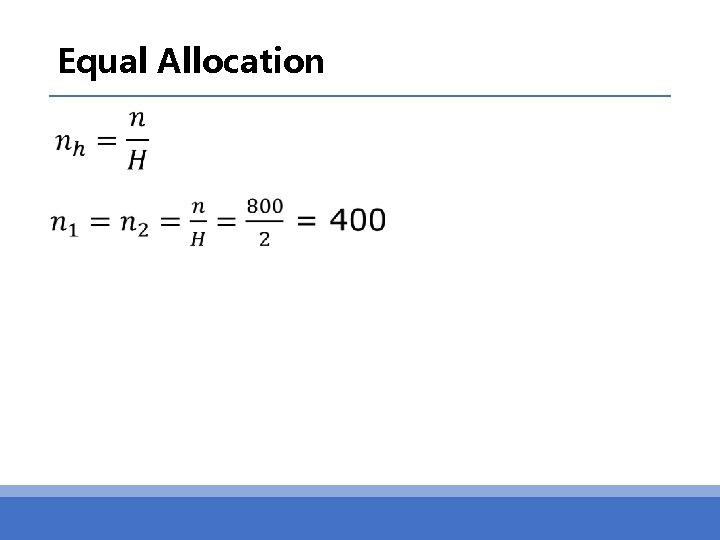
Equal Allocation
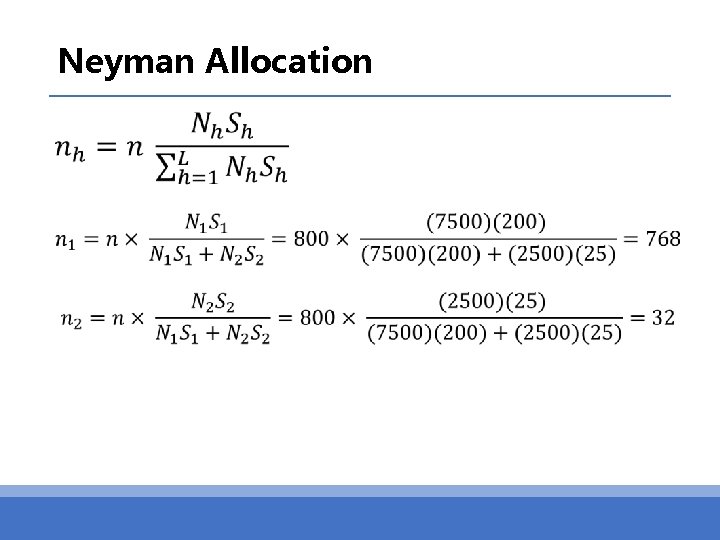
Neyman Allocation
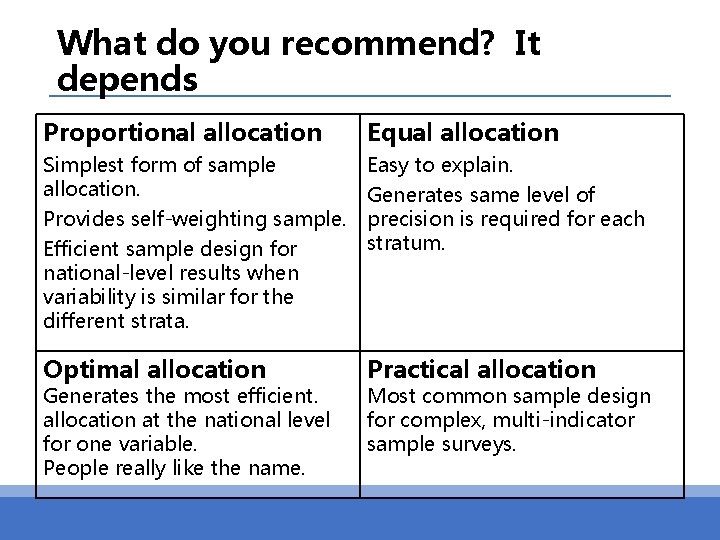
What do you recommend? It depends Proportional allocation Equal allocation Simplest form of sample allocation. Provides self-weighting sample. Efficient sample design for national-level results when variability is similar for the different strata. Easy to explain. Generates same level of precision is required for each stratum. Optimal allocation Practical allocation Generates the most efficient. allocation at the national level for one variable. People really like the name. Most common sample design for complex, multi-indicator sample surveys.
- Slides: 26