
Stratification by Age 12 Sociology in Modules 3
Stratification by Age 12 Sociology in Modules 3 rd edition Richard T. Schaefer Copyright © 2016 Mc. Graw-Hill Education. All rights reserved. No reproduction or distribution without the prior written consent of Mc. Graw-Hill Education.
Aging and Society • Age Stratification – All societies have some system of age stratification that associates certain social roles with distinct periods in life – “Being old” is master status that commonly overshadows all others in U. S. – “Old” designation has major impact on how others perceive individuals and how they view themselves Slide 2 Copyright © 2016 Mc. Graw-Hill Education. All rights reserved. No reproduction or distribution without the prior written consent of Mc. Graw-Hill Education.

Aging and Society • Age Stratification (continued) – Properties of minority or subordinate groups apply to older people in U. S. • • • Slide 3 Experience unequal employment treatment Share physical characteristics Membership is involuntary Strong sense of group solidarity Generally married to others of comparable age Copyright © 2016 Mc. Graw-Hill Education. All rights reserved. No reproduction or distribution without the prior written consent of Mc. Graw-Hill Education.
Sociological Perspectives on Aging • No clear-cut definitions for different periods of the aging cycle in U. S. – Old age typically regarded as beginning at 65 – Increase in life expectancy led writers to refer to people in their 60 s as the “young old” – Gerontology: scientific study of sociological and psychological aspects of aging and problems of the aged Slide 4 Copyright © 2016 Mc. Graw-Hill Education. All rights reserved. No reproduction or distribution without the prior written consent of Mc. Graw-Hill Education.
Functionalist Perspective: Disengagement Theory • Older people are socially isolated, with reduced social roles • Disengagement theory: society and aging individuals mutually sever many of their relationships – Functionalists emphasize that passing social roles from one generation to another ensures social stability Slide 5 Copyright © 2016 Mc. Graw-Hill Education. All rights reserved. No reproduction or distribution without the prior written consent of Mc. Graw-Hill Education.
Interactionist Perspective: Activity Theory • Older people involved in new networks and changing social roles • Activity theory: elderly persons who remain active and socially involved will be best-adjusted – Social interaction can lower death rates among elderly – Same need for social interaction as other groups – Focus on the potential contributions of older people to the maintenance of society Slide 6 Copyright © 2016 Mc. Graw-Hill Education. All rights reserved. No reproduction or distribution without the prior written consent of Mc. Graw-Hill Education.
Labeling Perspective • Old age is a life stage defined by society – Society reconsidering what makes a person old – Should old age be defined not by how old one is, but by how long one is expected to live? – Labeling of old age differs between cultures Slide 7 Copyright © 2016 Mc. Graw-Hill Education. All rights reserved. No reproduction or distribution without the prior written consent of Mc. Graw-Hill Education.
Conflict Perspective • Elderly victimized by social structure, and their social roles are devalued • Impact of social structure on aging patterns – Treatment of older people in U. S. reflects many divisions in society – In developing world, transition from agricultural economies to industrialization and capitalism not always beneficial to elderly Slide 8 Copyright © 2016 Mc. Graw-Hill Education. All rights reserved. No reproduction or distribution without the prior written consent of Mc. Graw-Hill Education.
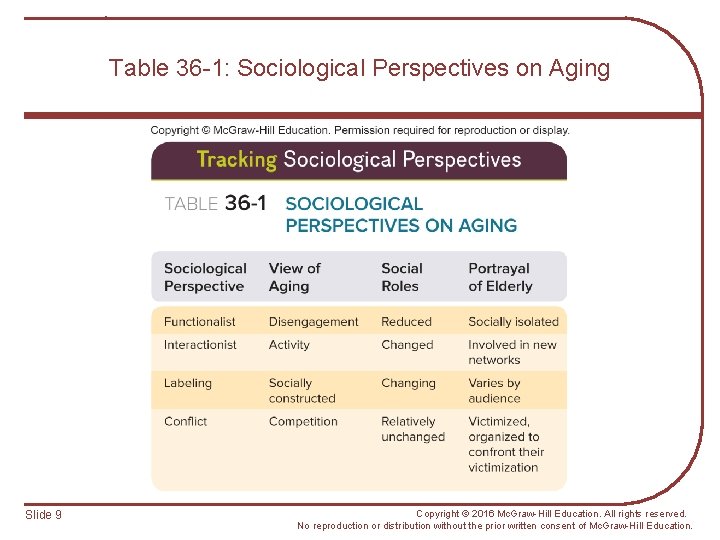
Table 36 -1: Sociological Perspectives on Aging Slide 9 Copyright © 2016 Mc. Graw-Hill Education. All rights reserved. No reproduction or distribution without the prior written consent of Mc. Graw-Hill Education.
Aging Worldwide • More than 570 million people age 65 or older – Europe’s population is older than others – Japanese enjoy life expectancy of 83 years; 79 in U. S. – In most developing countries, people over 60 in poorer health Slide 10 Copyright © 2016 Mc. Graw-Hill Education. All rights reserved. No reproduction or distribution without the prior written consent of Mc. Graw-Hill Education.
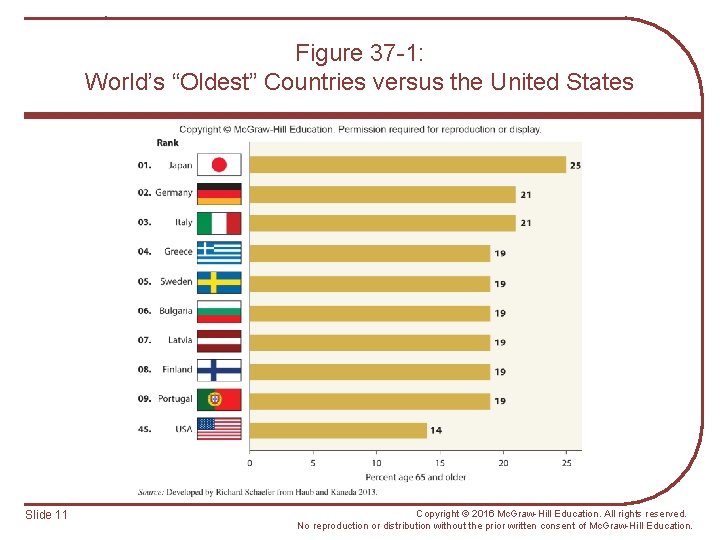
Figure 37 -1: World’s “Oldest” Countries versus the United States Slide 11 Copyright © 2016 Mc. Graw-Hill Education. All rights reserved. No reproduction or distribution without the prior written consent of Mc. Graw-Hill Education.
Role Transitions throughout the Life Course • Socialization is lifelong process – Life course varies dramatically depending on personal preferences and circumstances – Midlife crises: period of self-evaluation typically beginning around age 40 Slide 12 Copyright © 2016 Mc. Graw-Hill Education. All rights reserved. No reproduction or distribution without the prior written consent of Mc. Graw-Hill Education.
The Sandwich Generation • Sandwich Generation: adults who simultaneously try to meet the competing needs of their parents and of their own children – Role of caring for aging parents falls disproportionately on women • Last major transition occurs after age 60 – Causes dramatic changes in people’s everyday lives Slide 13 Copyright © 2016 Mc. Graw-Hill Education. All rights reserved. No reproduction or distribution without the prior written consent of Mc. Graw-Hill Education.
Adjusting to Retirement • Rite of passage – Marks critical transition from one phase of a person’s life to another (Atchley, 1976) • • Slide 14 Preretirement Near phase Honeymoon phase Disenchantment phase Reorientation phase Stability phase Termination phase Copyright © 2016 Mc. Graw-Hill Education. All rights reserved. No reproduction or distribution without the prior written consent of Mc. Graw-Hill Education.
Adjusting to Retirement • Naturally Occurring Retirement Communities (NORCs): older Americans congregate in areas that gradually become informal centers for senior citizens – Residents of these communities threatened by gentrification Slide 15 Copyright © 2016 Mc. Graw-Hill Education. All rights reserved. No reproduction or distribution without the prior written consent of Mc. Graw-Hill Education.
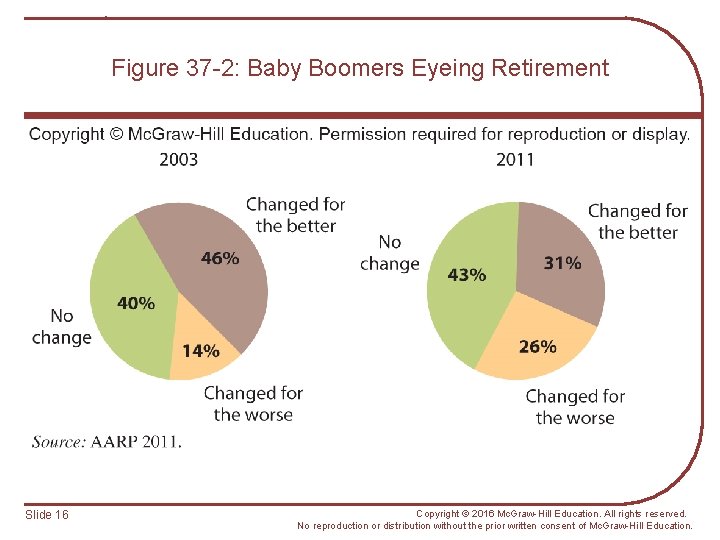
Figure 37 -2: Baby Boomers Eyeing Retirement Slide 16 Copyright © 2016 Mc. Graw-Hill Education. All rights reserved. No reproduction or distribution without the prior written consent of Mc. Graw-Hill Education.
Death and Dying • Kübler-Ross research encouraged open discussion of the process of dying – Identified five stages of the dying experience: denial, anger, bargaining, depression, acceptance • Five stages of dying has been challenged – Concept of a “good death” • Hospice care: seek to improve dying person’s last days by helping him or her to stay at home or in a homelike setting Slide 17 Copyright © 2016 Mc. Graw-Hill Education. All rights reserved. No reproduction or distribution without the prior written consent of Mc. Graw-Hill Education.
Age Stratification in the U. S. • The “Graying of America” – In the future, an increasing proportion of U. S. population will be composed of older people – At the same time, the “oldest old” will grow at a faster rate • Women outnumber men by a ratio of 3 to 2 • Elderly more likely to be White • Highest proportions of older people in FL, PA, RI, IA, WV, and AR Slide 18 Copyright © 2016 Mc. Graw-Hill Education. All rights reserved. No reproduction or distribution without the prior written consent of Mc. Graw-Hill Education.
Wealth and Income • Significant variation in wealth and poverty • Typical older person has higher standard of living than in nation’s past – Greater accumulation of wealth in form of home ownership, private pensions, and financial assets • Still, about 9% of nation’s elderly live below the poverty line Slide 19 Copyright © 2016 Mc. Graw-Hill Education. All rights reserved. No reproduction or distribution without the prior written consent of Mc. Graw-Hill Education.
Ageism • Ageism: prejudice and discrimination based on a person’s age – For many, old age symbolizes disease – While physical condition does weaken with age, today’s older people are in much better shape than their counterparts one generation ago – Silver collar economy—the hiring of people 65 and older because of the belief that they are more reliable and productive Slide 20 Copyright © 2016 Mc. Graw-Hill Education. All rights reserved. No reproduction or distribution without the prior written consent of Mc. Graw-Hill Education.
Competition in the Labor Force • Older workers face discrimination in the labor force – Federal Age Discrimination in Employment Act (ADEA) went into effect in 1986 – Courts made significant decisions in favor of older workers Slide 21 Copyright © 2016 Mc. Graw-Hill Education. All rights reserved. No reproduction or distribution without the prior written consent of Mc. Graw-Hill Education.
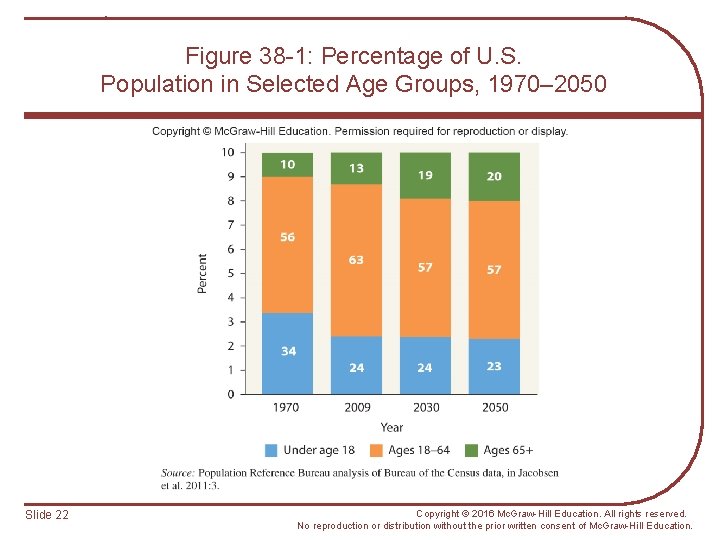
Figure 38 -1: Percentage of U. S. Population in Selected Age Groups, 1970– 2050 Slide 22 Copyright © 2016 Mc. Graw-Hill Education. All rights reserved. No reproduction or distribution without the prior written consent of Mc. Graw-Hill Education.
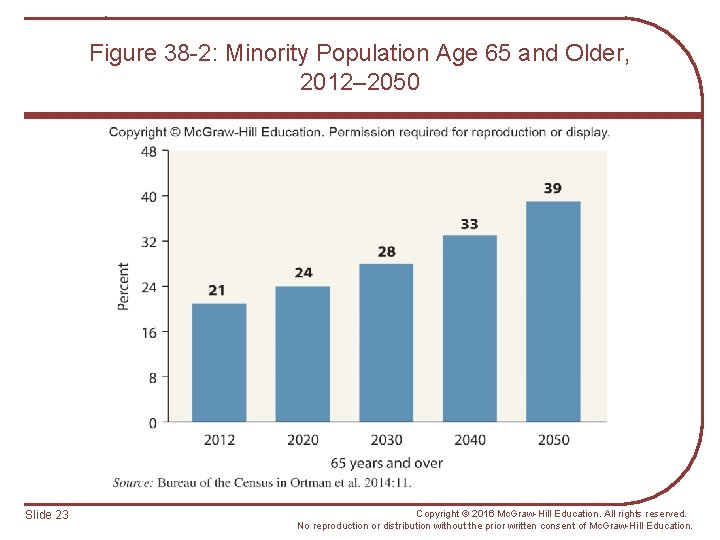
Figure 38 -2: Minority Population Age 65 and Older, 2012– 2050 Slide 23 Copyright © 2016 Mc. Graw-Hill Education. All rights reserved. No reproduction or distribution without the prior written consent of Mc. Graw-Hill Education.
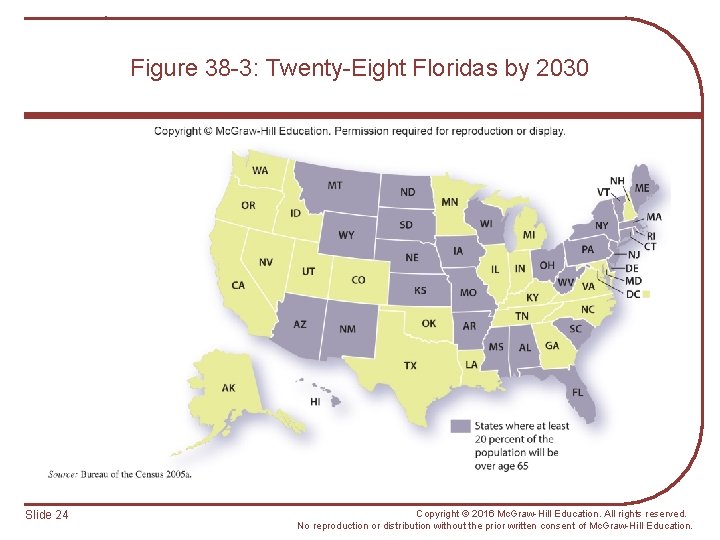
Figure 38 -3: Twenty-Eight Floridas by 2030 Slide 24 Copyright © 2016 Mc. Graw-Hill Education. All rights reserved. No reproduction or distribution without the prior written consent of Mc. Graw-Hill Education.
The Elderly: Emergence of a Collective Consciousness • Growing awareness of the social power of the elderly – AARP powerful lobbying organization – Formation of organizations for elderly homosexuals – Elderly in U. S. better off today than before, but they constitute diverse group Slide 25 Copyright © 2016 Mc. Graw-Hill Education. All rights reserved. No reproduction or distribution without the prior written consent of Mc. Graw-Hill Education.
Social Policy and Age Stratification: The Right to Die Worldwide • Looking at the Issue – Physician-assisted suicide one aspect of larger debate in U. S. • Euthanasia: act of bringing about death of a hopelessly ill and suffering person – Public opinion divided • Greater legal tolerance for passive euthanasia Slide 26 Copyright © 2016 Mc. Graw-Hill Education. All rights reserved. No reproduction or distribution without the prior written consent of Mc. Graw-Hill Education.
Social policy and Age Stratification: The Right to Die Worldwide • Applying Sociology – Informal norms seem to permit mercy killings – American Hospital Association estimates as many as 70% of all deaths in the U. S. quietly negotiated • Conflict theorists ask questions about the values raised by such decisions • People who died with a doctor’s help more likely to be socially, economically, and educationally privileged Slide 27 Copyright © 2016 Mc. Graw-Hill Education. All rights reserved. No reproduction or distribution without the prior written consent of Mc. Graw-Hill Education.
Social policy and Age Stratification: The Right to Die Worldwide • Initiating Policy – In industrialized world, euthanasia legal and widely accepted in the Netherlands, Belgium, and Switzerland – In U. S. , Oregon and Washington allows assisted suicide – Medical and technological advances allow us to prolong life • Cannot provide answers to complex ethical, legal, and political questions Slide 28 Copyright © 2016 Mc. Graw-Hill Education. All rights reserved. No reproduction or distribution without the prior written consent of Mc. Graw-Hill Education.
Research Today 37 -2: Native Americans and Death – Does your own family observe traditional cultural practices regarding death and dying, independent of formal religious ritual? If so, explain their meaning and importance to your family. – Apply the concepts you learned in Chapter 3 to Native American burial practices. Which of them do you find most useful in understanding these practices? Slide 29 Copyright © 2016 Mc. Graw-Hill Education. All rights reserved. No reproduction or distribution without the prior written consent of Mc. Graw-Hill Education.
Research Today 38 -1: Elderspeak and Other Signs of Ageism – Have you ever worked alongside an older person? If so, did that person’s age affect the way he or she did the job? In what ways? – Are older people the only ones who experience ageism? What signs of ageism might those who are not old experience? Slide 30 Copyright © 2016 Mc. Graw-Hill Education. All rights reserved. No reproduction or distribution without the prior written consent of Mc. Graw-Hill Education.
- Slides: 30