
Strategy Issues in Industries and Life Cycle Stages
- Slides: 20
Strategy Issues in Industries and Life Cycle Stages Chapter 8 Strategic Management: Value Creation, Sustainability, and Performance,
Learning Objectives 1. Stages of industry life cycle and their impact on business strategy. 2. Implications of competing in fragmented or concentrated industries. 3. Value chain activities appropriate for organizational life cycle stages. 4. Risks of first mover strategy. 5. International strategy considerations.
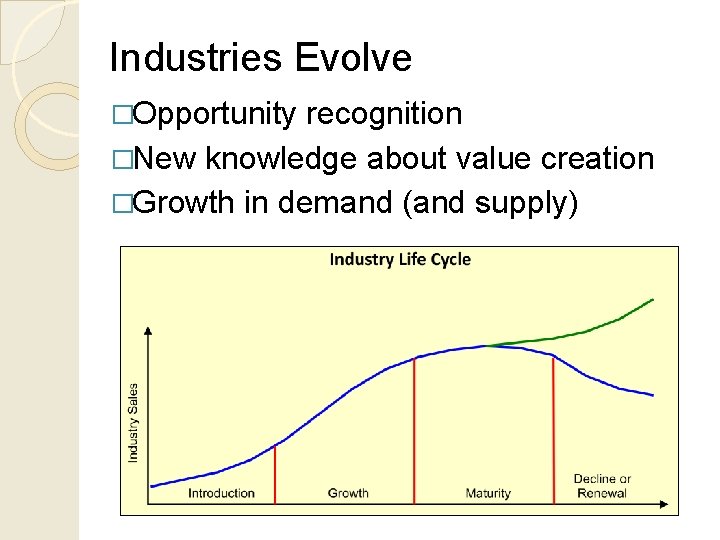
Industries Evolve �Opportunity recognition �New knowledge about value creation �Growth in demand (and supply)
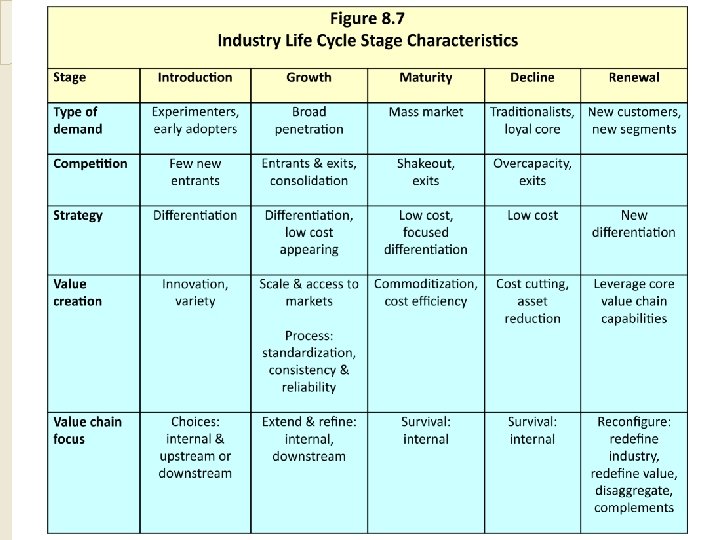
Industry Stages �Introduction – innovative new companies �Growth – increased demand, standardization �Maturity – slowed demand, commoditization �Decline – substitutes abound �Renewal – new customers, new segments § Redefine industry boundaries § Disaggregate bocks of value chain activity
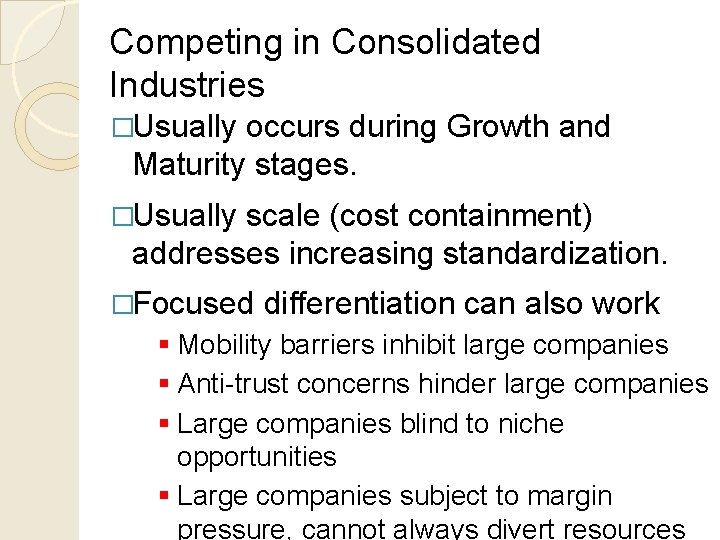
Competing in Consolidated Industries �Usually occurs during Growth and Maturity stages. �Usually scale (cost containment) addresses increasing standardization. �Focused differentiation can also work § Mobility barriers inhibit large companies § Anti-trust concerns hinder large companies § Large companies blind to niche opportunities § Large companies subject to margin pressure, cannot always divert resources
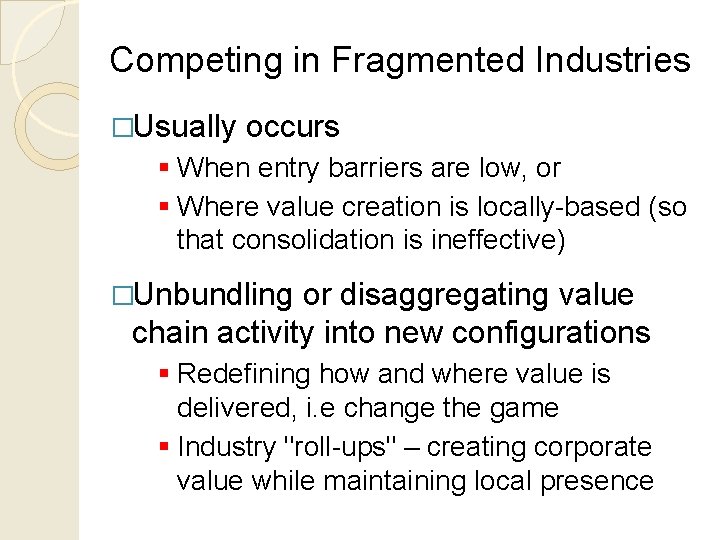
Competing in Fragmented Industries �Usually occurs § When entry barriers are low, or § Where value creation is locally-based (so that consolidation is ineffective) �Unbundling or disaggregating value chain activity into new configurations § Redefining how and where value is delivered, i. e change the game § Industry "roll-ups" – creating corporate value while maintaining local presence
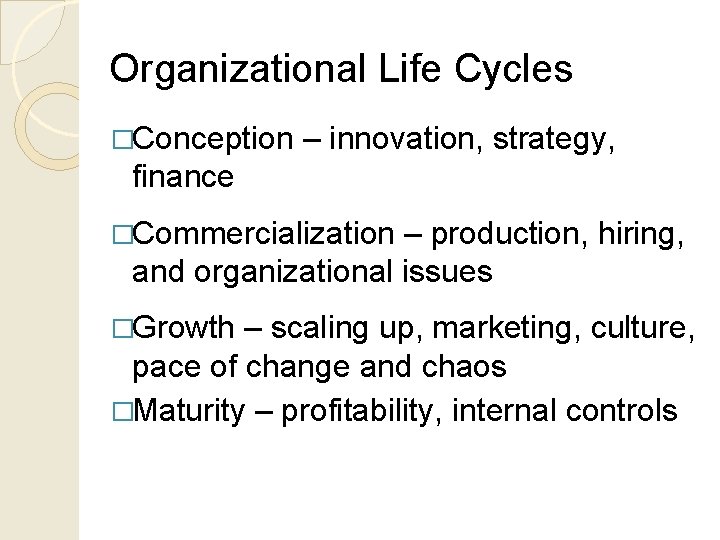
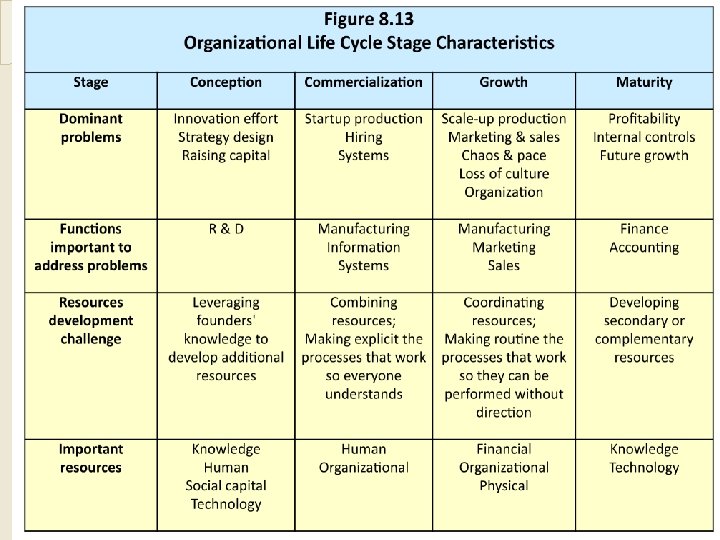
Organizational Life Cycles �Conception – innovation, strategy, finance �Commercialization – production, hiring, and organizational issues �Growth – scaling up, marketing, culture, pace of change and chaos �Maturity – profitability, internal controls
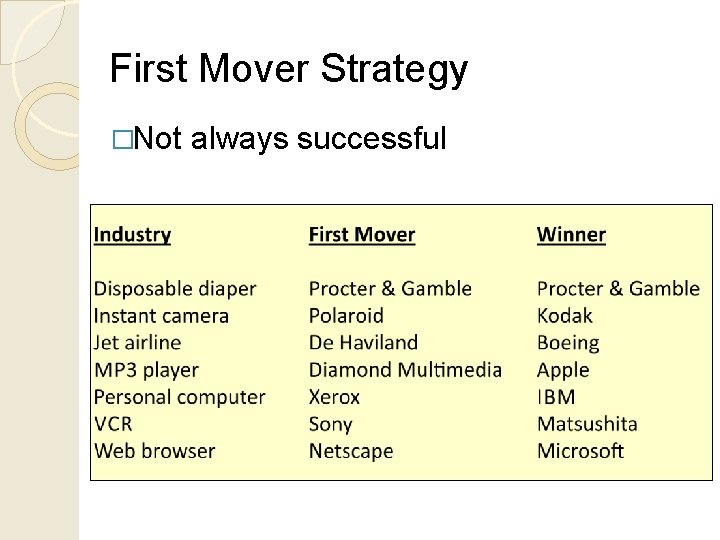
First Mover Strategy �Not always successful
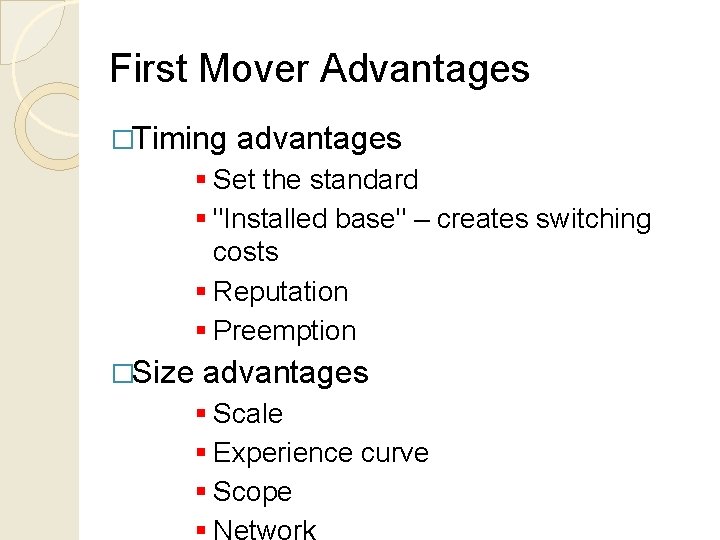
First Mover Advantages �Timing advantages § Set the standard § "Installed base" – creates switching costs § Reputation § Preemption �Size advantages § Scale § Experience curve § Scope
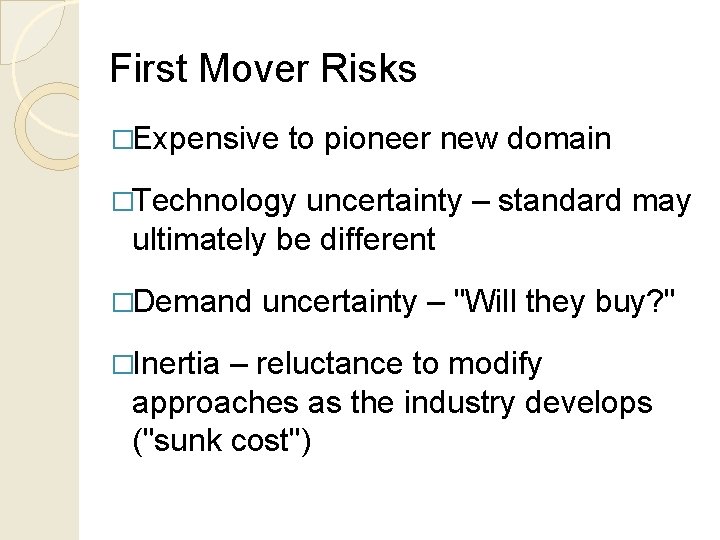
First Mover Risks �Expensive to pioneer new domain �Technology uncertainty – standard may ultimately be different �Demand �Inertia uncertainty – "Will they buy? " – reluctance to modify approaches as the industry develops ("sunk cost")
Dealing with Fast Growth �Growth at 20+ % per year �Organizational problems: chaos, paperwork, customer attention, competitive attention �"Solutions" § Use vision, mission, principles to unify § Carefully examine value chain activities ØWhat's strategically critical, what's not ØEmphasis on internal coordination of activities § Consider restructuring (Chapter 11)
Strategic Renewal �Usually needed at the Maturity Stage �"Solutions" § Build opportunity recognition capabilities § Reconfigure resources to develop new operational capabilities that can be leveraged § Develop new products / services at "platform" level – a foundation for future variations § Optioned investments in innovation – a portfolio approach
International / Global Strategy �Growth into international markets is a strategic choice among alternatives �Common motivations § New geographic revenue opportunities § Leverage value chain and resources § Spread risk § Overcoming trade barriers § Achieve location-based advantages (where value creation is enhance by local presence)
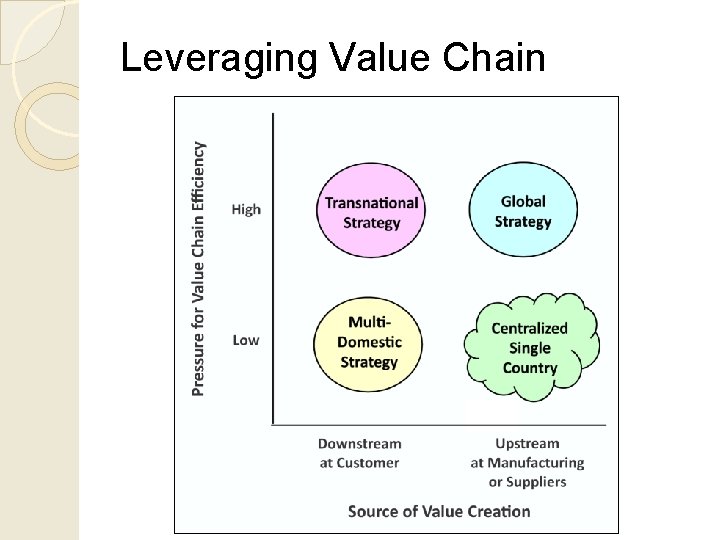
Leveraging Value Chain
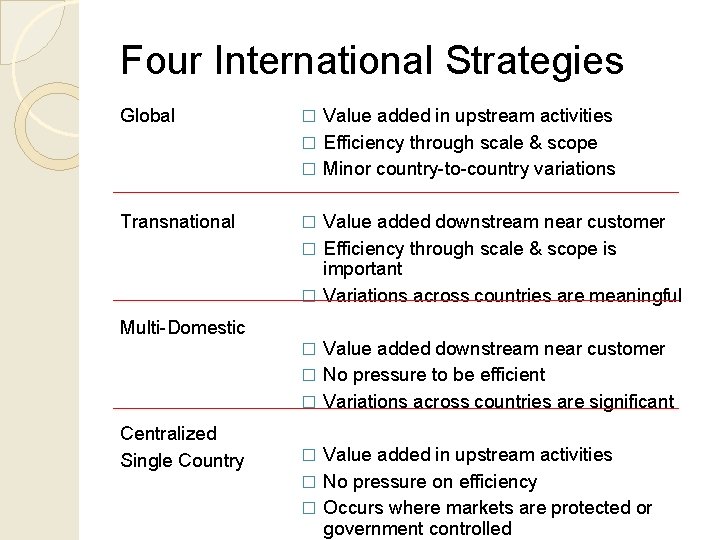
Four International Strategies Global � Transnational � Multi-Domestic Value added in upstream activities � Efficiency through scale & scope � Minor country-to-country variations Value added downstream near customer � Efficiency through scale & scope is important � Variations across countries are meaningful Value added downstream near customer � No pressure to be efficient � Variations across countries are significant � Centralized Single Country Value added in upstream activities � No pressure on efficiency � Occurs where markets are protected or government controlled �
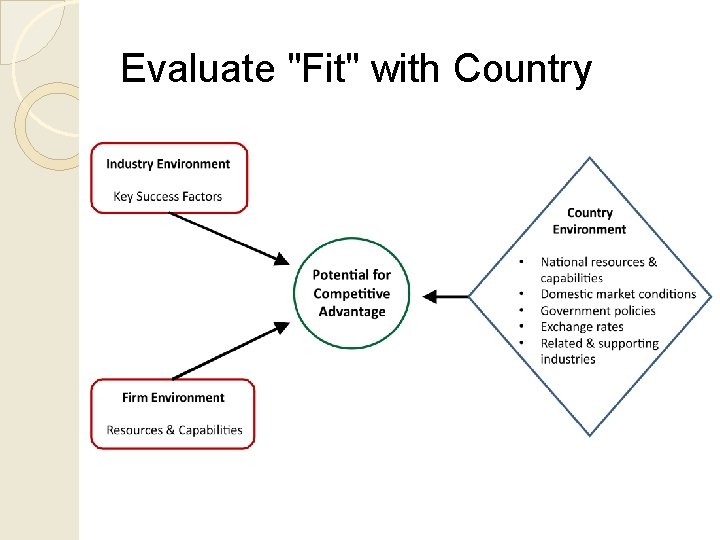
Evaluate "Fit" with Country
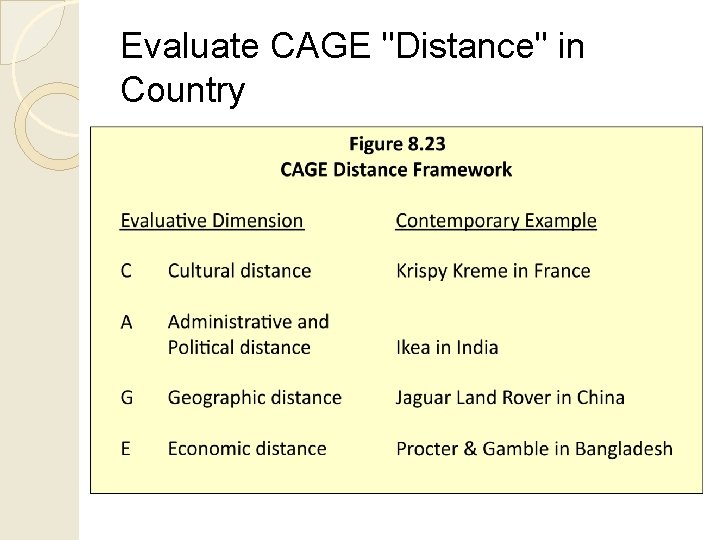
Evaluate CAGE "Distance" in Country
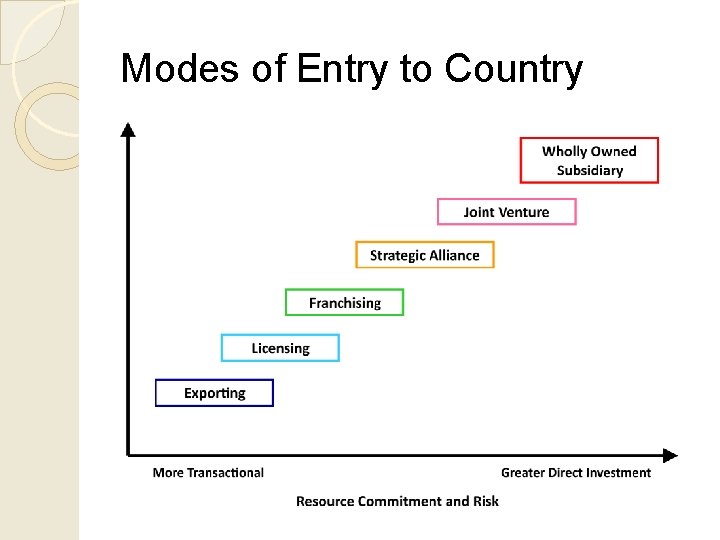
Modes of Entry to Country