
Strategy in A Complex World Semester 2 Internationalisation



- Slides: 22
Strategy in A Complex World Semester 2 Internationalisation Alan P France
National Advantage? • “Death of distance” - Virtual” working and ubiquitous connectivity • “Globalisation of Products and Markets • “Global Localisation”
National Advantage? • Companies detached from countries • Labour force mobility • English in the boardroom • Global CEOs • BUT – Made in Effect – Re-Shoring
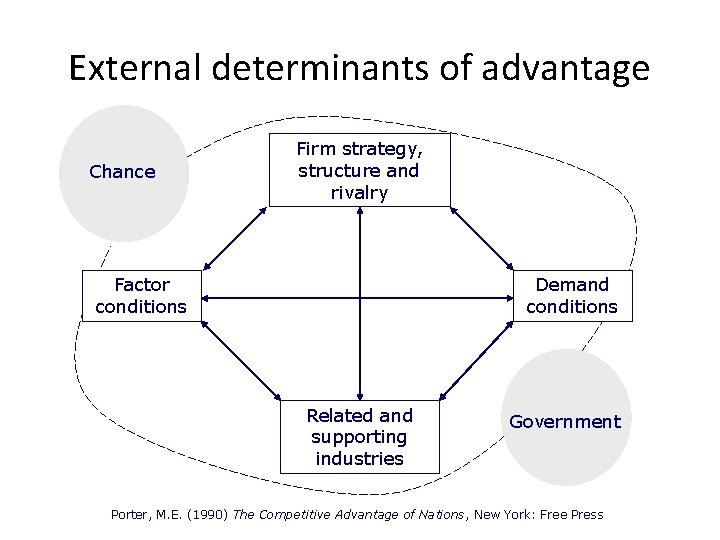
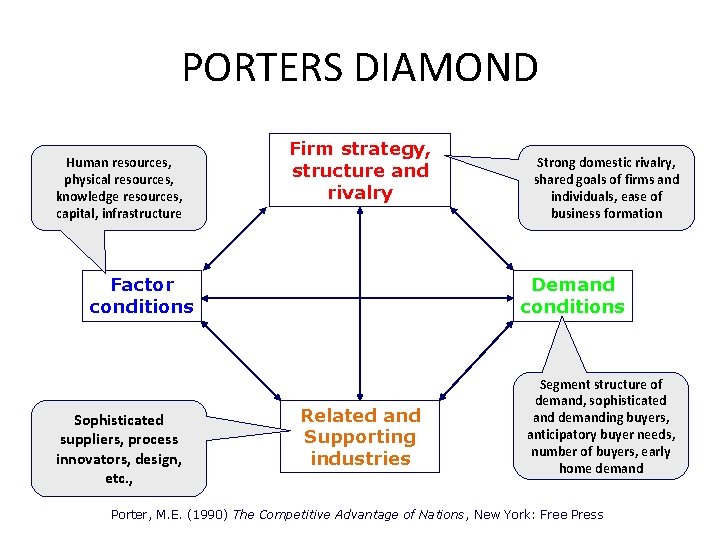
PORTER’S DIAMOND Published just before the wide availability of internet - Sought to explain – Why London was good for financial services, advertising – Why Silicon Valley was good for Technology Innovation – Why New York was good for media – Why Centre of India was good for IT industry – Why Germany was good for cars, machine tools, steel, surgical instruments – Why Uzbekistan is good for…
External determinants of advantage Chance Firm strategy, structure and rivalry Factor conditions Demand conditions Related and supporting industries Government Porter, M. E. (1990) The Competitive Advantage of Nations, New York: Free Press
PORTERS DIAMOND Human resources, physical resources, knowledge resources, capital, infrastructure Firm strategy, structure and rivalry Factor conditions Sophisticated suppliers, process innovators, design, etc. , Strong domestic rivalry, shared goals of firms and individuals, ease of business formation Demand conditions Related and Supporting industries Segment structure of demand, sophisticated and demanding buyers, anticipatory buyer needs, number of buyers, early home demand Porter, M. E. (1990) The Competitive Advantage of Nations, New York: Free Press
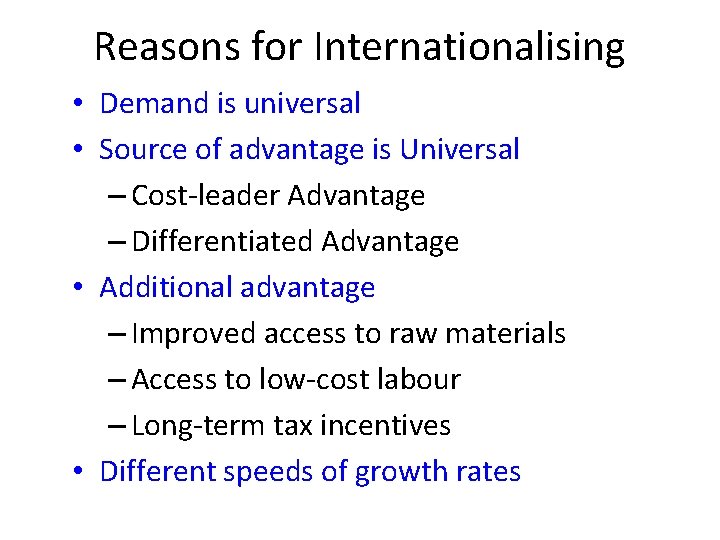
Reasons for Internationalising • Demand is universal • Source of advantage is Universal – Cost-leader Advantage – Differentiated Advantage • Additional advantage – Improved access to raw materials – Access to low-cost labour – Long-term tax incentives • Different speeds of growth rates
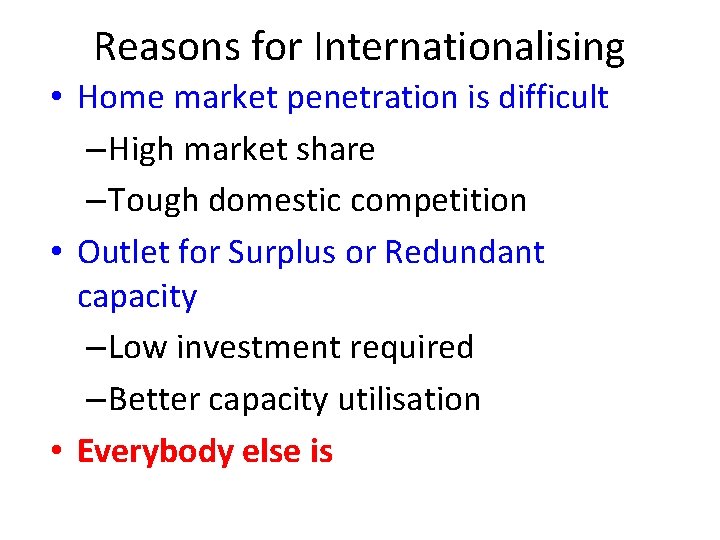
Reasons for Internationalising • Home market penetration is difficult – High market share – Tough domestic competition • Outlet for Surplus or Redundant capacity – Low investment required – Better capacity utilisation • Everybody else is
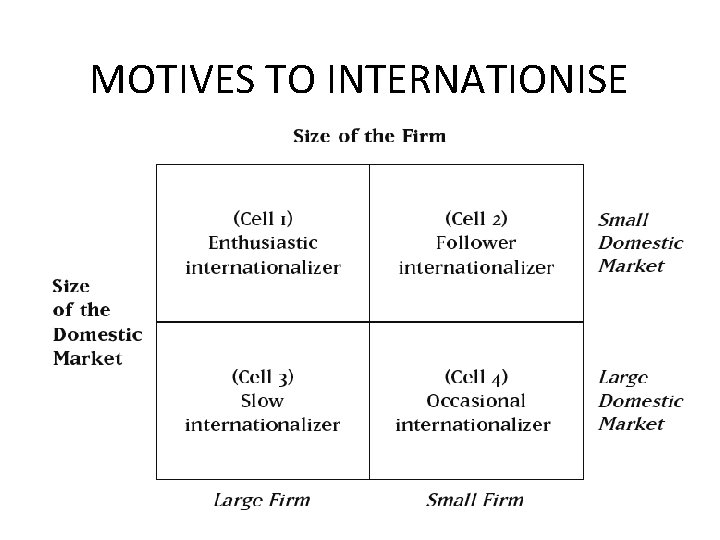
MOTIVES TO INTERNATIONISE
Where to GO? • Location – Geographical advantages – Agglomeration - clustering of economic activities • Strategic – Seeking natural resources, markets, efficiency and innovation • BUT – Cultural distance - the difference between two cultures – Institutional distance - comparing the regulatory, normative, and cognitive institutions
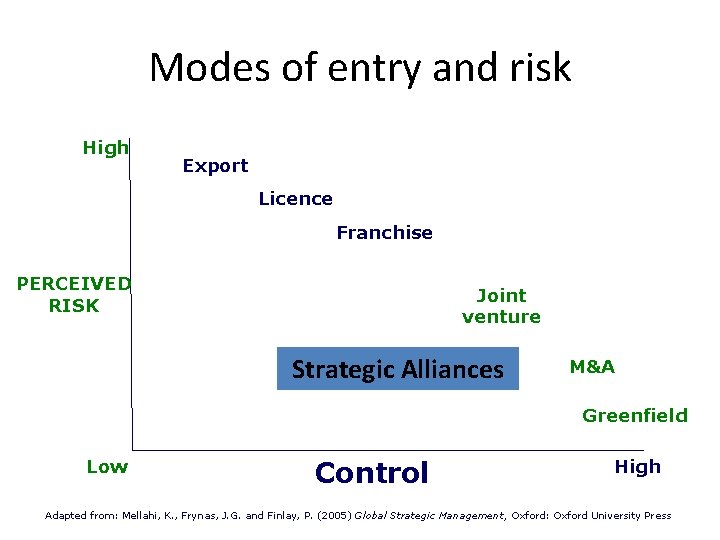
Modes of entry and risk High Export Licence Franchise PERCEIVED RISK Joint venture Strategic Alliances M&A Greenfield Low Control High Adapted from: Mellahi, K. , Frynas, J. G. and Finlay, P. (2005) Global Strategic Management, Oxford: Oxford University Press
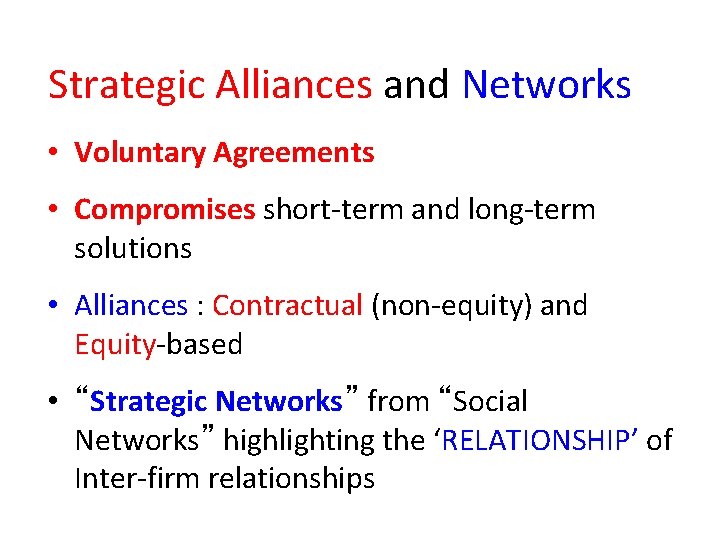
Strategic Alliances and Networks • Voluntary Agreements • Compromises short-term and long-term solutions • Alliances : Contractual (non-equity) and Equity-based • “Strategic Networks” from “Social Networks” highlighting the ‘RELATIONSHIP’ of Inter-firm relationships
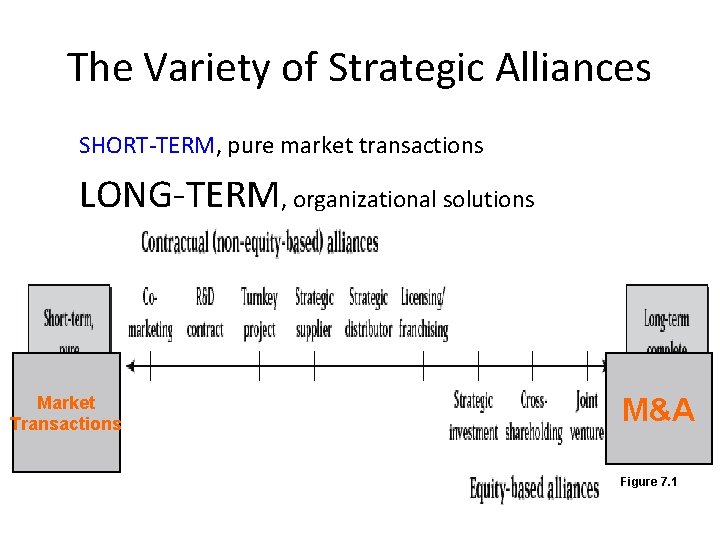
The Variety of Strategic Alliances SHORT-TERM, pure market transactions LONG-TERM, organizational solutions Market Transactions M&A Figure 7. 1
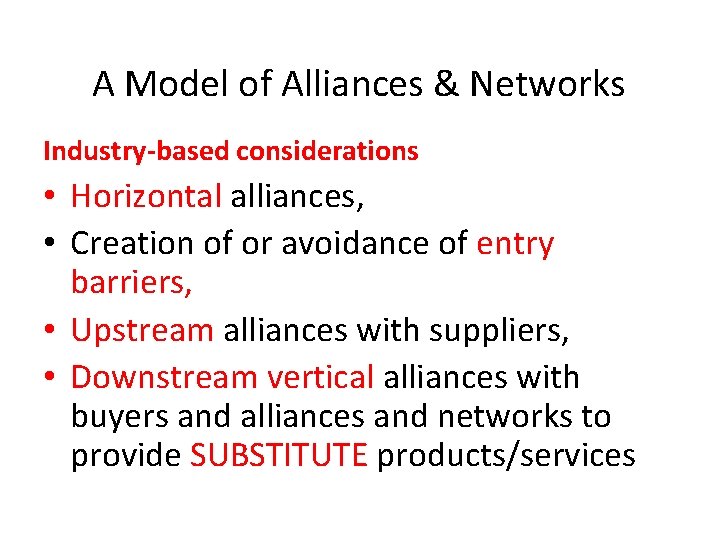
A Model of Alliances & Networks Industry-based considerations • Horizontal alliances, • Creation of or avoidance of entry barriers, • Upstream alliances with suppliers, • Downstream vertical alliances with buyers and alliances and networks to provide SUBSTITUTE products/services
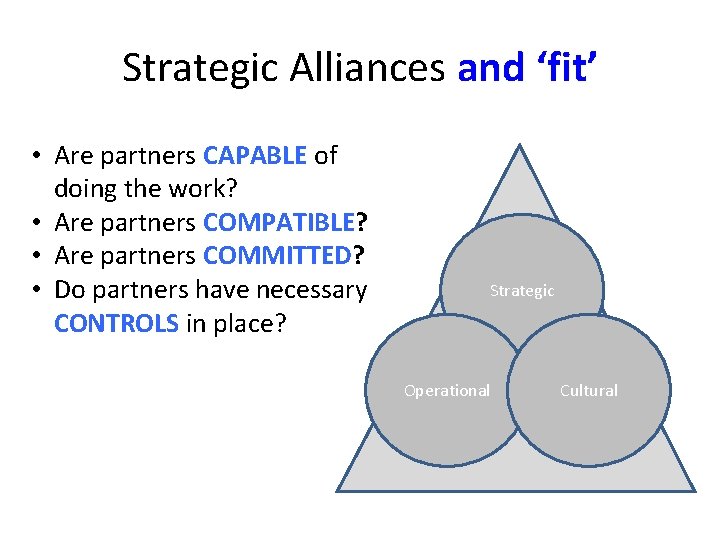
Strategic Alliances and ‘fit’ • Are partners CAPABLE of doing the work? • Are partners COMPATIBLE? • Are partners COMMITTED? • Do partners have necessary CONTROLS in place? Strategic Operational Cultural
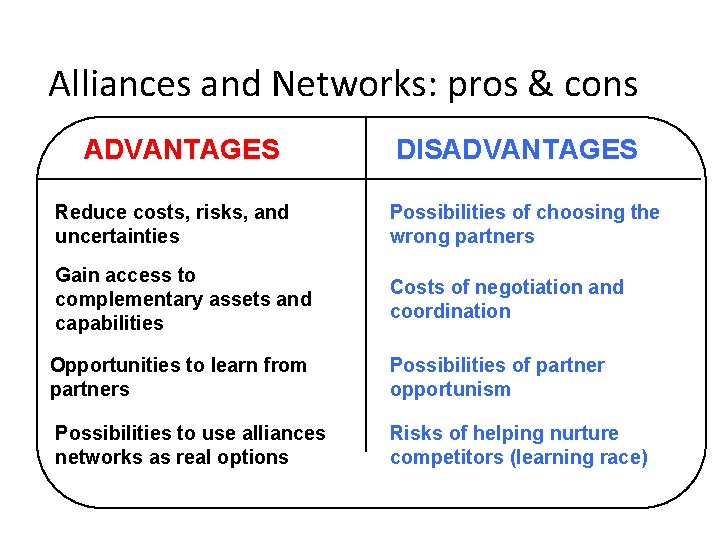
Alliances and Networks: pros & cons ADVANTAGES DISADVANTAGES Reduce costs, risks, and uncertainties Possibilities of choosing the wrong partners Gain access to complementary assets and capabilities Costs of negotiation and coordination Opportunities to learn from partners Possibilities of partner opportunism Possibilities to use alliances networks as real options Risks of helping nurture competitors (learning race) Table 7. 1
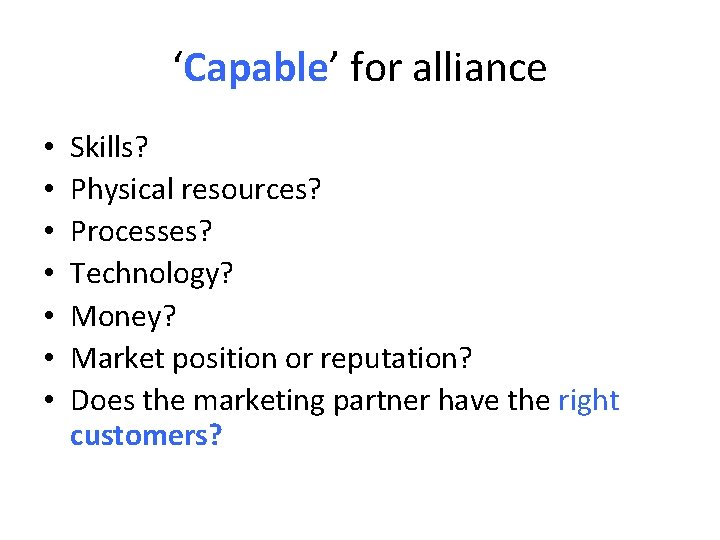
‘Capable’ for alliance • • Skills? Physical resources? Processes? Technology? Money? Market position or reputation? Does the marketing partner have the right customers?
‘Compatible for alliance Do the partners have the right combination of • Culture or Understanding of Diversity • Goals – Values and Outcomes
‘Committed’ to alliance • Do the partners have sufficiently similar • • • time horizons? will to continue? risk attitudes? balance of interest? balance of potential? balance of investment?
‘Control’ over alliance Do partners have sufficient comfort – that risks are contained to acceptable levels – that contractual control is established? – that managerial control is acceptable? – that operations will increase productivity over what each could do separately? – that individual core competencies will be preserved? – that exit conditions are agreed?
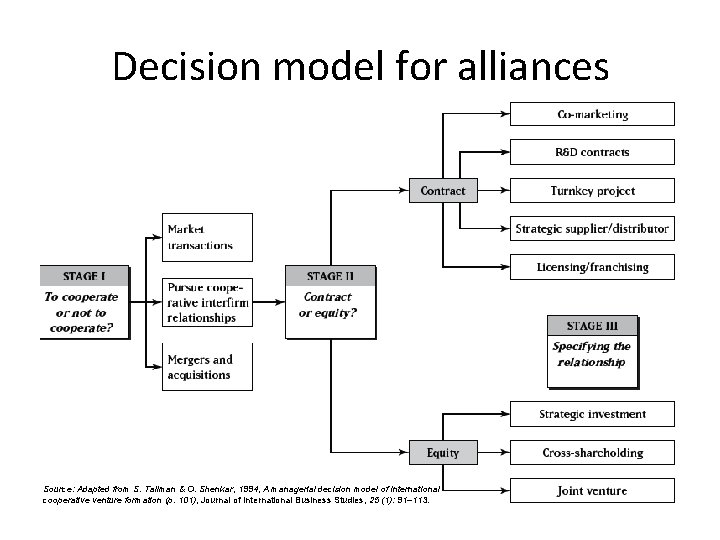
Formation • Stage one: To cooperate or not to cooperate • Stage two: Contract or equity? • Stage three: Positioning the relationship
Decision model for alliances Source: Adapted from S. Tallman & O. Shenkar, 1994, A managerial decision model of international cooperative venture formation (p. 101), Journal of International Business Studies, 25 (1): 91– 113.