
STRATEGY DEVELOPMENT METHODS Housekeeping Restrooms are located every
- Slides: 18
STRATEGY DEVELOPMENT METHODS
Housekeeping • Restrooms are located every floor near the lift area • Duration: 30 mins • No breaks. Learners are advised to have their meals before coming to class. • Canteen at the ground floor operates from 8: 30 am to 5: 00 pm • Free drinks from vending machines • Emergency exits are located at each end of the corridors. Incase of emergency, take the nearest exit down to the assembly area at the car park.
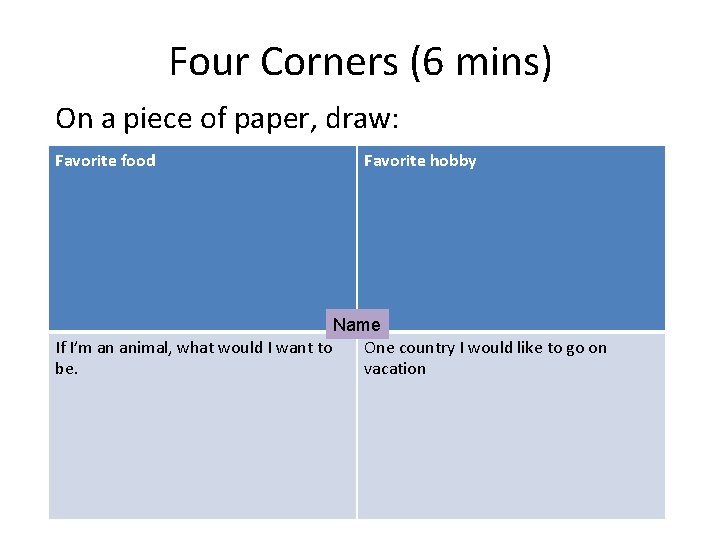
Four Corners (6 mins) On a piece of paper, draw: Favorite food Favorite hobby Name If I’m an animal, what would I want to One country I would like to go on be. vacation
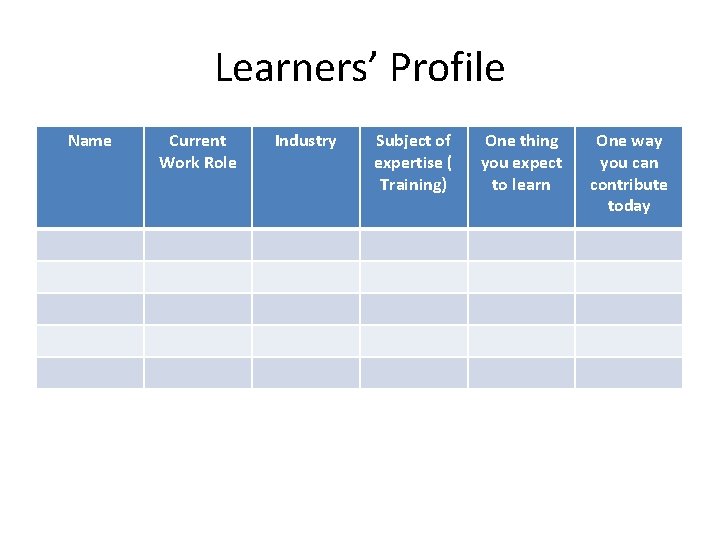
Learners’ Profile Name Current Work Role Industry Subject of expertise ( Training) One thing you expect to learn One way you can contribute today
What Can We Do To Enhance Learning?
Learning Outcomes By the end of this session, you will be able to: • Identify the strength and weaknesses of the company in relation to the project at hand. • Identify the opportunities and threats of the company in relation to the project at hand. • Identify appropriate strategies before embarking on a project
Strategic Planning Dept – IAL Project Identify strategies to increase the number of ACTA students in IAL.
Typical Analysis Tools • SWOT – Strength, Weaknesses, Opportunities & Threats • 3 Cs – Company, Customers & Competitors • 5 Cs – 3 Cs, Climate & Collaborators • 4 Ps – Product, Price, Place & Publicity (Positioning) • PEST – Political, Economy, Social & Technology • Porter’s Five Forces: – – – The threat of the entry of new competitors The intensity of competitive rivalry The threat of substitute products or services The bargaining power of customers (buyers) The bargaining power of suppliers
SWOT Analysis
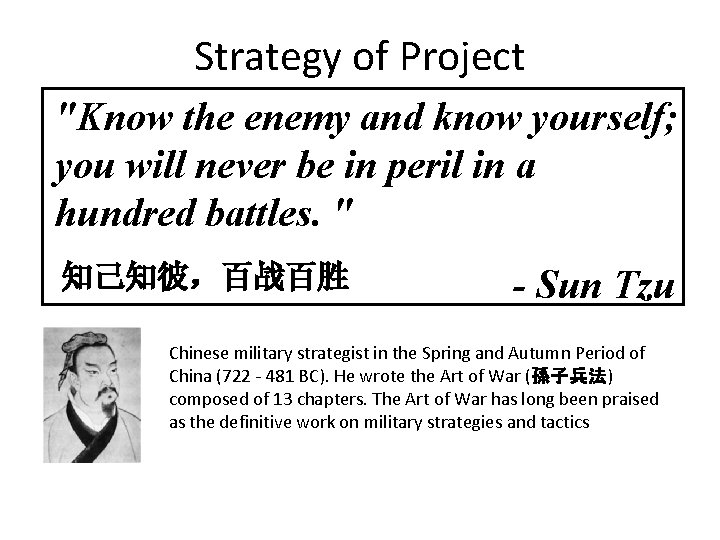
Strategy of Project "Know the enemy and know yourself; you will never be in peril in a hundred battles. " 知己知彼,百战百胜 - Sun Tzu Chinese military strategist in the Spring and Autumn Period of China (722 - 481 BC). He wrote the Art of War (孫子兵法) composed of 13 chapters. The Art of War has long been praised as the definitive work on military strategies and tactics
Situation Analysis In order to profitably satisfy customer needs, the firm must first understand the external and internal situation, including the customers, the market environment and the firm’s own capabilities. Furthermore, it needs to forecast trends in the dynamic environment in which it operates.
SWOT Analysis • SWOT: Strengths, Weaknesses, Opportunities and Threats – SWOT is a simple framework for generating strategic alternatives from a situation analysis. – SWOT was originated in the late 1960's. The GE Growth Council used this form of analysis in the 1980's. Because it concentrates on the issues that potentially have the most impact. • It is applicable to either the corporate level or the business unit level. • The SWOT analysis is useful when a very limited amount of time is available to address a complex strategic situation.
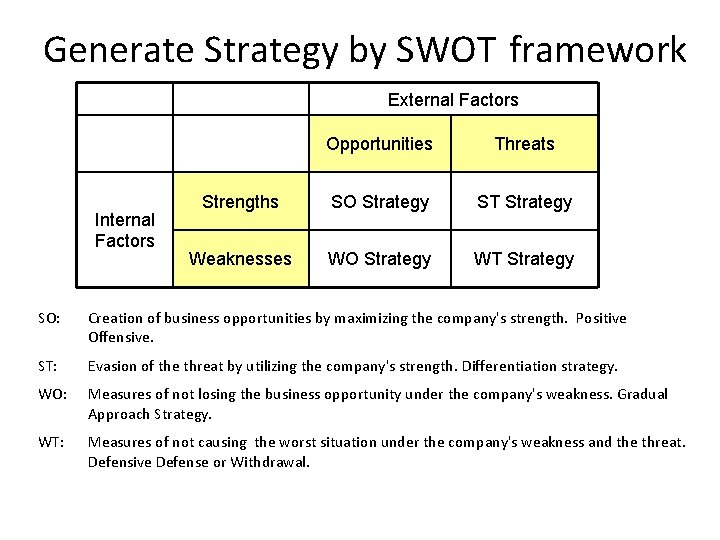
Generate Strategy by SWOT framework External Factors Internal Factors Opportunities Threats Strengths SO Strategy ST Strategy Weaknesses WO Strategy WT Strategy SO: Creation of business opportunities by maximizing the company's strength. Positive Offensive. ST: Evasion of the threat by utilizing the company's strength. Differentiation strategy. WO: Measures of not losing the business opportunity under the company's weakness. Gradual Approach Strategy. WT: Measures of not causing the worst situation under the company's weakness and the threat. Defensive Defense or Withdrawal.
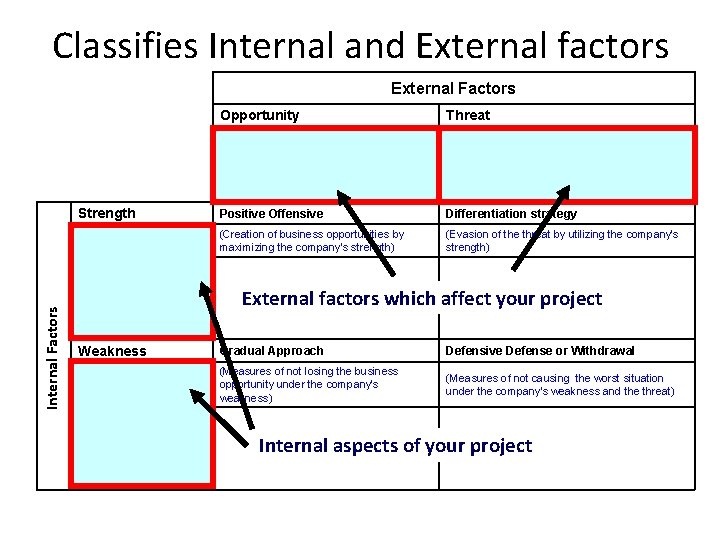
Classifies Internal and External factors Internal Factors External Factors Opportunity Threat Strength Positive Offensive Differentiation strategy (Creation of business opportunities by maximizing the company's strength) (Evasion of the threat by utilizing the company's strength) External factors which affect your project Weakness Gradual Approach Defensive Defense or Withdrawal (Measures of not losing the business opportunity under the company's weakness) (Measures of not causing the worst situation under the company's weakness and the threat) Internal aspects of your project
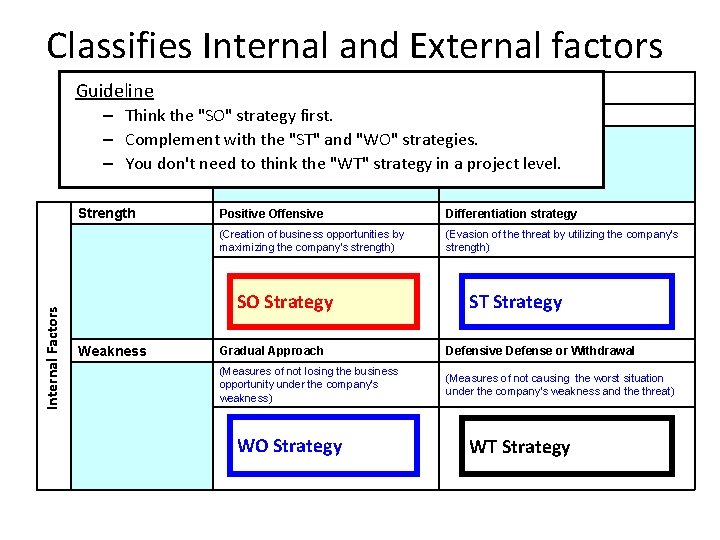
Classifies Internal and External factors Guideline External Factors Internal Factors Opportunity Threat – Think the "SO" strategy first. – Complement with the "ST" and "WO" strategies. – You don't need to think the "WT" strategy in a project level. Strength Positive Offensive Differentiation strategy (Creation of business opportunities by maximizing the company's strength) (Evasion of the threat by utilizing the company's strength) SO Strategy ST Strategy Weakness Gradual Approach Defensive Defense or Withdrawal (Measures of not losing the business opportunity under the company's weakness) (Measures of not causing the worst situation under the company's weakness and the threat) WO Strategy WT Strategy
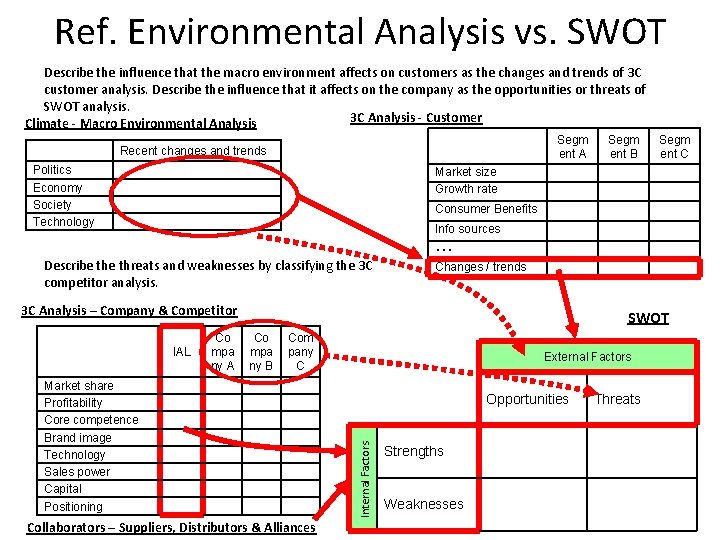
Ref. Environmental Analysis vs. SWOT Describe the influence that the macro environment affects on customers as the changes and trends of 3 C customer analysis. Describe the influence that it affects on the company as the opportunities or threats of SWOT analysis. 3 C Analysis - Customer Climate - Macro Environmental Analysis Segm ent A Recent changes and trends Politics Economy Society Technology Segm ent B Segm ent C Market size Growth rate Consumer Benefits Info sources Describe threats and weaknesses by classifying the 3 C competitor analysis. ・・・ Changes / trends 3 C Analysis – Company & Competitor Co mpa ny B Com pany C Market share Profitability Core competence Brand image Technology Sales power Capital Positioning Collaborators – Suppliers, Distributors & Alliances External Factors Opportunities Internal Factors IAL Co mpa ny A SWOT Strengths Weaknesses Threats
Learning Outcomes You should be able to: • Identify the strength and weaknesses of the company in relation to the project at hand. • Identify the opportunities and threats of the company in relation to the project at hand. • Identify appropriate strategies before embarking on a project
How will you use the knowledge in your work place?