
Strategies for Using Learning Styles TEACHERS HAVE TO
- Slides: 20
Strategies for Using Learning Styles TEACHERS HAVE TO DESIGN CLASSROOMS WITH THE STUDENTS FRONT AND CENTER. WHAT DOES THAT LOOK LIKE IN THE 21 ST CENTURY?
Let’s Pause and think about this quote from a teacher A fifth-grade teacher explains many reasons why she teaches, not the least of which is that …. her students are game changers and she wants a front-row seat when they change the world one day.
Game Changers…. What does that have to do with Learning styles? My supposition is that in order for teachers to be in the game, we need to look at Learning Styles differently from what we normally call “Learning Styles. ”
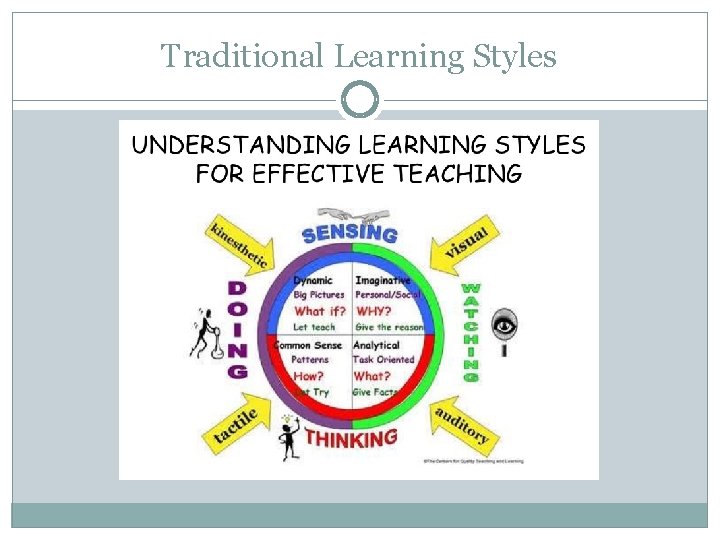
Traditional Learning Styles
Teaching Students about their own preferred Learning Style Experience has taught us that students who understand the models are better to understand their own learning profile. Watch video clip https: //www. youtube. com/watch? v=o. Nx. Cpor. Oofo
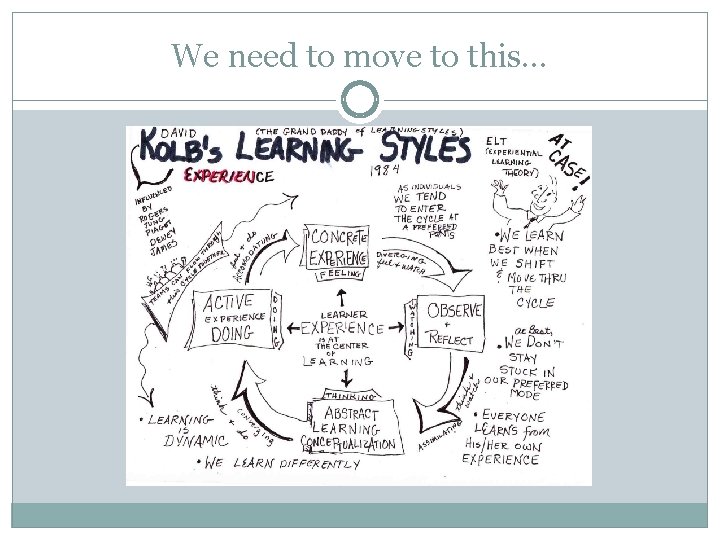
We need to move to this…
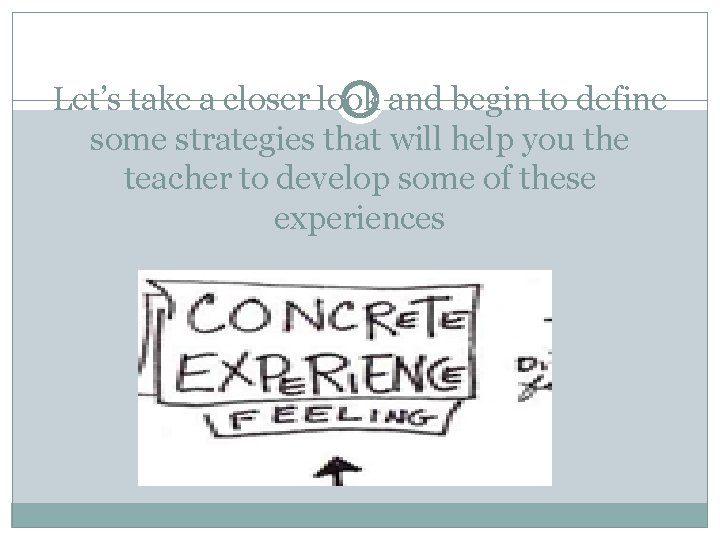
Let’s take a closer look and begin to define some strategies that will help you the teacher to develop some of these experiences
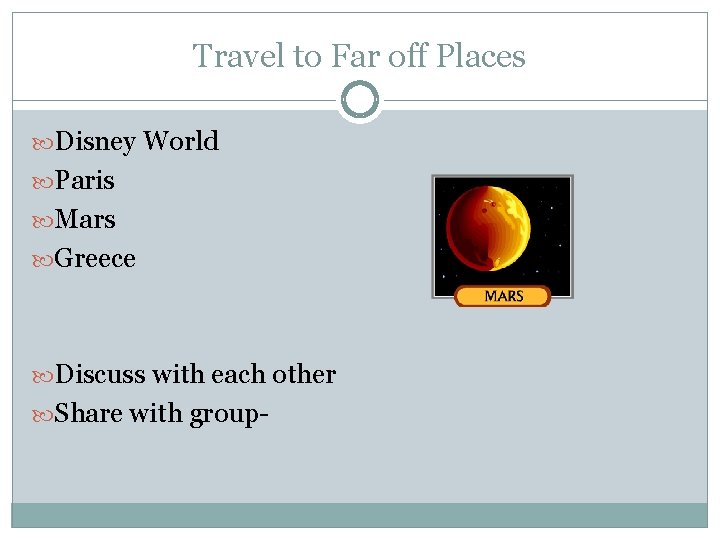
Travel to Mars https: //www. youtube. com/watch? v=Xr. Os. ZELKmtg Think-Pair-Share After watching the movie- answer the following question: “What would it take for you to be convinced to travel to Mars? ”
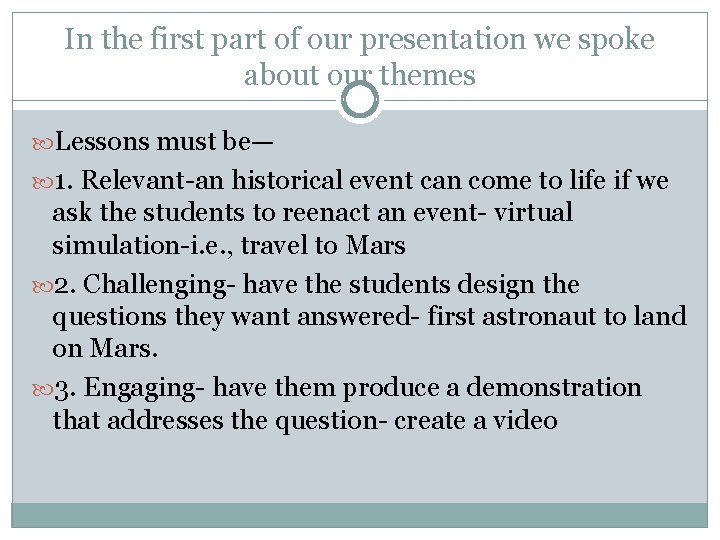
In the first part of our presentation we spoke about our themes Lessons must be— 1. Relevant-an historical event can come to life if we ask the students to reenact an event- virtual simulation-i. e. , travel to Mars 2. Challenging- have the students design the questions they want answered- first astronaut to land on Mars. 3. Engaging- have them produce a demonstration that addresses the question- create a video
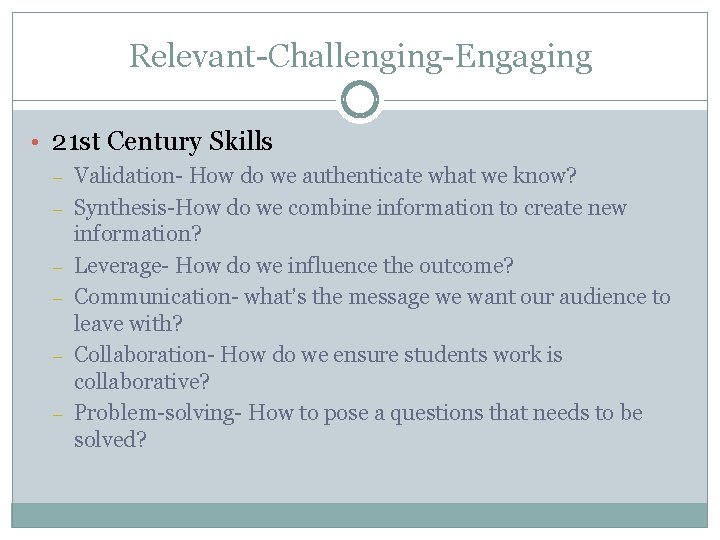
Relevant-Challenging-Engaging • 21 st Century Skills – – – Validation- How do we authenticate what we know? Synthesis-How do we combine information to create new information? Leverage- How do we influence the outcome? Communication- what’s the message we want our audience to leave with? Collaboration- How do we ensure students work is collaborative? Problem-solving- How to pose a questions that needs to be solved?
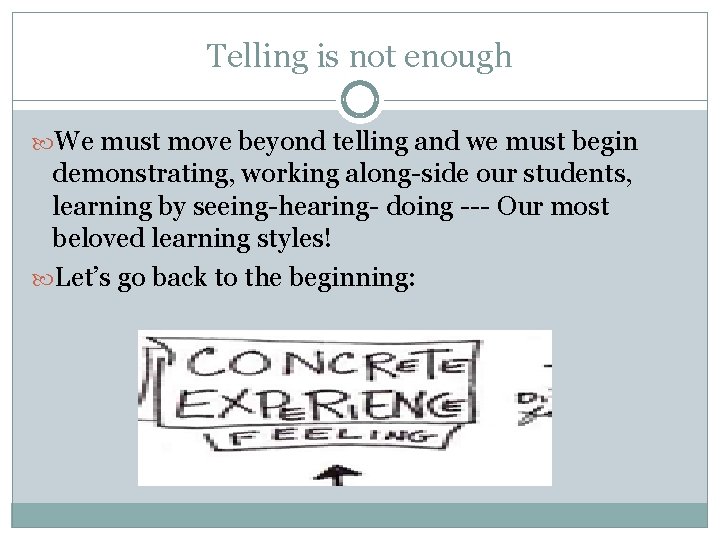
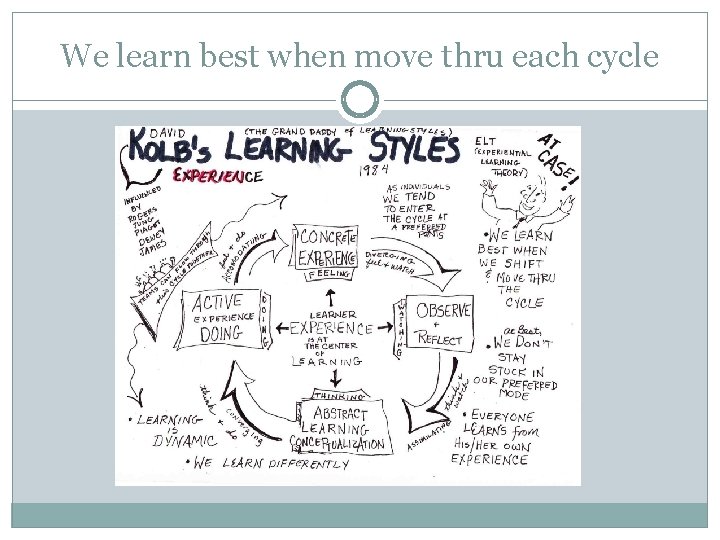
Telling is not enough We must move beyond telling and we must begin demonstrating, working along-side our students, learning by seeing-hearing- doing --- Our most beloved learning styles! Let’s go back to the beginning:
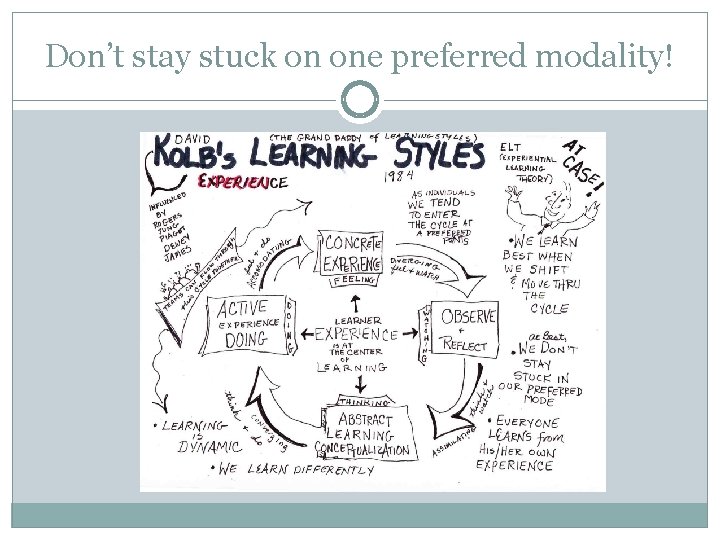
Don’t stay stuck on one preferred modality!
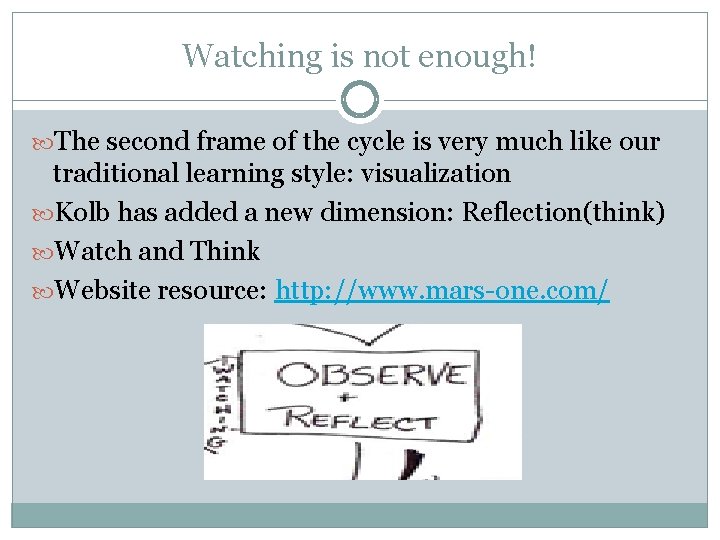
Watching is not enough! The second frame of the cycle is very much like our traditional learning style: visualization Kolb has added a new dimension: Reflection(think) Watch and Think Website resource: http: //www. mars-one. com/
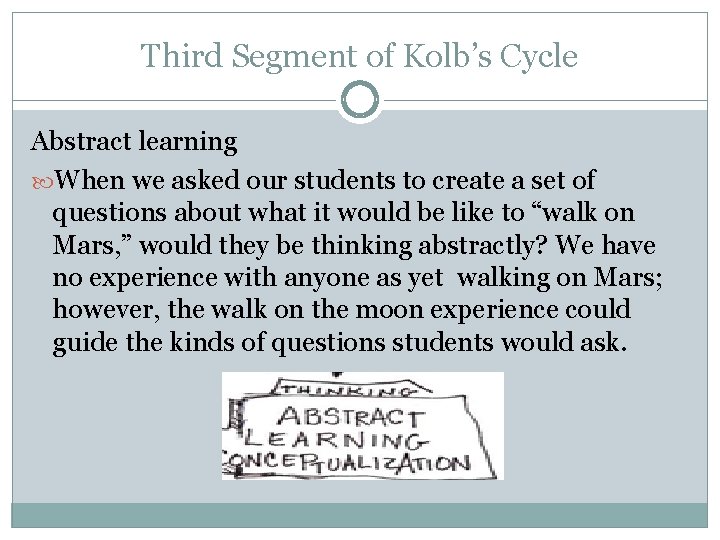
Third Segment of Kolb’s Cycle Abstract learning When we asked our students to create a set of questions about what it would be like to “walk on Mars, ” would they be thinking abstractly? We have no experience with anyone as yet walking on Mars; however, the walk on the moon experience could guide the kinds of questions students would ask.
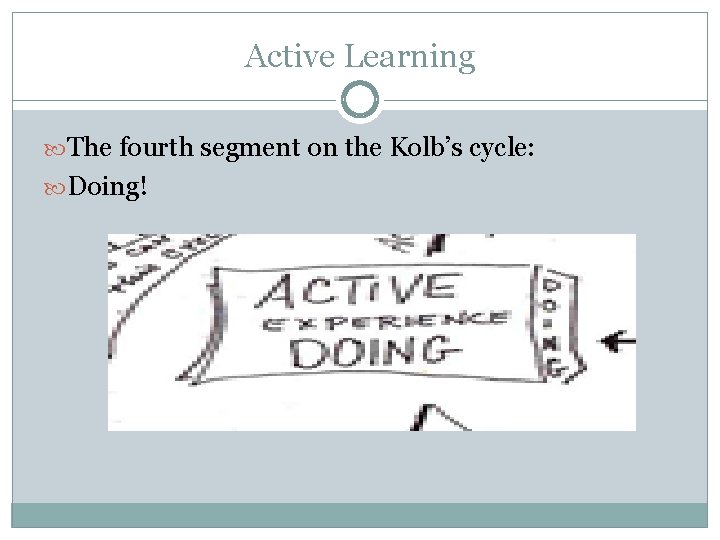
Active Learning The fourth segment on the Kolb’s cycle: Doing!
Active Learning Examples Definition Students involved in activities requiring Higher Order Thinking Skills (BLOOM), they are engaged in problem solving and exploration. Example: Corners: Four places that you would want to travel, if money was no object Go to a corner- and talk with the group as to why you choose the destination and it’s significance to you
Travel to Far off Places Disney World Paris Mars Greece Discuss with each other Share with group-
We learn best when move thru each cycle
Student Centered We all learn differently We all learn from our experiences We design the classroom experience with students in mind
Jamaican Educational Symposium Blog http: //jamaicaneducationalsymposium. weebly. com/ja maican-educational-symposium 1 Tom Frederick Frank Scala tom. frederick@myunion. edu frank. scala@myunion. edu