
Strategies for Managing Low Level Disruption in the
- Slides: 12
Strategies for Managing Low Level Disruption in the Classroom Tuesday 22 nd June 2010 Jacqui Mc. Carron, NBSS
Overview of the Session ¡ Planning for good behaviour ¡ Strategies for managing low level disruption ¡ Skills for de-escalation Jacqui Mc. Carron, NBSS
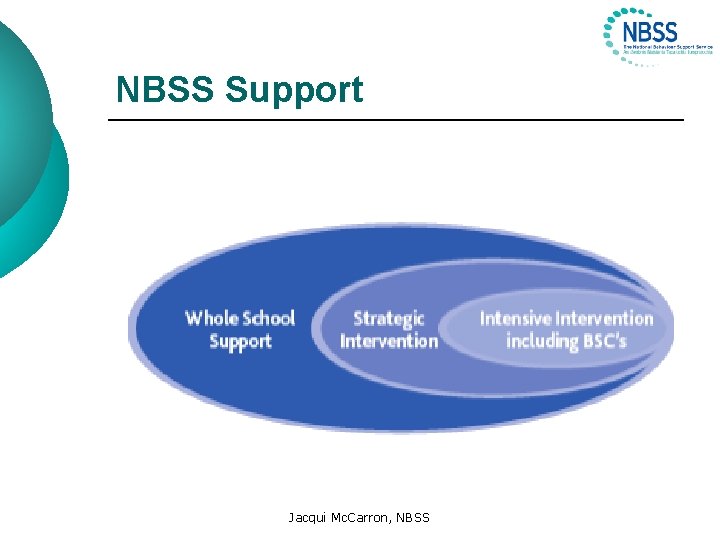
NBSS Support Jacqui Mc. Carron, NBSS
Low Level “ While many of the incidents of disruption may not appear in themselves to be of undue seriousness, taken cumulatively and on a recurring basis, they undermine the climate for teaching and learning in ways that are corrosive for the school community. ” School Matters 2006 p 52 Jacqui Mc. Carron, NBSS
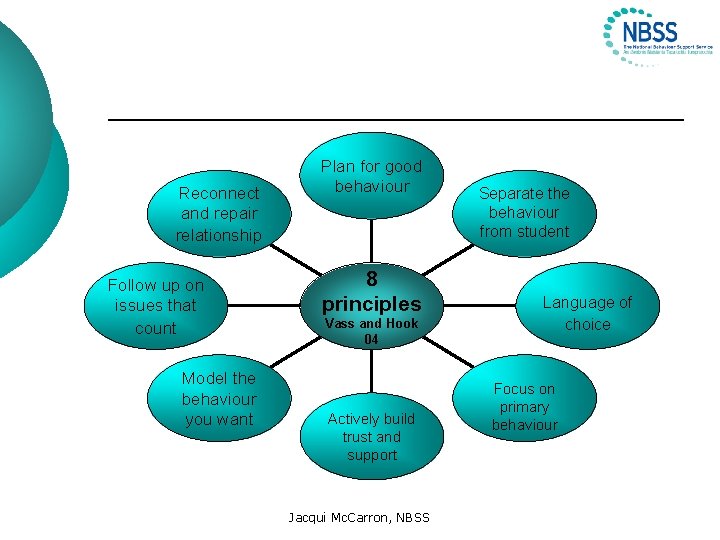
Reconnect and repair relationship Follow up on issues that count Model the behaviour you want Plan for good behaviour 8 principles Vass and Hook 04 Actively build trust and support Jacqui Mc. Carron, NBSS Separate the behaviour from student Language of choice Focus on primary behaviour
Motivational Talking to students and colleagues about what you want and would like to see happening - not what you don't want Jacqui Mc. Carron, NBSS
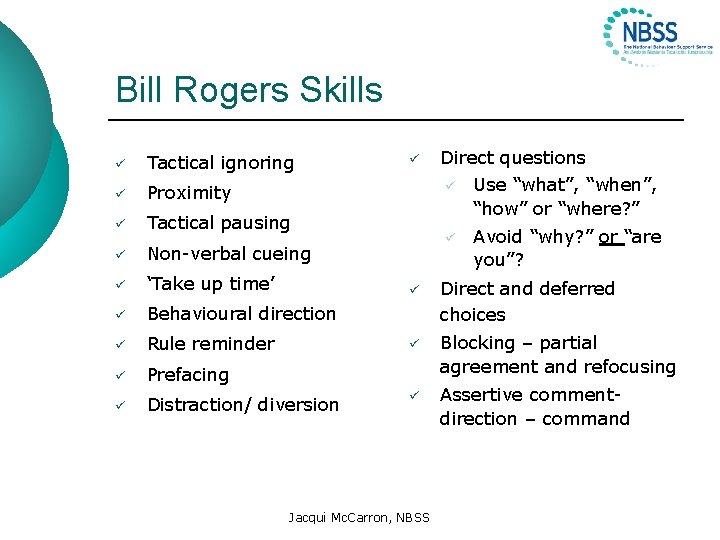
Bill Rogers Skills ü Tactical ignoring ü Proximity ü Tactical pausing ü Non-verbal cueing ü ‘Take up time’ ü Behavioural direction ü Rule reminder ü Prefacing ü Distraction/ diversion ü Direct questions ü Use “what”, “when”, “how” or “where? ” ü Avoid “why? ” or “are you”? ü Direct and deferred choices ü Blocking – partial agreement and refocusing ü Assertive commentdirection – command Jacqui Mc. Carron, NBSS
Keeping it Positive ¡ ¡ An emphasis on positive rather than negative statements Regular and sustained use of encouragement and rewards Teaching students the social skills they need to be successful Re-directing the students towards success, rather than highlighting their mistakes Jacqui Mc. Carron, NBSS
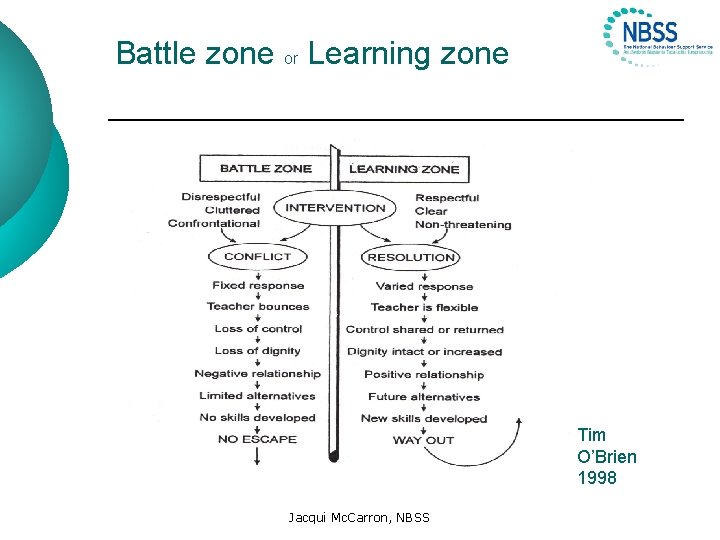
Battle zone or Learning zone Tim O’Brien 1998 Jacqui Mc. Carron, NBSS
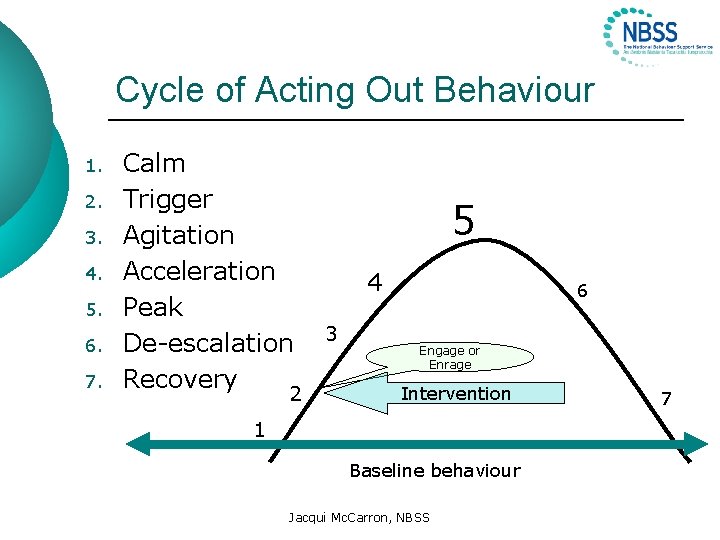
Cycle of Acting Out Behaviour 1. 2. 3. 4. 5. 6. 7. Calm Trigger Agitation Acceleration Peak De-escalation Recovery 2 5 4 3 6 Engage or Enrage Intervention 1 Baseline behaviour Jacqui Mc. Carron, NBSS 7
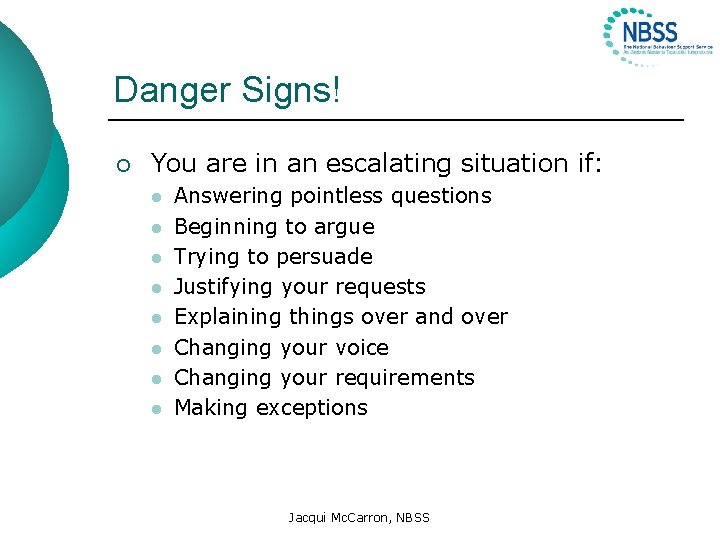
Danger Signs! ¡ You are in an escalating situation if: l l l l Answering pointless questions Beginning to argue Trying to persuade Justifying your requests Explaining things over and over Changing your voice Changing your requirements Making exceptions Jacqui Mc. Carron, NBSS
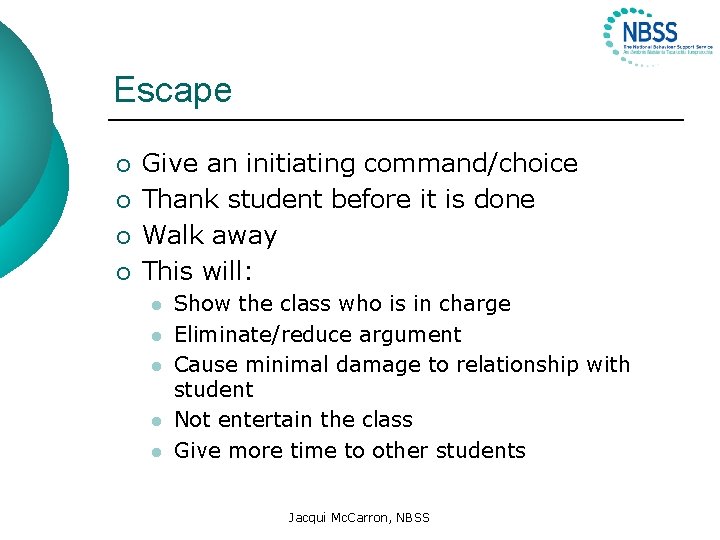
Escape ¡ ¡ Give an initiating command/choice Thank student before it is done Walk away This will: l l l Show the class who is in charge Eliminate/reduce argument Cause minimal damage to relationship with student Not entertain the class Give more time to other students Jacqui Mc. Carron, NBSS