
Strategies for Engaging Adult Learners Essential Question How
![Connections Since most learning is social, wouldn’t it be more effective to put [learners]](https://slidetodoc.com/presentation_image_h2/2335061ed94bb103d0f5502ae09038f2/image-16.jpg "Connections Since most learning is social, wouldn’t it be more effective to put [learners]")
![Concrete Practice Without concrete experience, the [information] may have little meaning, no matter how](https://slidetodoc.com/presentation_image_h2/2335061ed94bb103d0f5502ae09038f2/image-20.jpg "Concrete Practice Without concrete experience, the [information] may have little meaning, no matter how")

- Slides: 26
Strategies for Engaging Adult Learners
Essential Question: How can we more effectively engage adult learners in our classrooms?
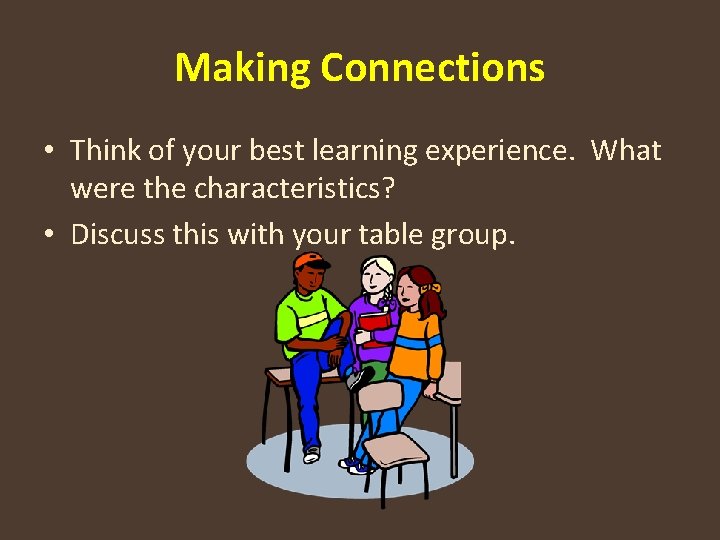
Making Connections • Think of your best learning experience. What were the characteristics? • Discuss this with your table group.
In today’s session, you will: • Discover the rationale behind brainbased/accelerated learning strategies; and • Demonstrate specific techniques to engage adult learners.
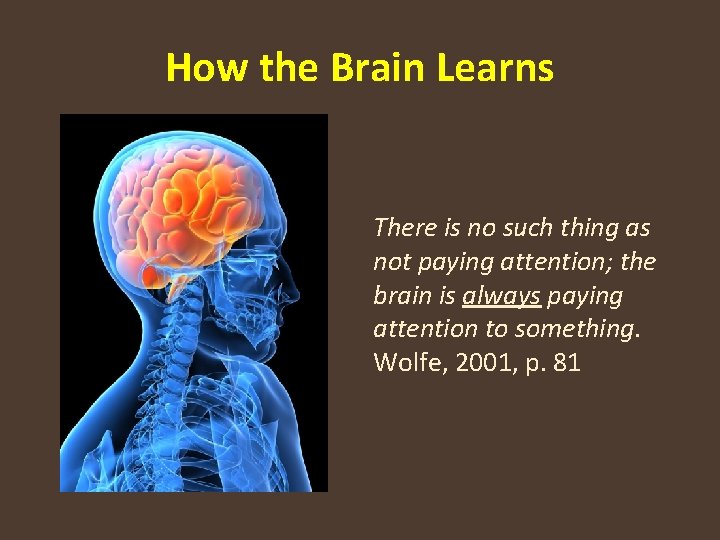
How the Brain Learns There is no such thing as not paying attention; the brain is always paying attention to something. Wolfe, 2001, p. 81
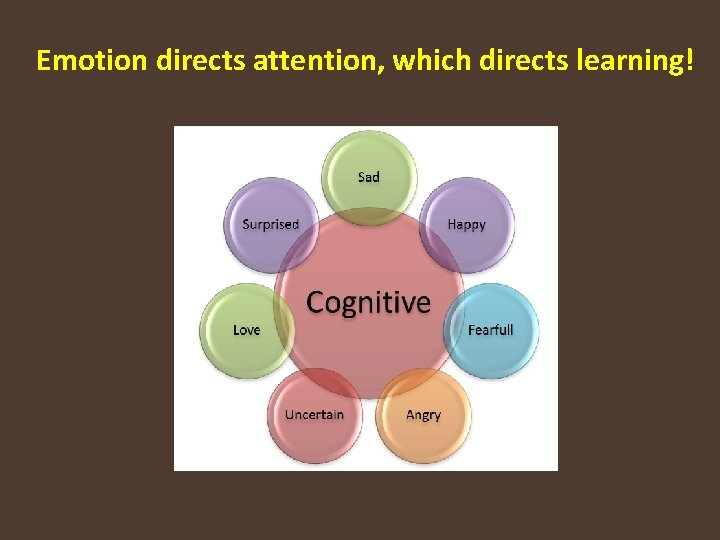
Emotion directs attention, which directs learning!
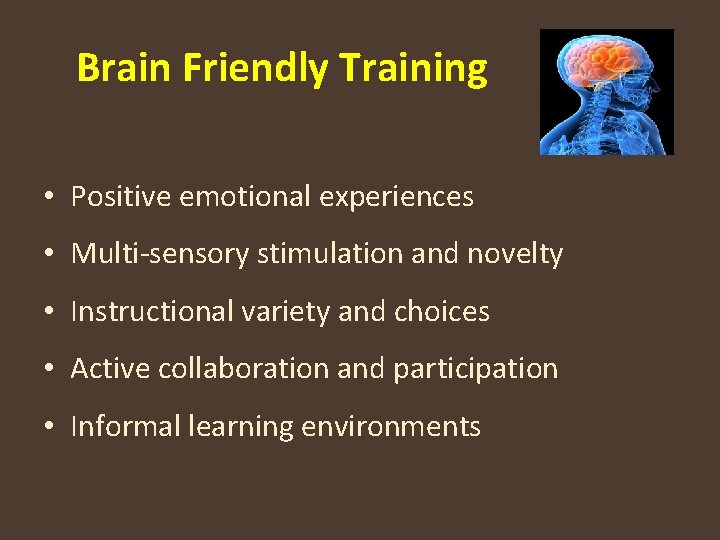
Brain Friendly Training • Positive emotional experiences • Multi-sensory stimulation and novelty • Instructional variety and choices • Active collaboration and participation • Informal learning environments
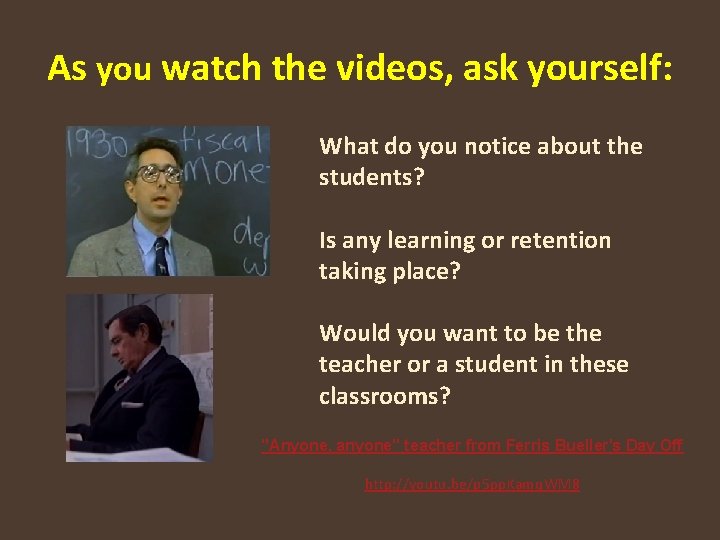
As you watch the videos, ask yourself: What do you notice about the students? Is any learning or retention taking place? Would you want to be the teacher or a student in these classrooms? "Anyone, anyone" teacher from Ferris Bueller's Day Off http: //youtu. be/p 5 pp. Kamq. WM 8
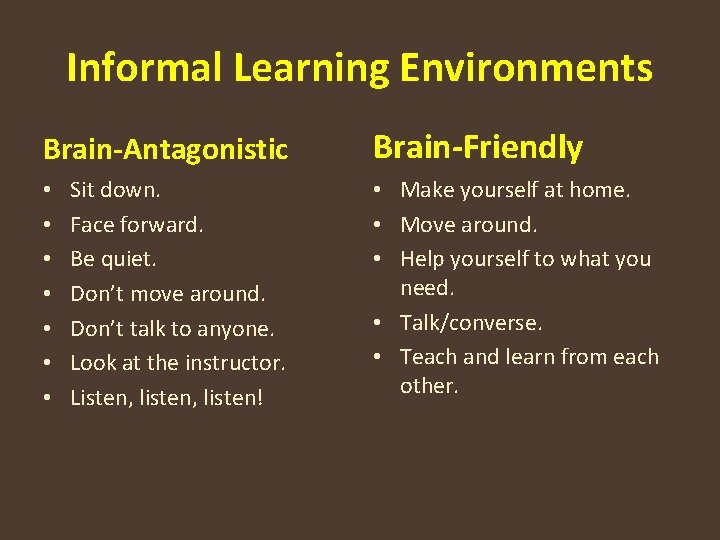
Informal Learning Environments Brain-Antagonistic • • Sit down. Face forward. Be quiet. Don’t move around. Don’t talk to anyone. Look at the instructor. Listen, listen! Brain-Friendly • Make yourself at home. • Move around. • Help yourself to what you need. • Talk/converse. • Teach and learn from each other.
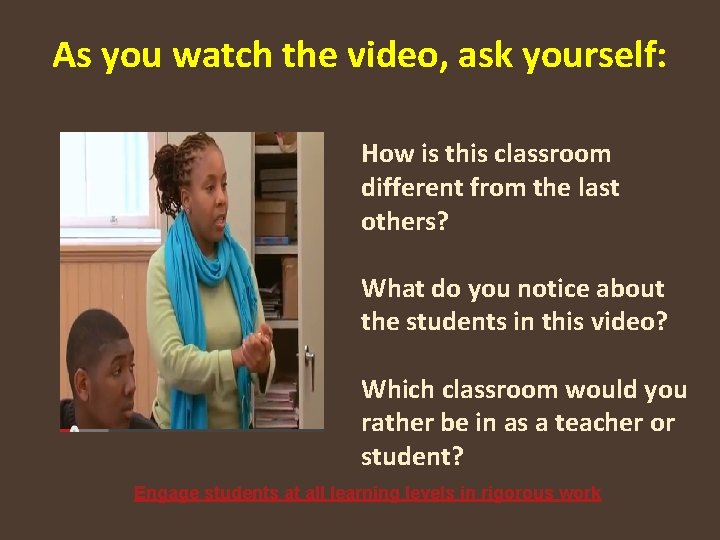
As you watch the video, ask yourself: How is this classroom different from the last others? What do you notice about the students in this video? Which classroom would you rather be in as a teacher or student? Engage students at all learning levels in rigorous work
We are not, cannot be, about designing content. A fundamental perspective I want you to take away is that we are designing experiences. Clark Quinn, Engaging Learning, 2005, p. 10
Concept Review: High Five Activity • Think about some assumptions you made or were taught about human learning. • Stand up and make eye contact with someone on the other side of the room. • Go to that person, give them a high five, and tell them how what you thought you knew differs from what current brain research tells us.
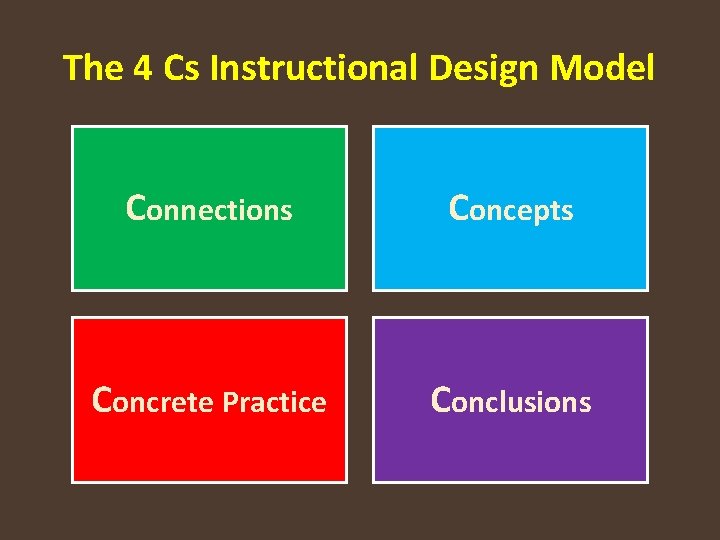
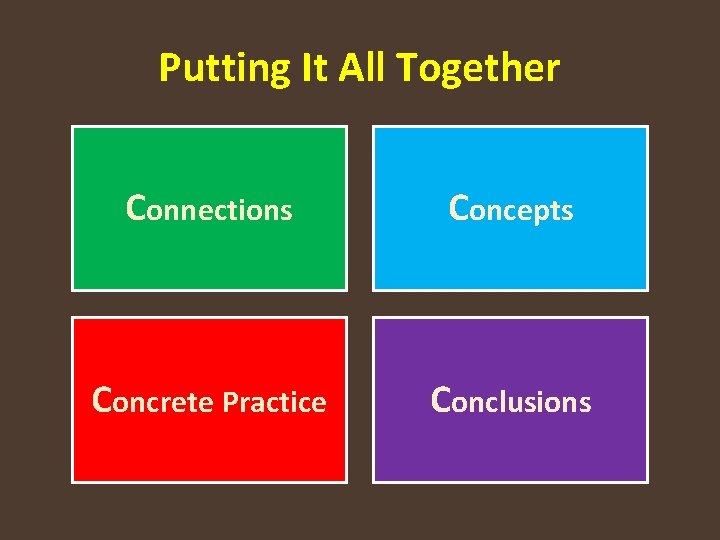
The 4 Cs Instructional Design Model Connections Concepts Concrete Practice Conclusions
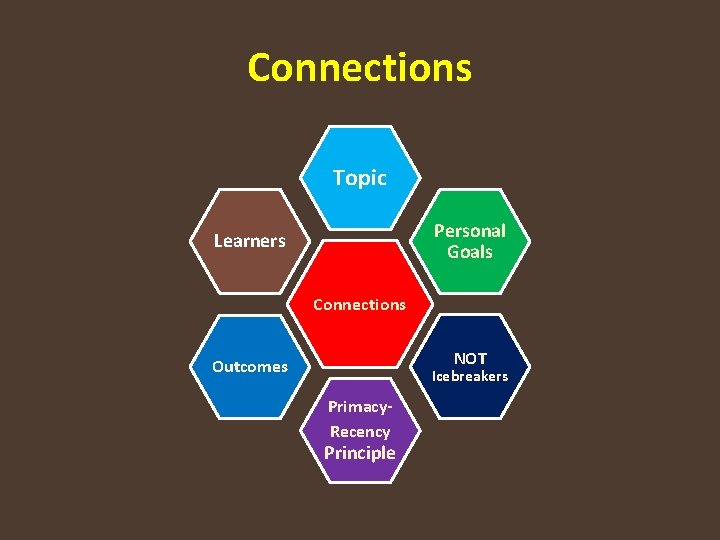
Connections Topic Personal Goals Learners Connections NOT Outcomes Icebreakers Primacy. Recency Principle
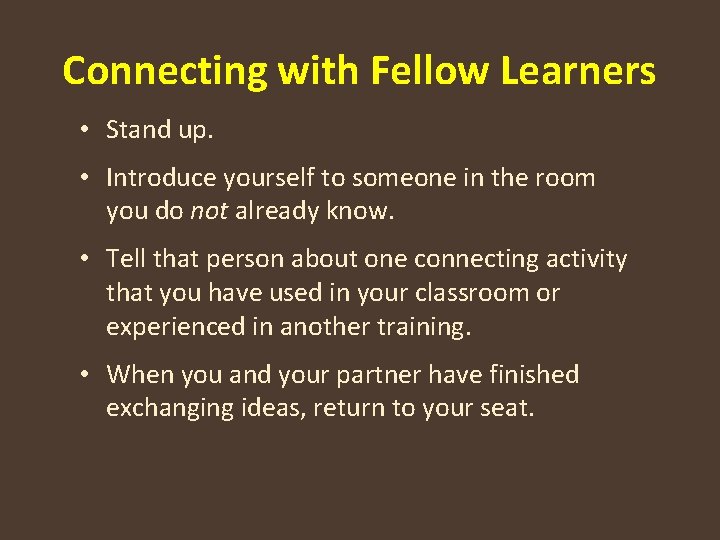
Connecting with Fellow Learners • Stand up. • Introduce yourself to someone in the room you do not already know. • Tell that person about one connecting activity that you have used in your classroom or experienced in another training. • When you and your partner have finished exchanging ideas, return to your seat.
Connections Since most learning is social, wouldn’t it be more effective to put [learners] in touch with others so they can learn from one another? Jay Cross, Informal learning, 2007, p. 39
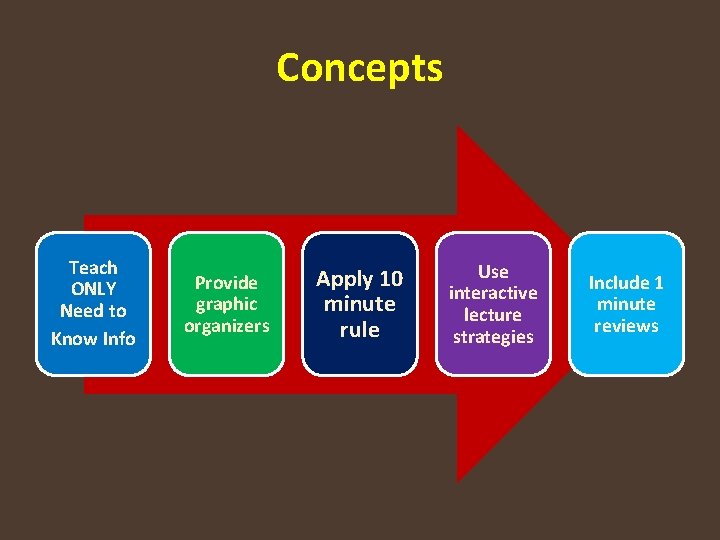
Concepts Teach ONLY Need to Know Info Provide graphic organizers Apply 10 minute rule Use interactive lecture strategies Include 1 minute reviews
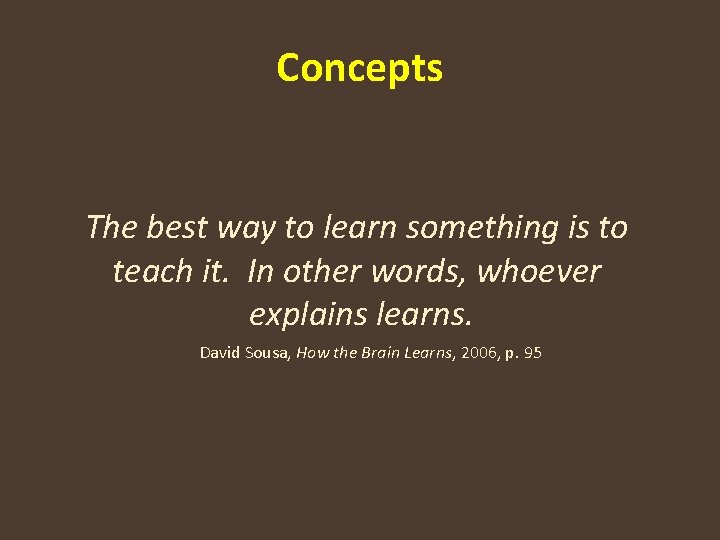
Concepts The best way to learn something is to teach it. In other words, whoever explains learns. David Sousa, How the Brain Learns, 2006, p. 95
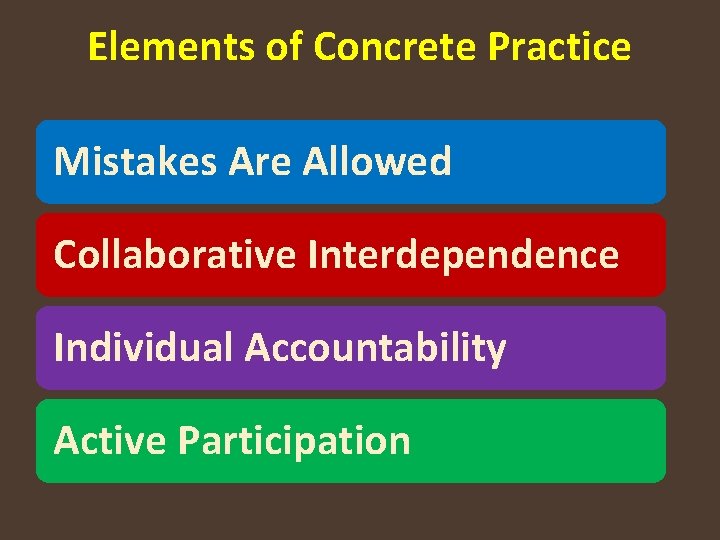
Elements of Concrete Practice Mistakes Are Allowed Collaborative Interdependence Individual Accountability Active Participation
Concrete Practice Without concrete experience, the [information] may have little meaning, no matter how much someone explains it to you. Patricia Wolfe, Brain Matters, 2001, p. 137
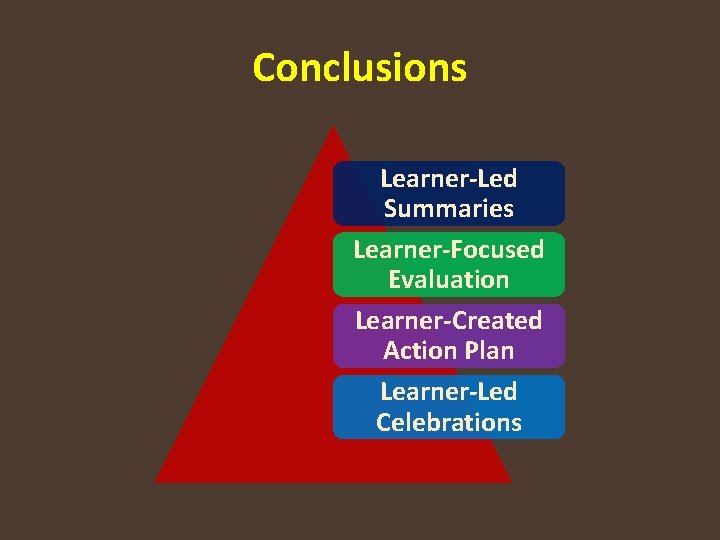
Conclusions Learner-Led Summaries Learner-Focused Evaluation Learner-Created Action Plan Learner-Led Celebrations
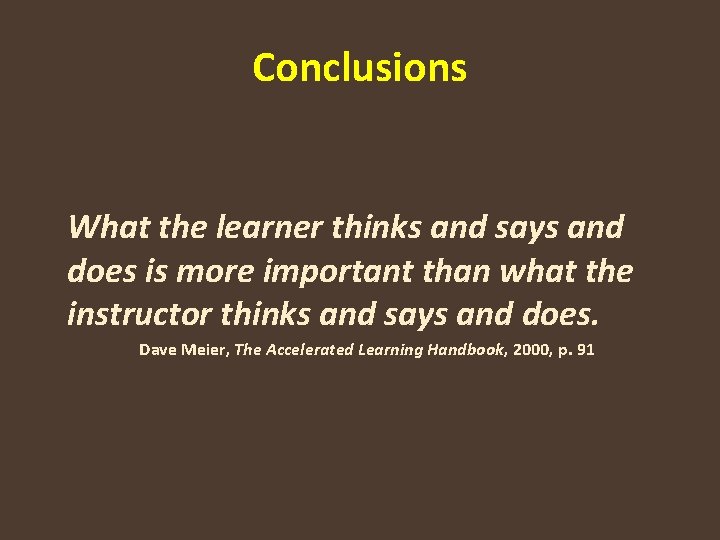
Conclusions What the learner thinks and says and does is more important than what the instructor thinks and says and does. Dave Meier, The Accelerated Learning Handbook, 2000, p. 91
Putting It All Together Connections Concepts Concrete Practice Conclusions
Your Concrete Practice • Each table group is assigned one of the 4 Cs: Connections, Concepts, Concrete Practice, or Conclusions. • As a group, decide on a topic or subject (something you teach in your class). • Choose one sample activity from the handout. • Model how you would apply that activity in teaching your assigned “C. ” • You may use anything in the room; be creative! Example of a Conclusions Activity: https: //www. dropbox. com/s/pc 6 tz 3 a 7 bnd 1 n 5 r/DSC_0195. AVI
Action Plan • Write down two changes you plan to make in your classroom next week. • Share with your table group.
Plus/Delta