
Strategies for Change Omer Yezdani Gail Stephenson Indigenous
- Slides: 24
Strategies for Change Omer Yezdani | Gail Stephenson Indigenous Economic Strategies, Schooling and Youth Branch Queensland State Office GPO Box 9880, Brisbane Q 4001 T: +61 7 3223 1025 | E: omer. yezdani@deewr. gov. au www. deewr. gov. au
“As a nation Australia values the central role of education in building a democratic, equitable and just society – a society that is prosperous, cohesive and culturally diverse, and that values Australia’s Indigenous cultures as a key part of the nation’s history, present and future. ” (MCEECDYA, 2008)
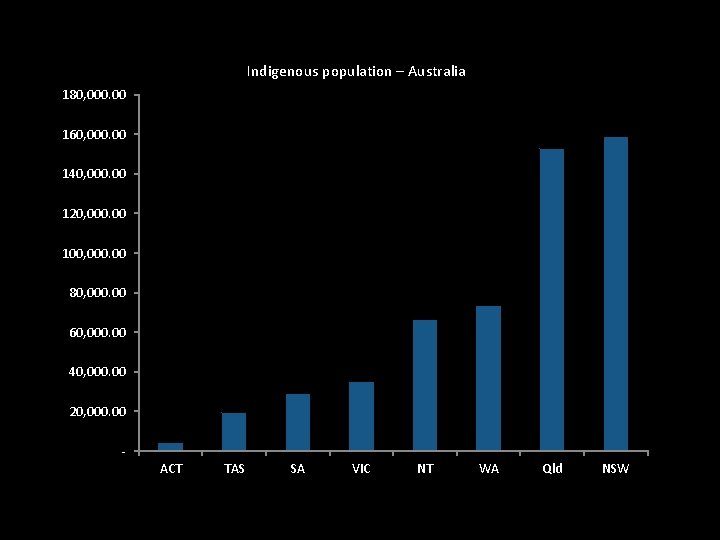
Indigenous population – Australia 180, 000. 00 160, 000. 00 140, 000. 00 120, 000. 00 100, 000. 00 80, 000. 00 60, 000. 00 40, 000. 00 20, 000. 00 ACT TAS SA VIC NT WA Qld NSW
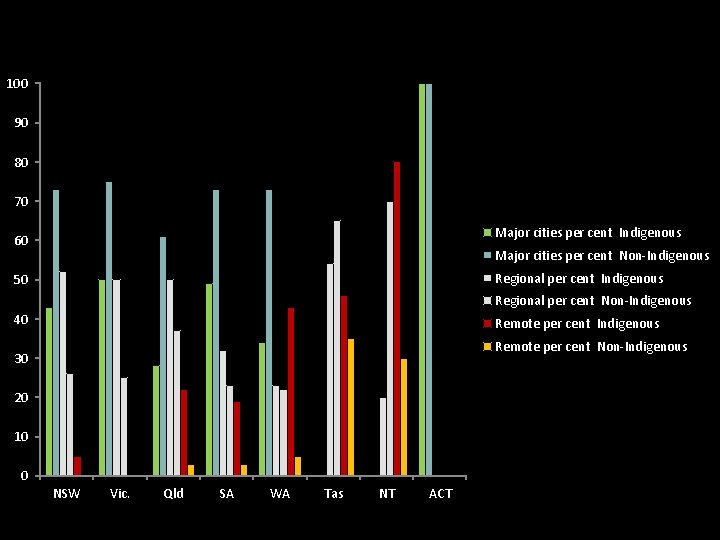
100 90 80 70 Major cities per cent Indigenous 60 Major cities per cent Non-Indigenous Regional per cent Indigenous 50 Regional per cent Non-Indigenous 40 Remote per cent Indigenous Remote per cent Non-Indigenous 30 20 10 0 NSW Vic. Qld SA WA Tas NT ACT
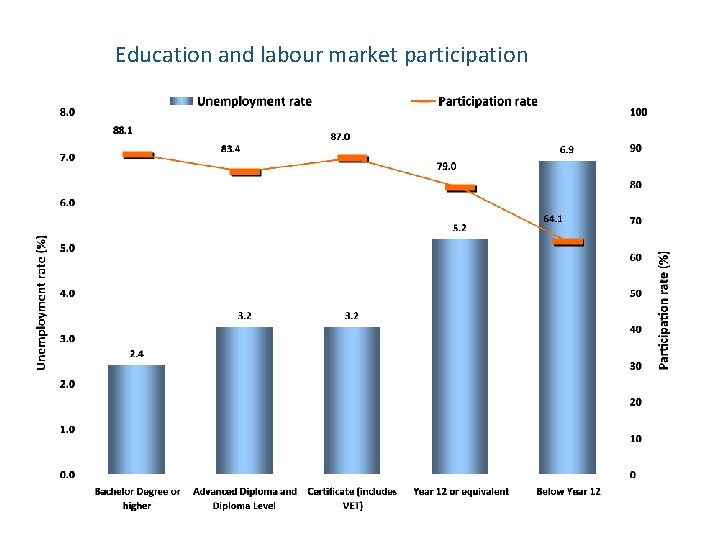
Education and labour market participation
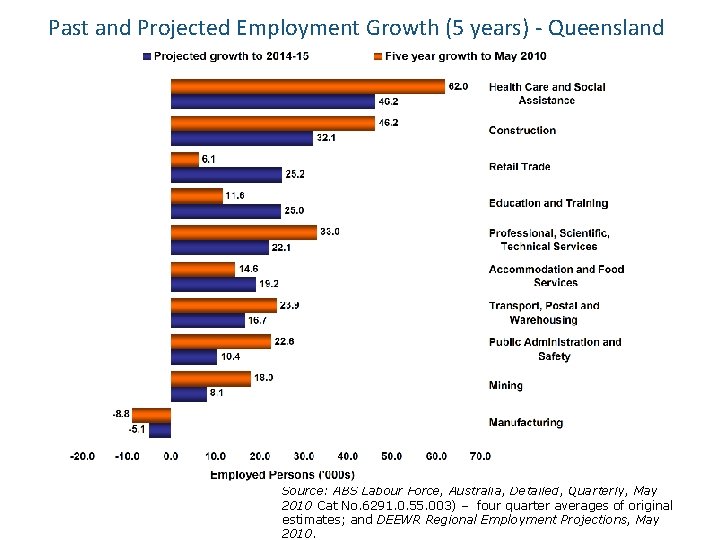
Past and Projected Employment Growth (5 years) - Queensland Source: ABS Labour Force, Australia, Detailed, Quarterly, May 2010 Cat No. 6291. 0. 55. 003) – four quarter averages of original estimates; and DEEWR Regional Employment Projections, May 2010.
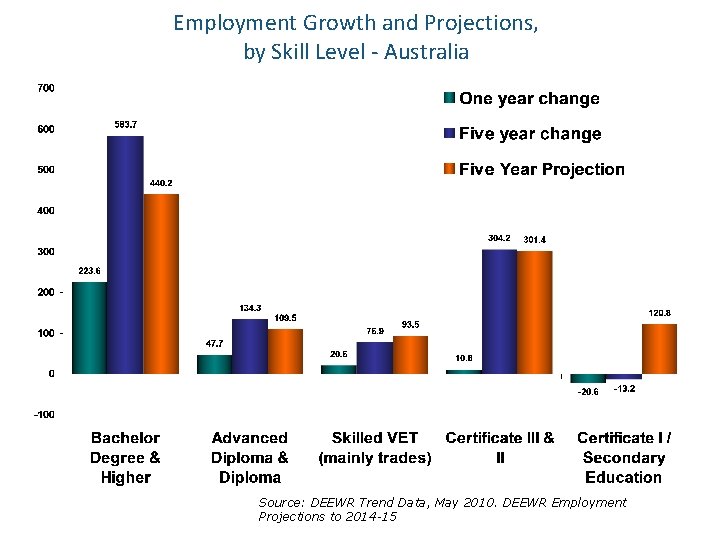
Employment Growth and Projections, by Skill Level - Australia Source: DEEWR Trend Data, May 2010. DEEWR Employment Projections to 2014 -15
Parental and Community Engagement “Engaging the local community in the future of Indigenous education is vital if there is be a significant shift towards equality of educational outcomes. . . ” MCEETYA & Curriculum Corporation (2006) Australian Directions in Indigenous Education 2005 -2008, MCEETYA, Carlton South, p 21
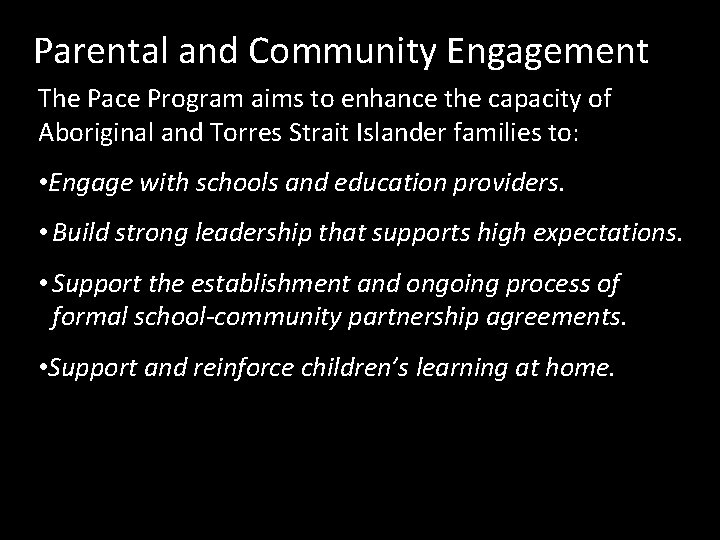
Parental and Community Engagement The Pace Program aims to enhance the capacity of Aboriginal and Torres Strait Islander families to: • Engage with schools and education providers. • Build strong leadership that supports high expectations. • Support the establishment and ongoing process of formal school-community partnership agreements. • Support and reinforce children’s learning at home.
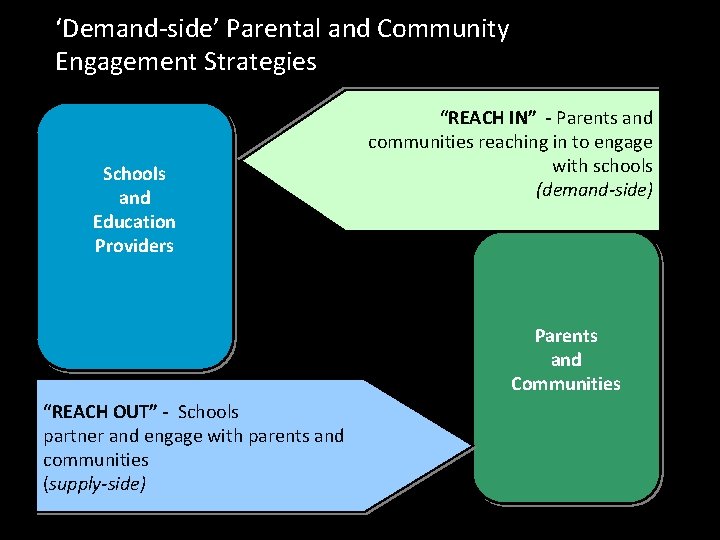
‘Demand-side’ Parental and Community Engagement Strategies Schools and Education Providers “REACH IN” - Parents and communities reaching in to engage with schools (demand-side) Parents and Communities “REACH OUT” - Schools partner and engage with parents and communities (supply-side)
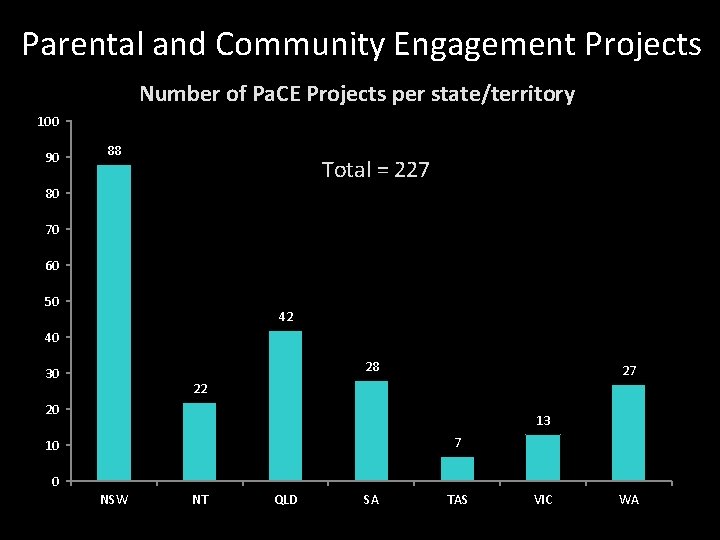
Parental and Community Engagement Projects Number of Pa. CE Projects per state/territory 100 90 88 Total = 227 80 70 60 50 42 40 28 30 27 22 20 13 7 10 0 NSW NT QLD SA TAS VIC WA
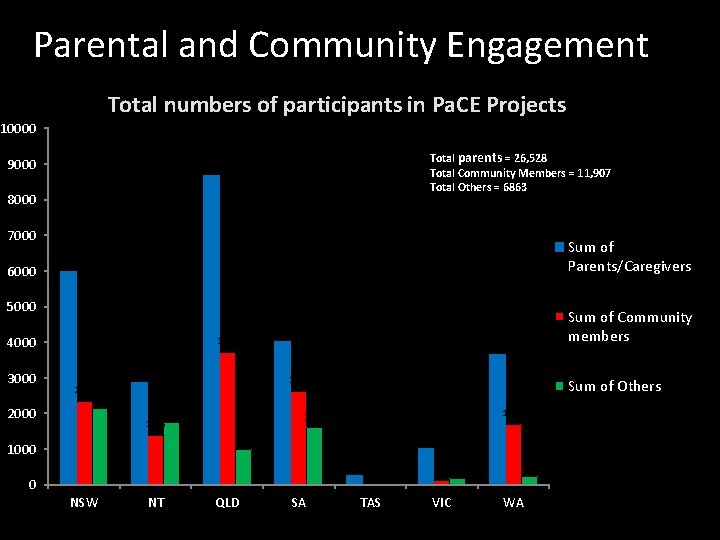
Parental and Community Engagement Total numbers of participants in Pa. CE Projects 10000 9000 Total parents = 26, 528 Total Community Members = 11, 907 Total Others = 6863 8681 8000 7000 6000 Sum of Parents/Caregivers 5994 5000 4000 3712 2883 3659 2617 2340 2133 1750 1388 2000 Sum of Others 1690 1593 1026 988 1000 260 0 NSW NT Sum of Community members 4025 QLD SA 45 5 TAS 115 168 VIC 226 WA
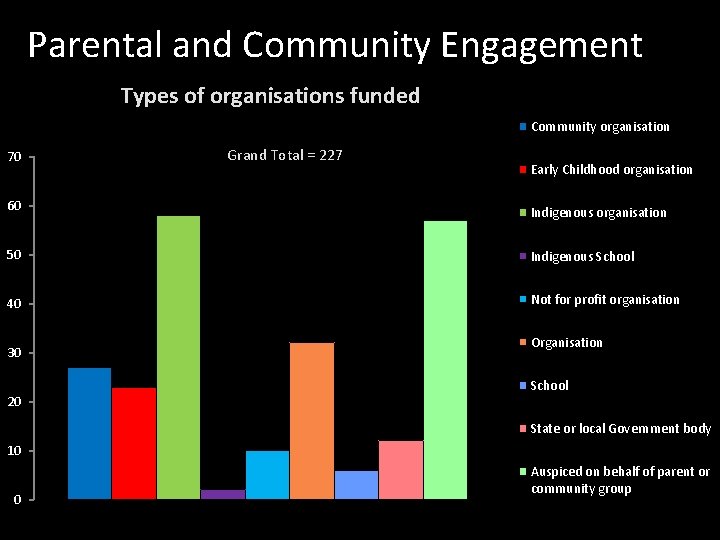
Parental and Community Engagement Types of organisations funded 70 60 Community organisation Grand Total = 227 Early Childhood organisation 58 57 50 40 Indigenous School Not for profit organisation 32 30 Organisation 27 23 20 School 12 10 10 0 Indigenous organisation 6 2 State or local Government body Auspiced on behalf of parent or community group
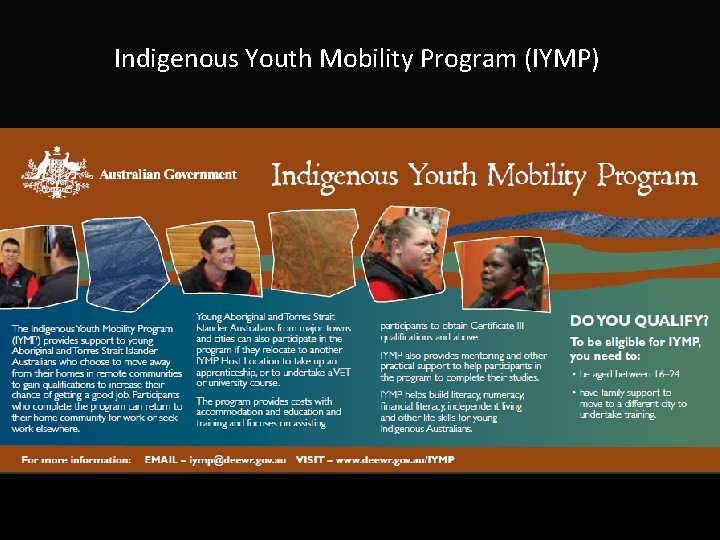
Indigenous Youth Mobility Program (IYMP)
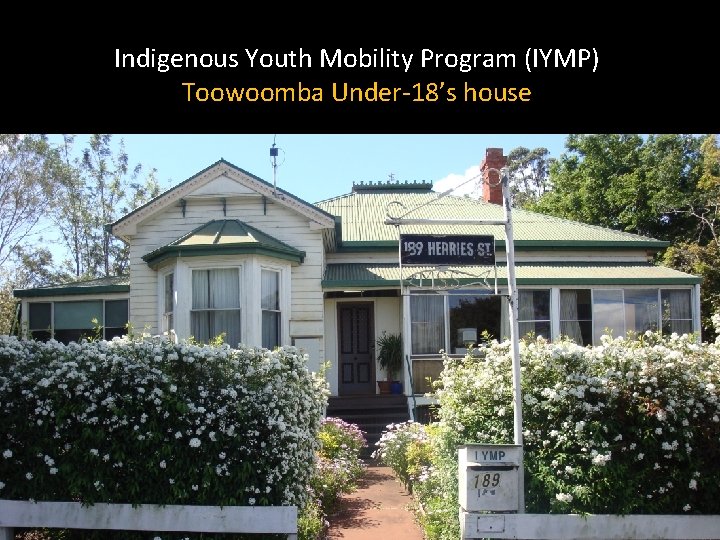
Indigenous Youth Mobility Program (IYMP) Toowoomba Under-18’s house
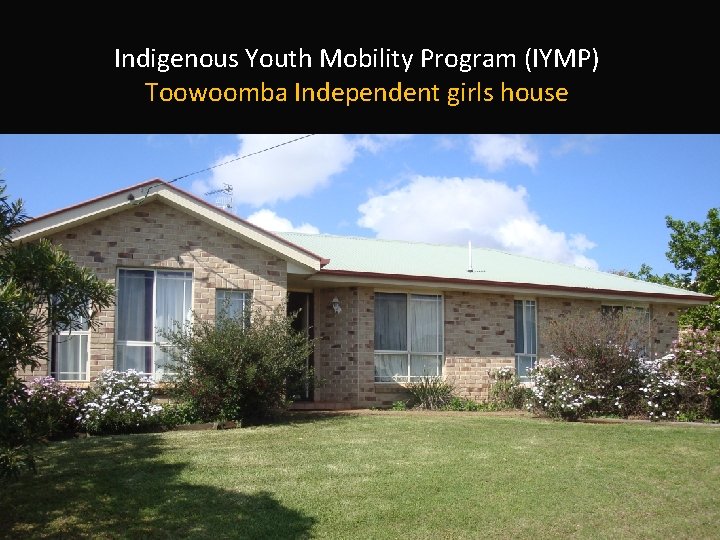
Indigenous Youth Mobility Program (IYMP) Toowoomba Independent girls house
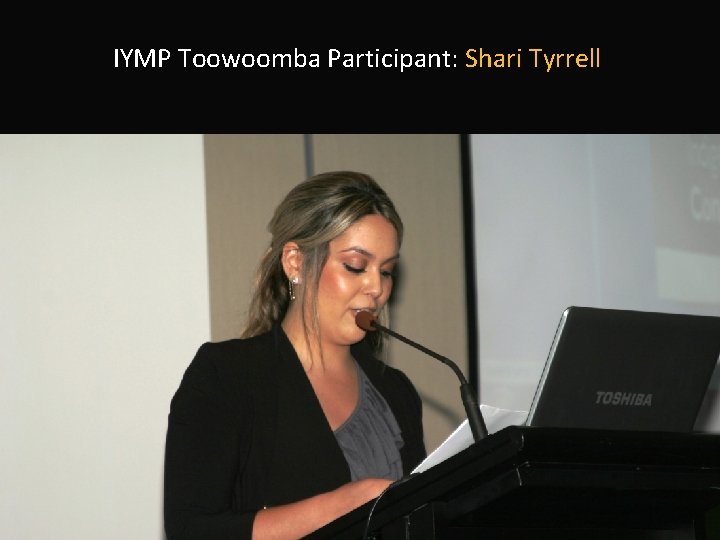
IYMP Toowoomba Participant: Shari Tyrrell
Thank you www. deewr. gov. au