
Strategies and Tips for PBIS Teams to Support
Strategies and Tips for PBIS Teams to Support PBIS at Home
What is PBIS? “Decision making framework that guides selection, integration & implementation of the best scientifically-based academic and behavioral practices & interventions for improving outcomes for all students. ” It is… § Not a curriculum § Not an intervention § Not a practice

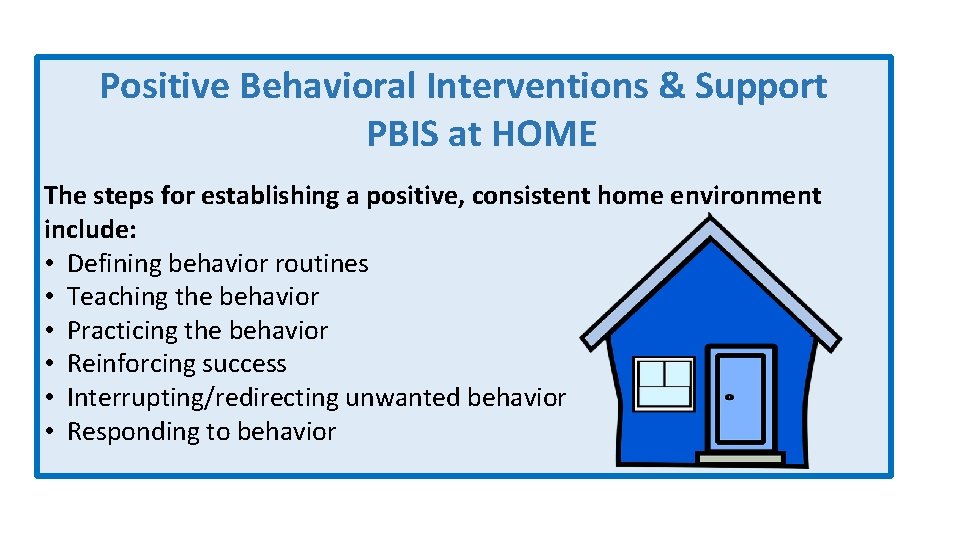
Positive Behavioral Interventions & Support PBIS at HOME The steps for establishing a positive, consistent home environment include: • Defining behavior routines • Teaching the behavior • Practicing the behavior • Reinforcing success • Interrupting/redirecting unwanted behavior • Responding to behavior
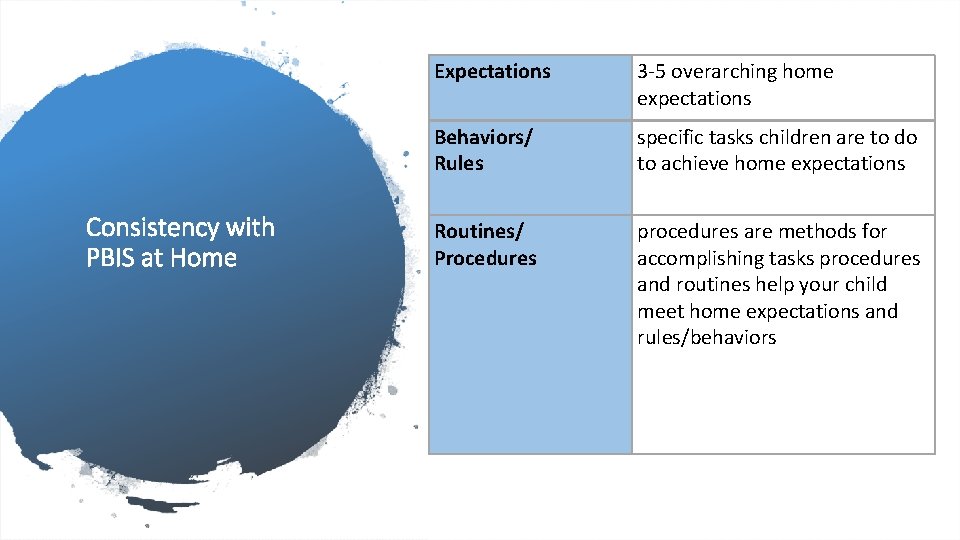
Consistency with PBIS at Home Expectations 3 -5 overarching home expectations Behaviors/ Rules specific tasks children are to do to achieve home expectations Routines/ Procedures procedures are methods for accomplishing tasks procedures and routines help your child meet home expectations and rules/behaviors
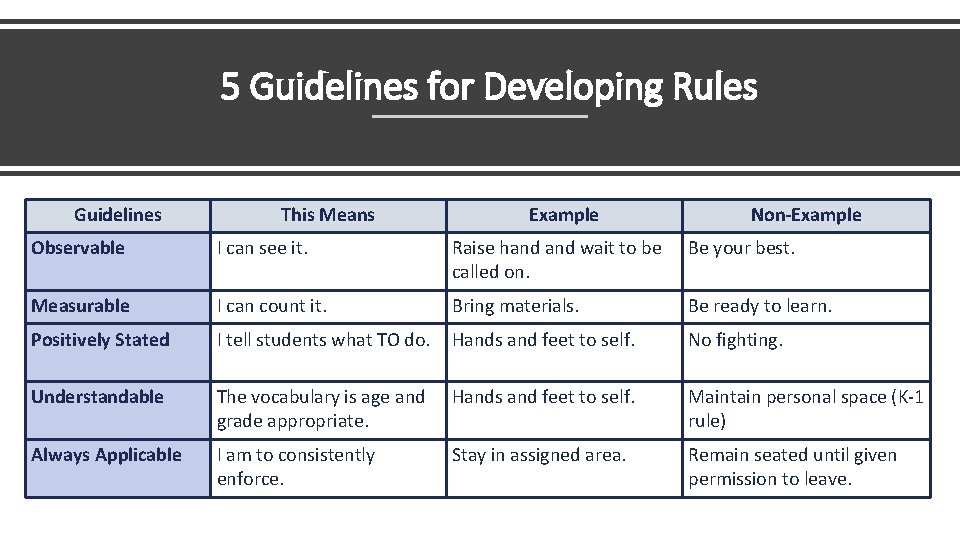
5 Guidelines for Developing Rules Guidelines This Means Example Non-Example Observable I can see it. Raise hand wait to be called on. Be your best. Measurable I can count it. Bring materials. Be ready to learn. Positively Stated I tell students what TO do. Hands and feet to self. No fighting. Understandable The vocabulary is age and grade appropriate. Hands and feet to self. Maintain personal space (K-1 rule) Always Applicable I am to consistently enforce. Stay in assigned area. Remain seated until given permission to leave.
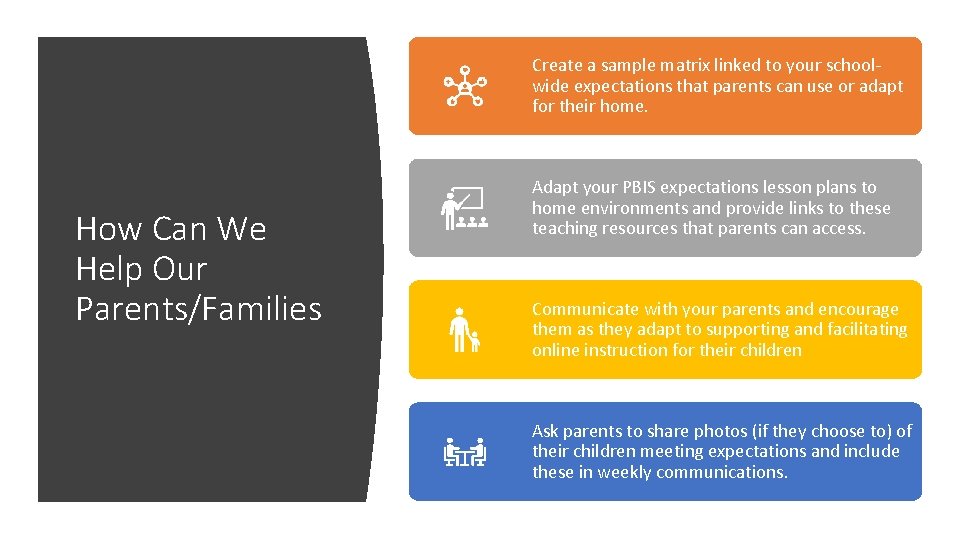
Create a sample matrix linked to your schoolwide expectations that parents can use or adapt for their home. How Can We Help Our Parents/Families Adapt your PBIS expectations lesson plans to home environments and provide links to these teaching resources that parents can access. Communicate with your parents and encourage them as they adapt to supporting and facilitating online instruction for their children Ask parents to share photos (if they choose to) of their children meeting expectations and include these in weekly communications.
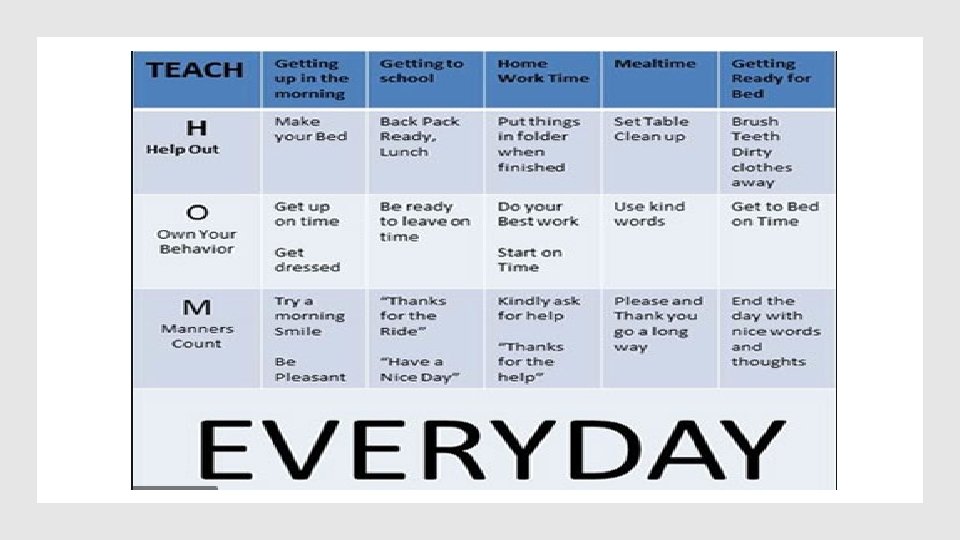
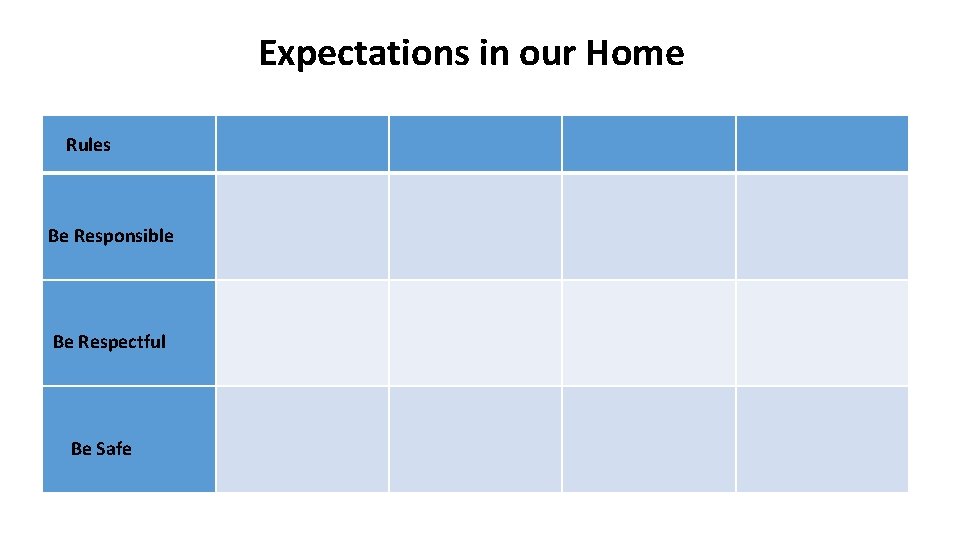
Expectations in our Home Rules Be Responsible Be Respectful Be Safe

Keys to Success
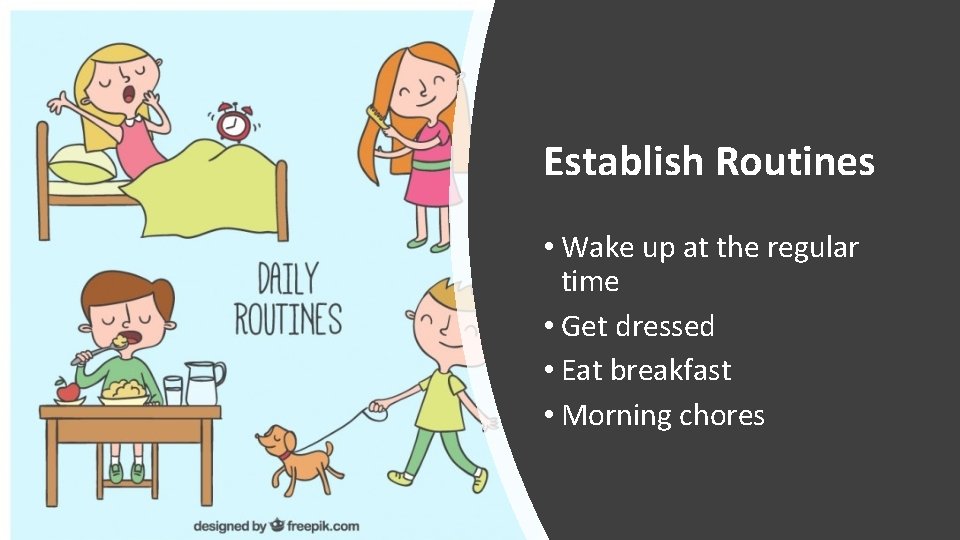
Establish Routines • Wake up at the regular time • Get dressed • Eat breakfast • Morning chores
Teach Expectations • Model (show) the behavior in the location where you want to see it • Give clear, specific directions • Teach the wanted behavior one step at a time • Show examples and nonexamples of the behavior • Give positive feedback

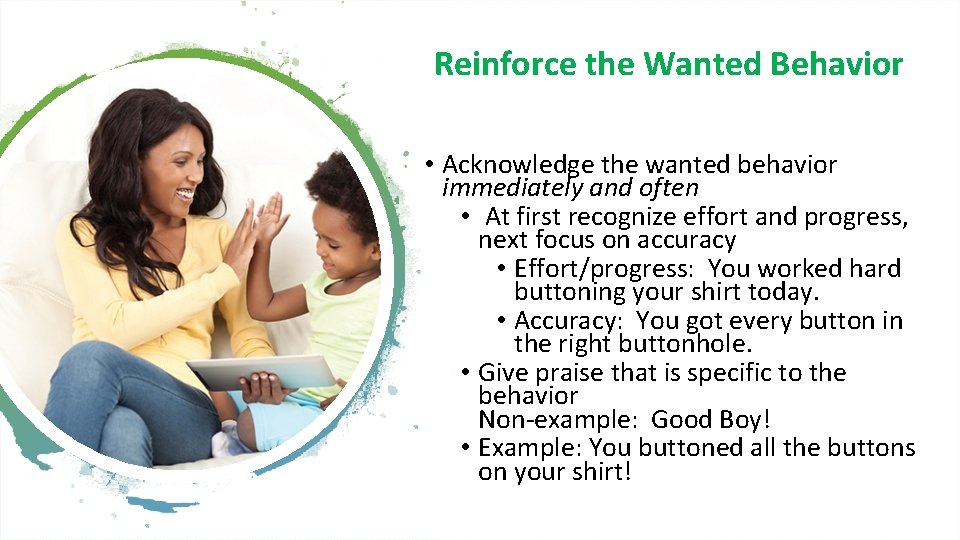
Reinforce the Wanted Behavior • Acknowledge the wanted behavior immediately and often • At first recognize effort and progress, next focus on accuracy • Effort/progress: You worked hard buttoning your shirt today. • Accuracy: You got every button in the right buttonhole. • Give praise that is specific to the behavior Non-example: Good Boy! • Example: You buttoned all the buttons on your shirt!
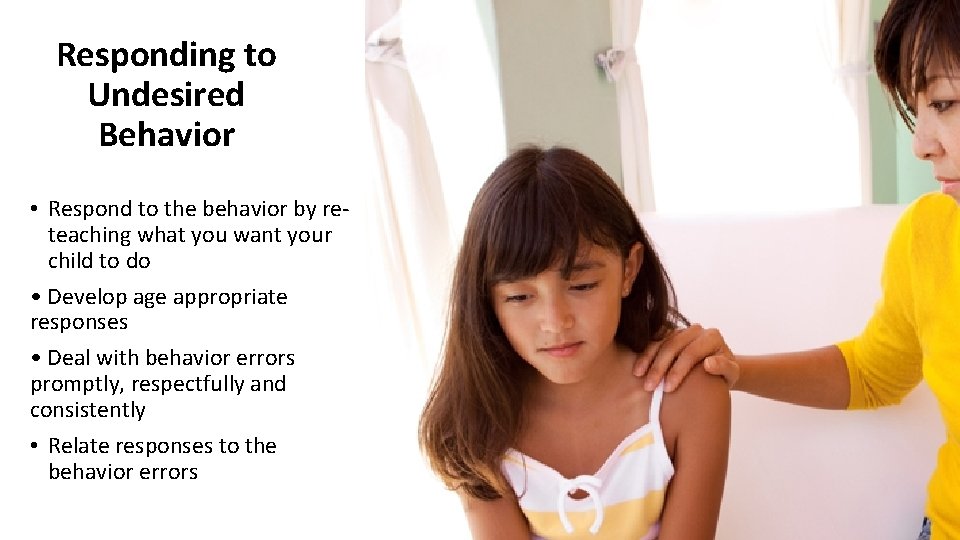
Responding to Undesired Behavior • Respond to the behavior by reteaching what you want your child to do • Develop age appropriate responses • Deal with behavior errors promptly, respectfully and consistently • Relate responses to the behavior errors

- Slides: 16