
Strategies and Interventions for Responsive Classrooms 1 cc

- Slides: 38
Strategies and Interventions for Responsive Classrooms 1 cc: Keoni Cabral - https: //www. flickr. com/photos/52193570@N 04
Tarah Randazzo 2
Objectives ● Discuss components of a Responsive Classroom/School ● Learn about responsive teacher behaviors. ● Learn about specific classroom and school-wide practices designed to meet the social emotional needs of students. ● Share data from Northwest Catholic School’s initiative 3
The most recognizable impacts of trauma on education fit into two intertwining categories: Impacts on academic performance: ●Reduced cognitive capacity ●Sleep disturbance ●Difficulties with memory ●Language delays Child Safety Commissioner (2007) cc: shinealight - https: //www. flickr. com/photos/19720483@N 04 Impacts on social relationships: ●Need for control ●Attachment difficulties ●Poor peer relationships ●Unstable living situation 4
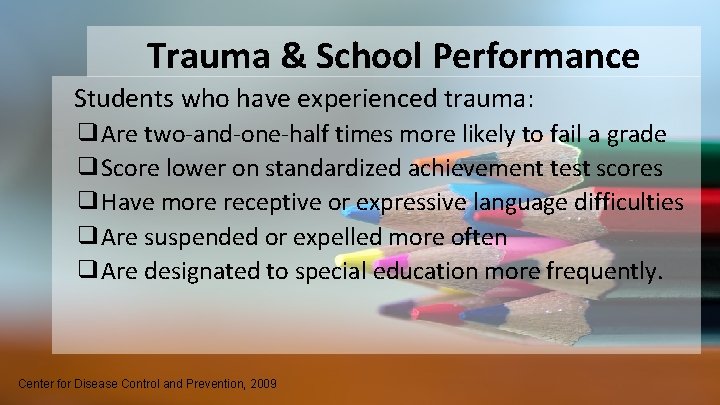
Trauma & School Performance Students who have experienced trauma: ❑Are two-and-one-half times more likely to fail a grade ❑Score lower on standardized achievement test scores ❑Have more receptive or expressive language difficulties ❑Are suspended or expelled more often ❑Are designated to special education more frequently. 5 Center for Disease Control and Prevention, 2009
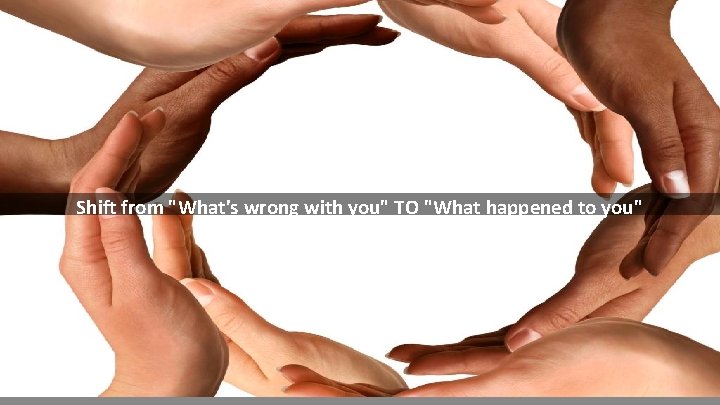
Shift from "What's wrong with you" TO "What happened to you" 6
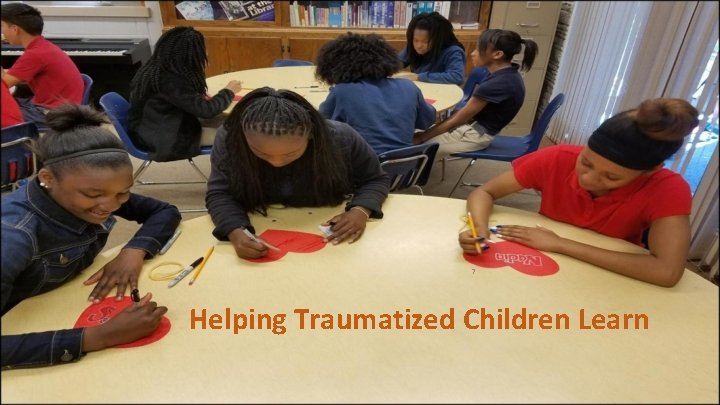
7 Helping Traumatized Children Learn
What is a Responsive School? 8
Responsive Schools benefit all children. . • Whose history is unknown • Whose trauma may never be identified • Who are impacted by their traumatized classmates 9
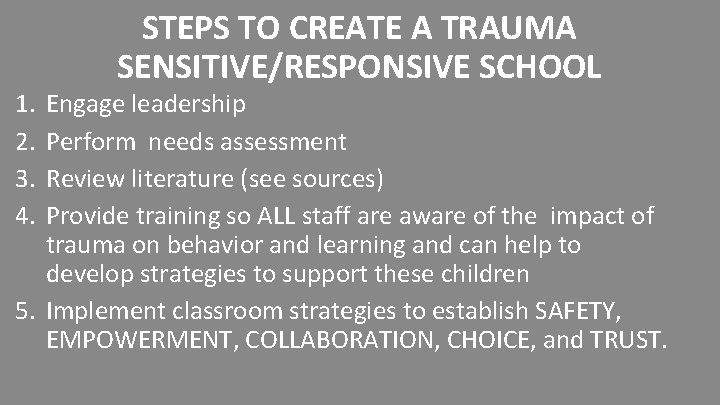
1. 2. 3. 4. STEPS TO CREATE A TRAUMA SENSITIVE/RESPONSIVE SCHOOL Engage leadership Perform needs assessment Review literature (see sources) Provide training so ALL staff are aware of the impact of trauma on behavior and learning and can help to develop strategies to support these children 5. Implement classroom strategies to establish SAFETY, EMPOWERMENT, COLLABORATION, CHOICE, and TRUST. 10
Key Components of Responsive Schools Training for School Personnel ▪ Foundational knowledge about brain & neuroscience, trauma’s impact on the brain, attachment & learning ▪ Trauma-sensitive school framework ▪ Compassionate discipline ▪ Teacher support (e. g. , coaching), self-care, professional development ▪ Parent & Student education ▪ Trauma-responsive whole-school (universal strategies); strategies in class delivered by teachers; interventions delivered by counselors 11 ▪ DATA, DATA & ongoing evaluation 11
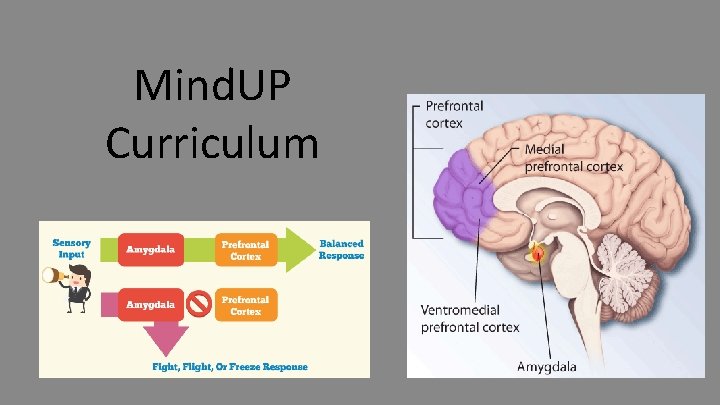
Components of a Trauma Sensitive/Responsive School • Support and teach children who have experienced trauma • Teach social and emotional skills Mind. UP Curriculum • Teach and practice self regulation skills • Focus on the strong link between academic success and social-emotional skills • Practice self regulation skills daily, such as mindful breathing or movement. • Approach is "What happened to you" not "What's wrong with you" 12
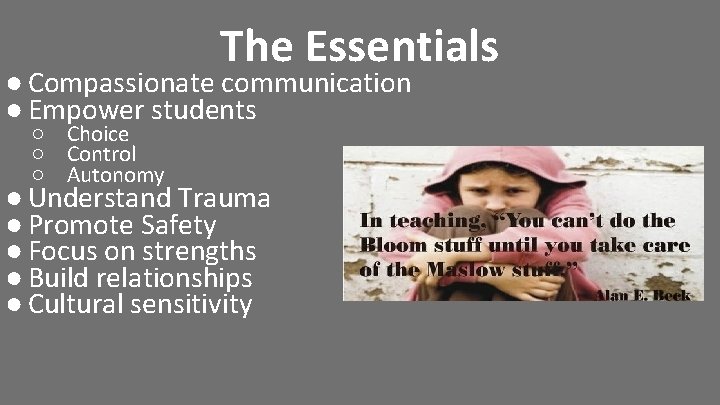
The Essentials ● Compassionate communication ● Empower students ○ Choice ○ Control ○ Autonomy ● Understand Trauma ● Promote Safety ● Focus on strengths ● Build relationships ● Cultural sensitivity 13
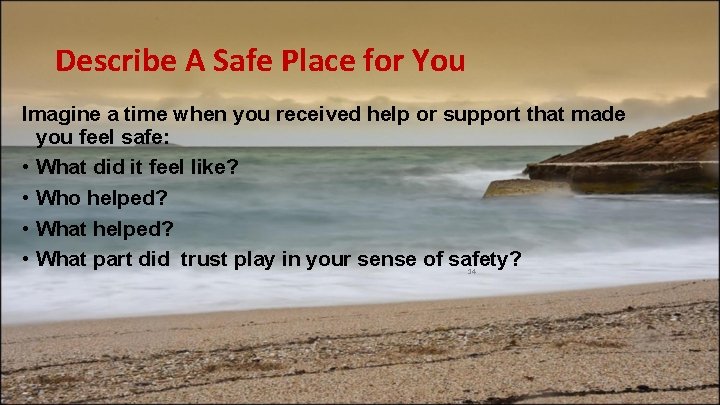
Describe A Safe Place for You Imagine a time when you received help or support that made you feel safe: • What did it feel like? • Who helped? • What part did trust play in your sense of safety? 14
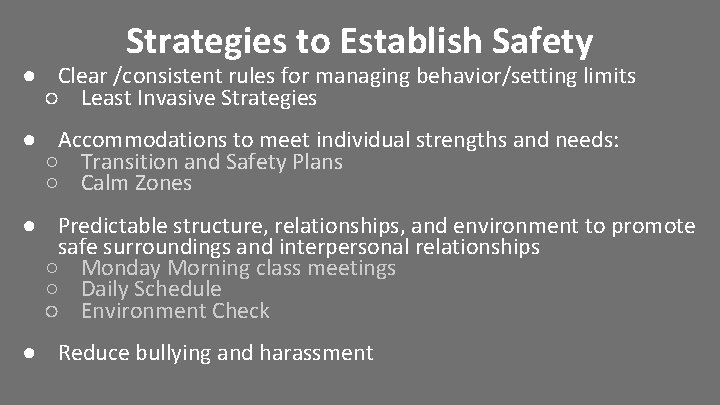
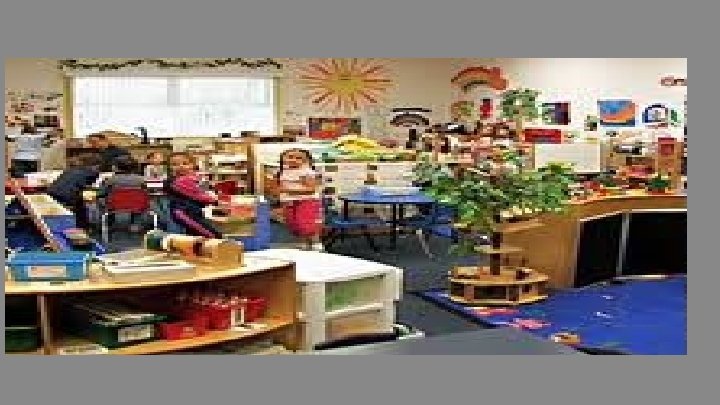
Strategies to Establish Safety ● Clear /consistent rules for managing behavior/setting limits ○ Least Invasive Strategies ● Accommodations to meet individual strengths and needs: ○ Transition and Safety Plans ○ Calm Zones ● Predictable structure, relationships, and environment to promote safe surroundings and interpersonal relationships ○ Monday Morning class meetings ○ Daily Schedule ○ Environment Check 15 ● Reduce bullying and harassment
16
17
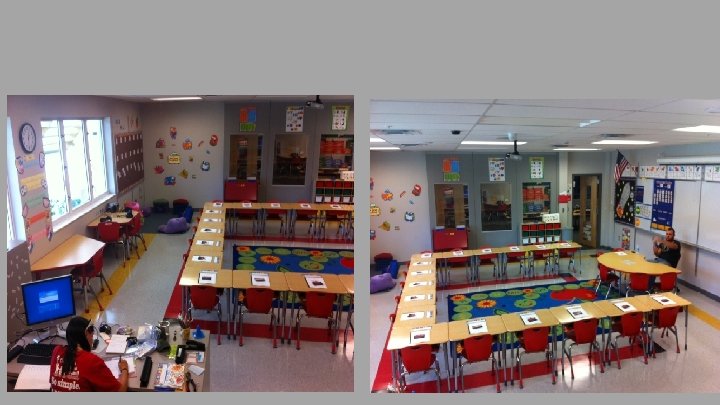
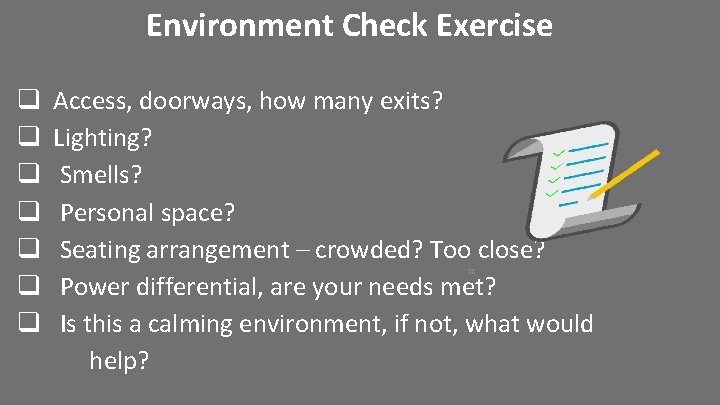
Environment Check Exercise q q q q Access, doorways, how many exits? Lighting? Smells? Personal space? Seating arrangement – crowded? Too close? Power differential, are your needs met? Is this a calming environment, if not, what would help? 18
Strategies to Establish Trust Build relationship based on trust by. . . • Maintaining unconditional positive regard for all students • Check assumptions, observe and question • Being a relationship coach It’s ALL about Relationships… 19 https: //www. ted. com/talks/rita_pierson_every_kid_needs_a_champion
• • • Ideas for Building Relationships Meet and greet at the door/Shake their hands Student survey of interests Anagram nametags Acknowledge students by name Personal notes on assignments Student of the week Classroom morning meetings Weekly questions about you Weekly ice breakers 20
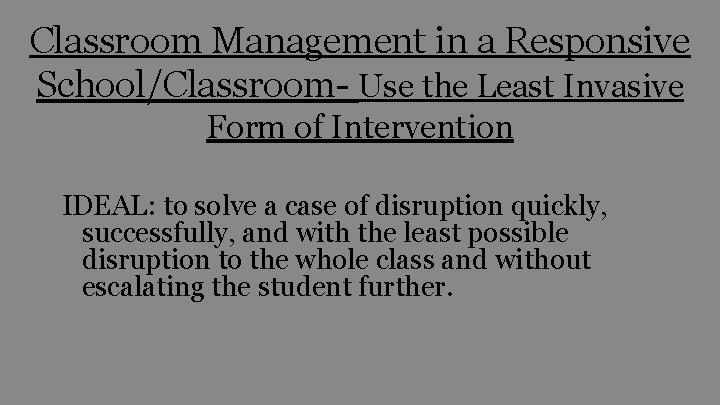
Classroom Management in a Responsive School/Classroom- Use the Least Invasive Form of Intervention IDEAL: to solve a case of disruption quickly, successfully, and with the least possible disruption to the whole class and without escalating the student further. 21
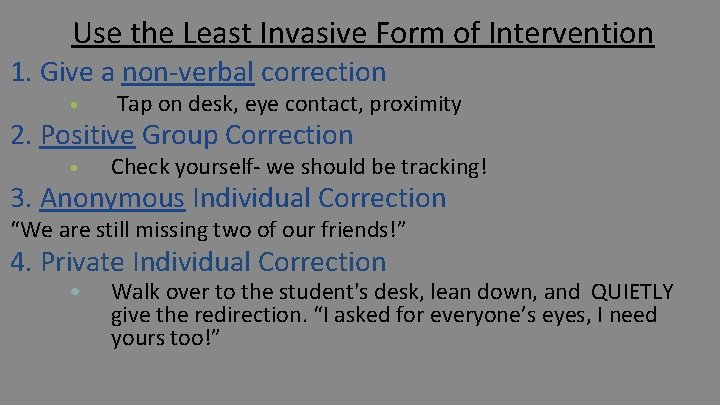
Use the Least Invasive Form of Intervention 1. Give a non-verbal correction • Tap on desk, eye contact, proximity 2. Positive Group Correction • Check yourself- we should be tracking! 3. Anonymous Individual Correction “We are still missing two of our friends!” 4. Private Individual Correction • 22 Walk over to the student's desk, lean down, and QUIETLY give the redirection. “I asked for everyone’s eyes, I need yours too!”
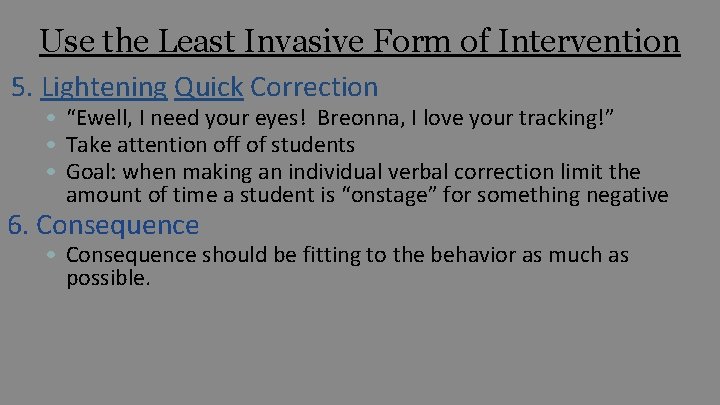
Use the Least Invasive Form of Intervention 5. Lightening Quick Correction • “Ewell, I need your eyes! Breonna, I love your tracking!” • Take attention off of students • Goal: when making an individual verbal correction limit the amount of time a student is “onstage” for something negative 6. Consequence • Consequence should be fitting to the behavior as much as possible. 23
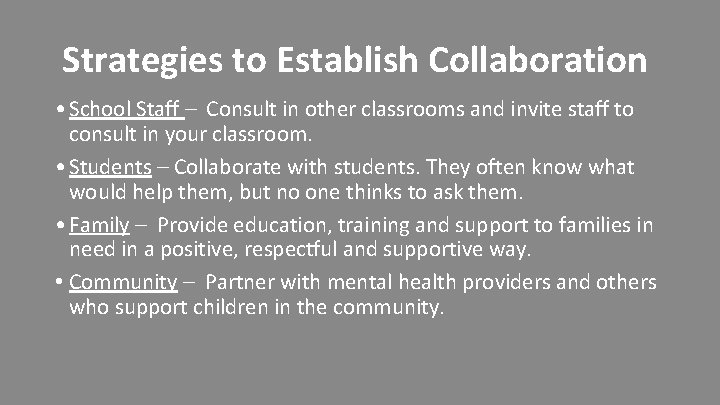
Strategies to Establish Collaboration • School Staff – Consult in other classrooms and invite staff to consult in your classroom. • Students – Collaborate with students. They often know what would help them, but no one thinks to ask them. • Family – Provide education, training and support to families in need in a positive, respectful and supportive way. • Community – Partner with mental health providers and others who support children in the community. 24
Responsive Teacher Behaviors 1. 2. 3. 4. Creates and/or maintains consistent daily routines for the classroom. Tells children when something out of the ordinary is going to occur. Offers children developmentally appropriate choices. Anticipates difficult periods and transitions and offers extra support during these times. 5. Uses techniques to support children’s self-regulation. 6. Helps students manage their feelings during intense emotional moments by remaining composed and offering empathy and support. 25 7. Is appropriately nurturing and affectionate. 8. Uses positive guidance and supportive interventions to help all children 9. Goals for achievement of students affected by traumatic experiences are consistent with the rest of the class.
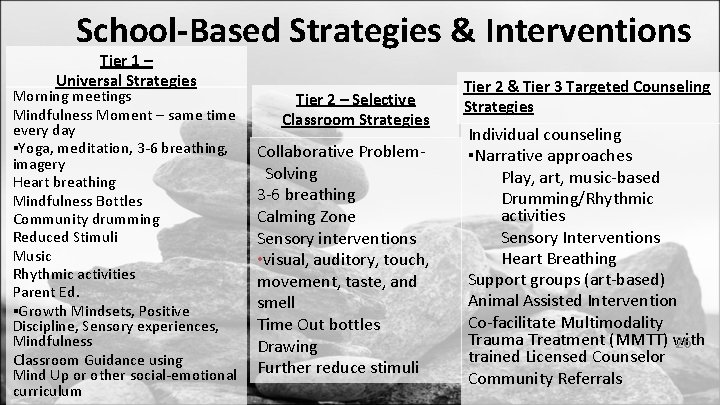
School-Based Strategies & Interventions Tier 1 – Universal Strategies Morning meetings Tier 2 – Selective Mindfulness Moment – same time Classroom Strategies every day ▪Yoga, meditation, 3 -6 breathing, Collaborative Problem- imagery Solving Heart breathing 3 -6 breathing Mindfulness Bottles Calming Zone Community drumming Reduced Stimuli Sensory interventions Music • visual, auditory, touch, Rhythmic activities movement, taste, and Parent Ed. ▪Growth Mindsets, Positive smell Time Out bottles Discipline, Sensory experiences, Mindfulness Drawing Classroom Guidance using Mind Up or other social-emotional Further reduce stimuli curriculum Tier 2 & Tier 3 Targeted Counseling Strategies Individual counseling ▪Narrative approaches Play, art, music-based Drumming/Rhythmic activities Sensory Interventions Heart Breathing 26 Support groups (art-based) Animal Assisted Intervention Co-facilitate Multimodality Trauma Treatment (MMTT) with 26 trained Licensed Counselor Community Referrals
• • Tools and Strategies Calming bottles Drumming Breathing ball Stability balls Sensory tools Meditation/Guided Imagery Yoga Animal Assisted Therapy 27
28 cc: Forbes. Oste - https: //www. flickr. com/photos/71035640@N 08
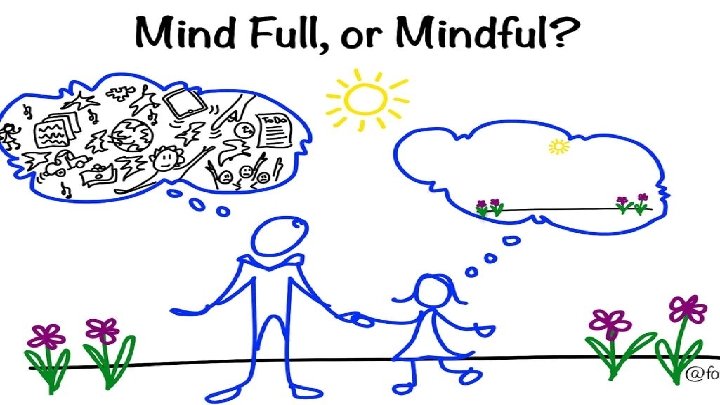
“Mindfulness means paying attention in a particular way; On purpose, in the present moment, and non-judgmentally. ” - Jon Kabat-Zinn 29 cc: lewishamdreamer - https: //www. flickr. com/photos/26503210@N 00
Mind. UP Curriculum 30
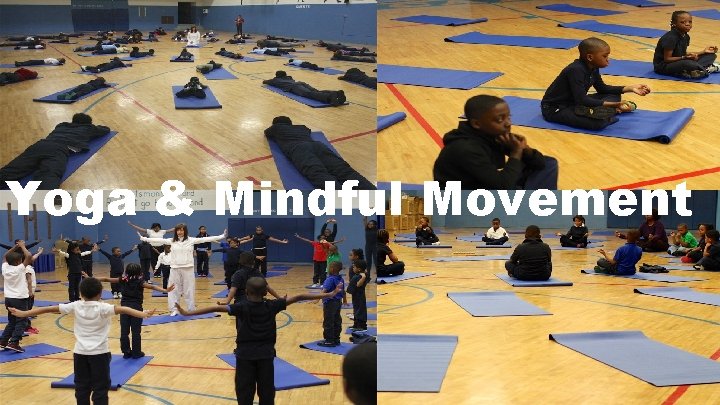
Yoga & Mindful Movement 31
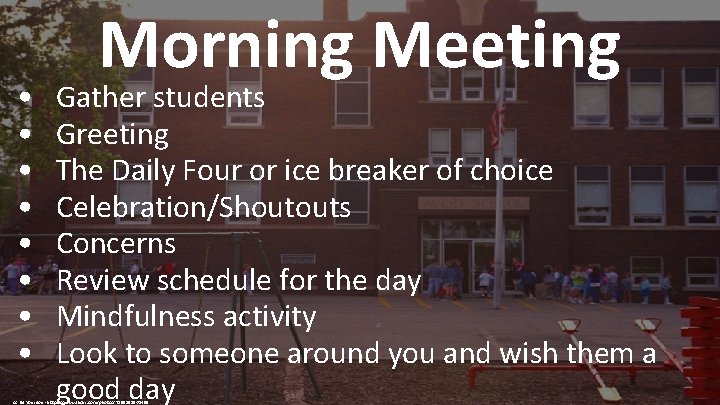
• • Morning Meeting Gather students Greeting The Daily Four or ice breaker of choice Celebration/Shoutouts Concerns Review schedule for the day Mindfulness activity Look to someone around you and wish them a good day cc: Ed Yourdon - https: //www. flickr. com/photos/72098626@N 00 32
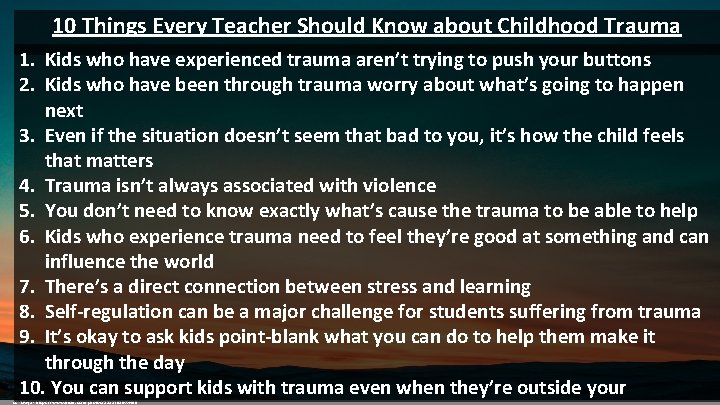
10 Things Every Teacher Should Know about Childhood Trauma 1. Kids who have experienced trauma aren’t trying to push your buttons 2. Kids who have been through trauma worry about what’s going to happen next 3. Even if the situation doesn’t seem that bad to you, it’s how the child feels that matters 4. Trauma isn’t always associated with violence 5. You don’t need to know exactly what’s cause the trauma to be able to help 6. Kids who experience trauma need to feel they’re good at something and can influence the world 7. There’s a direct connection between stress and learning 8. Self-regulation can be a major challenge for students suffering from trauma 9. It’s okay to ask kids point-blank what you can do to help them make it through the day 10. You can support kids with trauma even when they’re outside your 33 cc: T. Kiya - https: //www. flickr. com/photos/38217580@N 05
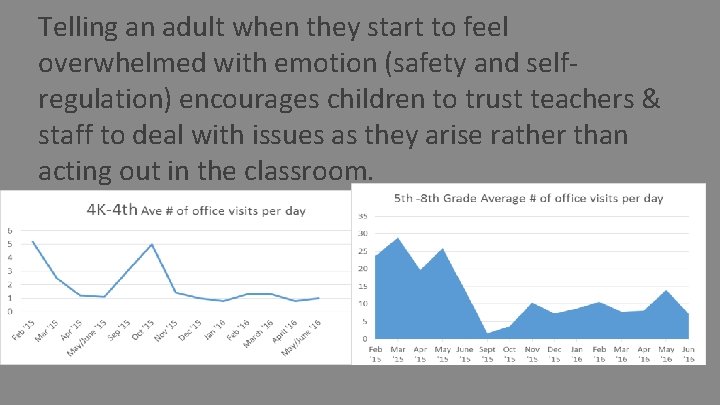
Telling an adult when they start to feel overwhelmed with emotion (safety and selfregulation) encourages children to trust teachers & staff to deal with issues as they arise rather than acting out in the classroom. 34
Northwest Catholic School Responsive School 35 https: //www. youtube. com/watch? v=z. Ll. MOV 62 LHg
36
• Questions? • Calming Bottle Raffle 37
Thank You!!! Tarah Randazzo LPCIT, DPI Licensed School Counselor tarahrandazzo@gmail. com 38