
Strategic Water Source Areas Project vital for national
- Slides: 20
Strategic Water Source Areas Project – vital for national water security during droughts David Le Maitre 1, Helen Seyler 2, Lindie Smith-Adao 1 and Jeanne Nel 1 1: Natural Resources and the Environment, CSIR 2: delta-H Supported by the WRC
Introduction �Strategic Water Source Areas Project: �Built on the 2013 study with stakeholder & expert input �Produced an integrated map of strategic surface-water and groundwater source areas, and �Advanced our knowledge of the benefit-flows and management of these areas � Link SWSAs to benefit flows � Human population supplied � Economic activity sustained � Irrigated agriculture supplied
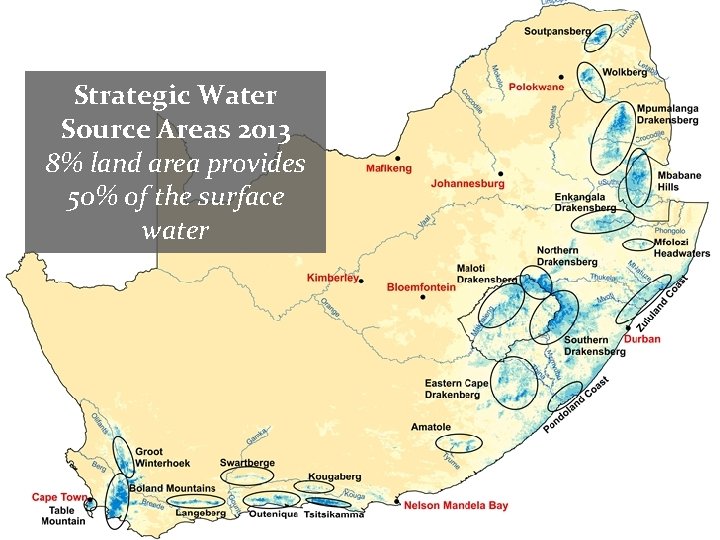
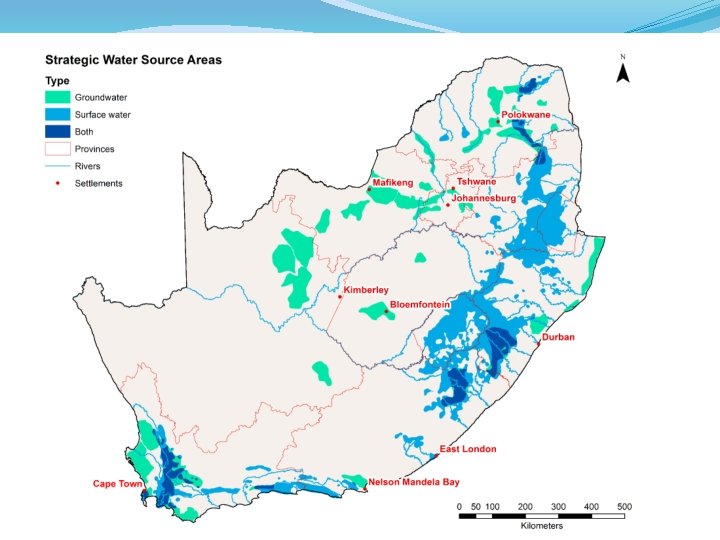
Strategic Water Source Areas 2013 8% land area provides 50% of the surface water
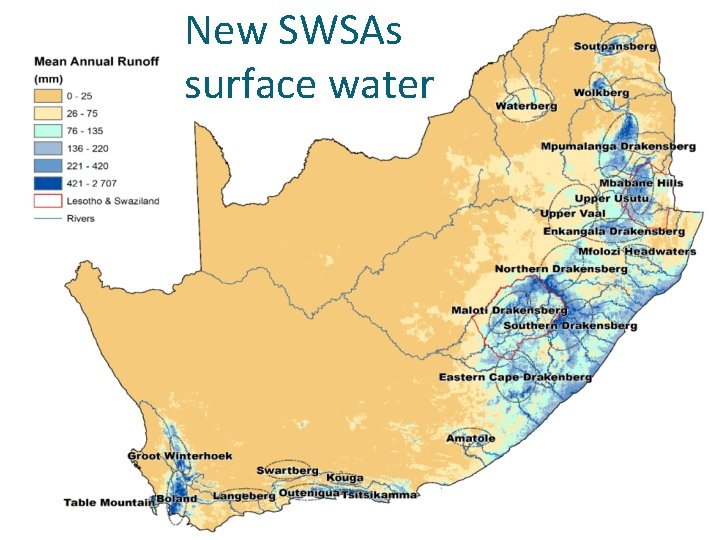
New SWSAs surface water
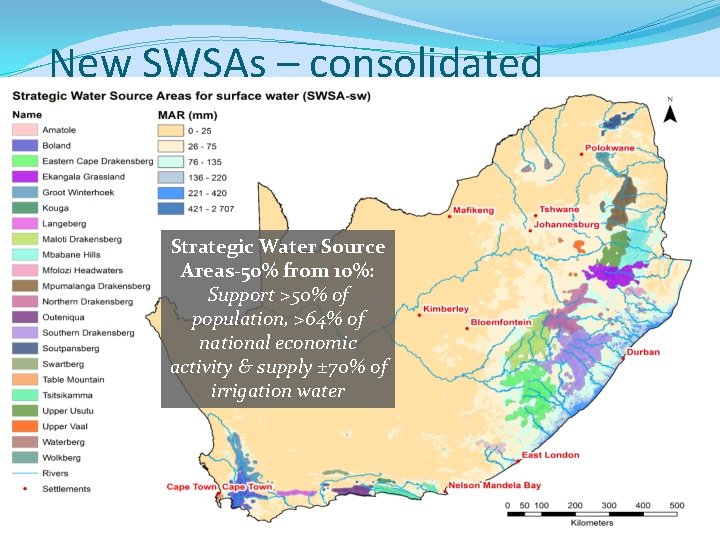
New SWSAs – consolidated Strategic Water Source Areas-50% from 10%: Support >50% of population, >64% of national economic activity & supply ± 70% of irrigation water
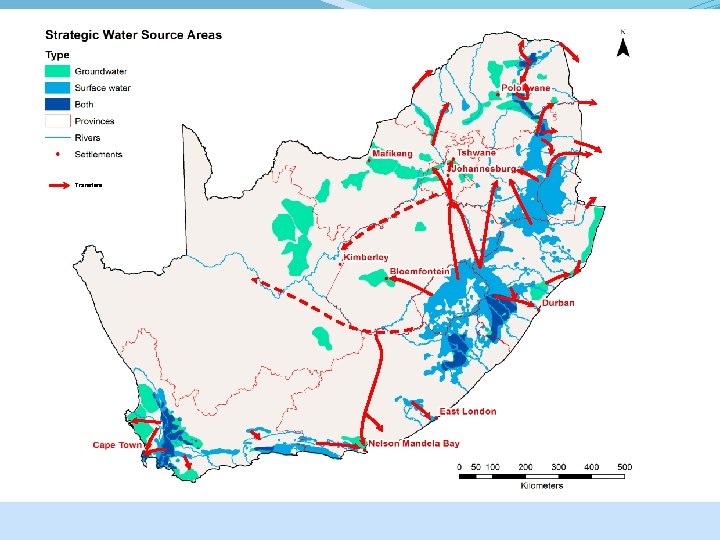
Definition �Strategic Water Source Areas (SWSAs) areas of land that either: (a) supply a disproportionate amount of mean annual surface water runoff in relation to their size and are considered nationally important (surface water); or (b) have high groundwater recharge and where the groundwater forms a nationally important resource (groundwater: high use and dependence); (c) or areas that meet both criteria (a) and (b) (overlaps)
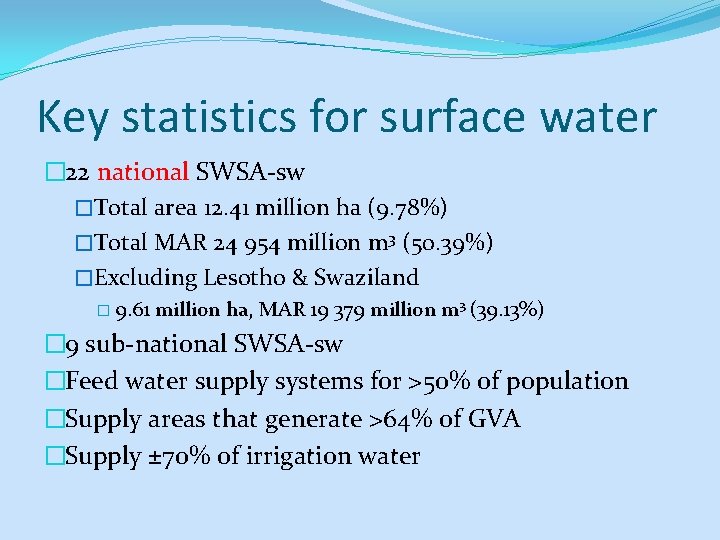
Key statistics for surface water � 22 national SWSA-sw �Total area 12. 41 million ha (9. 78%) �Total MAR 24 954 million m 3 (50. 39%) �Excluding Lesotho & Swaziland � 9. 61 million ha, MAR 19 379 million m 3 (39. 13%) � 9 sub-national SWSA-sw �Feed water supply systems for >50% of population �Supply areas that generate >64% of GVA �Supply ± 70% of irrigation water
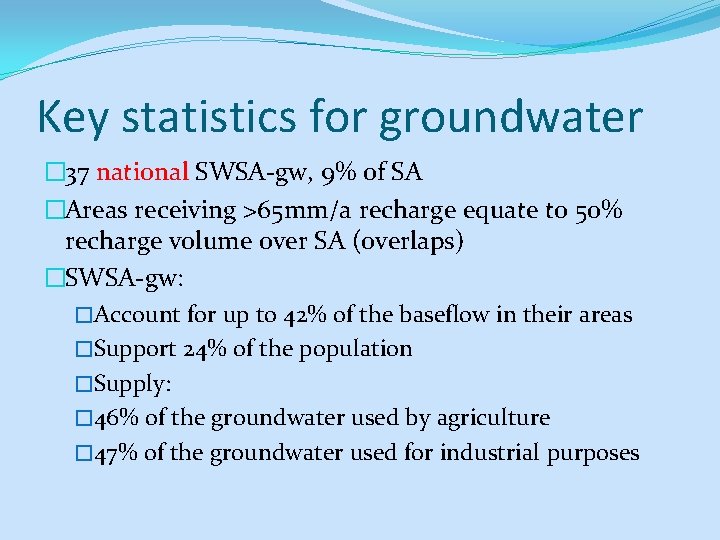
Key statistics for groundwater � 37 national SWSA-gw, 9% of SA �Areas receiving >65 mm/a recharge equate to 50% recharge volume over SA (overlaps) �SWSA-gw: �Account for up to 42% of the baseflow in their areas �Support 24% of the population �Supply: � 46% of the groundwater used by agriculture � 47% of the groundwater used for industrial purposes
New SWSAs
Water security and drought
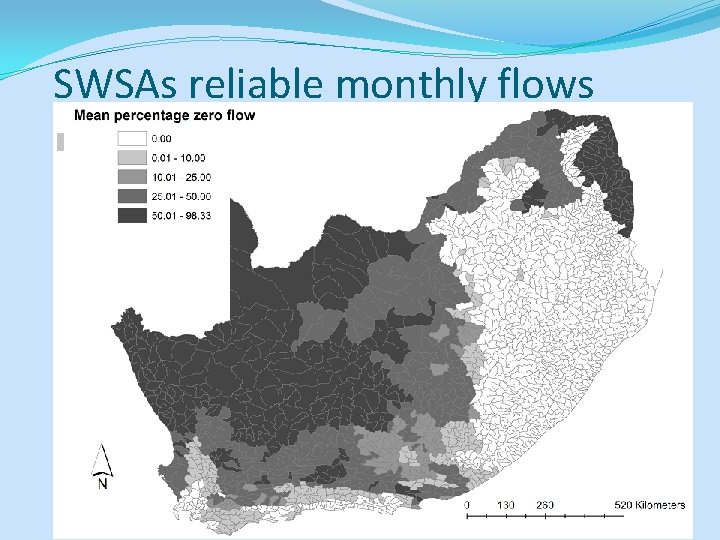
SWSAs reliable monthly flows
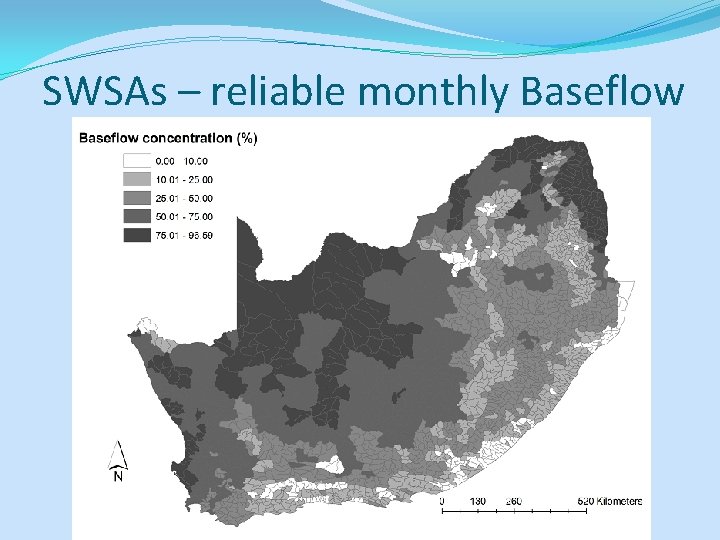
SWSAs – reliable monthly Baseflow
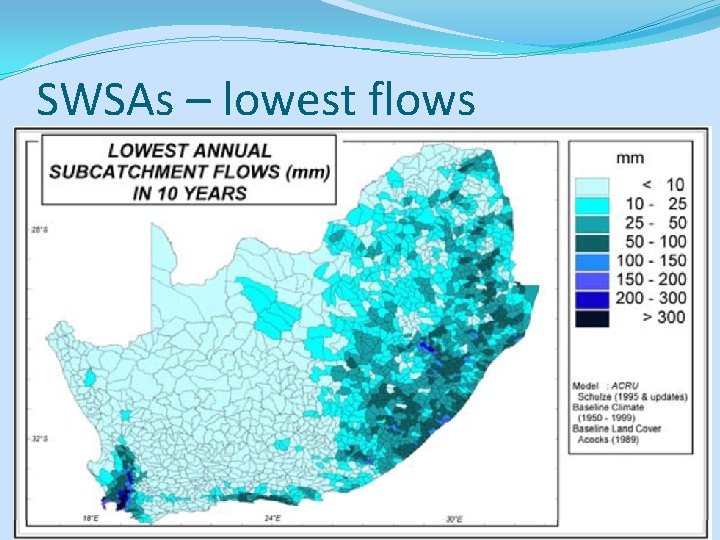
SWSAs – lowest flows
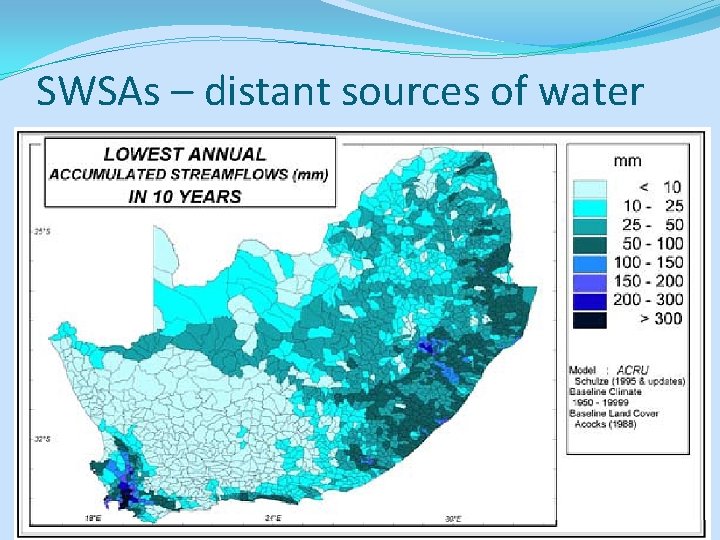
SWSAs – distant sources of water
Transfers
Protection � 67 SWSAs (surface & groundwater) have a portion in formal PAs �<2% to 72% � 11% of all the SWSAs � 10 SWSAs have no PAs (mainly groundwater, Upper Vaal) �Excludes PAs in Lesotho and Swaziland
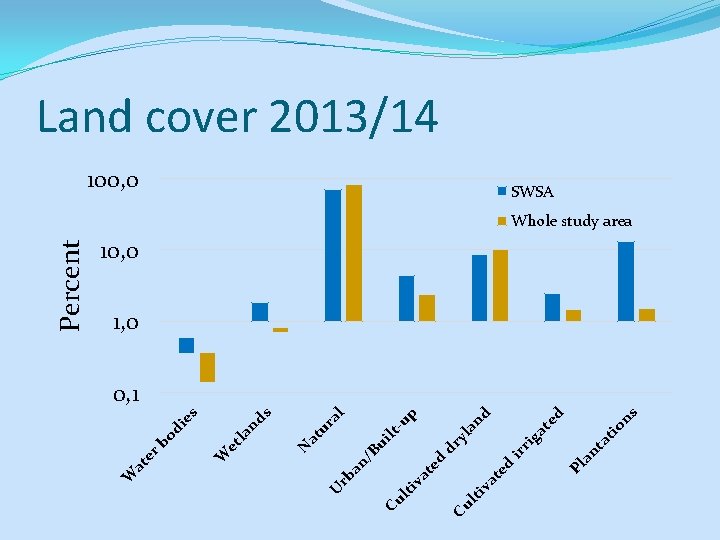
an Pl on ti ta d p s 100, 0 ed ri ga t an yl -u al ur lt ui dr ir d te ed at iv a iv lt Cu an /B rb U at s nd la et es di bo N W er at W Percent Land cover 2013/14 SWSA Whole study area 10, 0 1, 0 0, 1
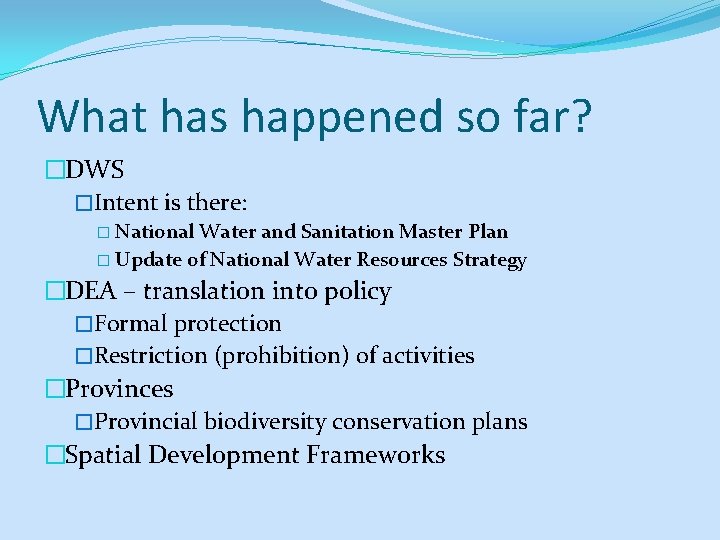
What has happened so far? �DWS �Intent is there: � National Water and Sanitation Master Plan � Update of National Water Resources Strategy �DEA – translation into policy �Formal protection �Restriction (prohibition) of activities �Provincial biodiversity conservation plans �Spatial Development Frameworks
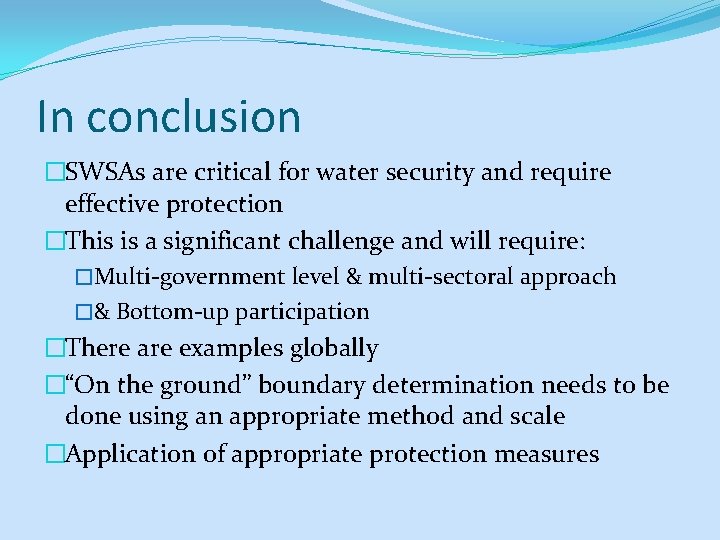
In conclusion �SWSAs are critical for water security and require effective protection �This is a significant challenge and will require: �Multi-government level & multi-sectoral approach �& Bottom-up participation �There are examples globally �“On the ground” boundary determination needs to be done using an appropriate method and scale �Application of appropriate protection measures
Water is the most critical resource issue of our lifetime and our children’s lifetime. The health of our waters is the principal measure of how we live on the land. Attributed to Luna Leopold