
Strategic Planning Workshop Global Teen Challenge Executive Leadership
Strategic Planning Workshop Global Teen Challenge Executive Leadership Training Rick L. Souza
What Is Strategic Planning? It is a process that leadership uses on a regular and ongoing basis to produce fundamental decisions and actions that shape and guide who a ministry is, where it is going, and how it will get there.
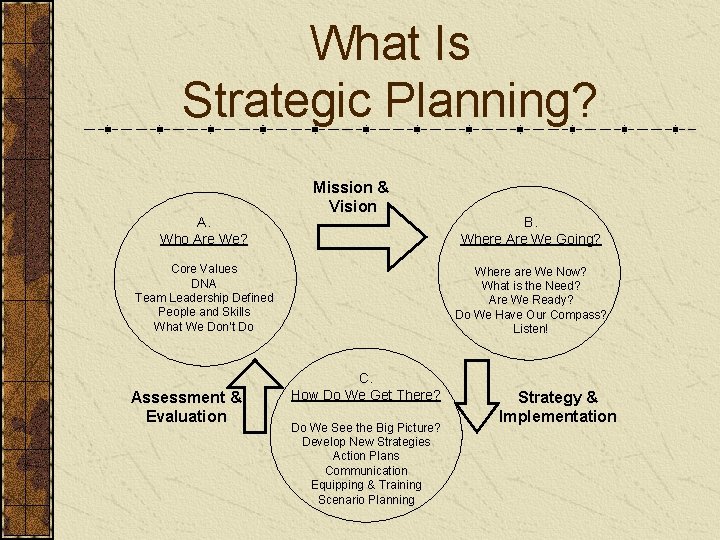
What Is Strategic Planning? A. Who Are We? Mission & Vision Core Values DNA Team Leadership Defined People and Skills What We Don’t Do Assessment & Evaluation B. Where Are We Going? Where are We Now? What is the Need? Are We Ready? Do We Have Our Compass? Listen! C. How Do We Get There? Do We See the Big Picture? Develop New Strategies Action Plans Communication Equipping & Training Scenario Planning Strategy & Implementation
What Is the Purpose of Strategic Planning? A. To discuss the ministry’s strengths, limitations, weaknesses. B. To build on its strengths, and minimize its weaknesses. C. To facilitate communication and build trust. D. To understand implement spiritually-healthy and Christ-honored change. E. To get leadership and constituency on the same page. F. To discover and articulate core values. G. To develop and communicate your mission.
What Is the Purpose of Strategic Planning? H. To develop and articulate an inspiring, compelling vision. I. To identify the most urgent needs of the ministry. J. To develop strategies to meet the identified needs. K. To implement Action Plans. L. To evaluate the effectiveness of all aspects of the ministry, and make corrective change where necessary to assure constant improvement.
Why Do We Need Strategic Planning? A. More than any other time in history, North America, along with much of the world, is experiencing mega-change.
Why Do We Need Strategic Planning? B. Where is the church and related ministries in all of this? How are we doing? 1. Most ministries and churches don’t understand the full implication of mega-change. 2. Most don’t know how to respond, and often react rather than adjust. 3. Most leaders in the Christian world are still being prepared for a modern, not post-modern world. 4. Most training equips pastors and leaders for theological ministry, but ignore the skills needed for effective leadership gifts and abilities, people skills, financial management, strategic thinking and implementation.
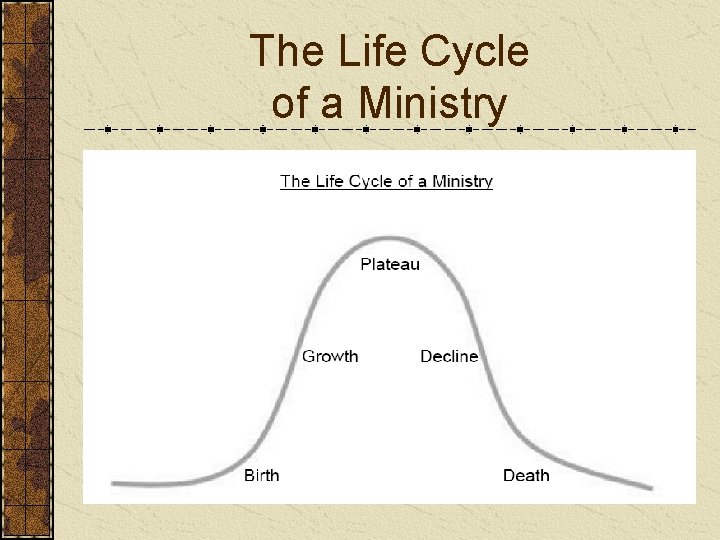
The Life Cycle of a Ministry
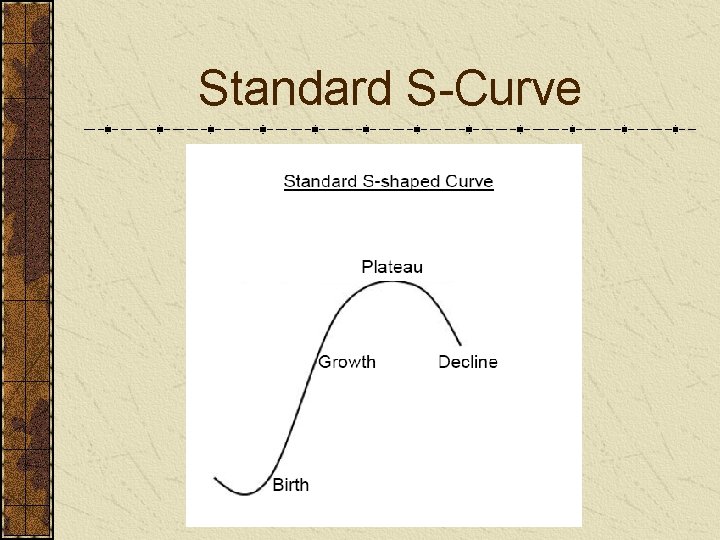
Standard S-Curve
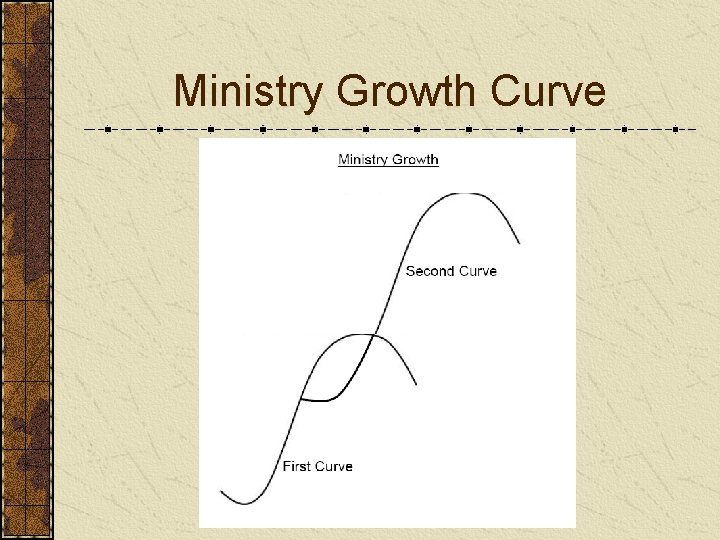
Ministry Growth Curve
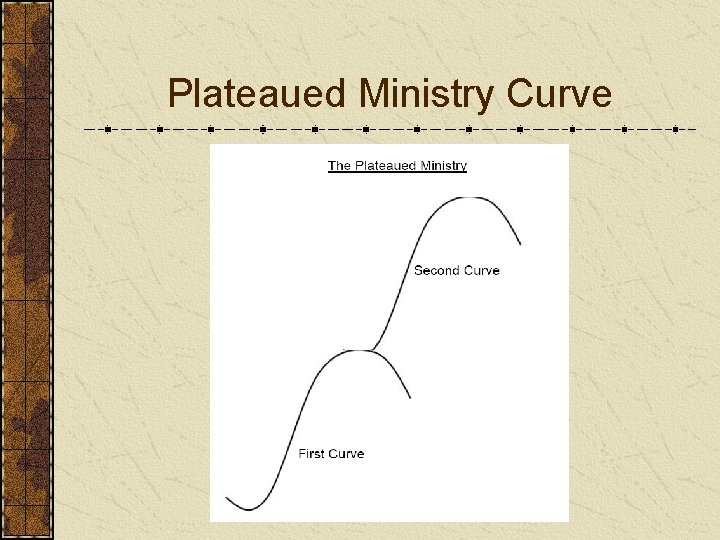
Plateaued Ministry Curve
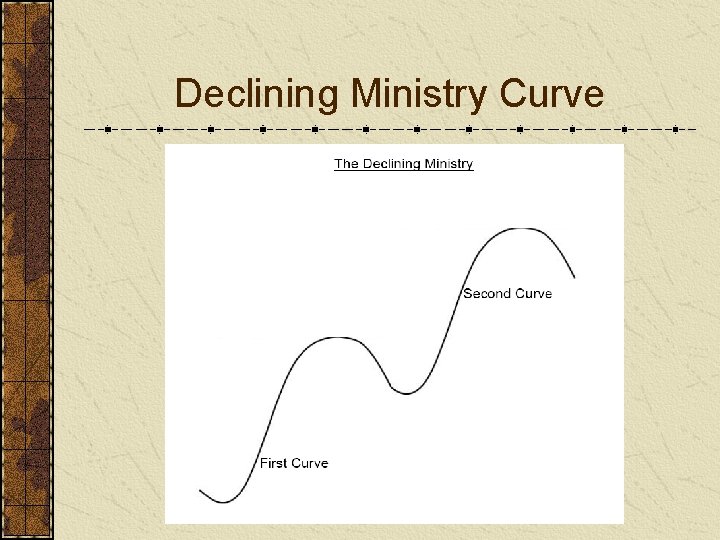
Declining Ministry Curve
Three Critical Questions A. Who are we? 1. The importance of values. a. Values determine ministry distinctives. b. Values dictate personal involvement. c. Values communicate what is important. d. Values embrace good change. e. Values influence overall behavior. f. Values inspire people to action. g. Values enhance credible leadership. h. Values contribute to the success of ministry. i. Values determine ministry mission and vision.
Three Critical Questions A. Who are we? 2. The definition of values. a. Values are constant. b. Values are passionate. c. Values are biblical. d. Values are core beliefs. e. Values drive ministry.
Three Critical Questions B. Where are we going? 1. The importance of the mission. a. The mission dictates the ministry’s direction. b. The mission formulates the ministry’s function. c. The mission focuses on the ministry’s future. d. The mission inspires ministry unity. e. The mission helps to shape the strategy. f. The mission enhances ministry effectiveness. g. The mission ensures an enduring organization. h. The mission facilitates evaluation.
Three Critical Questions B. Where are we going? 2. What a mission is not. organization’s brief, compelling statement of purpose. ” However, the purpose of a ministry is very different in many ways from its mission. First, the purpose answers different questions. It answers the “why” questions. Why are we here? Why do we exist? The mission, however, answers the “what” questions. What are we supposed to be doing? What is our divine, strategic intent? Purpose is different from mission because it is broader in scope. The mission of a ministry, as well as its vision and values, is subsumed under its purpose.
Three Critical Questions B. Where are we going? 3. What a mission is. a. A mission is broad, but not overly broad. b. A mission is brief. c. A mission is biblical. d. A mission is a statement. e. A mission is what the ministry is supposed to be doing.
Three Critical Questions B. Where are we going? 4. The importance of vision. a. A vision provides energy. b. A vision creates cause. c. A vision fosters risk taking. d. A vision legitimizes leadership. e. A vision energizes leadership. f. A vision sustains ministry. g. A vision motivates giving.
Three Critical Questions B. Where are we going? 5. What a vision is not. a. The mission is a statement of what the ministry is supposed to be doing, while the vision is a snapshot or picture of it. b. The mission is used for planning where the ministry is going; the vision is used for communicating where the ministry is going. c. A mission statement must be short enough to fit on a T-shirt. The vision statement, however, goes into detail and can range from a single paragraph to several pages in length.
Three Critical Questions B. Where are we going? 5. What a vision is not. d. The purpose of a mission is to inform all the ministry’s functions. The purpose of the vision is to inspire people to accomplish the ministry’s functions. e. The mission involves knowing. It helps your people know here they are going. The vision involves seeing. It helps people see where they are going. If people cannot see a goal, it probably will not happen. f. The mission comes from the head – it is more intellectual in origin. It supplies knowledge. The vision comes from the heart – it is more emotional in origin. It supplies passion.
Three Critical Questions B. Where are we going? 5. What a vision is not. g. Logically, the mission precedes the vision. In their development, the vision grows out of and develops detail around the mission, fleshing it out. h. The mission has a broad, general focus, while the vision has a narrow focus. It singles out the details and specifics of the ministry community. i. Mission development is a science – it can be taught. The vision, however, is an art – it is more caught. Either you catch it or you miss it altogether.
Three Critical Questions B. Where are we going? 5. What a vision is not. j. The mission is communicated visually; it is written down somewhere. The vision is communicated verbally. You hear it preached. An example is Martin Luther King’s “I Have a Dream” vision. Hearing him preach it has much greater impact than reading it off the page.
Three Critical Questions B. Where are we going? 6. What a vision is. a. A vision is clear. b. A vision is compelling. c. A vision is a picture. d. A vision is the future of a ministry. e. A vision is what can be. f. A vision is what must be.
Three Critical Questions C. How do we get there? 1. The importance of strategy. a. The strategy accomplishes the mission and vision. b. The strategy facilitates understanding. c. The strategy provides a sense of spiritual momentum. d. The strategy invests God’s resources properly. e. The strategy displays what God is blessing.
Three Critical Questions C. How do we get there? 2. The definition of strategy: It is the process that determines how your ministry will meet the need in order to accomplish its mission. A good strategy answers the “how” questions.
Three Critical Questions C. How do we get there? 3. What is scenario planning? Scenario planning is critical to the strategic planning process and developing effective alternative strategies.
Three Critical Questions C. How do we get there? 4. Implement an Action Plan. a. What is the strategy? b. Who is responsible for making sure it is completed? c. When will it start? When will it be completed? d. Where will the action take place? e. How will it be accomplished? f. What will it cost in finances, resources, manpower, time and energy? g. Who will do the follow up? h. How will it be evaluated?
Strategic Planning is a Process The important thing to remember is that it is a process.
What is Needed for the Strategic Planning Process? A. Step 1: Gain leadership support. 1. Understand the board’s attitude toward strategic planning. 2. Understand the leader’s attitude toward strategic planning. 3. Understand the staff’s attitude toward strategic planning. 4. Understand the patriarch or matriarch’s attitude toward strategic planning.
What is Needed for the Strategic Planning Process? B. Step 2: Recruit a leadership team. 1. Questions to ask: a. Who will choose the team? b. When will they choose? c. Why are these people on the team? d. Why would these leaders want to be on the team? e. How does this process help these people create a strategy? f. How many will be on the team? g. How often will the team meet? h. Who will lead the team? i. What are the expectations of the team?
What is Needed for the Strategic Planning Process? C. Step 3: Make sure communication is effective. 1. Communication builds trust. 2. Determine who will communicate. 3. Determine how you will communicate. 4. Determine what you will communicate. 5. Communicate well.
What is Needed for the Strategic Planning Process? D. Step 4: Assess the ministry’s readiness for change. 1. Understand how change has affected people in the ministry. 2. Take the readiness for change inventory. 3. Ask probing questions. 4. Tap into people’s emotions. 5. Determine events that engage emotions. 6. Embrace a theology of change.
What is Needed for the Strategic Planning Process? E. Step 5: Conduct a ministry analysis. 1. It asks the basic questions. 2. It prompts what could be. 3. It produces the “iceberg effect. ” 4. It brings complacency to the surface. 5. It prompts change.
What is Needed for the Strategic Planning Process? F. Step 6: Set reasonable time expectations for the planning process. 1. The time factor may present a problem for some ministries. Those ministries in deep decline or spiraling downward may not have more than a year to make critical changes. In some cases it may be best to let the ministry die, as harsh as that sounds. 2. The best response to the question of time is patience. 3. The leadership must be committed to seeing the process through.
Evaluating the Ministry: How are we Doing? 1. The purpose of evaluation: a. Evaluation of the Action Plan item helps keep the task on schedule and prompts ministry alignment if necessary. b. Evaluation prioritizes ministry accomplishment. c. Evaluation encourages ministry appraisal. d. Evaluation coaxes ministry affirmation. e. Evaluation emboldens ministry correction. f. Evaluation elicits ministry improvement. g. Evaluation promotes change.
Wrapping It Up A. Reasons for not planning: 1. Lack of time or fear it will take too much time. 2. Lack of knowledge or skill. 3. Pride. 4. Expense.
- Slides: 36