
Strategic Planning methodology and best practices in Lithuania
Strategic Planning: methodology and best practices in Lithuania 8 December 2015 Lina Lajauskienė
Presentation Plan Strategic Planning System § Background § Planning document § Responsibility for results chain § Performance indicators Annual planning cycle § § Planning process Budget negotiations Monitoring and Reporting Lessons learned
Strategic Planning System
Strategic Planning development I phase – introduction of SP 1999 – 2000: institutionalisation of SP across Gov’t 1999 – 2000: piloting of strategic planning in 5 min 2002 –adoption of a Methodology II phase – consolidation of strategic planning 2003 – 2008: through Strategic planning committee III phase – rethinking efficiency and effectiveness 2009 - 2011: strengthening of government-wide approach and leadership 2010: introduction of budget negotiations, evaluation, functional reviews and etc.
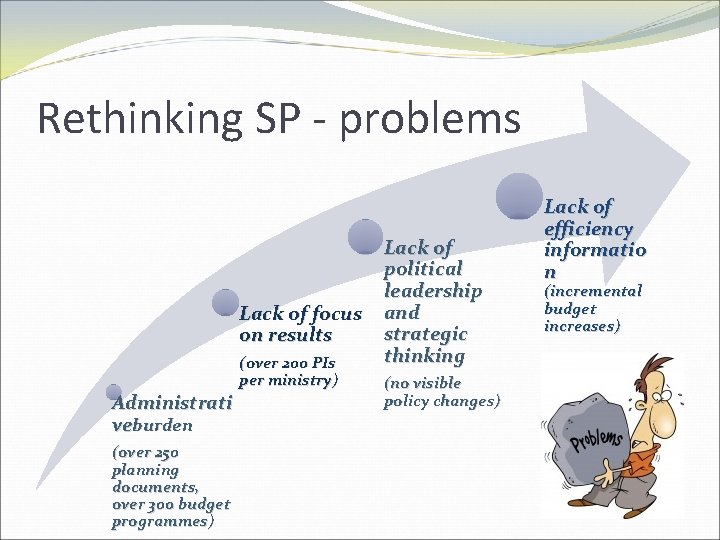
Rethinking SP - problems Lack of focus on results (over 200 PIs per ministry) Administrati veburden (over 250 planning documents, over 300 budget programmes) Lack of political leadership and strategic thinking (no visible policy changes) Lack of efficiency informatio n (incremental budget increases)
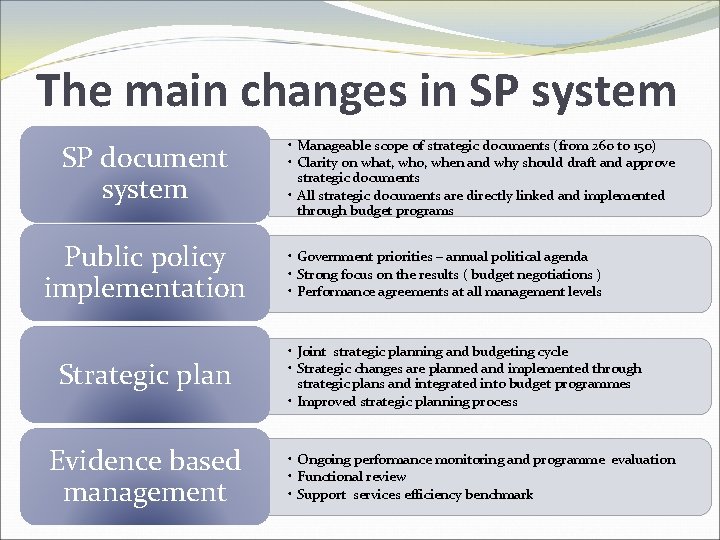
The main changes in SP system SP document system Public policy implementation Strategic plan Evidence based management • Manageable scope of strategic documents (from 260 to 150) • Clarity on what, who, when and why should draft and approve strategic documents • All strategic documents are directly linked and implemented through budget programs • Government priorities – annual political agenda • Strong focus on the results ( budget negotiations ) • Performance agreements at all management levels • Joint strategic planning and budgeting cycle • Strategic changes are planned and implemented through strategic plans and integrated into budget programmes • Improved strategic planning process • Ongoing performance monitoring and programme evaluation • Functional review • Support services efficiency benchmark
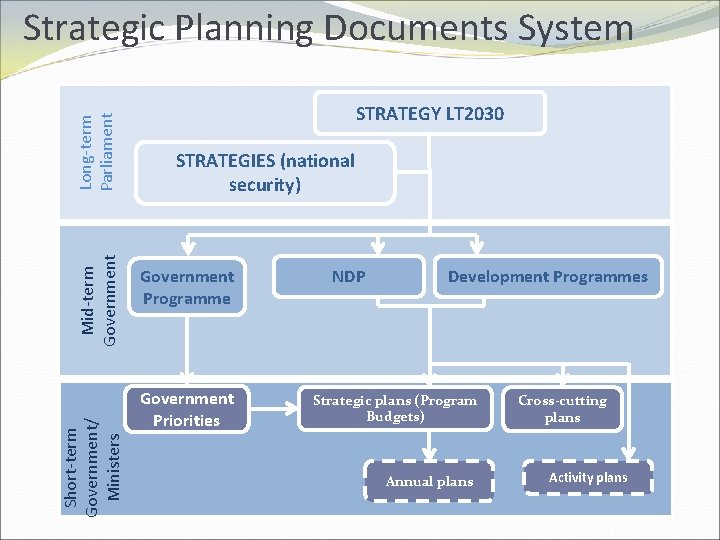
Short-term Government/ Ministers Mid-term Government Long-term Parliament Strategic Planning Documents System STRATEGY LT 2030 STRATEGIES (national security) Government Programme Government Priorities NDP Development Programmes Strategic plans (Program Budgets) Annual plans Cross-cutting plans Activity plans 7
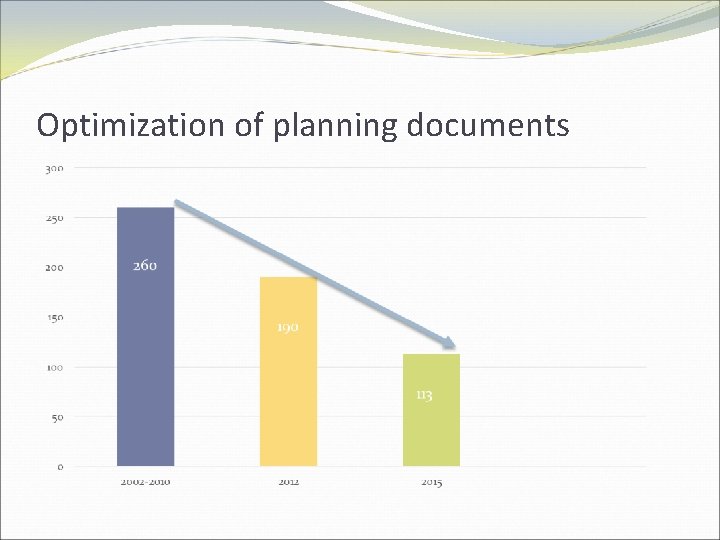
Optimization of planning documents
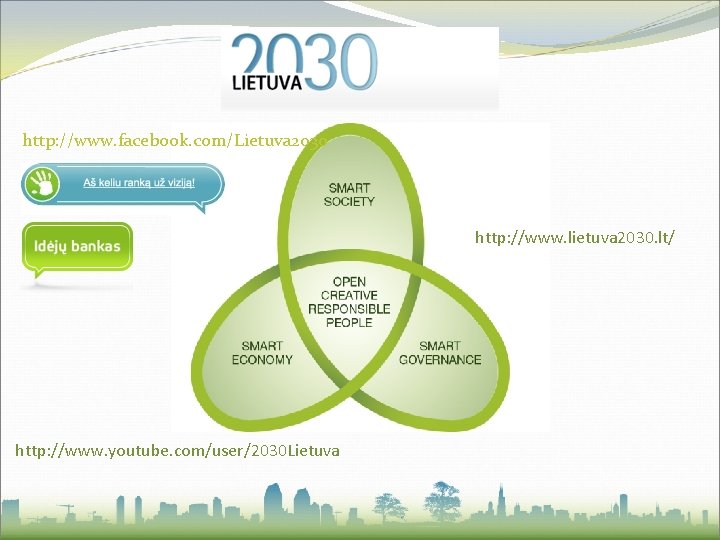
http: //www. facebook. com/Lietuva 2030 http: //www. lietuva 2030. lt/ http: //www. youtube. com/user/2030 Lietuva
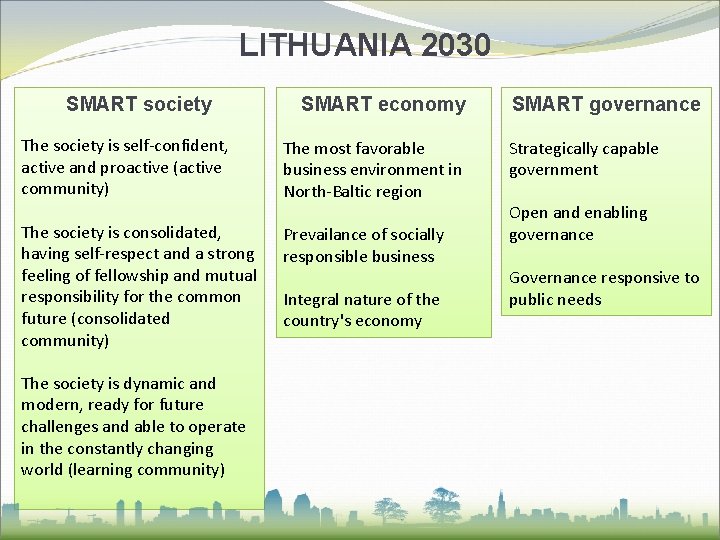
LITHUANIA 2030 SMART society The society is self-confident, active and proactive (active community) The society is consolidated, having self-respect and a strong feeling of fellowship and mutual responsibility for the common future (consolidated community) The society is dynamic and modern, ready for future challenges and able to operate in the constantly changing world (learning community) SMART economy The most favorable business environment in North-Baltic region Prevailance of socially responsible business Integral nature of the country's economy SMART governance Strategically capable government Open and enabling governance Governance responsive to public needs
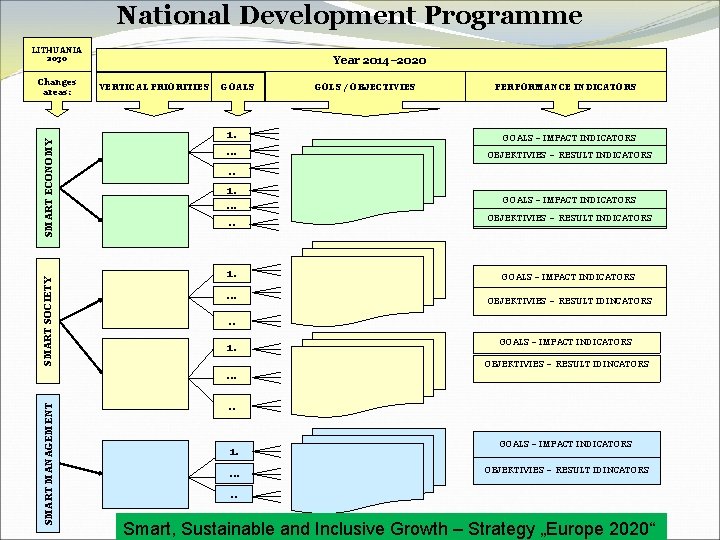
National Development Programme LITHUANIA 2030 SMART SOCIETY SMART ECONOMY Changes areas: Year 2014– 2020 VERTICAL PRIORITIES GOALS GOLS / OBJECTIVIES PERFORMANCE INDICATORS 1. GOALS – IMPACT INDICATORS . . . OBJEKTIVIES – RESULT INDICATORS . . 1. . GOALS – IMPACT INDICATORS . . OBJEKTIVIES – RESULT kliai INDICATORS 1. GOALS – IMPACT INDICATORS . . . OBJEKTIVIES – RESULT IDINCATORS . . 1. GOALS – IMPACT INDICATORS OBJEKTIVIES – RESULT IDINCATORS SMART MANAGEMENT . . . 1. . GOALS – IMPACT INDICATORS OBJEKTIVIES – RESULT IDINCATORS . . Smart, Sustainable and Inclusive Growth – Strategy „Europe 2020“
Development programmes FILTER: Request for Government’s permission to prepare development programme SCOPE: Development programme has to cover at least one governance/public policy area TIMEFRAME: Medium-term (7 -9 years) planning document to be approved by the Government OWNERSHIP: For each programme the coordinator has to be appointed
Development Program Structure Introduction Programme preparation purpose Planning documents referring to entire management area Other important information Environmental Assessment: - Review and evaluation current state; - Evident based conclusions Programme goals ( including strategic goals), objectives and performance indicators; Implementation, monitoring and reporting
Cross-Cutting Plans TIMEFRAME: Short-term (up to 3 years) planning document to be approved by the Government NECCESSITY: Horizontal planning document for the implementation of horizontal goals and objectives of: Government priorities, complex problems National Development programme or other programmes More than 3 appropriation managers involved in the implementation FILTER: prior Government permission INTEGRITY and FINANCIAL DISCIPLINE: connected with strategic plan and budget (activities and projects exported and “duplicated” in budget programmes) “frozen” funds (in IT budget execution and results monitoring system) SCOPE: 15 cross-cutting plans
Cross-cutting plans NDP plan “Regional Development” NDP plan “Culture” NDP plan “Health for All” Increase of employment Global Lithuania Safety on the roads Information society Climate change Internal security development and etc.
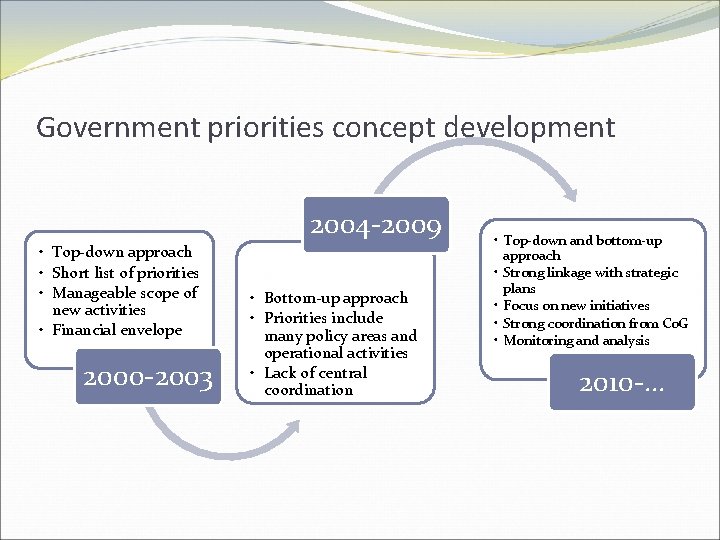
Government priorities concept development 2004 -2009 • Top-down approach • Short list of priorities • Manageable scope of new activities • Financial envelope 2000 -2003 • Bottom-up approach • Priorities include many policy areas and operational activities • Lack of central coordination • Top-down and bottom-up approach • Strong linkage with strategic plans • Focus on new initiatives • Strong coordination from Co. G • Monitoring and analysis 2010 -…
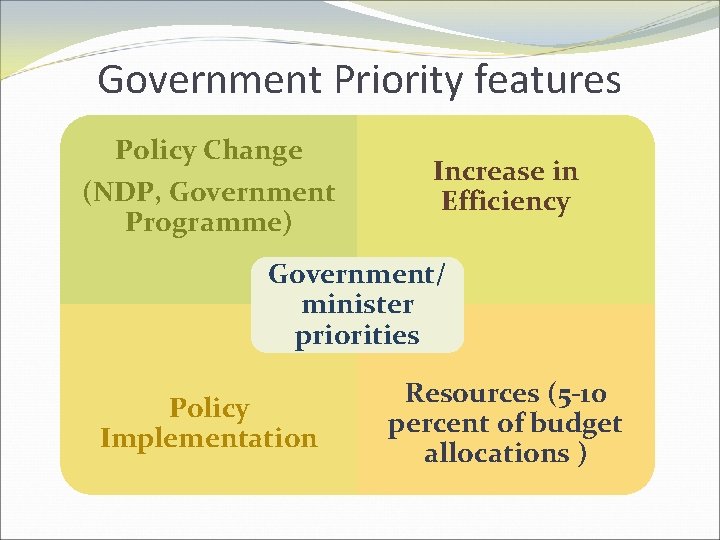
Government Priority features Policy Change (NDP, Government Programme) Increase in Efficiency Government/ minister priorities Policy Implementation Resources (5 -10 percent of budget allocations )
Strategic Plan • 3 years rolling document; • To be approved by appropriations managers ( ministers ) • Axis of performance management and drafting budget proposals;
Appropriations managers The Law on Budgeting provide criteria which serve as the basis for institutions to be listed in the annual Law on the Approval of Financial Indicators of the State Budget and Municipal Budgets; Heads of the institutions have the status of appropriations managers. The criteria are as follows: The legal form: a budget institution; Accountability: to the Seimas of the Republic of Lithuania, the President of the Republic of Lithuania and the Government of the Republic of Lithuania; Autonomy: granted by law (courts, higher education establishments, etc. ); Exception- National culture organizations (National theaters, National museums, National Libraries – total 10) Total Appropriations managers -103
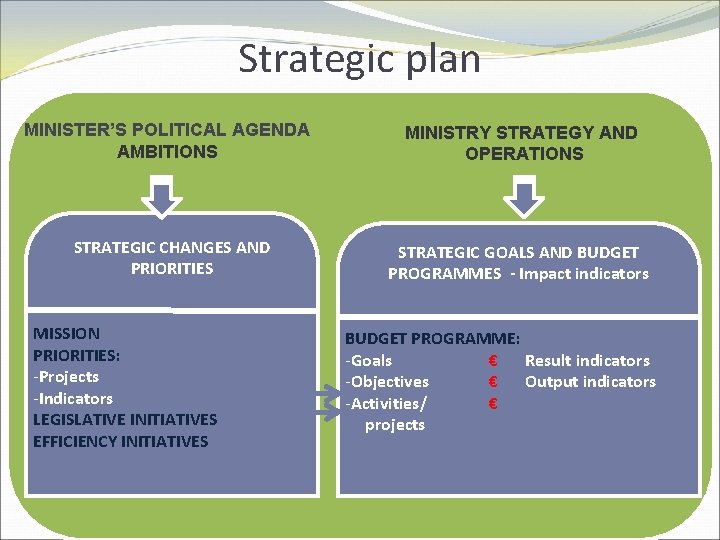
Strategic plan MINISTER’S POLITICAL AGENDA AMBITIONS MINISTRY STRATEGY AND OPERATIONS STRATEGIC CHANGES AND PRIORITIES STRATEGIC GOALS AND BUDGET PROGRAMMES - Impact indicators MISSION PRIORITIES: -Projects -Indicators LEGISLATIVE INITIATIVES EFFICIENCY INITIATIVES BUDGET PROGRAMME: -Goals € Result indicators -Objectives € Output indicators -Activities/ € projects
Strategic Plan Structure Strategic changes part: Mission Government/ minister’s priorities Efficiency initiatives Legislative initiatives Ministry strategy and operations: Strategic goals, programs and budget appropriations Administrative costs Budget programs (brief description, financial table, performance indicators table) Personnel information Capital projects
Strategic plan financial table
Performance indicators table
Annual plans are prepared according to strategic plan and must ensure that strategic plan goals and objectives will be achieved; The Minister, as an appropriations manager, allocates appropriations to subordinate institutions on the basis of delegated tasks and achievable outcomes; The head of the subordinate institution is responsibile for the implementation of the tasks delegated to them as well for the proper use of the allocated funds
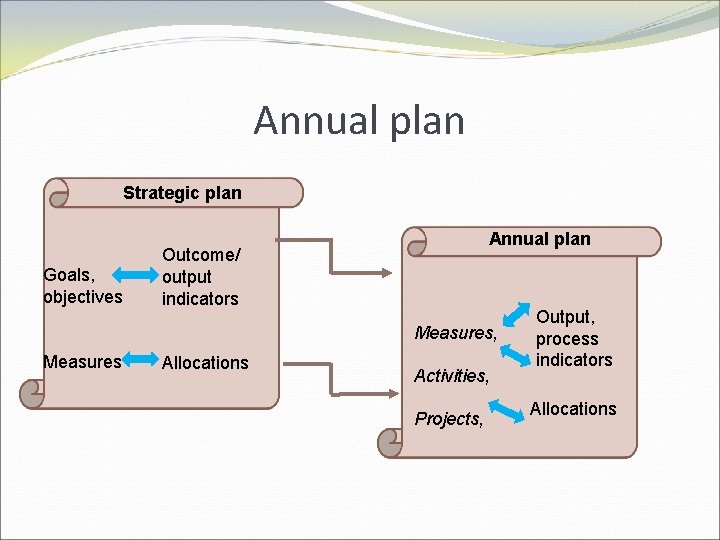
Annual plan Strategic plan Goals, objectives Annual plan Outcome/ output indicators Measures, Measures Allocations Activities, Projects, Output, process indicators Allocations
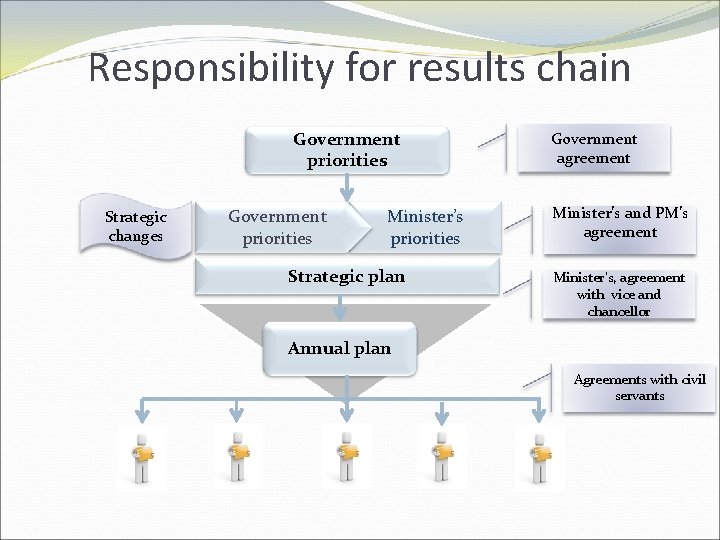
Responsibility for results chain Government priorities Strategic changes Government priorities Minister’s priorities Strategic plan Government agreement Minister’s and PM’s agreement Minister’s, agreement with vice and chancellor Annual plan Agreements with civil servants
Performance Indicators
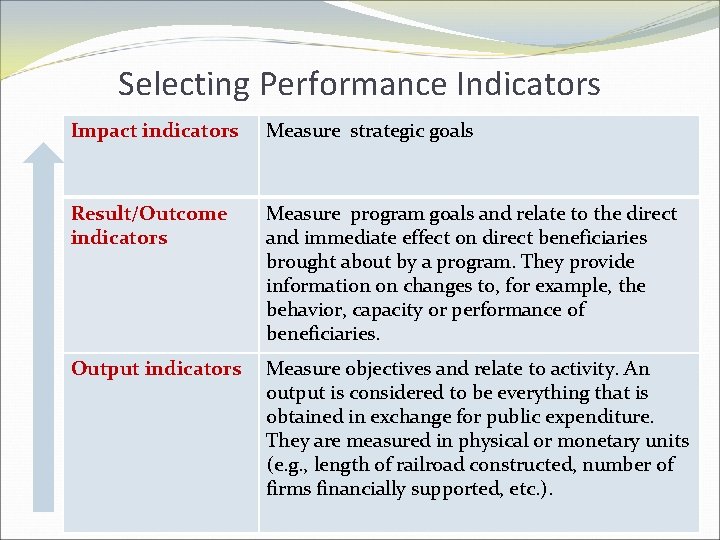
Selecting Performance Indicators Impact indicators Measure strategic goals Result/Outcome indicators Measure program goals and relate to the direct and immediate effect on direct beneficiaries brought about by a program. They provide information on changes to, for example, the behavior, capacity or performance of beneficiaries. Output indicators Measure objectives and relate to activity. An output is considered to be everything that is obtained in exchange for public expenditure. They are measured in physical or monetary units (e. g. , length of railroad constructed, number of firms financially supported, etc. ).
Formulation of Impact Indicators The PI shall assess the achievement of the goal and shows the benefit which is received not only by direct program beneficiaries but also by the public The number of indicators may not be lesser than the number of goals as the indicators must evaluate the implementation of all goals The head of an institution shall participate in selecting the performance indicators and setting the planned values thereof in order to ensure the fulfilment of the highest-level obligations of an institution.
Formulation of Outcome Indicators The PI shall assess the achievement of the program goals and shows the benefit which is received by direct program beneficiaries; The number of indicators for result shall be no lesser than the number of program objectives. The PI shall be used to evaluate the main activities of a program and therefore they must clearly show the content and direct results of the program. When formulating the PI for result a clear understanding of the desired change is needed, while its actual value shall show whether a problem was successfully solved and whether the envisaged benefit was received There must be a logic linkage between results and impacts. Results shall measure the most important factors which have an influence on the achievement of goals The head of a responsible administrative subdivision shall participate in selecting indicators for result and shall also take a decision on their values.
Formulation of Outputs Indicators The PI for output may be composed of the performance indicators for process or input; The number of output measures shall not be lesser than the number of objectives as the output measure or a whole of several output measures must enable evaluation of the achievement of the program objective. An objective normally indicates the provision or development of certain services or products. In order to avoid an overabundance of information and an increased workload it is important to assess only the major activities in implementing the objective and set a limited number of performance measures; It is recommended to employ outputs for the measurement of the purchase or development of relatively very expensive services or products with the aim of observing whether the allocated resources are used efficiently.
Quantitative and Qualitative Indicators Quantitative PI assess quantifiable values and shall be formulated on the basis of quantitative information, i. e. facts, figures, statistics or departmental data. They show inputs or a quantitative scope of the final output or result. Qualitative PI show the quality characteristics of institution’s performance, i. e. either its advance or decline (e. g. timeliness of results, their compliance with consumer or public needs, standards, etc). They can be developed using poll or research data, surveys, materials of experts or special group discussions and other information.
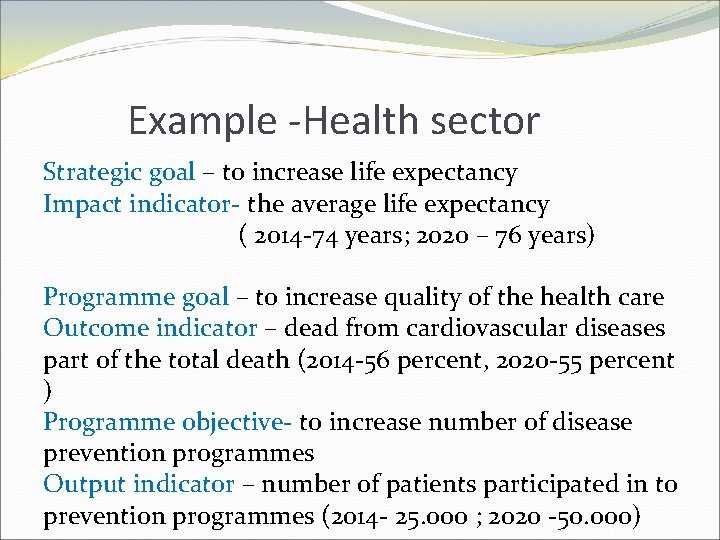
Example -Health sector Strategic goal – to increase life expectancy Impact indicator- the average life expectancy ( 2014 -74 years; 2020 – 76 years) Programme goal – to increase quality of the health care Outcome indicator – dead from cardiovascular diseases part of the total death (2014 -56 percent, 2020 -55 percent ) Programme objective- to increase number of disease prevention programmes Output indicator – number of patients participated in to prevention programmes (2014 - 25. 000 ; 2020 -50. 000)
Annual planning cycle
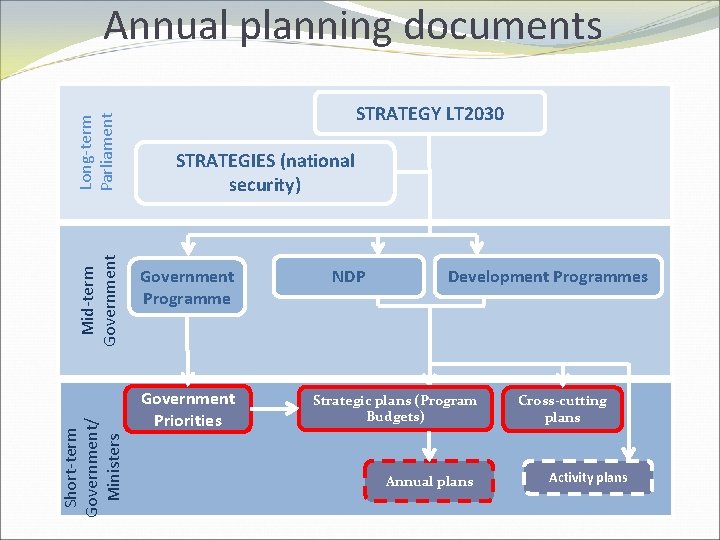
Short-term Government/ Ministers Mid-term Government Long-term Parliament Annual planning documents STRATEGY LT 2030 STRATEGIES (national security) Government Programme Government Priorities NDP Development Programmes Strategic plans (Program Budgets) Annual plans Cross-cutting plans Activity plans 35
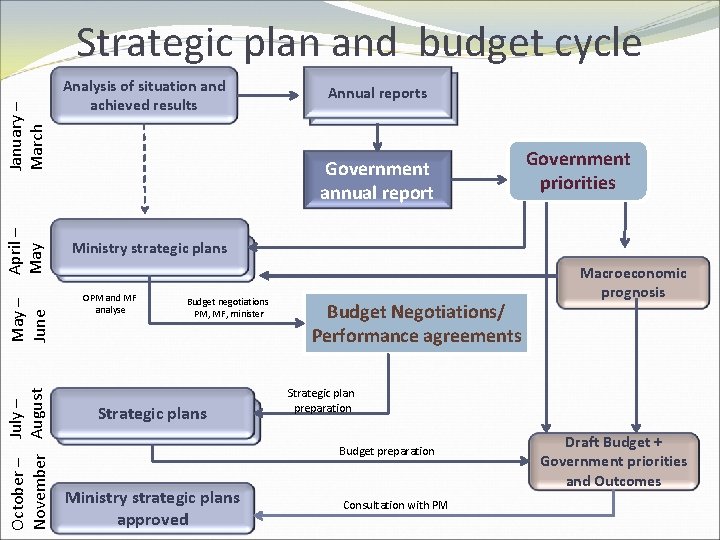
October – July – November August May – June April – May January – March Strategic plan and budget cycle Analysis of situation and achieved results Annual reports Government annual report Government priorities Ministry strategic plans OPM and MF analyse Budget negotiations PM, MF, minister Strategic plans Budget Negotiations/ Performance agreements Strategic plan preparation Budget preparation Ministry strategic plans approved Macroeconomic prognosis Consultation with PM Draft Budget + Government priorities and Outcomes
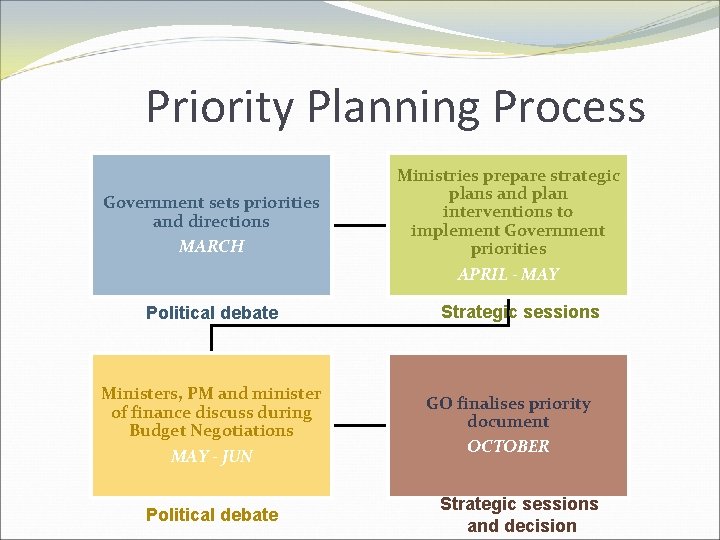
Priority Planning Process Government sets priorities and directions MARCH Political debate Ministers, PM and minister of finance discuss during Budget Negotiations MAY - JUN Political debate Ministries prepare strategic plans and plan interventions to implement Government priorities APRIL - MAY Strategic sessions GO finalises priority document OCTOBER Strategic sessions and decision
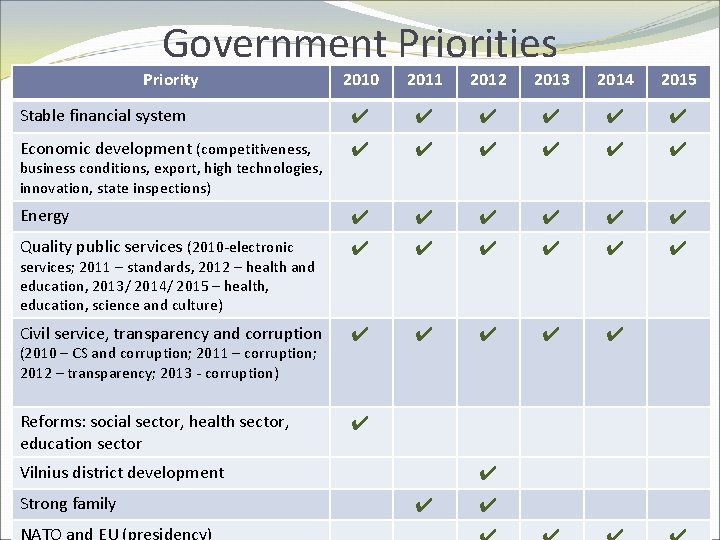
Government Priorities Priority 2010 2011 2012 2013 2014 2015 Stable financial system ✔ ✔ ✔ Economic development (competitiveness, ✔ ✔ ✔ Energy ✔ ✔ ✔ Quality public services (2010 -electronic ✔ ✔ ✔ Civil service, transparency and corruption ✔ ✔ ✔ Reforms: social sector, health sector, education sector ✔ business conditions, export, high technologies, innovation, state inspections) services; 2011 – standards, 2012 – health and education, 2013/ 2014/ 2015 – health, education, science and culture) (2010 – CS and corruption; 2011 – corruption; 2012 – transparency; 2013 - corruption) Vilnius district development Strong family ✔ ✔ ✔
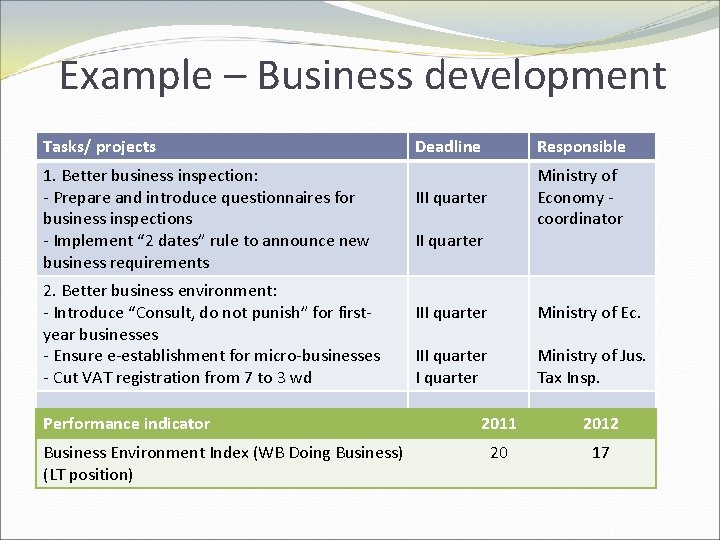
Example – Business development Tasks/ projects 1. Better business inspection: - Prepare and introduce questionnaires for business inspections - Implement “ 2 dates” rule to announce new business requirements 2. Better business environment: - Introduce “Consult, do not punish” for firstyear businesses - Ensure e-establishment for micro-businesses - Cut VAT registration from 7 to 3 wd … Performance indicator Business Environment Index (WB Doing Business) (LT position) Deadline Responsible III quarter Ministry of Economy coordinator II quarter III quarter Ministry of Ec. III quarter Ministry of Jus. Tax Insp. 2011 2012 20 17
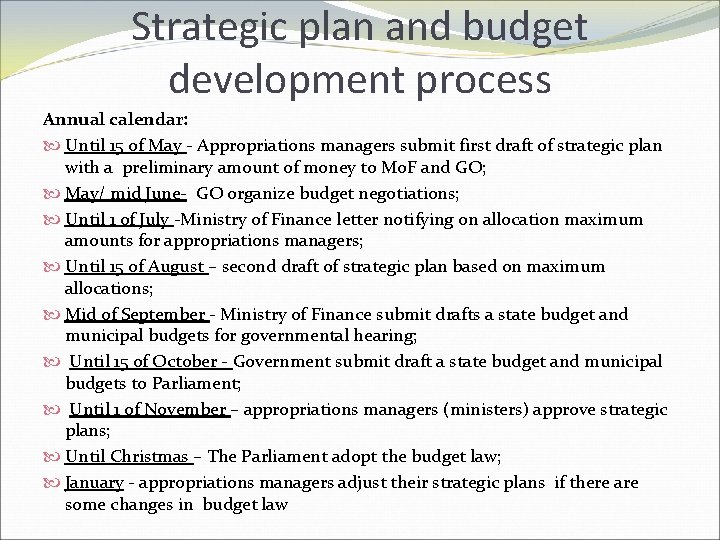
Strategic plan and budget development process Annual calendar: Until 15 of May - Appropriations managers submit first draft of strategic plan with a preliminary amount of money to Mo. F and GO; May/ mid June- GO organize budget negotiations; Until 1 of July -Ministry of Finance letter notifying on allocation maximum amounts for appropriations managers; Until 15 of August – second draft of strategic plan based on maximum allocations; Mid of September - Ministry of Finance submit drafts a state budget and municipal budgets for governmental hearing; Until 15 of October - Government submit draft a state budget and municipal budgets to Parliament; Until 1 of November – appropriations managers (ministers) approve strategic plans; Until Christmas – The Parliament adopt the budget law; January - appropriations managers adjust their strategic plans if there are some changes in budget law
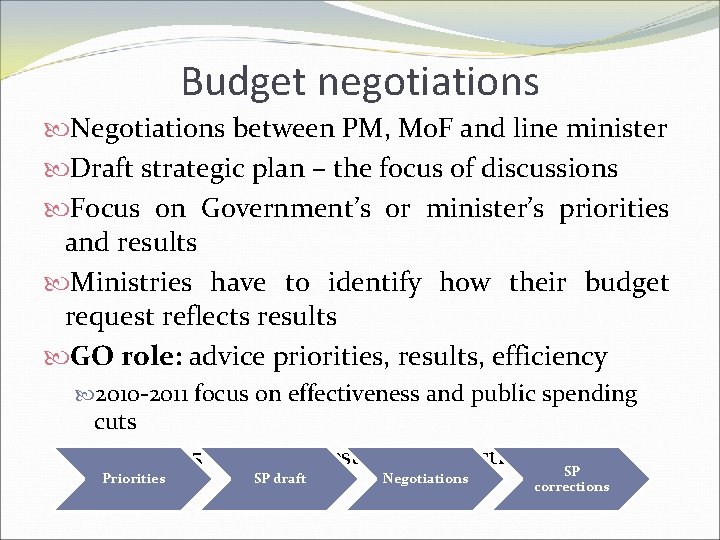
Budget negotiations Negotiations between PM, Mo. F and line minister Draft strategic plan – the focus of discussions Focus on Government’s or minister’s priorities and results Ministries have to identify how their budget request reflects results GO role: advice priorities, results, efficiency 2010 -2011 focus on effectiveness and public spending cuts 2012 - 2015 – focus on results and effectiveness SP Priorities SP draft Negotiations corrections
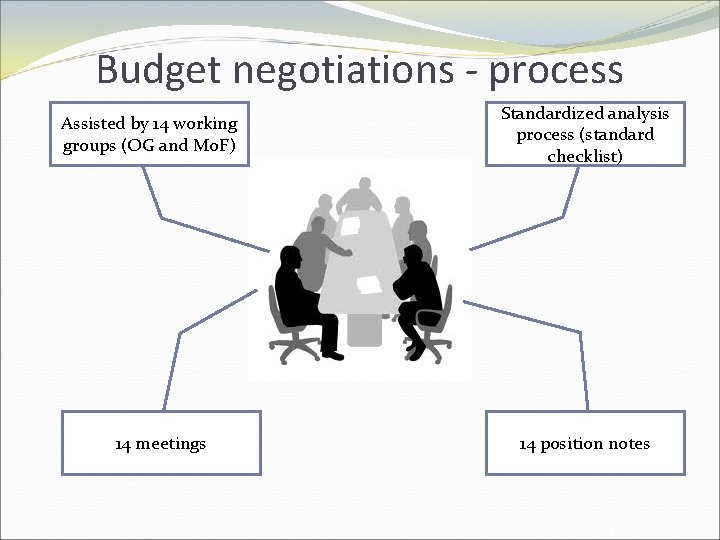
Budget negotiations - process Assisted by 14 working groups (OG and Mo. F) 14 meetings Standardized analysis process (standard checklist) 14 position notes
Strategic issues in resources allocation New commitments: New (legislative) commitments Government priorities EU projects, etc. Available financial space Savings from finished projects (programs), efficiencies What to do with the base?
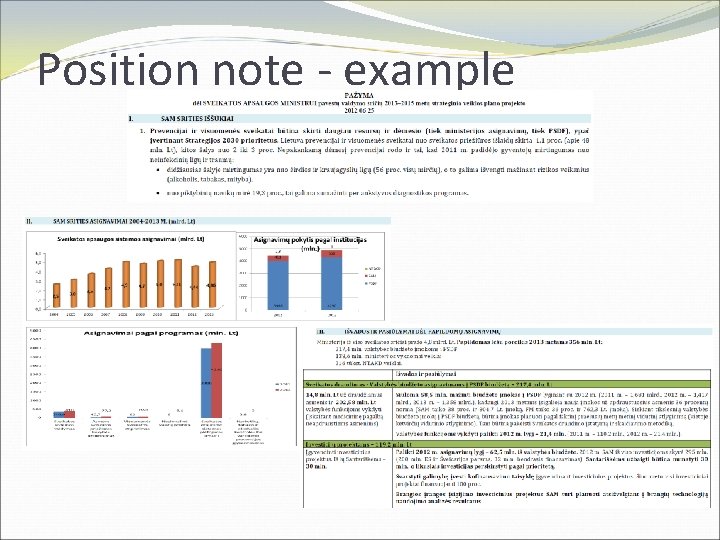
Position note - example
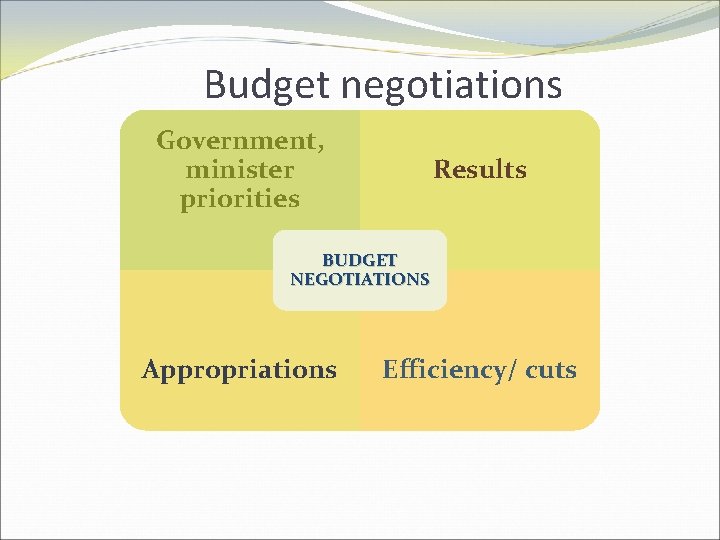
Budget negotiations Government, minister priorities Results BUDGET NEGOTIATIONS Appropriations Efficiency/ cuts
Monitoring and Reporting
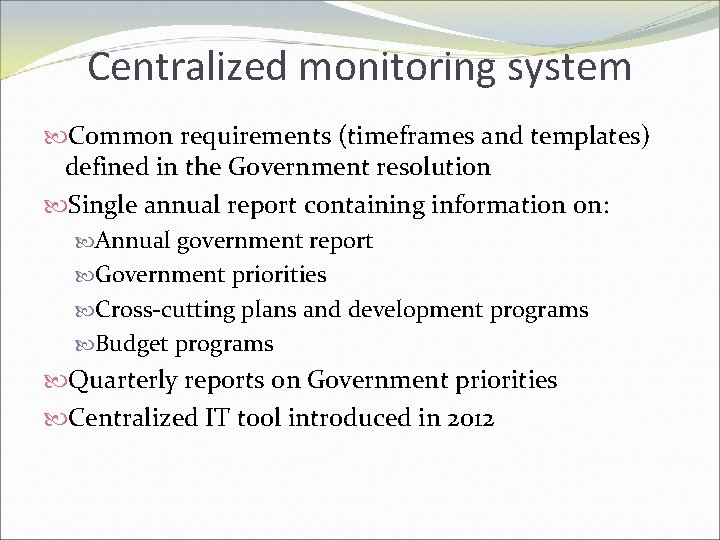
Centralized monitoring system Common requirements (timeframes and templates) defined in the Government resolution Single annual report containing information on: Annual government report Government priorities Cross-cutting plans and development programs Budget programs Quarterly reports on Government priorities Centralized IT tool introduced in 2012
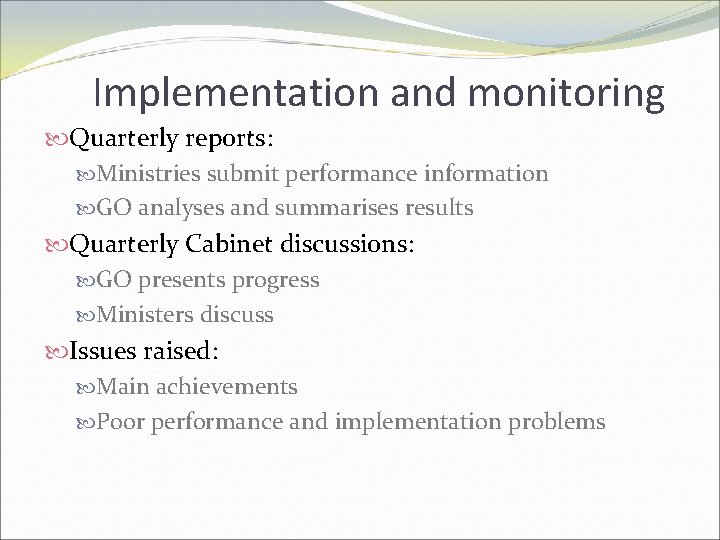
Implementation and monitoring Quarterly reports: Ministries submit performance information GO analyses and summarises results Quarterly Cabinet discussions: GO presents progress Ministers discuss Issues raised: Main achievements Poor performance and implementation problems
Monitoring information system (SIS) Aim: monitor and analyse achievement of goals and targets Scope: long, mid and short term documents: Strategies, programmes, plans and Government priorities (about 60 planning documents) Target: goals, PIs (about 3000 Pis) and budget execution Frequency: quarterly Functionality: Monitoring by traffic lights Analysing performance and budget trends
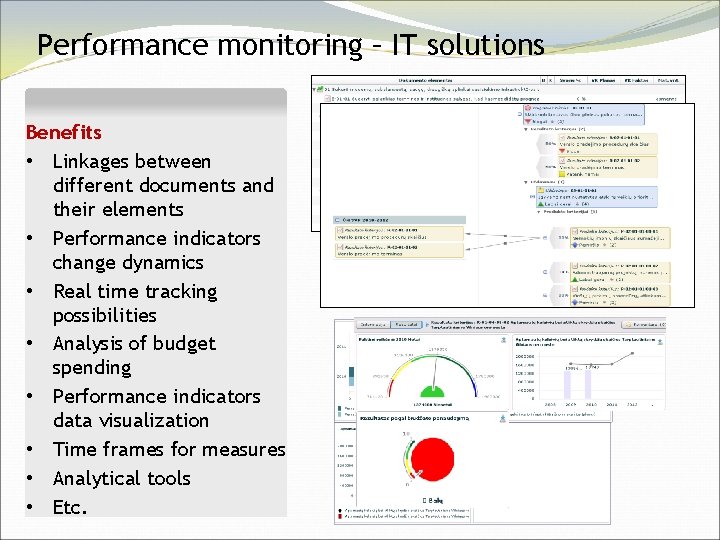
Performance monitoring – IT solutions Benefits • Linkages between different documents and their elements • Performance indicators change dynamics • Real time tracking possibilities • Analysis of budget spending • Performance indicators data visualization • Time frames for measures • Analytical tools • Etc.
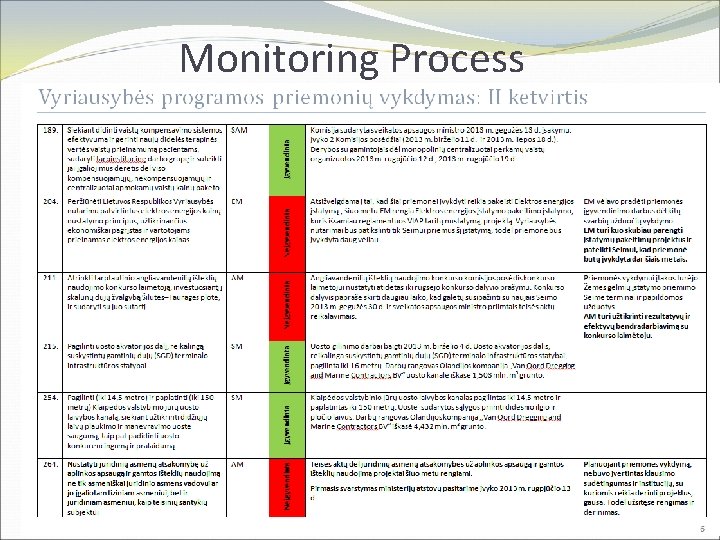
Monitoring Process
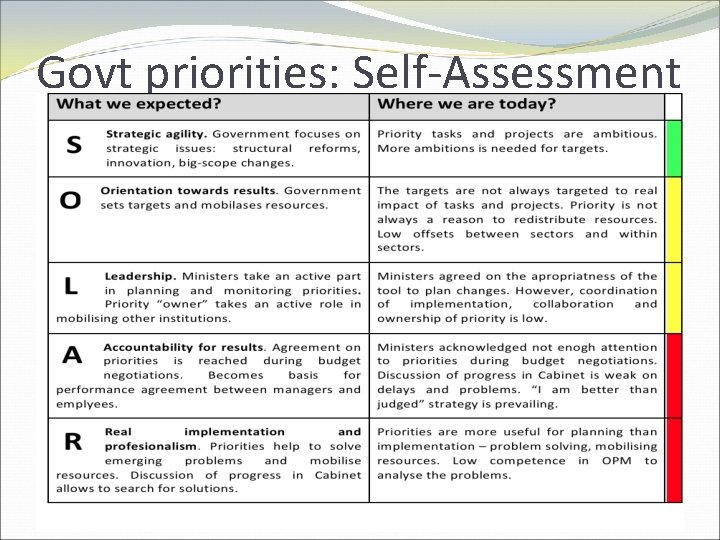
Govt priorities: Self-Assessment
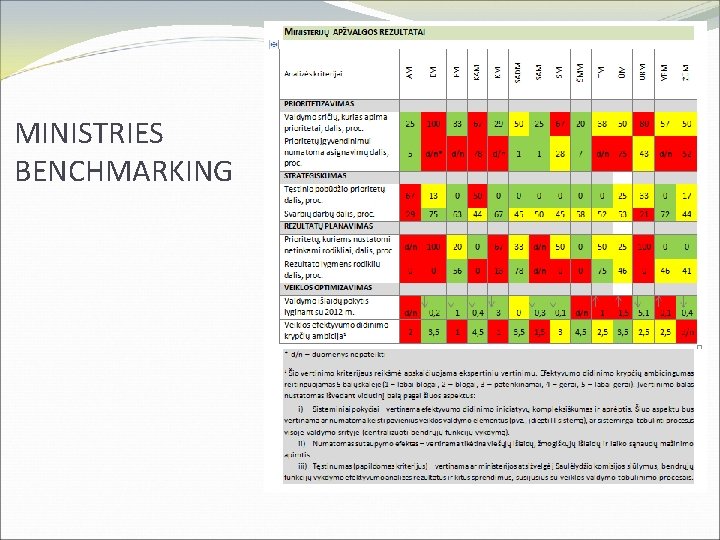
MINISTRIES BENCHMARKING
Lessons learned Think of a big picture but make small steps. Look for political/ management support Invest in building relationships, communication and collaboration Don’t be put off even if people don’t approve of your actions. It takes time to accept change

Thank you for your attention!
- Slides: 55