
Strategic Management Todays Class 1 What is this
- Slides: 65
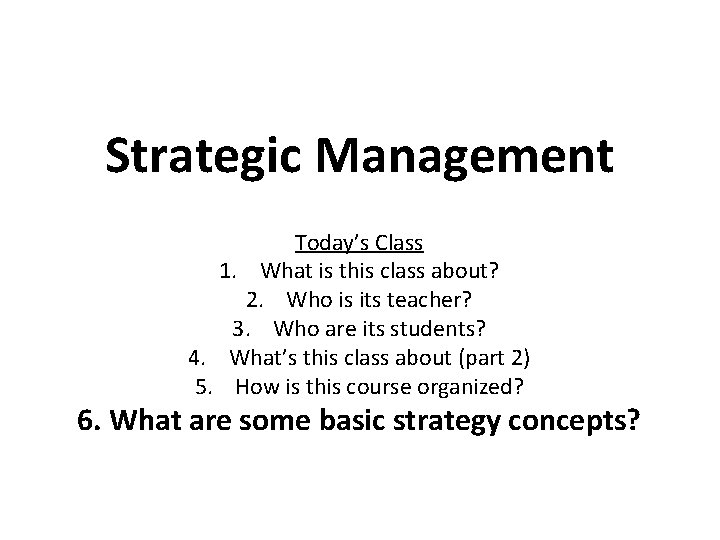
Strategic Management Today’s Class 1. What is this class about? 2. Who is its teacher? 3. Who are its students? 4. What’s this class about (part 2) 5. What is the class structure? 5. What are some basic strategy concepts?
Strategic Management Today’s Class 1. What is this class about? 2. Who is its teacher? 3. Who are its students? 4. What’s this class about (part 2) 5. What is the class structure? 5. What are some basic strategy concepts?
What is this class about? • Strategy = how you achieve your goals • Example: your goal is to graduate from Hue College of Economics? How do you do that? – One strategy: take & pass the required classes • Example: your goal to make your business successful => more profitable – One strategy: raise prices – Another strategy: lower costs
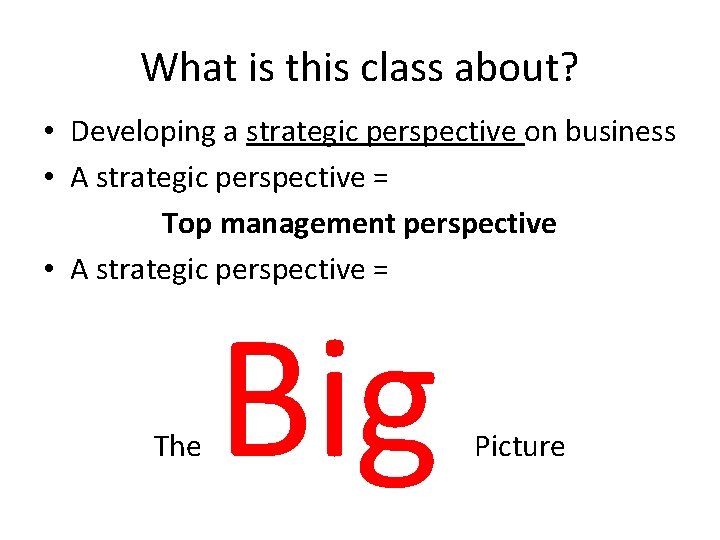
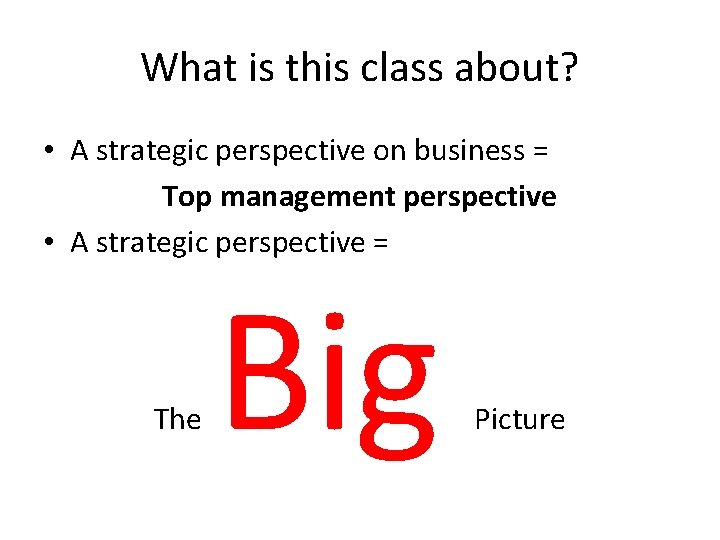
What is this class about? • Developing a strategic perspective on business • A strategic perspective = Top management perspective • A strategic perspective = The Big Picture
Strategic Management 1. Today’s Class What is this class about? 2. Who is its teacher? 3. Who are its students? 4. What’s this class about (part 2) 5. What is the class structure? 5. What are some basic strategy concepts?
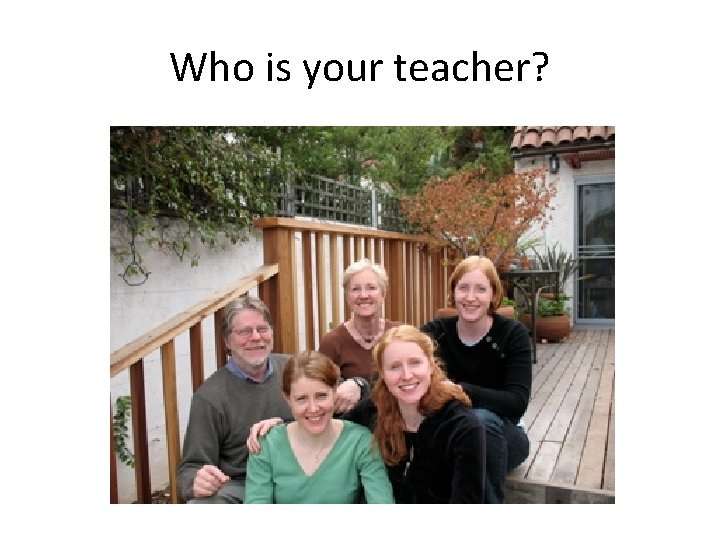
Who is your teacher? • Richard Kernochan • Ph. D, 1997, in Strategic Management • Teach at California State University, Northridge • Taught classes in accounting, management, organizational theory, strategic management, international business and internships
Who is your teacher? • Research interests – Strategy implementation – Cross-cultural perspectives – Buddhism and teaching – Reflective Learning
Who is your teacher? • • • 64 years old Married for 38 years One wife Three daughters Zen Buddhist Lived in America, France, Iran, Greece, Turkey, Morocco – and now Vietnam
Who is your teacher?
Strategic Management Today’s Class 1. What is this class about? 2. Who is its teacher? 3. Who are its students? 4. What’s this class about (part 2) 5. What is the class structure? 5. What are some basic strategy concepts?
Who are its students? • Highly skilled in rote learning: listening and repeating information • Wanting to become a part of doi moi, the new Vietnam economy: • Needing skills to succeed in that economy • Wanting skills to think differently, not just know course material • Success = what you know AND what you can do with it • Wanting to practice critical thinking skills • Critical thinking • Creative problem solving
Critical Thinking • Critical thinking = having a personal opinion or point of view, questioning “facts. ” Example: • Fact: Vietnam’s population is 84 million people • Critical Thinking Questions: – Is that good or bad? – Is that a lot or a little? – Is that too many or too few?
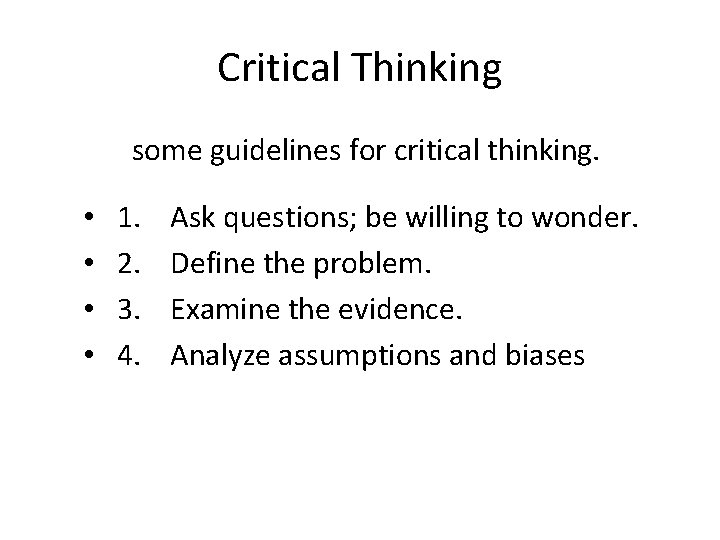
Critical Thinking some guidelines for critical thinking. • • 1. 2. 3. 4. Ask questions; be willing to wonder. Define the problem. Examine the evidence. Analyze assumptions and biases
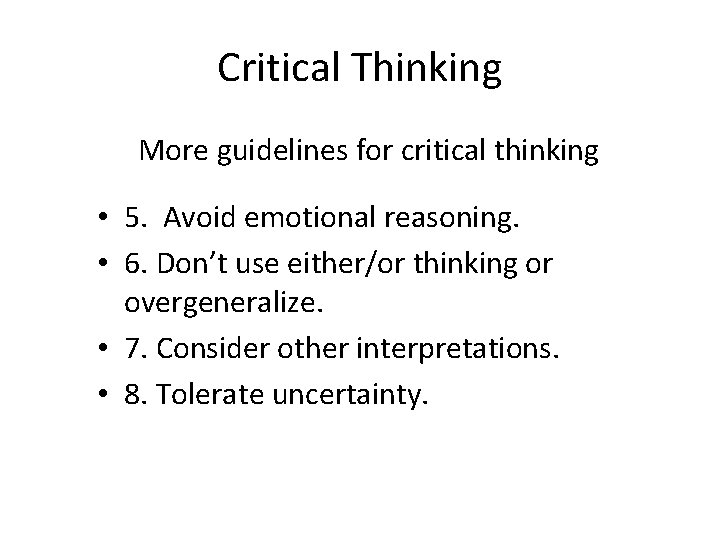
Critical Thinking More guidelines for critical thinking • 5. Avoid emotional reasoning. • 6. Don’t use either/or thinking or overgeneralize. • 7. Consider other interpretations. • 8. Tolerate uncertainty.
Critical Thinking • • Hard work Scary work You can be wrong, or not right Takes courage to be wrong Do you have the courage to be wrong?
Who are its students? • Some will be entrepreneurs; they will start their own businesses. • Entrepreneurs are people who think critically and see differently. • They see opportunity where others see risk or failure • They know how to fail and try again • They don’t like to work for other people • Most people are not entrepreneurs
Critical Thinking Question What makes businesses successful?
Strategic Management Today’s Class 1. What is this class about? 2. Who is its teacher? 3. Who are its students? 4. What’s this class about (part 2) 5. What is the class structure? 5. What are some basic strategy concepts?
What is this class about? • Strategy = how you achieve your goals • Example: your goal is to graduate from Hue College of Economics? How do you do that? – One strategy: take & pass the required classes • Example: your goal to make your business successful => more profitable – One strategy: raise prices – Another strategy: cut costs
Basic Strategy Concepts • Strategy = how you reach your goal, the set of actions you take to reach your goal – Plan for future action – Pattern of past actions • A goal makes your actions have a logical purpose – Logical purpose of actions = accomplish goal – Illogical actions are those that don’t accomplish goal
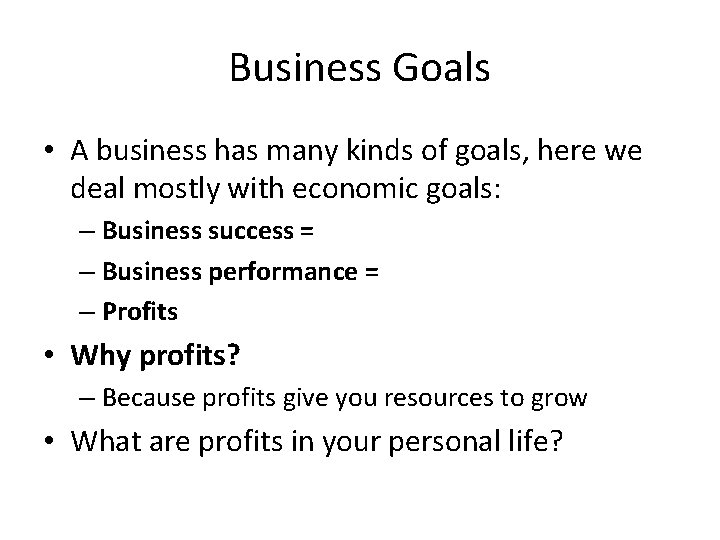
Business Goals • A business has many kinds of goals, here we deal mostly with economic goals: – Business success = – Business performance = – Profits • Why profits? – Because profits give you resources to grow • What are profits in your personal life?
What is this class about? • A strategic perspective on business = Top management perspective • A strategic perspective = The Big Picture
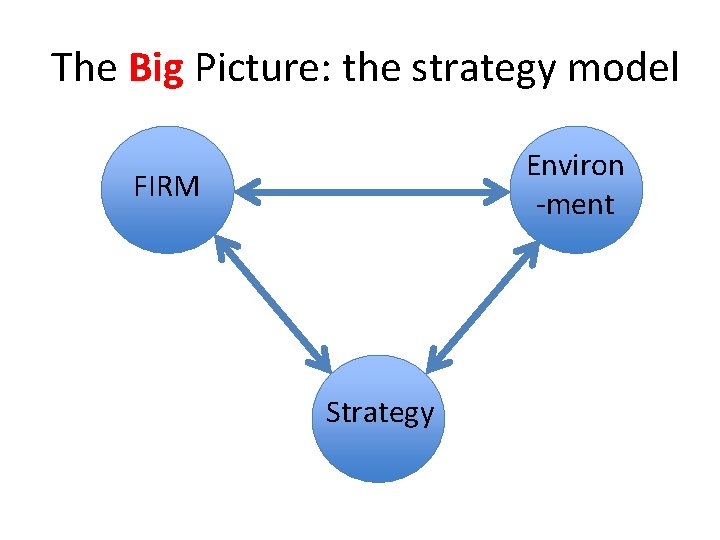
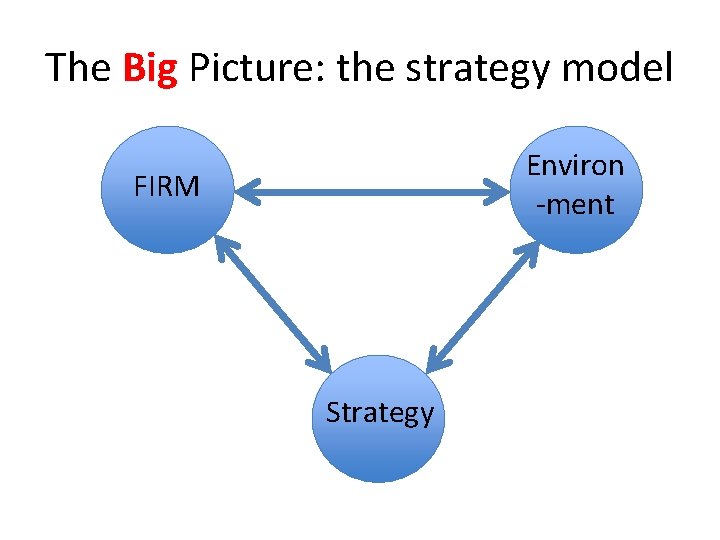
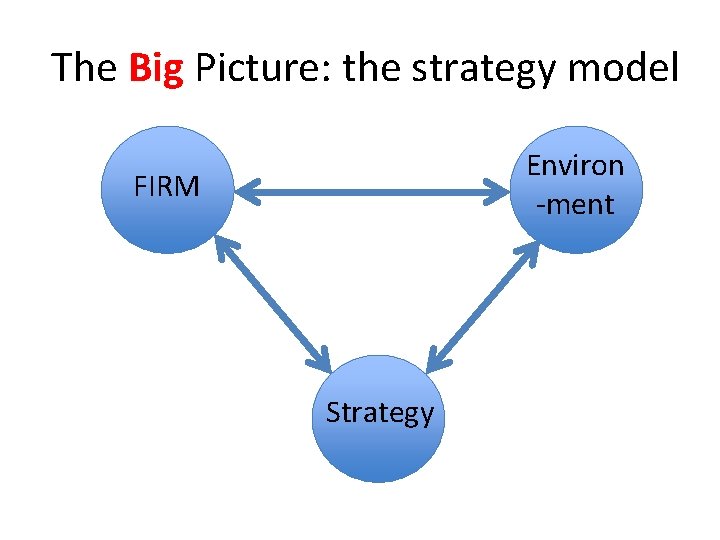
The Big Picture: the strategy model Environ -ment FIRM Strategy
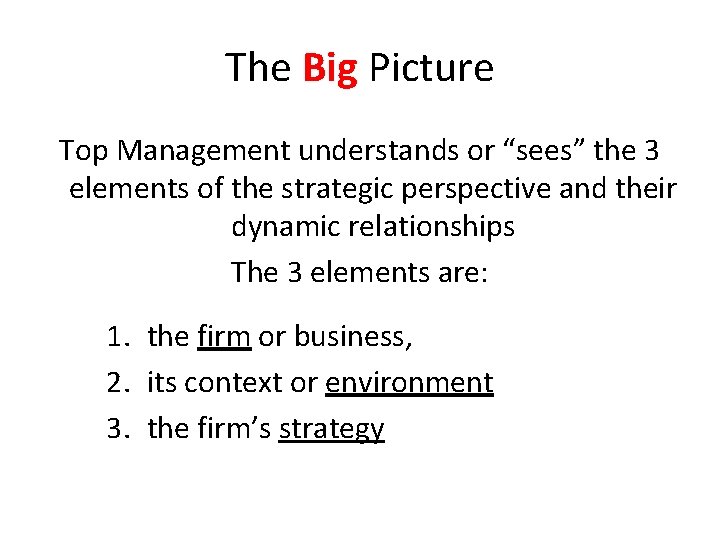
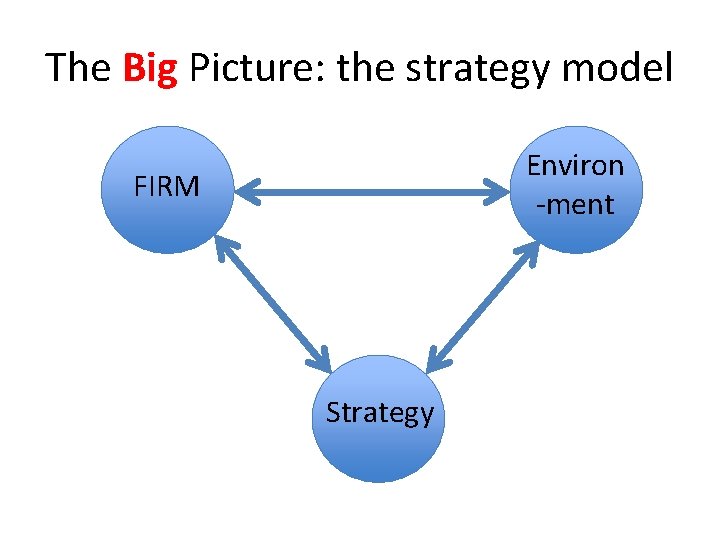
The Big Picture Top Management understands or “sees” the 3 elements of the strategic perspective and their dynamic relationships The 3 elements are: 1. the firm or business, 2. its context or environment 3. the firm’s strategy
The Big Picture: the strategy model Environ -ment FIRM Strategy
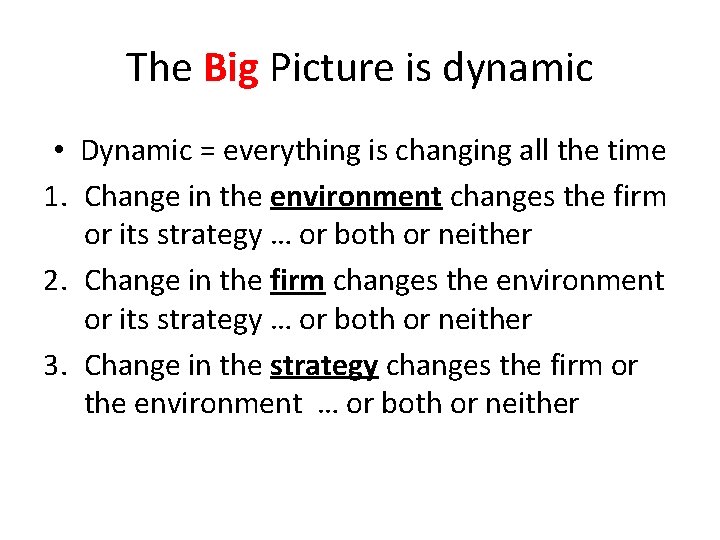
The Big Picture is dynamic • Dynamic = everything is changing all the time 1. Change in the environment changes the firm or its strategy … or both or neither 2. Change in the firm changes the environment or its strategy … or both or neither 3. Change in the strategy changes the firm or the environment … or both or neither
The Big Picture: the strategy model Environ -ment FIRM Strategy
Strategic Management Today’s Class 1. What is this class about? 2. Who is its teacher? 3. Who are its students? 4. What’s this class about (part 2) 5. How is this course organized? 6. What are some basic strategy concepts?
Course Organization • February 1 -23 – Textbook Chapters – 3 group field research projects • February 25 -March 18 – Business simulation • March 25 – Simulation debriefing – Review of course content
Course Topics • • What is strategy? External Analysis of the outside environment Internal Analysis of the company environment Business-level strategy Functional-level Strategy Corporate and global/international strategies Business simulation to practice strategy formulation and implementation
The Strategy Learning Challenge The principal challenge in learning strategy is not learning the basic principles, or even the more sophisticated ones. The principle challenge in learning strategy is learning how to use it, learning how to act strategically at all times.
Additional course topics • Culture topics: explore similarities and differences between Western and Vietnamese thinking. • Critical Thinking topics: defending your personal thoughts/opinions on a variety of issues. • Language topics: practice speaking English
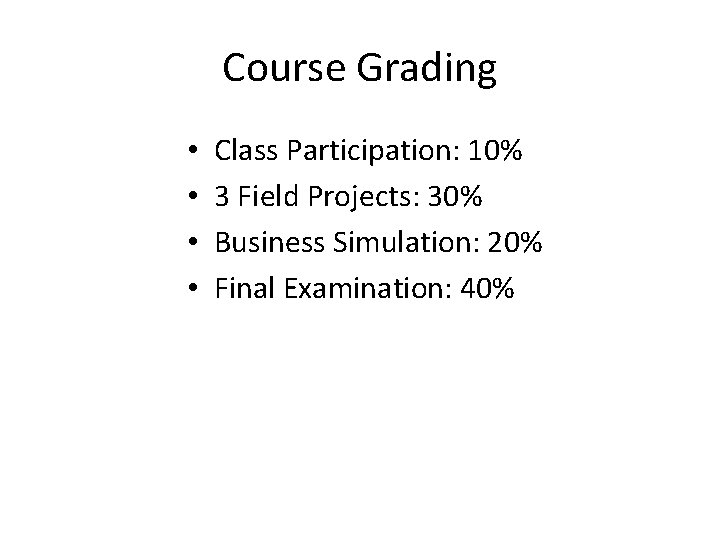
Course Grading • • Class Participation: 10% 3 Field Projects: 30% Business Simulation: 20% Final Examination: 40%
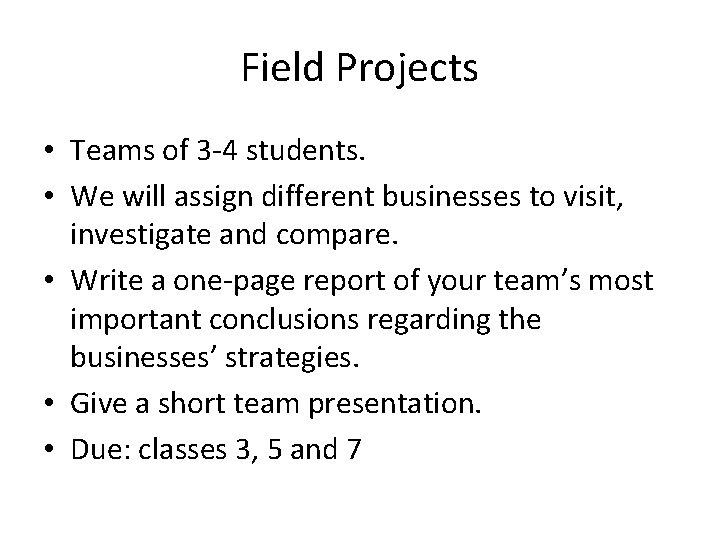
Field Projects • Teams of 3 -4 students. • We will assign different businesses to visit, investigate and compare. • Write a one-page report of your team’s most important conclusions regarding the businesses’ strategies. • Give a short team presentation. • Due: classes 3, 5 and 7
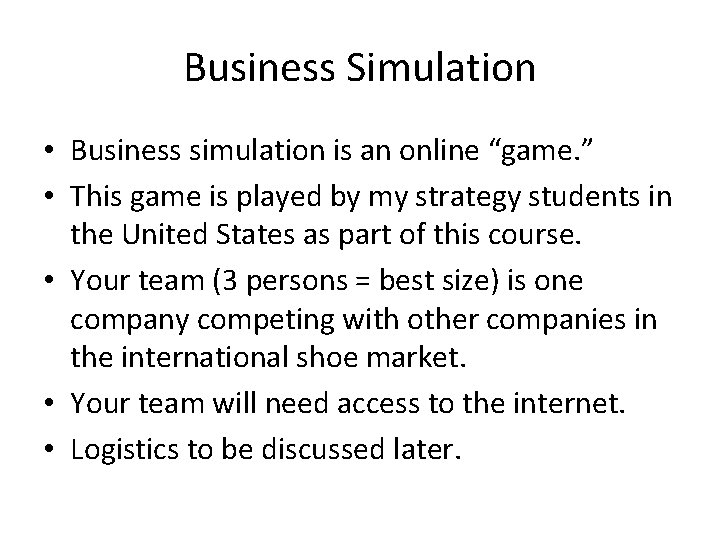
Business Simulation • Business simulation is an online “game. ” • This game is played by my strategy students in the United States as part of this course. • Your team (3 persons = best size) is one company competing with other companies in the international shoe market. • Your team will need access to the internet. • Logistics to be discussed later.
Strategic Management Today’s Class 1. What is this class about? 2. Who is its teacher? 3. Who are its students? 4. What’s this class about (part 2) 5. How is this course organized? 6. What are some basic strategy concepts?
Today’s culture reflection • A student has the following statement on her email account: “You can make it (succeed) if you try” What do you think about this statement and why?
Critical Thinking 2 Another way to say “you can make it if you try” is You can’t make it if you don’t try What do you think about this statement?
Strategic Management Today’s Class 1. What is this class about? 2. Who is its teacher? 3. Who are its students? 4. What’s this class about (part 2) 5. How is this course organized? 6. What are some basic strategy concepts?
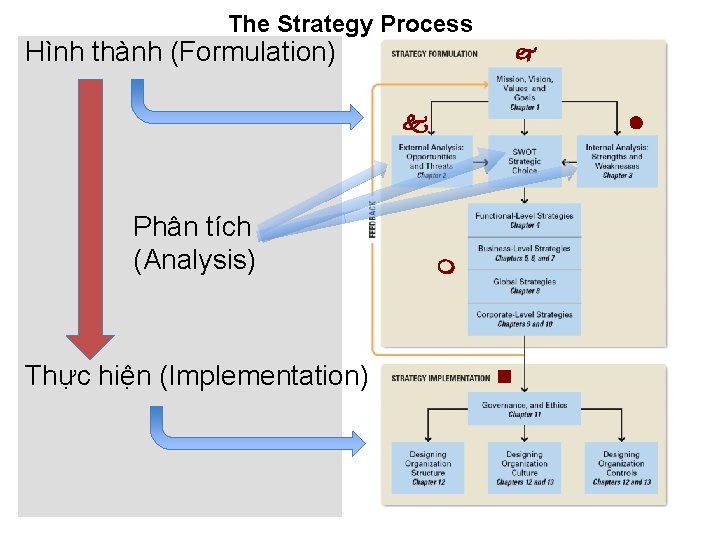
The Strategy Process Hình thành (Formulation) Phân tích (Analysis) Thực hiện (Implementation)
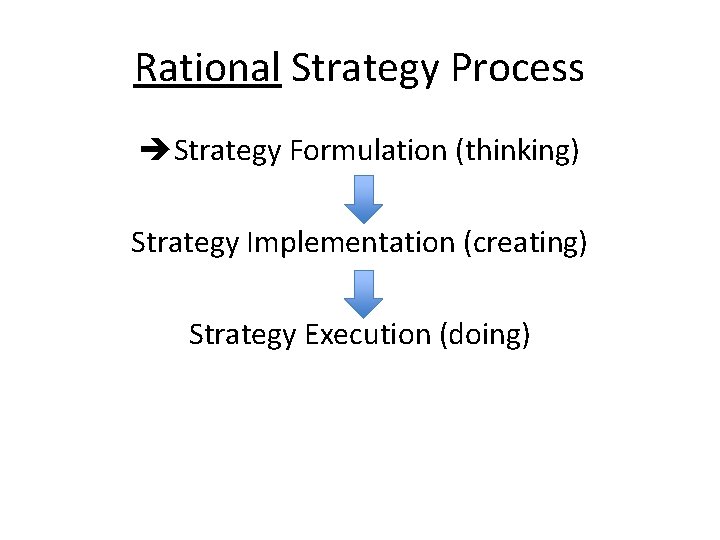
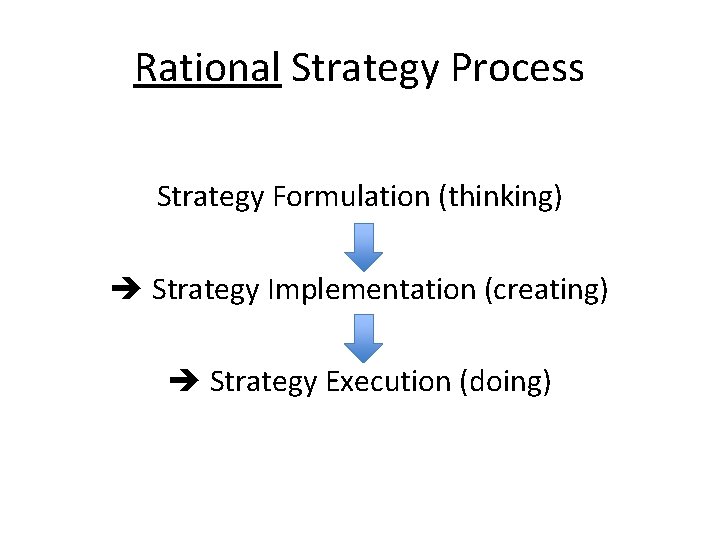
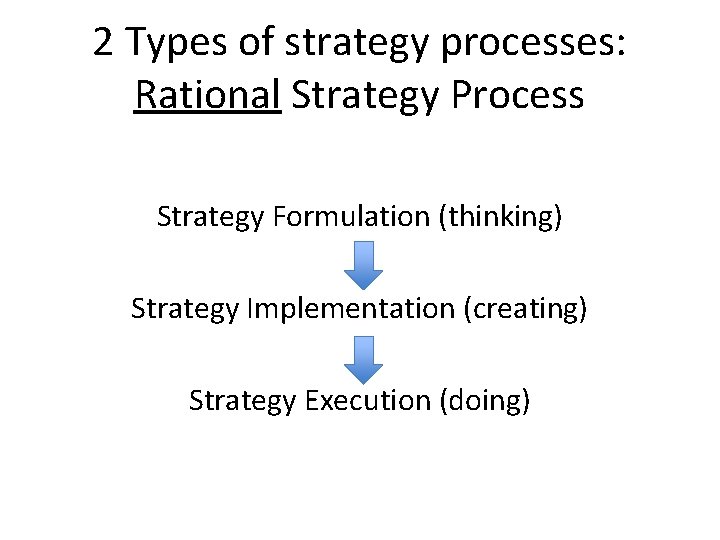
Rational Strategy Process Strategy Formulation (thinking) Strategy Implementation (creating) Strategy Execution (doing)
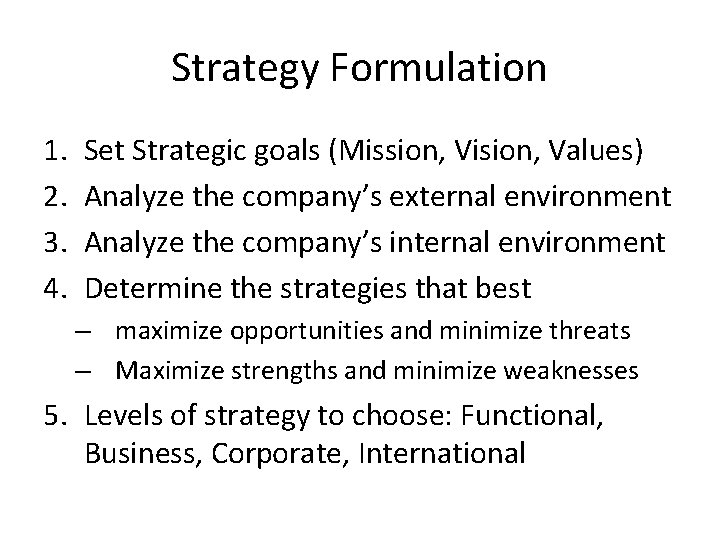
Strategy Formulation 1. 2. 3. 4. Set Strategic goals (Mission, Vision, Values) Analyze the company’s external environment Analyze the company’s internal environment Determine the strategies that best – maximize opportunities and minimize threats – Maximize strengths and minimize weaknesses 5. Levels of strategy to choose: Functional, Business, Corporate, International
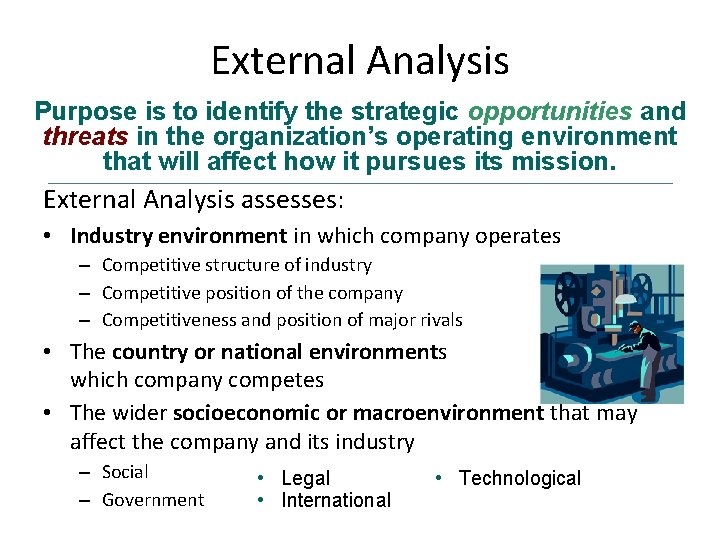
External Analysis Purpose is to identify the strategic opportunities and threats in the organization’s operating environment that will affect how it pursues its mission. External Analysis assesses: • Industry environment in which company operates – Competitive structure of industry – Competitive position of the company – Competitiveness and position of major rivals • The country or national environments in which company competes • The wider socioeconomic or macroenvironment that may affect the company and its industry – Social – Government • Legal • International • Technological
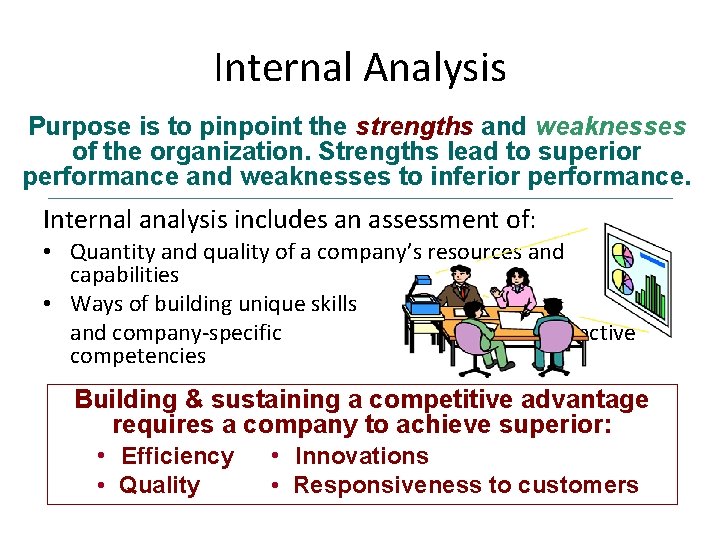
Internal Analysis Purpose is to pinpoint the strengths and weaknesses of the organization. Strengths lead to superior performance and weaknesses to inferior performance. Internal analysis includes an assessment of: • Quantity and quality of a company’s resources and capabilities • Ways of building unique skills and company-specific or distinctive competencies Building & sustaining a competitive advantage requires a company to achieve superior: • Efficiency • Innovations • Quality • Responsiveness to customers
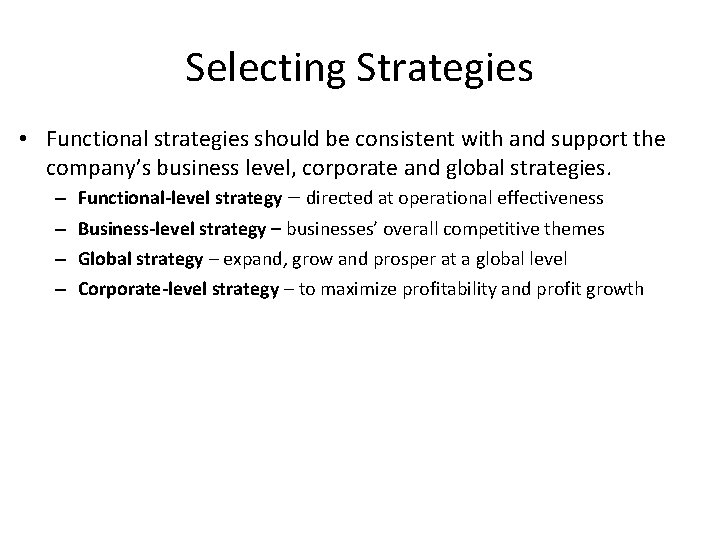
Selecting Strategies • Functional strategies should be consistent with and support the company’s business level, corporate and global strategies. – Functional-level strategy – directed at operational effectiveness – Business-level strategy – businesses’ overall competitive themes – Global strategy – expand, grow and prosper at a global level – Corporate-level strategy – to maximize profitability and profit growth
Rational Strategy Process Strategy Formulation (thinking) Strategy Implementation (creating) Strategy Execution (doing)
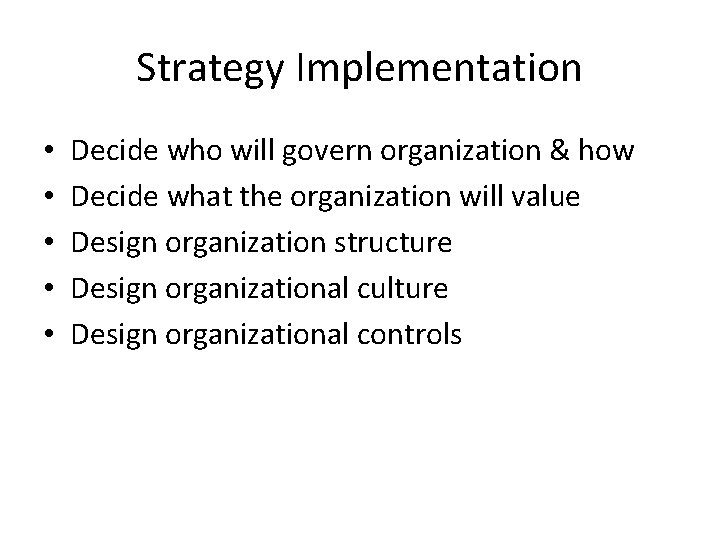
Strategy Implementation • • • Decide who will govern organization & how Decide what the organization will value Design organization structure Design organizational culture Design organizational controls
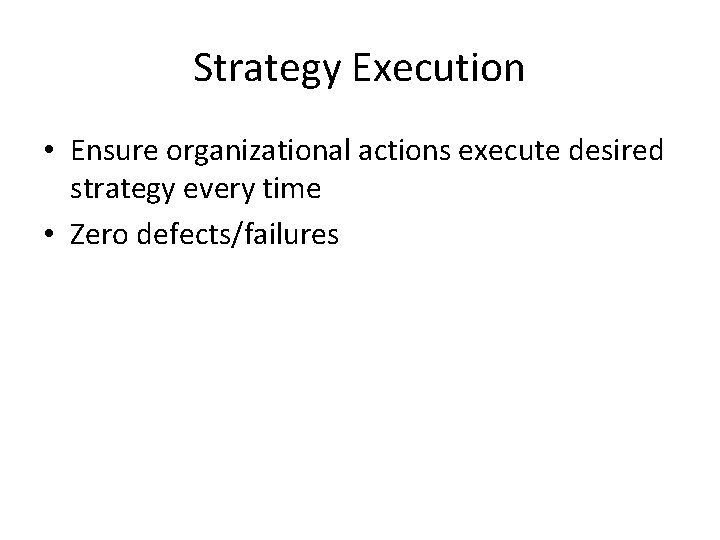
Strategy Execution • Ensure organizational actions execute desired strategy every time • Zero defects/failures
2 Types of strategy processes: Rational Strategy Process Strategy Formulation (thinking) Strategy Implementation (creating) Strategy Execution (doing)
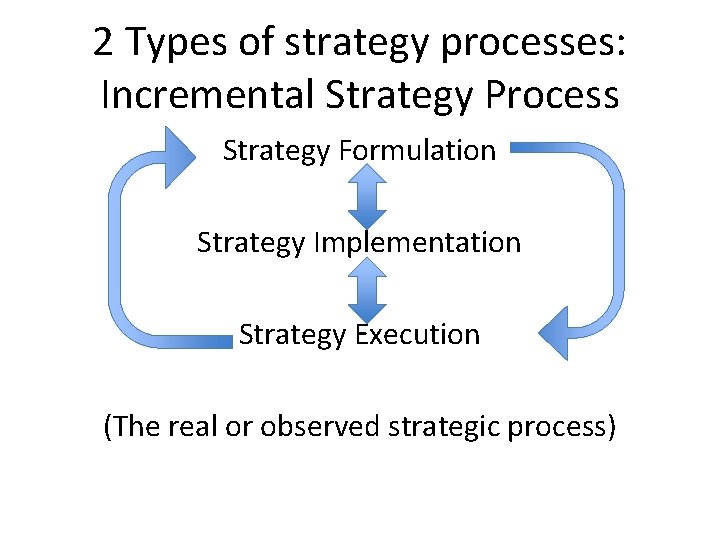
2 Types of strategy processes: Incremental Strategy Process Strategy Formulation Strategy Implementation Strategy Execution (The real or observed strategic process)
Strategy Process • Strategy is a verb, not a noun • The strategy process should never stop • The feedback loop – strategic planning is ongoing – Through controls, managers monitor strategy execution: • To determine if strategic goals and objectives are being achieved • To evaluate to what extent competitive advantage is being created and sustained
“The essence of strategy is creating tomorrow’s competitive advantage faster than competitors can copy the ones you have today. ” - Gary Hamel & C. K. Prahalad © Royalty. Free/ Stockdisc/ Getty Images
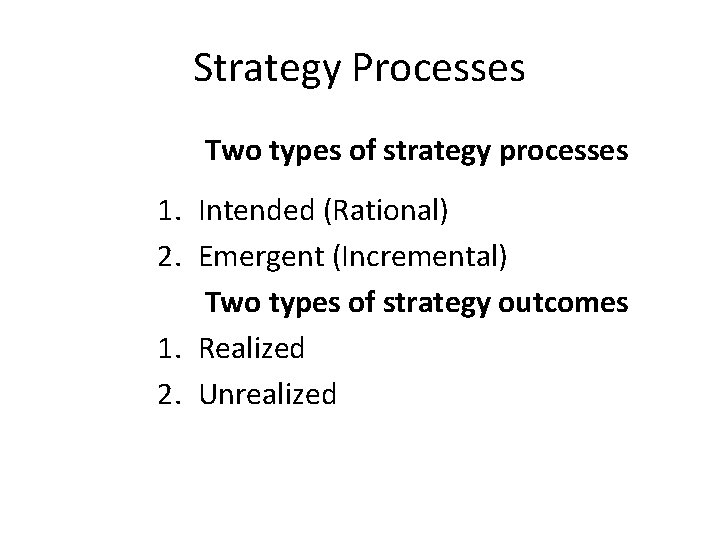
Strategy Processes Two types of strategy processes 1. Intended (Rational) 2. Emergent (Incremental) Two types of strategy outcomes 1. Realized 2. Unrealized
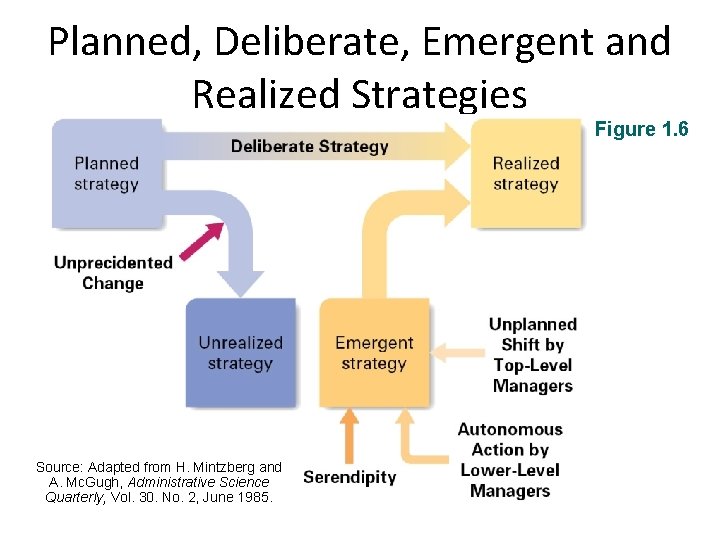
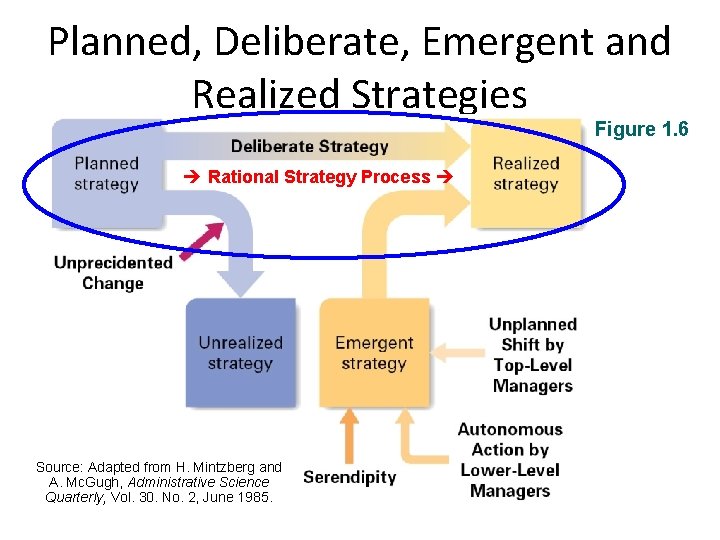
Planned, Deliberate, Emergent and Realized Strategies Figure 1. 6 Source: Adapted from H. Mintzberg and A. Mc. Gugh, Administrative Science Quarterly, Vol. 30. No. 2, June 1985.
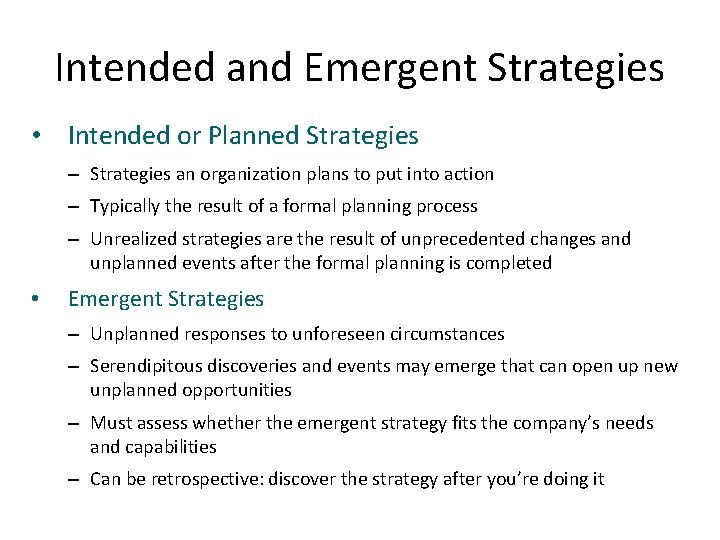
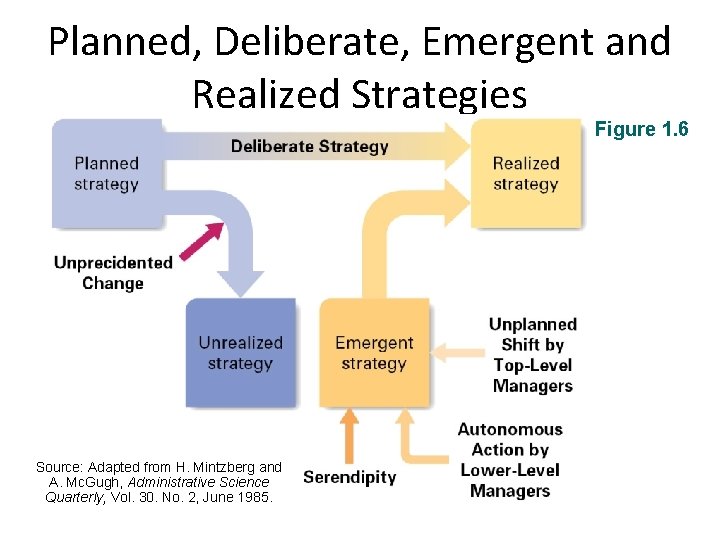
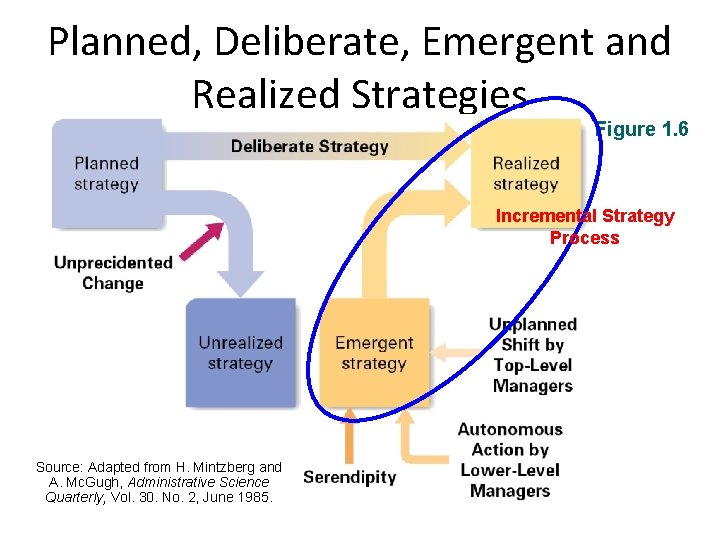
Intended and Emergent Strategies • Intended or Planned Strategies – Strategies an organization plans to put into action – Typically the result of a formal planning process – Unrealized strategies are the result of unprecedented changes and unplanned events after the formal planning is completed • Emergent Strategies – Unplanned responses to unforeseen circumstances – Serendipitous discoveries and events may emerge that can open up new unplanned opportunities – Must assess whether the emergent strategy fits the company’s needs and capabilities – Can be retrospective: discover the strategy after you’re doing it
Planned, Deliberate, Emergent and Realized Strategies Figure 1. 6 Source: Adapted from H. Mintzberg and A. Mc. Gugh, Administrative Science Quarterly, Vol. 30. No. 2, June 1985.
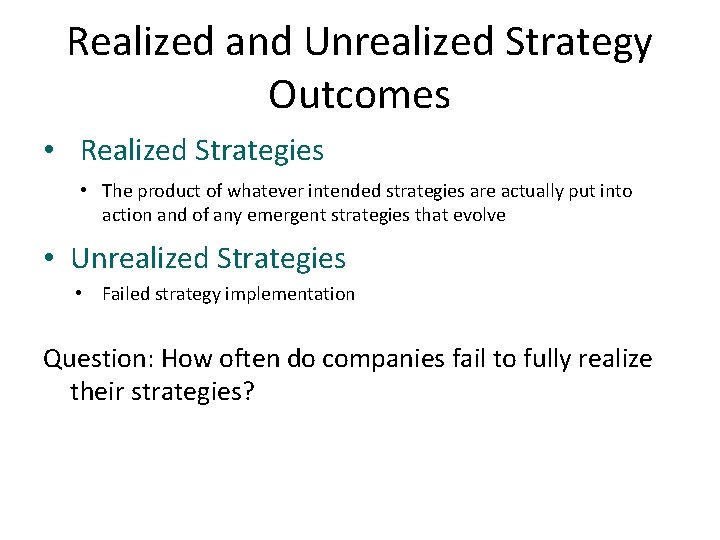
Realized and Unrealized Strategy Outcomes • Realized Strategies • The product of whatever intended strategies are actually put into action and of any emergent strategies that evolve • Unrealized Strategies • Failed strategy implementation Question: How often do companies fail to fully realize their strategies?
Planned, Deliberate, Emergent and Realized Strategies Figure 1. 6 Rational Strategy Process Source: Adapted from H. Mintzberg and A. Mc. Gugh, Administrative Science Quarterly, Vol. 30. No. 2, June 1985.
Planned, Deliberate, Emergent and Realized Strategies Figure 1. 6 Incremental Strategy Process Source: Adapted from H. Mintzberg and A. Mc. Gugh, Administrative Science Quarterly, Vol. 30. No. 2, June 1985.
What is a rational strategy? • Strategy is one answer to the question: “What makes businesses succeed? • Strategy is a pattern of a firm’s actions. • Pattern means that an observer sees a logic to a set of actions.
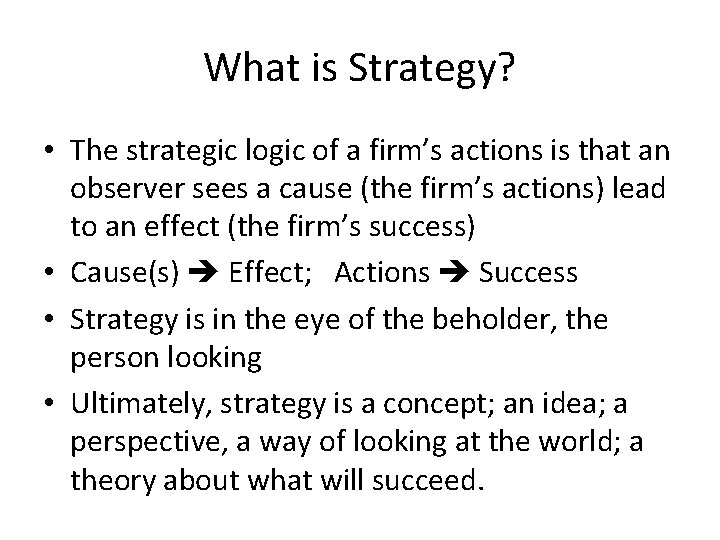
What is Strategy? • The strategic logic of a firm’s actions is that an observer sees a cause (the firm’s actions) lead to an effect (the firm’s success) • Cause(s) Effect; Actions Success • Strategy is in the eye of the beholder, the person looking • Ultimately, strategy is a concept; an idea; a perspective, a way of looking at the world; a theory about what will succeed.
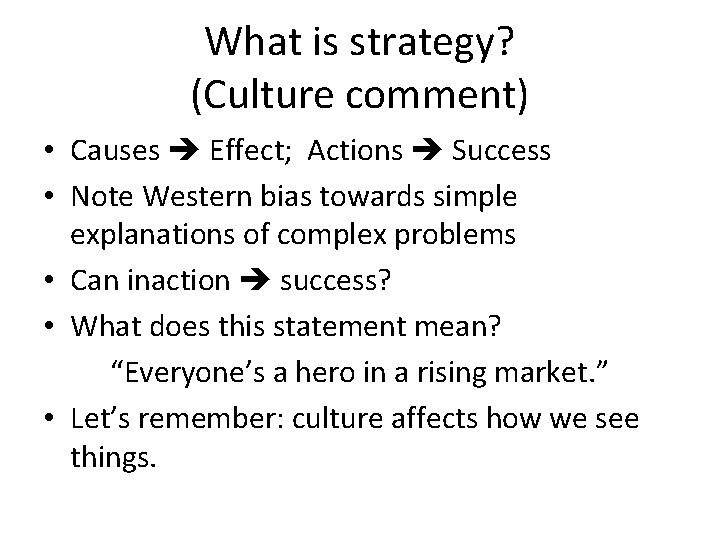
What is strategy? (Culture comment) • Causes Effect; Actions Success • Note Western bias towards simple explanations of complex problems • Can inaction success? • What does this statement mean? “Everyone’s a hero in a rising market. ” • Let’s remember: culture affects how we see things.
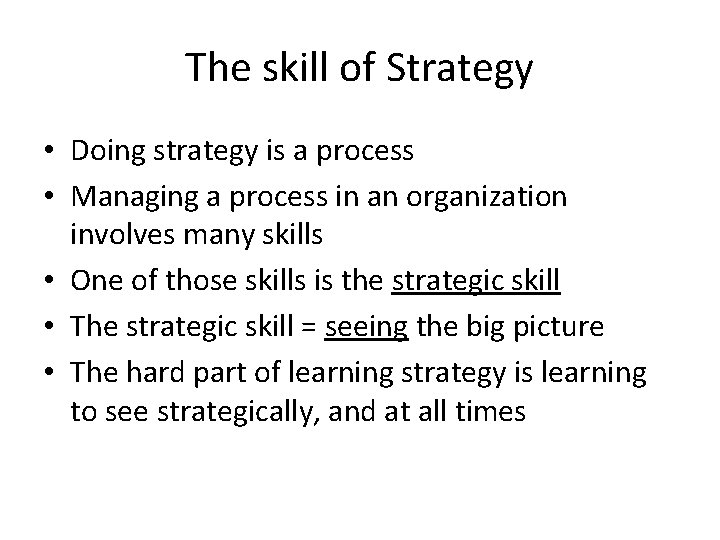
The skill of Strategy • Doing strategy is a process • Managing a process in an organization involves many skills • One of those skills is the strategic skill • The strategic skill = seeing the big picture • The hard part of learning strategy is learning to see strategically, and at all times
The Big Picture: the strategy model Environ -ment FIRM Strategy
Critical Thinking Question What do we see if a business has no strategy?