
Strategic Management From Society Human Resource Management Learning


- Slides: 50
Strategic Management From Society Human Resource Management Learning System
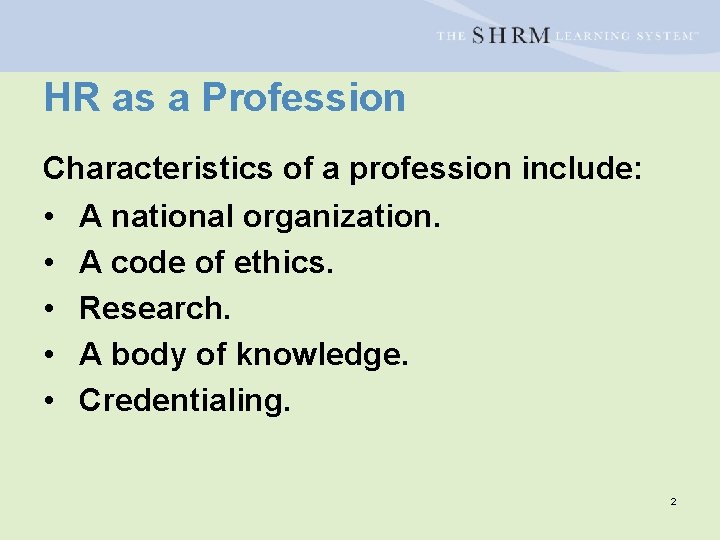
HR as a Profession Characteristics of a profession include: • A national organization. • A code of ethics. • Research. • A body of knowledge. • Credentialing. 2
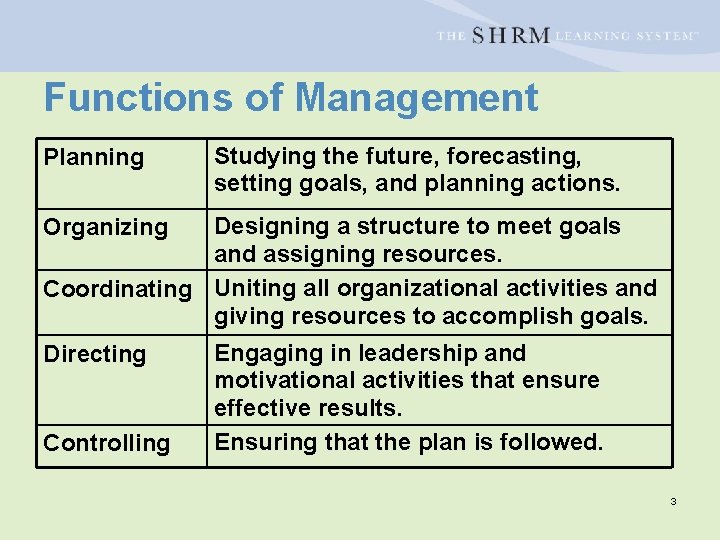
Functions of Management Planning Studying the future, forecasting, setting goals, and planning actions. Designing a structure to meet goals and assigning resources. Coordinating Uniting all organizational activities and giving resources to accomplish goals. Organizing Directing Controlling Engaging in leadership and motivational activities that ensure effective results. Ensuring that the plan is followed. 3
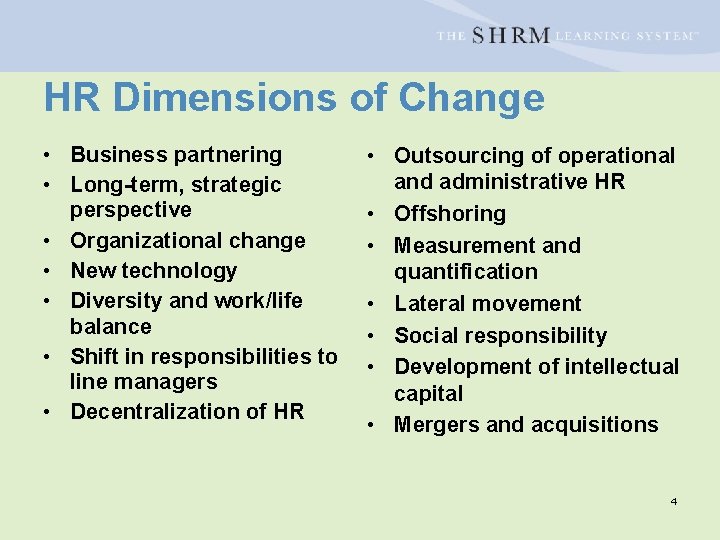
HR Dimensions of Change • Business partnering • Long-term, strategic perspective • Organizational change • New technology • Diversity and work/life balance • Shift in responsibilities to line managers • Decentralization of HR • Outsourcing of operational and administrative HR • Offshoring • Measurement and quantification • Lateral movement • Social responsibility • Development of intellectual capital • Mergers and acquisitions 4
Change • Process of alteration that people and organizations go through in response to external or internal factors. • Requires a systematic approach to ensure positive outcomes. • Top-performing organizations are open to change. 5
Cycle of Organizational Change 6
Change Process Challenges The greatest challenges result from changes in: • Organizational structure and mission. • The way business is done. • Ownership. • Organizational culture. • Staffing. 7
Managing Third-Party Contractors • Impacted by change in the HR profession. • Also referred to as outsourcing. • Challenges executives to build a flexible organization around: – Core competencies. – Long-term outside relationships. 8
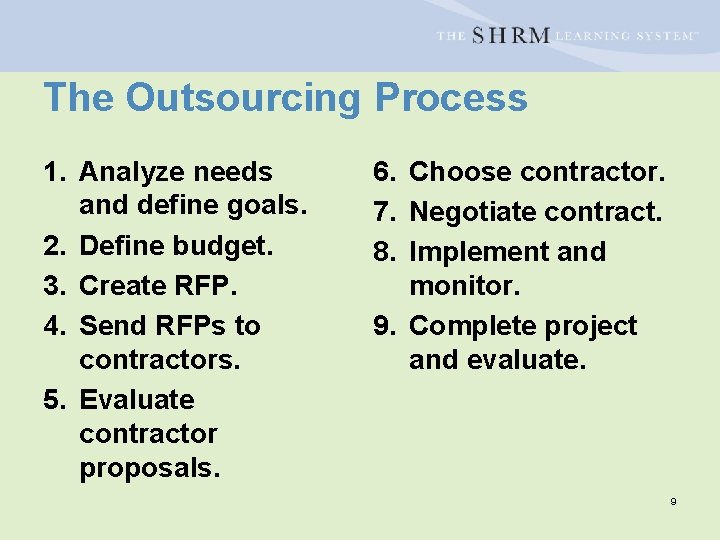
The Outsourcing Process 1. Analyze needs and define goals. 2. Define budget. 3. Create RFP. 4. Send RFPs to contractors. 5. Evaluate contractor proposals. 6. Choose contractor. 7. Negotiate contract. 8. Implement and monitor. 9. Complete project and evaluate. 9
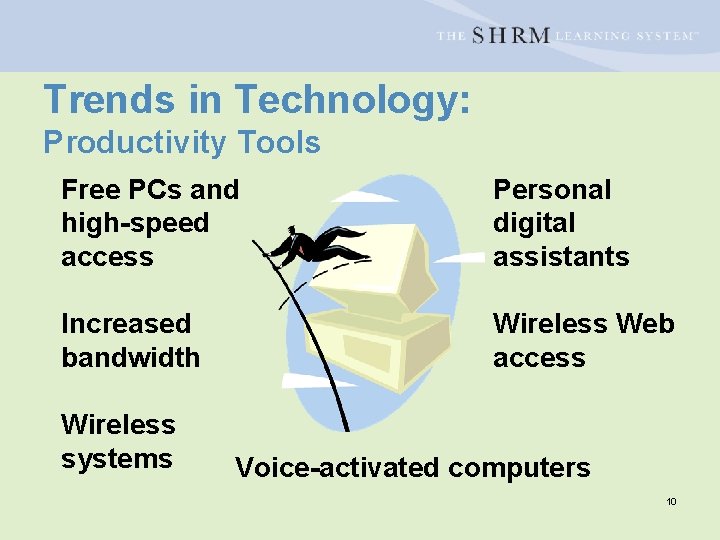
Trends in Technology: Productivity Tools Free PCs and high-speed access Personal digital assistants Increased bandwidth Wireless Web access Wireless systems Voice-activated computers 10
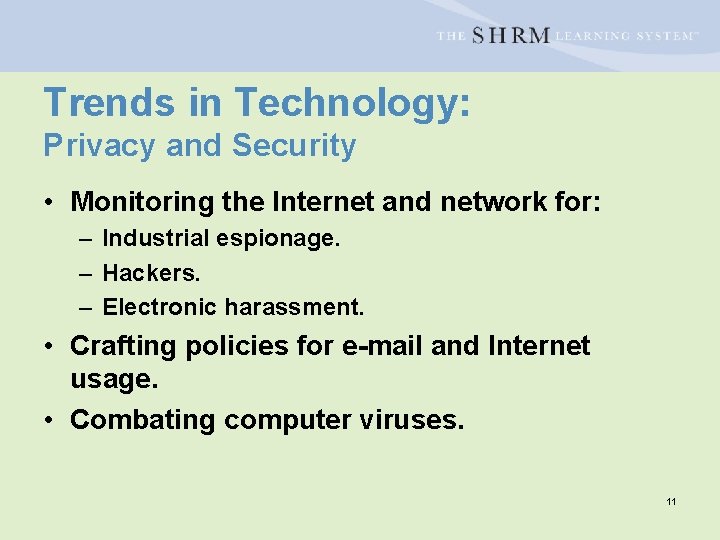
Trends in Technology: Privacy and Security • Monitoring the Internet and network for: – Industrial espionage. – Hackers. – Electronic harassment. • Crafting policies for e-mail and Internet usage. • Combating computer viruses. 11
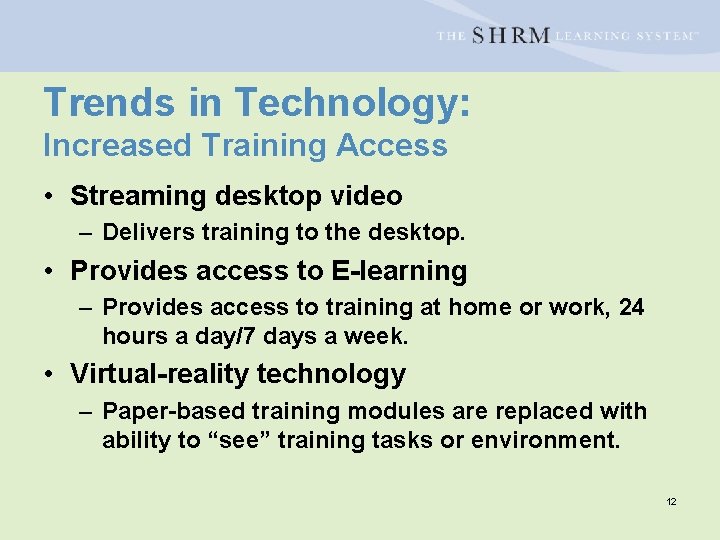
Trends in Technology: Increased Training Access • Streaming desktop video – Delivers training to the desktop. • Provides access to E-learning – Provides access to training at home or work, 24 hours a day/7 days a week. • Virtual-reality technology – Paper-based training modules are replaced with ability to “see” training tasks or environment. 12
Trends in Technology: Access to Knowledge and Information • Knowledge management – Enhances the ability to retain intellectual capital. • Web portals – Provide an interface to resources needed on the job. • Internet – Provides information, enhances productivity, and improves communication. 13
Trends in Technology: Changes in How Business Is Done • Business-to-business integration – B-to-B e-commerce will become the dominant business model. • E-procurement – Online ordering processes streamline transactions. • Electronic signatures – Carry the same weight as a pen-and-ink signature. • Application service providers – Host and manage an organization's software applications on the Internet. 14
Trends in Technology: Widening of the Digital Divide • Refers to the gap between people who have computer access and those who do not. • HR is instrumental in analyzing skill and technology levels in employees. 15
Strategic Planning • Process that: – Integrates the major business units of an organization. – Positions an organization for the future. – Helps management focus on how to succeed. • Answers three questions: – Where is the company now? – Where does the company want to go? – How will the company get there? 16
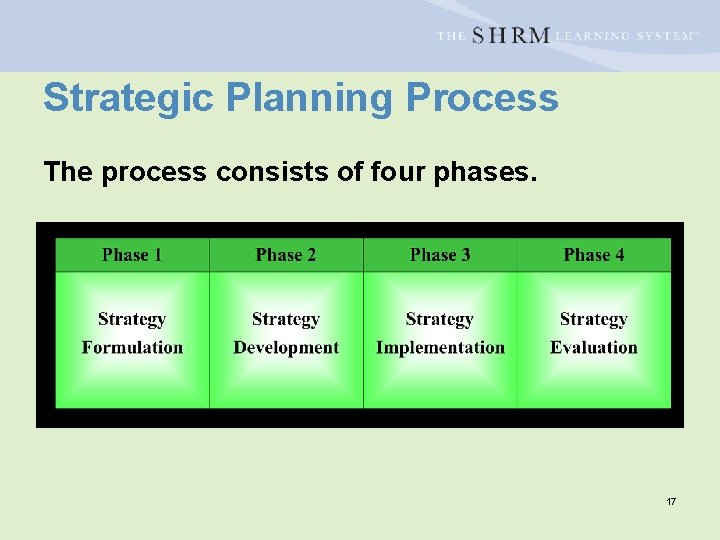
Strategic Planning Process The process consists of four phases. 17
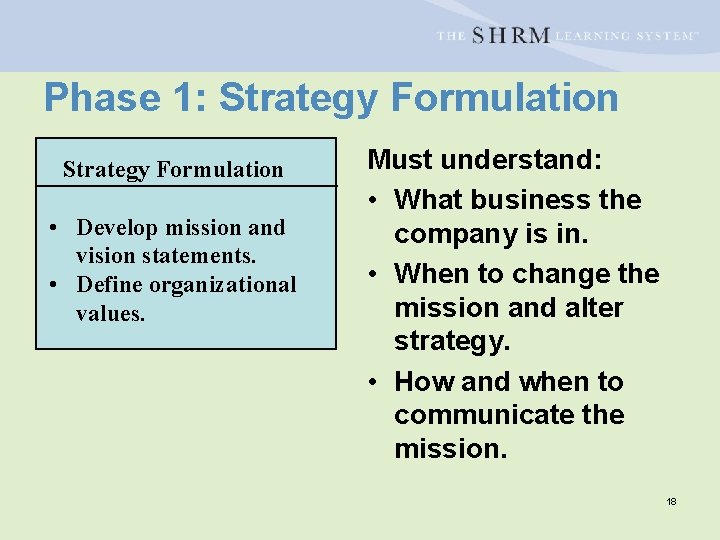
Phase 1: Strategy Formulation • Develop mission and vision statements. • Define organizational values. Must understand: • What business the company is in. • When to change the mission and alter strategy. • How and when to communicate the mission. 18
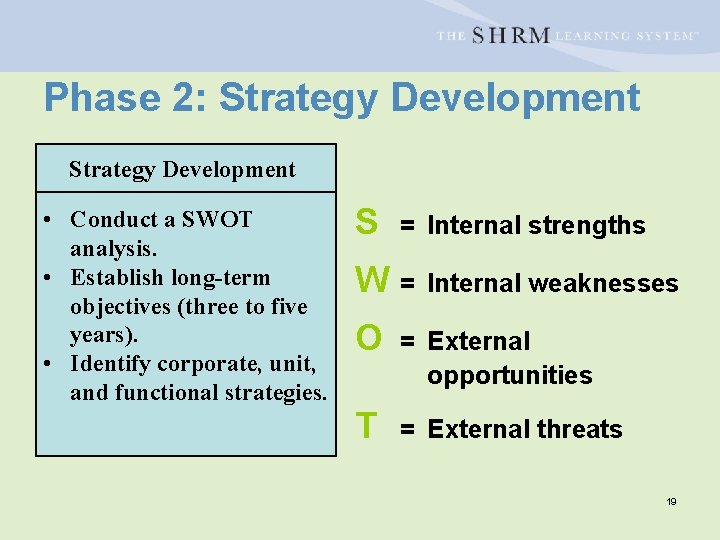
Phase 2: Strategy Development • Conduct a SWOT analysis. • Establish long-term objectives (three to five years). • Identify corporate, unit, and functional strategies. S = Internal strengths W = Internal weaknesses O = External opportunities T = External threats 19
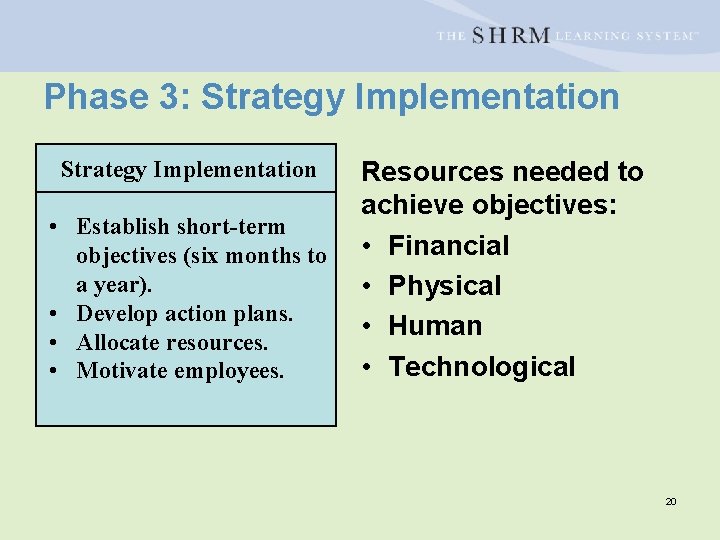
Phase 3: Strategy Implementation • Establish short-term objectives (six months to a year). • Develop action plans. • Allocate resources. • Motivate employees. Resources needed to achieve objectives: • Financial • Physical • Human • Technological 20
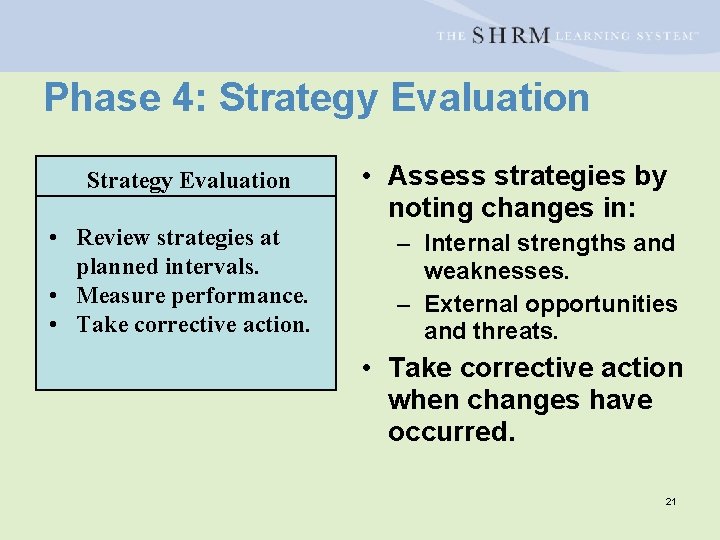
Phase 4: Strategy Evaluation • Review strategies at planned intervals. • Measure performance. • Take corrective action. • Assess strategies by noting changes in: – Internal strengths and weaknesses. – External opportunities and threats. • Take corrective action when changes have occurred. 21
HR’s Role in Strategic Planning • • • Serve the organization’s needs. Learn about the organization’s industry. Serve as a consultant. Gather facts and data. Build partnerships. 22
Environmental Scanning • Interprets data related to external opportunities and threats. • Prepares HR to participate in strategic planning. • Looks at seven key factors. – – Economic International Technological Social – Employment – Demographics – Political 23
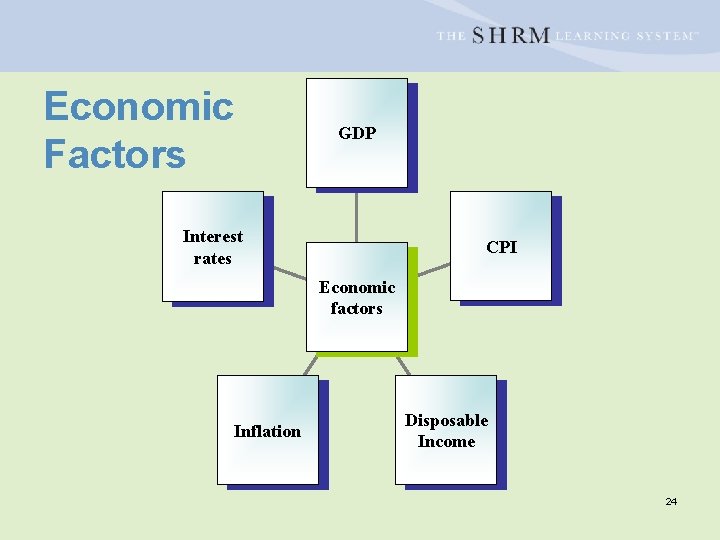
Economic Factors GDP Interest rates CPI Economic factors Inflation Disposable Income 24
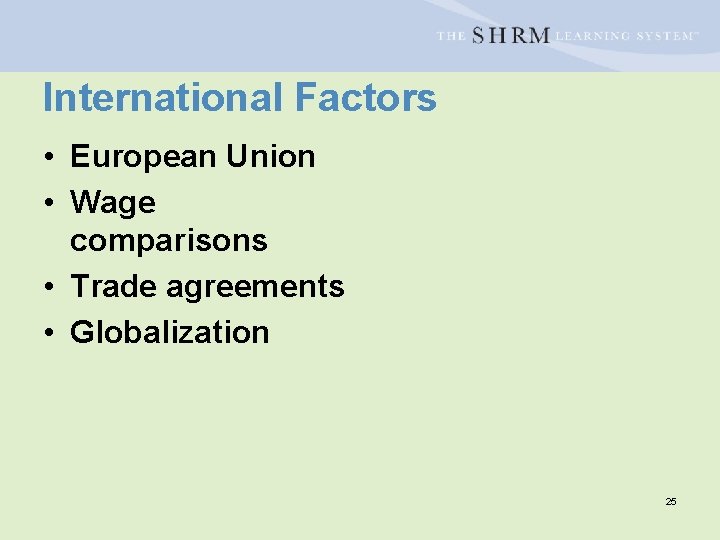
International Factors • European Union • Wage comparisons • Trade agreements • Globalization 25
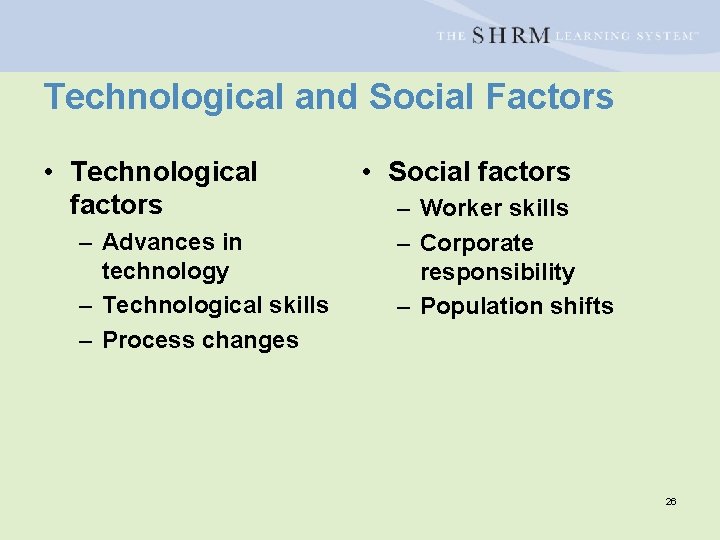
Technological and Social Factors • Technological factors – Advances in technology – Technological skills – Process changes • Social factors – Worker skills – Corporate responsibility – Population shifts 26
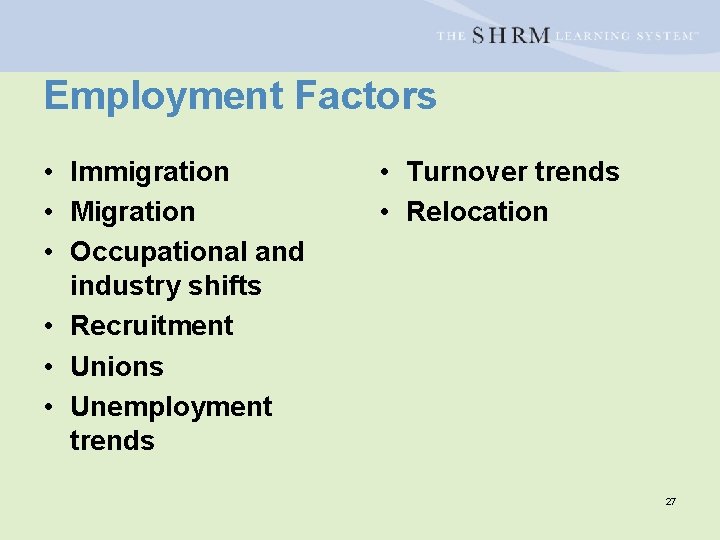
Employment Factors • Immigration • Migration • Occupational and industry shifts • Recruitment • Unions • Unemployment trends • Turnover trends • Relocation 27
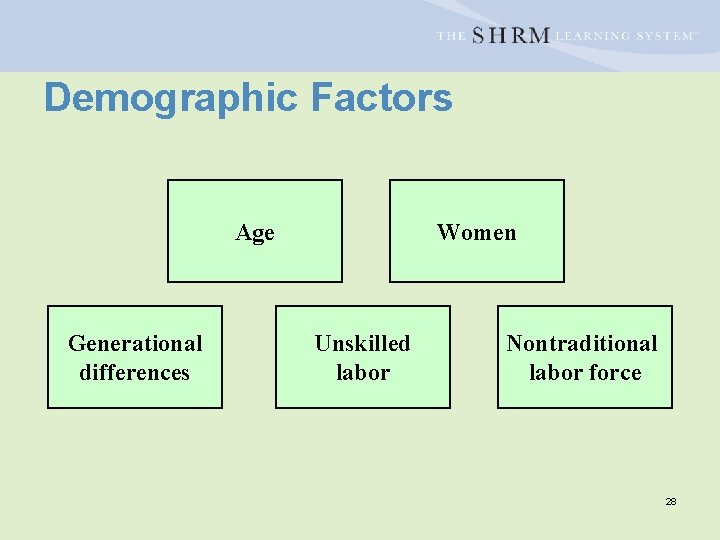
Demographic Factors Age Generational differences Women Unskilled labor Nontraditional labor force 28
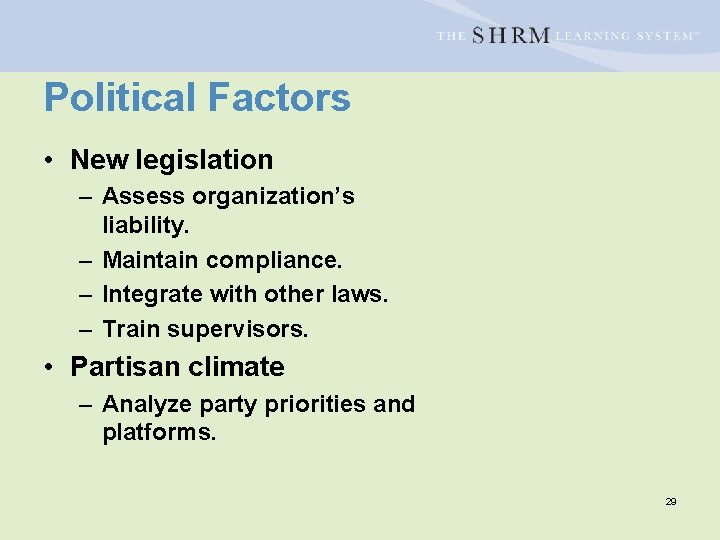
Political Factors • New legislation – Assess organization’s liability. – Maintain compliance. – Integrate with other laws. – Train supervisors. • Partisan climate – Analyze party priorities and platforms. 29
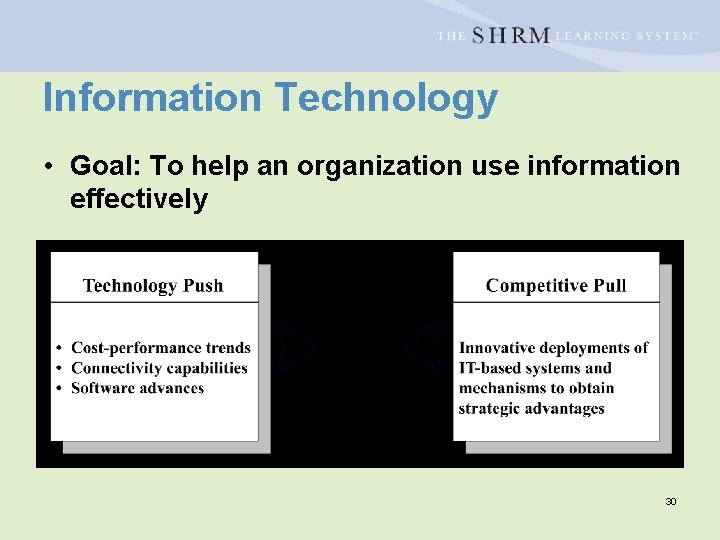
Information Technology • Goal: To help an organization use information effectively 30
Employees • Human capital: – Consists of the knowledge, skills, and experience of employees. – Ensures that business functions operate smoothly. – Can be a competitive advantage. • Invest in human capital to retain loyal and committed employees. 31
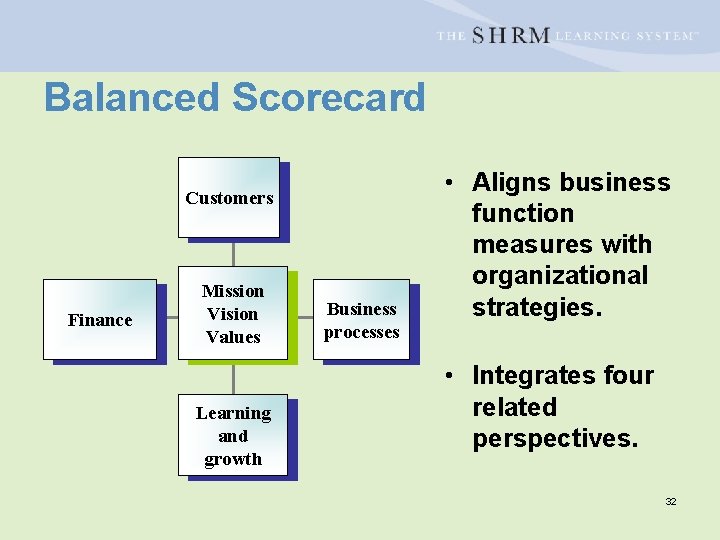
Balanced Scorecard Customers Finance Mission Vision Values Learning and growth Business processes • Aligns business function measures with organizational strategies. • Integrates four related perspectives. 32
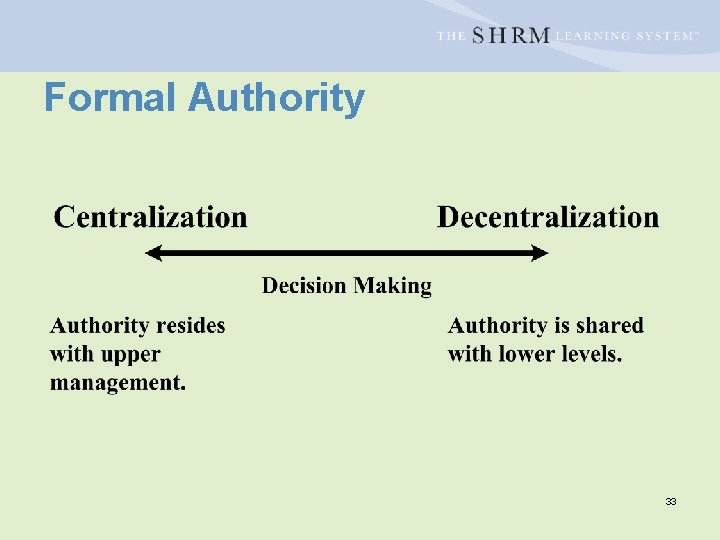
Formal Authority 33
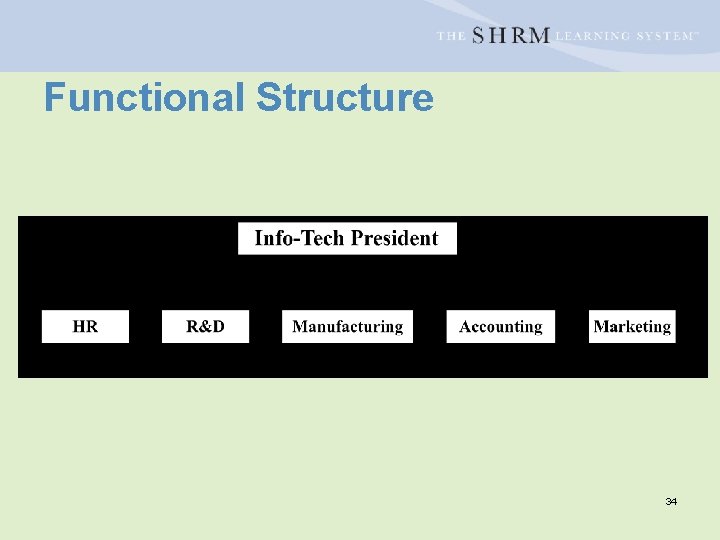
Functional Structure 34
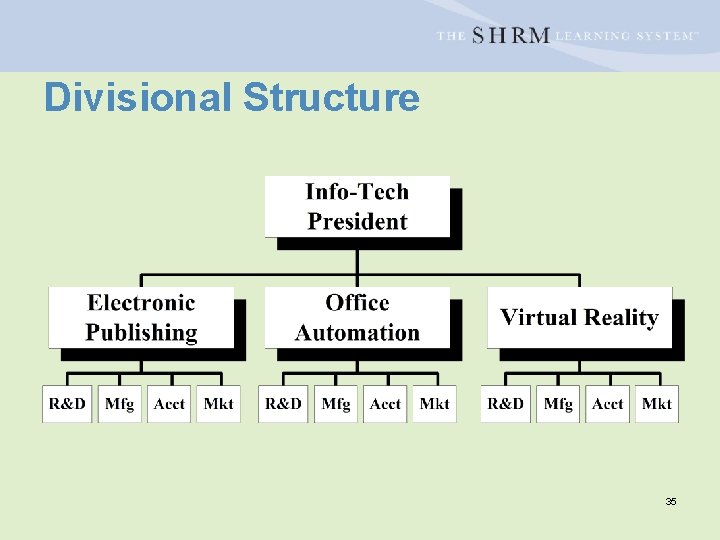
Divisional Structure 35
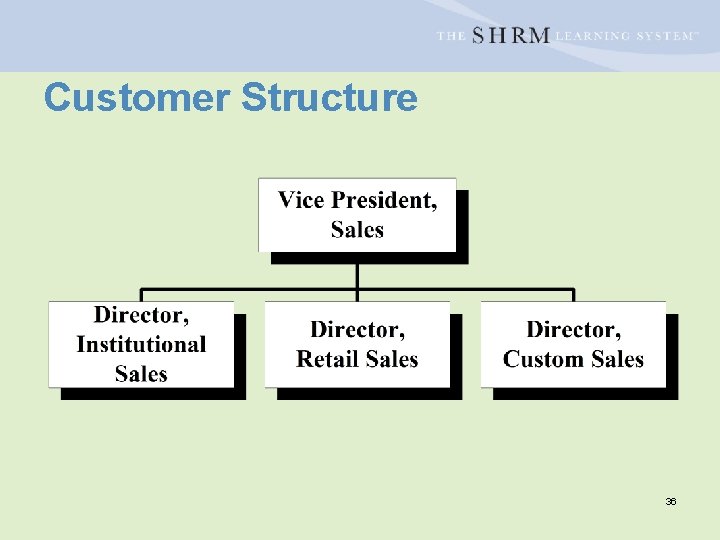
Customer Structure 36
Matrix Structure 37
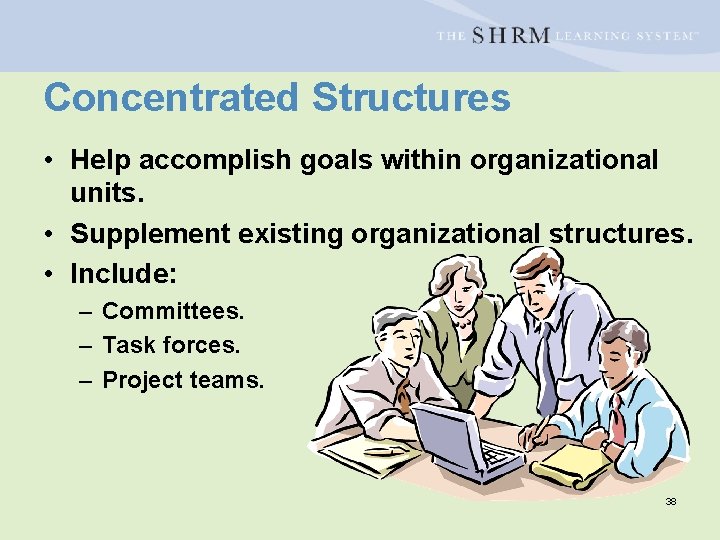
Concentrated Structures • Help accomplish goals within organizational units. • Supplement existing organizational structures. • Include: – Committees. – Task forces. – Project teams. 38
Other Structural Issues • Span of control – Number of direct reports – Narrow span (“tall” organization) – Wide span (“flat” organization) • Line and staff units – Line conducts the major business of the organization (production). – Staff provides specialized services (accounting). 39
Other Measurement Methods • • Organization’s most important issues Human capital ROI Turnover cost Compensation as a percentage of operating expense • Training investment factor • Time to start • Cost per hire 40
Primary and Secondary Research Primary (data gathered Secondary (data gathered by researcher) by others) • • • Scientific method Pilot projects Surveys Interviews Observation Testing • • • Informal communications HR records Professional publications Best-practices reports Appraisal trends Benchmarking 41
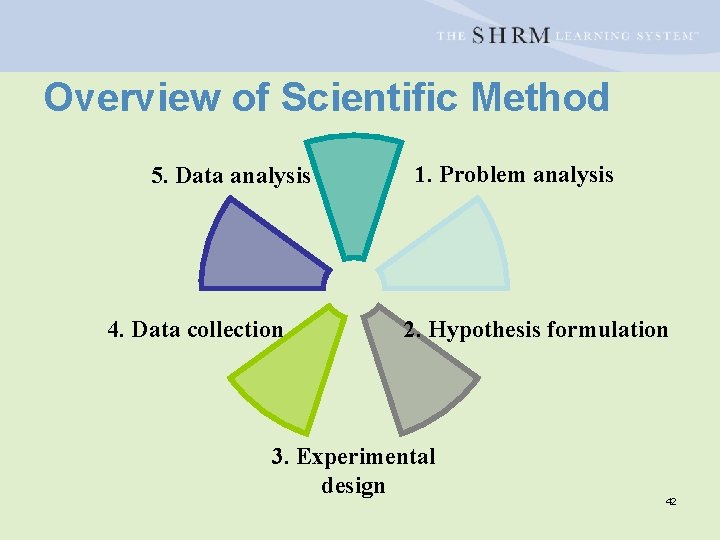
Overview of Scientific Method 5. Data analysis 4. Data collection 1. Problem analysis 2. Hypothesis formulation 3. Experimental design 42
Step 1: Problem Analysis • State the problem as a question. – “Why are there so many voluntary terminations? ” • Identify key factors that contribute to the problem. 43
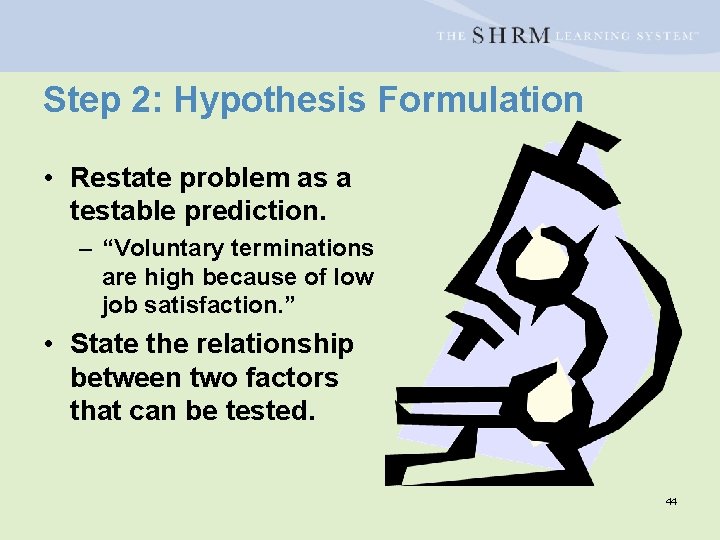
Step 2: Hypothesis Formulation • Restate problem as a testable prediction. – “Voluntary terminations are high because of low job satisfaction. ” • State the relationship between two factors that can be tested. 44
Step 3: Experimental Design • An experiment: – Explores what is not directly observed. – Determines the causes that have the greatest impact. – Must be concerned with reliability and validity. 45
Step 4: Data Collection • Methods used to gather data include: – Individual or panel interviews. – Surveys and questionnaires. – Observation, file studies, and testing. 46
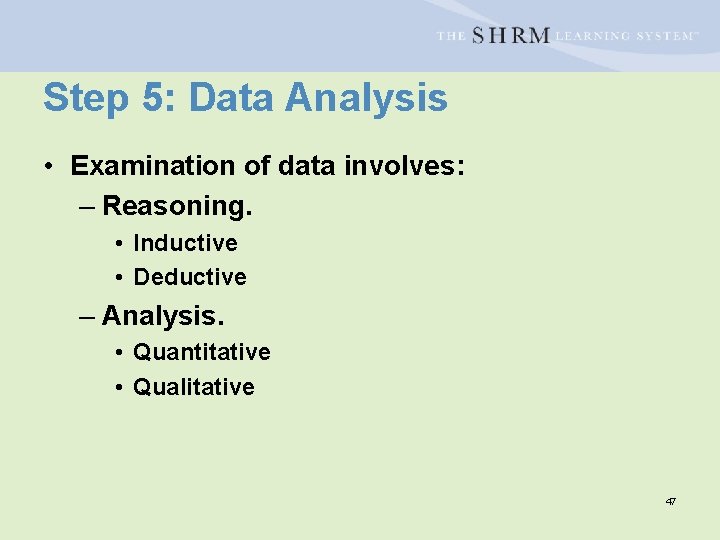
Step 5: Data Analysis • Examination of data involves: – Reasoning. • Inductive • Deductive – Analysis. • Quantitative • Qualitative 47
Ethics • System of moral principles and values that establish appropriate conduct. • Includes rules or standards governing the conduct of members of a profession. • HR assumes a key role in creating an ethical organization. 48
Ethical Issues • • Workplace privacy Whistle blowing Conflict of interest Bribes, payoffs, and kickbacks • Organizational abuse • • Insider trading Diversity Copyrights Corporate responsibility 49
Social Responsibility Organizations go through four phases in the development of corporate citizenship programs. 50