
Strategic Innovation A Pathway for Growth How companies
- Slides: 31
Strategic Innovation: A Pathway for Growth How companies can access resources at the UW to support strategic growth Wil Tutol & Ivan Barron Greater Tacoma Convention & Trade Center June 1, 2016
Agenda 1. Introductions 2. Strategic Innovation: Focusing on what matters “The 3 M’s” 3. Leveraging Resources: Accessing UW programs to support your growth 4. Strategic Decision-Making: Frameworks to assess your company's needs. 5. Q & A
Introductions • Wil Tutol, Associate Director • Ivan Barron Lecturer and Assistant Director • UW Foster School Consulting and Business Development Center
Strategic Innovation: Focusing on what matters What are the key areas for innovation? Research on small business by Dr. Bill Bradford identified the 3 M’s as critical areas for success. • Markets • Money • Management
Consulting & Business Development Center Leveraging UW Resources Wil Tutol, Associate Director Greater Tacoma Convention & Trade Center June 1, 2016
Mission & Goals • Consulting Center’s Mission – Links students, faculty, and staff from the UW Foster School with a racially and ethnically diverse business and nonprofit community to expand students' knowledge and skills, help small businesses grow, create and retain jobs, open educational opportunities for under-represented minority students, and stimulate innovative economic development research. • Center’s Programs Aim To – Center provides field-based learning experiences to Foster Students while growing small businesses – Teach business owners cutting edge techniques and various business disciplines to improve their firm’s competitiveness
Accomplishments • Field Experience for Students – – Students gain experience in making a measurable difference for a business Students solve complex, real-world problems Students are positioned for success especially for careers in consulting Enhances graduates involvement in the broader community • External for Washington – The Center has created $95 million in new revenues – Supported 100, 000 jobs in communities across Washington
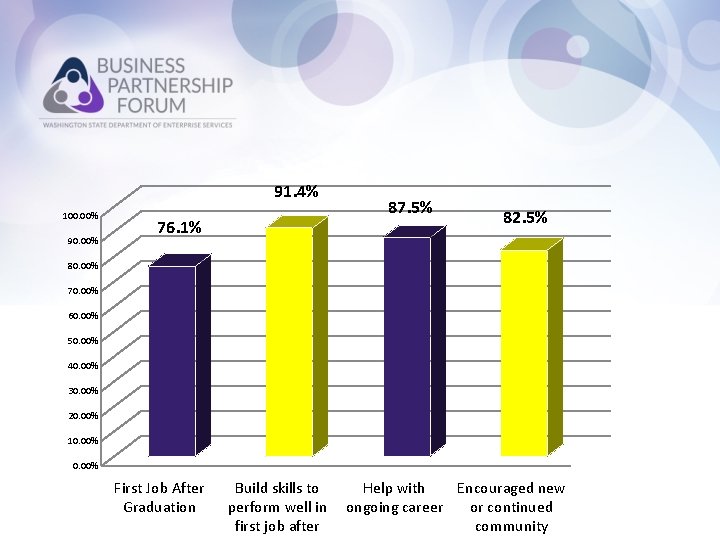
91. 4% 100. 00% 90. 00% 76. 1% 87. 5% 82. 5% 80. 00% 70. 00% 60. 00% 50. 00% 40. 00% 30. 00% 20. 00% 10. 00% First Job After Graduation Build skills to perform well in first job after Help with Encouraged new ongoing career or continued community
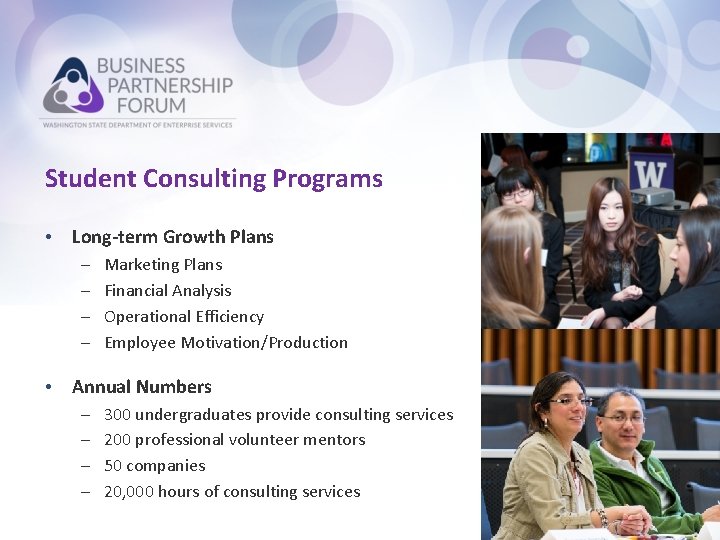
Student Consulting Programs • Long-term Growth Plans – – Marketing Plans Financial Analysis Operational Efficiency Employee Motivation/Production • Annual Numbers – – 300 undergraduates provide consulting services 200 professional volunteer mentors 50 companies 20, 000 hours of consulting services
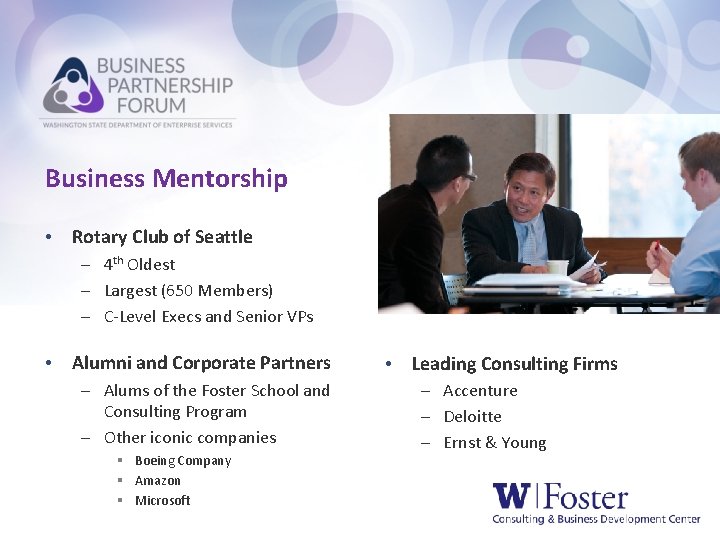
Business Mentorship • Rotary Club of Seattle – 4 th Oldest – Largest (650 Members) – C-Level Execs and Senior VPs • Alumni and Corporate Partners – Alums of the Foster School and Consulting Program – Other iconic companies § Boeing Company § Amazon § Microsoft • Leading Consulting Firms – Accenture – Deloitte – Ernst & Young
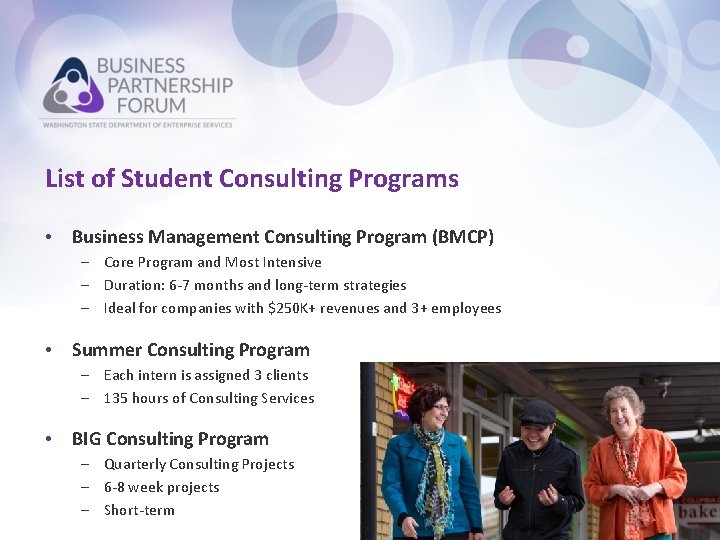
List of Student Consulting Programs • Business Management Consulting Program (BMCP) – Core Program and Most Intensive – Duration: 6 -7 months and long-term strategies – Ideal for companies with $250 K+ revenues and 3+ employees • Summer Consulting Program – Each intern is assigned 3 clients – 135 hours of Consulting Services • BIG Consulting Program – Quarterly Consulting Projects – 6 -8 week projects – Short-term
Student Consulting Program: Example • Online Digitizing Firm – High Customer Concentration – Value Proposition – New Business Model • Results – Repositioned Marketplace – Accelerated Growth – $700 K to $6. 7 Million
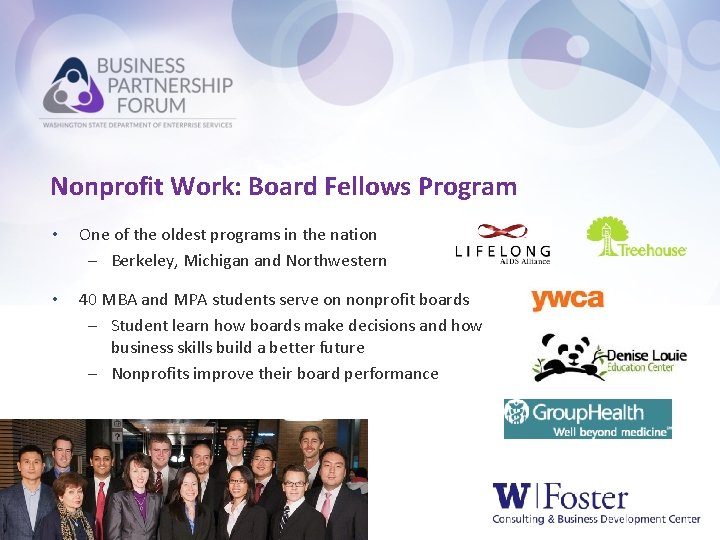
Nonprofit Work: Board Fellows Program • One of the oldest programs in the nation – Berkeley, Michigan and Northwestern • 40 MBA and MPA students serve on nonprofit boards – Student learn how boards make decisions and how business skills build a better future – Nonprofits improve their board performance
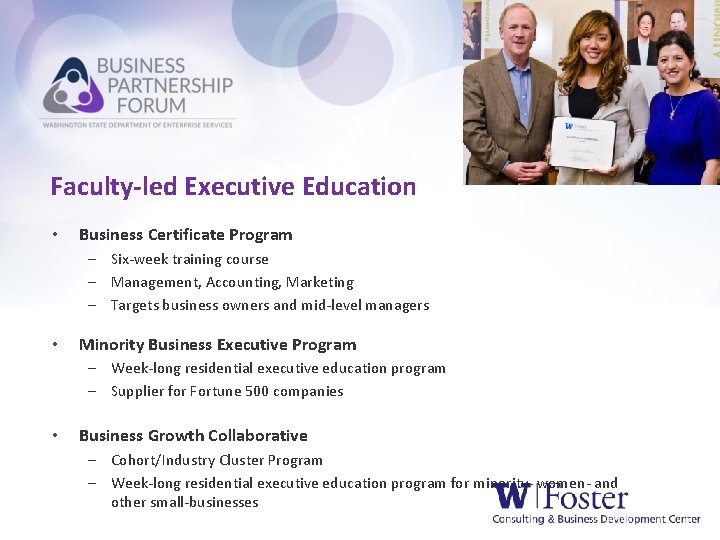
Faculty-led Executive Education • Business Certificate Program – Six-week training course – Management, Accounting, Marketing – Targets business owners and mid-level managers • Minority Business Executive Program – Week-long residential executive education program – Supplier for Fortune 500 companies • Business Growth Collaborative – Cohort/Industry Cluster Program – Week-long residential executive education program for minority- women- and other small-businesses
Questions?
Strategic Decision-Making: Frameworks to assess your company's needs Ivan Barron, Lecturer & Assistant Director Greater Tacoma Convention & Trade Center June 1, 2016
How do entrepreneurs make decisions about business growth and innovation?
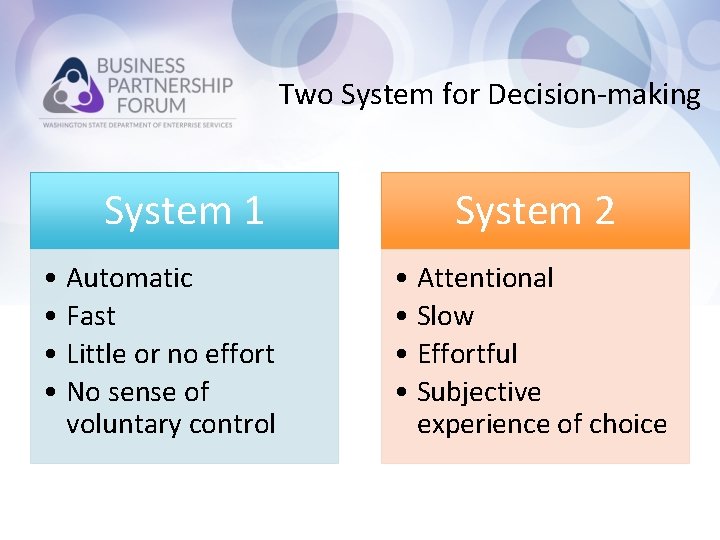
Two System for Decision-making System 1 • Automatic • Fast • Little or no effort • No sense of voluntary control System 2 • Attentional • Slow • Effortful • Subjective experience of choice
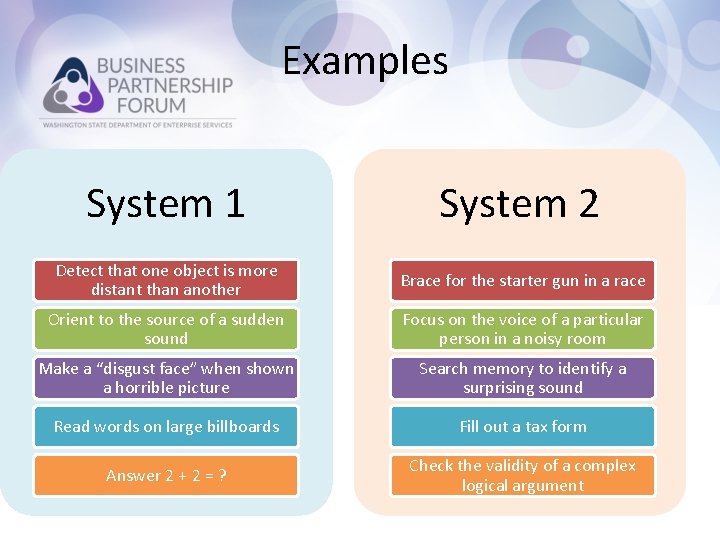
Examples System 1 System 2 Detect that one object is more distant than another Brace for the starter gun in a race Orient to the source of a sudden sound Focus on the voice of a particular person in a noisy room Make a “disgust face” when shown a horrible picture Search memory to identify a surprising sound Read words on large billboards Fill out a tax form Answer 2 + 2 = ? Check the validity of a complex logical argument
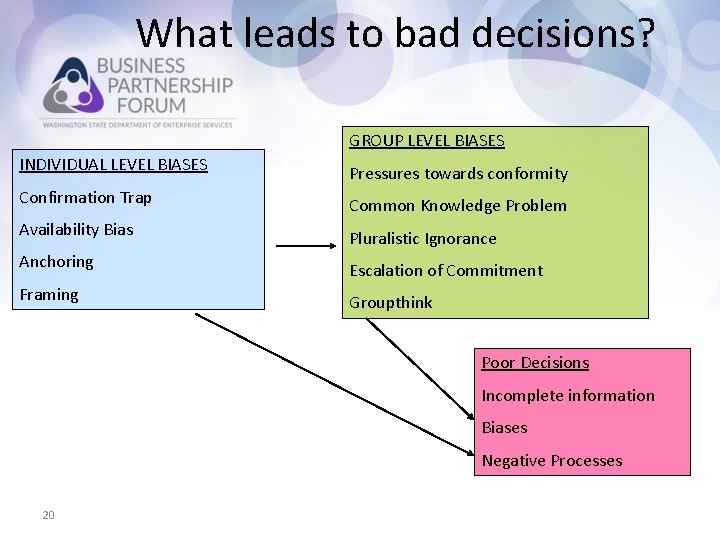
What leads to bad decisions? GROUP LEVEL BIASES INDIVIDUAL LEVEL BIASES Pressures towards conformity Confirmation Trap Common Knowledge Problem Availability Bias Pluralistic Ignorance Anchoring Escalation of Commitment Framing Groupthink Poor Decisions Incomplete information Biases Negative Processes 20
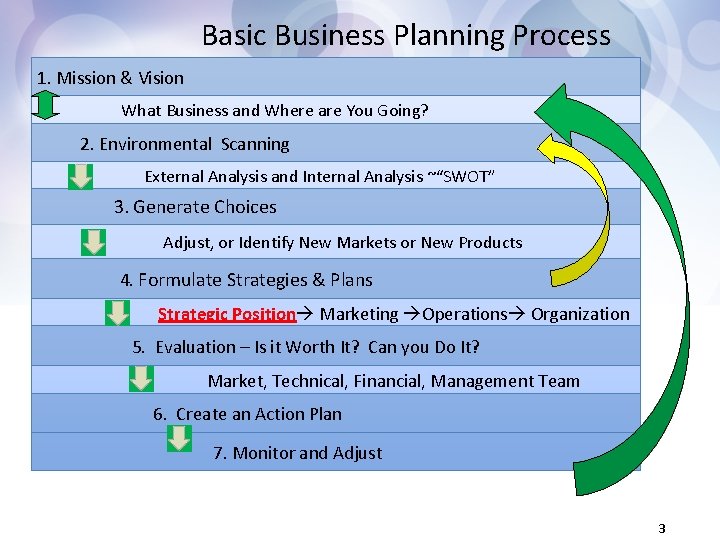
Basic Business Planning Process 1. Mission & Vision What Business and Where are You Going? 2. Environmental Scanning External Analysis and Internal Analysis ~“SWOT” 3. Generate Choices Adjust, or Identify New Markets or New Products 4. Formulate Strategies & Plans Strategic Position Marketing Operations Organization 5. Evaluation – Is it Worth It? Can you Do It? Market, Technical, Financial, Management Team 6. Create an Action Plan 7. Monitor and Adjust 3
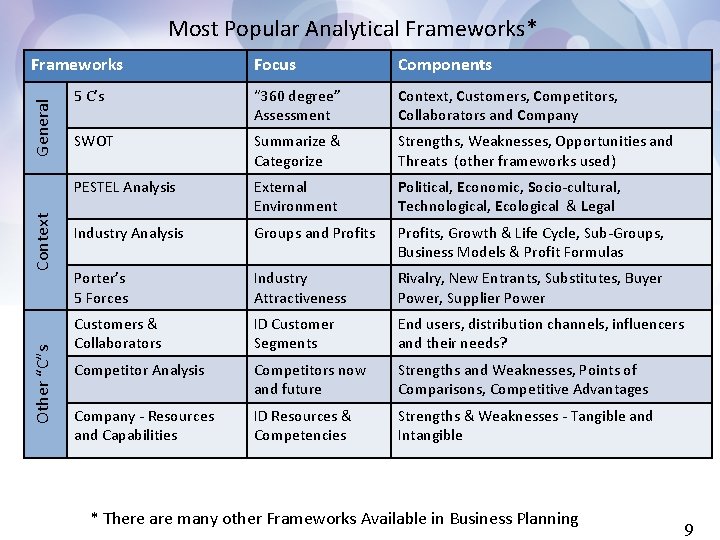
Most Popular Analytical Frameworks* Other “C”s Context General Frameworks Focus Components 5 C’s “ 360 degree” Assessment Context, Customers, Competitors, Collaborators and Company SWOT Summarize & Categorize Strengths, Weaknesses, Opportunities and Threats (other frameworks used) PESTEL Analysis External Environment Political, Economic, Socio-cultural, Technological, Ecological & Legal Industry Analysis Groups and Profits, Growth & Life Cycle, Sub-Groups, Business Models & Profit Formulas Porter’s 5 Forces Industry Attractiveness Rivalry, New Entrants, Substitutes, Buyer Power, Supplier Power Customers & Collaborators ID Customer Segments End users, distribution channels, influencers and their needs? Competitor Analysis Competitors now and future Strengths and Weaknesses, Points of Comparisons, Competitive Advantages Company - Resources and Capabilities ID Resources & Competencies Strengths & Weaknesses - Tangible and Intangible * There are many other Frameworks Available in Business Planning 9
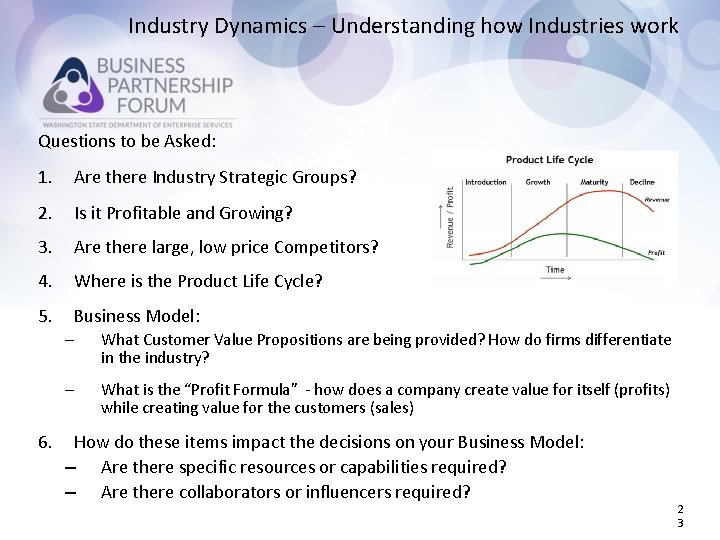
Industry Dynamics – Understanding how Industries work Questions to be Asked: 1. Are there Industry Strategic Groups? 2. Is it Profitable and Growing? 3. Are there large, low price Competitors? 4. Where is the Product Life Cycle? 5. Business Model: 6. – What Customer Value Propositions are being provided? How do firms differentiate in the industry? – What is the “Profit Formula” - how does a company create value for itself (profits) while creating value for the customers (sales) How do these items impact the decisions on your Business Model: – Are there specific resources or capabilities required? – Are there collaborators or influencers required? 2 3
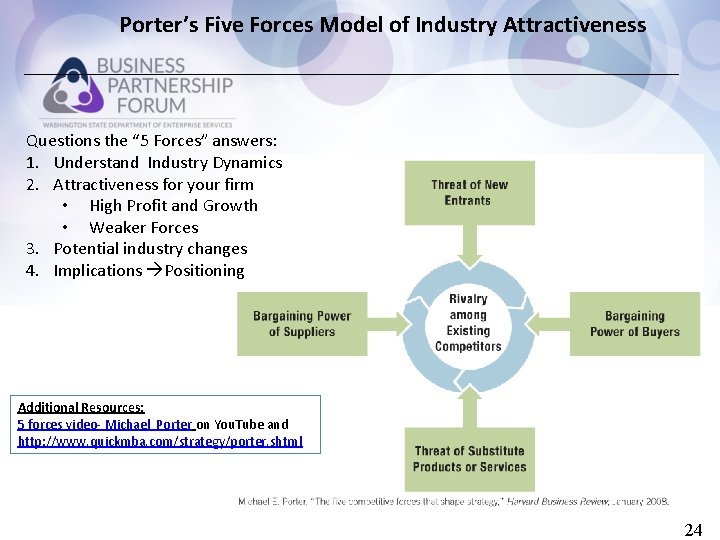
Porter’s Five Forces Model of Industry Attractiveness Questions the “ 5 Forces” answers: 1. Understand Industry Dynamics 2. Attractiveness for your firm • High Profit and Growth • Weaker Forces 3. Potential industry changes 4. Implications Positioning Additional Resources: 5 forces video- Michael Porter on You. Tube and http: //www. quickmba. com/strategy/porter. shtml 24
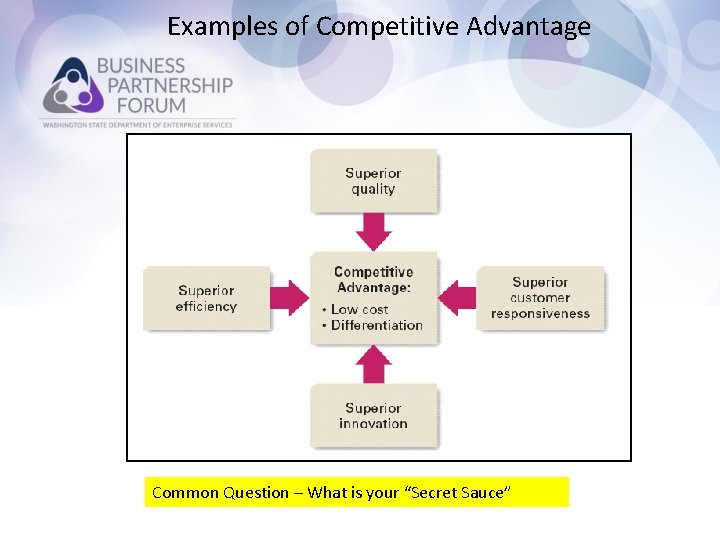
Examples of Competitive Advantage Common Question – What is your “Secret Sauce”
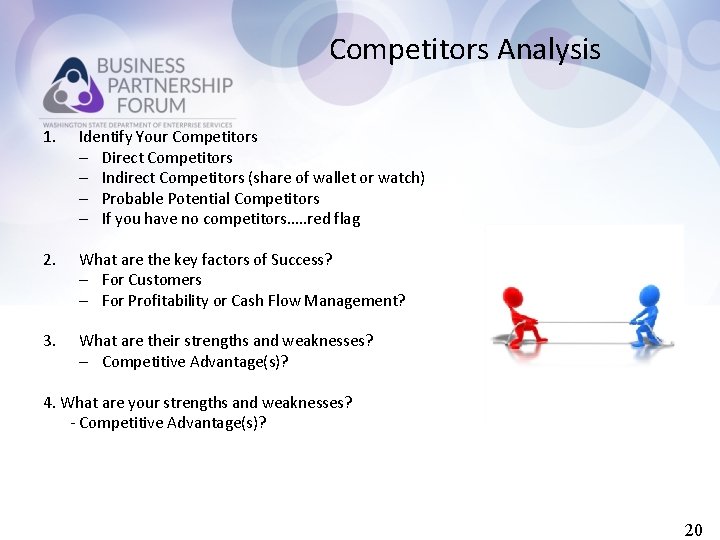
Competitors Analysis 1. Identify Your Competitors – Direct Competitors – Indirect Competitors (share of wallet or watch) – Probable Potential Competitors – If you have no competitors…. . red flag 2. What are the key factors of Success? – For Customers – For Profitability or Cash Flow Management? 3. What are their strengths and weaknesses? – Competitive Advantage(s)? 4. What are your strengths and weaknesses? - Competitive Advantage(s)? 20
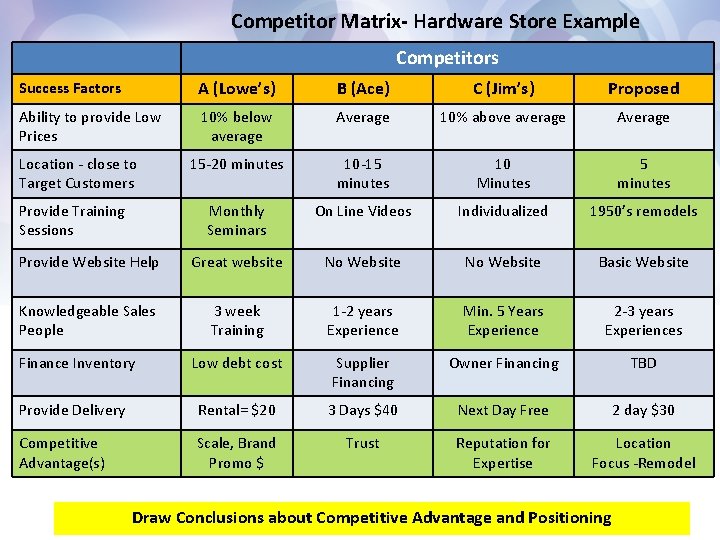
Competitor Matrix- Hardware Store Example Competitors Success Factors A (Lowe’s) B (Ace) C (Jim’s) Proposed Ability to provide Low Prices 10% below average Average 10% above average Average 15 -20 minutes 10 -15 minutes 10 Minutes 5 minutes Monthly Seminars On Line Videos Individualized 1950’s remodels Provide Website Help Great website No Website Basic Website Knowledgeable Sales People 3 week Training 1 -2 years Experience Min. 5 Years Experience 2 -3 years Experiences Low debt cost Supplier Financing Owner Financing TBD Provide Delivery Rental= $20 3 Days $40 Next Day Free 2 day $30 Competitive Advantage(s) Scale, Brand Promo $ Trust Reputation for Expertise Location Focus -Remodel Location - close to Target Customers Provide Training Sessions Finance Inventory Draw Conclusions about Competitive Advantage and Positioning
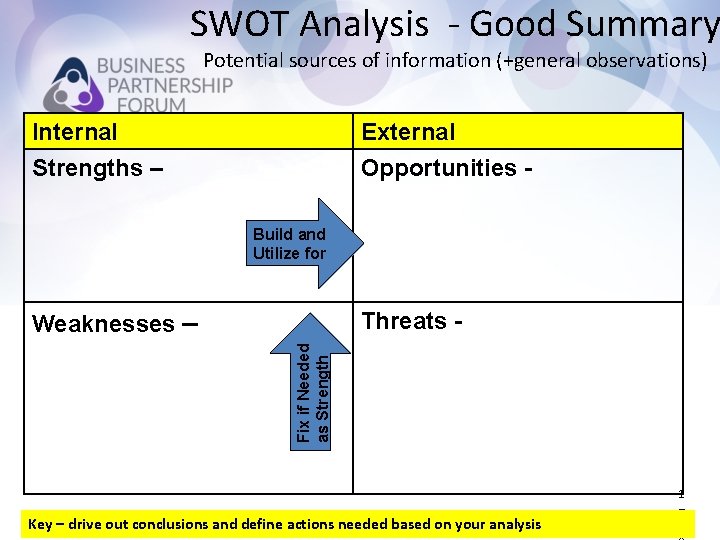
SWOT Analysis - Good Summary Potential sources of information (+general observations) Internal Strengths – External Opportunities Build and Utilize for Threats Fix if Needed as Strength Weaknesses – Key – drive out conclusions and define actions needed based on your analysis 1 – 2
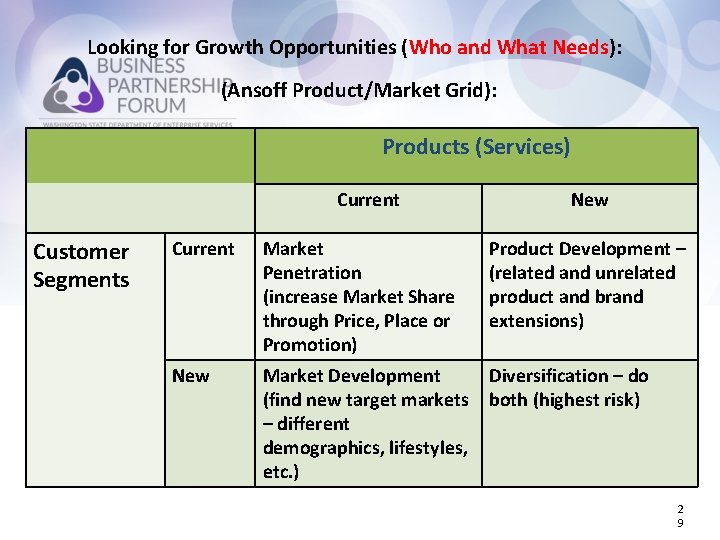
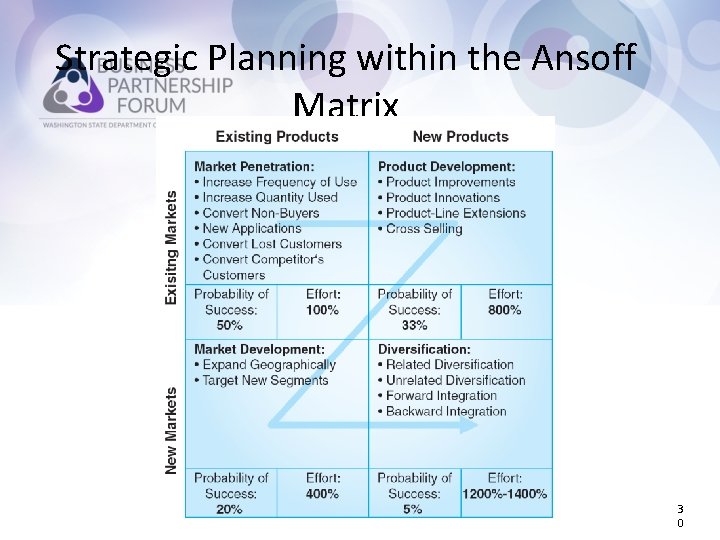
Looking for Growth Opportunities (Who and What Needs): (Ansoff Product/Market Grid): Products (Services) Current Customer Segments New Current Market Penetration (increase Market Share through Price, Place or Promotion) Product Development – (related and unrelated product and brand extensions) New Market Development Diversification – do (find new target markets both (highest risk) – different demographics, lifestyles, etc. ) 2 9
Strategic Planning within the Ansoff Matrix 3 0
Thank you