
STRATEGIC HUMAN RESOURCE DEVELOPMENT PLAN FOR THE TOURISM
![Industry Characteristics [1] Highly Similar Product ¢ ¢ Similar skills set Similar training needs](https://slidetodoc.com/presentation_image_h2/4fe4183399714862b29bb76d7d056ecd/image-4.jpg "Industry Characteristics [1] Highly Similar Product ¢ ¢ Similar skills set Similar training needs")
![Industry Characteristics. [2] Staff Turnover Time restricted contracts ¢ Relationship building ¢ Skills transfer](https://slidetodoc.com/presentation_image_h2/4fe4183399714862b29bb76d7d056ecd/image-5.jpg "Industry Characteristics. [2] Staff Turnover Time restricted contracts ¢ Relationship building ¢ Skills transfer")
![Industry Characteristics. . [3] ‘One Island – One Resort’ Job security ¢ High threshold/](https://slidetodoc.com/presentation_image_h2/4fe4183399714862b29bb76d7d056ecd/image-6.jpg "Industry Characteristics. . [3] ‘One Island – One Resort’ Job security ¢ High threshold/")
![Industry Characteristics… [4] Training Efforts ¢ ¢ ¢ Individual <> Industry Ranking No ‘trained’](https://slidetodoc.com/presentation_image_h2/4fe4183399714862b29bb76d7d056ecd/image-7.jpg "Industry Characteristics… [4] Training Efforts ¢ ¢ ¢ Individual <> Industry Ranking No ‘trained’")
![Industry Characteristics…. [5] Market Dynamics Regional competition for labour ¢ Language skills requirements ¢](https://slidetodoc.com/presentation_image_h2/4fe4183399714862b29bb76d7d056ecd/image-8.jpg "Industry Characteristics…. [5] Market Dynamics Regional competition for labour ¢ Language skills requirements ¢")
![Solution. No single solution Four Intervention levels: [1] Awareness & Attitude [2] Training &](https://slidetodoc.com/presentation_image_h2/4fe4183399714862b29bb76d7d056ecd/image-20.jpg "Solution. No single solution Four Intervention levels: [1] Awareness & Attitude [2] Training &")
- Slides: 26
STRATEGIC HUMAN RESOURCE DEVELOPMENT PLAN FOR THE TOURISM INDUSTRY
Structure Part I - Situational analysis Part II - Strategic Interventions
Part I - Situational Analysis Industry Characteristics ¢ Socio-cultural Context ¢ Educational System ¢ Regulatory Environment ¢
Industry Characteristics [1] Highly Similar Product ¢ ¢ Similar skills set Similar training needs Limited career diversification On-site residence > External mobility
Industry Characteristics. [2] Staff Turnover Time restricted contracts ¢ Relationship building ¢ Skills transfer ¢ Objective: economic <> career ¢ > Training efforts expensive
Industry Characteristics. . [3] ‘One Island – One Resort’ Job security ¢ High threshold/ Low local demand ¢ Staff migration ¢ Limited integration in atoll economy ¢ > Parallel Universe
Industry Characteristics… [4] Training Efforts ¢ ¢ ¢ Individual <> Industry Ranking No ‘trained’ requirement No ‘trained’ incentive High contents & ongoing > Reducing training demand > Clustering motivation
Industry Characteristics…. [5] Market Dynamics Regional competition for labour ¢ Language skills requirements ¢ Brain drain ¢ ‘Authentic’ demand from source markets ¢ > Local labour demand increase
Socio-cultural Context ¢ Negative perception towards resort employment ¢ Voluntary unemployment ¢ Family livelihood support ¢ Position of women ¢ Economic active age > Reduced potential work force
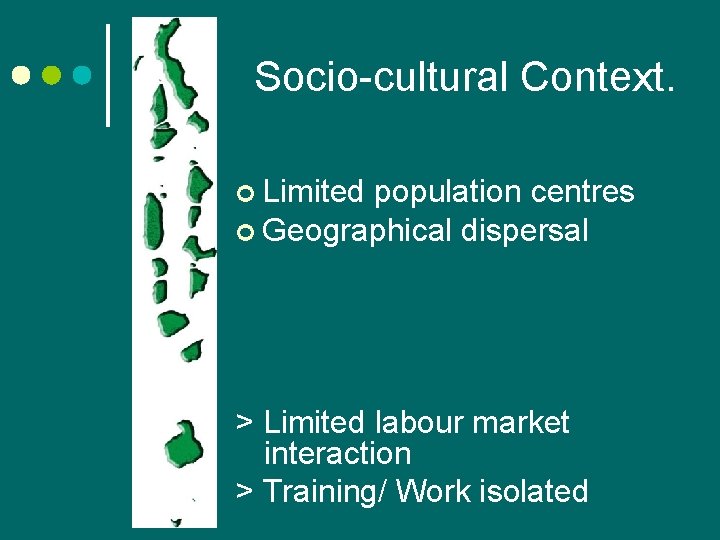
Socio-cultural Context. ¢ Limited population centres ¢ Geographical dispersal > Limited labour market interaction > Training/ Work isolated
Educational System Secondary Education ¢ Academic curriculum ¢ Limited soft-skills development ¢ Career thinking unaddressed ¢ Hospitality under-addressed in local context > School/training leavers not ready for labour market
Educational System. Tertiary Education Contents not to market demand ¢ Malé concentration ¢ Ad-hoc schedule ¢ > Trained people not ready for labour market
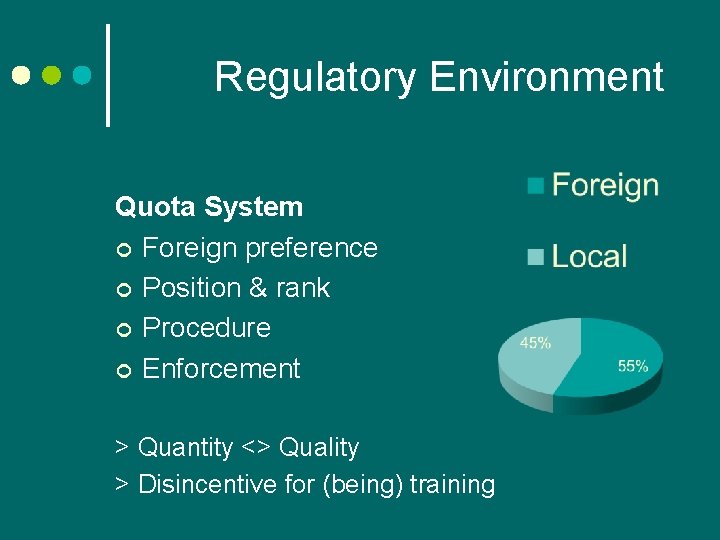
Regulatory Environment Quota System ¢ Foreign preference ¢ Position & rank ¢ Procedure ¢ Enforcement > Quantity <> Quality > Disincentive for (being) training
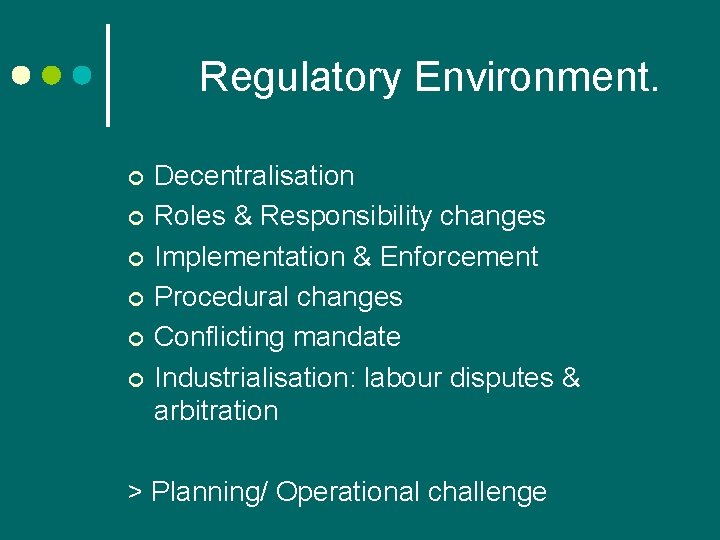
Regulatory Environment. ¢ ¢ ¢ Decentralisation Roles & Responsibility changes Implementation & Enforcement Procedural changes Conflicting mandate Industrialisation: labour disputes & arbitration > Planning/ Operational challenge
Part II – Strategic Intervention • • Strategic Planning Objective Interventions Approach
Strategic Planning • • Process Visibility Something for everybody Logical steps
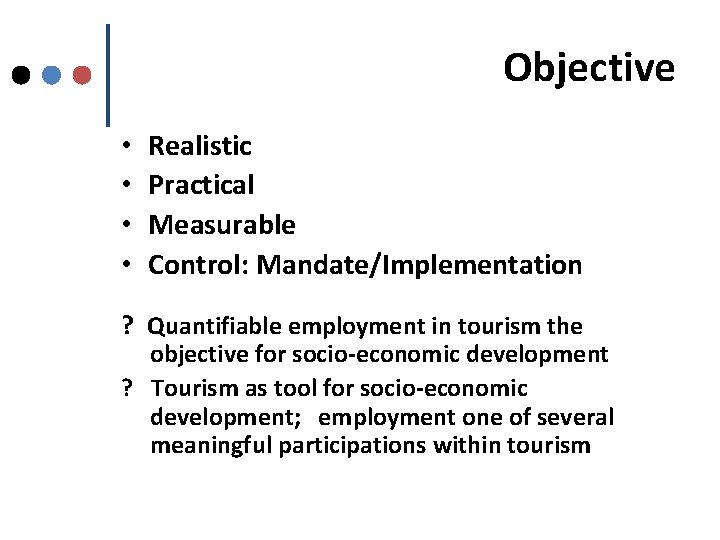
Objective • • Realistic Practical Measurable Control: Mandate/Implementation ? Quantifiable employment in tourism the objective for socio-economic development ? Tourism as tool for socio-economic development; employment one of several meaningful participations within tourism
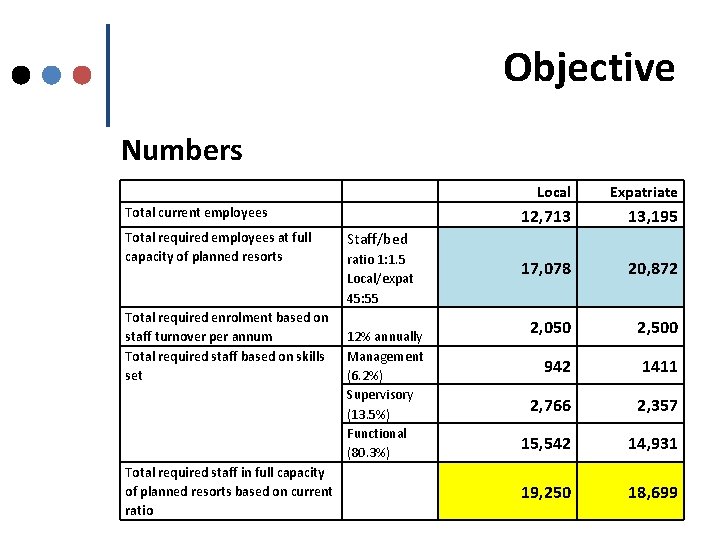
Objective Numbers Total current employees Total required employees at full capacity of planned resorts Total required enrolment based on staff turnover per annum Total required staff based on skills set Total required staff in full capacity of planned resorts based on current ratio Local Expatriate 12, 713 13, 195 17, 078 20, 872 2, 050 2, 500 942 1411 2, 766 2, 357 15, 542 14, 931 19, 250 18, 699 Staff/bed ratio 1: 1. 5 Local/expat 45: 55 12% annually Management (6. 2%) Supervisory (13. 5%) Functional (80. 3%)
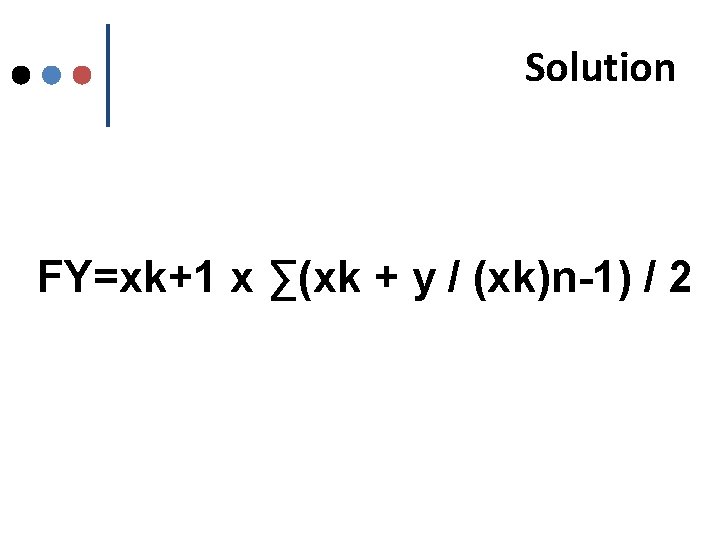
Solution FY=xk+1 x ∑(xk + y / (xk)n-1) / 2
Solution. No single solution Four Intervention levels: [1] Awareness & Attitude [2] Training & Career [3] Value Chain Development [4] Regulatory Environment > More > Better > Different > Control
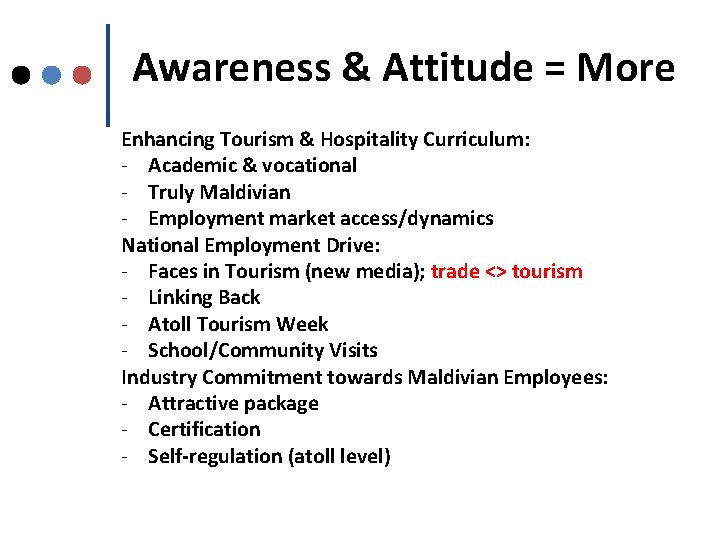
Awareness & Attitude = More Enhancing Tourism & Hospitality Curriculum: - Academic & vocational - Truly Maldivian - Employment market access/dynamics National Employment Drive: - Faces in Tourism (new media); trade <> tourism - Linking Back - Atoll Tourism Week - School/Community Visits Industry Commitment towards Maldivian Employees: - Attractive package - Certification - Self-regulation (atoll level)
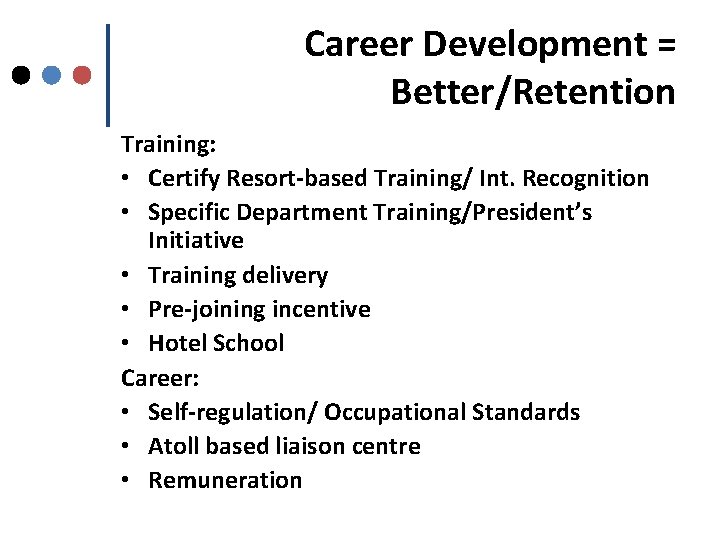
Career Development = Better/Retention Training: • Certify Resort-based Training/ Int. Recognition • Specific Department Training/President’s Initiative • Training delivery • Pre-joining incentive • Hotel School Career: • Self-regulation/ Occupational Standards • Atoll based liaison centre • Remuneration
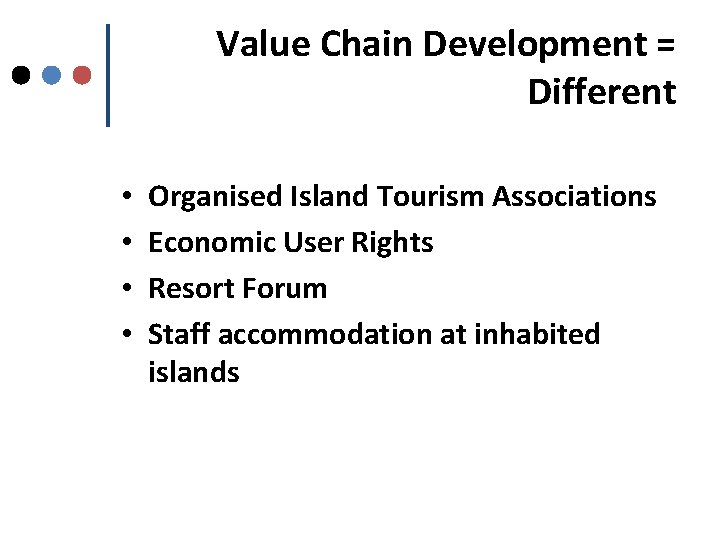
Value Chain Development = Different • • Organised Island Tourism Associations Economic User Rights Resort Forum Staff accommodation at inhabited islands
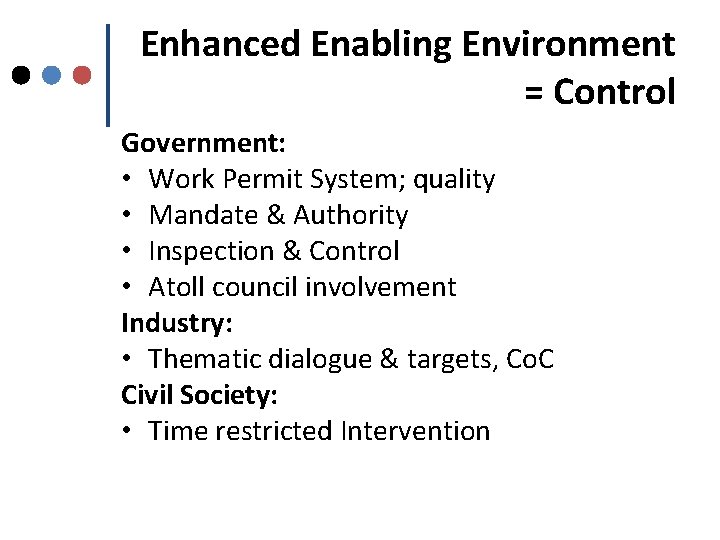
Enhanced Enabling Environment = Control Government: • Work Permit System; quality • Mandate & Authority • Inspection & Control • Atoll council involvement Industry: • Thematic dialogue & targets, Co. C Civil Society: • Time restricted Intervention
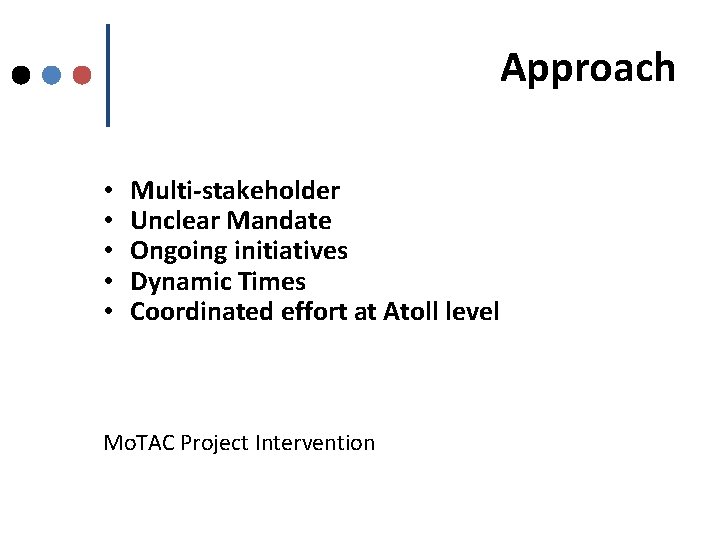
Approach • • • Multi-stakeholder Unclear Mandate Ongoing initiatives Dynamic Times Coordinated effort at Atoll level Mo. TAC Project Intervention