
STRATEGIC HRD PRACTICES PERFORMANCE FEEDBACK AND CAREER PLANNING
STRATEGIC HRD PRACTICES, PERFORMANCE FEEDBACK AND CAREER PLANNING HRD for competitive Advantage – Linking Business Strategy with HRD – Performance Appraisal and Development – Appraisal System – Feedback and Performance Counseling – Developing Dyadic relationship – Potential Appraisal – Requirements, Linkages, Steps, Methods, Conditions for Development – Career Planning

CAREER PLANNING AND DEVELOPMENT

DEFINITION OF CAREER • 1. Career is a sequence of attitudes and behaviors associated with the series of job and work related activities over a person’s life time. • 2. Succession of related jobs , arranged in hierarchical order, through which a person moves in an organization.
OBJECTIVES OF CAREER DEVELOPMENT • To attract and retain persons in an organization • To utilize human resources optimally • To improve morale and motivation level of employees • To reduce employee turnover • To practice a balanced ‘promotion from within’ policy • To make employees adaptable to changes
CONT…… • To maintain harmonious industrial relation • To increase employee’s loyalty commitment to the organization • To inculcate equitable employment practices providing equal career progression opportunities to women and minorities

DIFFERENT STAGES OF CAREER DEVELOPMENT • Exploratory stage • Establishment stage • Maintenance stage • Stage of decline
i) EXPLORATORY STAGE • Ensure the availability of accurate information about the various occupations existing in the organization to the new employee • Create opportunities to enable new employees to get information with the organizational careers through job rotation, internship, visit different units, seminars, etc. • Sponsor educational and training programmes for ensuring supply of potential talent in future.
ii) ESTABLISHMENT STAGE • Identification of the best possible talent for the organization • Communicating the correct and positive of the organization to the employee • Maximum learning and favorable attitudes of the employees towards the organization • Assigning challenging jobs to employees to enable them test their abilities and skills/ • Designing of development plan , identification of development needs, deciding career steps, etc
iii) MAINTANANCE STAGE • Strategies motivate employees, so that they can be productivity utilized even without promotion • Adequate opportunities for transition from specialist cadres to generalist position at higher levels of the organization • Help employees to adjust to their changing role s their career shifts from active position to advisory position • Help employees to prepare for retirement
iv) DECLINE STAGE • Manage retirement without destroying the employee’s sense of self-worth • Invent new creative part-time roles for which can use their knowledge, experience and wisdom
ADVANTAGES OF CAREER DEVELOPMENT • It reduces employee turnover by providing promotional avenues • It improves morale and motivation • It enables organizations to man promotional vacancies internally • It ensures better utilization of employee’s skills and provides increased work satisfaction to employees • It makes employees adaptable to the changing requirement of the organization
CONT…. • It reduces industrial disputes related to promotional matters and thereby provides opportunity to the organization to maintain hard industrial relations • Career development programs ensure equitable promotional decisions for every human in an organization
WHAT IS SUCCESSION PLANNING? 1. Growth and survival of the organization are the responsibilities of the top management 2. To fulfill such responsibilities each organization needs to plan management succession 3. Succession planning is done in different time frames to ensure the availability of right managerial personnel at the right time in right positions for continuing organizational vitality and strength 4. Good organizations try to make succession planning in three different time frames
STEPS OF SUCCESSION PLANNING 1. Prepare and develop a management staffing plan for all anticipated needs in different time frames 2. The second step is staffing and development. Staffing is concerned with recruitment, selection and placement. Development means development of managerial personnel through training, job rotation, counseling and guidance 3. The third step is to ensure congenial organizational environment to retain the desired managerial personnel
Cont…… 4. The fourth step is to develop a good performance appraisal system to get feedback on managerial performance and to review their progress and shortfalls. 5. The fifth step is the preparation of the management resource inventory. Such inventory contains details of personal data, performance records, skills, potential, career goals and career paths of managerial personnel.
MANAGEMENT DEVELOPMENT
MANAGEMENT DEVELOPMENT • Management development is a scientific training process for managers and executives to enrich their knowledge and skills so as to make them competent to manage their organization effectively.
Characteristics Of Management Development 1. A continues process 2. A knowledge updating activity 3. A vehicle for attitudinal change 4. A stimulant to higher competence 5. A deficiency improver 6. A self-development process
COMPONENTS OF MDP 1. Selection selection process enables us to understand the innate potentiality of the executives and the degree and extent of their managerial abilities. 2. Intellectual Conditioning It is the process of educating managers and executives on different managerial tools and techniques
Cont…. • 3. Supervised training • It is the process of guiding managers and executives while they apply and use their knowledge in day to day work
STEPS OF MDP 1. To look at the organizations objectives 2. To ascertain the development needs 3. To appraise the present performance of managerial staff 4. To prepare manpower inventory 5. To plan for individual development programs 6. To establish training and development programs
OBJECTIVES OF MDP 1. To make available managers and executives with requisite knowledge and skill to meet the present and anticipated future needs of the organizations. 2. To encourage managers to develop their full potentiality for handling greater responsibility 3. To improve the functional competence of the managers , making them more transparent and responsive to the changing needs of the organization. 4. To develop managers for higher assignments, duly replacing the elderly executives.
WHY MDPs FAIL 1. Purposes of the management development efforts in most of the organizations are often characterized by insincerity. 2. Some organizations are too much concerned to get the immediate benefits of MDPs. 3. In some cases, lessons imparted in MDPs are in direct conflict with the philosophy of the organization. 4. There is no system to evaluate the effectiveness of the MDPs by such outside agencies.
Performance Appraisal
PERFORMANCE APPRAISAL • DEFINITION: performance appraisal is the systematic description of an employee’s job relevant strengths and weakness. Or performance appraisal is evaluating employee contribution to the job.
PURPOSE OF DEVELOPMENT • Provide performance feedback to all concerned. • Identify individual skills, core competencies, strengths and weakness. • Evaluate goal achievement of employees. • Identify individual training needs. • Determine organizational training needs. • Reinforce authority structure.
WHAT IS THE PURPOSE OF THE APPRAISAL? JUDGMENTAL – To make administrative decisions (To justify rewards given for performance) DEVELOPMENTAL – To improve performance (To provide feedback for learning and work improvement)
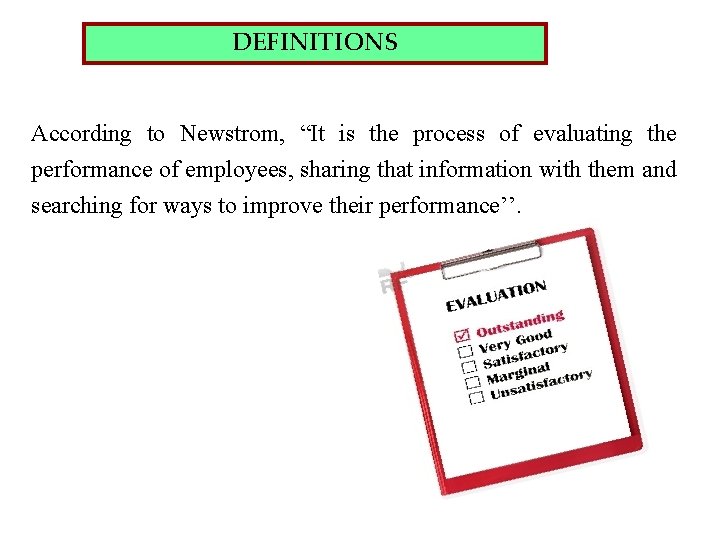
DEFINITIONS According to Newstrom, “It is the process of evaluating the performance of employees, sharing that information with them and searching for ways to improve their performance’’.
Meaning Performance appraisal is the step where the management finds out how effective it has been at hiring and placing employees. A “Performance appraisal” is a process of evaluating an employee’s performance of a job in terms of its requirements.
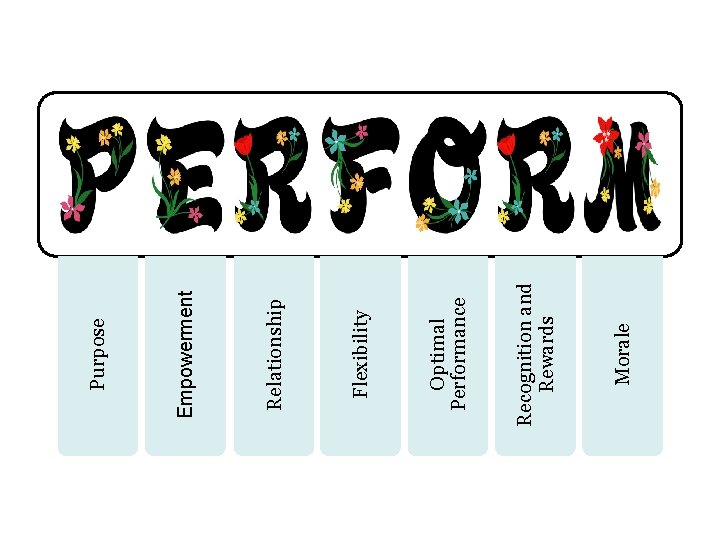
Morale Recognition and Rewards Optimal Performance Flexibility Relationship Empowerment Purpose
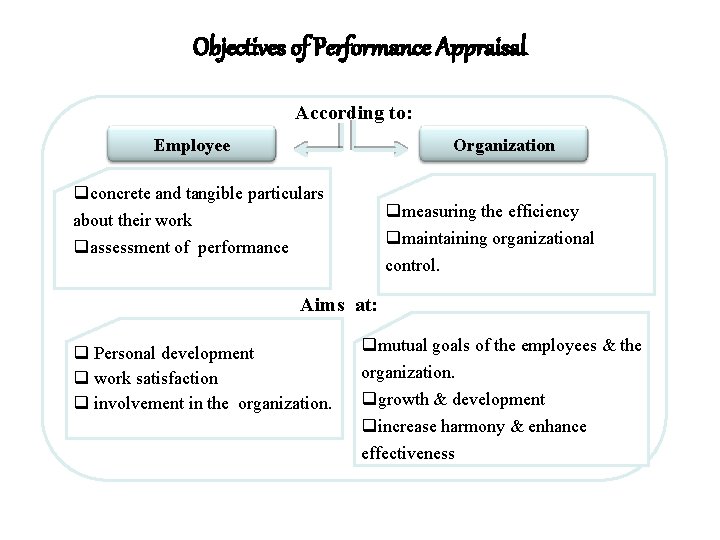
Objectives of Performance Appraisal According to: Employee Organization qconcrete and tangible particulars about their work qassessment of performance qmeasuring the efficiency qmaintaining organizational control. Aims at: q Personal development q work satisfaction q involvement in the organization. qmutual goals of the employees & the organization. qgrowth & development qincrease harmony & enhance effectiveness
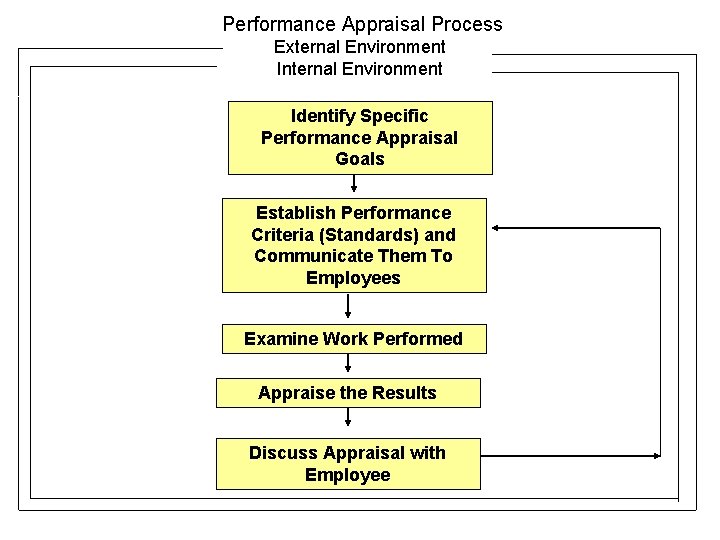
Performance Appraisal Process External Environment Internal Environment Identify Specific Performance Appraisal Goals Establish Performance Criteria (Standards) and Communicate Them To Employees Examine Work Performed Appraise the Results Discuss Appraisal with Employee
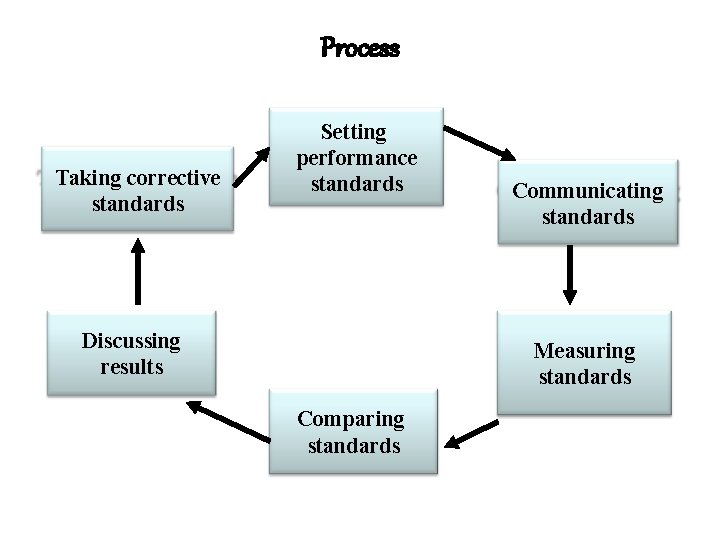
Process Taking corrective standards Setting performance standards Discussing results Communicating standards Measuring standards Comparing standards
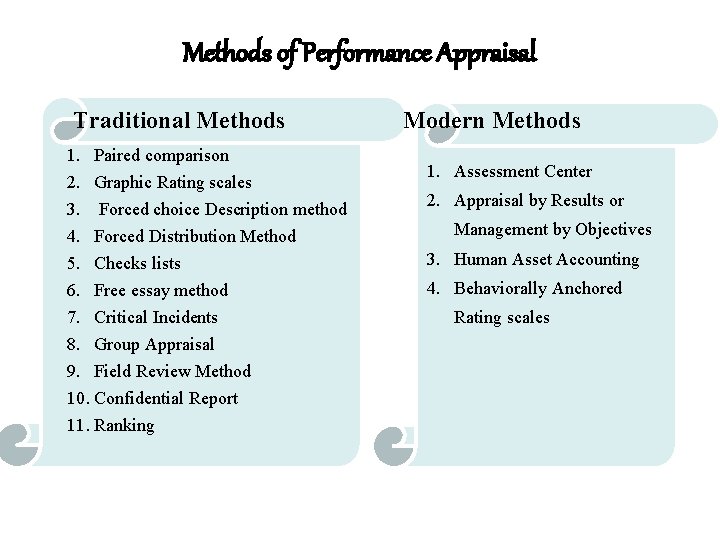
Methods of Performance Appraisal Traditional Methods 1. Paired comparison 2. Graphic Rating scales 3. Forced choice Description method 4. Forced Distribution Method 5. Checks lists 6. Free essay method 7. Critical Incidents 8. Group Appraisal 9. Field Review Method 10. Confidential Report 11. Ranking Modern Methods 1. Assessment Center 2. Appraisal by Results or Management by Objectives 3. Human Asset Accounting 4. Behaviorally Anchored Rating scales
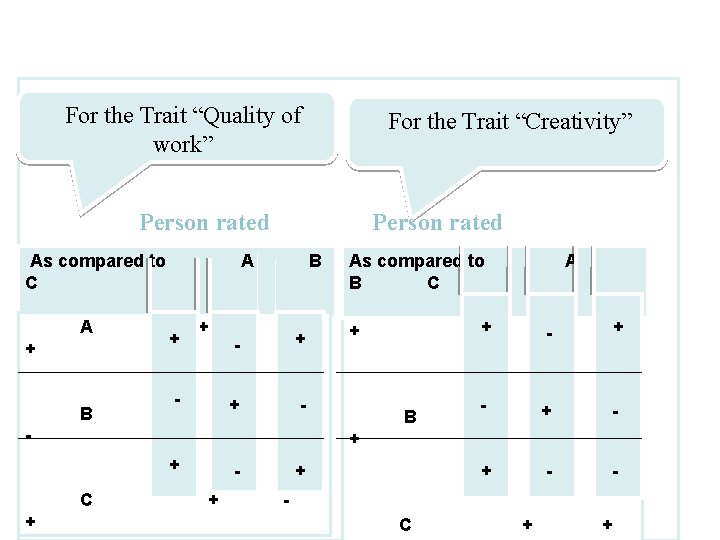
Ranking employees by paired comparison Method For the Trait “Quality of work” For the Trait “Creativity” Person rated As compared to C A + B Person rated A + - - + B - + +- - B A - + + - ++ -- + - - + + C + As compared to B C A + + C + +
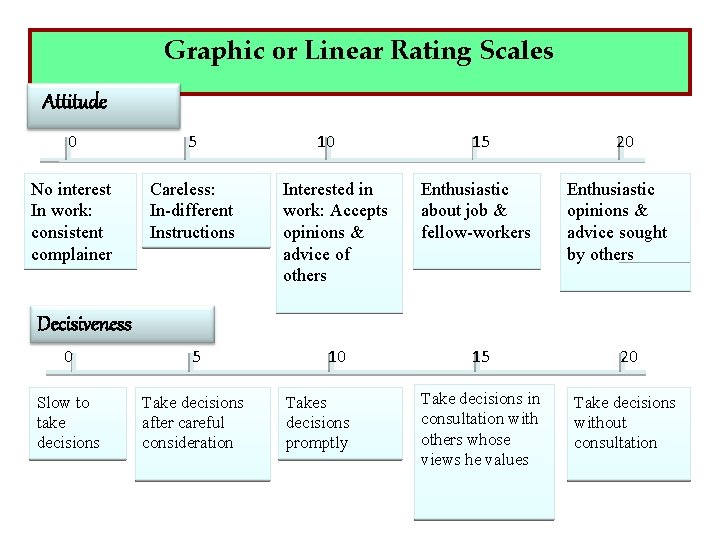
Graphic or Linear Rating Scales Attitude 0 5 10 15 20 No interest In work: consistent complainer Careless: In-different Instructions Interested in work: Accepts opinions & advice of others Enthusiastic about job & fellow-workers 0 5 10 15 20 Slow to take decisions Take decisions after careful consideration Take decisions in consultation with others whose views he values Take decisions without consultation Enthusiastic opinions & advice sought by others Decisiveness Takes decisions promptly
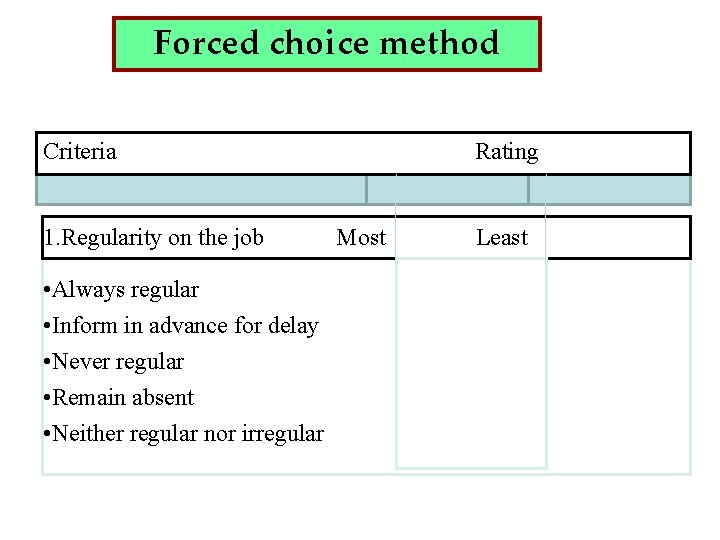
Forced choice method Criteria 1. Regularity on the job • Always regular • Inform in advance for delay • Never regular • Remain absent • Neither regular nor irregular Rating Most Least
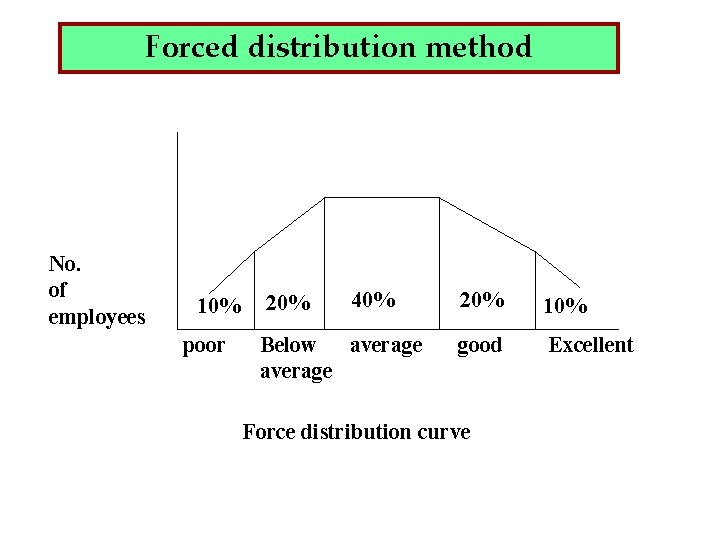
Forced distribution method No. of employees 10% poor 20% 40% Below average 20% 10% good Excellent Force distribution curve
![Specimen of Staff Assessment Form [Descriptive Essay Type] Staff Appraisal Name. . . .](http://slidetodoc.com/presentation_image_h2/245c26139d1ab1e7c26e721a187032a2/image-39.jpg "Specimen of Staff Assessment Form [Descriptive Essay Type] Staff Appraisal Name. . . .")
Specimen of Staff Assessment Form [Descriptive Essay Type] Staff Appraisal Name. . . . Job Title. . . . Department. . . Date of Review. . . . Age. . . . Years in present job Section I Appraisal Of Performance Note to Appraiser 1. Appraisal must cover the period of the preceding 12 months 2. Consideration to every function & responsibility of the job 3. An objective factual assessment of an employee’s improvement or deterioration Section II Promotability & Potential Promotability 1. Promotion now 2. Within 2 years 3. Within 5 years 4. Unlikely to qualify for promotion Section III Career Development Section IV Notes on Interview with employee Section V Comments on & Endorsement by Reviewing Authority
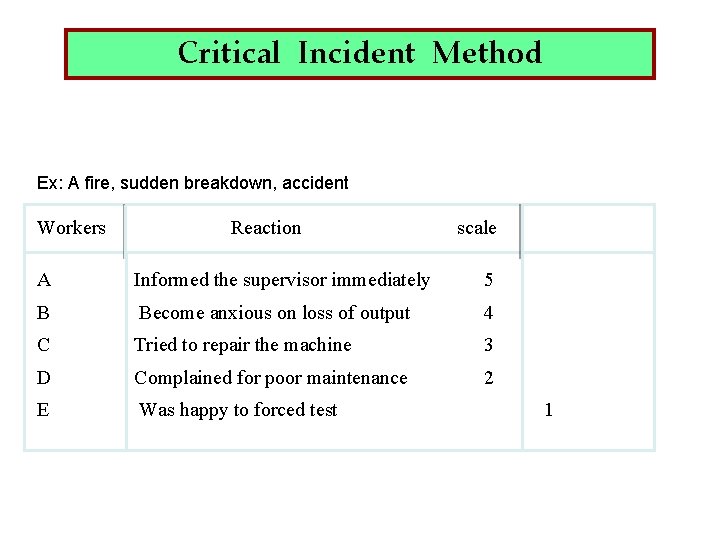
Critical Incident Method Ex: A fire, sudden breakdown, accident Workers Reaction scale A Informed the supervisor immediately 5 B Become anxious on loss of output 4 C Tried to repair the machine 3 D Complained for poor maintenance 2 E Was happy to forced test 1
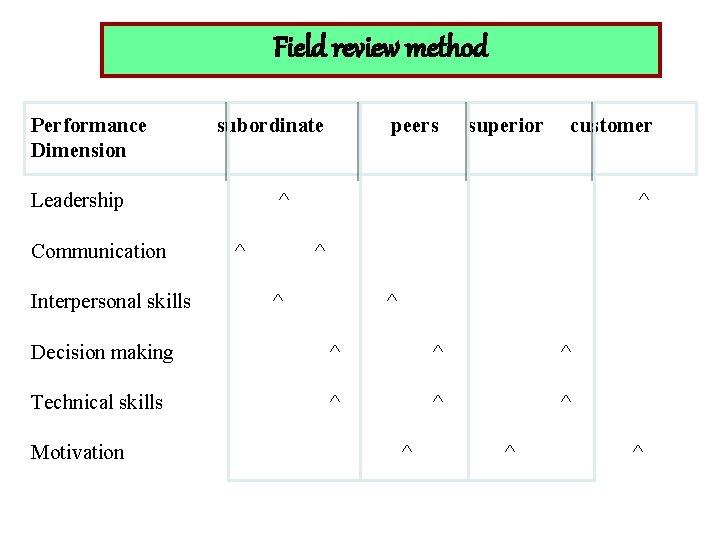
Field review method Performance Dimension subordinate Leadership Communication Interpersonal skills peers superior customer ^ ^ ^ Decision making ^ ^ ^ Technical skills ^ ^ ^ Motivation ^ ^ ^
Group Appraisal Method
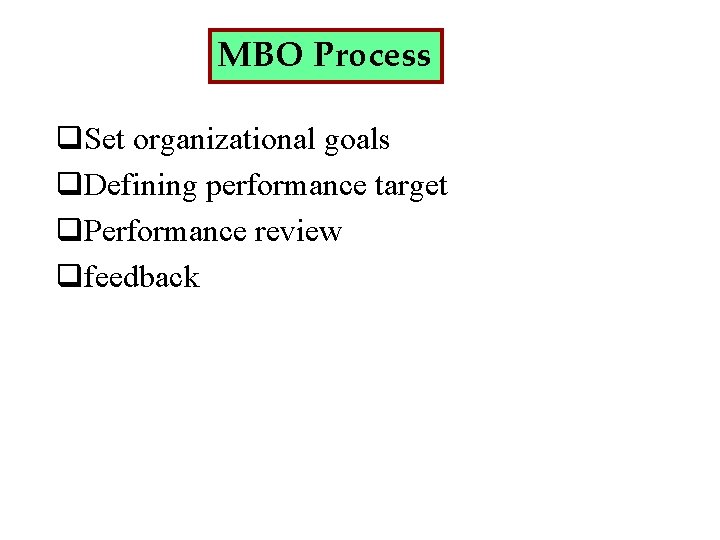
MBO Process q. Set organizational goals q. Defining performance target q. Performance review qfeedback
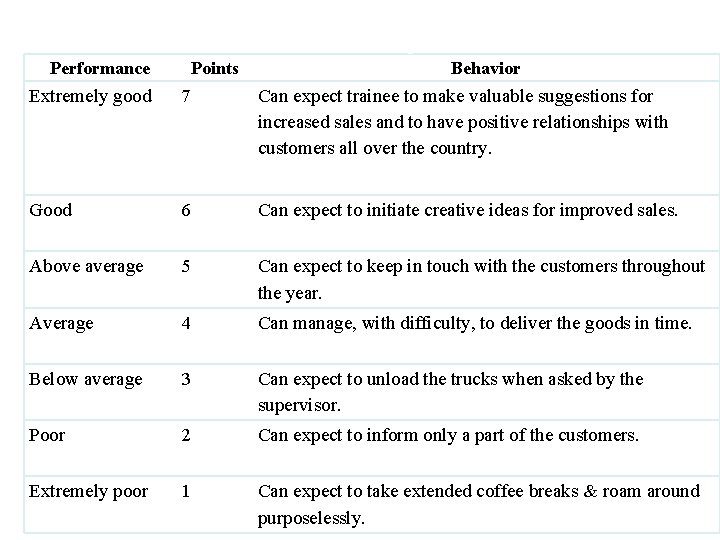
Behavioral Anchored Rating Scales Performance Points Behavior Extremely good 7 Can expect trainee to make valuable suggestions for increased sales and to have positive relationships with customers all over the country. Good 6 Can expect to initiate creative ideas for improved sales. Above average 5 Can expect to keep in touch with the customers throughout the year. Average 4 Can manage, with difficulty, to deliver the goods in time. Below average 3 Can expect to unload the trucks when asked by the supervisor. Poor 2 Can expect to inform only a part of the customers. Extremely poor 1 Can expect to take extended coffee breaks & roam around purposelessly.
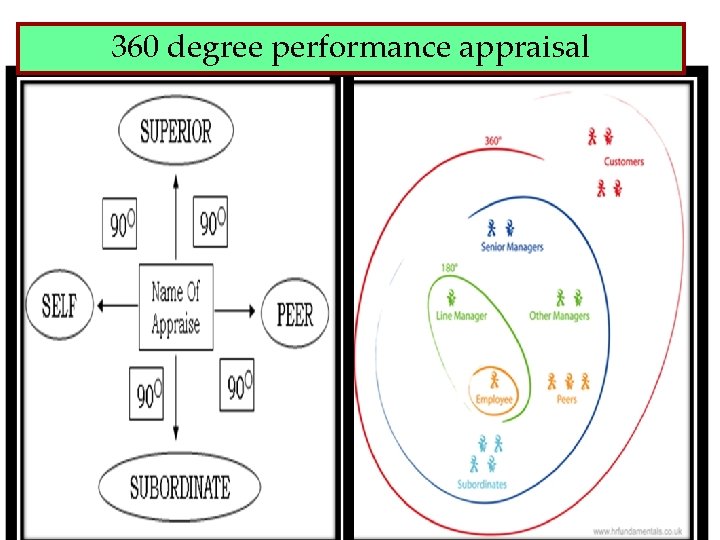
360 degree performance appraisal
Examples of 360 degree performance appraisal method These companies are using 360 Degree Performance Appraisal Method q. Wipro q. Infosys q. Reliance Industries q. Maruti Udyog q. HCL Technologies q. Wyeth Consumer Health (WCH)
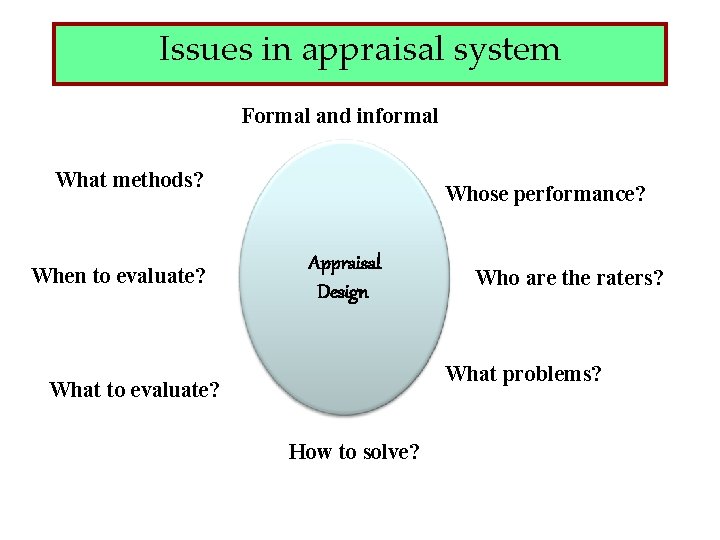
Issues in appraisal system Formal and informal What methods? When to evaluate? Whose performance? Appraisal Design Who are the raters? What problems? What to evaluate? How to solve?
Cons tant chec indu k emp ces loye e to perf orm bette r
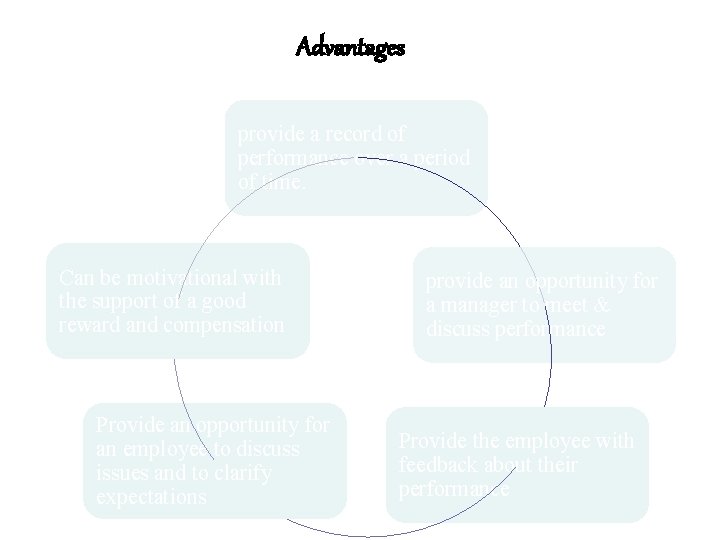
Advantages provide a record of performance over a period of time. Can be motivational with the support of a good reward and compensation Provide an opportunity for an employee to discuss issues and to clarify expectations provide an opportunity for a manager to meet & discuss performance Provide the employee with feedback about their performance
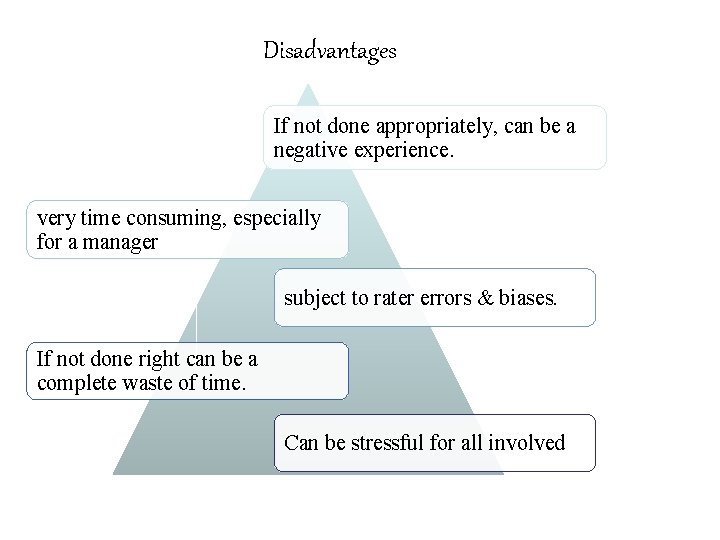
Disadvantages If not done appropriately, can be a negative experience. very time consuming, especially for a manager subject to rater errors & biases. If not done right can be a complete waste of time. Can be stressful for all involved
HOW OFTEN SHOULD APPRAISALS BE DONE? • Annually (once a year) • Semi-annually (every 6 months) • Quarterly (every 3 months) • Monthly • Continuously
AN APPRAISER MUST: • BE AWARE OF THE OBJECTIVES & REQUIREMENTS OF THE EMPLOYEE’S JOB • HAVE THE OPPORTUNITY TO FREQUENTLY OBSERVE THE EMPLOYEE OR HIS/HER WORK • BE CAPABLE OF EVALUATING AND RECORDING OBSERVED WORK BEHAVIOR OR PERFORMANCE • AVOID OR MINIMIZE POTENTIAL APPRAISAL ERRORS AND BIAS
PROBLEMS IN PERFORMANCE APPRAISAL • Appraiser discomfort • Lack of objectivity • Halo/horn error • Leniency/strictness • Central tendency • Recent behavior bias • Personal bias • Manipulating the evaluation • Employee anxiety
a) Appraiser Discomfort • Performance appraisal process cuts into manager’s time • Experience can be unpleasant when employee has not performed well
b) Lack of Objectivity • In rating scales method, commonly used factors such as attitude, appearance, and personality are difficult to measure • Factors may have little to do with employee’s job performance • Employee appraisal based primarily on personal characteristics may place evaluator and company in untenable positions
c) Halo/Horn Error • Halo error - Occurs when manager generalizes one positive performance feature or incident to all aspects of employee performance resulting in higher rating • Horn error - Evaluation error occurs when manager generalizes one negative performance feature or incident to all aspects of employee performance resulting in lower rating
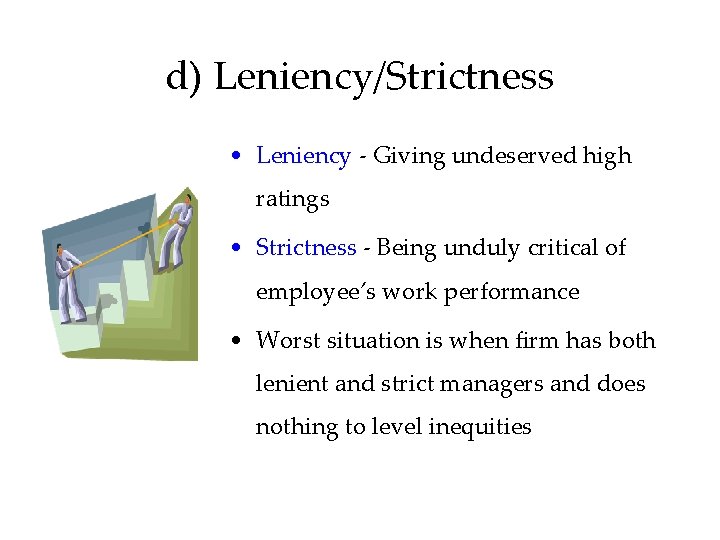
d) Leniency/Strictness • Leniency - Giving undeserved high ratings • Strictness - Being unduly critical of employee’s work performance • Worst situation is when firm has both lenient and strict managers and does nothing to level inequities
e) Central Tendency • Error occurs when employees are incorrectly rated near average or middle of scale • May be encouraged by some rating scale systems requiring evaluator to justify in writing extremely high or extremely low ratings
f) Recent Behavior Bias • Employee’s behavior often improves and productivity tends to rise several days or weeks before scheduled evaluation • Only natural for rater to remember recent behavior more clearly than actions from more distant past • Maintaining records of performance
g) Personal Bias (Stereotyping) • Managers allow individual differences such as gender, race or age to affect ratings they give • Effects of cultural bias, or stereotyping, can influence appraisals • Other factors – Example: mild-mannered employees may be appraised more harshly simply because they do not seriously object to results
h) Manipulating the Evaluation • Sometimes, managers control virtually every aspect of appraisal process and are in position to manipulate system • Example: Want to give pay raise to certain employee. Supervisor may give employee a undeserved high performance evaluation
i) Employee Anxiety • Evaluation process may create anxiety for appraised employee • Opportunities for promotion, better work assignments, and increased compensation may hinge on results
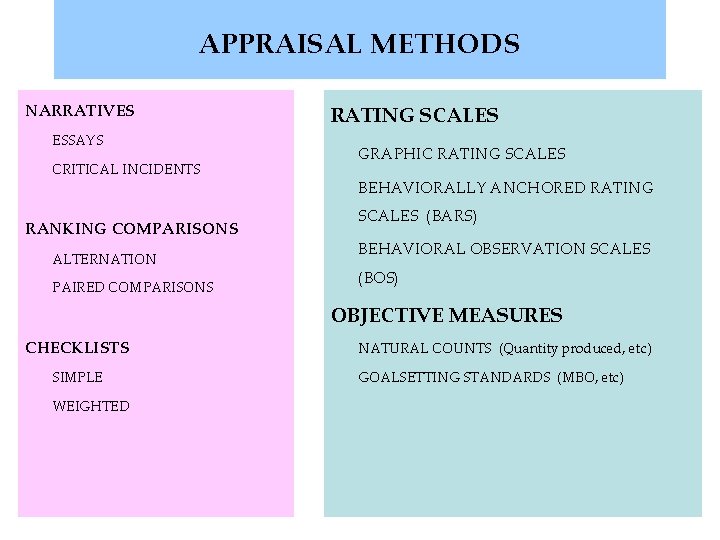
APPRAISAL METHODS NARRATIVES ESSAYS CRITICAL INCIDENTS RANKING COMPARISONS ALTERNATION PAIRED COMPARISONS RATING SCALES GRAPHIC RATING SCALES BEHAVIORALLY ANCHORED RATING SCALES (BARS) BEHAVIORAL OBSERVATION SCALES (BOS) OBJECTIVE MEASURES CHECKLISTS SIMPLE WEIGHTED NATURAL COUNTS (Quantity produced, etc) GOALSETTING STANDARDS (MBO, etc)
MANAGEMENT BY OBJECTIVES BENEFITS A basis for effective organizational planning and control Improves communication and feedback with the supervisor Encourages participation and joint decision-making Facilitates role clarification by revealing assessment criteria PROBLEMS Are the really important (key) areas of the job included? Is the process participative or are goals “set” for the worker? Can the worker truly control the outcomes s/he achieves? Overemphasizes quantitative, short-term, individual objectives

THANK YOU
- Slides: 65