
Strategic Clinical Networks The holy grail of integrated
- Slides: 26
Strategic Clinical Networks The holy grail of integrated care Date September 17 DEBateman NCD Neurology
12 SCNs in England ✤ 4 million people per SCN ✤ 700 k per SCN with a neurological condition ✤ What are they for? ✤ What can they do? ✤ How can they do it?
Strategic Clinical Networks ✤ Large geographical area ✤ Connect the network & join up care ✤ Coordinate complex care pathways ✤ Designed around patients’ needs ✤ Unique opportunity to do this with support • Permanent structures for continued improvement ✤ Never achieved previously
Why is this so important? ✤ Current spend 5. 3 billion! ✤ No more money! ✤ Service redesign ✤ Change of roles ✤ Permanent structures for continued improvement ✤ Neurology conditions ideally suited to this approach
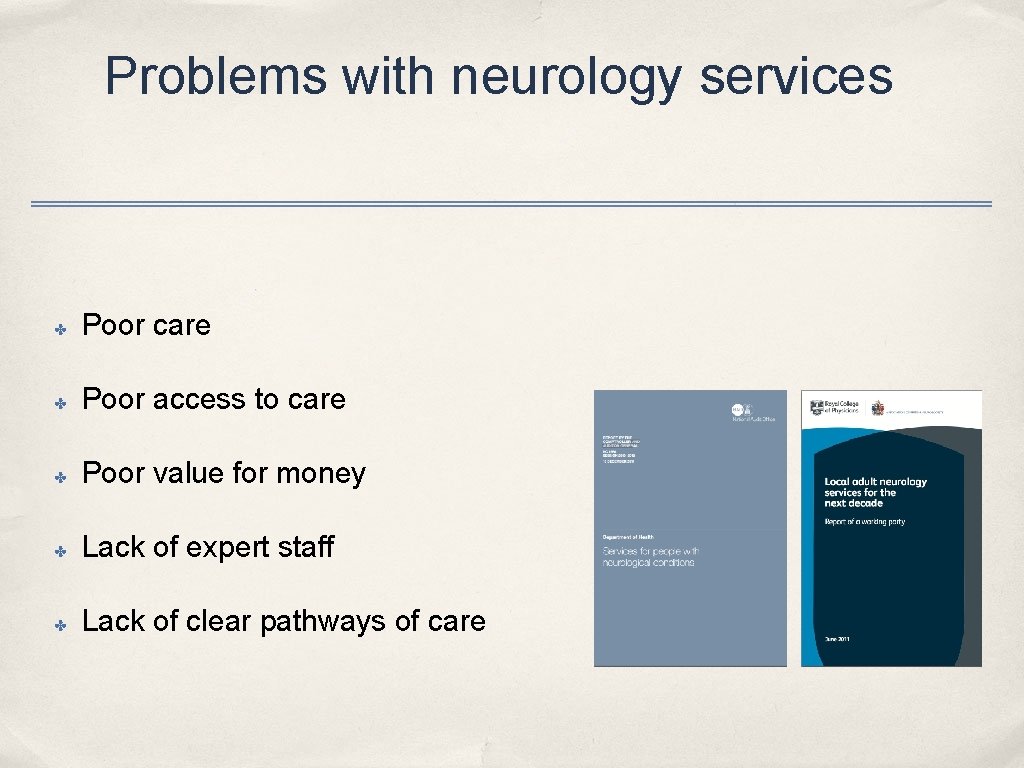
Problems with neurology services ✤ Poor care ✤ Poor access to care ✤ Poor value for money ✤ Lack of expert staff ✤ Lack of clear pathways of care
What are neurological conditions? ✤ Common disorders ✤ ✤ Life threatening ✤ ✤ Meningitis, encephalitis, SAH, GBS, status epilepticus Rare but difficult ✤ ✤ Headache & migraine 90% life time prevalence in women MND, myasthenia, mitochondrial disease Long term conditions ✤ Parkinson’s disease 1 : 1000 ✤ Multiple sclerosis 1: 800 ✤ Epilepsy 1: 250
Where & how ? ✤ Access to care? ✤ 3 ways ✤ Acute emergency ✤ Scheduled care OP dept ✤ Long term care
What is commissioned? ✤ Neuroscience specialist commissioning e. g. rare neuromuscular disorders ✤ Tertiary rehabilitation in some areas NSC ✤ OP scheduled care CCG ✤ What about acute and long term neurology conditions?
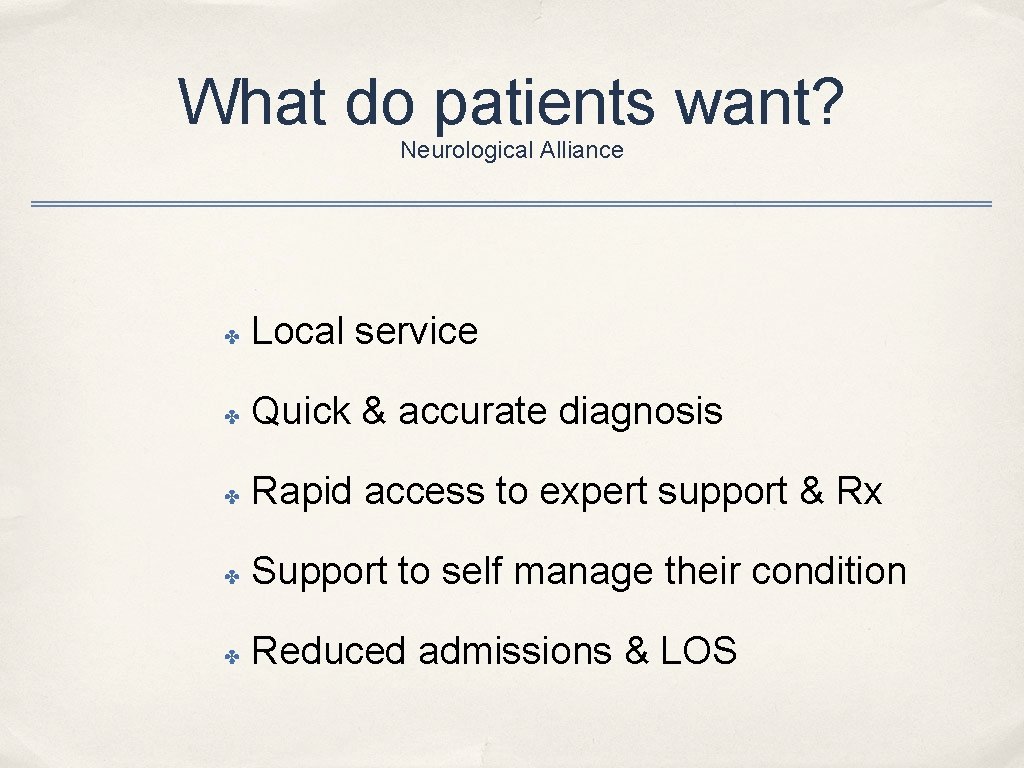
What do patients want? Neurological Alliance ✤ Local service ✤ Quick & accurate diagnosis ✤ Rapid access to expert support & Rx ✤ Support to self manage their condition ✤ Reduced admissions & LOS
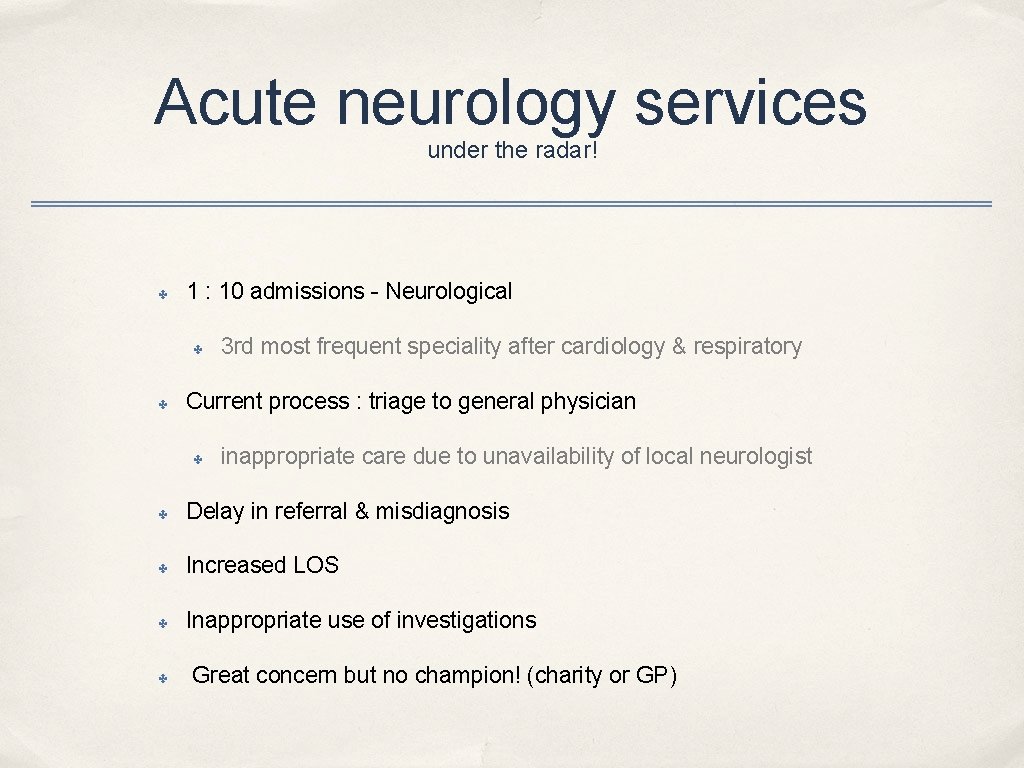
Acute neurology services under the radar! ✤ 1 : 10 admissions - Neurological ✤ ✤ 3 rd most frequent speciality after cardiology & respiratory Current process : triage to general physician ✤ inappropriate care due to unavailability of local neurologist ✤ Delay in referral & misdiagnosis ✤ Increased LOS ✤ Inappropriate use of investigations ✤ Great concern but no champion! (charity or GP)
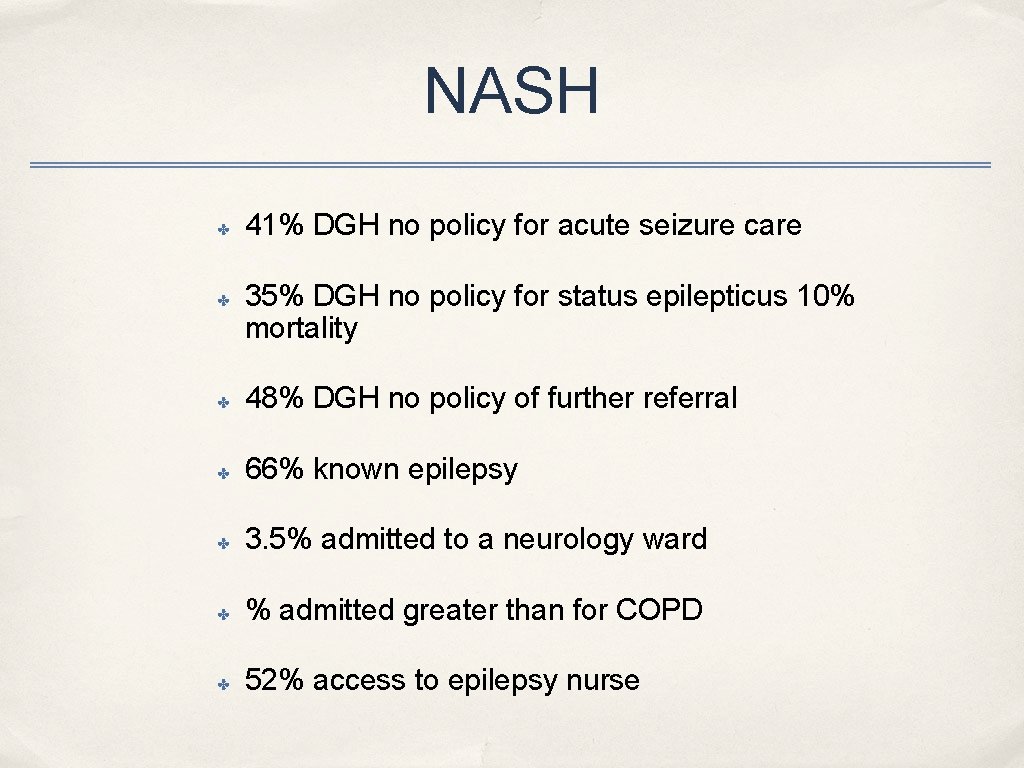
NASH ✤ ✤ 41% DGH no policy for acute seizure care 35% DGH no policy for status epilepticus 10% mortality ✤ 48% DGH no policy of further referral ✤ 66% known epilepsy ✤ 3. 5% admitted to a neurology ward ✤ % admitted greater than for COPD ✤ 52% access to epilepsy nurse
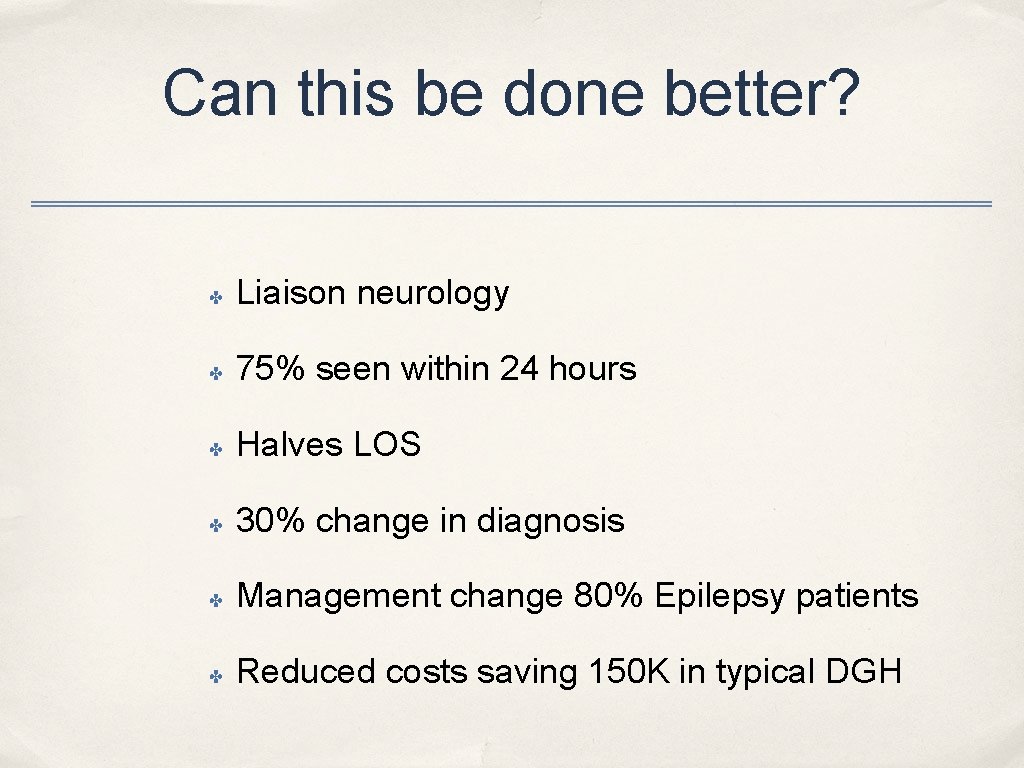
Can this be done better? ✤ Liaison neurology ✤ 75% seen within 24 hours ✤ Halves LOS ✤ 30% change in diagnosis ✤ Management change 80% Epilepsy patients ✤ Reduced costs saving 150 K in typical DGH
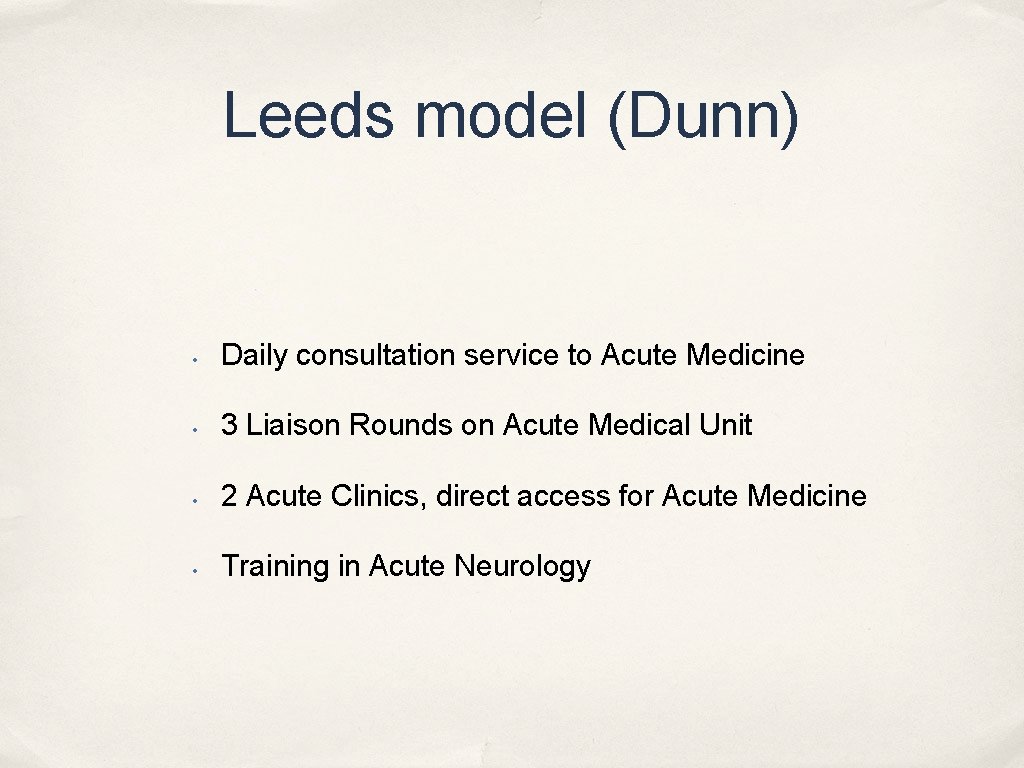
Leeds model (Dunn) • Daily consultation service to Acute Medicine • 3 Liaison Rounds on Acute Medical Unit • 2 Acute Clinics, direct access for Acute Medicine • Training in Acute Neurology
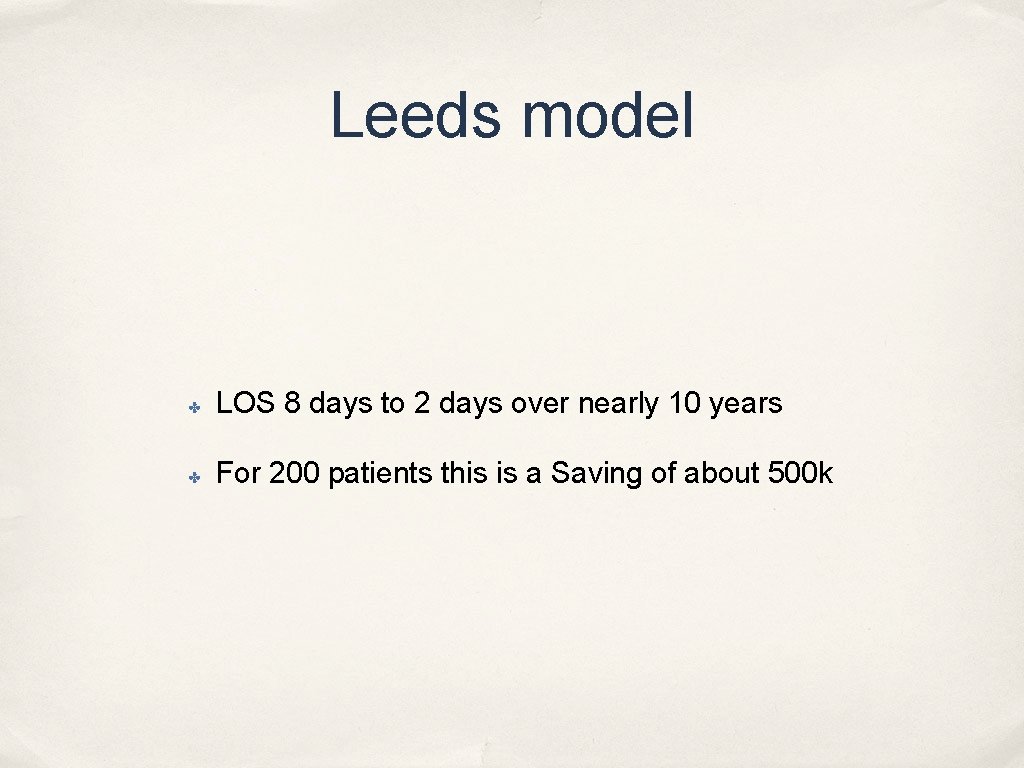
Leeds model ✤ LOS 8 days to 2 days over nearly 10 years ✤ For 200 patients this is a Saving of about 500 k
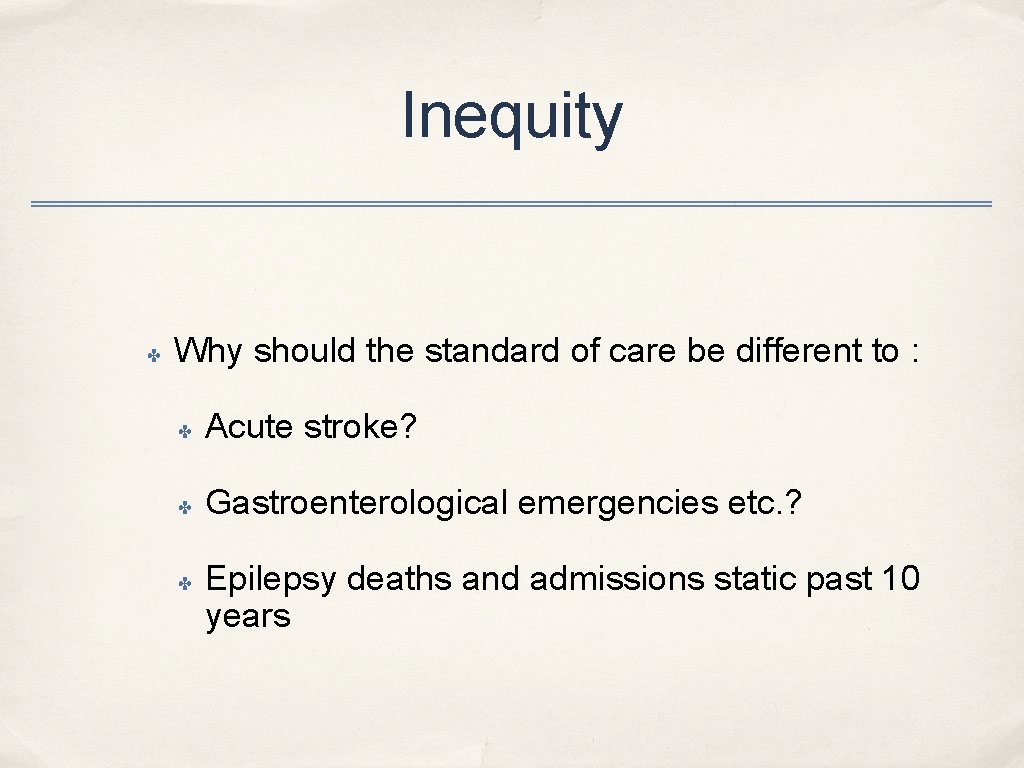
Inequity ✤ Why should the standard of care be different to : ✤ Acute stroke? ✤ Gastroenterological emergencies etc. ? ✤ Epilepsy deaths and admissions static past 10 years
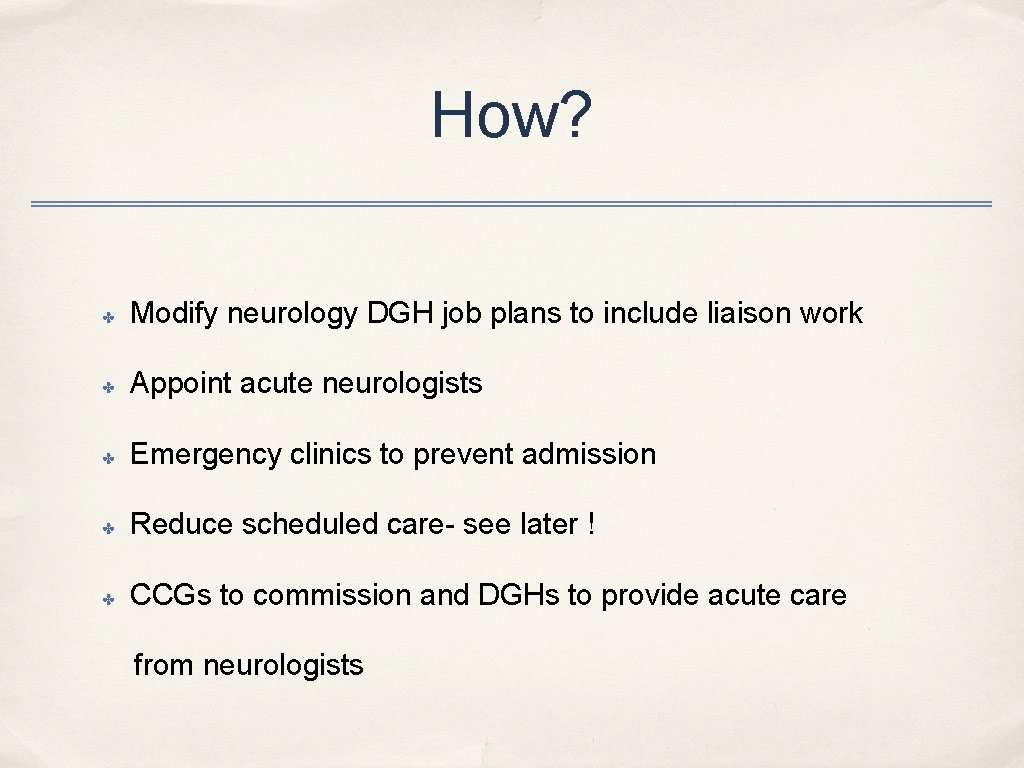
How? ✤ Modify neurology DGH job plans to include liaison work ✤ Appoint acute neurologists ✤ Emergency clinics to prevent admission ✤ Reduce scheduled care- see later ! ✤ CCGs to commission and DGHs to provide acute care from neurologists
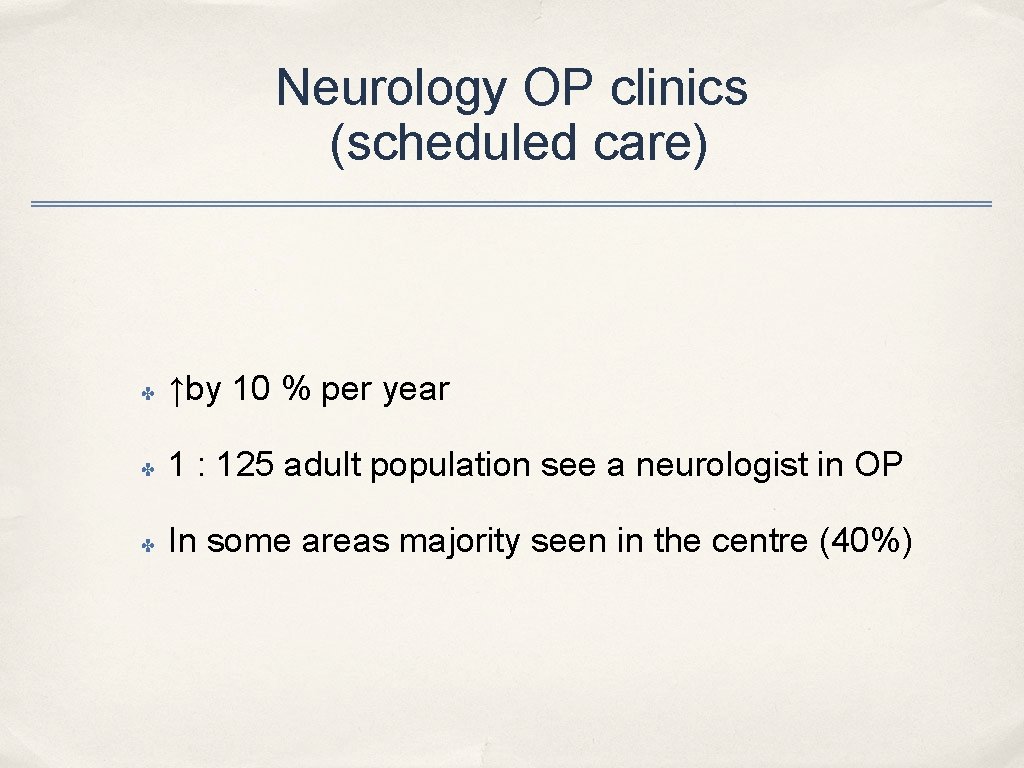
Neurology OP clinics (scheduled care) ✤ ↑by 10 % per year ✤ 1 : 125 adult population see a neurologist in OP ✤ In some areas majority seen in the centre (40%)
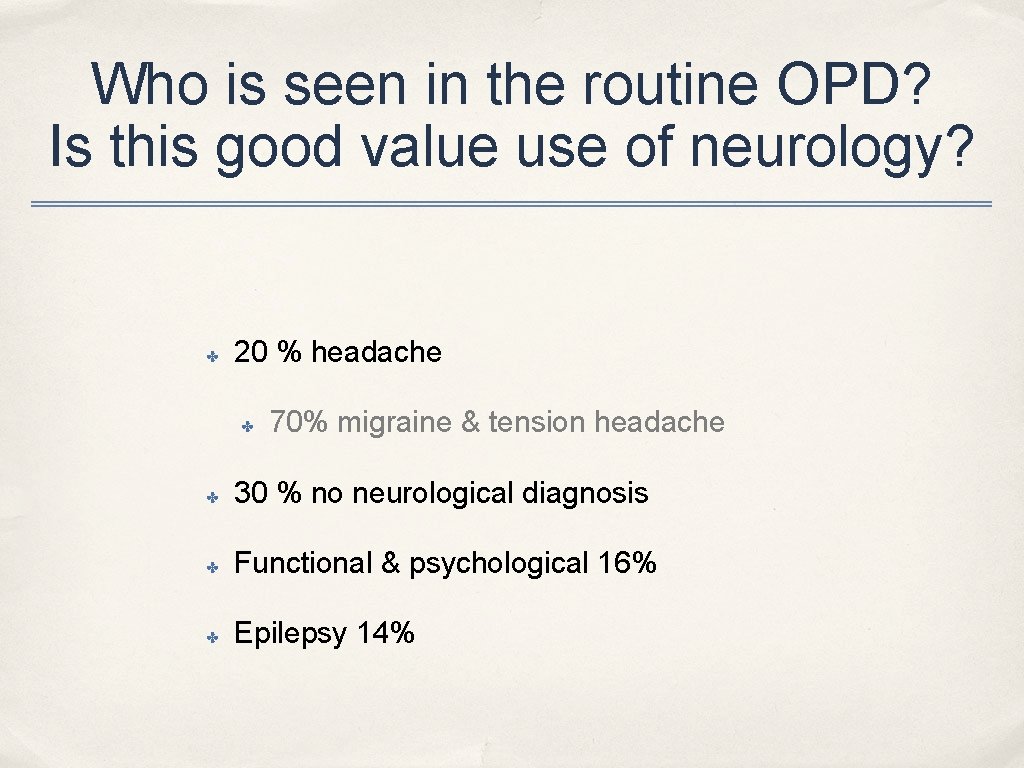
Who is seen in the routine OPD? Is this good value use of neurology? ✤ 20 % headache ✤ 70% migraine & tension headache ✤ 30 % no neurological diagnosis ✤ Functional & psychological 16% ✤ Epilepsy 14%
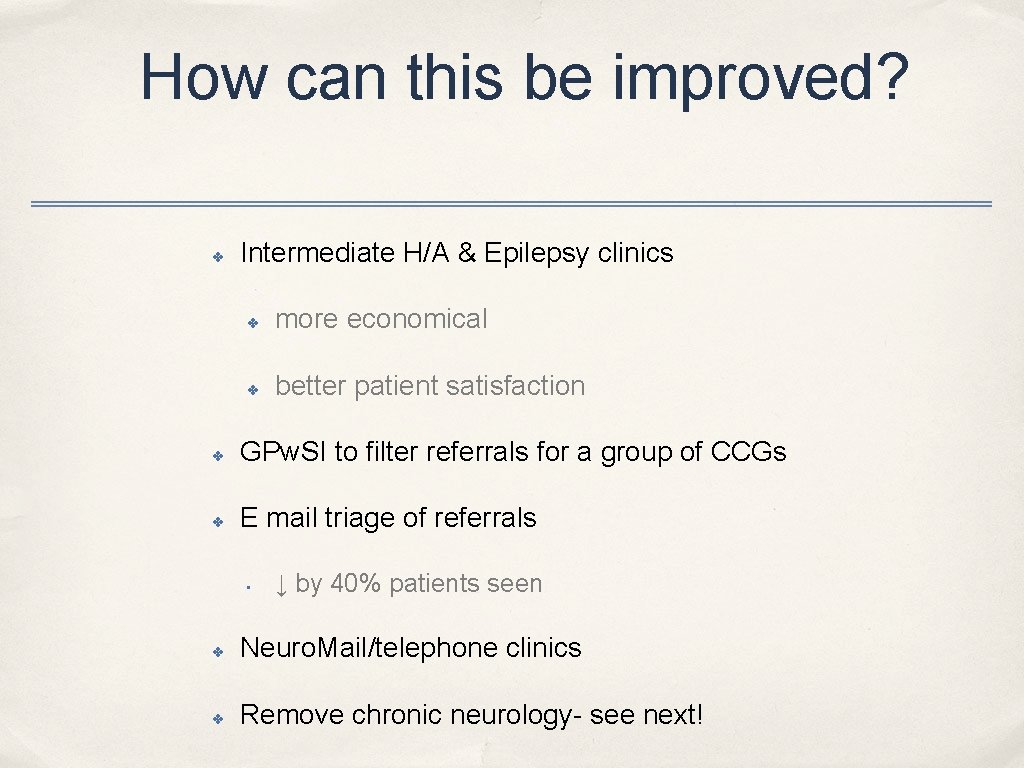
How can this be improved? ✤ Intermediate H/A & Epilepsy clinics ✤ more economical ✤ better patient satisfaction ✤ GPw. SI to filter referrals for a group of CCGs ✤ E mail triage of referrals • ↓ by 40% patients seen ✤ Neuro. Mail/telephone clinics ✤ Remove chronic neurology- see next!
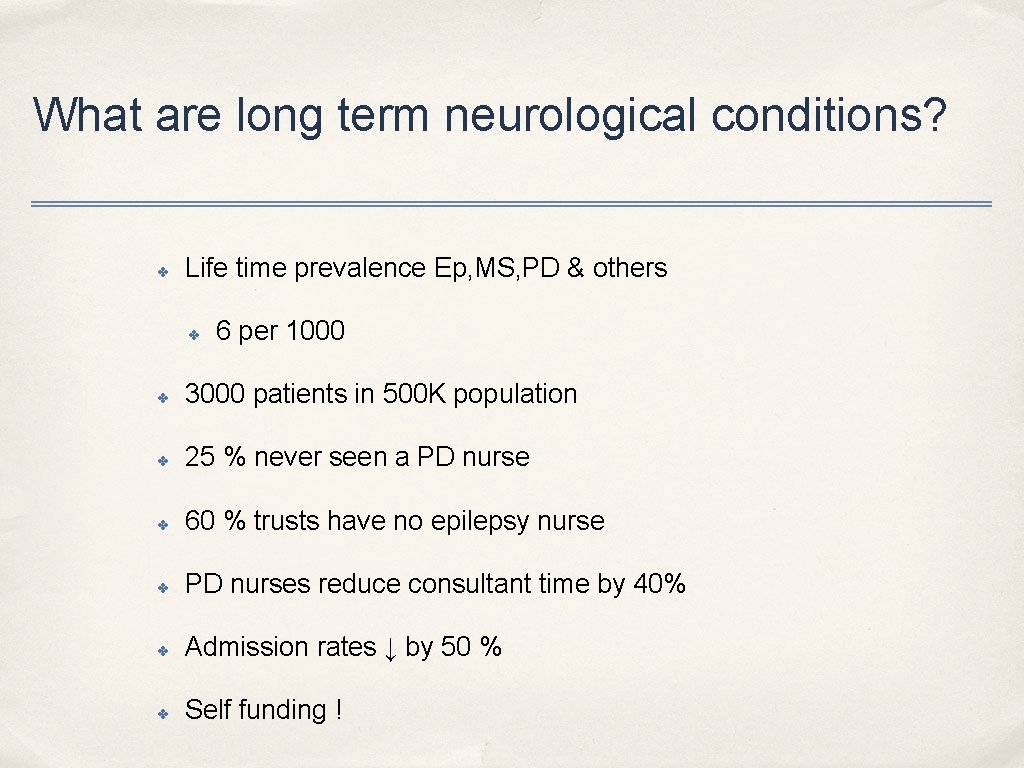
What are long term neurological conditions? ✤ Life time prevalence Ep, MS, PD & others ✤ 6 per 1000 ✤ 3000 patients in 500 K population ✤ 25 % never seen a PD nurse ✤ 60 % trusts have no epilepsy nurse ✤ PD nurses reduce consultant time by 40% ✤ Admission rates ↓ by 50 % ✤ Self funding !
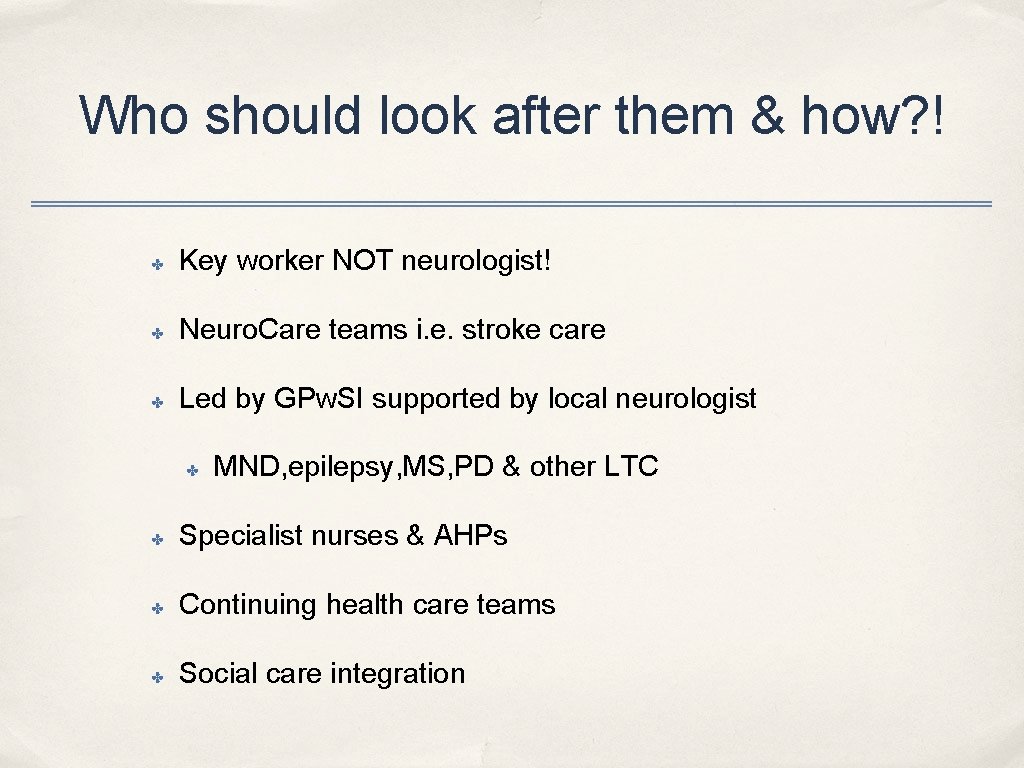
Who should look after them & how? ! ✤ Key worker NOT neurologist! ✤ Neuro. Care teams i. e. stroke care ✤ Led by GPw. SI supported by local neurologist ✤ MND, epilepsy, MS, PD & other LTC ✤ Specialist nurses & AHPs ✤ Continuing health care teams ✤ Social care integration
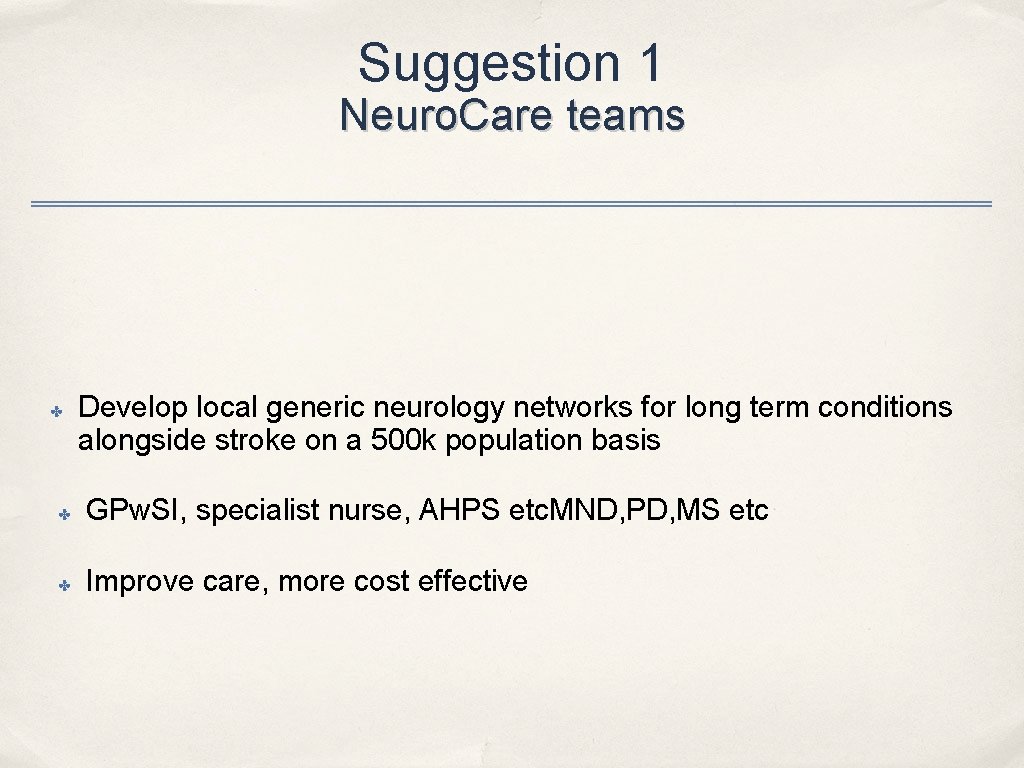
Suggestion 1 Neuro. Care teams ✤ Develop local generic neurology networks for long term conditions alongside stroke on a 500 k population basis ✤ GPw. SI, specialist nurse, AHPS etc. MND, PD, MS etc ✤ Improve care, more cost effective
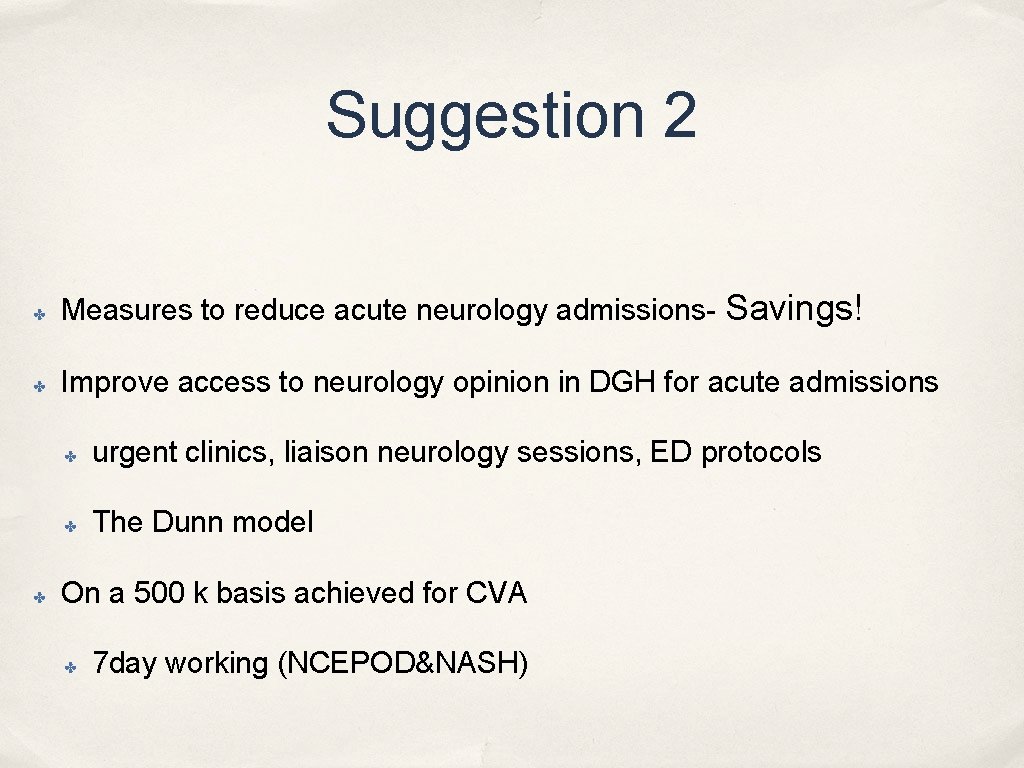
Suggestion 2 ✤ Measures to reduce acute neurology admissions- Savings! ✤ Improve access to neurology opinion in DGH for acute admissions ✤ ✤ urgent clinics, liaison neurology sessions, ED protocols ✤ The Dunn model On a 500 k basis achieved for CVA ✤ 7 day working (NCEPOD&NASH)
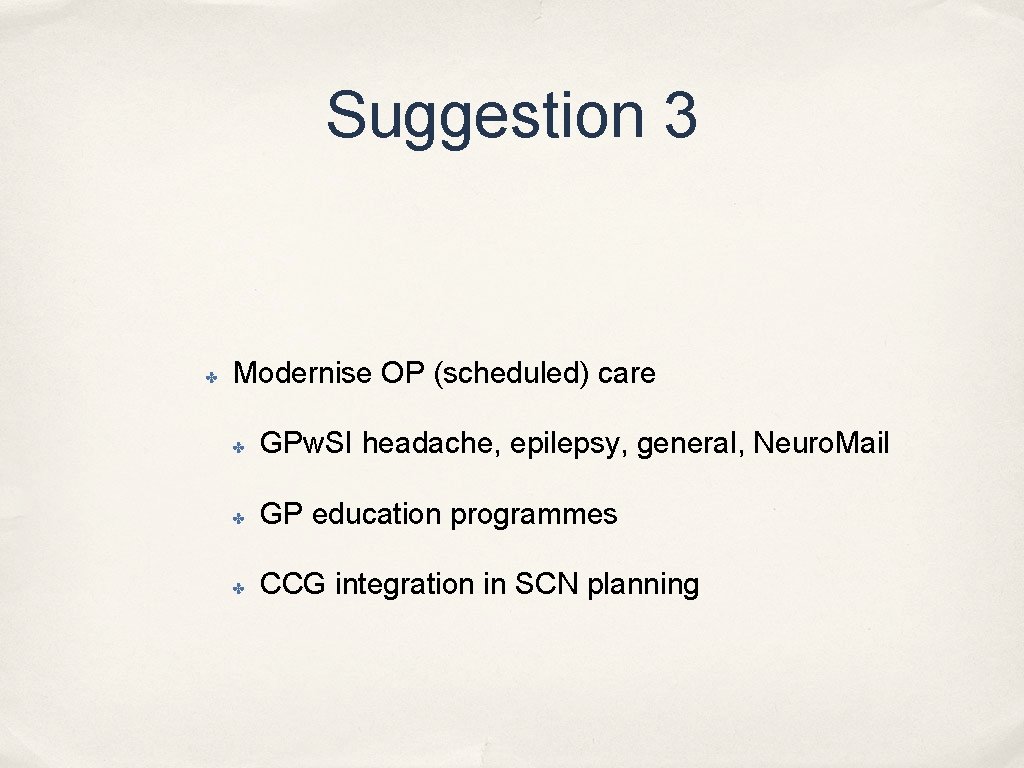
Suggestion 3 ✤ Modernise OP (scheduled) care ✤ GPw. SI headache, epilepsy, general, Neuro. Mail ✤ GP education programmes ✤ CCG integration in SCN planning
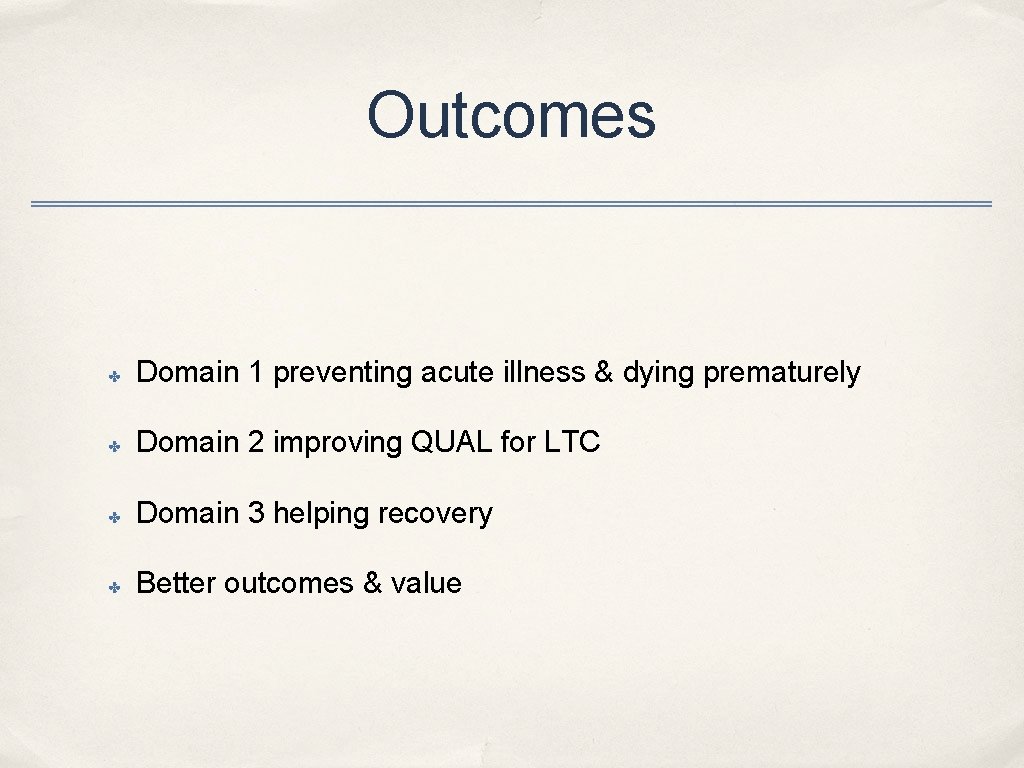
Outcomes ✤ Domain 1 preventing acute illness & dying prematurely ✤ Domain 2 improving QUAL for LTC ✤ Domain 3 helping recovery ✤ Better outcomes & value
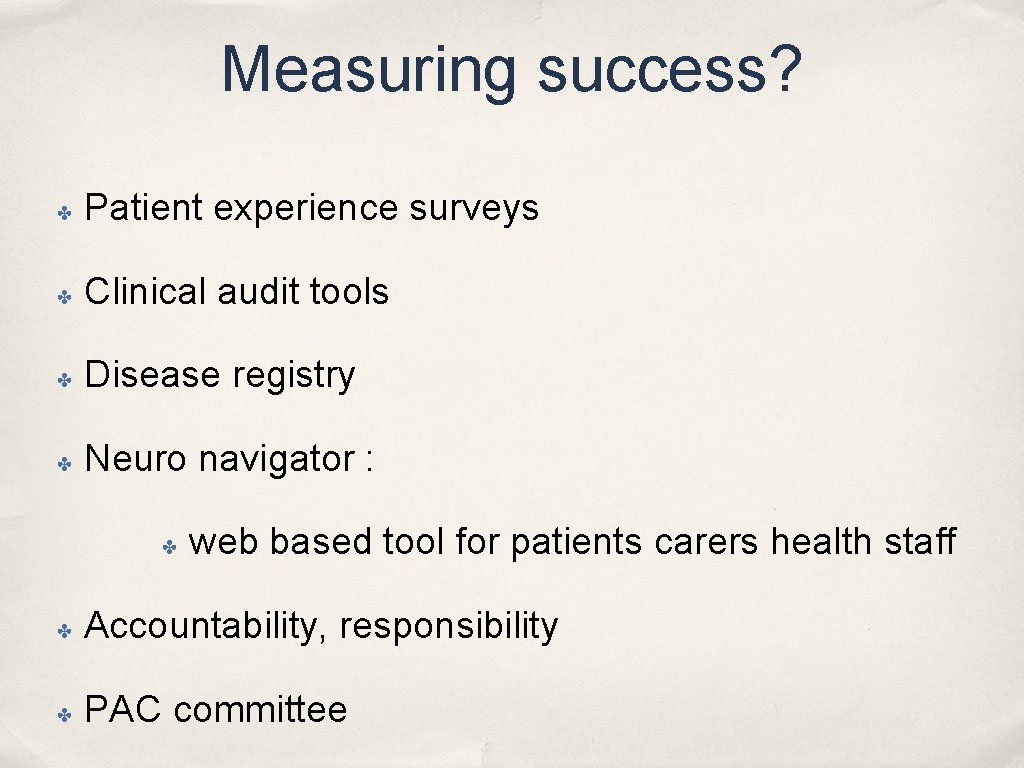
Measuring success? ✤ Patient experience surveys ✤ Clinical audit tools ✤ Disease registry ✤ Neuro navigator : ✤ web based tool for patients carers health staff ✤ Accountability, responsibility ✤ PAC committee