
Strategic Capability By Nilantha 1 Strategic Inputs Chapter
Strategic Capability By Nilantha 1
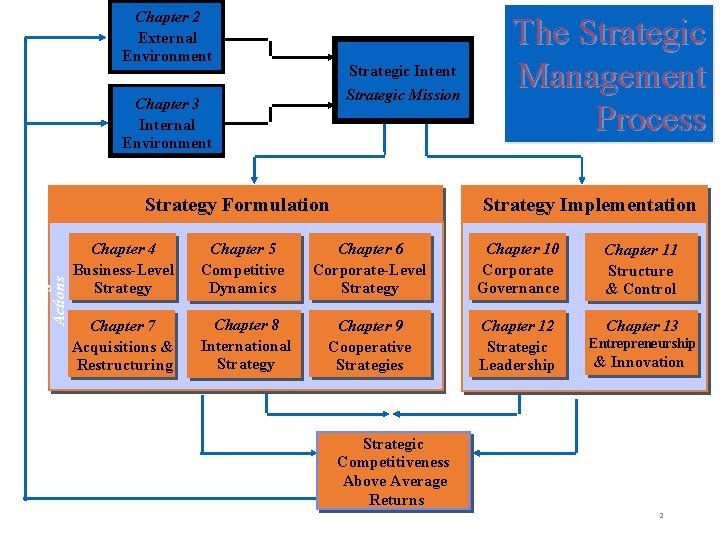
Strategic Inputs Chapter 2 External Environment Strategic Intent Strategic Mission Chapter 3 Internal Environment Strategy Implementation Chapter 4 Business-Level Strategy Chapter 5 Competitive Dynamics Chapter 6 Corporate-Level Strategy Chapter 10 Corporate Governance Chapter 11 Structure & Control Chapter 7 Acquisitions & Restructuring Chapter 8 International Strategy Chapter 9 Cooperative Strategies Chapter 12 Strategic Leadership Chapter 13 Outcomes Strategic Actions Strategy Formulation The Strategic Management Process Feedback Entrepreneurship & Innovation Strategic Competitiveness Above Average Returns 2
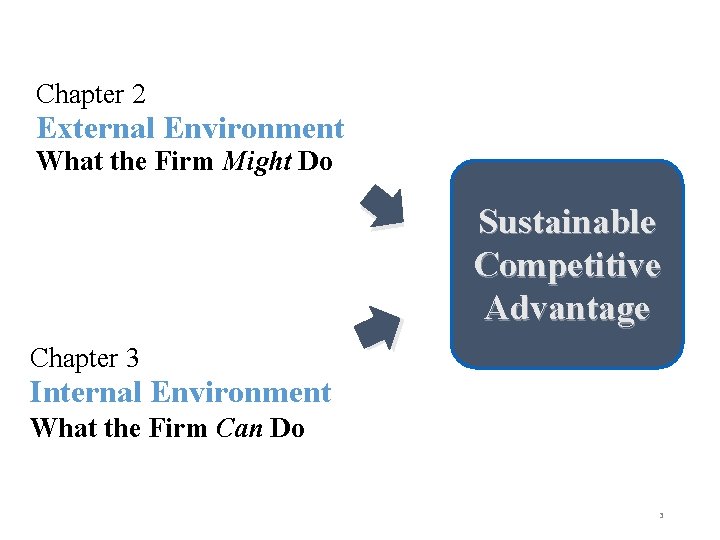
Chapter 2 External Environment What the Firm Might Do Sustainable Competitive Advantage Chapter 3 Internal Environment What the Firm Can Do 3
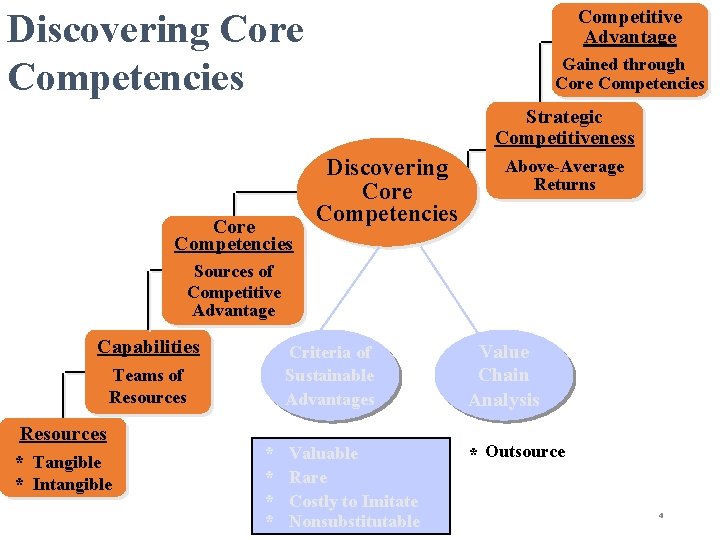
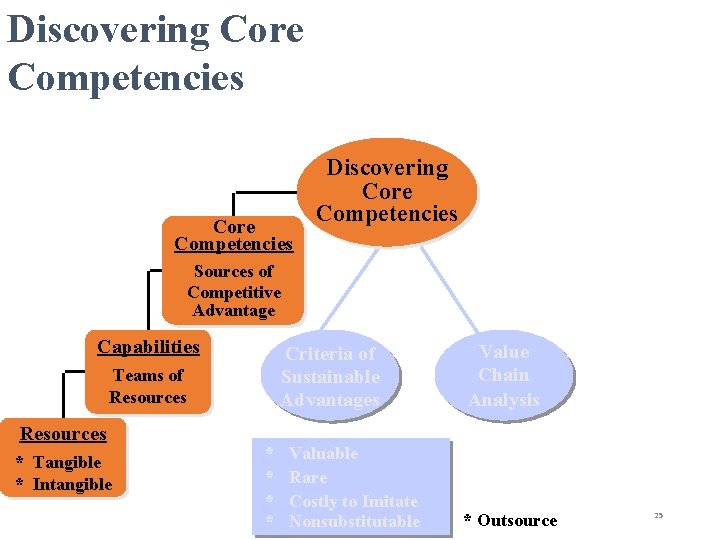
Competitive Advantage Discovering Core Competencies Gained through Core Competencies Strategic Competitiveness Core Competencies Discovering Core Competencies Above-Average Returns Sources of Competitive Advantage Capabilities Teams of Resources * Tangible * Intangible * * Criteria of Sustainable Advantages Value Chain Analysis Valuable Rare Costly to Imitate Nonsubstitutable * Outsource 4
Key Questions for Managers in Internal Analysis How do we assemble bundles of Resources, Capabilities and Core Competencies to create VALUE for customers? And. . . Will environmental changes make our core competencies obsolete? Are substitutes available for our core competencies? Are our core competencies easily imitated? 5
Conditions Affecting Managerial Decisions About Resources, Capabilities and Core Competencies Uncertainty regarding characteristics of the general and the industry environments, competitor’s actions, and customer’s preferences. Complexity regarding the interrelated causes shaping a firm’s environments and perceptions of the environments Intraorganizational Conflicts among people making managerial decisions and those affected by them 6
Discovering Core Competencies Resources * Tangible * Intangible 7
Resources What a firm Has. . . What a firm has to work with: its assets, including its people and the value of its brand name 8
Resources What a firm Has. . . What a firm has to work with: its assets, including its people and the value of its brand name Resources represent inputs into a firm’s production process. . . such as capital equipment, skills of employees, brand names, finances and talented managers 9
Resources What a firm Has. . . What a firm has to work with: its assets, including its people and the value of its brand name Resources represent inputs into a firm’s production process. . . such as capital equipment, skills of employees, brand names, finances and talented managers “Some genius invented the Oreo. We’re just living off the inheritance. ” F. Ross Johnson, Former President & CEO, RJR Nabisco 10
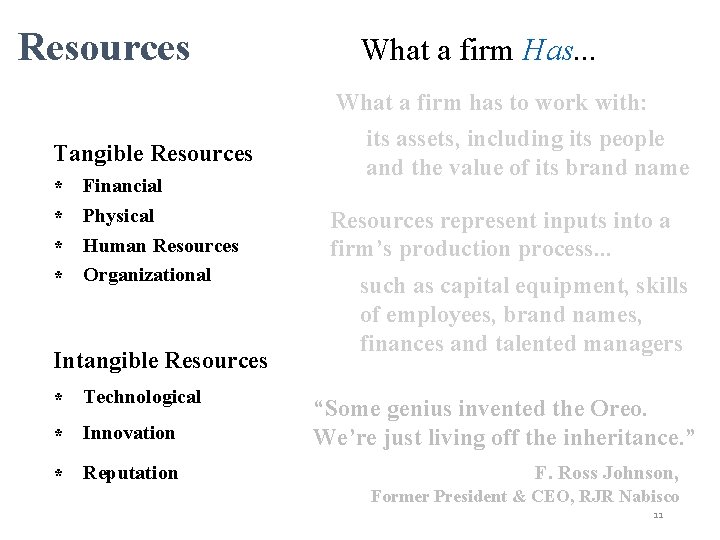
Resources Tangible Resources * * Financial Physical Human Resources Organizational Intangible Resources * Technological * Innovation * Reputation What a firm Has. . . What a firm has to work with: its assets, including its people and the value of its brand name Resources represent inputs into a firm’s production process. . . such as capital equipment, skills of employees, brand names, finances and talented managers “Some genius invented the Oreo. We’re just living off the inheritance. ” F. Ross Johnson, Former President & CEO, RJR Nabisco 11
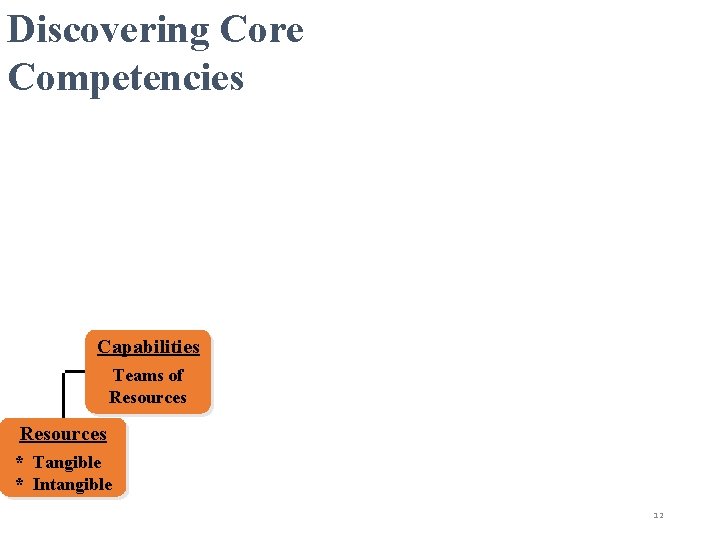
Discovering Core Competencies Capabilities Teams of Resources * Tangible * Intangible 12
Capabilities What a firm Does. . . Capabilities represent: the firm’s capacity or ability to integrate individual firm resources to achieve a desired objective. 13
Capabilities What a firm Does. . . Capabilities represent: the firm’s capacity or ability to integrate individual firm resources to achieve a desired objective. Capabilities develop over time as a result of complex interactions that take advantage of the interrelationships between a firm’s tangible and intangible resources that are based on the development, transmission and exchange or sharing of information and knowledge as carried out by the firm's employees. 14
Capabilities What a firm Does. . . Capabilities represent: the firm’s capacity or ability to integrate individual firm resources to achieve a desired objective. Capabilities develop over time as a result of complex interactions that take advantage of the interrelationships between a firm’s tangible and intangible resources that are based on the development, transmission and exchange or sharing of information and knowledge as carried out by the firm's employees. Capabilities become important when they are combined in unique combinations which create core competencies which have strategic value and can lead to competitive advantage. 15
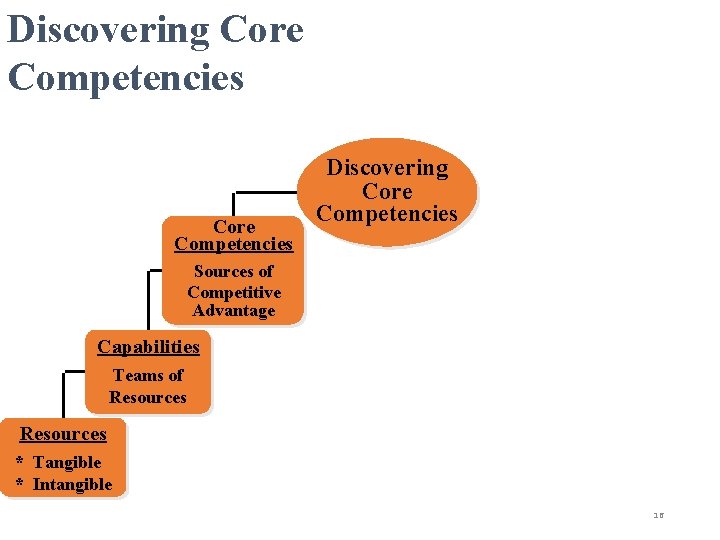
Discovering Core Competencies Sources of Competitive Advantage Capabilities Teams of Resources * Tangible * Intangible 16
Core Competencies What a firm Does. . . that is Strategically Valuable “…are the essence of what makes an organization unique in its ability to provide value to customers. ” Leonard-Barton, Bowen, Clark, Holloway & Wheelwright Mc. Kinsey & Co. recommends identifying three to four competencies to use in framing strategic actions. 17
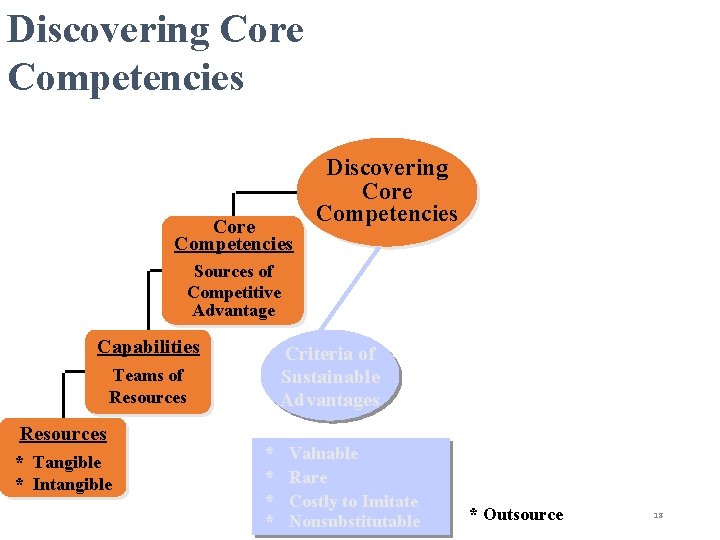
Discovering Core Competencies Sources of Competitive Advantage Capabilities Criteria of Sustainable Advantages Teams of Resources * Tangible * Intangible * * Valuable Rare Costly to Imitate Nonsubstitutable * Outsource 18
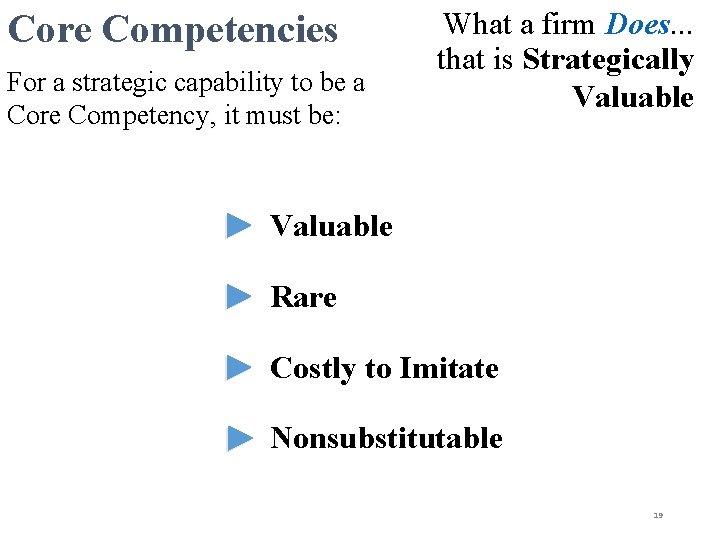
Core Competencies For a strategic capability to be a Core Competency, it must be: What a firm Does. . . that is Strategically Valuable Rare Costly to Imitate Nonsubstitutable 19
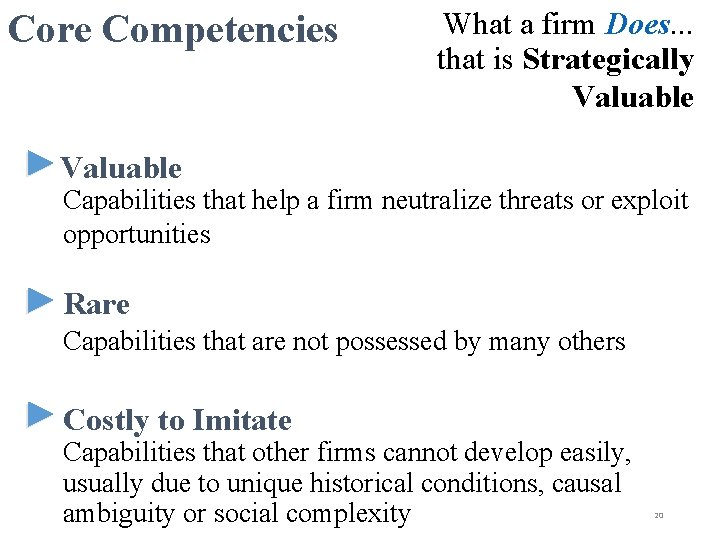
Core Competencies What a firm Does. . . that is Strategically Valuable Capabilities that help a firm neutralize threats or exploit opportunities Rare Capabilities that are not possessed by many others Costly to Imitate Capabilities that other firms cannot develop easily, usually due to unique historical conditions, causal ambiguity or social complexity 20
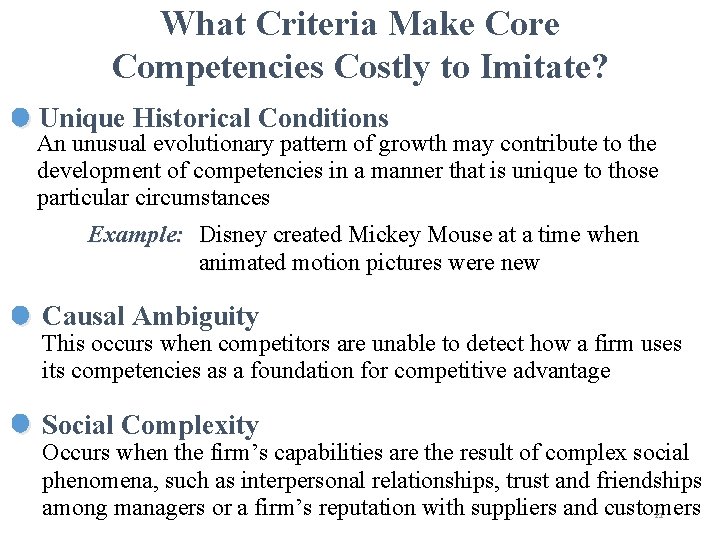
What Criteria Make Core Competencies Costly to Imitate? Unique Historical Conditions An unusual evolutionary pattern of growth may contribute to the development of competencies in a manner that is unique to those particular circumstances Example: Disney created Mickey Mouse at a time when animated motion pictures were new Causal Ambiguity This occurs when competitors are unable to detect how a firm uses its competencies as a foundation for competitive advantage Social Complexity Occurs when the firm’s capabilities are the result of complex social phenomena, such as interpersonal relationships, trust and friendships among managers or a firm’s reputation with suppliers and customers 21
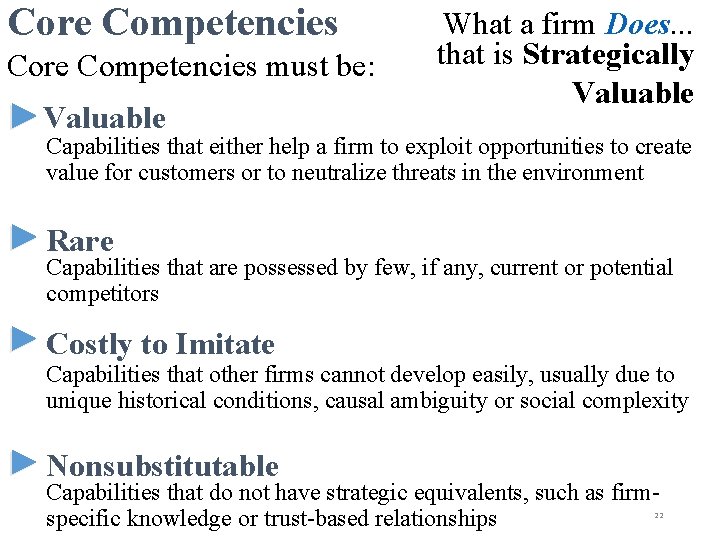
Core Competencies must be: Valuable What a firm Does. . . that is Strategically Valuable Capabilities that either help a firm to exploit opportunities to create value for customers or to neutralize threats in the environment Rare Capabilities that are possessed by few, if any, current or potential competitors Costly to Imitate Capabilities that other firms cannot develop easily, usually due to unique historical conditions, causal ambiguity or social complexity Nonsubstitutable Capabilities that do not have strategic equivalents, such as firmspecific knowledge or trust-based relationships 22
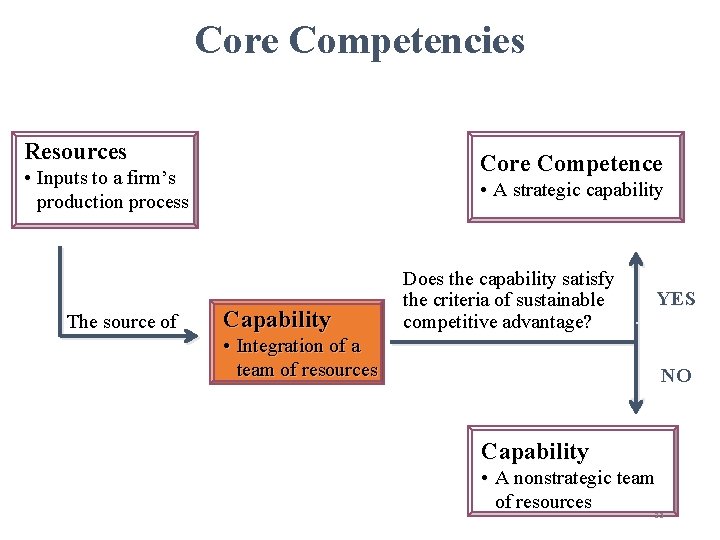
Core Competencies Resources Core Competence • Inputs to a firm’s production process The source of • A strategic capability Capability Does the capability satisfy the criteria of sustainable competitive advantage? • Integration of a team of resources YES NO Capability • A nonstrategic team of resources 23
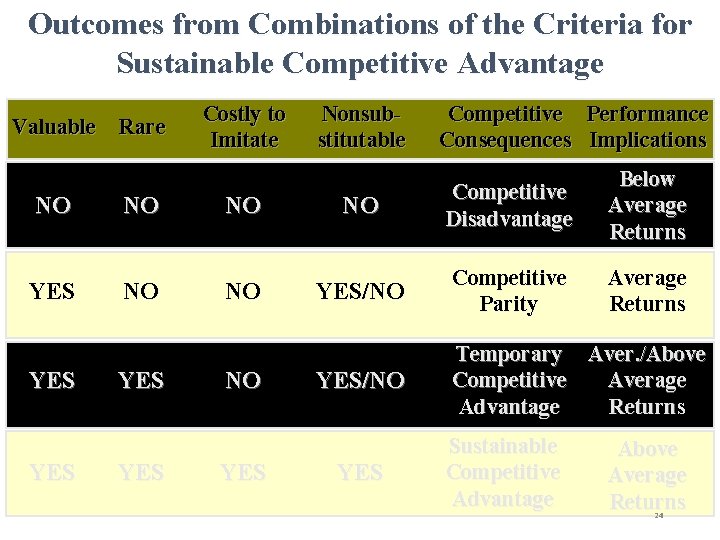
Outcomes from Combinations of the Criteria for Sustainable Competitive Advantage Valuable Rare Costly to Imitate Nonsubstitutable Competitive Performance Consequences Implications Below Average Returns NO NO Competitive Disadvantage YES NO NO YES/NO Competitive Parity YES/NO Temporary Aver. /Above Competitive Average Advantage Returns YES YES NO YES Sustainable Competitive Advantage Above Average Returns 24
Discovering Core Competencies Sources of Competitive Advantage Capabilities Criteria of Sustainable Advantages Teams of Resources * Tangible * Intangible * * Valuable Rare Costly to Imitate Nonsubstitutable Value Chain Analysis * Outsource 25
Value Chain Analysis Identifying Resources and Capabilities That Can Add Value Support Activities Primary Activities 26
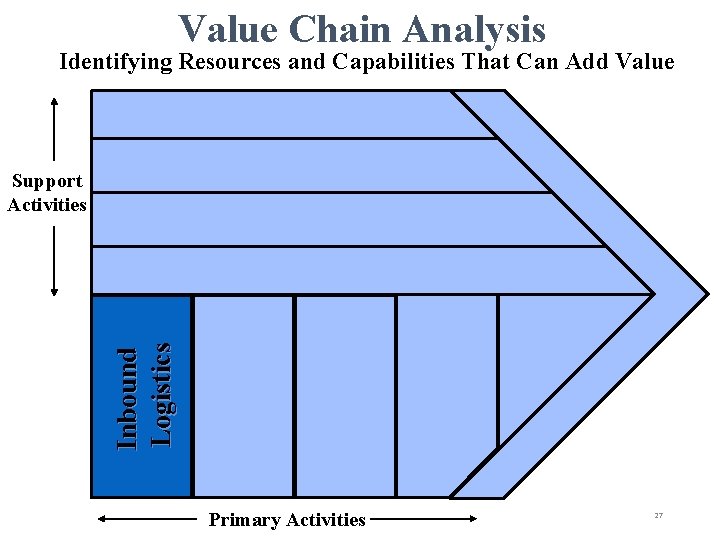
Value Chain Analysis Identifying Resources and Capabilities That Can Add Value Inbound Logistics Support Activities Primary Activities 27
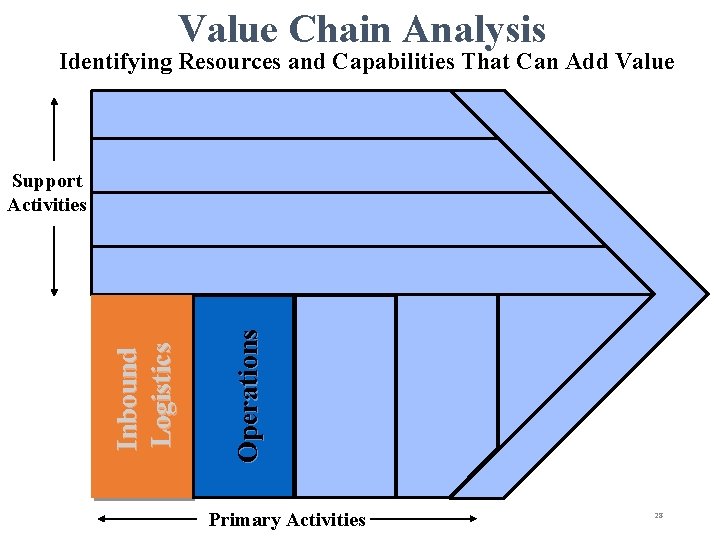
Value Chain Analysis Identifying Resources and Capabilities That Can Add Value Operations Inbound Logistics Support Activities Primary Activities 28
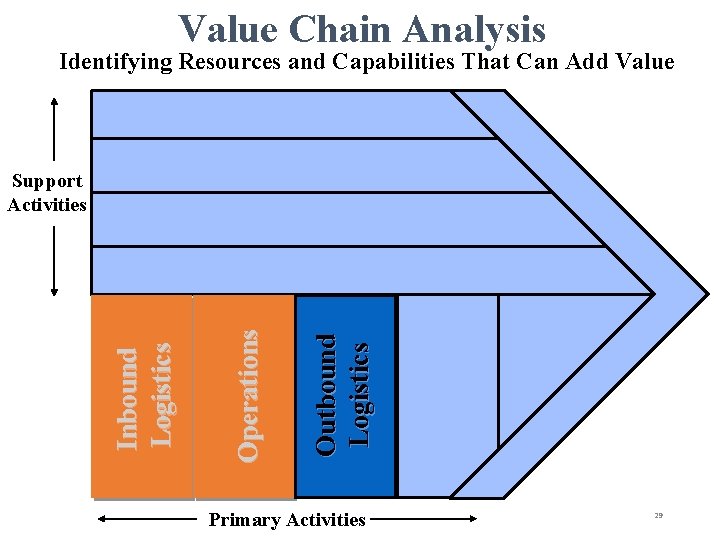
Value Chain Analysis Identifying Resources and Capabilities That Can Add Value Outbound Logistics Operations Inbound Logistics Support Activities Primary Activities 29
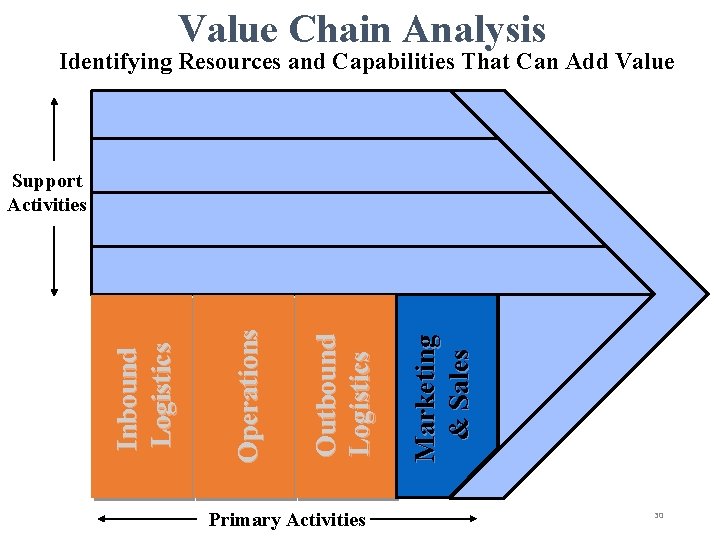
Value Chain Analysis Identifying Resources and Capabilities That Can Add Value Primary Activities Marketing & Sales Outbound Logistics Operations Inbound Logistics Support Activities 30
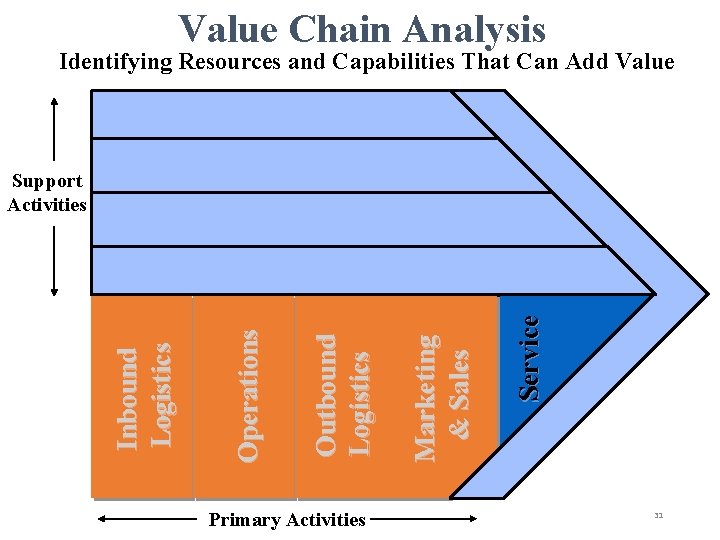
Value Chain Analysis Identifying Resources and Capabilities That Can Add Value Primary Activities Service Marketing & Sales Outbound Logistics Operations Inbound Logistics Support Activities 31
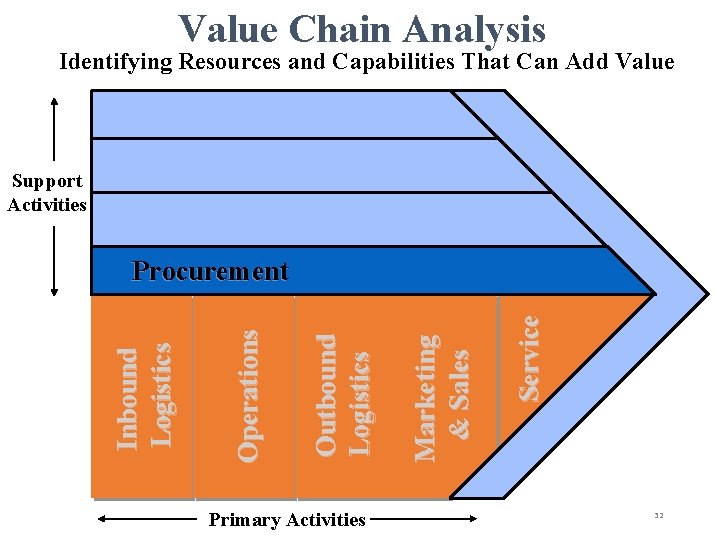
Value Chain Analysis Identifying Resources and Capabilities That Can Add Value Support Activities Primary Activities Service Marketing & Sales Outbound Logistics Operations Inbound Logistics Procurement 32
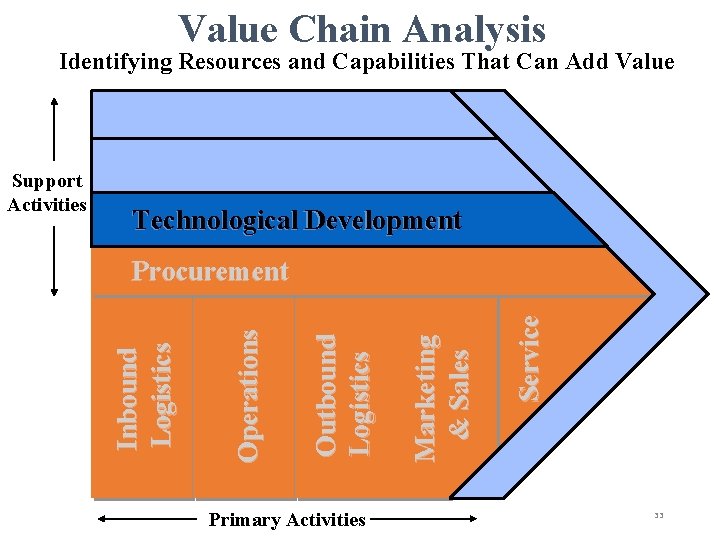
Value Chain Analysis Identifying Resources and Capabilities That Can Add Value Technological Development Primary Activities Service Marketing & Sales Outbound Logistics Operations Procurement Inbound Logistics Support Activities 33
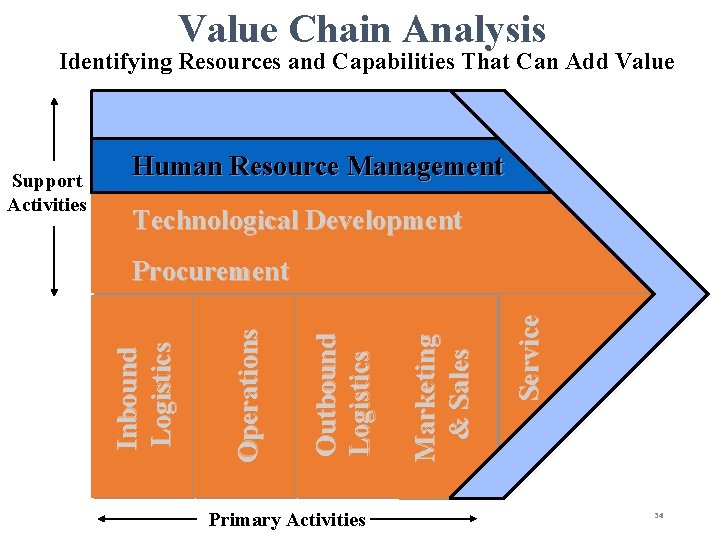
Value Chain Analysis Identifying Resources and Capabilities That Can Add Value Human Resource Management Technological Development Primary Activities Service Marketing & Sales Outbound Logistics Operations Procurement Inbound Logistics Support Activities 34
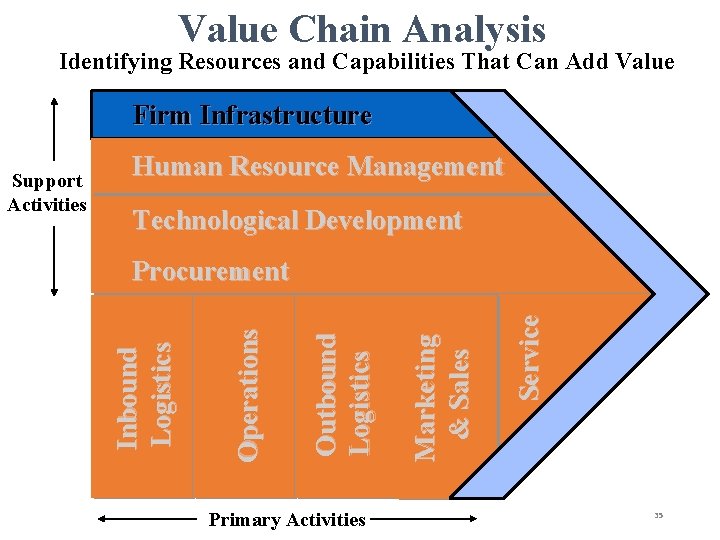
Value Chain Analysis Identifying Resources and Capabilities That Can Add Value Firm Infrastructure Human Resource Management Technological Development Primary Activities Service Marketing & Sales Outbound Logistics Operations Procurement Inbound Logistics Support Activities 35
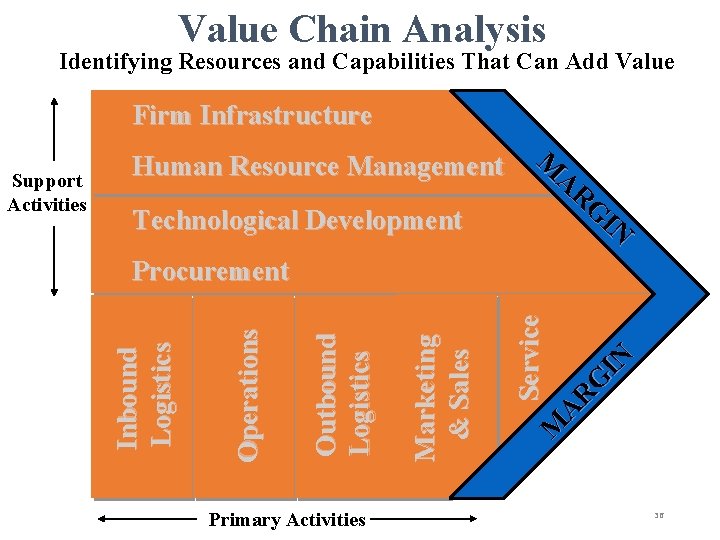
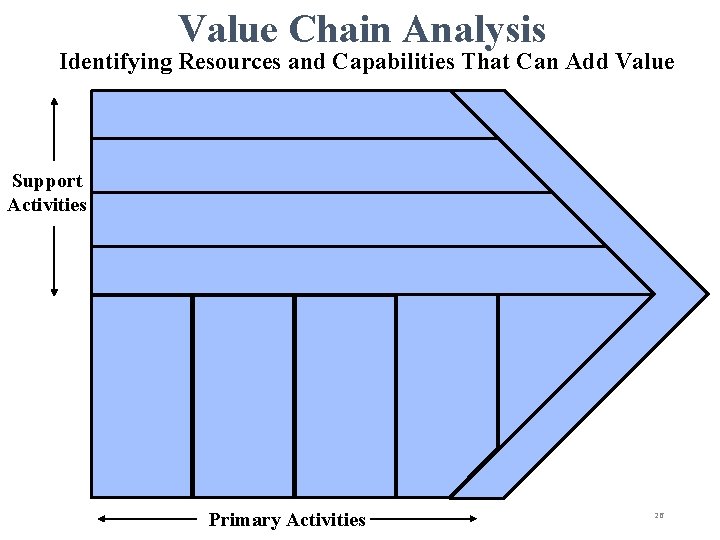
Value Chain Analysis Identifying Resources and Capabilities That Can Add Value Firm Infrastructure Technological Development M A R G IN Primary Activities M Service A R G IN Marketing & Sales Outbound Logistics Operations Procurement Inbound Logistics Support Activities Human Resource Management 36
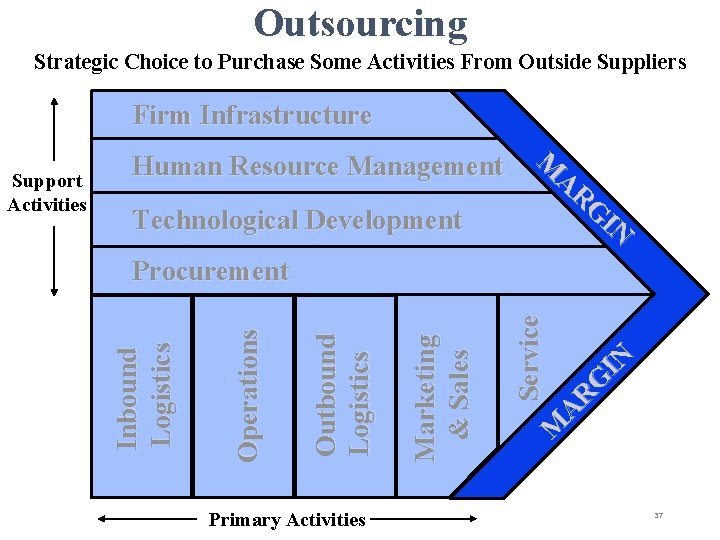
Outsourcing Strategic Choice to Purchase Some Activities From Outside Suppliers Firm Infrastructure Technological Development M A R G IN Primary Activities M Service A R G IN Marketing & Sales Outbound Logistics Operations Procurement Inbound Logistics Support Activities Human Resource Management 37
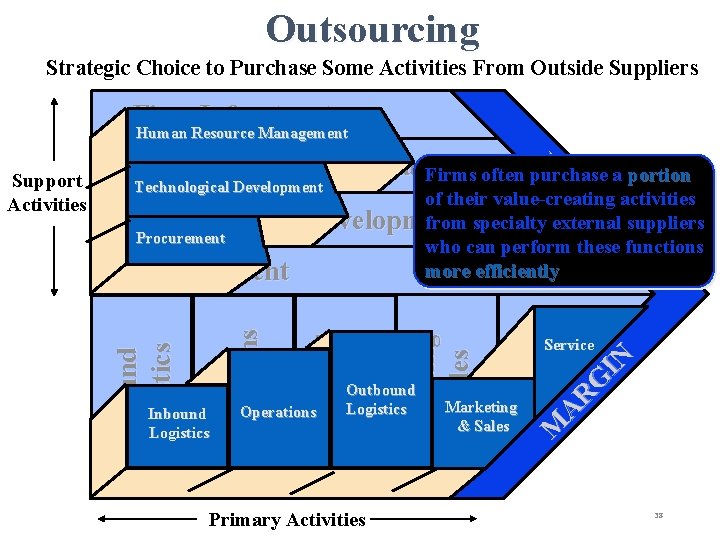
Outsourcing Strategic Choice to Purchase Some Activities From Outside Suppliers Firm Infrastructure Human Resource Management Operations Marketing & Sales Outbound Logistics Operations Inbound Logistics Outbound Logistics Primary Activities M Service A R G IN who can perform these functions more efficiently Procurement Inbound Logistics Support Activities M Human Resource Management Firms often purchase a portion A Technological Development R activities of their value-creating G IN suppliers from specialty external Technological Development Procurement Service Marketing & Sales 38
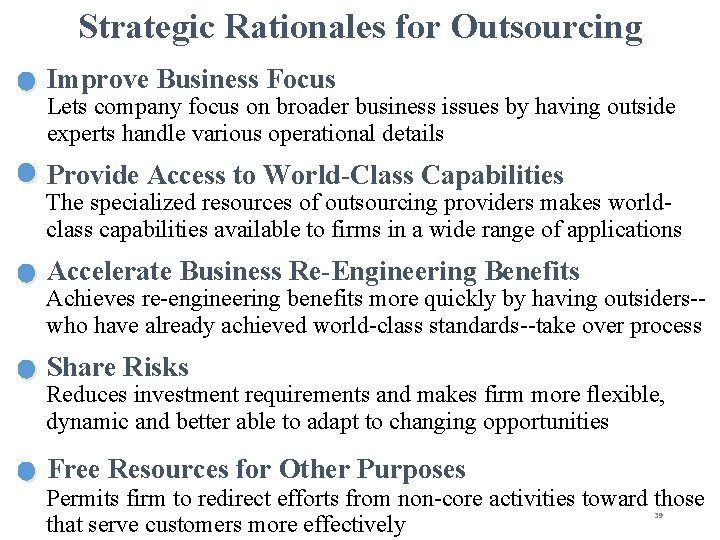
Strategic Rationales for Outsourcing Improve Business Focus Lets company focus on broader business issues by having outside experts handle various operational details Provide Access to World-Class Capabilities The specialized resources of outsourcing providers makes worldclass capabilities available to firms in a wide range of applications Accelerate Business Re-Engineering Benefits Achieves re-engineering benefits more quickly by having outsiders-who have already achieved world-class standards--take over process Share Risks Reduces investment requirements and makes firm more flexible, dynamic and better able to adapt to changing opportunities Free Resources for Other Purposes Permits firm to redirect efforts from non-core activities toward those that serve customers more effectively 39
To capitalize on the usefulness of the Value Chain concept. . . it is important to recognize that. . . 40
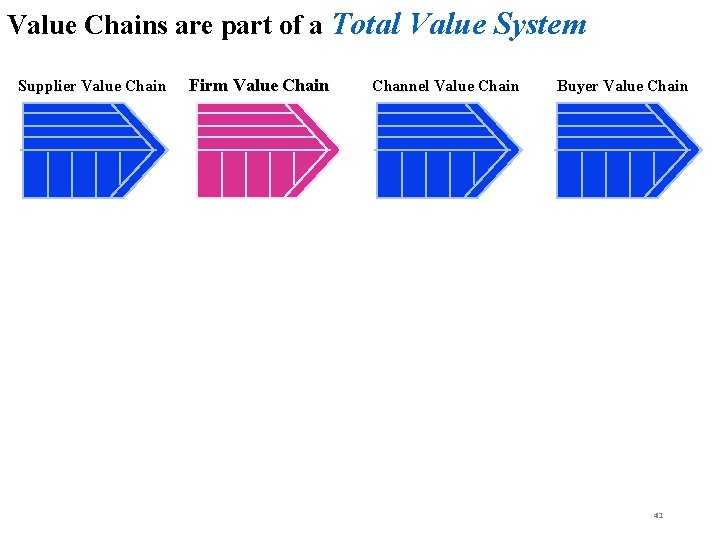
Value Chains are part of a Total Value System Supplier Value Chain Firm Value Chain Channel Value Chain Buyer Value Chain 41
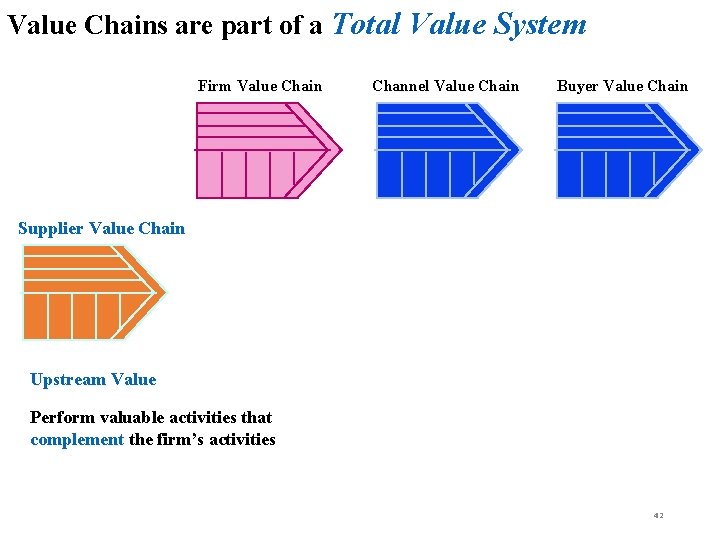
Value Chains are part of a Total Value System Firm Value Chain Channel Value Chain Buyer Value Chain Supplier Value Chain Upstream Value Perform valuable activities that complement the firm’s activities 42
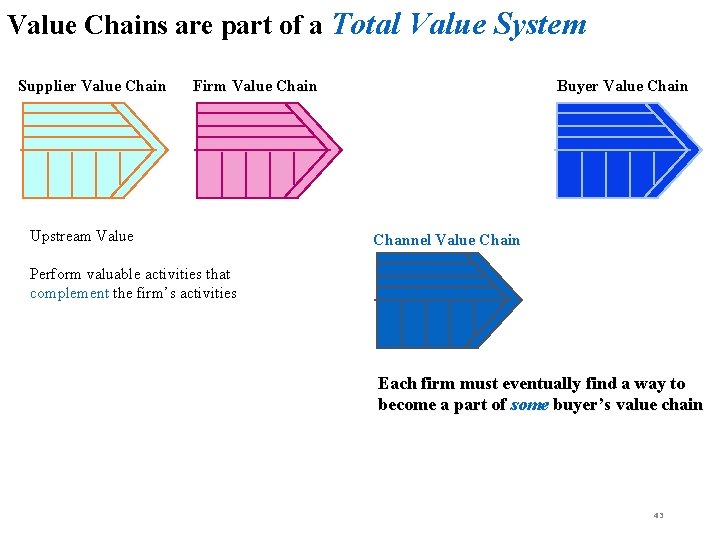
Value Chains are part of a Total Value System Supplier Value Chain Firm Value Chain Upstream Value Buyer Value Chain Channel Value Chain Perform valuable activities that complement the firm’s activities Each firm must eventually find a way to become a part of some buyer’s value chain 43
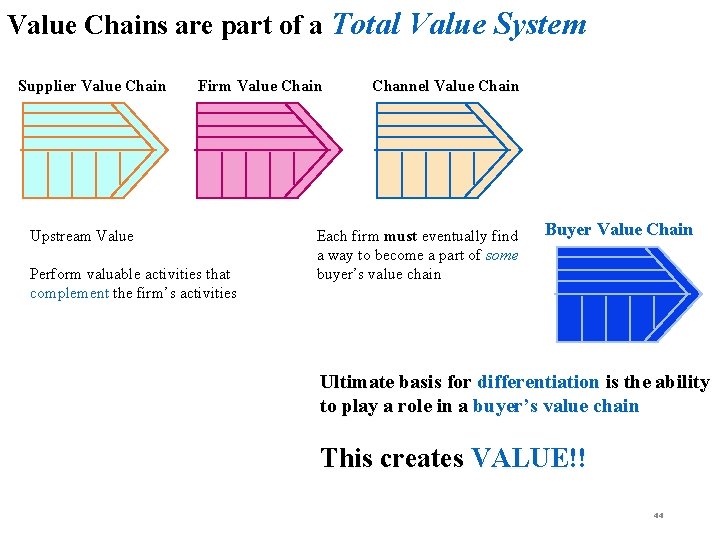
Value Chains are part of a Total Value System Supplier Value Chain Firm Value Chain Upstream Value Perform valuable activities that complement the firm’s activities Channel Value Chain Each firm must eventually find a way to become a part of some buyer’s value chain Buyer Value Chain Ultimate basis for differentiation is the ability to play a role in a buyer’s value chain This creates VALUE!! 44
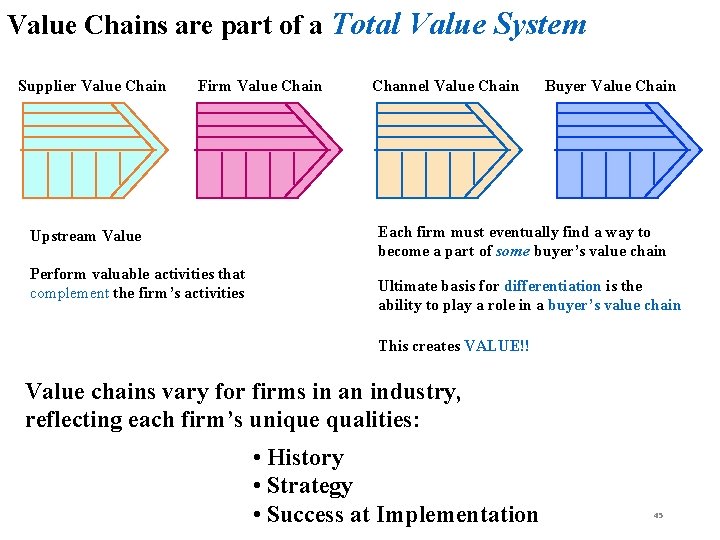
Value Chains are part of a Total Value System Supplier Value Chain Firm Value Chain Upstream Value Perform valuable activities that complement the firm’s activities Channel Value Chain Buyer Value Chain Each firm must eventually find a way to become a part of some buyer’s value chain Ultimate basis for differentiation is the ability to play a role in a buyer’s value chain This creates VALUE!! Value chains vary for firms in an industry, reflecting each firm’s unique qualities: • History • Strategy • Success at Implementation 45
Core Competencies--Cautions and Reminders Never take for granted that core competencies will continue to provide a source of competitive advantage All core competencies have the potential to become Core Rigidities are former core competencies that sow the seeds of organizational inertia and prevent the firm from responding appropriately to changes in the external environment Strategic myopia and inflexibility can strangle the firm’s ability to grow and adapt to environmental change or competitive threats 46
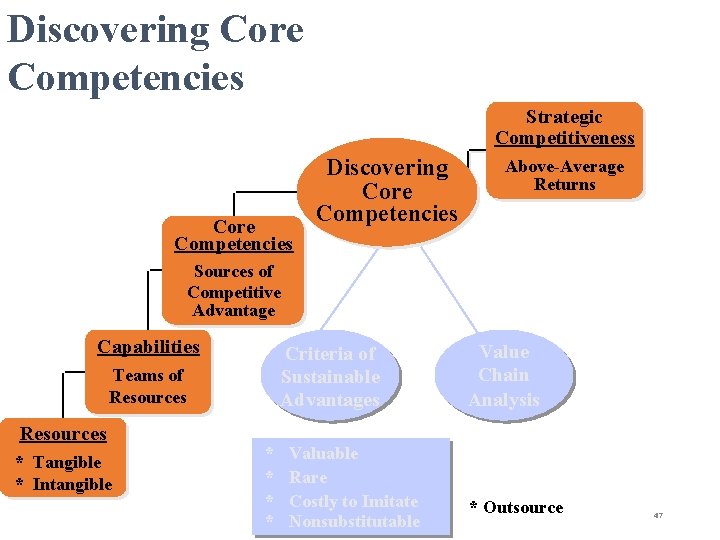
Discovering Core Competencies Strategic Competitiveness Core Competencies Discovering Core Competencies Above-Average Returns Sources of Competitive Advantage Capabilities Criteria of Sustainable Advantages Teams of Resources * Tangible * Intangible * * Valuable Rare Costly to Imitate Nonsubstitutable Value Chain Analysis * Outsource 47
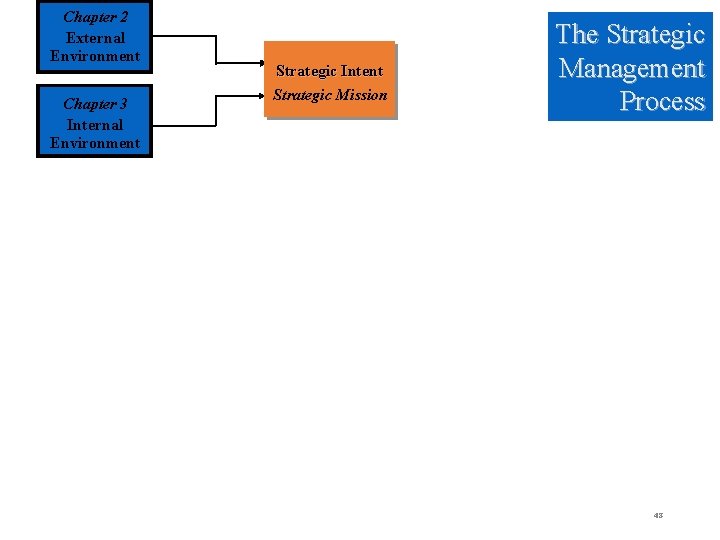
Chapter 2 External Environment Chapter 3 Internal Environment Strategic Intent Strategic Mission The Strategic Management Process 48
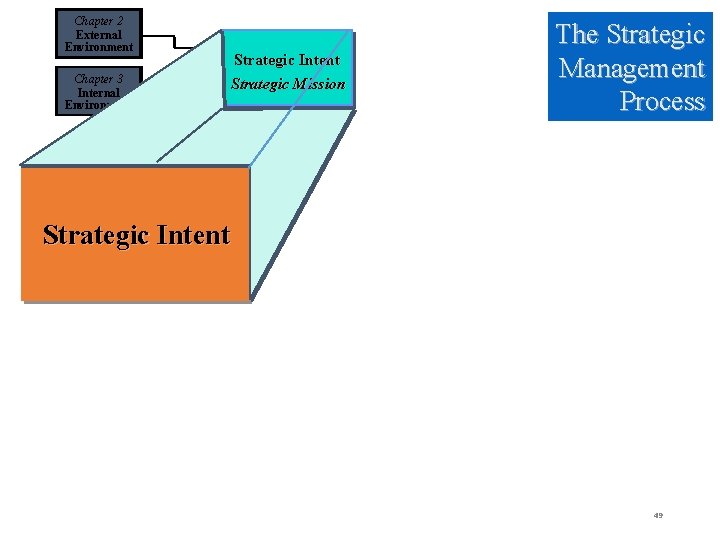
Chapter 2 External Environment Chapter 3 Internal Environment Strategic Intent Strategic Mission The Strategic Management Process Strategic Intent 49
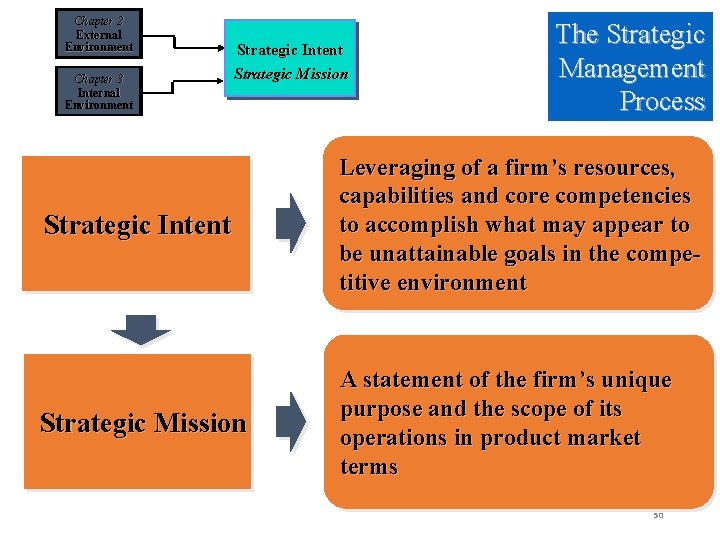
Chapter 2 External Environment Chapter 3 Internal Environment Strategic Intent Strategic Mission The Strategic Management Process Strategic Intent Leveraging of a firm’s resources, capabilities and core competencies to accomplish what may appear to be unattainable goals in the competitive environment Strategic Mission A statement of the firm’s unique purpose and the scope of its operations in product market terms 50
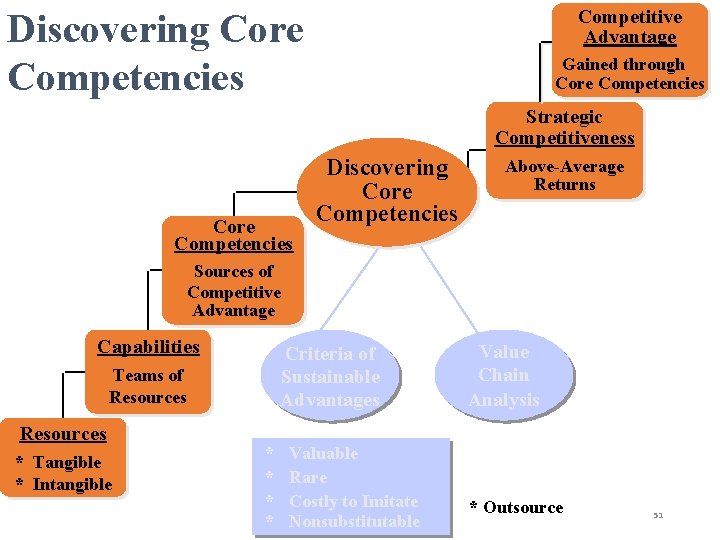
Competitive Advantage Discovering Core Competencies Gained through Core Competencies Strategic Competitiveness Core Competencies Discovering Core Competencies Above-Average Returns Sources of Competitive Advantage Capabilities Criteria of Sustainable Advantages Teams of Resources * Tangible * Intangible * * Valuable Rare Costly to Imitate Nonsubstitutable Value Chain Analysis * Outsource 51
- Slides: 51