
STRATEGIC BRAND MANAGEMENT BUILDING MEASURING AND MANAGING BRAND

STRATEGIC BRAND MANAGEMENT BUILDING, MEASURING, AND MANAGING BRAND EQUITY Kevin Lane Keller Kafli 2 21. september 2004 1 1
Motivation for Customer-Based Brand Equity Model • Marketers know strong brands are important but aren’t always sure how to build one. • CBBE model was designed to be … – – – comprehensive cohesive well-grounded up-to-date actionable 2 2
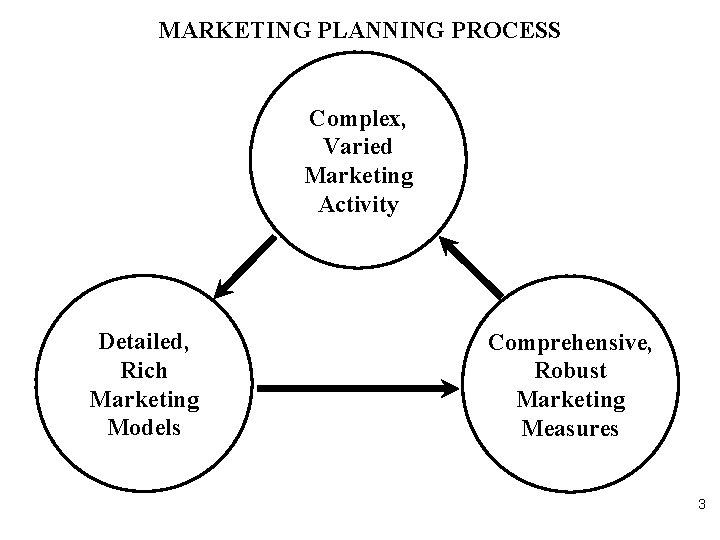
MARKETING PLANNING PROCESS Complex, Varied Marketing Activity Detailed, Rich Marketing Models Comprehensive, Robust Marketing Measures 3
Rationale of Customer-Based Brand Equity Model • Basic premise: Power of a brand resides in the minds of customers • Challenge is to ensure customers have the right types of experiences with products & services and their marketing programs to create the right brand knowledge structures: – – – Thoughts Feelings Images Perceptions Attitudes 4 4
Building Customer-Based Brand Equity • Building a strong brand involves a series of steps as part of a “branding ladder” • A strong brand is also characterized by a logically constructed set of brand “building blocks. ” – Identifies areas of strength and weakness – Provides guidance to marketing activities 5 5
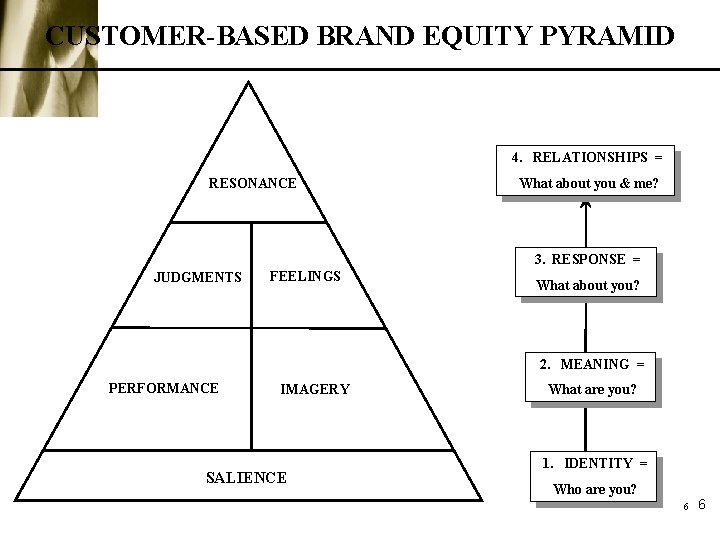
CUSTOMER-BASED BRAND EQUITY PYRAMID 4. RELATIONSHIPS = RESONANCE What about you & me? 3. RESPONSE = JUDGMENTS FEELINGS What about you? 2. MEANING = PERFORMANCE IMAGERY SALIENCE What are you? 1. IDENTITY = Who are you? 6 6
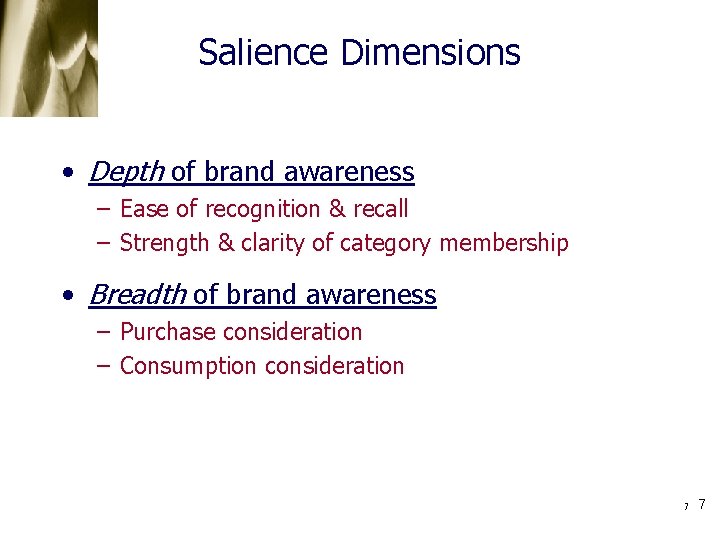
Salience Dimensions • Depth of brand awareness – Ease of recognition & recall – Strength & clarity of category membership • Breadth of brand awareness – Purchase consideration – Consumption consideration 7 7
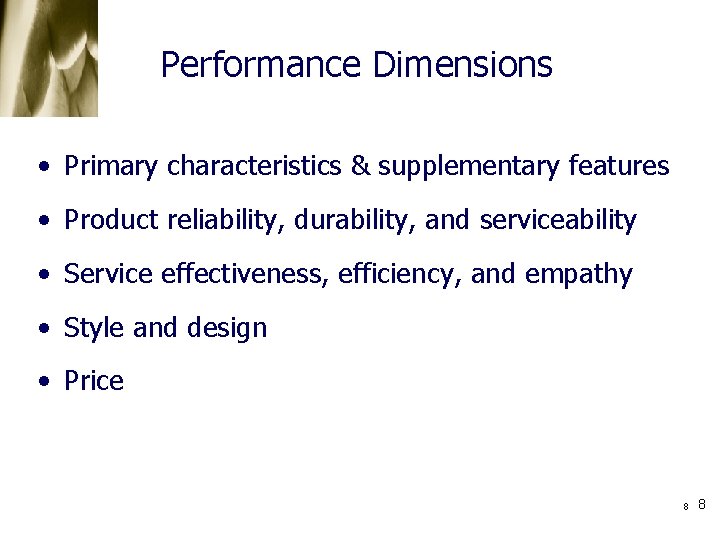
Performance Dimensions • Primary characteristics & supplementary features • Product reliability, durability, and serviceability • Service effectiveness, efficiency, and empathy • Style and design • Price 8 8
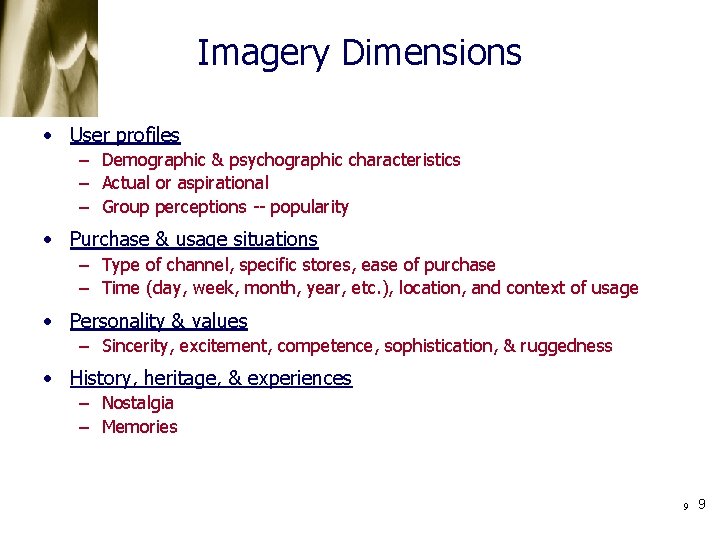
Imagery Dimensions • User profiles – Demographic & psychographic characteristics – Actual or aspirational – Group perceptions -- popularity • Purchase & usage situations – Type of channel, specific stores, ease of purchase – Time (day, week, month, year, etc. ), location, and context of usage • Personality & values – Sincerity, excitement, competence, sophistication, & ruggedness • History, heritage, & experiences – Nostalgia – Memories 9 9
Judgment Dimensions • Brand quality – Value – Satisfaction • Brand credibility – Expertise – Trustworthiness – Likability • Brand consideration – Relevance • Brand superiority – Differentiation 10 10
Feelings Dimensions • • • Warmth Fun Excitement Security Social approval Self-respect 11 11
Resonance Dimensions • Behavioral loyalty – Frequency and amount of repeat purchases • Attitudinal attachment – Love brand (favorite possessions; “a little pleasure”) – Proud of brand • Sense of community – Kinship – Affiliation • Active engagement – Seek information – Join club – Visit web site, chat rooms 12 12
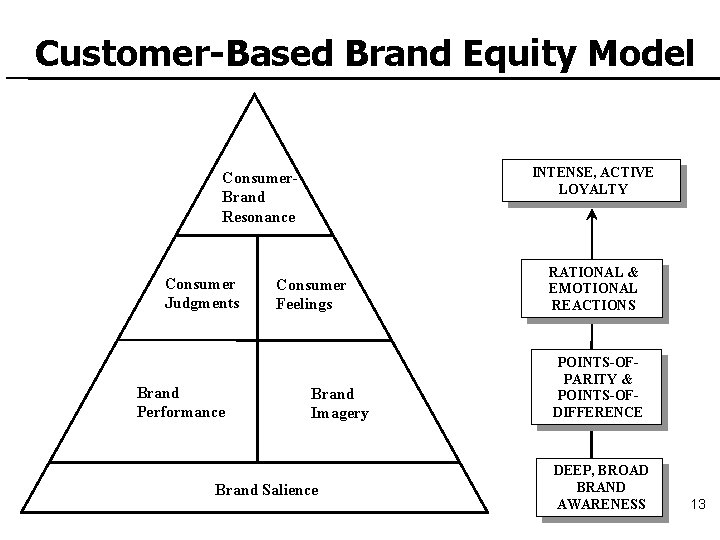
Customer-Based Brand Equity Model INTENSE, ACTIVE LOYALTY Consumer. Brand Resonance Consumer Judgments Brand Performance Consumer Feelings Brand Imagery Brand Salience RATIONAL & EMOTIONAL REACTIONS POINTS-OFPARITY & POINTS-OFDIFFERENCE DEEP, BROAD BRAND AWARENESS 13
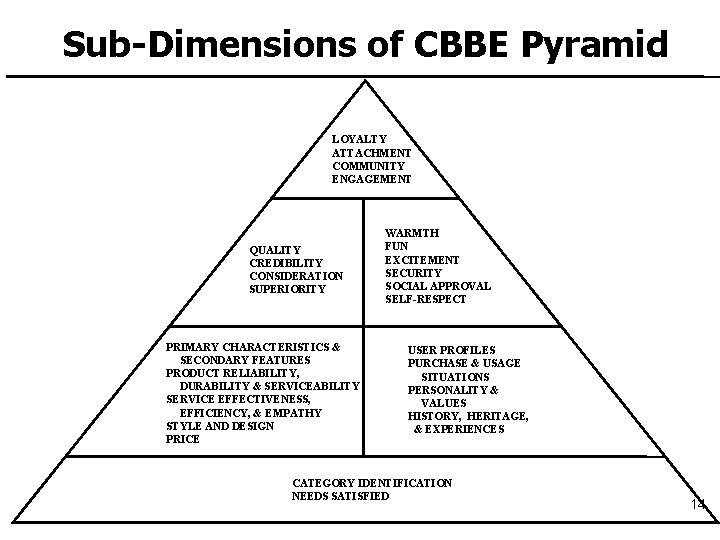
Sub-Dimensions of CBBE Pyramid LOYALTY ATTACHMENT COMMUNITY ENGAGEMENT QUALITY CREDIBILITY CONSIDERATION SUPERIORITY PRIMARY CHARACTERISTICS & SECONDARY FEATURES PRODUCT RELIABILITY, DURABILITY & SERVICEABILITY SERVICE EFFECTIVENESS, EFFICIENCY, & EMPATHY STYLE AND DESIGN PRICE WARMTH FUN EXCITEMENT SECURITY SOCIAL APPROVAL SELF-RESPECT USER PROFILES PURCHASE & USAGE SITUATIONS PERSONALITY & VALUES HISTORY, HERITAGE, & EXPERIENCES CATEGORY IDENTIFICATION NEEDS SATISFIED 14
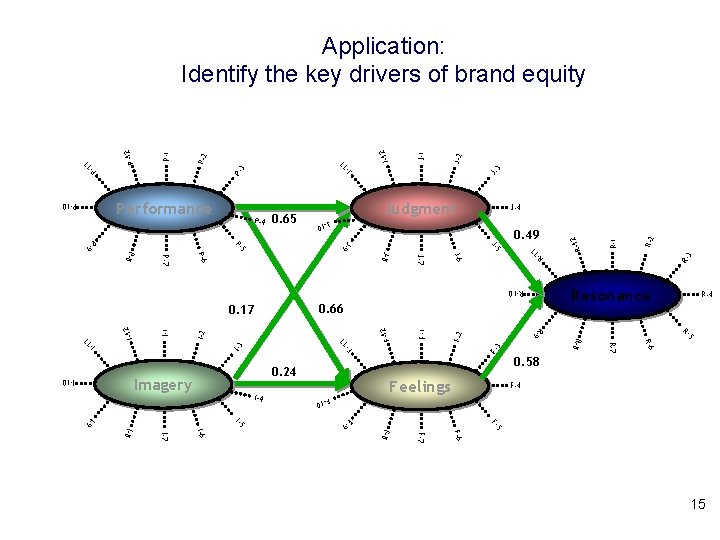
J-2 J-1 3 Judgment R-10 F-2 F-1 11 3 F- I-1 I-12 I-2 Feelings 3 R-2 F-4 0 F-1 1 R-1 P-10 I-1 R-6 R-7 R-8 5 9 R- R- I-4 R-4 0. 58 0. 24 Imagery R- 5 J-6 J-7 J-8 5 P-6 P-7 P-8 Resonance 0. 66 0. 17 R-1 9 J- J- 9 P- P- 0. 49 2 J-4 1 0. 65 1 R- P-4 J- P- 3 J- 11 P-2 P-1 P- Performance J-10 11 2 Application: Identify the key drivers of brand equity 9 F- FF-6 F-7 F-8 I-6 I-7 I-8 5 I-10 I-9 15
- Slides: 15