
Strand 1 Chapter 12 Home baking Home baking
Strand 1 Chapter 12 Home baking
Home baking What you will learn • • The advantages of home baking and the basic ingredients used The types of flour available The raising agents and how they work The rules for home baking and methods of making breads and cakes The advantages and disadvantages of cake mixes The rules for pastry making How to evaluate baked products 2
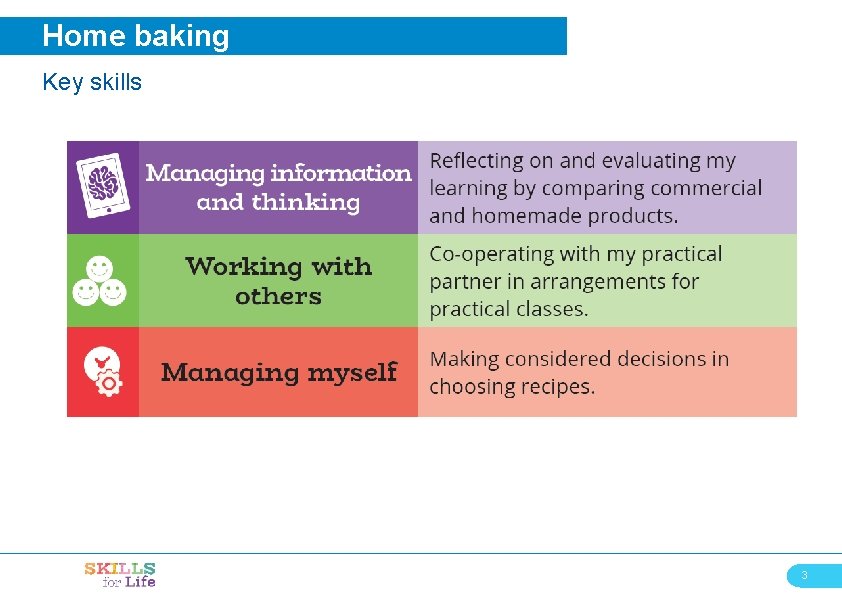
Home baking Key skills 3
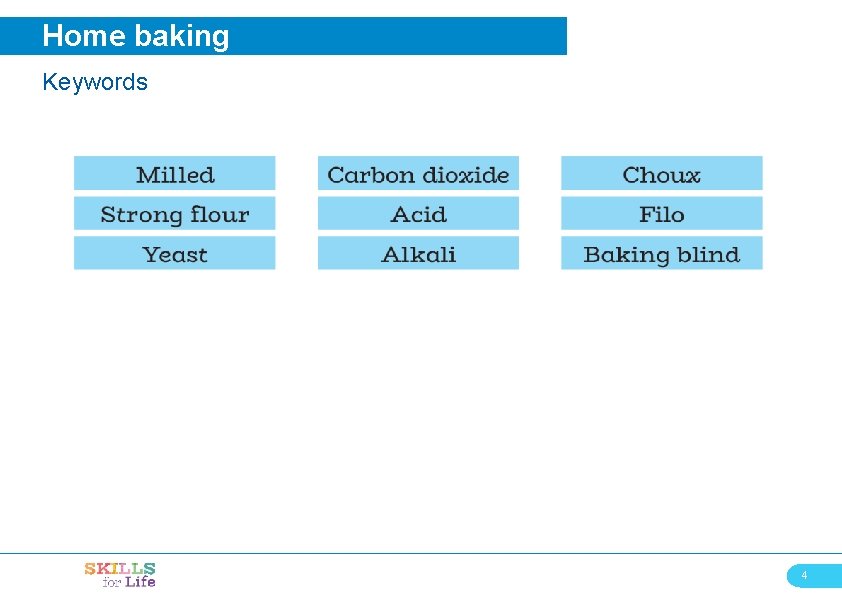
Home baking Keywords 4
Home baking Let’s get ready! 1. 2. 3. 4. 5. Have you ever done any baking at home? What have you baked? What are the most common ingredients used in baking? Can you name any raising agent? What is its function? List some dishes that use pastry. Can you name any different types of pastry? 5
Home baking Baking at home: Advantages Better flavour More appetising appearance Cheaper No artificial preservatives Control of ingredients No packaging See Think-Pair-Share page 128 6
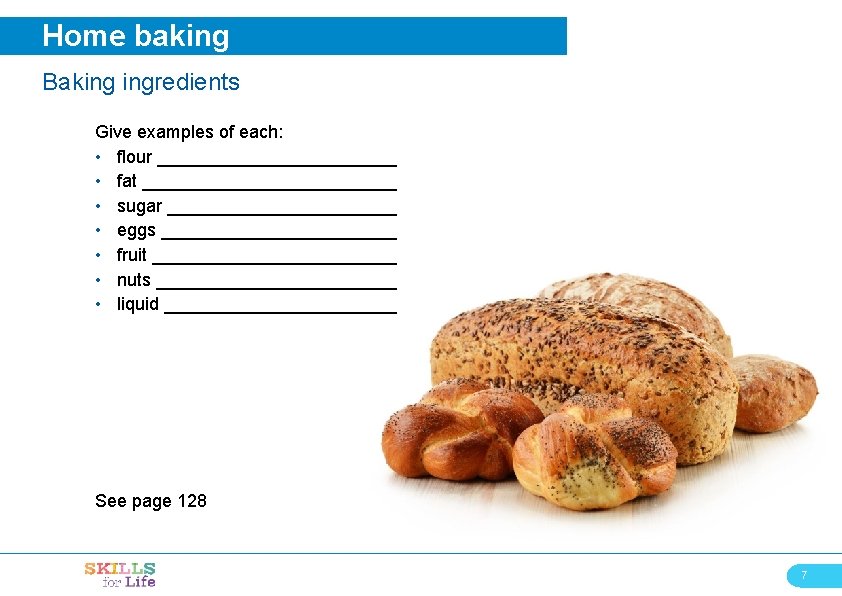
Home baking Baking ingredients Give examples of each: • flour _______________ • fat ______________ • sugar _____________ • eggs _____________ • fruit _____________ • nuts _____________ • liquid _____________ See page 128 7
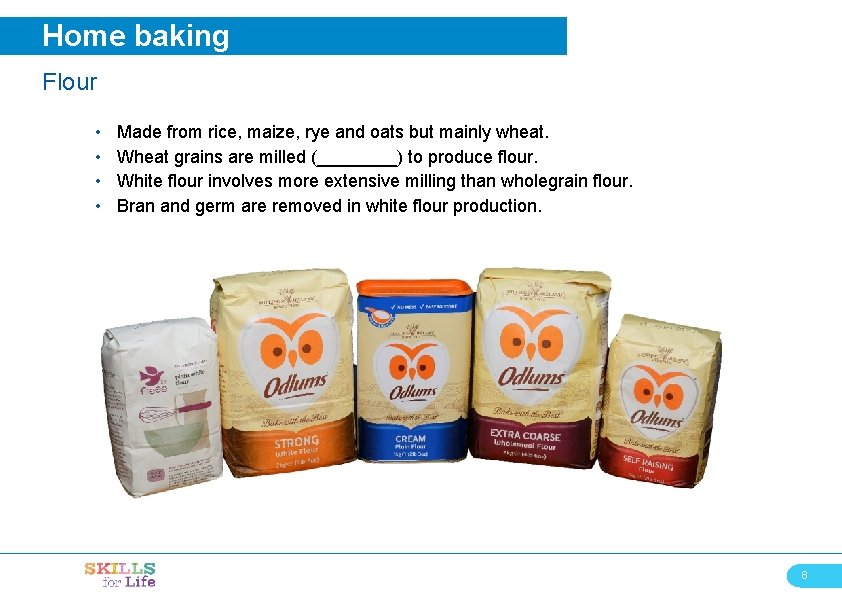
Home baking Flour • • Made from rice, maize, rye and oats but mainly wheat. Wheat grains are milled (____) to produce flour. White flour involves more extensive milling than wholegrain flour. Bran and germ are removed in white flour production. 8
Home baking Types of wheat flour • • • Wholegrain: Contains the whole grain White (plain) flour: Contains the endosperm only Self-raising: White flour to which baking powder has been added Strong flour: Contains extra gluten – used in yeast cooking Gluten-free: Gluten removed from flour, suitable for coeliacs 9
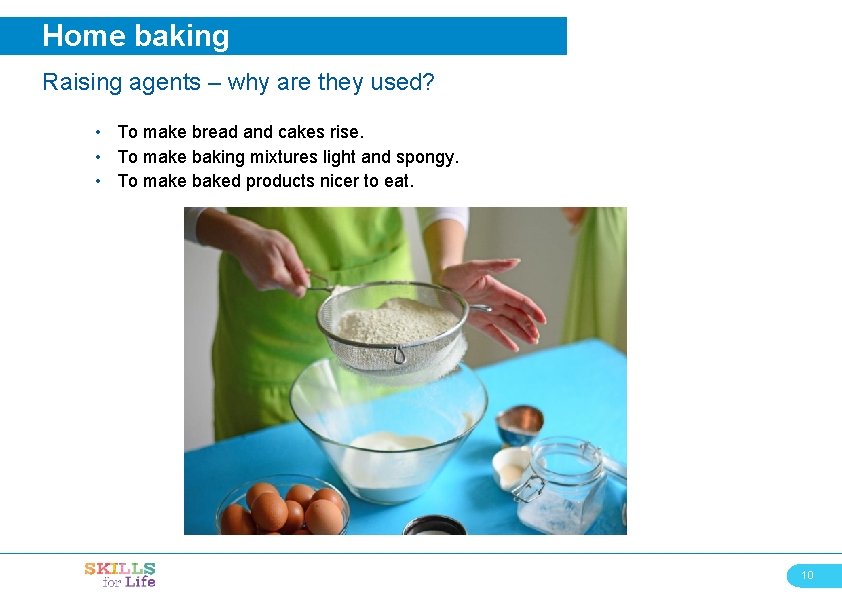
Home baking Raising agents – why are they used? • To make bread and cakes rise. • To make baking mixtures light and spongy. • To make baked products nicer to eat. 10
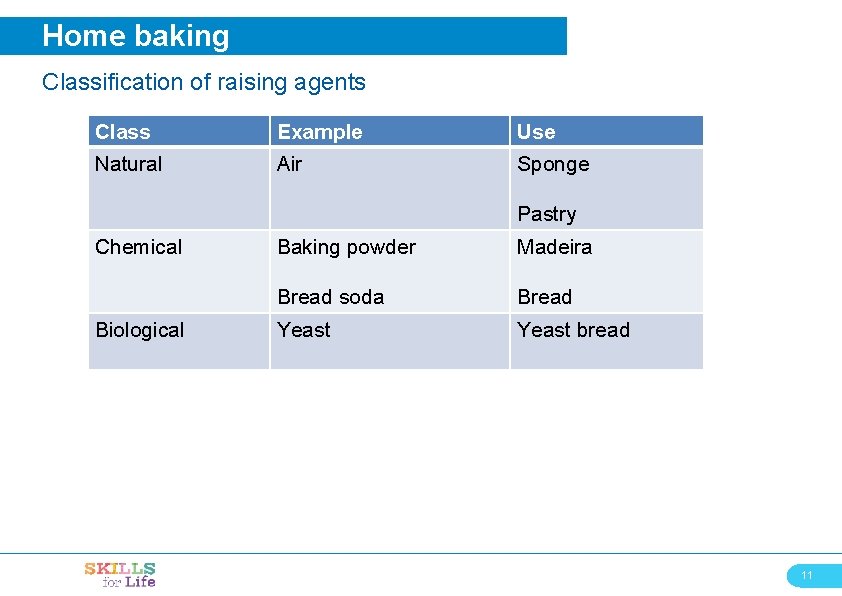
Home baking Classification of raising agents Class Example Use Natural Air Sponge Pastry Chemical Biological Baking powder Madeira Bread soda Bread Yeast bread 11
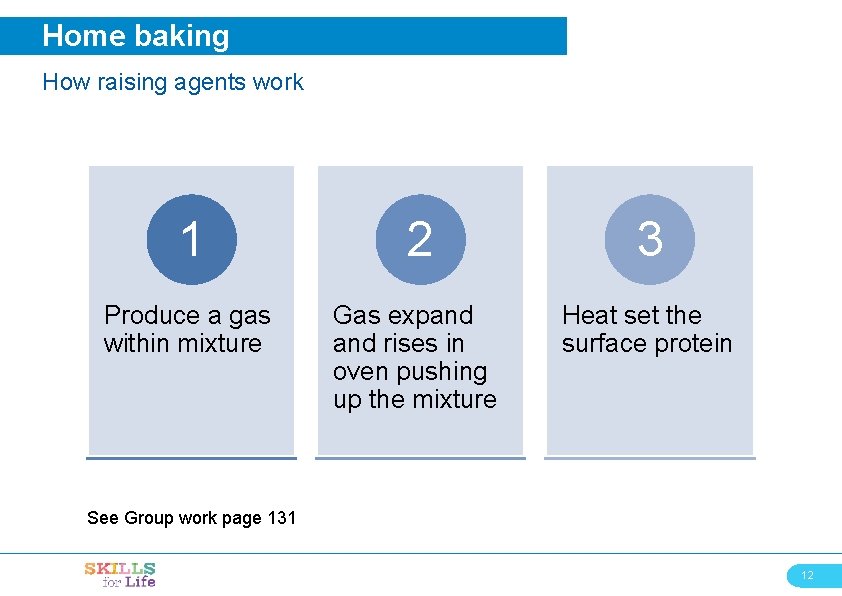
Home baking How raising agents work 1 2 3 Produce a gas within mixture Gas expand rises in oven pushing up the mixture Heat set the surface protein See Group work page 131 12
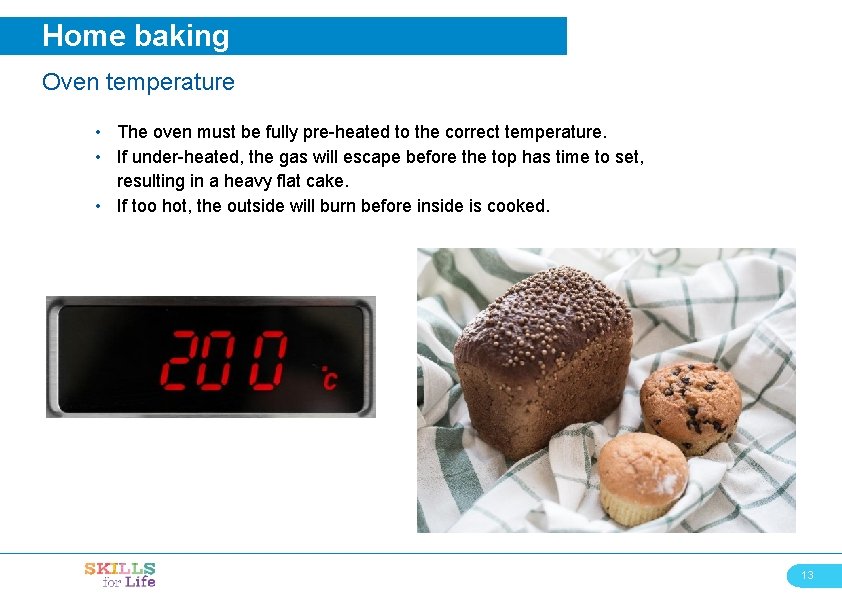
Home baking Oven temperature • The oven must be fully pre-heated to the correct temperature. • If under-heated, the gas will escape before the top has time to set, resulting in a heavy flat cake. • If too hot, the outside will burn before inside is cooked. 13
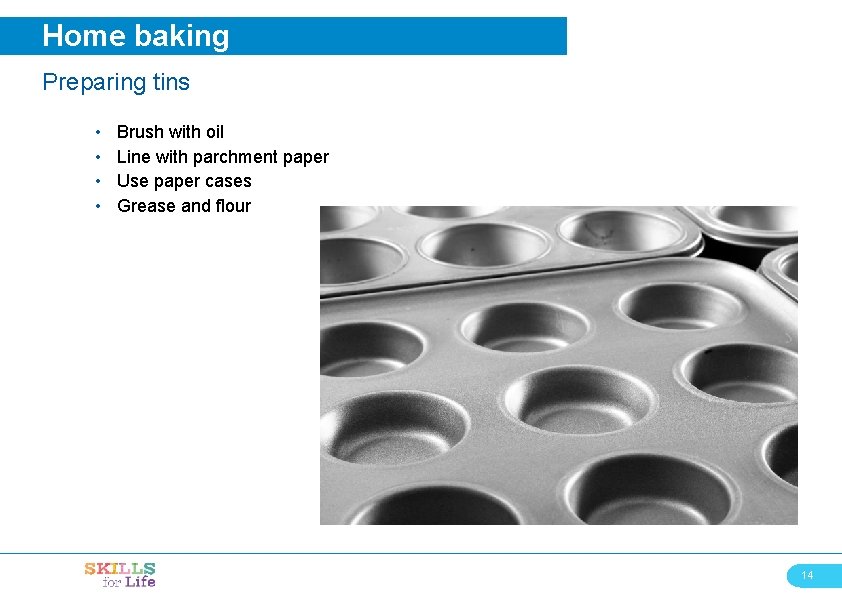
Home baking Preparing tins • • Brush with oil Line with parchment paper Use paper cases Grease and flour 14
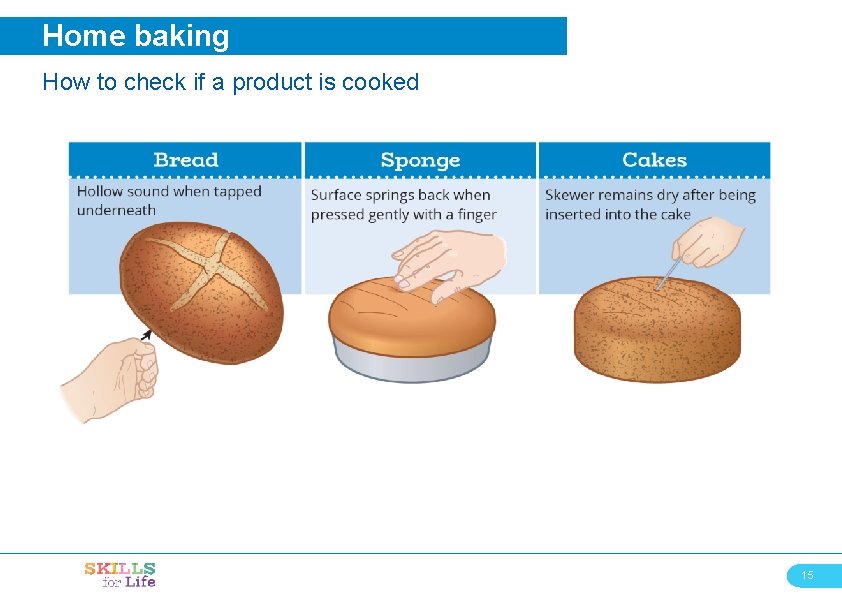
Home baking How to check if a product is cooked 15
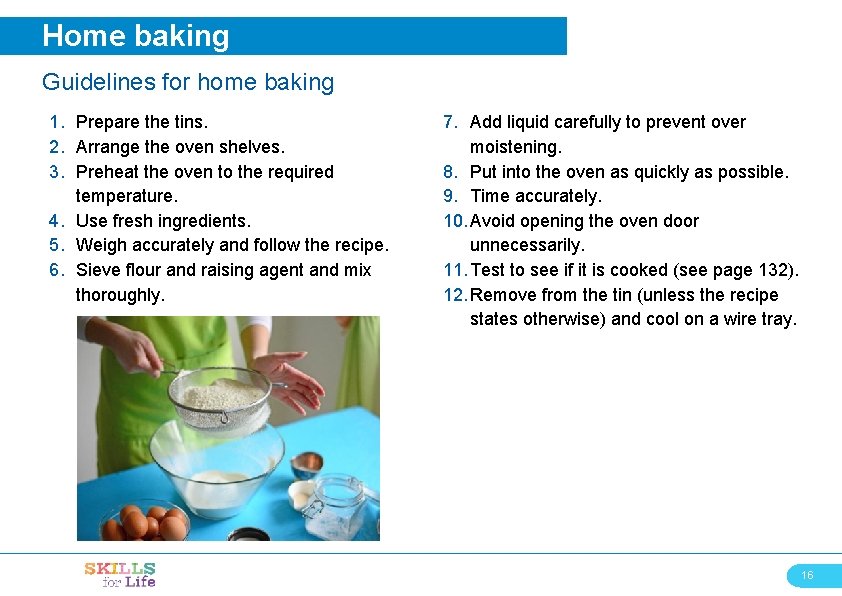
Home baking Guidelines for home baking 1. Prepare the tins. 2. Arrange the oven shelves. 3. Preheat the oven to the required temperature. 4. Use fresh ingredients. 5. Weigh accurately and follow the recipe. 6. Sieve flour and raising agent and mix thoroughly. 7. Add liquid carefully to prevent over moistening. 8. Put into the oven as quickly as possible. 9. Time accurately. 10. Avoid opening the oven door unnecessarily. 11. Test to see if it is cooked (see page 132). 12. Remove from the tin (unless the recipe states otherwise) and cool on a wire tray. 16
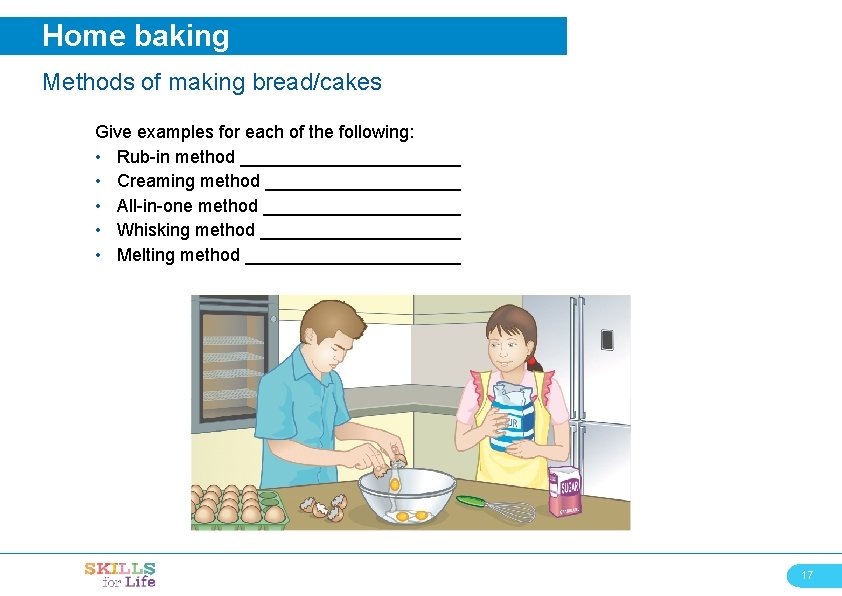
Home baking Methods of making bread/cakes Give examples for each of the following: • Rub-in method ______________ • Creaming method ____________ • All-in-one method ____________ • Whisking method ____________ • Melting method _____________ 17
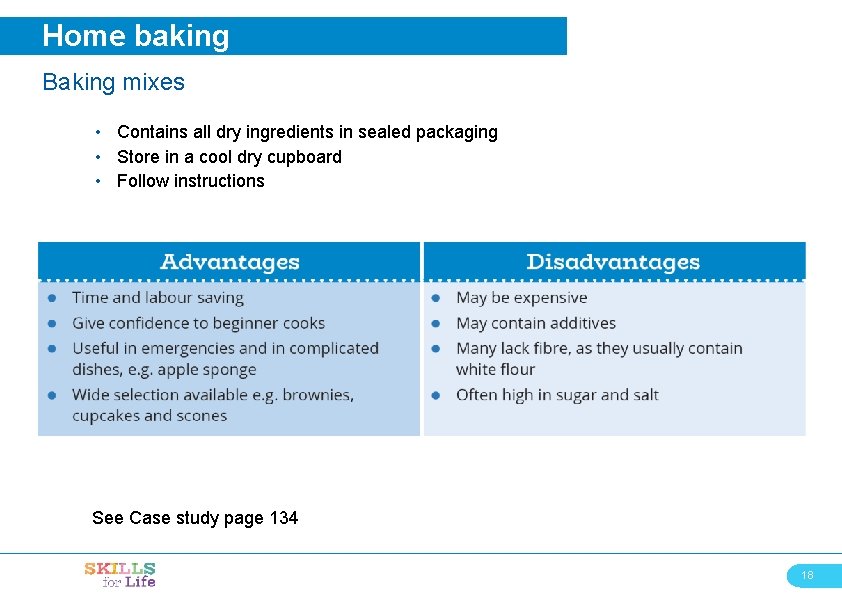
Home baking Baking mixes • Contains all dry ingredients in sealed packaging • Store in a cool dry cupboard • Follow instructions See Case study page 134 18
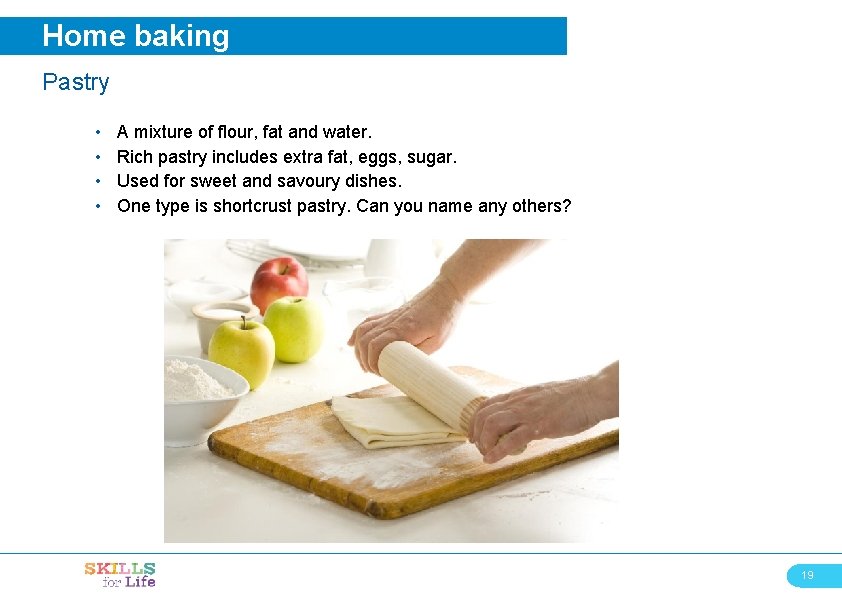
Home baking Pastry • • A mixture of flour, fat and water. Rich pastry includes extra fat, eggs, sugar. Used for sweet and savoury dishes. One type is shortcrust pastry. Can you name any others? 19
Home baking Guidelines for pastry making • • Weigh ingredients accurately. Keep ingredients and utensils cool. Introduce air to make the pastry light and crisp. Avoid overhandling. Use a knife for mixing. Add the water carefully. Knead and roll the pastry mixture lightly. To reduce the possibility of shrinkage, allow the pastry to relax in a cool place for 15 minutes before baking. • Avoid stretching the pastry by rolling lightly. • Bake in a hot oven, and reduce after 10 minutes to allow the filling to cook. 20
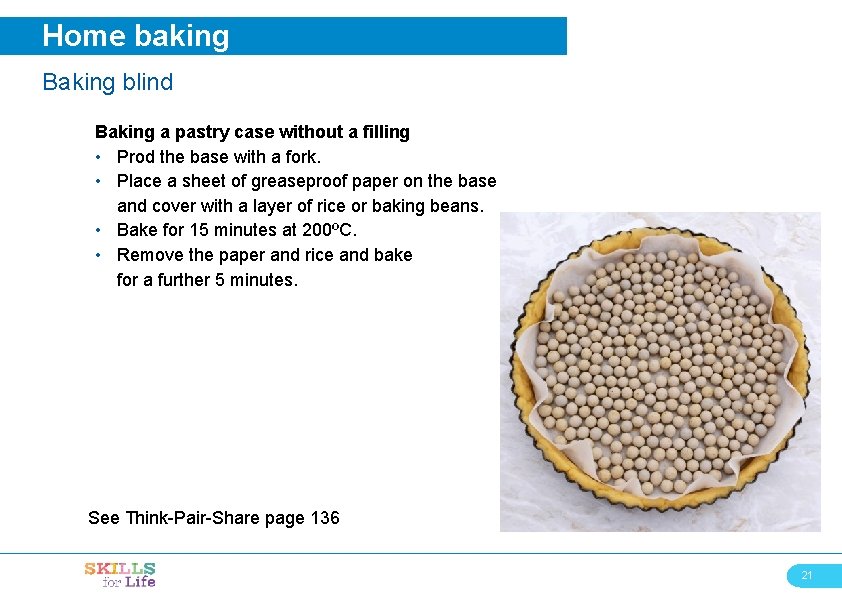
Home baking Baking blind Baking a pastry case without a filling • Prod the base with a fork. • Place a sheet of greaseproof paper on the base and cover with a layer of rice or baking beans. • Bake for 15 minutes at 200ºC. • Remove the paper and rice and bake for a further 5 minutes. See Think-Pair-Share page 136 21
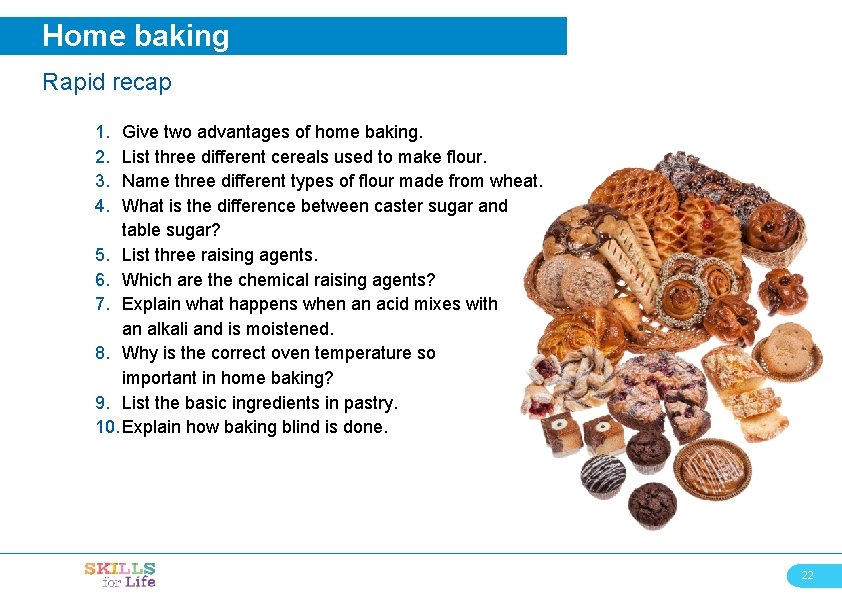
Home baking Rapid recap 1. 2. 3. 4. Give two advantages of home baking. List three different cereals used to make flour. Name three different types of flour made from wheat. What is the difference between caster sugar and table sugar? 5. List three raising agents. 6. Which are the chemical raising agents? 7. Explain what happens when an acid mixes with an alkali and is moistened. 8. Why is the correct oven temperature so important in home baking? 9. List the basic ingredients in pastry. 10. Explain how baking blind is done. 22
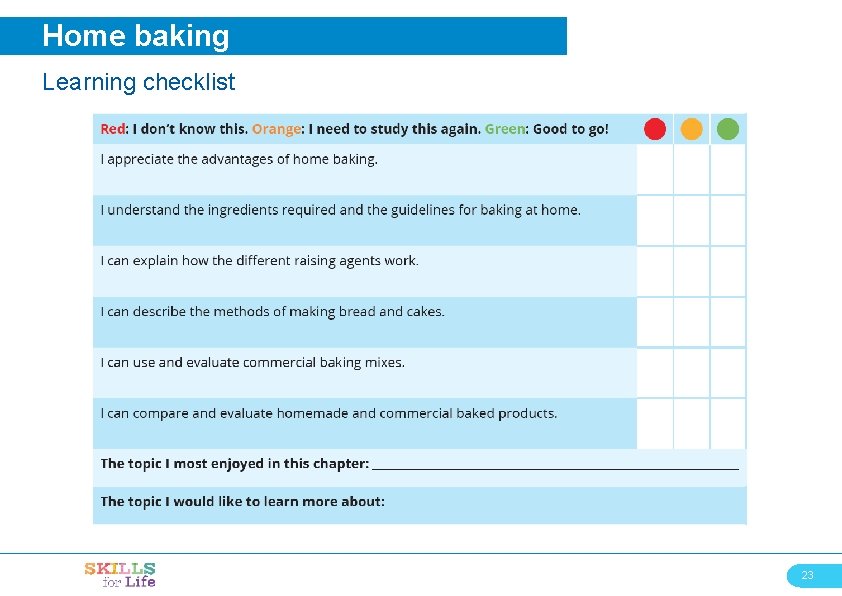
Home baking Learning checklist 23
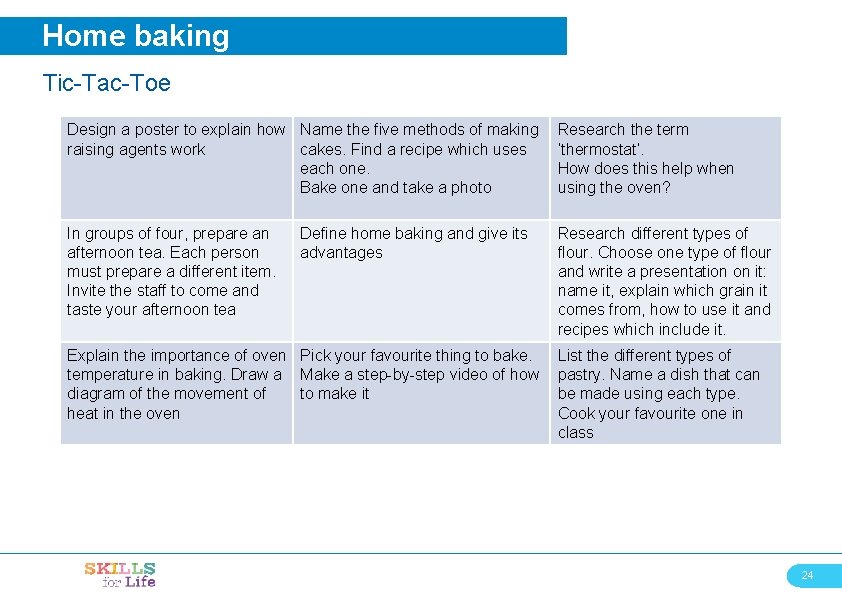
Home baking Tic-Tac-Toe Design a poster to explain how Name the five methods of making raising agents work cakes. Find a recipe which uses each one. Bake one and take a photo Research the term ‘thermostat’. How does this help when using the oven? In groups of four, prepare an afternoon tea. Each person must prepare a different item. Invite the staff to come and taste your afternoon tea Research different types of flour. Choose one type of flour and write a presentation on it: name it, explain which grain it comes from, how to use it and recipes which include it. Define home baking and give its advantages Explain the importance of oven Pick your favourite thing to bake. temperature in baking. Draw a Make a step-by-step video of how diagram of the movement of to make it heat in the oven List the different types of pastry. Name a dish that can be made using each type. Cook your favourite one in class 24
- Slides: 24