
STRAITS POND MIDGES Biology Ecology and Problem Populations
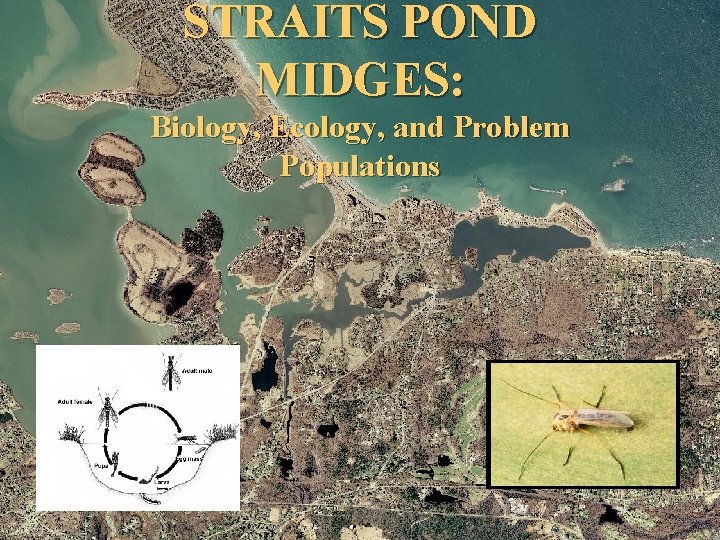
STRAITS POND MIDGES: Biology, Ecology, and Problem Populations
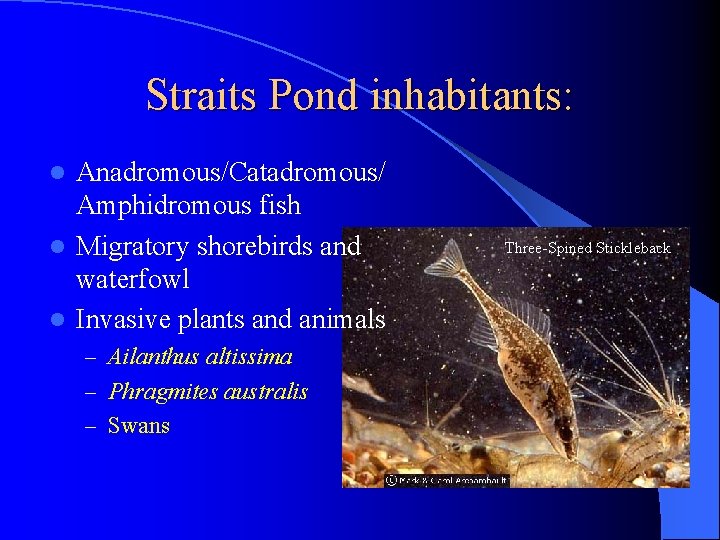
Straits Pond inhabitants: Anadromous/Catadromous/ Amphidromous fish l Migratory shorebirds and waterfowl l Invasive plants and animals l – Ailanthus altissima – Phragmites australis – Swans Three-Spined Stickleback
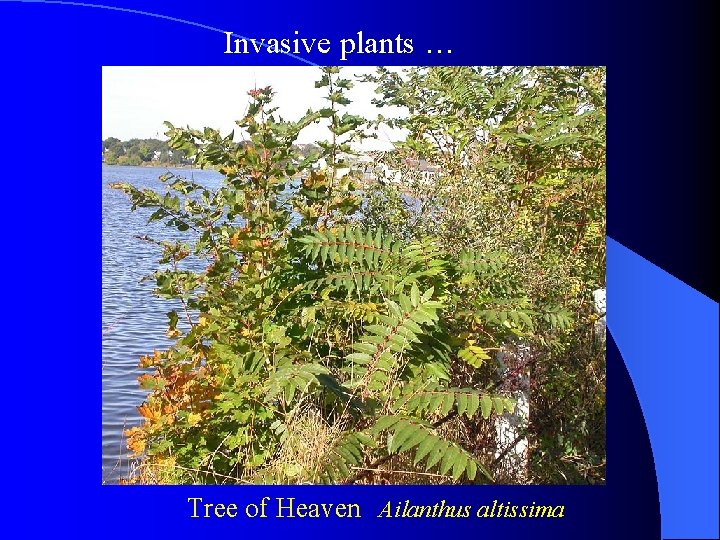
Invasive plants … Tree of Heaven Ailanthus altissima
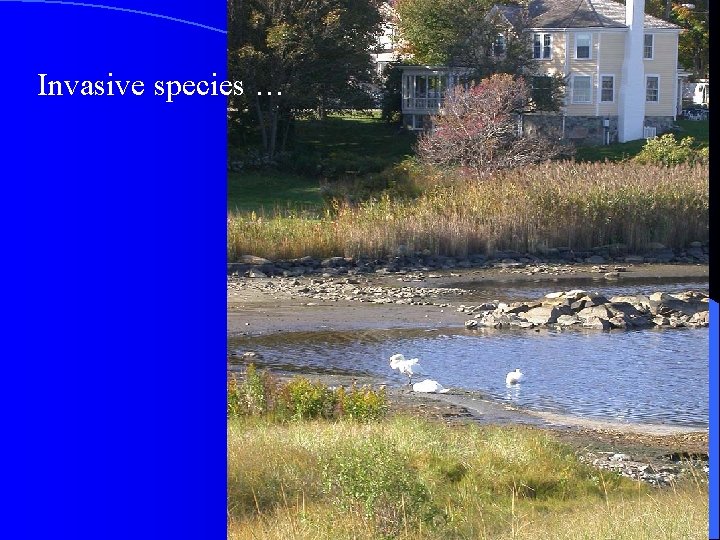
Invasive species …
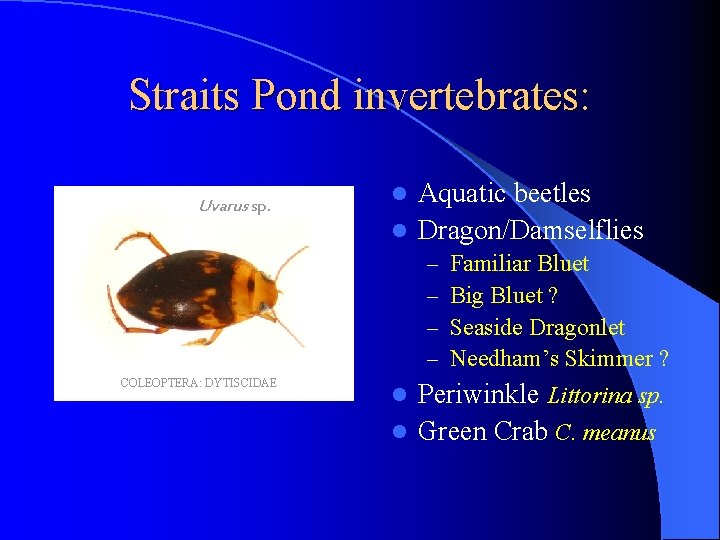
Straits Pond invertebrates: Uvarus sp. Aquatic beetles l Dragon/Damselflies l – – COLEOPTERA: DYTISCIDAE Familiar Bluet Big Bluet ? Seaside Dragonlet Needham’s Skimmer ? Periwinkle Littorina sp. l Green Crab C. meanus l
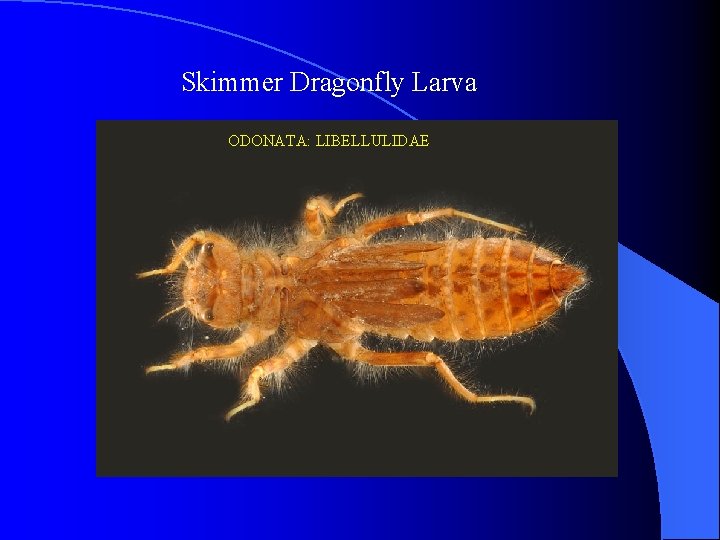
Skimmer Dragonfly Larva ODONATA: LIBELLULIDAE
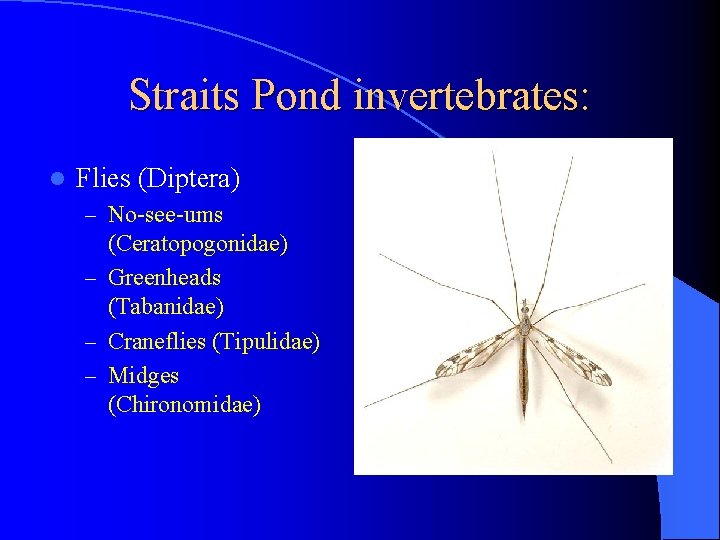
Straits Pond invertebrates: l Flies (Diptera) – No-see-ums (Ceratopogonidae) – Greenheads (Tabanidae) – Craneflies (Tipulidae) – Midges (Chironomidae)
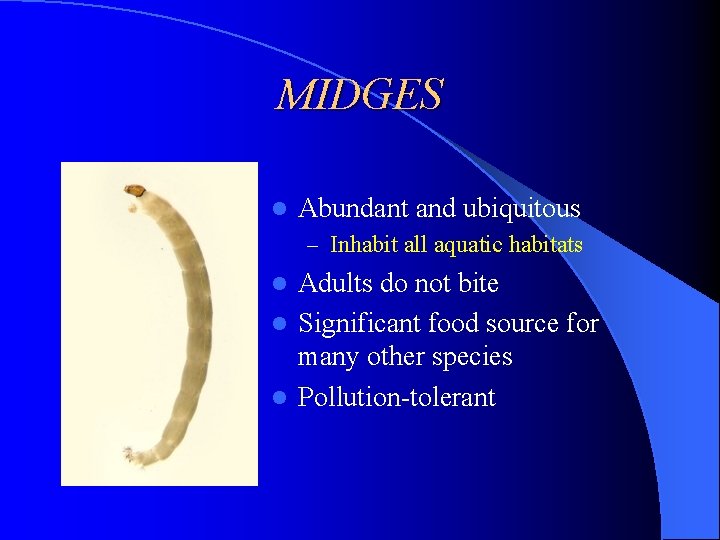
MIDGES l Abundant and ubiquitous – Inhabit all aquatic habitats Adults do not bite l Significant food source for many other species l Pollution-tolerant l
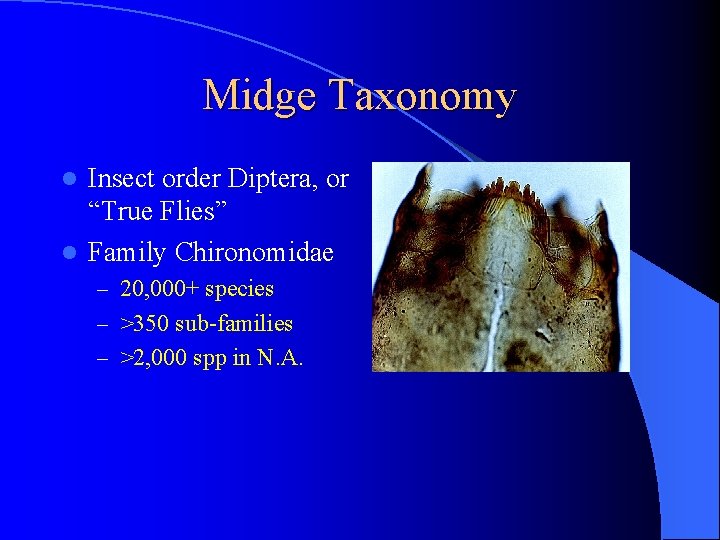
Midge Taxonomy Insect order Diptera, or “True Flies” l Family Chironomidae l – 20, 000+ species – >350 sub-families – >2, 000 spp in N. A.
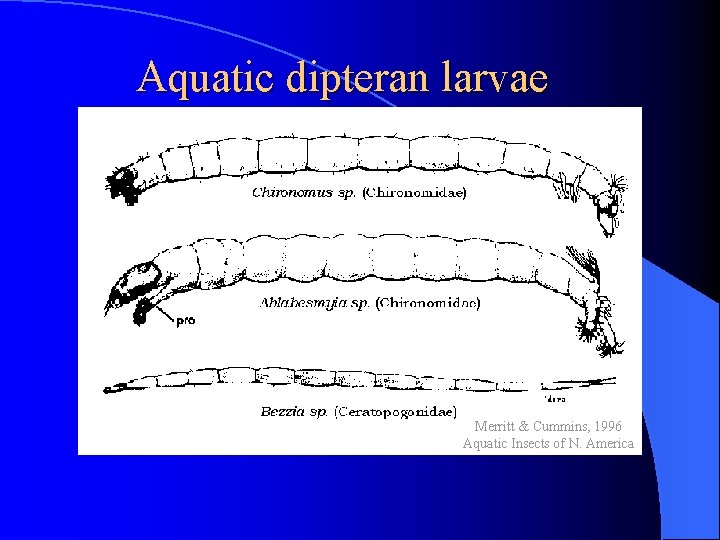
Aquatic dipteran larvae Merritt & Cummins, 1996 Aquatic Insects of N. America
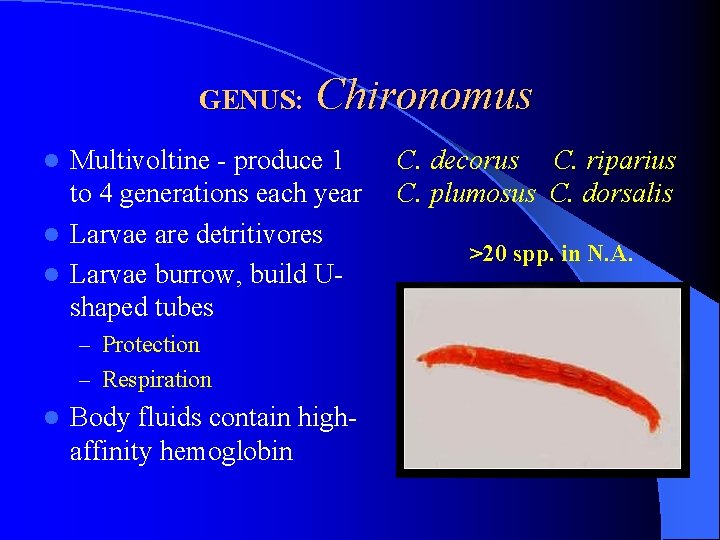
GENUS: Chironomus Multivoltine - produce 1 to 4 generations each year l Larvae are detritivores l Larvae burrow, build Ushaped tubes l – Protection – Respiration l Body fluids contain highaffinity hemoglobin C. decorus C. riparius C. plumosus C. dorsalis >20 spp. in N. A.
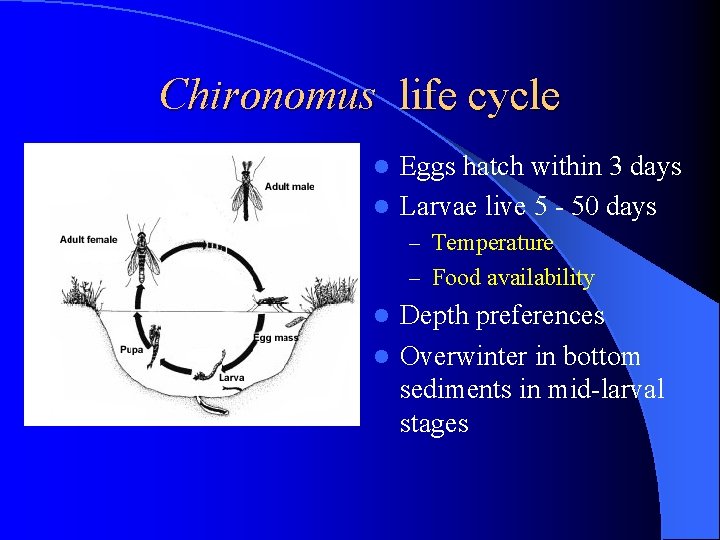
Chironomus life cycle Eggs hatch within 3 days l Larvae live 5 - 50 days l – Temperature – Food availability Depth preferences l Overwinter in bottom sediments in mid-larval stages l
Chironomus larval ecology Associated with soft upper sediment layers l Densities correlated with organic content l – Consume bacterial and fungal components Lower densities found in gravel (ponds) l Relatively drought and freeze tolerant l – Do not migrate during dry/cold spells
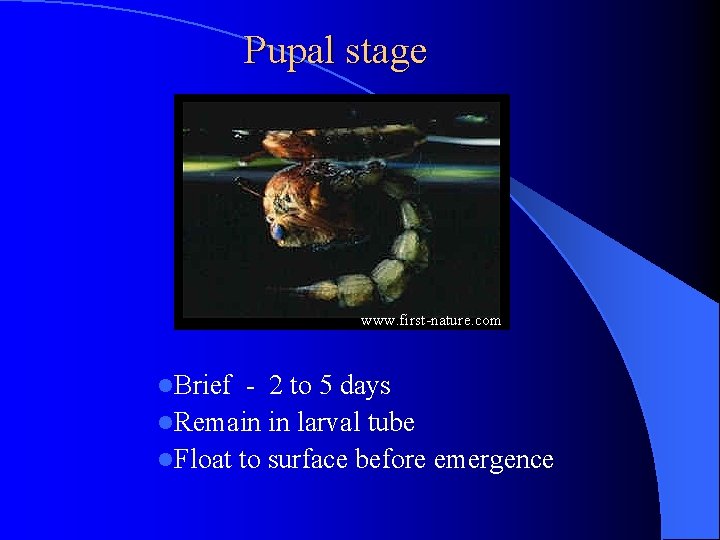
Pupal stage www. first-nature. com l. Brief - 2 to 5 days l. Remain in larval tube l. Float to surface before emergence
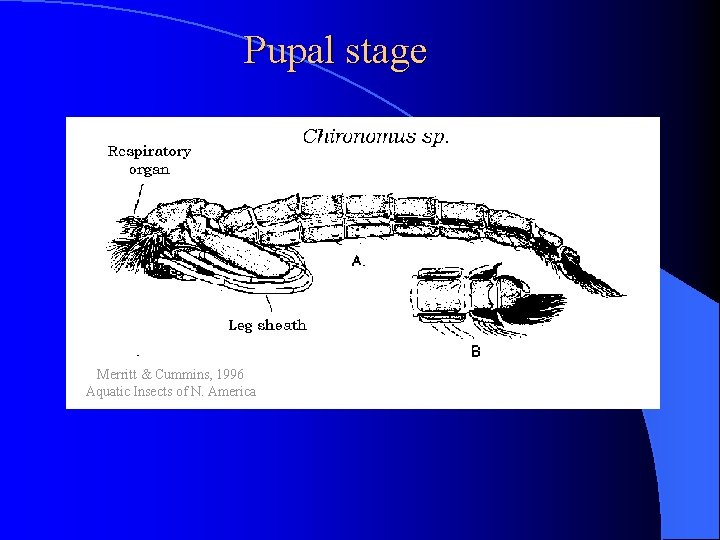
Pupal stage Merritt & Cummins, 1996 Aquatic Insects of N. America
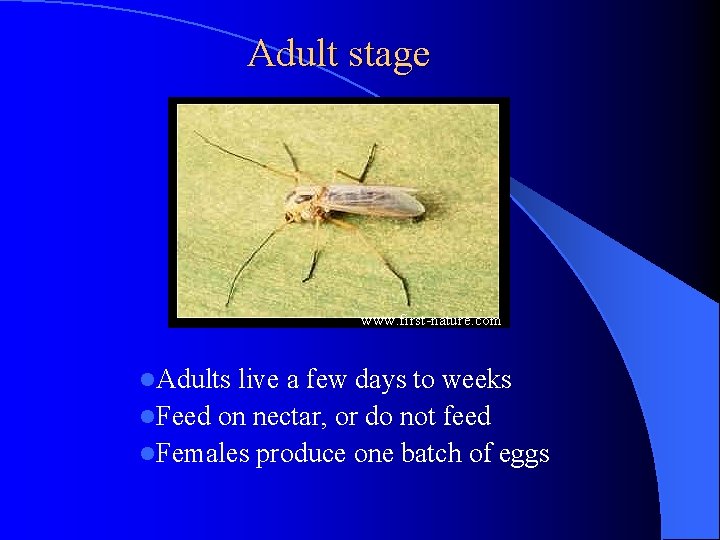
Adult stage www. first-nature. com l. Adults live a few days to weeks l. Feed on nectar, or do not feed l. Females produce one batch of eggs
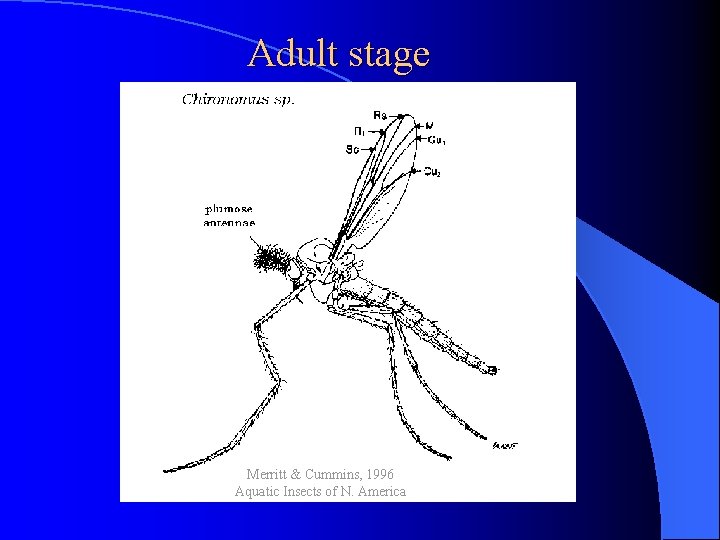
Adult stage Merritt & Cummins, 1996 Aquatic Insects of N. America
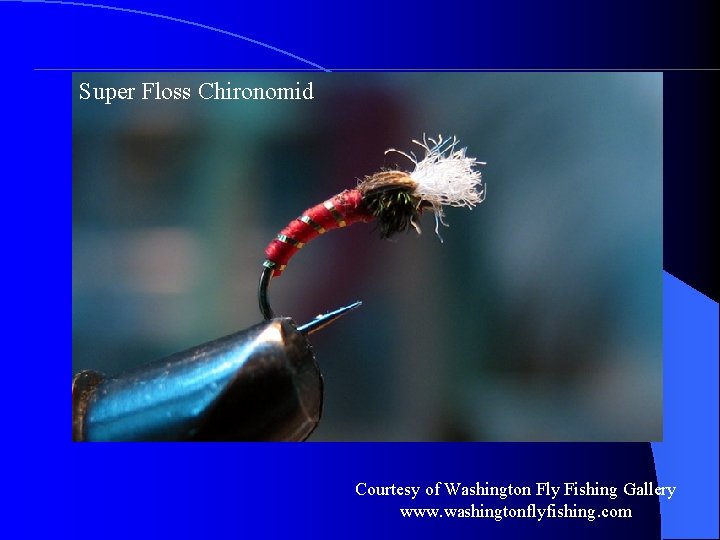
Super Floss Chironomid Courtesy of Washington Fly Fishing Gallery www. washingtonflyfishing. com
Factors contributing to problem populations: l Stagnation – Warmer temperatures – Lower Dissolved Oxygen concentration l Nutrient loading – Septic systems and fertilizers … N, P, K – Decayed algae and plants … C
Problems & Suggestions Annoying swarms l Beware of “bug-zappers” gather in backyards – Attract more insects – Kill beneficial spp. l Adult midges are attracted to lights l Use yellow bulbs l Food is abundant l Reduce nutrient sources – Lawns/Septic systems l Larvae thrive in harsh – Decaying plant material environments l Circulate/aerate water l
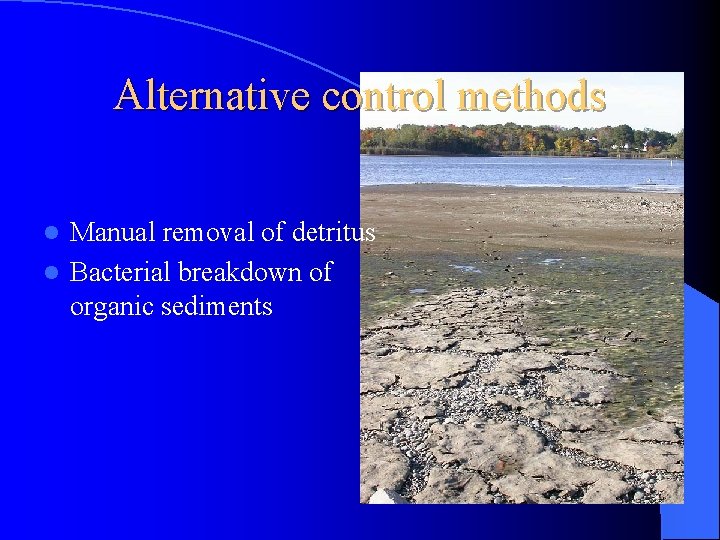
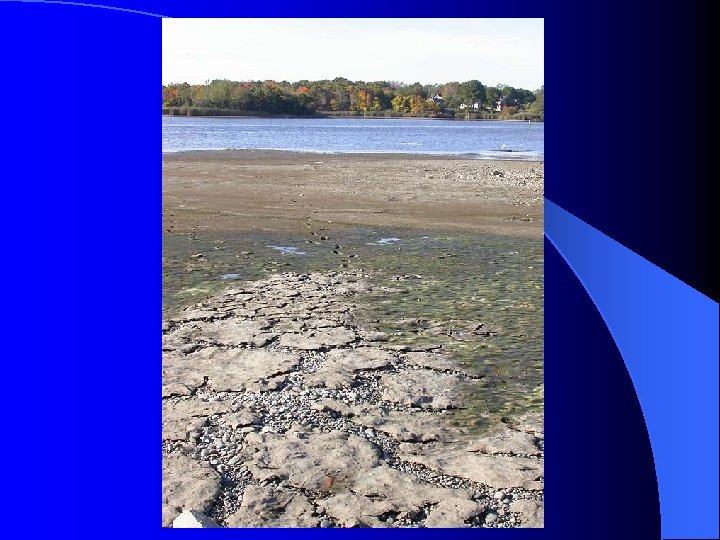
Alternative control methods Manual removal of detritus l Bacterial breakdown of organic sediments l
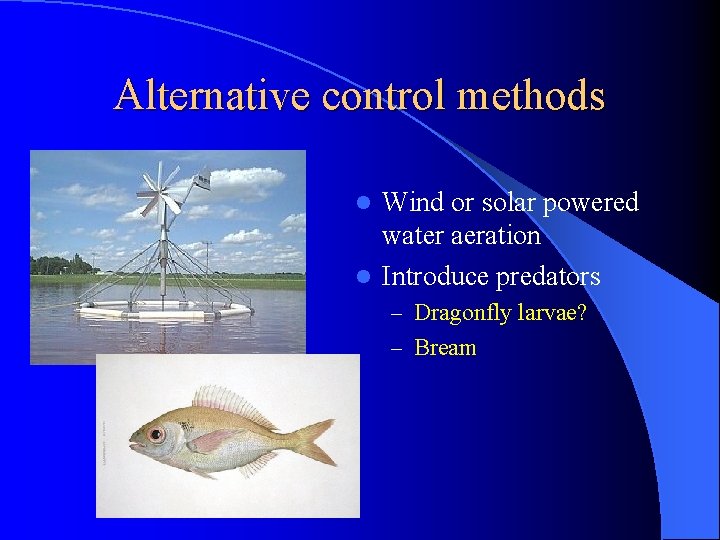
Alternative control methods Wind or solar powered water aeration l Introduce predators l – Dragonfly larvae? – Bream
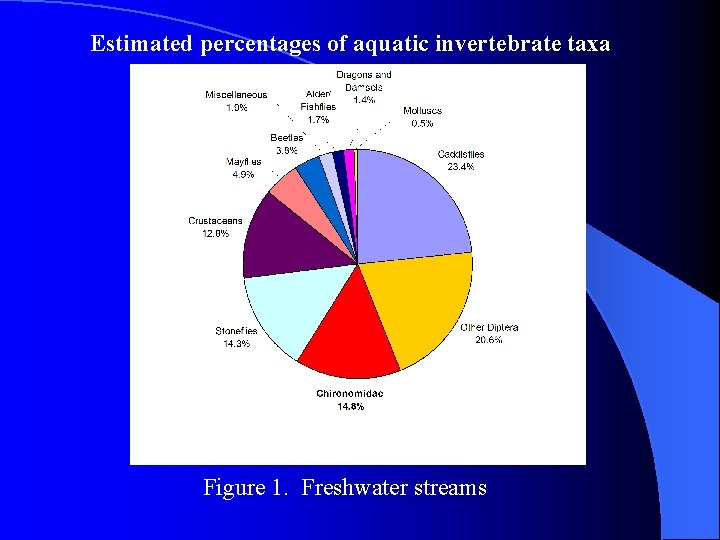
Estimated percentages of aquatic invertebrate taxa Figure 1. Freshwater streams
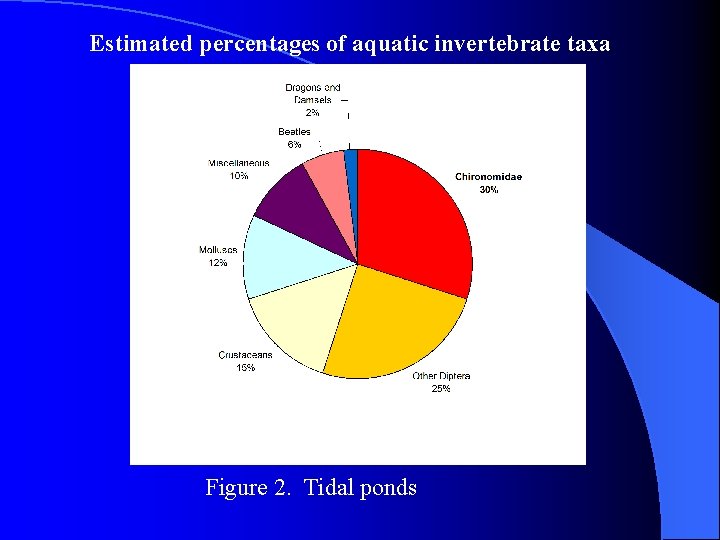
Estimated percentages of aquatic invertebrate taxa Figure 2. Tidal ponds
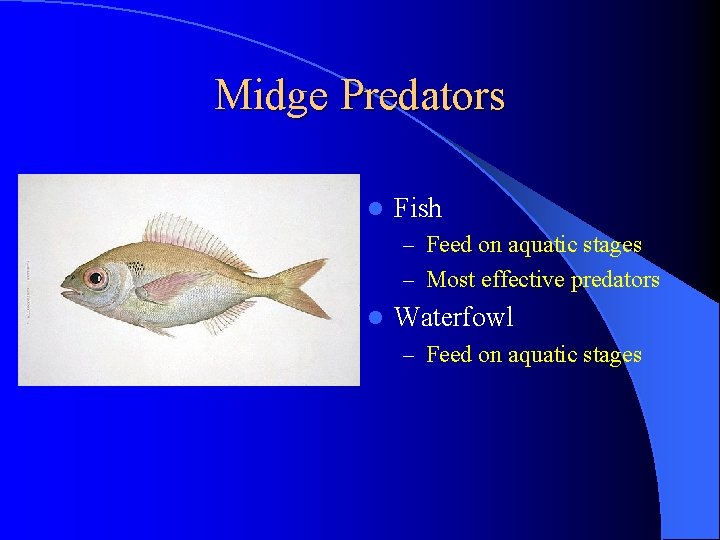
Midge Predators l Fish – Feed on aquatic stages – Most effective predators l Waterfowl – Feed on aquatic stages
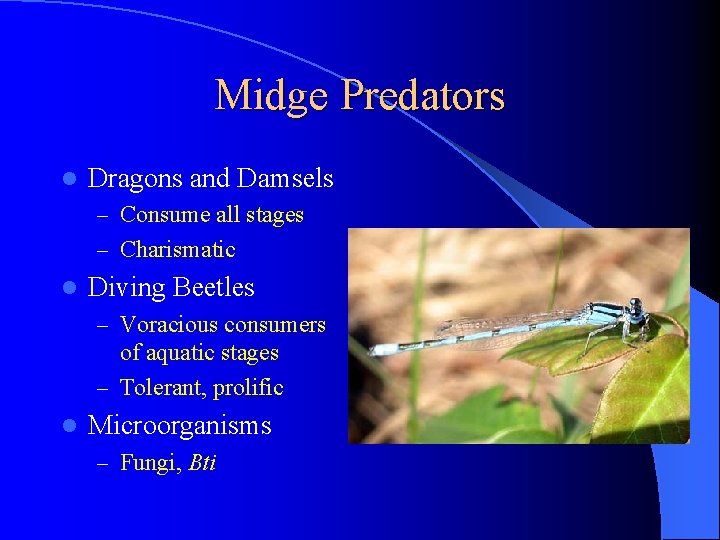
Midge Predators l Dragons and Damsels – Consume all stages – Charismatic l Diving Beetles – Voracious consumers of aquatic stages – Tolerant, prolific l Microorganisms – Fungi, Bti
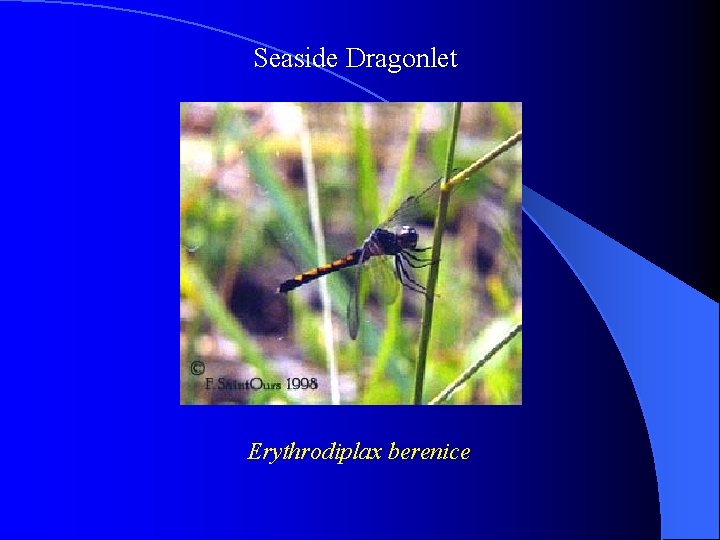
Seaside Dragonlet Erythrodiplax berenice
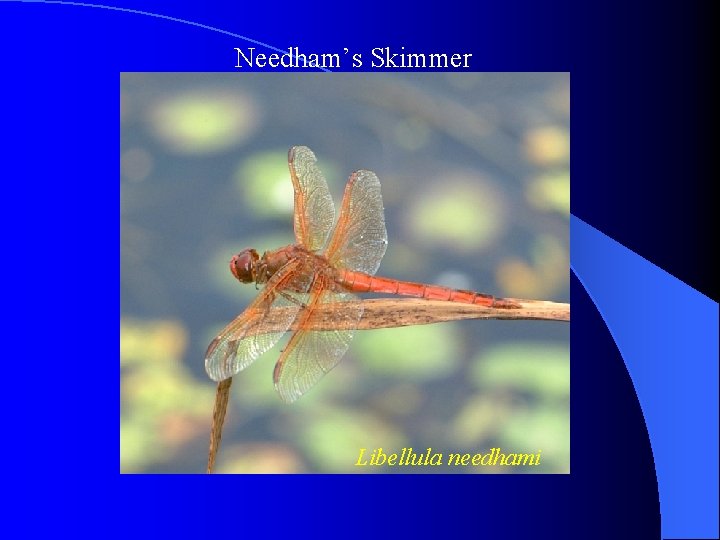
Needham’s Skimmer Libellula needhami
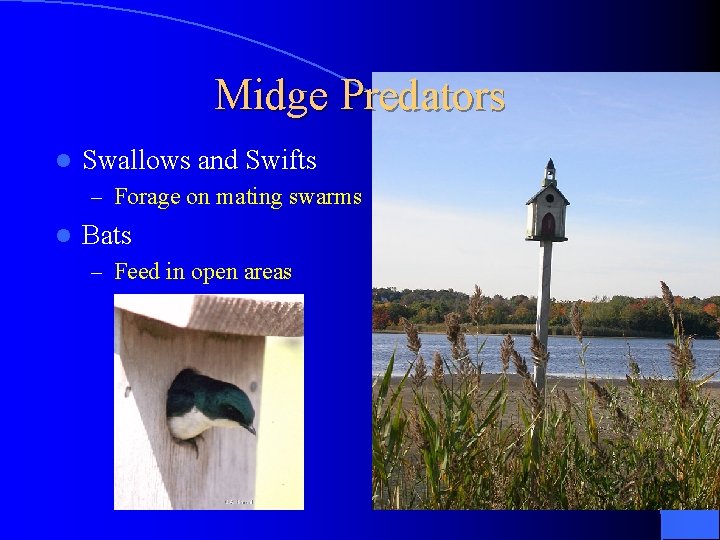
Midge Predators l Swallows and Swifts – Forage on mating swarms l Bats – Feed in open areas
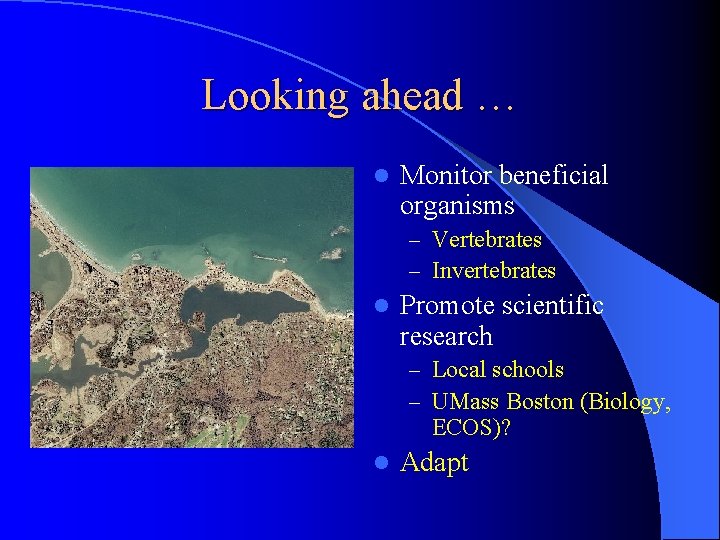
Looking ahead … l Monitor beneficial organisms – Vertebrates – Invertebrates l Promote scientific research – Local schools – UMass Boston (Biology, ECOS)? l Adapt
- Slides: 32