
STRAIN GAUGE CONTENTS Introduction Strain Measurement Techniques Types
- Slides: 20
STRAIN GAUGE
CONTENTS • Introduction Ø Strain Ø Measurement Techniques • Types of Strain • Resistive Strain gauge • Gauge Factor • Strain Gauge Sensitivity • Wheat Stone Bridge • Types of Strain Gauges
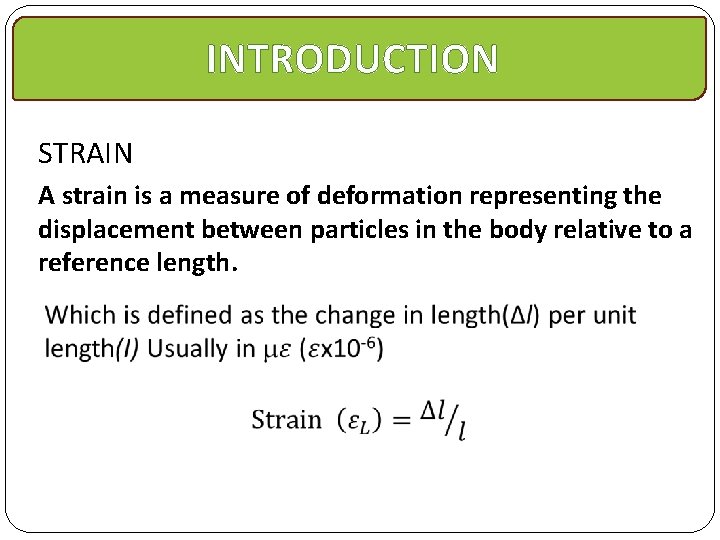
INTRODUCTION STRAIN A strain is a measure of deformation representing the displacement between particles in the body relative to a reference length.
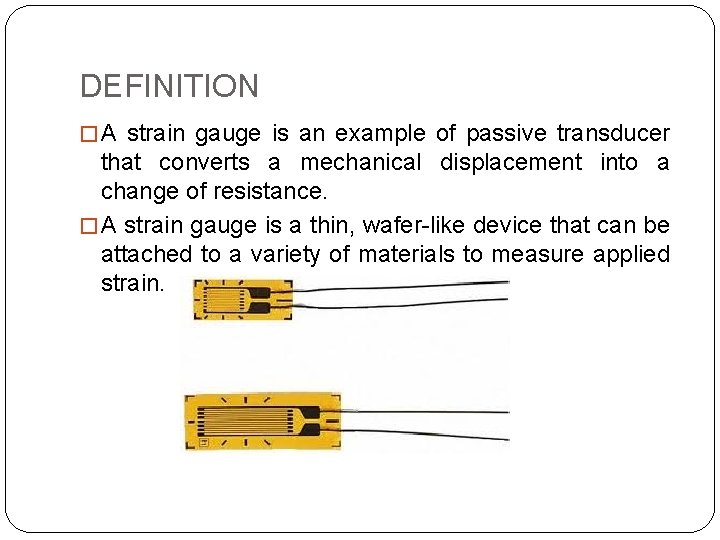
DEFINITION � A strain gauge is an example of passive transducer that converts a mechanical displacement into a change of resistance. � A strain gauge is a thin, wafer-like device that can be attached to a variety of materials to measure applied strain.
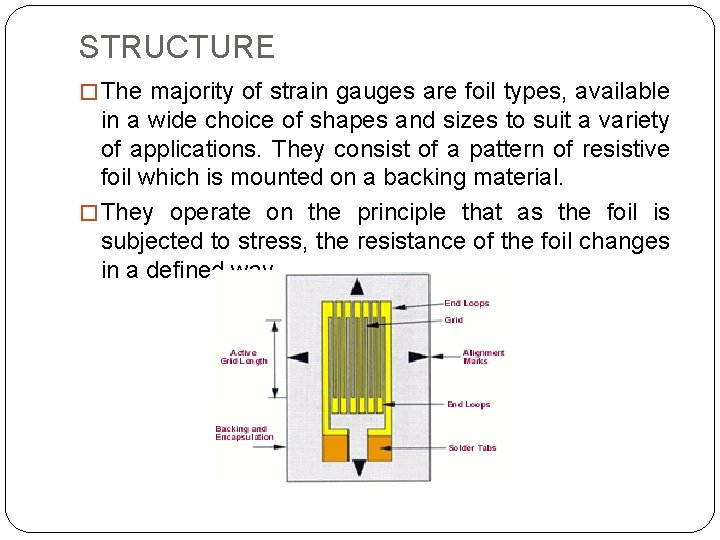
STRUCTURE � The majority of strain gauges are foil types, available in a wide choice of shapes and sizes to suit a variety of applications. They consist of a pattern of resistive foil which is mounted on a backing material. � They operate on the principle that as the foil is subjected to stress, the resistance of the foil changes in a defined way.
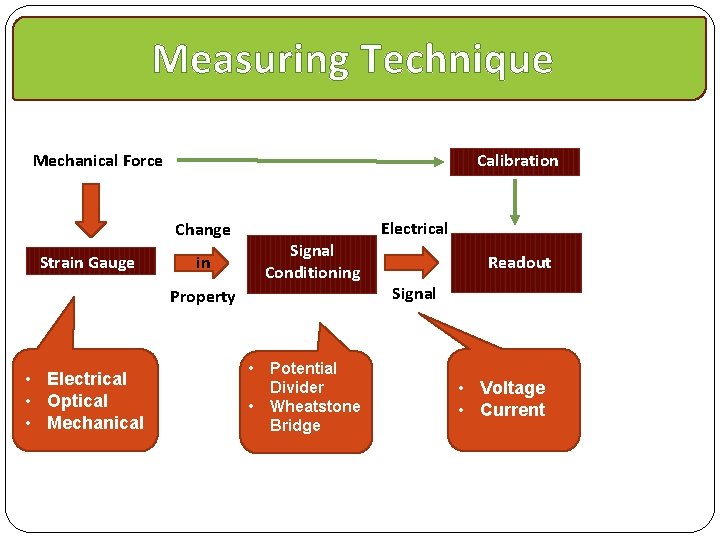
Measuring Technique Mechanical Force Calibration Electrical Change Strain Gauge Signal Conditioning in Property • Electrical • Optical • Mechanical • • Potential Divider Wheatstone Bridge Readout Signal • Voltage • Current
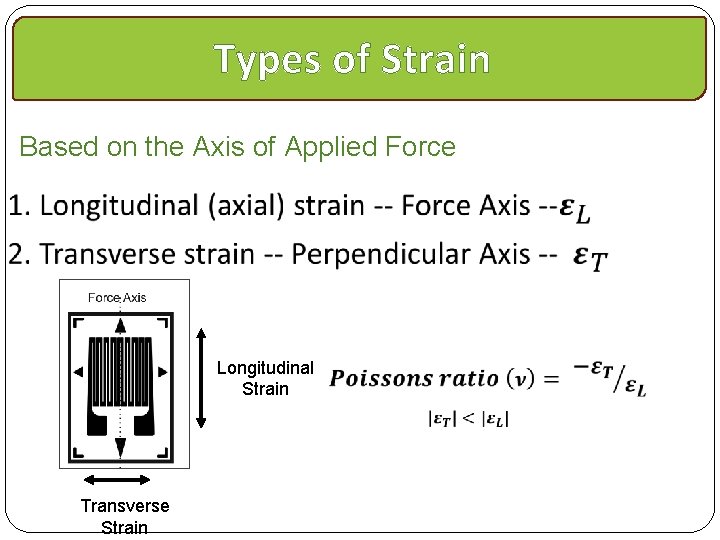
Types of Strain Based on the Axis of Applied Force Longitudinal Strain Transverse Strain
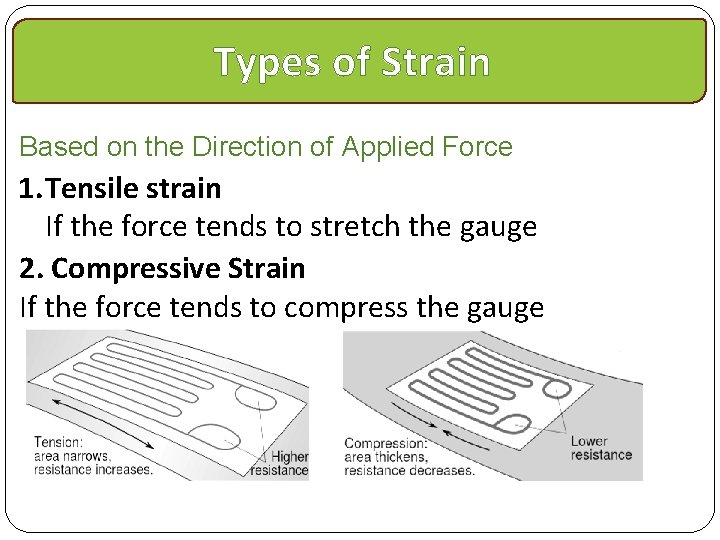
Types of Strain Based on the Direction of Applied Force 1. Tensile strain If the force tends to stretch the gauge 2. Compressive Strain If the force tends to compress the gauge
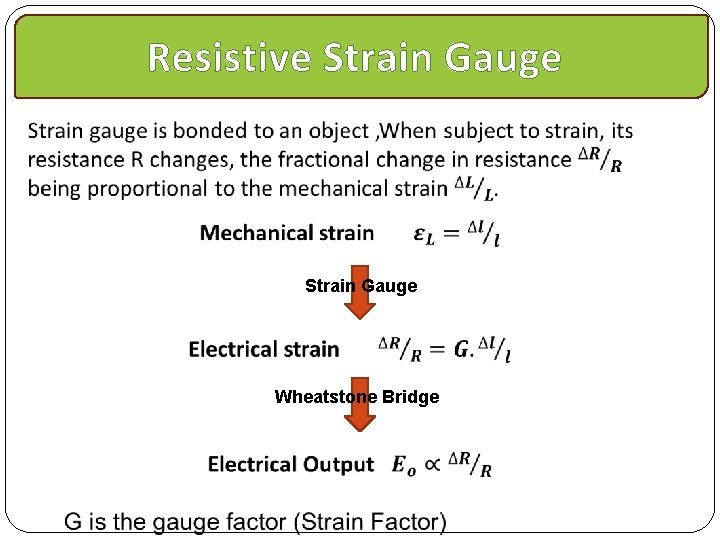
Resistive Strain Gauge Wheatstone Bridge
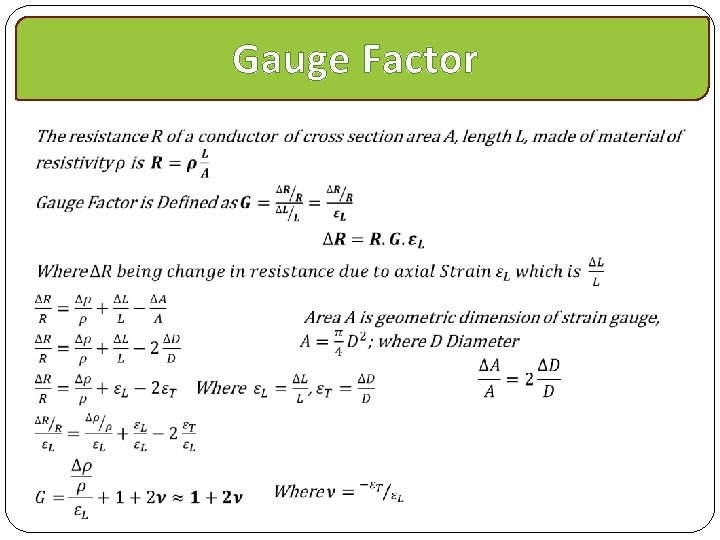
Gauge Factor
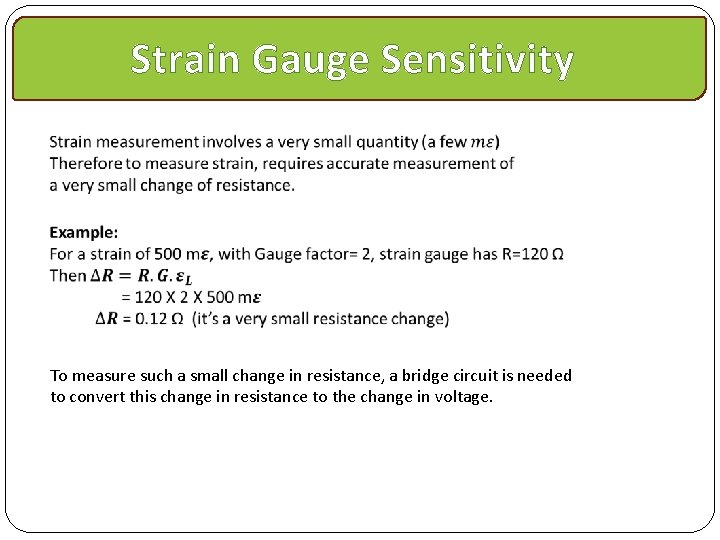
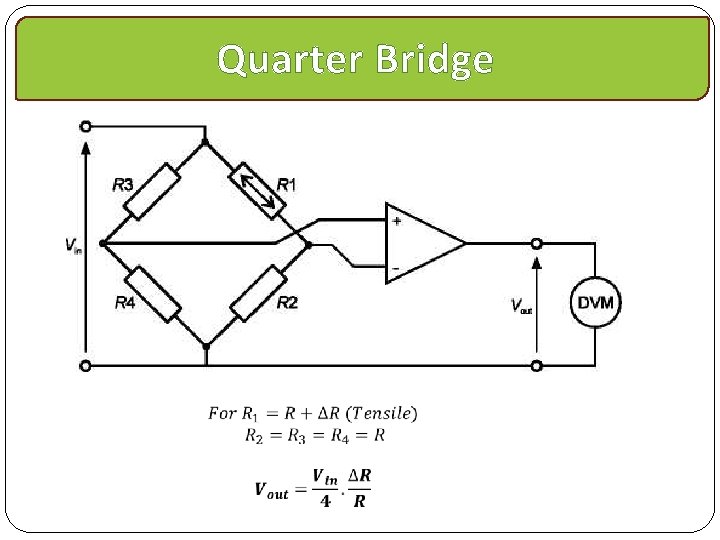
Strain Gauge Sensitivity To measure such a small change in resistance, a bridge circuit is needed to convert this change in resistance to the change in voltage.
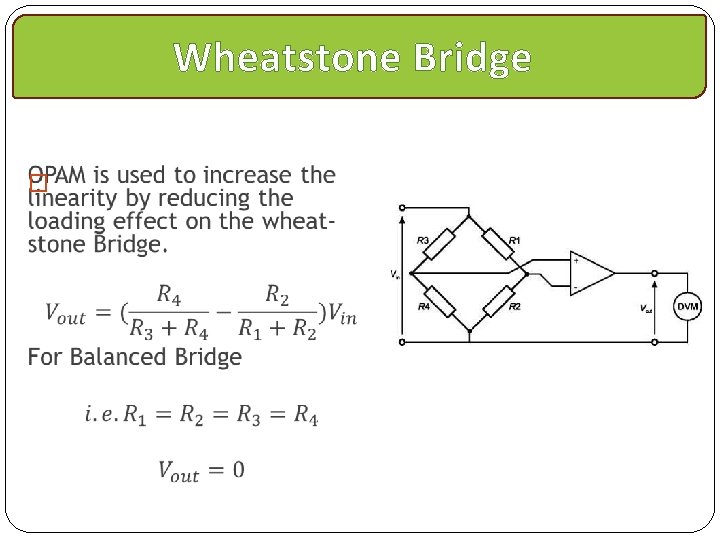
Wheatstone Bridge �
Quarter Bridge
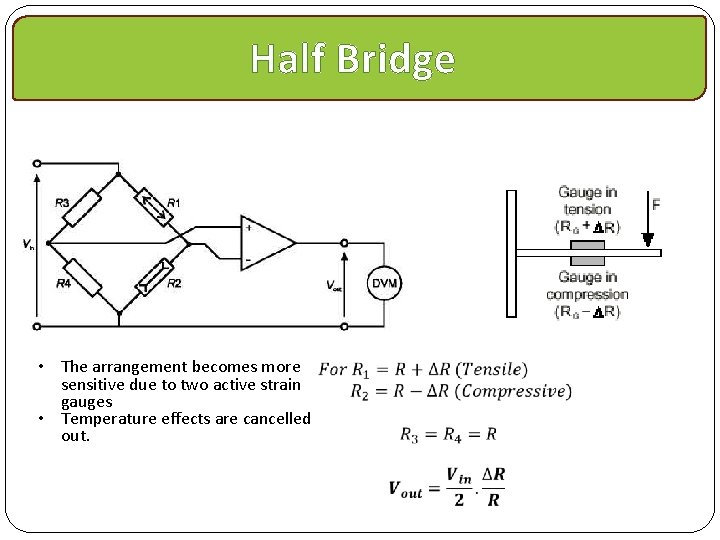
Half Bridge • The arrangement becomes more sensitive due to two active strain gauges • Temperature effects are cancelled out.
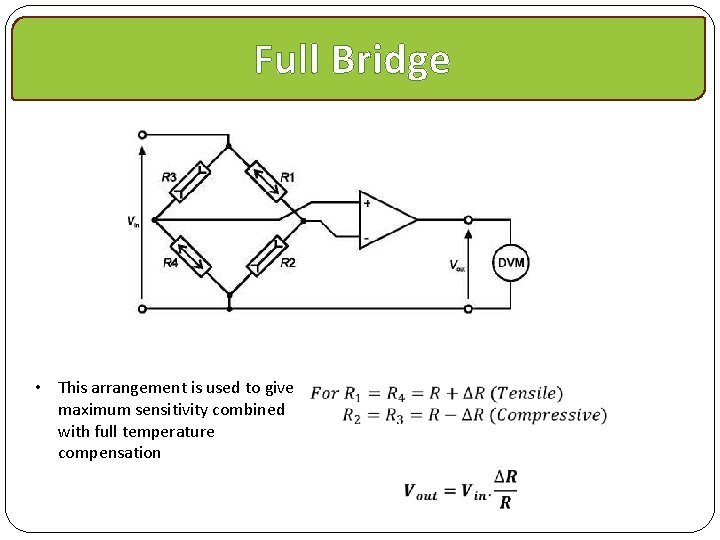
Full Bridge • This arrangement is used to give maximum sensitivity combined with full temperature compensation
Types of Strain Gauge Various means like Mechanical, optical or electrical can be used to measure deformation (strain) of an object. o Mechanical strain gauges offer certain limitations like low resolutions. Besides they are bulky and difficult to use. o Capacitance and Inductance-based strain gages were introduced but these devices sensitivity to vibration, their mounting requirements, and circuit complexity restricted their usage. o A photoelectric gauge can be as short as 1/16 inch but its usage proves to be extremely costly and delicate. o Other types of Strain Gauges are: • Bonded Strain Gauges • Unbonded Strain Gauges • Rosettes • Semiconductor (Piezo-resistive) strain gauges
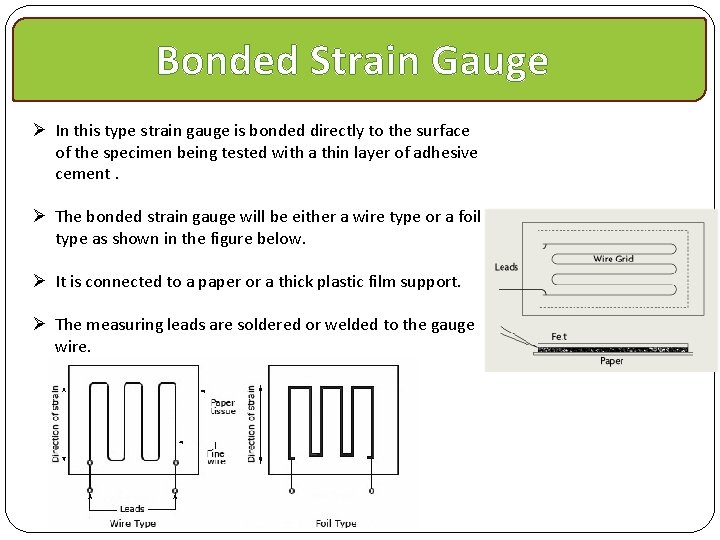
Bonded Strain Gauge Ø In this type strain gauge is bonded directly to the surface of the specimen being tested with a thin layer of adhesive cement. Ø The bonded strain gauge will be either a wire type or a foil type as shown in the figure below. Ø It is connected to a paper or a thick plastic film support. Ø The measuring leads are soldered or welded to the gauge wire.
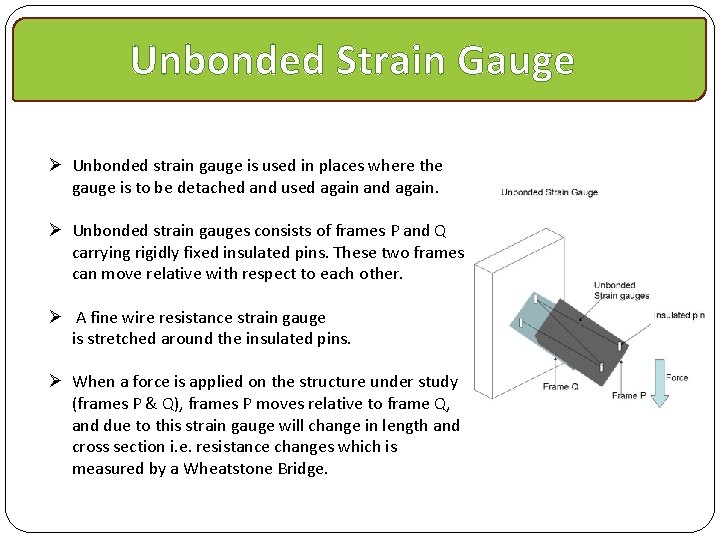
Unbonded Strain Gauge Ø Unbonded strain gauge is used in places where the gauge is to be detached and used again and again. Ø Unbonded strain gauges consists of frames P and Q carrying rigidly fixed insulated pins. These two frames can move relative with respect to each other. Ø A fine wire resistance strain gauge is stretched around the insulated pins. Ø When a force is applied on the structure under study (frames P & Q), frames P moves relative to frame Q, and due to this strain gauge will change in length and cross section i. e. resistance changes which is measured by a Wheatstone Bridge.
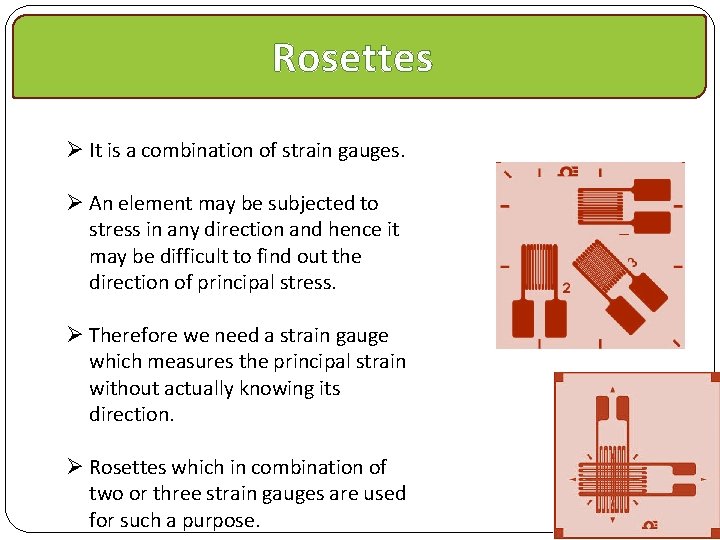
Rosettes Ø It is a combination of strain gauges. Ø An element may be subjected to stress in any direction and hence it may be difficult to find out the direction of principal stress. Ø Therefore we need a strain gauge which measures the principal strain without actually knowing its direction. Ø Rosettes which in combination of two or three strain gauges are used for such a purpose.
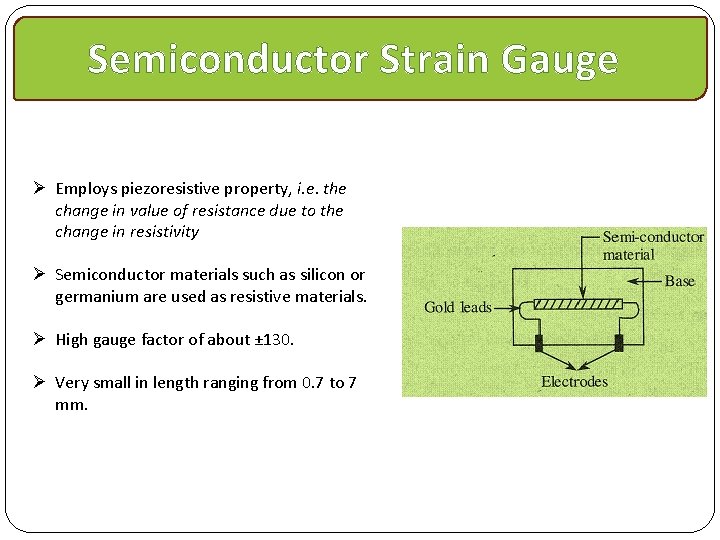
Semiconductor Strain Gauge Ø Employs piezoresistive property, i. e. the change in value of resistance due to the change in resistivity Ø Semiconductor materials such as silicon or germanium are used as resistive materials. Ø High gauge factor of about ± 130. Ø Very small in length ranging from 0. 7 to 7 mm.