
Storyboarding Water Properties Nora Egan Demers Joanna SalapskaGelleri
Storyboarding Water Properties Nora Egan Demers Joanna Salapska-Gelleri
• • • Background- how we got here What we did What we’ve learned so far What we’d like to do Can it play a valuable role in program assessment? Demers and Salapska-Gelleri 6/5/2021
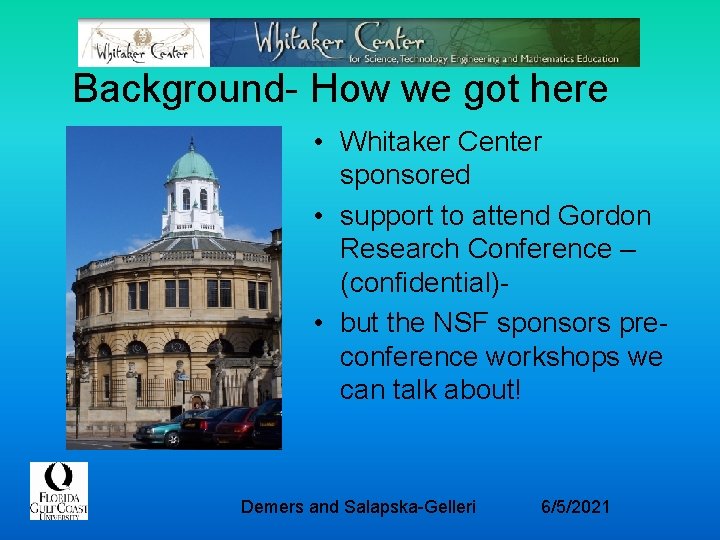
Background- How we got here • Whitaker Center sponsored • support to attend Gordon Research Conference – (confidential) • but the NSF sponsors preconference workshops we can talk about! Demers and Salapska-Gelleri 6/5/2021
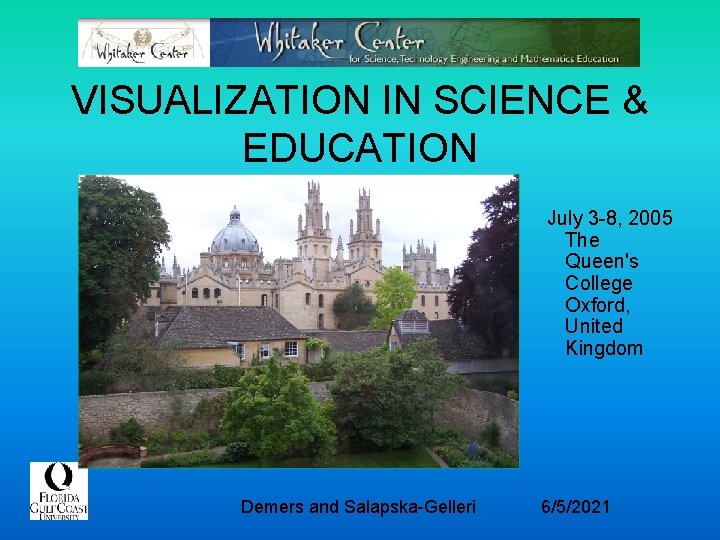
VISUALIZATION IN SCIENCE & EDUCATION July 3 -8, 2005 The Queen's College Oxford, United Kingdom Demers and Salapska-Gelleri 6/5/2021
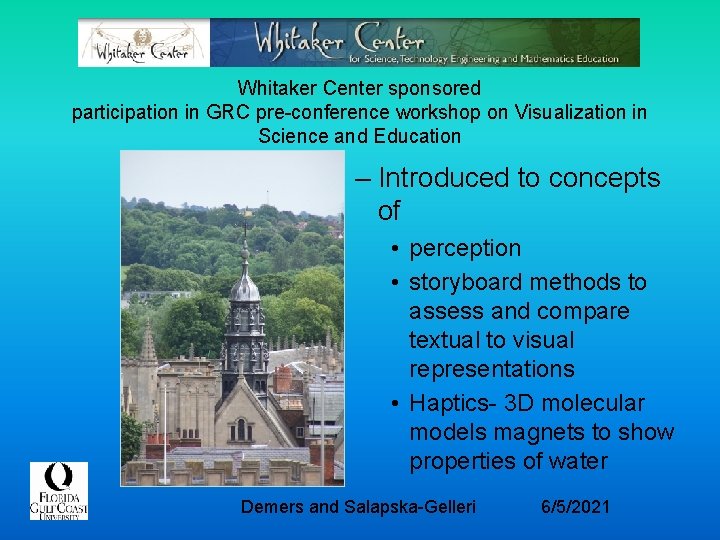
Whitaker Center sponsored participation in GRC pre-conference workshop on Visualization in Science and Education – Introduced to concepts of • perception • storyboard methods to assess and compare textual to visual representations • Haptics- 3 D molecular models magnets to show properties of water Demers and Salapska-Gelleri 6/5/2021
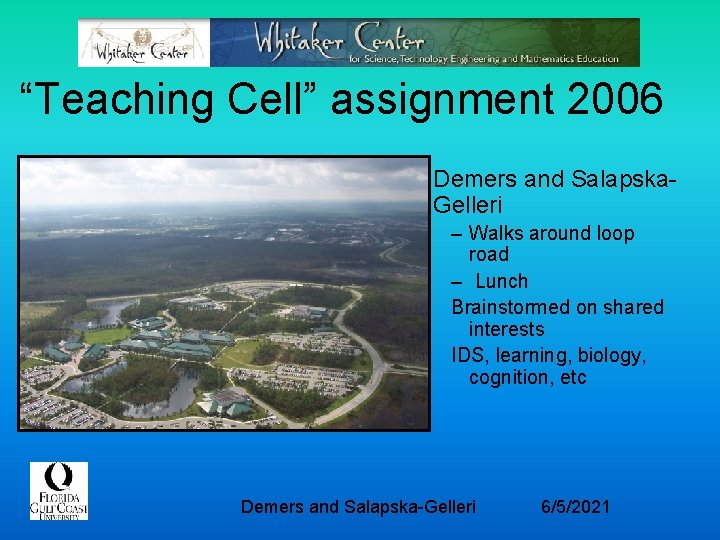
“Teaching Cell” assignment 2006 • Demers and Salapska. Gelleri – Walks around loop road – Lunch Brainstormed on shared interests IDS, learning, biology, cognition, etc Demers and Salapska-Gelleri 6/5/2021
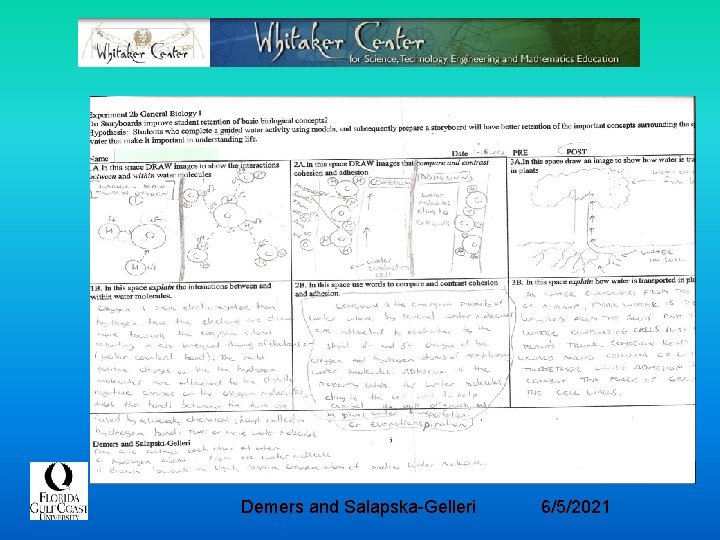
What we did • What is a “fundamental and powerful concept” in Biology (and other natural sciences)? • Drafted storyboard to assess student understanding of knowledge before and after using cool magnets in hands-on learning approach in Gen Bio I • Approach D. Schmidt with idea- she suggested 3 rd box to extend to assess their understanding of higher level application – how does water go up a tree? Demers and Salapska-Gelleri 6/5/2021
Demers and Salapska-Gelleri 6/5/2021
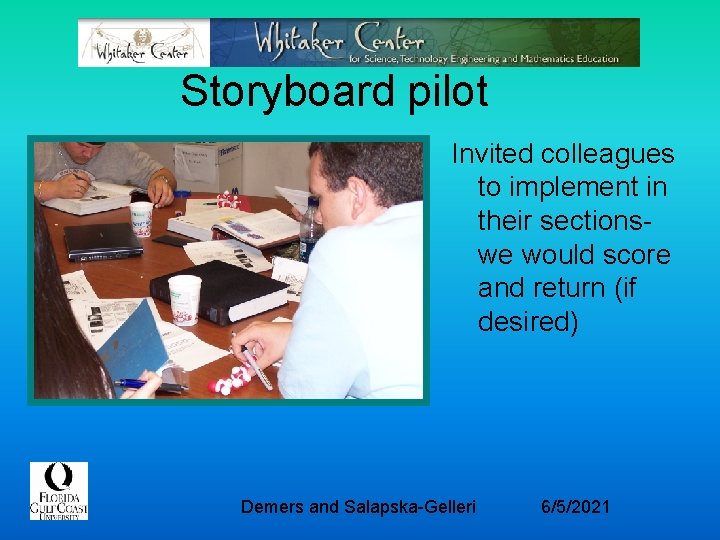
Storyboard pilot Invited colleagues to implement in their sectionswe would score and return (if desired) Demers and Salapska-Gelleri 6/5/2021
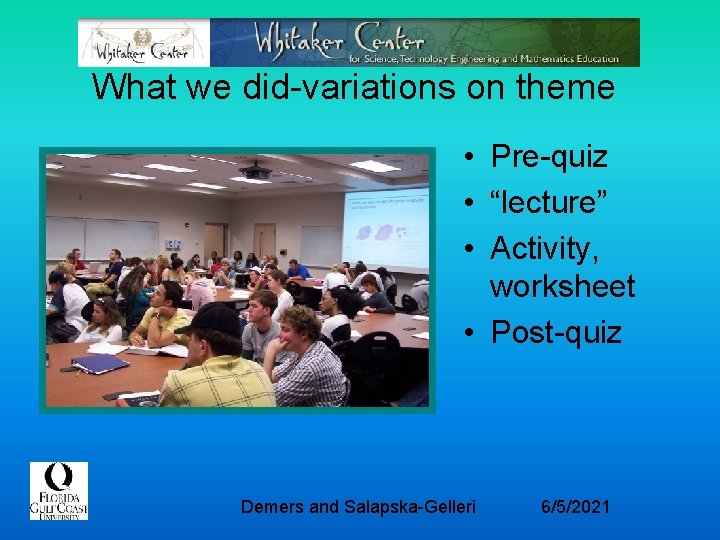
What we did-variations on theme • Pre-quiz • “lecture” • Activity, worksheet • Post-quiz Demers and Salapska-Gelleri 6/5/2021
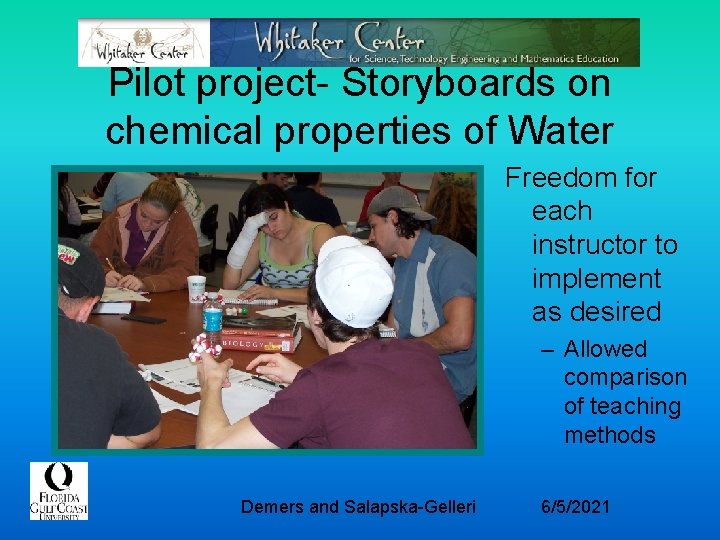
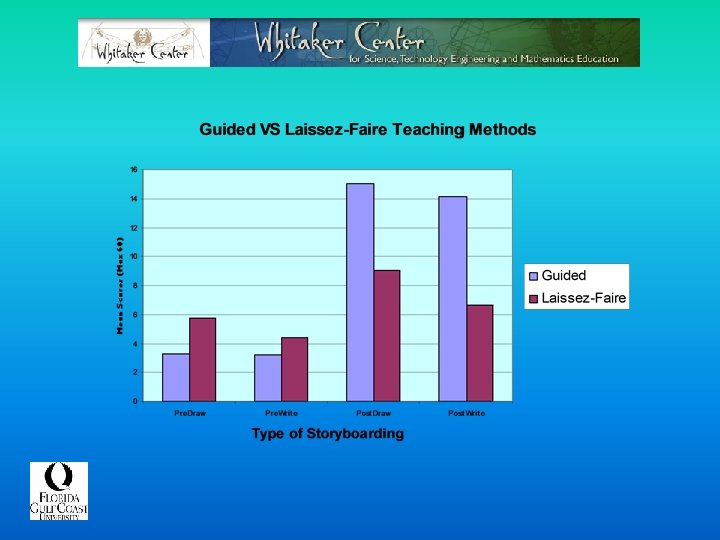
Pilot project- Storyboards on chemical properties of Water Freedom for each instructor to implement as desired – Allowed comparison of teaching methods Demers and Salapska-Gelleri 6/5/2021
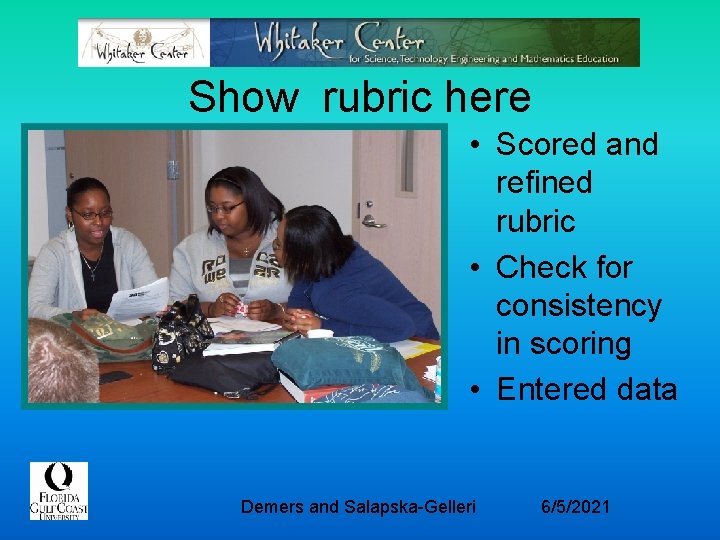
Show rubric here • Scored and refined rubric • Check for consistency in scoring • Entered data Demers and Salapska-Gelleri 6/5/2021
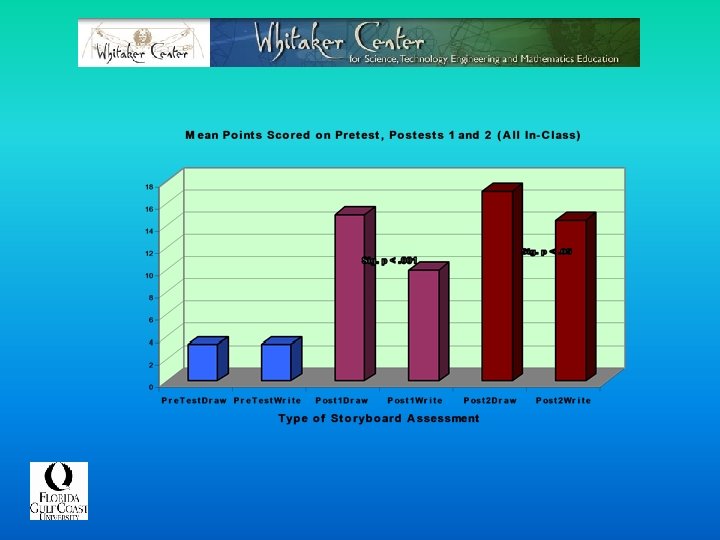
Preliminary Analyses Conducted • Scores based on collapsed values for Boxes 1 and 2. • Comparison of baseline knowledge for written versus graphic water properties. • Gains from class activity as a function of Pre and Post test performance. • Evaluation techniques: concurrent, homework, in-class post.
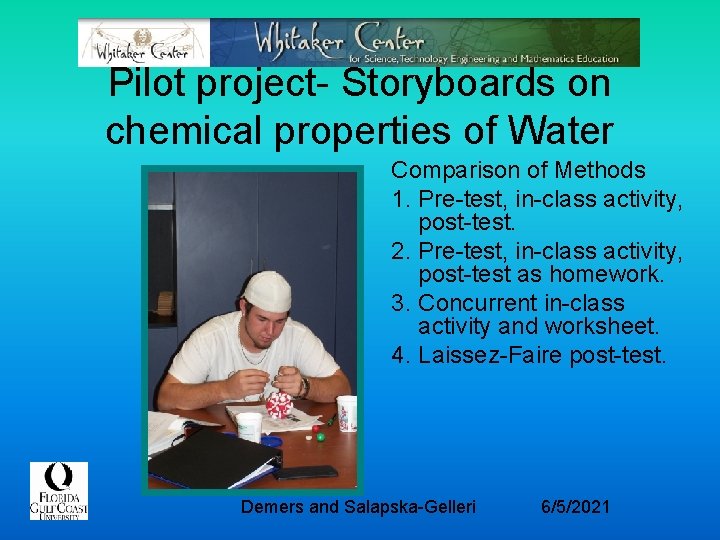
Pilot project- Storyboards on chemical properties of Water Comparison of Methods 1. Pre-test, in-class activity, post-test. 2. Pre-test, in-class activity, post-test as homework. 3. Concurrent in-class activity and worksheet. 4. Laissez-Faire post-test. Demers and Salapska-Gelleri 6/5/2021
Demers and Salapska-Gelleri 6/5/2021
What did they retain? • In two of sections the post was done again during DNA replication chapter – Tried to reinforced importance of distinguishing hydrogen and covalent bonding properties – Those data showed Demers and Salapska-Gelleri 6/5/2021
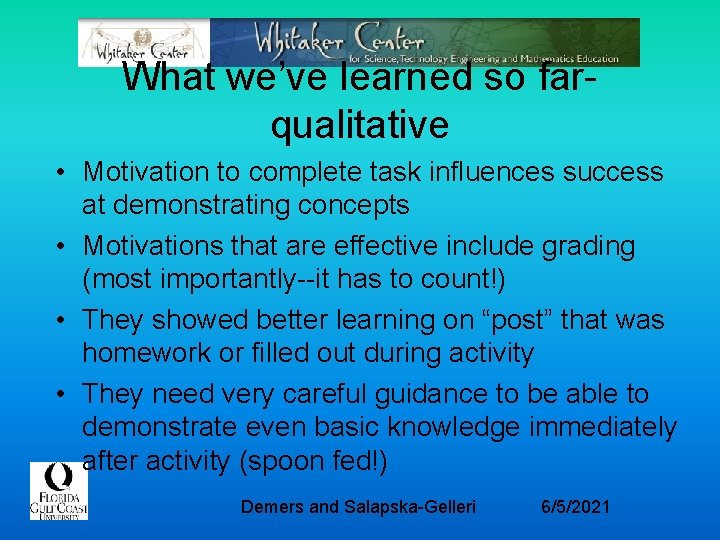
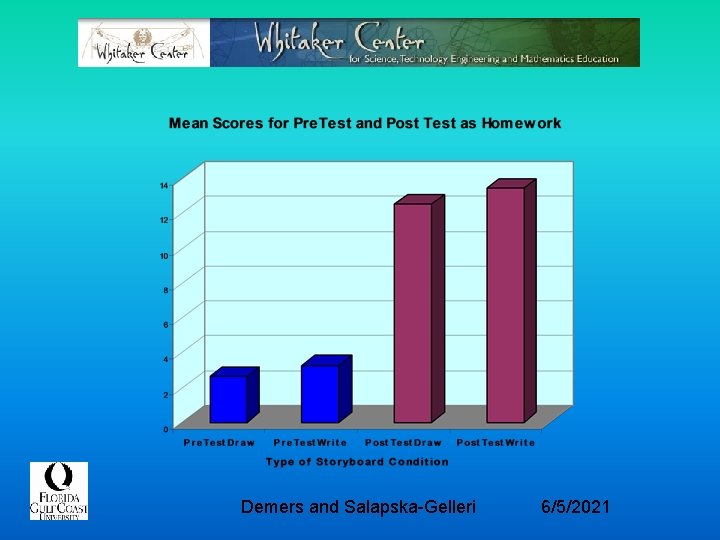
What we’ve learned so farqualitative • Motivation to complete task influences success at demonstrating concepts • Motivations that are effective include grading (most importantly--it has to count!) • They showed better learning on “post” that was homework or filled out during activity • They need very careful guidance to be able to demonstrate even basic knowledge immediately after activity (spoon fed!) Demers and Salapska-Gelleri 6/5/2021
What we’d like to do • Reassess later in term and in future classes • Submitted IACUC application • Compare to other benchmarks – SAT, GPA, class grade, etc Demers and Salapska-Gelleri 6/5/2021
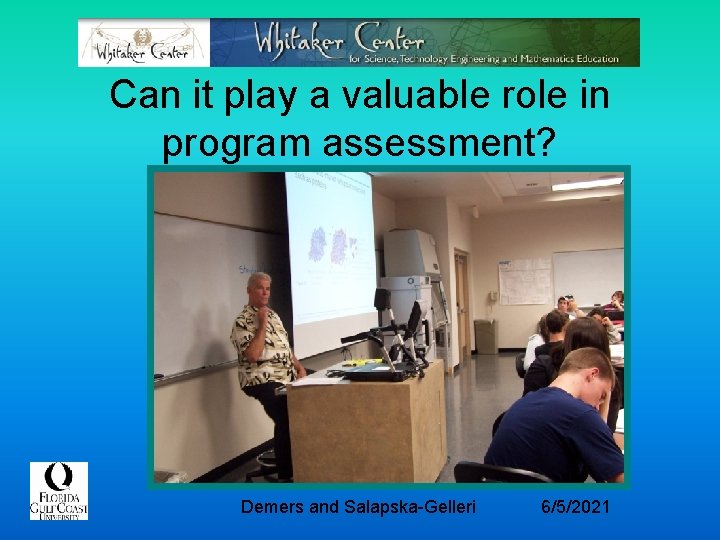
Can it play a valuable role in program assessment? Demers and Salapska-Gelleri 6/5/2021
Whitaker Center initiative? • • Can we collaborate? Can we apply for grants? Can we earn grants? What do we need to do? You help decide future of project and its scope
- Slides: 22