
Storyboard Population Main point Because earth is effectively
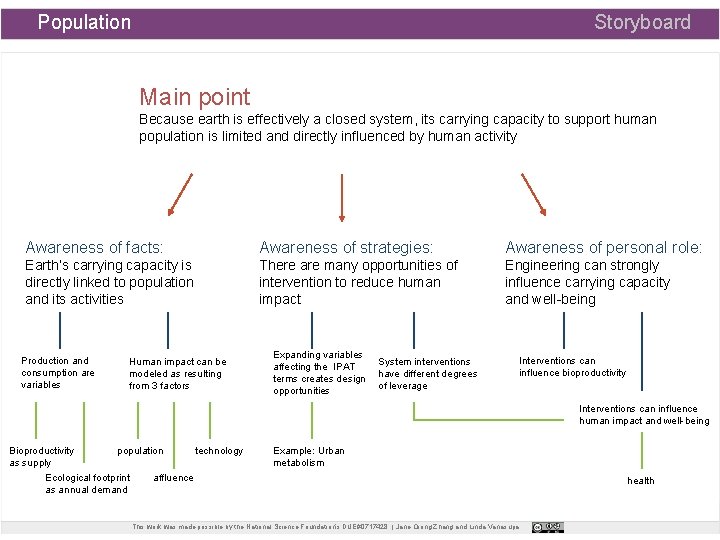
Storyboard Population Main point Because earth is effectively a closed system, its carrying capacity to support human population is limited and directly influenced by human activity Awareness of facts: Awareness of strategies: Awareness of personal role: Earth’s carrying capacity is directly linked to population and its activities There are many opportunities of intervention to reduce human impact Engineering can strongly influence carrying capacity and well-being Production and consumption are variables Human impact can be modeled as resulting from 3 factors Expanding variables affecting the IPAT terms creates design opportunities System interventions have different degrees of leverage Interventions can influence bioproductivity Interventions can influence human impact and well-being Bioproductivity population technology as supply Ecological footprint affluence as annual demand Example: Urban metabolism This work was made possible by the National Science Foundation’s DUE#0717428 | Jane Qiong Zhang and Linda Vanasupa health
Population 2
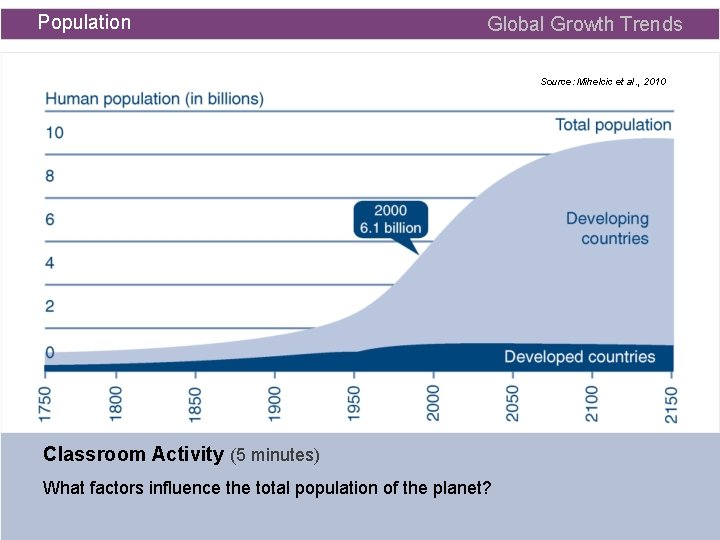
Population Global Growth Trends Source: Mihelcic et al. , 2010 Classroom Activity (5 minutes) What factors influence the total population of the planet?
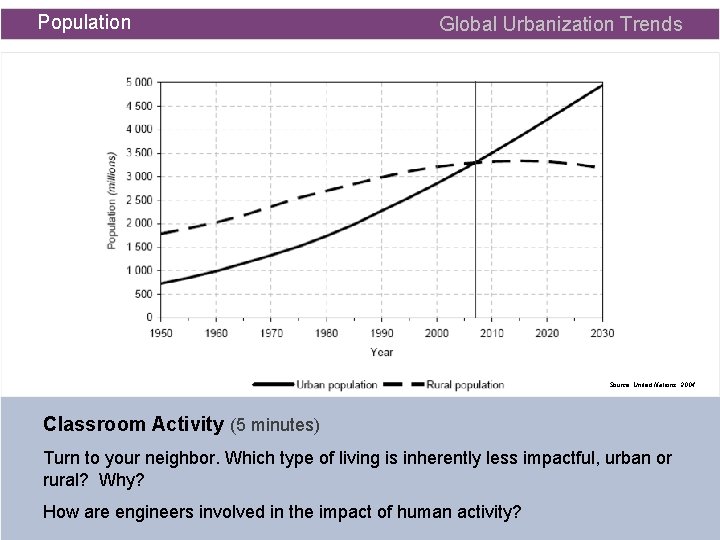
Population Global Urbanization Trends Source: United Nations, 2004. Classroom Activity (5 minutes) Turn to your neighbor. Which type of living is inherently less impactful, urban or rural? Why? How are engineers involved in the impact of human activity?
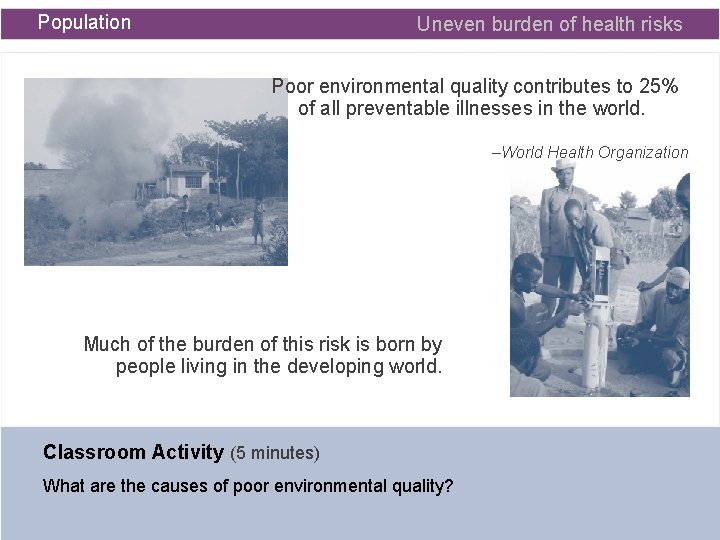
Population Uneven burden of health risks Poor environmental quality contributes to 25% of all preventable illnesses in the world. –World Health Organization Much of the burden of this risk is born by people living in the developing world. Classroom Activity (5 minutes) What are the causes of poor environmental quality?
Population Carrying Capacity 6

Population Carrying Capacity How many people can the earth support? System Boundary Conceptually “separates” the system and surroundings E Can exchange energy but not enough mass to affect its thermodynamic state Classroom Activity (2 minutes) Turn to your neighbor. Together determine what would you need to know in order to compute how many people the earth can support each year? 3

Population Carrying Capacity How many people can the earth support? System Boundary Conceptually “separates” the system and surroundings E Can exchange energy but not enough mass to affect its thermodynamic state Classroom Activity (2 minutes) Turn to your neighbor. Together determine what would you need to know in order to compute how many people the earth can support each year? 3
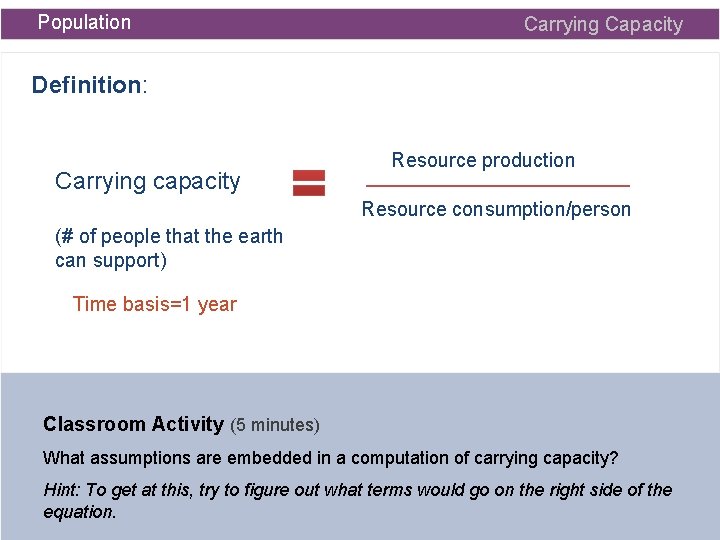
Population Carrying Capacity Definition: Carrying capacity Resource production Resource consumption/person (# of people that the earth can support) Time basis=1 year Classroom Activity (5 minutes) What assumptions are embedded in a computation of carrying capacity? Hint: To get at this, try to figure out what terms would go on the right side of the equation.
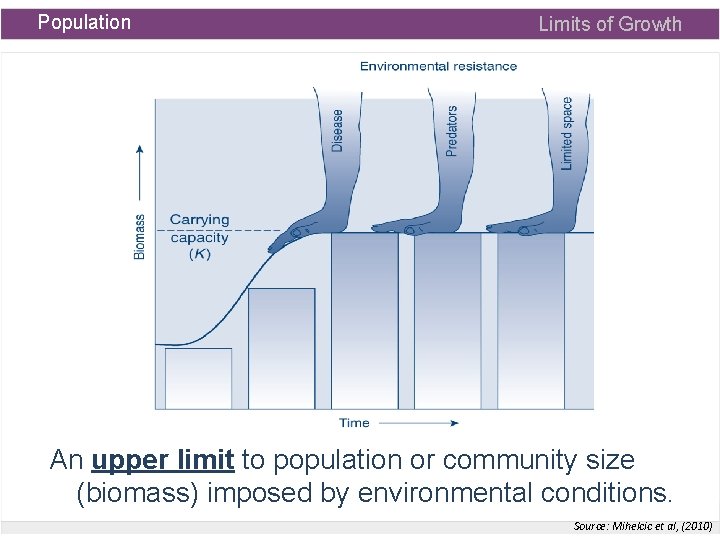
Population Limits of Growth An upper limit to population or community size (biomass) imposed by environmental conditions. Source: Mihelcic et al, (2010)
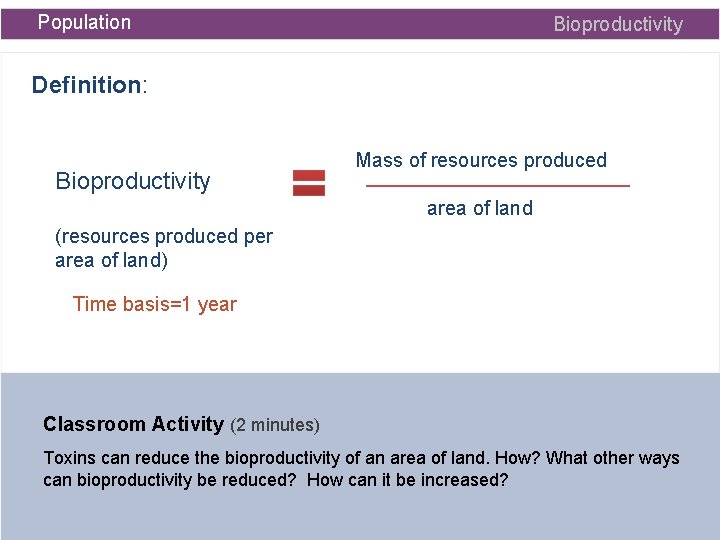
Population Bioproductivity Definition: Bioproductivity Mass of resources produced area of land (resources produced per area of land) Time basis=1 year Classroom Activity (2 minutes) Toxins can reduce the bioproductivity of an area of land. How? What other ways can bioproductivity be reduced? How can it be increased?
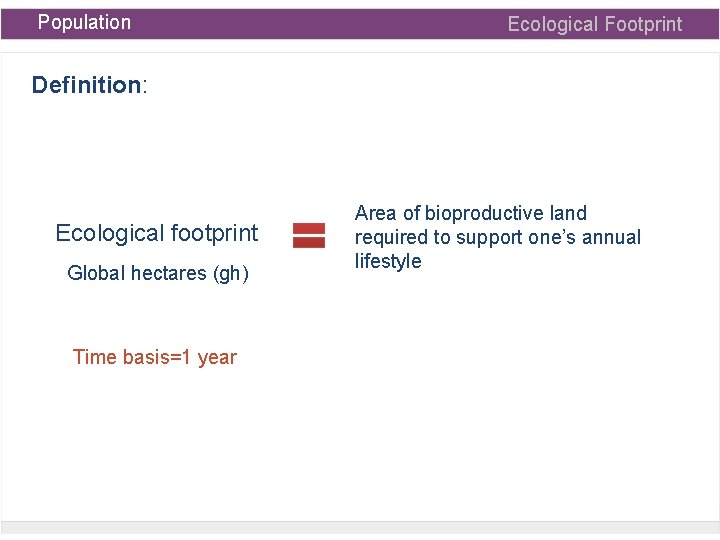
Population Ecological Footprint Definition: Ecological footprint Global hectares (gh) Time basis=1 year Area of bioproductive land required to support one’s annual lifestyle
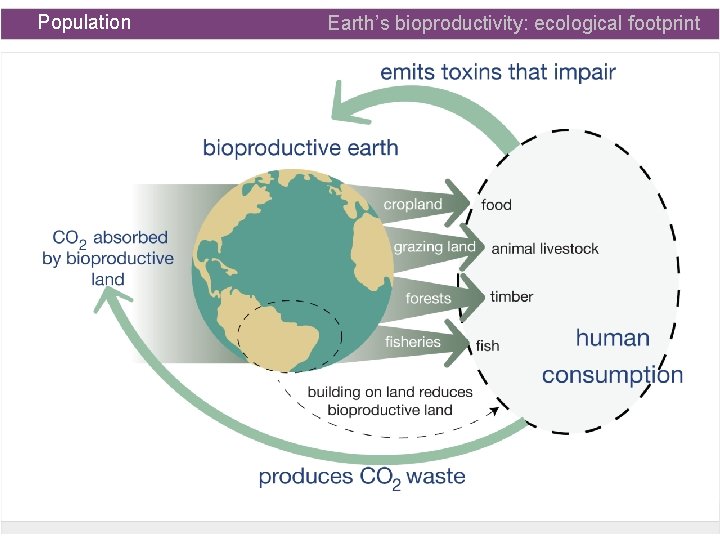
Population Earth’s bioproductivity: ecological footprint
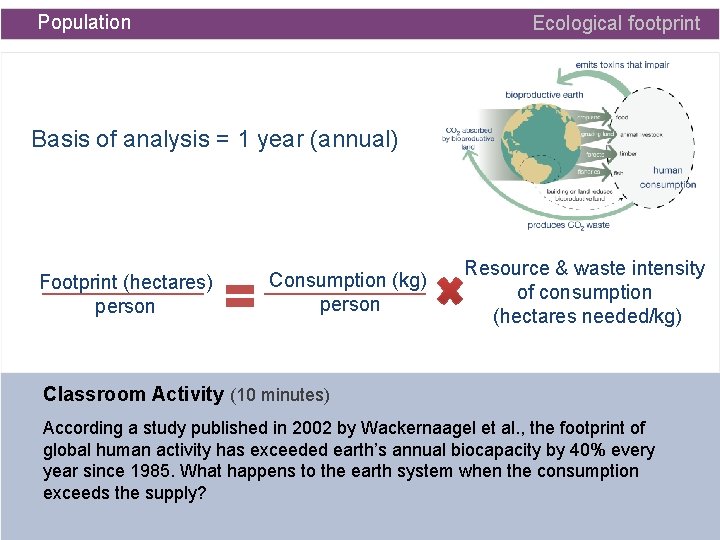
Population Ecological footprint Basis of analysis = 1 year (annual) Footprint (hectares) person Consumption (kg) person Resource & waste intensity of consumption (hectares needed/kg) Classroom Activity (10 minutes) According a study published in 2002 by Wackernaagel et al. , the footprint of global human activity has exceeded earth’s annual biocapacity by 40% every year since 1985. What happens to the earth system when the consumption exceeds the supply?
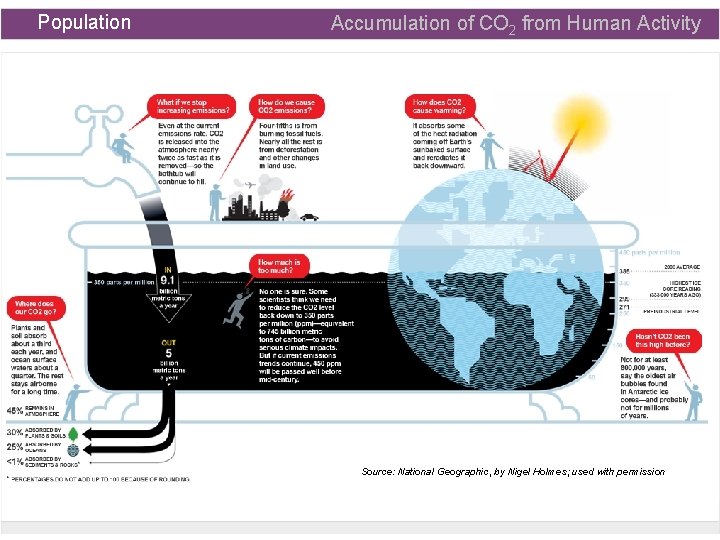
Population Accumulation of CO 2 from Human Activity Source: National Geographic, by Nigel Holmes; used with permission
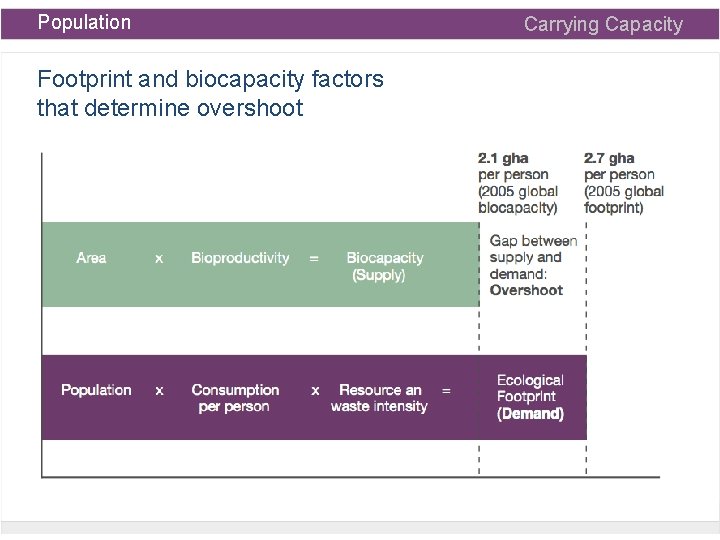
Population Footprint and biocapacity factors that determine overshoot Carrying Capacity
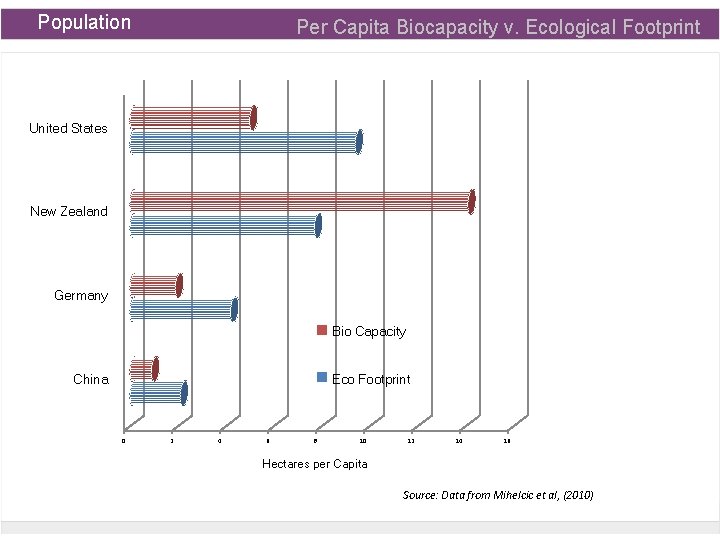
Population Per Capita Biocapacity v. Ecological Footprint United States New Zealand Germany Bio Capacity Eco Footprint China 0 2 4 6 8 10 12 14 16 Hectares per Capita Source: Data from Mihelcic et al, (2010)
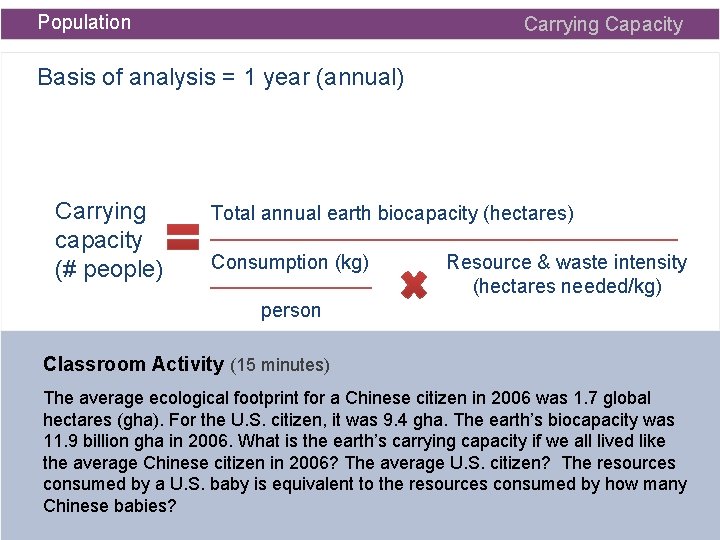
Population Carrying Capacity Basis of analysis = 1 year (annual) Carrying capacity (# people) Total annual earth biocapacity (hectares) Consumption (kg) Resource & waste intensity (hectares needed/kg) person Classroom Activity (15 minutes) The average ecological footprint for a Chinese citizen in 2006 was 1. 7 global hectares (gha). For the U. S. citizen, it was 9. 4 gha. The earth’s biocapacity was 11. 9 billion gha in 2006. What is the earth’s carrying capacity if we all lived like the average Chinese citizen in 2006? The average U. S. citizen? The resources consumed by a U. S. baby is equivalent to the resources consumed by how many Chinese babies? © 2009 - Jane Qiong Zhang and Linda Vanasupa
Population Intervention Strategies Using systems thinking 19
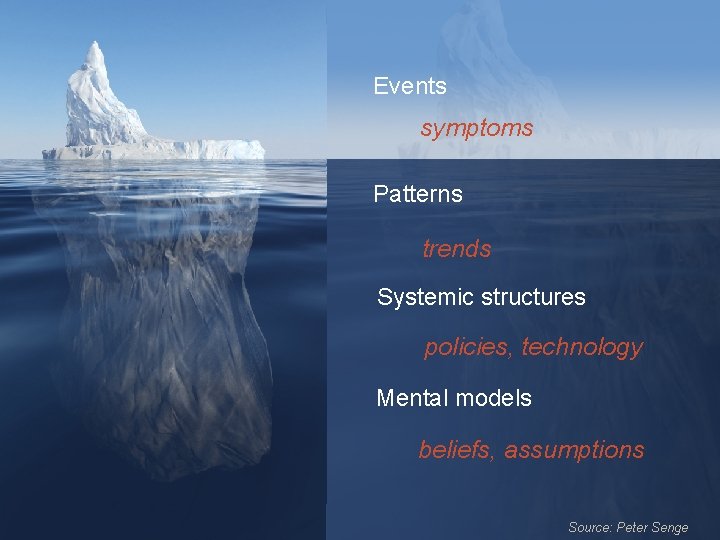
Population Events symptoms Patterns trends Systemic structures policies, technology Mental models beliefs, assumptions Source: Peter Senge
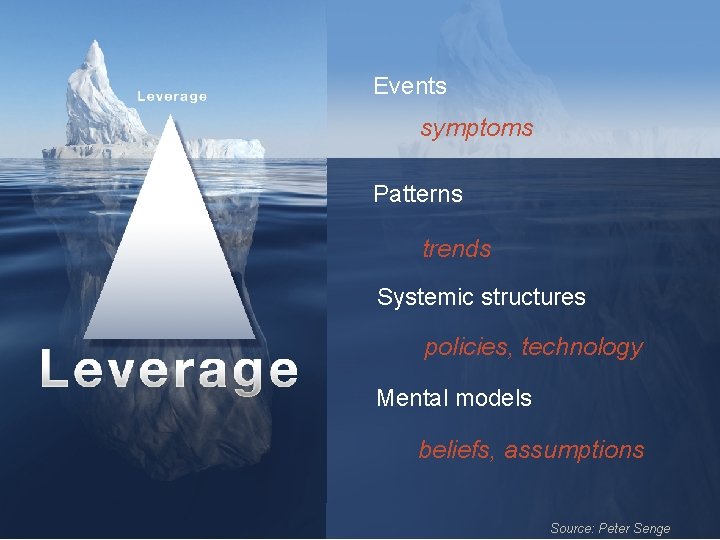
Population Events symptoms Patterns trends Systemic structures policies, technology Mental models beliefs, assumptions Source: Peter Senge
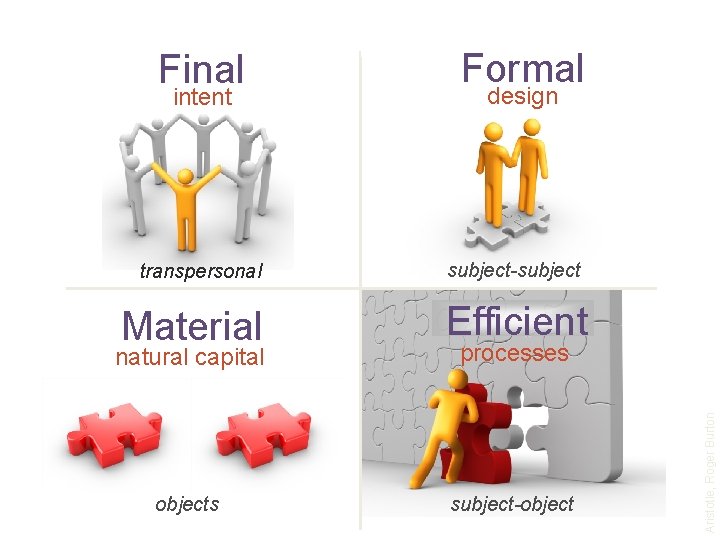
Population intent transpersonal Formal design subject-subject Material Efficient natural capital processes objects subject-object Aristotle, Roger Burton Final
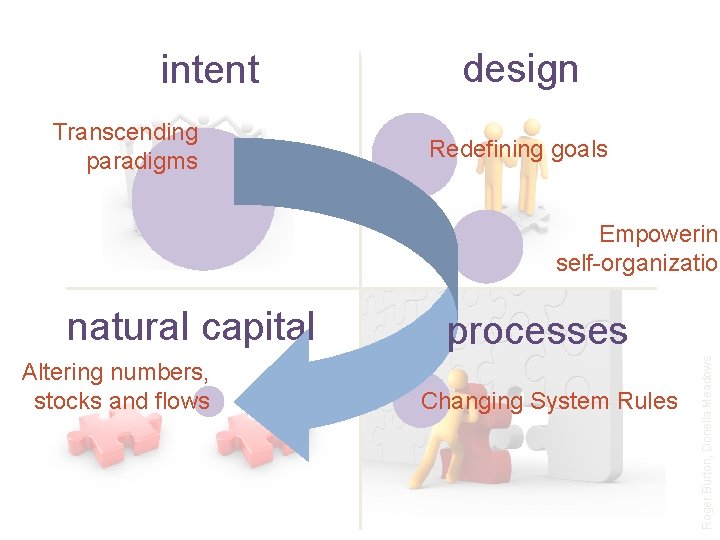
Population intent Transcending paradigms design Redefining goals Empowering self-organization Altering numbers, stocks and flows processes Changing System Rules Roger Burton, Donella Meadows natural capital
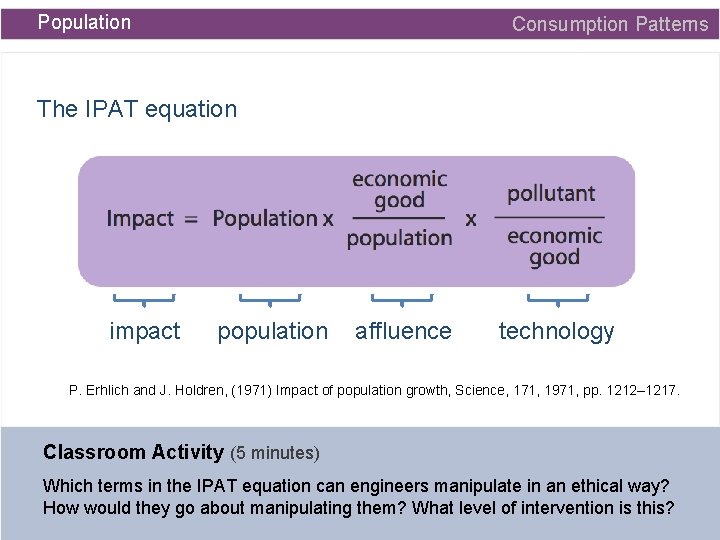
Population Consumption Patterns The IPAT equation impact population affluence technology P. Erhlich and J. Holdren, (1971) Impact of population growth, Science, 171, 1971, pp. 1212– 1217. Classroom Activity (5 minutes) Which terms in the IPAT equation can engineers manipulate in an ethical way? How would they go about manipulating them? What level of intervention is this?
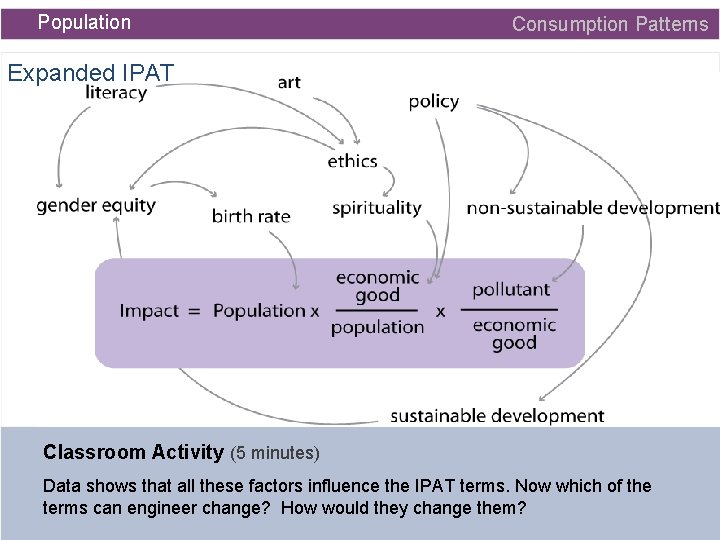
Population Consumption Patterns Expanded IPAT Classroom Activity (5 minutes) Data shows that all these factors influence the IPAT terms. Now which of the terms can engineer change? How would they change them?
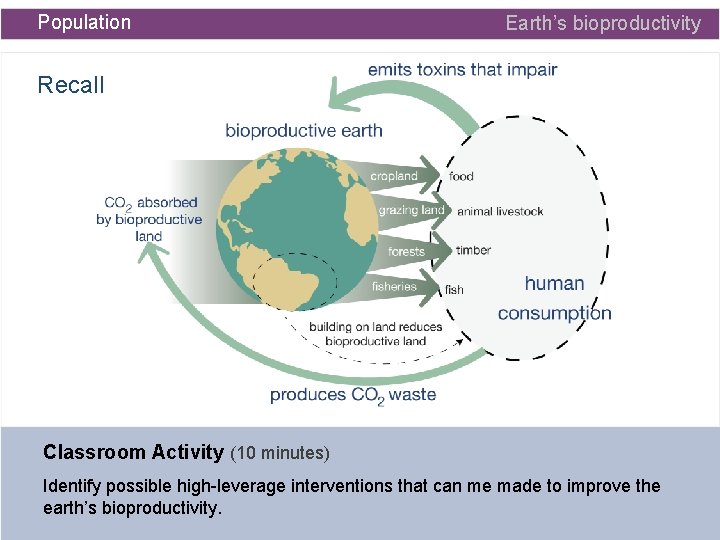
Population Earth’s bioproductivity Recall Classroom Activity (10 minutes) Identify possible high-leverage interventions that can me made to improve the earth’s bioproductivity.
Population Example Urban metabolism 27
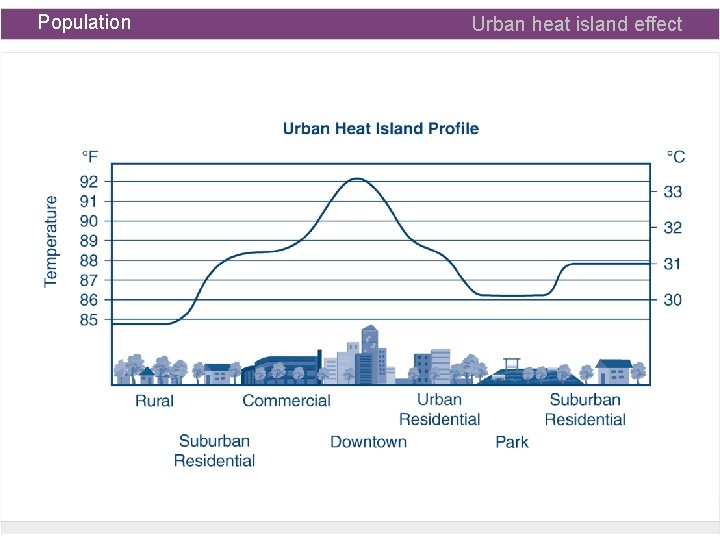
Population Urban heat island effect
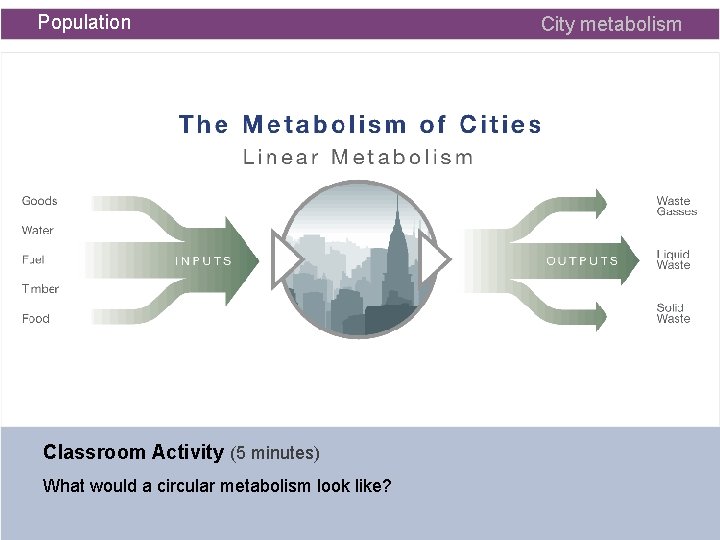
Population Classroom Activity (5 minutes) What would a circular metabolism look like? City metabolism
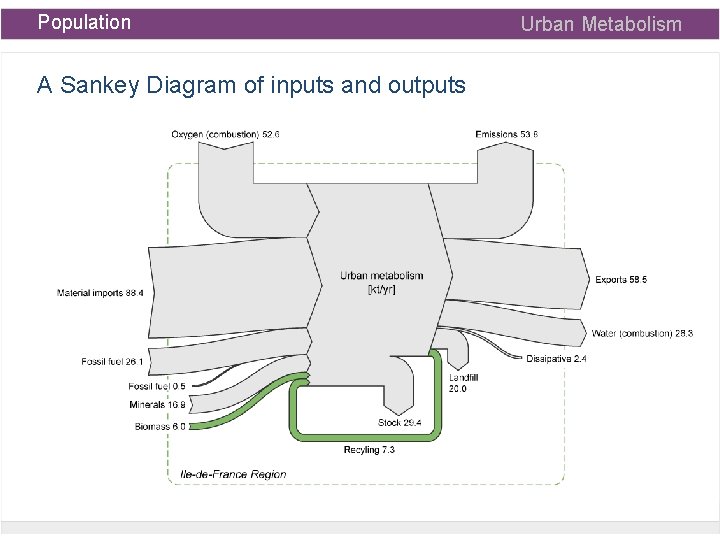
Population A Sankey Diagram of inputs and outputs Urban Metabolism
- Slides: 30