
Storyboard Planning for Teaching and Learning Challenges and
Storyboard Planning for Teaching and Learning: Challenges and Possibilities By Gelien Matthews
History of Storyboarding • First emerged in American film industry by 1933 • Pioneered by Walt Disney Studio’s early Mickey Mouse Cartoons of the 1930 s • Webb Smith, animator for the 1933 release of The Three Little Pigs is credited as the inventor of the storyboard • First live action film to use storyboards -Gone with the Wind released in 1938 • By the 1990 s, storyboarding emerged as an integral planning methodology in education

Webb Smith – Inventor of the Storyboard • .
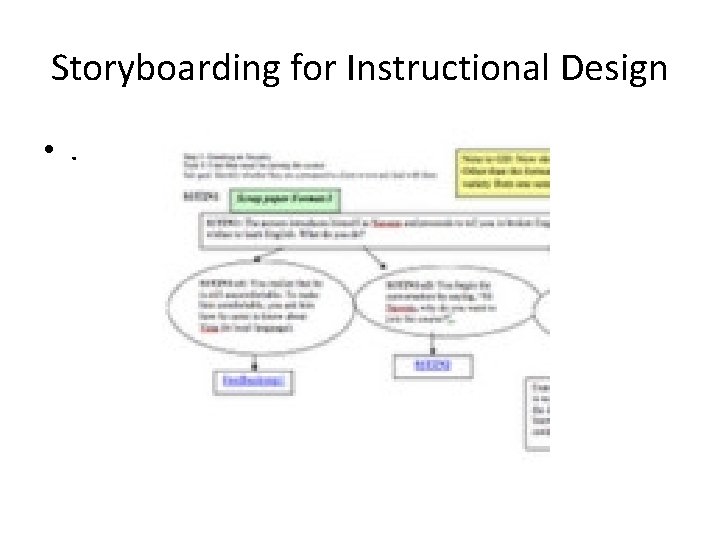
Defining Storyboards • In the film industry – An action by action visual layout of the film sketched out frame by frame with close reference to the script • In educational design and planning – a module by module plan of all the elements that will constitute an online or blended course • It is built by close reference to a course outline but is much more detailed than the former • It is actually a dry run of how an online course will unfold
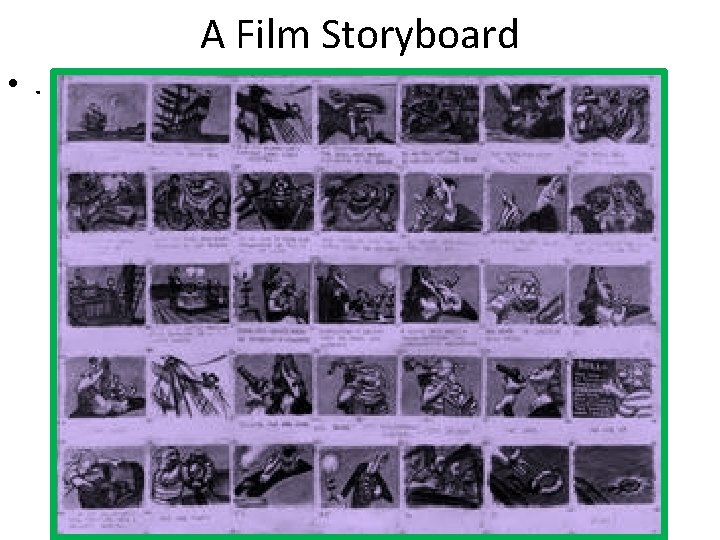
A Film Storyboard • .
Storyboarding for Instructional Design • .
The Conceptual Framework, Rationale and Objective of the Paper • A fairly equal number of disadvantages and advantages exists in the educational storyboard • The degree of its usefulness is thus in question • It is the objective of this paper to determine to what extent storyboarding in education is defensible
Downside of the Storyboard – Meticulous Time Consuming Details • It takes weeks of planning and researching to put together ü Course code and title ü Course description ü Instructor’s details ü Learning Objectives ü Teaching strategies ü Learning strategies ü Course resources ü Course calendar ü Assignments and assessments ü Departmental and institution policies
Challenge in Balancing Details and Order • Cannot absorb the lengthy reading lists • Can absorb the web addresses but not the actual links to online textual, audio and video sources used in elearning courses • It is easy for the storyboard to run the risk of appearing cluttered and chaotic which defeats the clarity at which it aims
Rigidity of the Storyboard Planned Course • Controlled by a course calendar • Leads to linear and static unfolding of teaching and learning • Boxes in the educational experience • Little room for spontaneity
Merely a Preparatory Draft • Eventually discarded • Temporary • In the short term it appears to be a waste of time and energy
Benefits – Editing Flexibility • The comprehensive vista of the course it provides at completion enables the course developer to easily grasp the extent to which modules fit or do not fit together • Decisions about Ø Including Ø Omitting Ø Dividing Ø Rearranging - course content can be rationalized by the holistic picture that the storyboard facilitates
Benefits – Clockwork functioning of Courses • Teaching and learning paths perfectly set from the beginning • Little room is left for going off course • Student frustrations about course description, rationale, learning objectives, assignments, assessments et cetera are eliminated – facilitating self regulated learning • A great chunk of the semester workload of the lecturer is completed - reduces stress • Course objectives are well aligned to teaching and learning strategies and activities – course validity requirement met • Courses are free from chaos, well organized, easy to follow and master
Benefits – Compels Pedagogical Creativity • Presents to the designer both the wisdom and necessity of breaking with the traditional • • • monotony of lecture after lecture to include instead Interactive student/lecturer sessions Collaborative learning Role play acting Think and share sessions Regulated viewing of audios
Benefit. Justifies Course Inclusion • Can justify expenditure that courses incur • Readily reveals the place of a course in the vision and mission of a department and the wider institution • Demonstrates the extent to which the course designer has a working knowledge of the course and can defend it
Conclusion • The major criticisms are compensated for by the efficiency, transparency, order, teaching and learning outcomes that are generated by storyboarding. • It has overwhelmingly justified its place as a critical methodology in planning for teaching and learning and it will provide quality assurance in higher education
- Slides: 16