
STORMWATER CONTROL MS 4 Protecting Our Environment STORMWATER

- Slides: 15
STORMWATER CONTROL MS 4 Protecting Our Environment.
STORMWATER POLLUTION • Stormwater runoff is generated from rain and snowmelt events that flow over land or impervious surfaces, such as paved streets, parking lots, and building rooftops, and does not soak into the ground. The runoff picks up pollutants like trash, chemicals, oils, and dirt/sediment that can harm our rivers, streams, lakes, and coastal waters. • Population growth and the development of urban/urbanized areas are major contributors to the amount of pollutants in the runoff as well as the volume and rate of runoff from impervious surfaces. • Traditional stormwater management approaches that rely on peak flow storage have generally not targeted pollutant reduction and can exacerbate problems associated with changes in hydrology and hydraulics. 2 12/12/2021 Add a footer
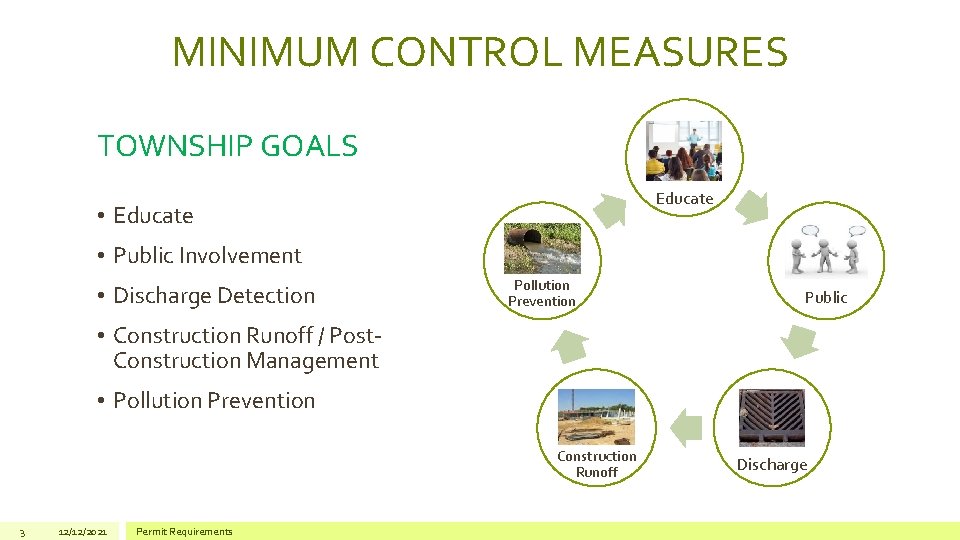
MINIMUM CONTROL MEASURES TOWNSHIP GOALS Educate • Educate • Public Involvement • Discharge Detection Pollution Prevention Public • Construction Runoff / Post. Construction Management • Pollution Prevention Construction Runoff 3 12/12/2021 Permit Requirements Discharge
STORMWATER MANAGEMENT Modern stormwater management, including proper planning, the use of green infrastructure, and public education, reduces runoff and runoff pollution to protect and improve water quality. 4 12/12/2021 Add a footer
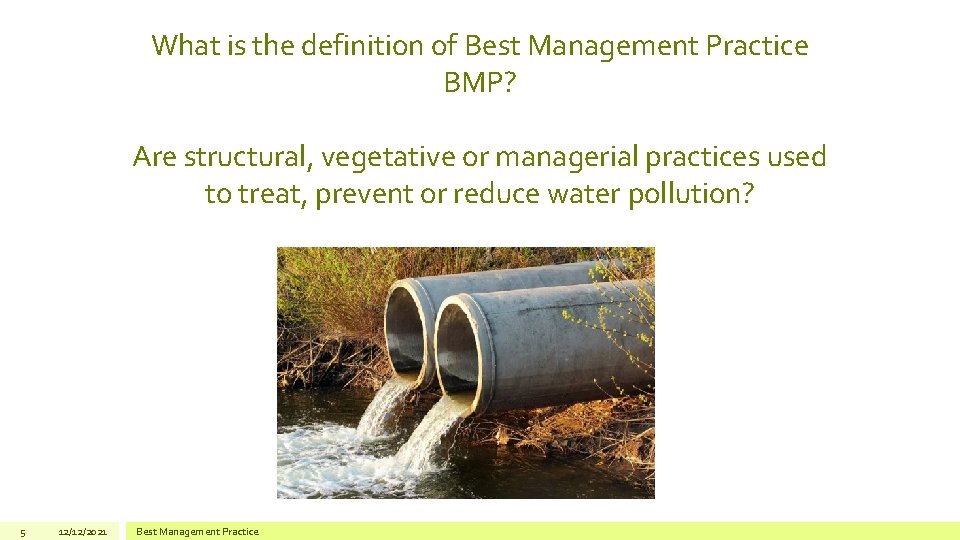
What is the definition of Best Management Practice BMP? Are structural, vegetative or managerial practices used to treat, prevent or reduce water pollution? 5 12/12/2021 Best Management Practice
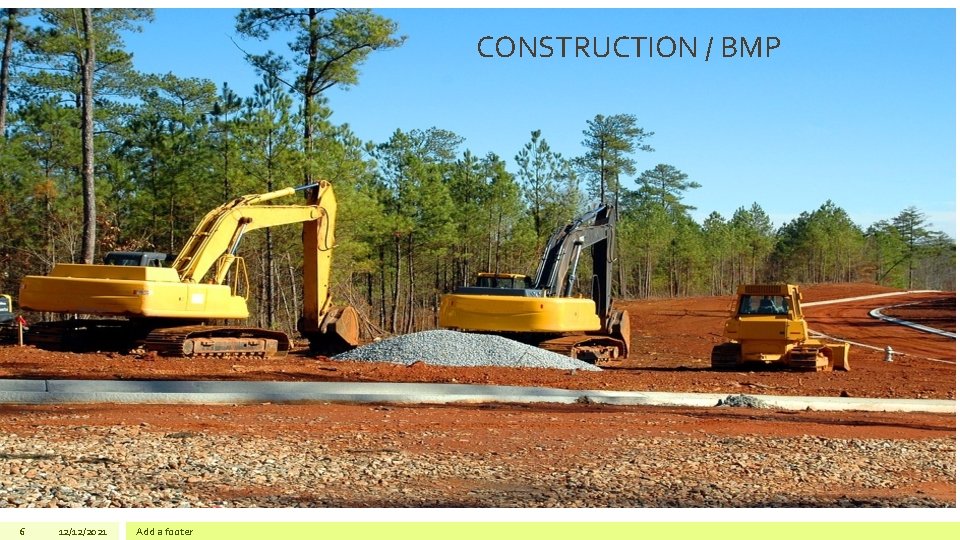
CONSTRUCTION / BMP Add a Slide Title - 5 6 12/12/2021 Add a footer
BEST MANAGEMENT PRACTICES NON STRUCTUAL AND STRUCTUAL BMPS
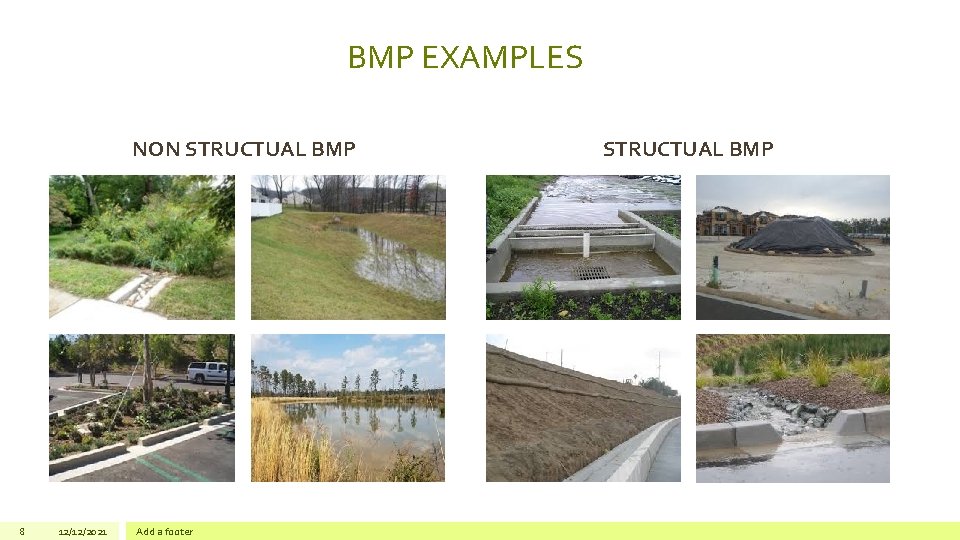
BMP EXAMPLES NON STRUCTUAL BMP 8 12/12/2021 Add a footer STRUCTUAL BMP
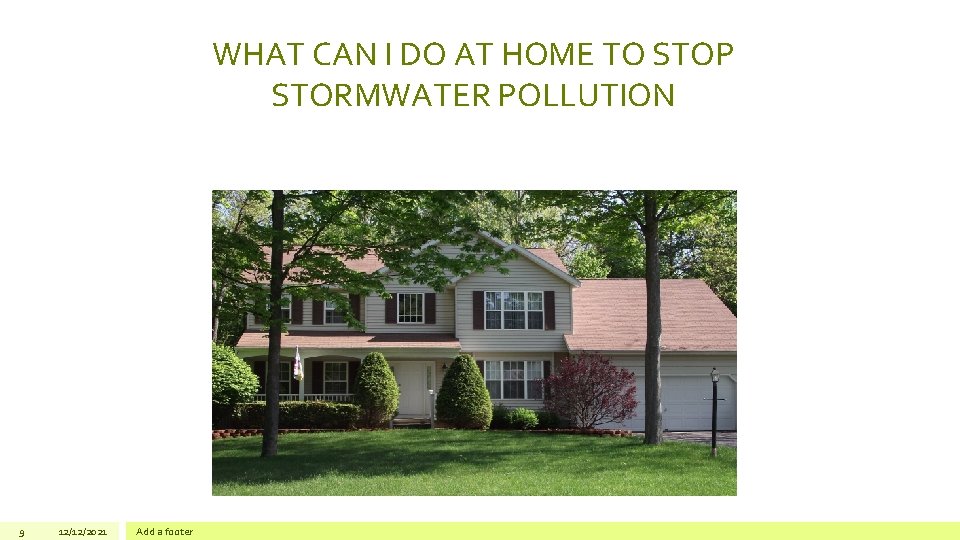
WHAT CAN I DO AT HOME TO STOP STORMWATER POLLUTION 9 12/12/2021 Add a footer
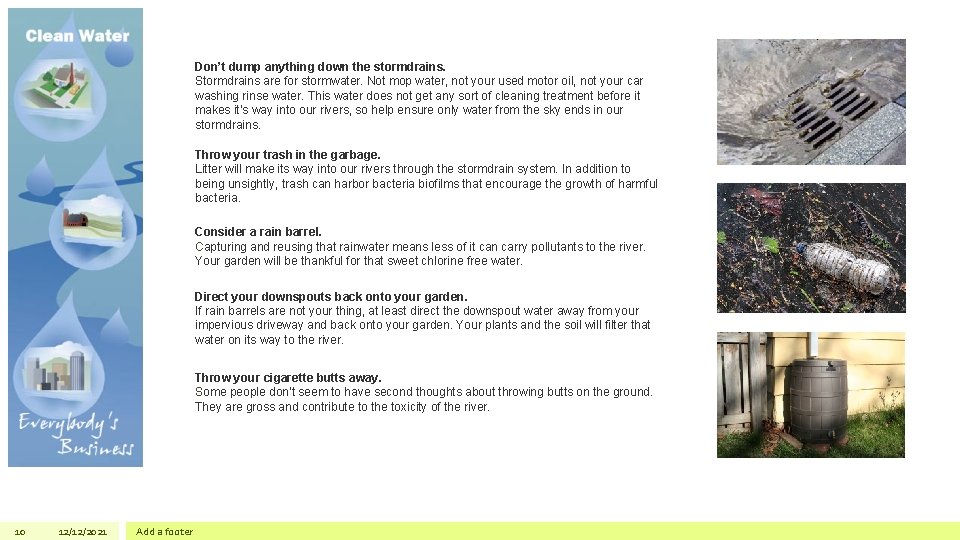
Don’t dump anything down the stormdrains. Stormdrains are for stormwater. Not mop water, not your used motor oil, not your car washing rinse water. This water does not get any sort of cleaning treatment before it makes it’s way into our rivers, so help ensure only water from the sky ends in our stormdrains. Throw your trash in the garbage. Litter will make its way into our rivers through the stormdrain system. In addition to being unsightly, trash can harbor bacteria biofilms that encourage the growth of harmful bacteria. Consider a rain barrel. Capturing and reusing that rainwater means less of it can carry pollutants to the river. Your garden will be thankful for that sweet chlorine free water. Direct your downspouts back onto your garden. If rain barrels are not your thing, at least direct the downspout water away from your impervious driveway and back onto your garden. Your plants and the soil will filter that water on its way to the river. Throw your cigarette butts away. Some people don’t seem to have second thoughts about throwing butts on the ground. They are gross and contribute to the toxicity of the river. 10 12/12/2021 Add a footer
Farmers and ranchers can reduce erosion and sedimentation by 20 to 90 percent by applying management practices that control the volume and flow rate of runoff water, keep the soil in place, and reduce soil transport. FARMING
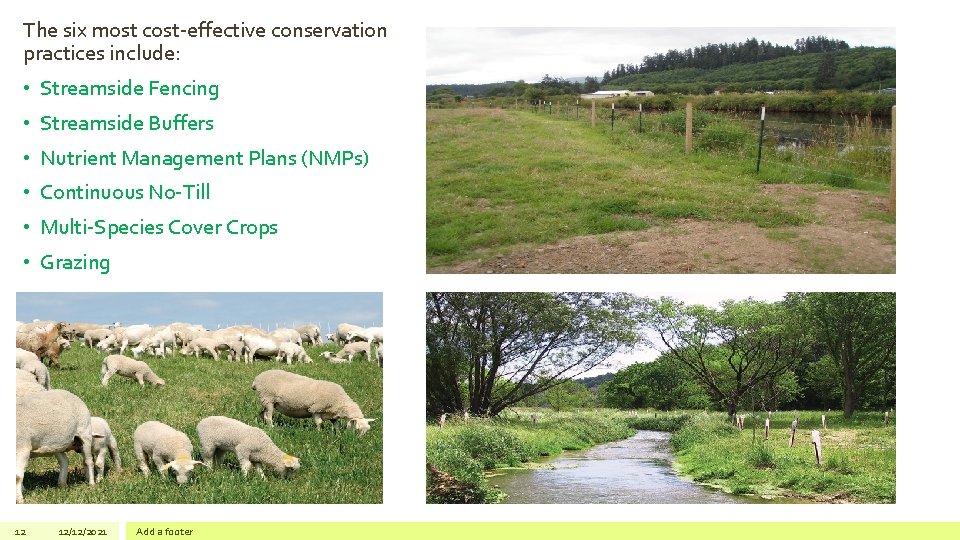
The six most cost-effective conservation practices include: • Streamside Fencing • Streamside Buffers • Nutrient Management Plans (NMPs) • Continuous No-Till • Multi-Species Cover Crops • Grazing 12 12/12/2021 Add a footer
LOCAL GOVERNMENT’S ROLE IN REDUCING STORMWWATER POLLUTION 13 12/12/2021 What can local government do to reduce stormwater pollution
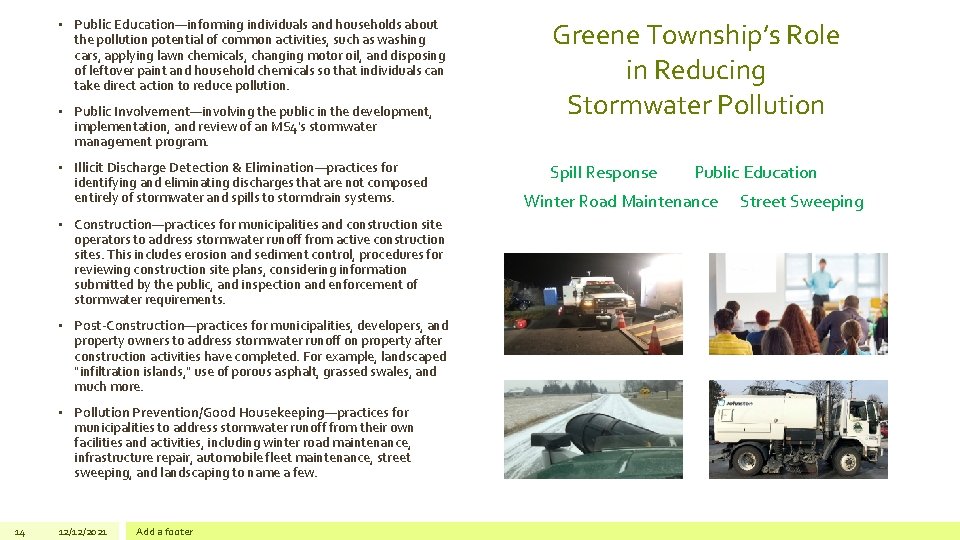
• Public Education—informing individuals and households about the pollution potential of common activities, such as washing cars, applying lawn chemicals, changing motor oil, and disposing of leftover paint and household chemicals so that individuals can take direct action to reduce pollution. • Public Involvement—involving the public in the development, implementation, and review of an MS 4's stormwater management program. • Illicit Discharge Detection & Elimination—practices for identifying and eliminating discharges that are not composed entirely of stormwater and spills to stormdrain systems. • Construction—practices for municipalities and construction site operators to address stormwater runoff from active construction sites. This includes erosion and sediment control, procedures for reviewing construction site plans, considering information submitted by the public, and inspection and enforcement of stormwater requirements. • Post-Construction—practices for municipalities, developers, and property owners to address stormwater runoff on property after construction activities have completed. For example, landscaped "infiltration islands, " use of porous asphalt, grassed swales, and much more. • Pollution Prevention/Good Housekeeping—practices for municipalities to address stormwater runoff from their own facilities and activities, including winter road maintenance, infrastructure repair, automobile fleet maintenance, street sweeping, and landscaping to name a few. 14 12/12/2021 Add a footer Greene Township’s Role in Reducing Stormwater Pollution Spill Response Public Education Winter Road Maintenance Street Sweeping
If you have a question contact Greene Township 717 -263 -9160 15 12/12/2021 Add a footer