
Stormwater Best Management Practices What is stormwater Stormwater

Stormwater Best Management Practices
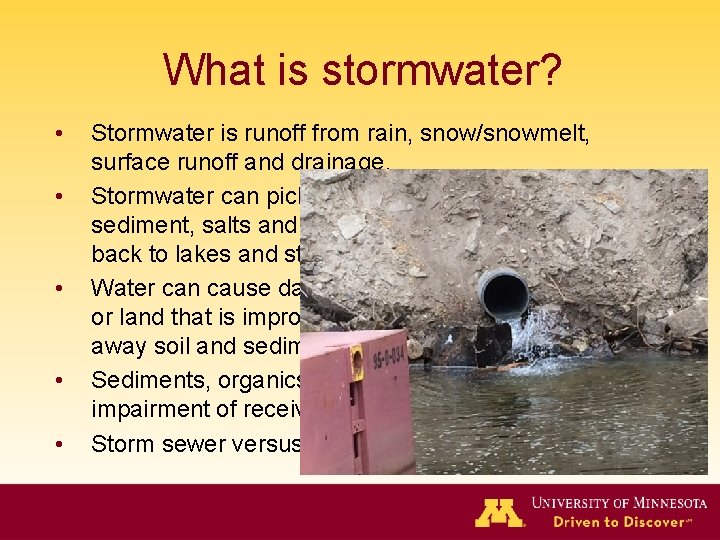
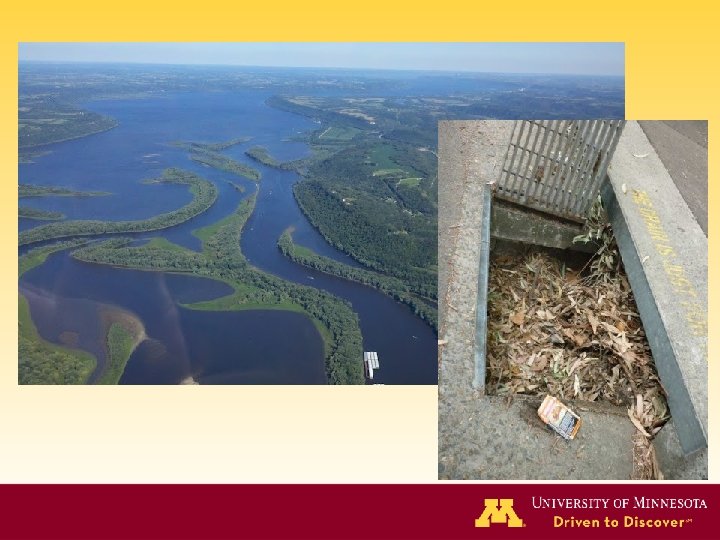
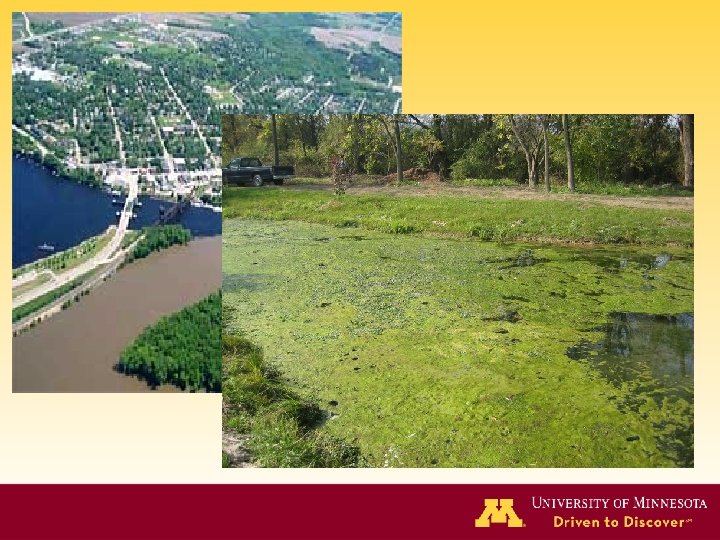
What is stormwater? • • • Stormwater is runoff from rain, snow/snowmelt, surface runoff and drainage. Stormwater can pick up litter, organic materials, sediment, salts and other chemicals before flowing back to lakes and streams. Water can cause damage to land under construction, or land that is improperly vegetated by washing away soil and sediments. Sediments, organics and litter contribute to impairment of receiving waters. Storm sewer versus sanitary sewer

Stormwater Regulations • Municipal Separate Storm Sewer System (MS 4) permit is campus-wide stormwater permit to control non-point sources (umbrella over all activities) – UMTC – UMD • Industrial Stormwater permits for certain industries/sectors – – – Printing Fueling Electric generation Waste management Mining • Construction Stormwater Permits for certain projects (>1 acre) • University Policy – BMPs for all activities, lowest impact choice
Best Management Practices • Stormwater Control Measures fall into categories – – – – Good Housekeeping Erosion Prevention and Sediment Control Maintenance of BMPs and Equipment PM Eliminate and Reduce Exposure Management of Runoff Spill Prevention and Response Salt Storage Employee Training
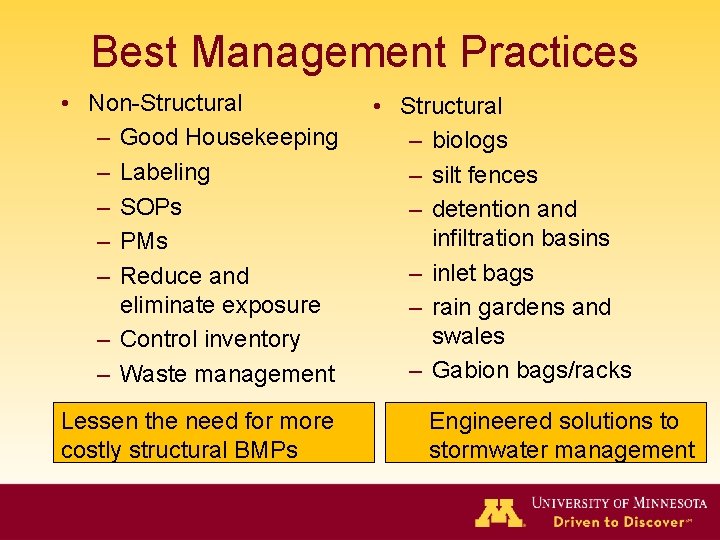
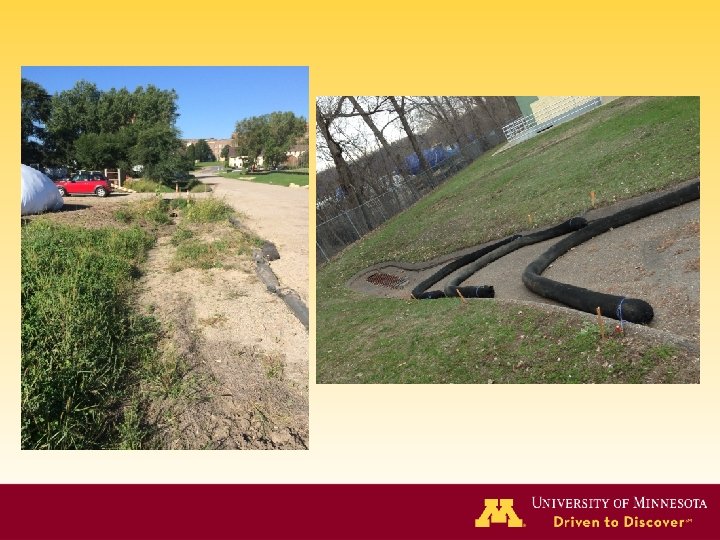
Best Management Practices • Non-Structural – Good Housekeeping – Labeling – SOPs – PMs – Reduce and eliminate exposure – Control inventory – Waste management Lessen the need for more costly structural BMPs • Structural – biologs – silt fences – detention and infiltration basins – inlet bags – rain gardens and swales – Gabion bags/racks Engineered solutions to stormwater management
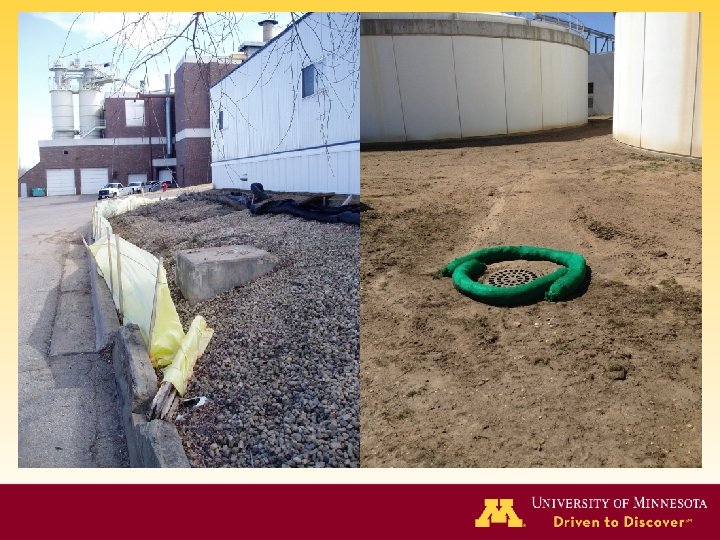
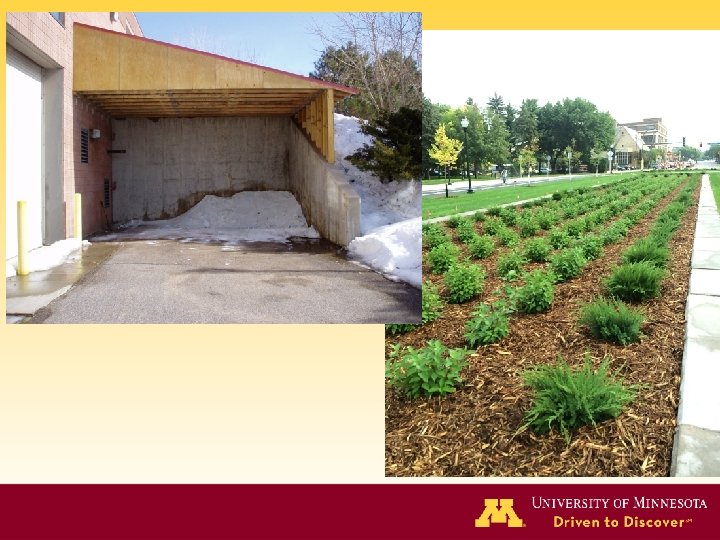
Examples
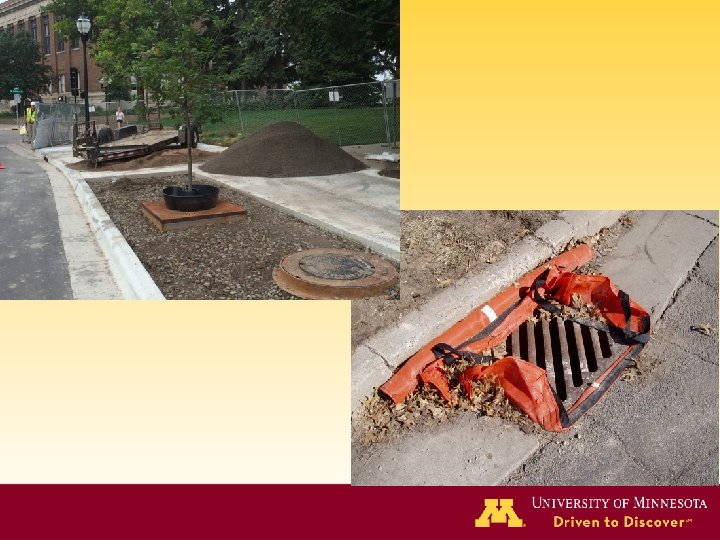
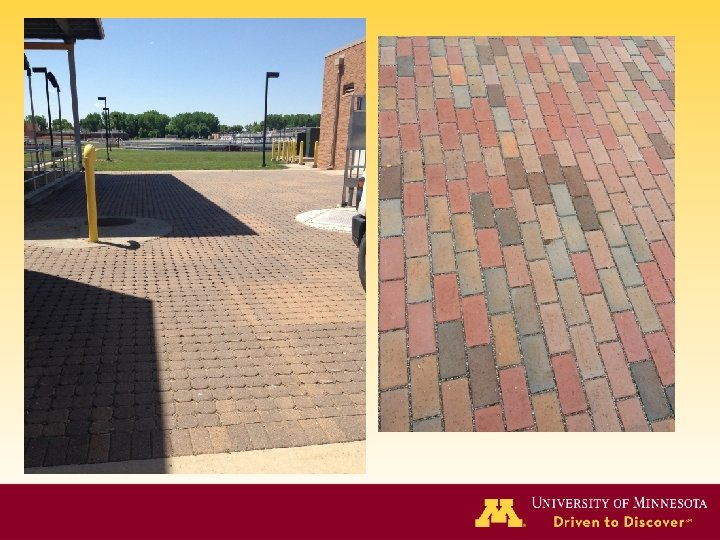
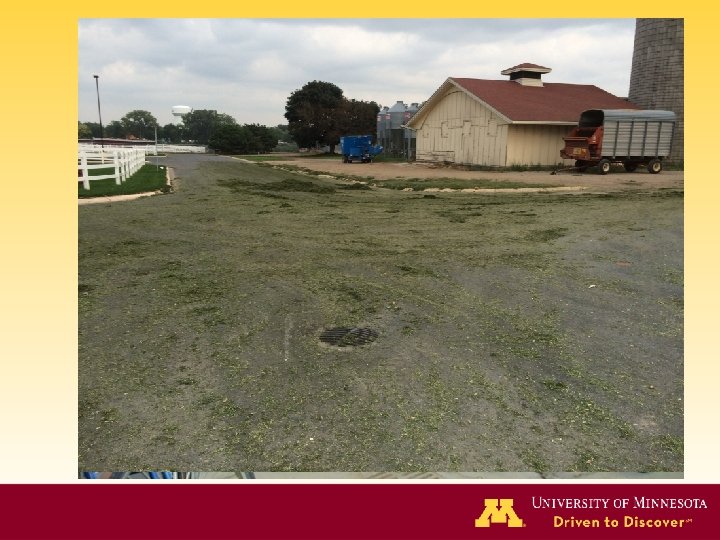
Good Housekeeping • Easy, cheap and makes good business sense • Always put things away • Keep work area tidy • Follow work instructions and SOPs • Remove waste and put into proper containers • Manage inventory/labeling
Labeling and Inventory Control • Are you buying it 3 times? • Label with the contents, NFPA diamond or hazard description – Also an RTK requirement • If waste, additional requirements apply • Control access to prevent accidents, vandalism • Control inventory (JIT ordering or minimal supplies to prevent waste)
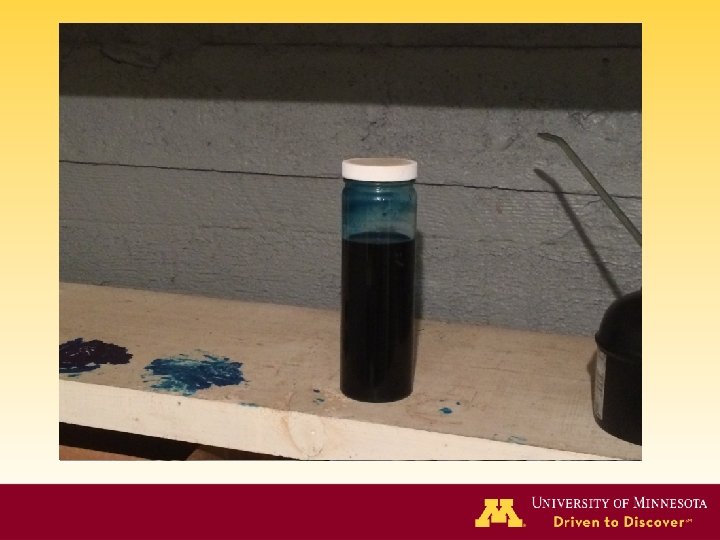
Erosion Prevention and Sediment Control • Erosive forces: flow volume and velocity • Strategies for control: – Keep soils in place – Slow down water – Treat on the way • Key to erosion prevention is vegetation and minimization of hard surfaces. – Nonstructural BMPs play largest role in prevention – Vegetate and revegetate • Vegetation allows infiltration, reduces speed and provides treatment • Once soils are dislodged: control inlets, flow direction and velocity using structural BMPs • Combination of structural and non-structural

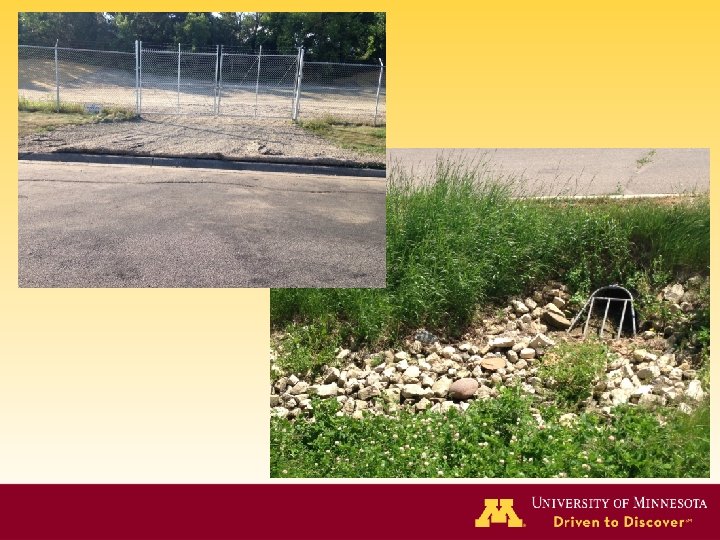
Reduce and Eliminate Exposure • Protects stormwater by removing potential for contact • Avoid doing activities that generate dust, emissions or waste outside – Move activities to a building or covered area – Use temporary measures that minimize contact with the ground, air and water – Use mechanical means to cleanup (not water) • Store materials, supplies and wastes indoors or under cover • Limit access to materials to prevent accidental damage, spills or vandalism
Work Instructions/SOP • Standard operating practices encourage: • Consistency in practices • Best practices • Pollution prevention • Base of common knowledge • Examples include equipment washing, fueling
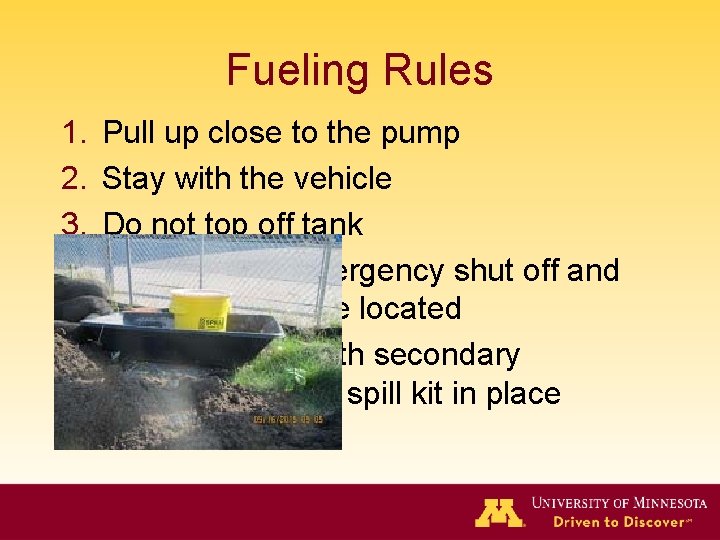
Fueling Rules 1. 2. 3. 4. Pull up close to the pump Stay with the vehicle Do not top off tank Know where emergency shut off and spill materials are located 5. Mobile fueling with secondary containment and spill kit in place
Equipment Wash Area Rules 1. Clean equipment in designated areas only – Pre-wash equipment using dry, mechanical methods – Sweep up and dispose of removed grass, dirt and other debris – Wet wash INDOORS only, if needed to complete the job 2. Avoid detergents and other chemicals 3. Absolutely no engine cleaning, degreasing or fluid removals 4. Clean up after yourself when finished
Spill Prevention and Response • Contain the spill if safely possible – Stop the release, if possible – Locate spill kit – Ensure access to water and sewers is blocked and isolate area • Call for help – Call 9 -1 -1 to report spill and details – Notify colleagues if needed • Cleanup the spill – AHERPS/EHS or DEM staff make contact and coordinate response – If directed to do so, clean up the spill (small quantity, indoors) – Chemical Waste Team deployed if needed – Additional reporting may be required
Waste Management • Outdoor containers are potential sources of pollutants to stormwater • Waste and waste storage areas need special attention – Maintain common areas and practices for waste collection and disposal – Closed/covered except when adding/removing – Regular inspection of containers and stockpiles • Litter and debris contained • Good condition and not leaking – Hard surfaces to capture spills
Waste Management (Con’t) • Some wastes further regulated – Oily wastes, – Special wastes: scrap metals, antifreeze, paint waste, lamps, batteries, pesticides, Hg containing items – Hazardous wastes: paint wastes, thinners, ink • Store indoors within bermed accumulation area
BMPs • Lowest cost way to reduce impact on the environment are non-structural • BMPs are the goal for each opportunity – May or may not be permit driven – Use the best practice available at the time, revisit as time and money allow – Periodic audits, ‘public’ feedback and desire for growth opportunities may drive

Questions or Comments? See something that’s not right? • Ask Questions • Talk to your manager • Talk to EHS Julianne Rantala U Health and Safety Environmental Health and Safety jrantala@umn. edu, 6 -7957
- Slides: 28