
Storing food safely Food safety n n Food
- Slides: 11
Storing food safely
Food safety n n Food safety is the paramount consideration for everyone involved in food service or preparation Follow manufacturers instructions for storage, freezing and cooking
E. coli n The highly publicised outbreak of E. coli in Scotland in 1998, which affected 500 people and led to 20 deaths, highlights the importance of good practice in every aspect of food handling and storage
Bacteria n n n In order for bacteria to thrive it needs Warmth Food Moisture Time
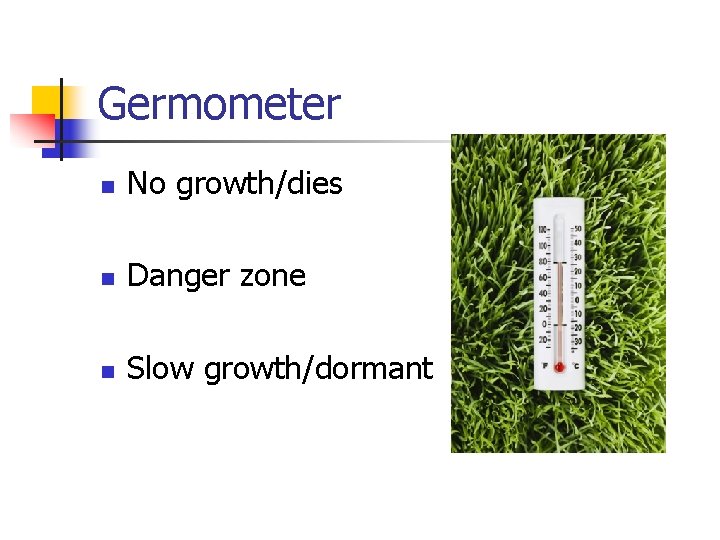
Germometer n n n Food stored below 5 degrees – slows growth of bacteria/dormant Food heated to 63 degrees and above – no growth/dies Danger zone is 5 degrees – 63 degrees
Germometer n No growth/dies n Danger zone n Slow growth/dormant
Food Storage n n There are different ways of storing foods…. Refrigerator, freezer, bread bin and cupboards Fresh foods such as dairy products, meat – raw and cooked, fish – raw and cooked, should be kept in the fridge
Food Storage n n n Foods that require refrigeration once opened e. g. tins, jars etc Correct temperature for a fridge is between 0 -5 degrees centigrade Why is the temperature important?
Refrigerator n n Where should raw meat be stored? Why should you cover it/wrap/put in a container? How and where should you store cooked meat, such as ham, salami? Why?
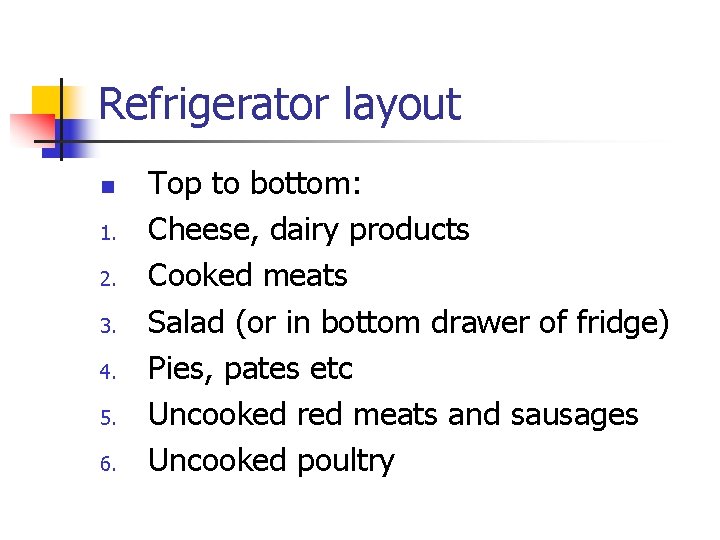
Refrigerator layout n 1. 2. 3. 4. 5. 6. Top to bottom: Cheese, dairy products Cooked meats Salad (or in bottom drawer of fridge) Pies, pates etc Uncooked red meats and sausages Uncooked poultry
Freezer n n Frozen food should be stored in a freezer at minus 18 degrees centigrade How long should you keep food in the freezer for? Check labels for thawing times/cooking times from frozen (and suitability) Some foods are best cooked from frozen – convenience foods