
Stories at Work Storytelling for Group Facilitators How
- Slides: 24
Stories at Work Storytelling for Group Facilitators How to Create, Tell, & Use Stories with Groups and Organizations © 2002 Sandor P. Schuman Stories at Work® Executive Decision Services LLC Stories at Work
© 2002 Sandor P. Schuman Stories at Work® Executive Decision Services LLC Stories at Work
Only the Best is Good Enough © 2002 Sandor P. Schuman Stories at Work® Executive Decision Services LLC Stories at Work
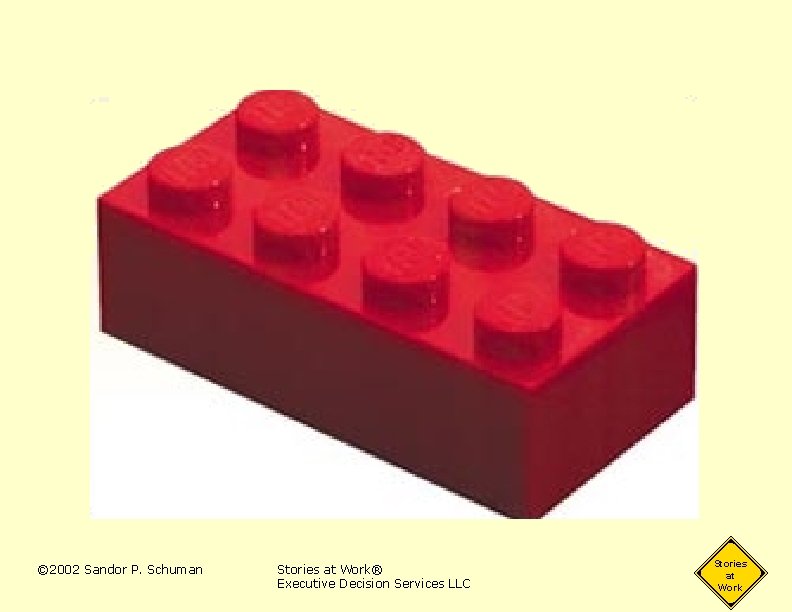
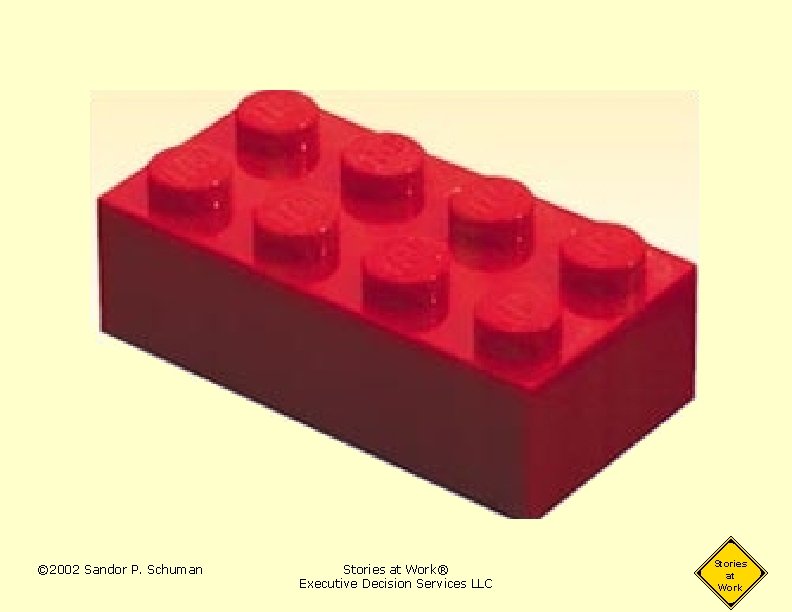
When Godtfred, son of LEGO's founder Ole Kirk, tried to save some money by finishing a shipment of toy ducks with two coats of paint instead of the usual three, his father said: “Go and get the ducks immediately, give them their last coat of paint … and do it all yourself - even if it takes you all night!” © 2002 Sandor P. Schuman Stories at Work® Executive Decision Services LLC Stories at Work
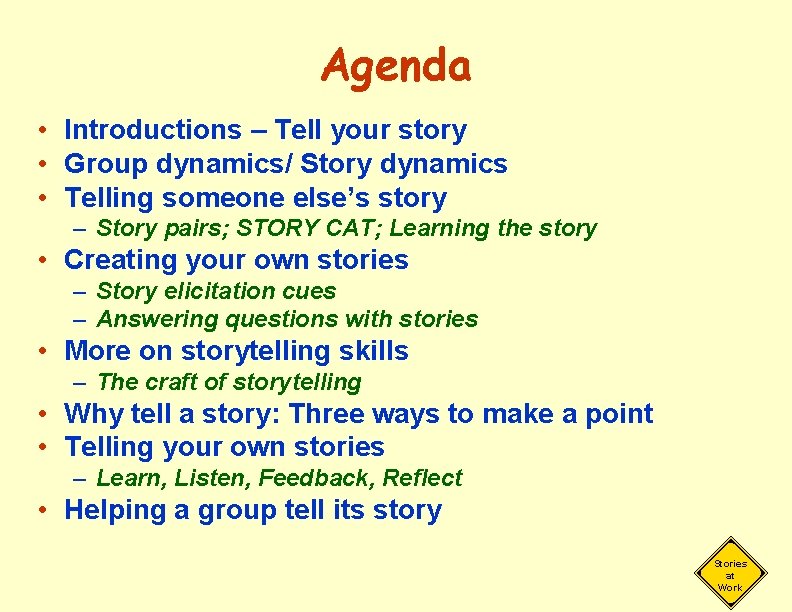
Agenda • Introductions – Tell your story • Group dynamics/ Story dynamics • Telling someone else’s story – Story pairs; STORY CAT; Learning the story • Creating your own stories – Story elicitation cues – Answering questions with stories • More on storytelling skills – The craft of storytelling • Why tell a story: Three ways to make a point • Telling your own stories – Learn, Listen, Feedback, Reflect • Helping a group tell its story Stories at Work
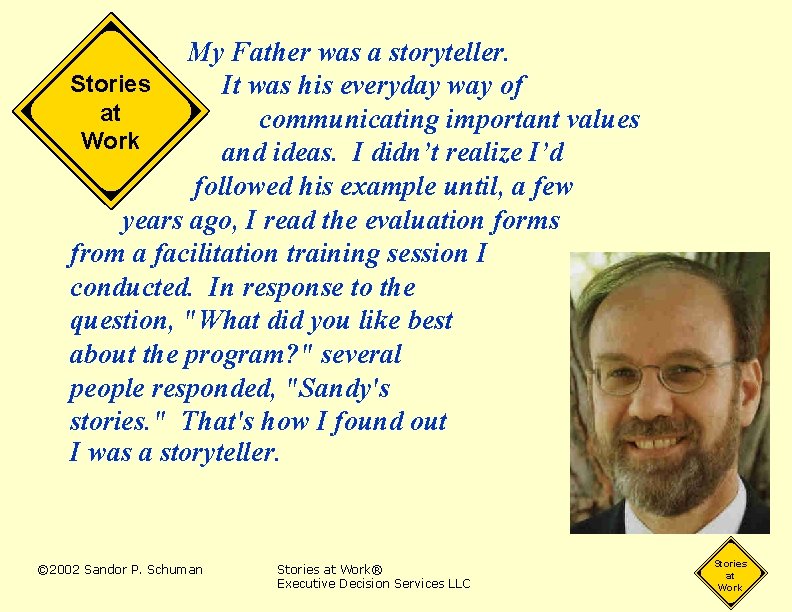
My Father was a storyteller. Stories It was his everyday way of at communicating important values Work and ideas. I didn’t realize I’d followed his example until, a few years ago, I read the evaluation forms from a facilitation training session I conducted. In response to the question, "What did you like best about the program? " several people responded, "Sandy's stories. " That's how I found out I was a storyteller. © 2002 Sandor P. Schuman Stories at Work® Executive Decision Services LLC Stories at Work
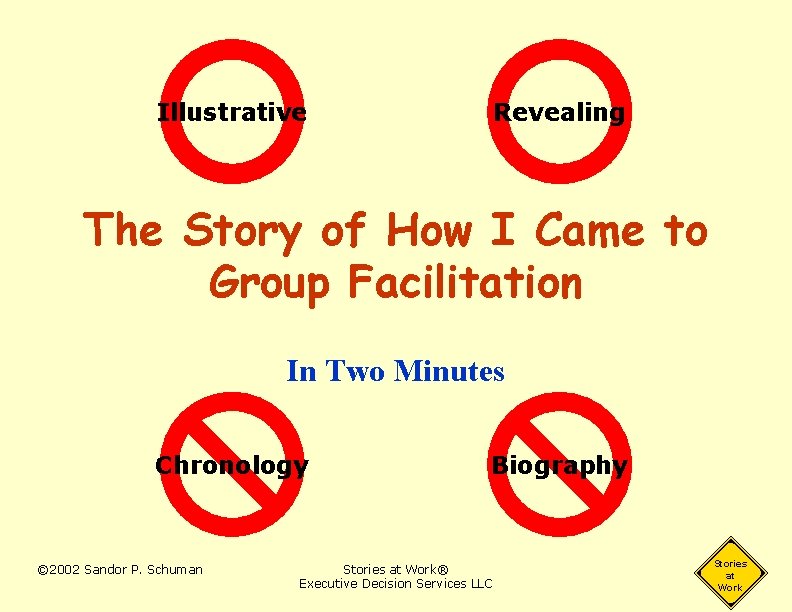
Illustrative Revealing The Story of How I Came to Group Facilitation In Two Minutes Chronology © 2002 Sandor P. Schuman Biography Stories at Work® Executive Decision Services LLC Stories at Work
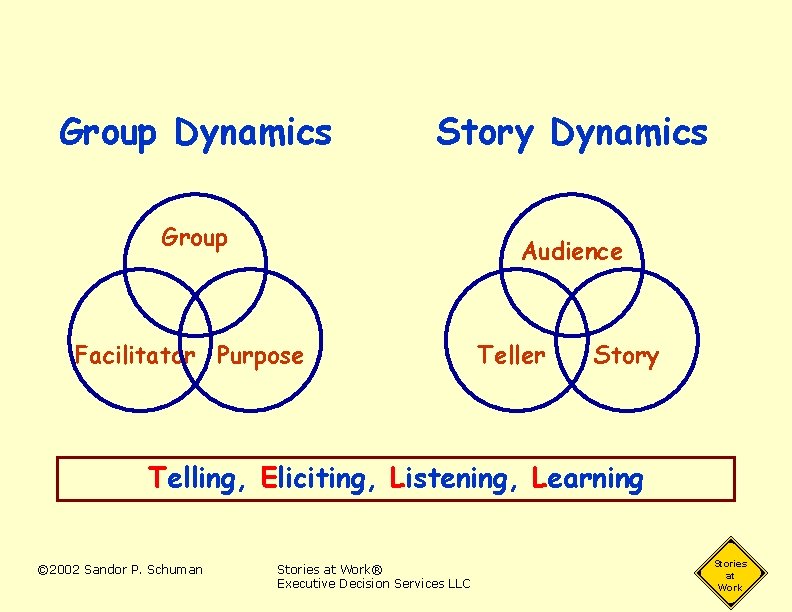
Group Dynamics Story Dynamics Group Audience Facilitator Purpose Teller Story Telling, Eliciting, Listening, Learning © 2002 Sandor P. Schuman Stories at Work® Executive Decision Services LLC Stories at Work
Story Pairs • The Meaning of Wilderness • The Uncomfortable Participant Stories at Work
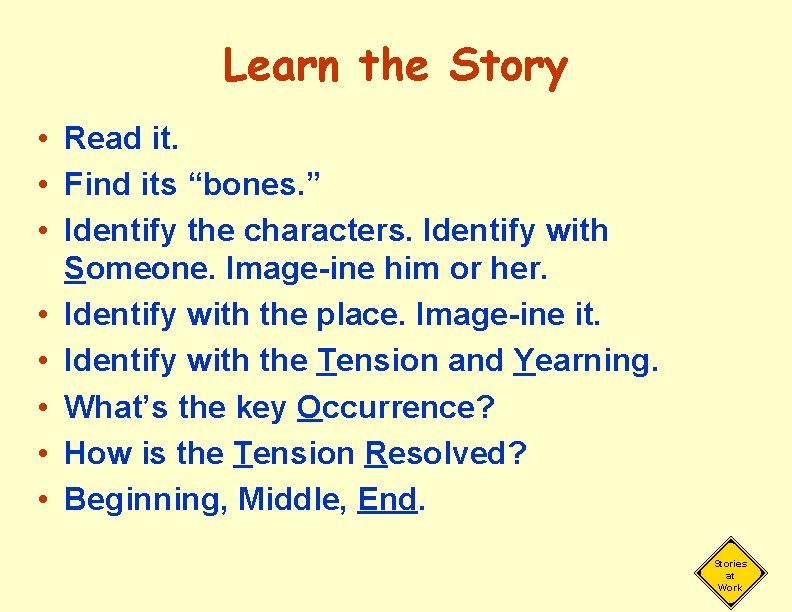
Learn the Story • Read it. • Find its “bones. ” • Identify the characters. Identify with Someone. Image-ine him or her. • Identify with the place. Image-ine it. • Identify with the Tension and Yearning. • What’s the key Occurrence? • How is the Tension Resolved? • Beginning, Middle, End. Stories at Work
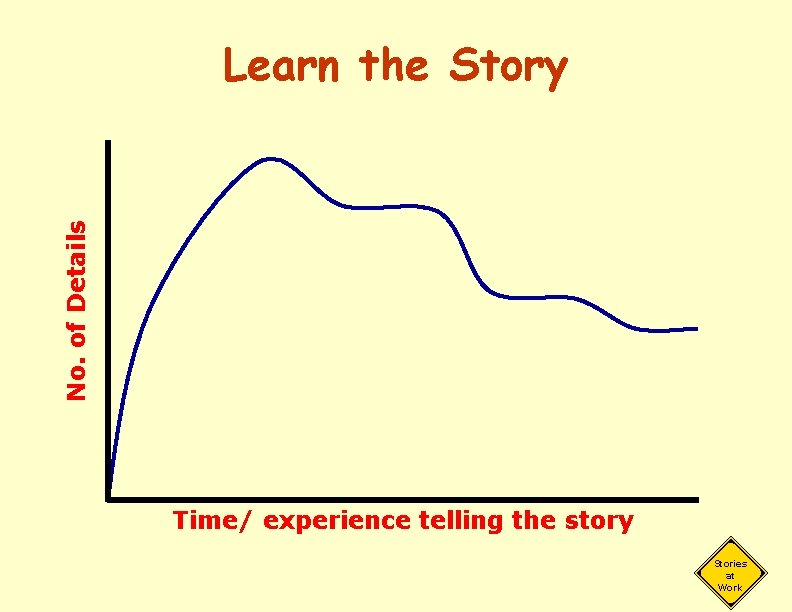
No. of Details Learn the Story Time/ experience telling the story Stories at Work
Tell the Story The Meaning of Wilderness The Uncomfortable Participant Stories at Work
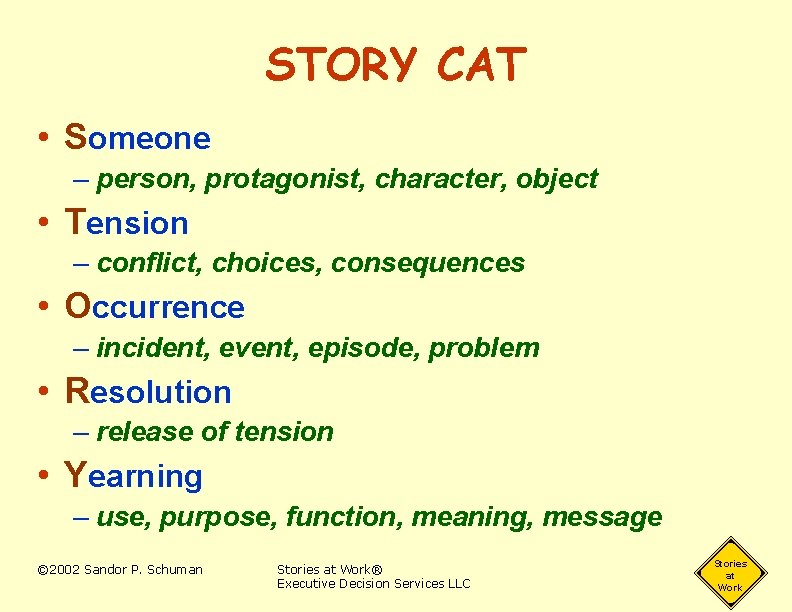
STORY CAT • Someone – person, protagonist, character, object • Tension – conflict, choices, consequences • Occurrence – incident, event, episode, problem • Resolution – release of tension • Yearning – use, purpose, function, meaning, message © 2002 Sandor P. Schuman Stories at Work® Executive Decision Services LLC Stories at Work
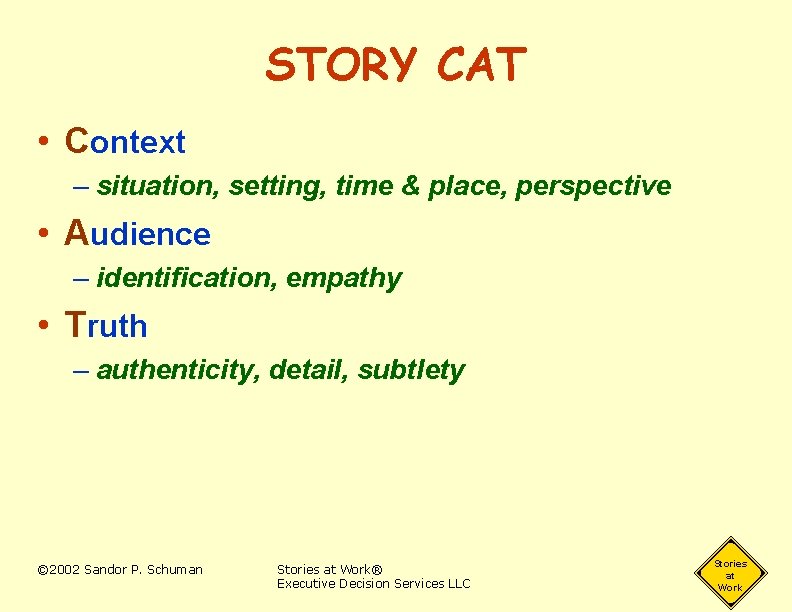
STORY CAT • Context – situation, setting, time & place, perspective • Audience – identification, empathy • Truth – authenticity, detail, subtlety © 2002 Sandor P. Schuman Stories at Work® Executive Decision Services LLC Stories at Work
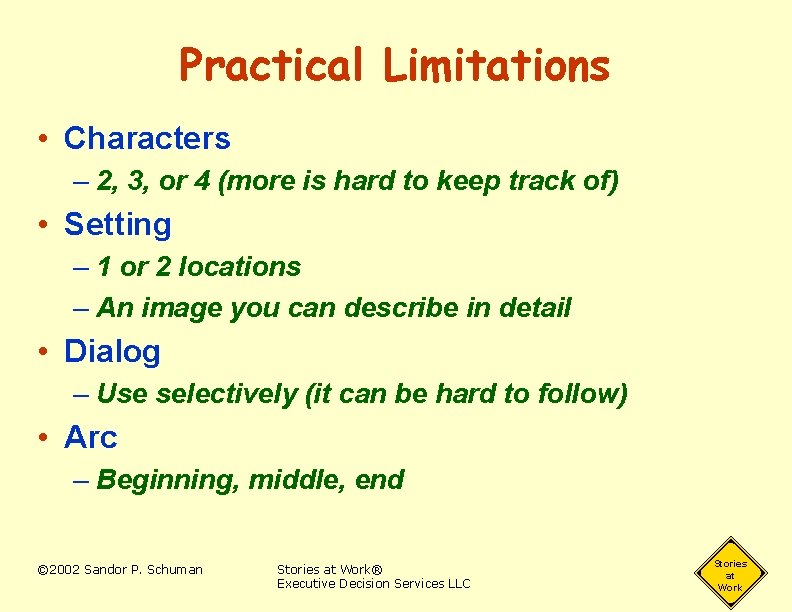
Practical Limitations • Characters – 2, 3, or 4 (more is hard to keep track of) • Setting – 1 or 2 locations – An image you can describe in detail • Dialog – Use selectively (it can be hard to follow) • Arc – Beginning, middle, end © 2002 Sandor P. Schuman Stories at Work® Executive Decision Services LLC Stories at Work
Answering Questions with a Story Stories at Work
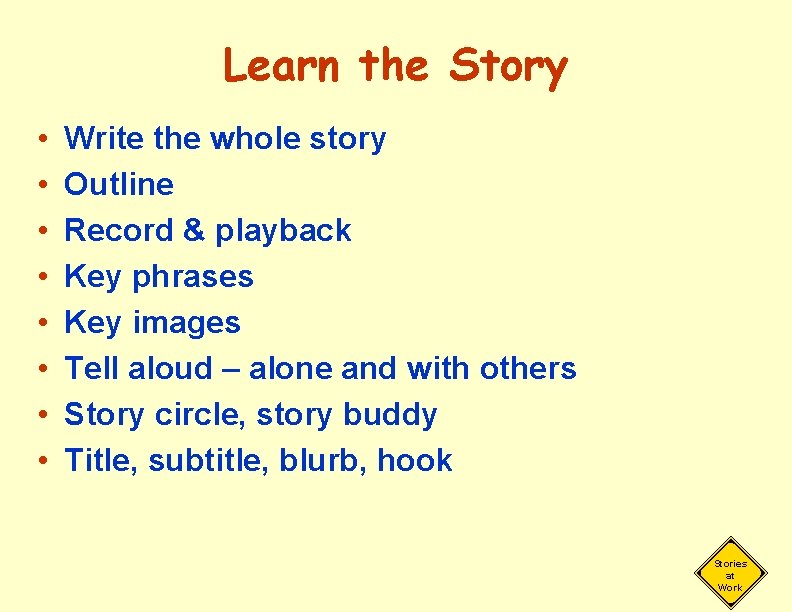
Learn the Story • • Write the whole story Outline Record & playback Key phrases Key images Tell aloud – alone and with others Story circle, story buddy Title, subtitle, blurb, hook Stories at Work
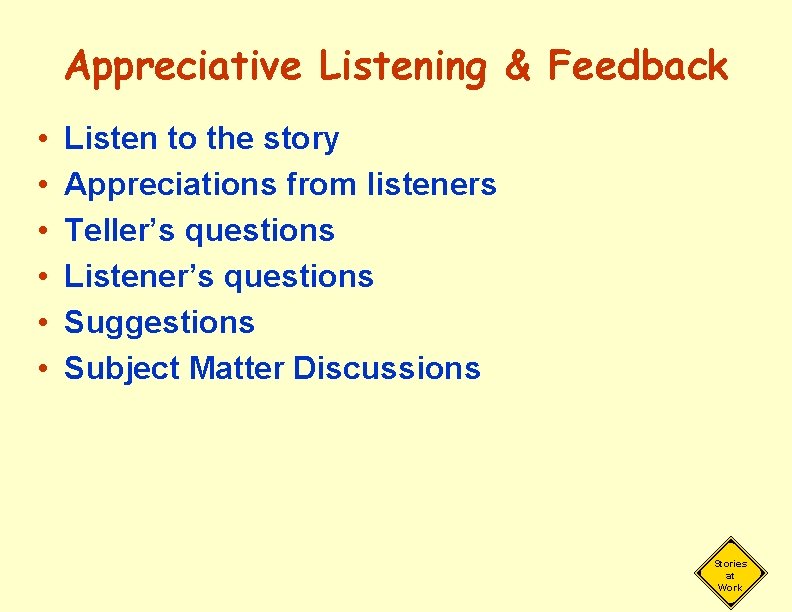
Appreciative Listening & Feedback • • • Listen to the story Appreciations from listeners Teller’s questions Listener’s questions Suggestions Subject Matter Discussions Stories at Work
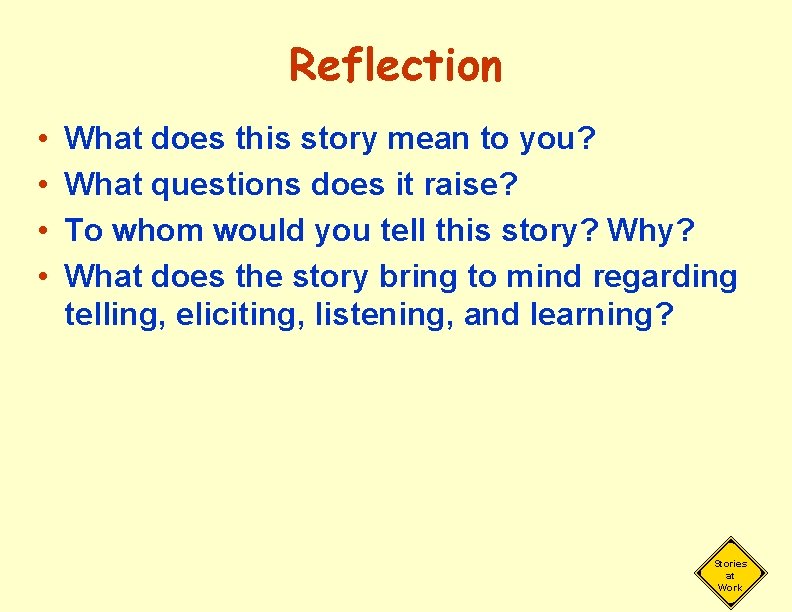
Reflection • • What does this story mean to you? What questions does it raise? To whom would you tell this story? What does the story bring to mind regarding telling, eliciting, listening, and learning? Stories at Work
© 2002 Sandor P. Schuman Stories at Work® Executive Decision Services LLC Stories at Work
Three ways to make a point Way #1 • • Baby boomers are aging People are living longer Proportion of elderly increasing More aging services needed Stories at Work
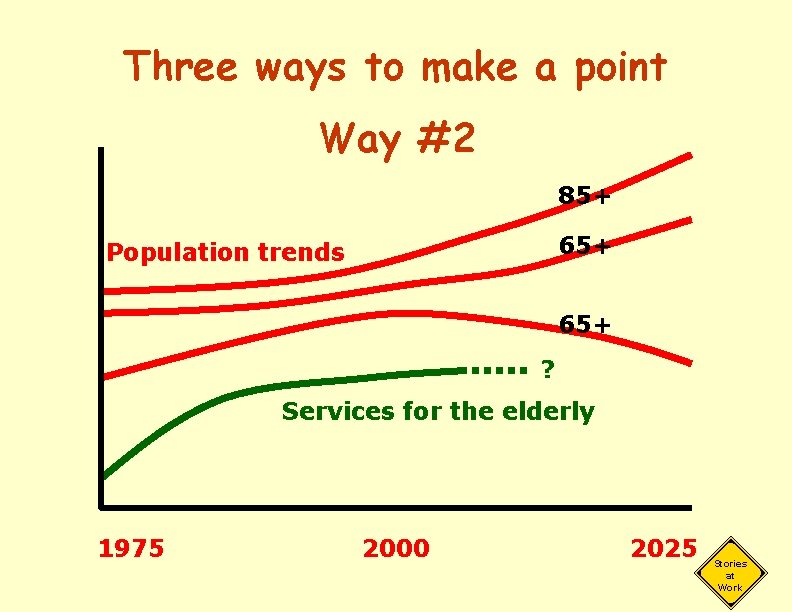
Three ways to make a point Way #2 85+ 65+ Population trends 65+ ? Services for the elderly 1975 2000 2025 Stories at Work
Three ways to make a point Way #3 At 83 years of age, Mrs. K doesn’t want to visit the Senior Center any more. It was great, back when her husband retired and she was 62, but now it’s crowded and deteriorated. Her friends agree. Stories at Work
Learn the Story IMAGE MOVEMENT AUDIENCE GESTURE EMOTION, EXPRESSION Stories at Work