
Stored Seed Protectants Bhadriraju Subramanyam Subi Department of
Stored Seed Protectants Bhadriraju Subramanyam (Subi) Department of Grain Science and Industry Kansas State University Manhattan, KS 66506 sbhadrir@ksu. edu www. oznet. ksu. edu/grsc_subi ASTA Seed Treatment & Environmental Committee Meeting July 12, 2006
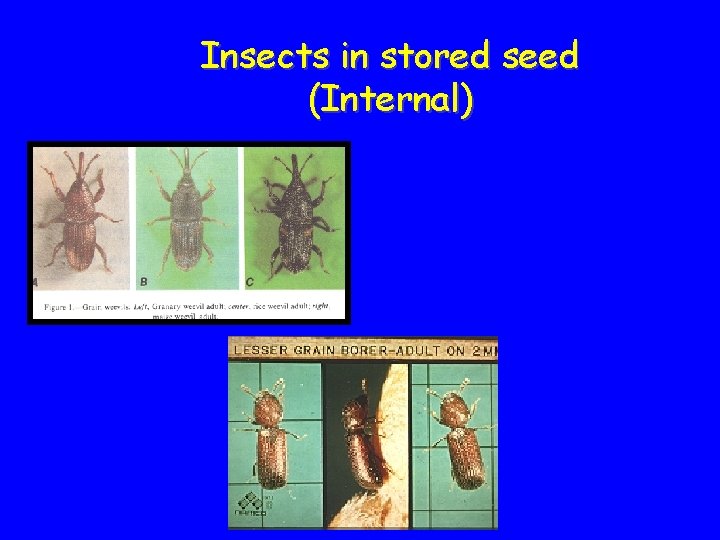
Insects in stored seed (Internal)
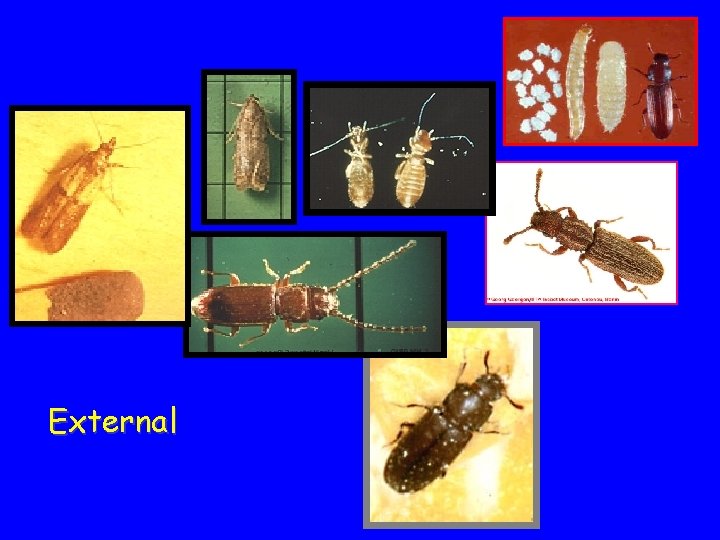
External
Losses caused by insects v. Quantitative losses, 5 -10% v. Seed heating (contributes to moisture migration) v. Distribute molds within seed bulk v. Some species feed exclusively on the germ
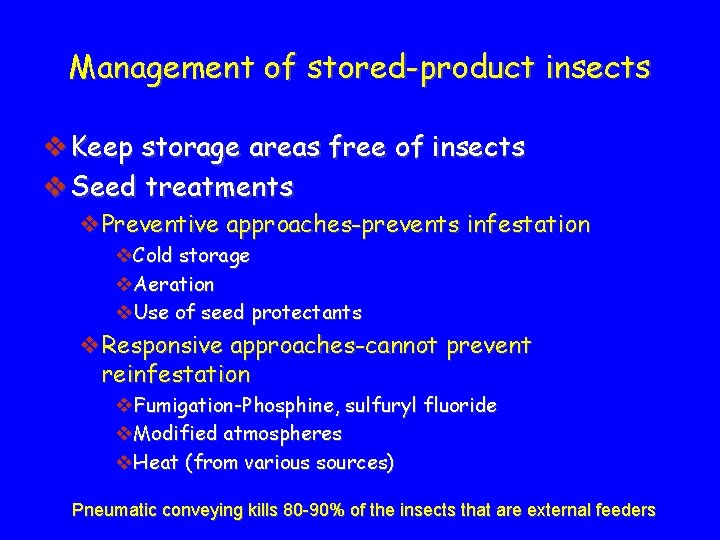
Management of stored-product insects v Keep storage areas free of insects v Seed treatments v. Preventive approaches-prevents infestation v. Cold storage v. Aeration v. Use of seed protectants v. Responsive approaches-cannot prevent reinfestation v. Fumigation-Phosphine, sulfuryl fluoride v. Modified atmospheres v. Heat (from various sources) Pneumatic conveying kills 80 -90% of the insects that are external feeders
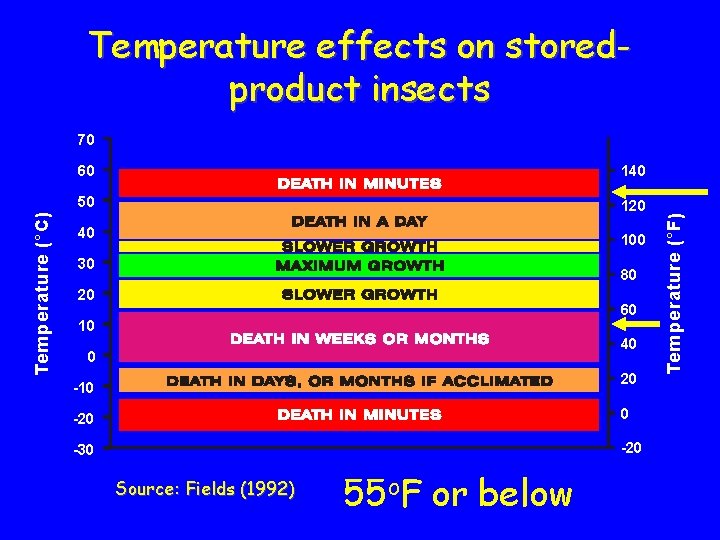
Temperature effects on storedproduct insects 60 140 50 120 40 100 30 80 20 60 10 40 0 20 -10 -20 0 -30 -20 Source: Fields (1992) 55 o. F or below Tem pe rature (°F) Tem perature (°C) 70
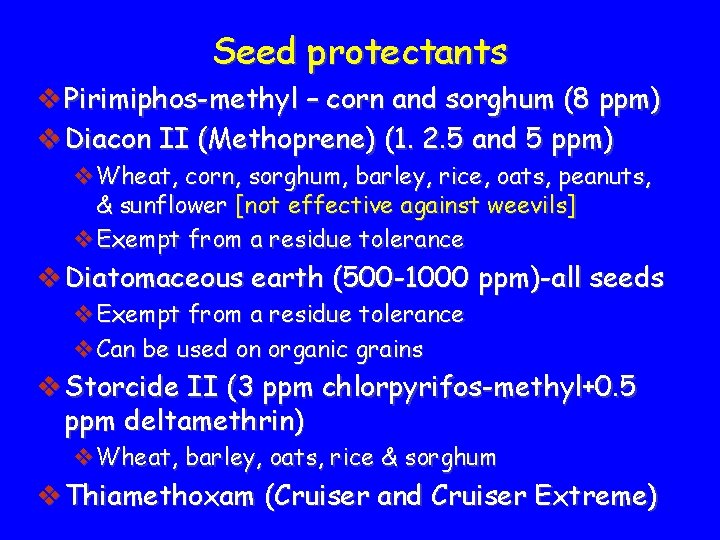
Seed protectants v Pirimiphos-methyl – corn and sorghum (8 ppm) v Diacon II (Methoprene) (1. 2. 5 and 5 ppm) v. Wheat, corn, sorghum, barley, rice, oats, peanuts, & sunflower [not effective against weevils] v. Exempt from a residue tolerance v Diatomaceous earth (500 -1000 ppm)-all seeds v. Exempt from a residue tolerance v. Can be used on organic grains v Storcide II (3 ppm chlorpyrifos-methyl+0. 5 ppm deltamethrin) v. Wheat, barley, oats, rice & sorghum v Thiamethoxam (Cruiser and Cruiser Extreme)
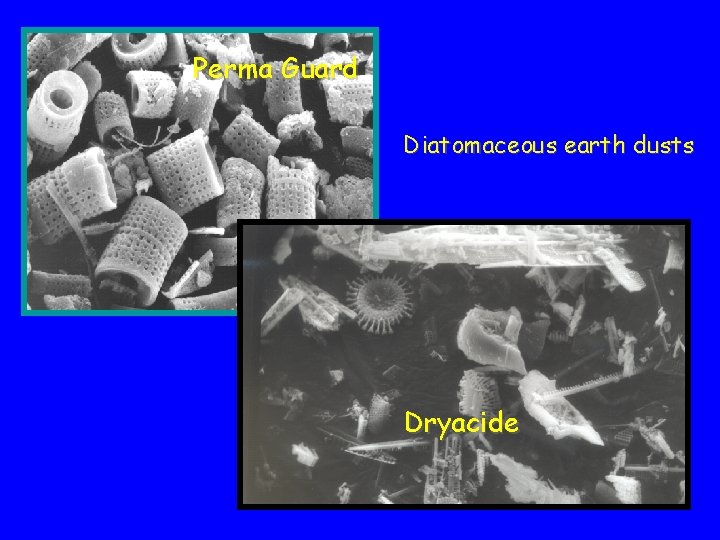
Perma Guard Diatomaceous earth dusts Dryacide
Seed protectants v. Should be applied to uninfested seed v. Prevents insect infestation v. Provides long-term protection v. Treat the entire seed lot intended for storage v. Expect a 25 -30% loss during application v. Do not apply a protectant if storage time is less than a month v. Do not treat seed that is already infested v. Infested seeds should be first fumigated and then treated with a protectant
A New Seed Protectant-Spinosad
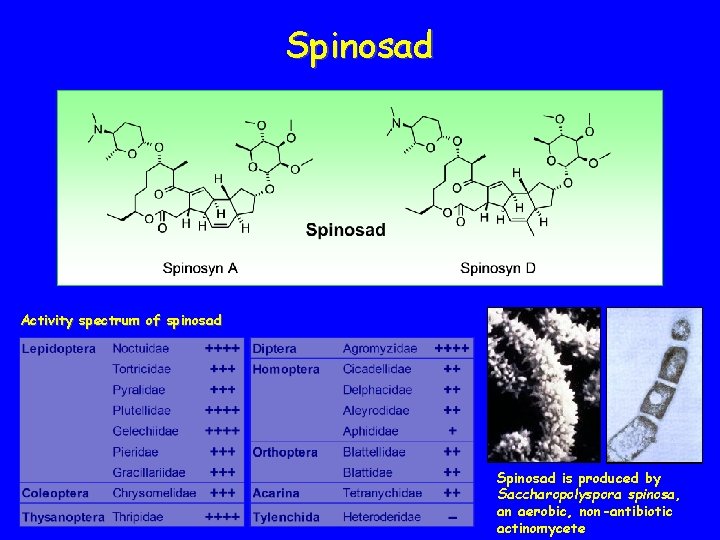
Spinosad Activity spectrum of spinosad Spinosad is produced by Saccharopolyspora spinosa, an aerobic, non-antibiotic actinomycete
What is spinosad? v Fermentation product of the bacterium Saccharopolyspora spinosa v Broad spectrum insecticide, mixture of spinosyns A and D v Low mammalian toxicity (rat oral and dermal LD 50, > 5000 mg/kg) v Unique mode of action v Stomach toxicity>contact toxicity (5: 1) v Currently labeled for use on over 250+ crops in the US and registered in over 52 countries v Approved by EPA in January 2005 for treating corn, barley, sorghum, millets, oats, rice, triticale, wheat, birdseed, flower seeds, ornamental seeds, and grass seeds (Fed Reg 70: 1349 -1357)
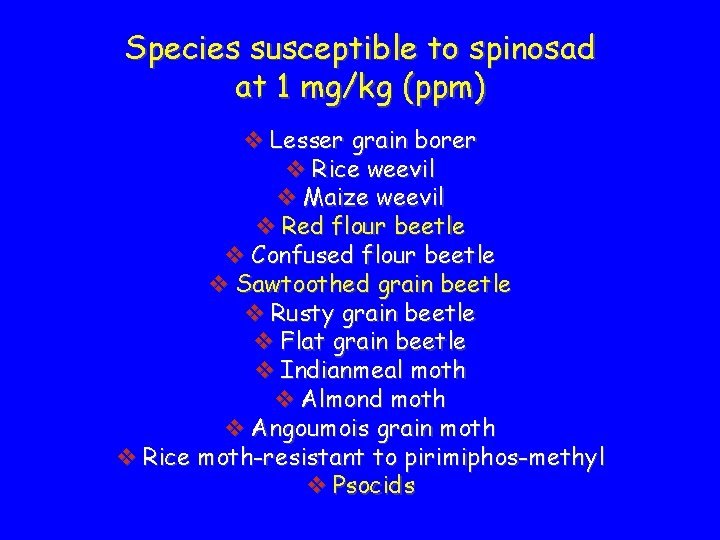
Species susceptible to spinosad at 1 mg/kg (ppm) v Lesser grain borer v Rice weevil v Maize weevil v Red flour beetle v Confused flour beetle v Sawtoothed grain beetle v Rusty grain beetle v Flat grain beetle v Indianmeal moth v Almond moth v Angoumois grain moth v Rice moth-resistant to pirimiphos-methyl v Psocids
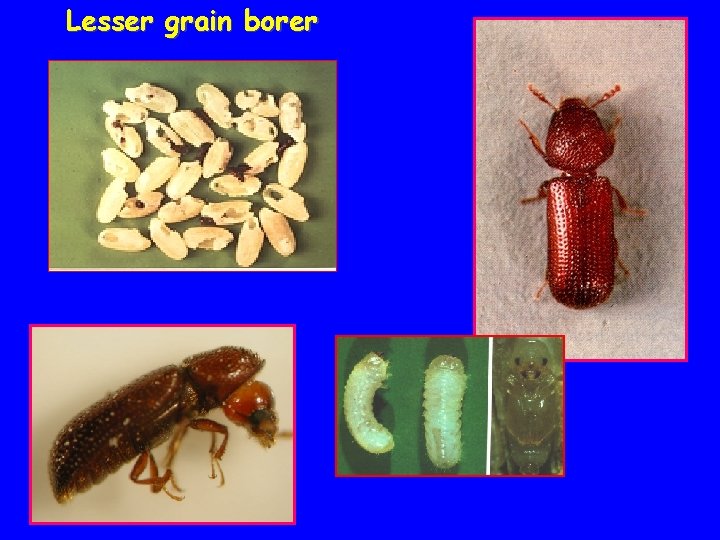
Lesser grain borer
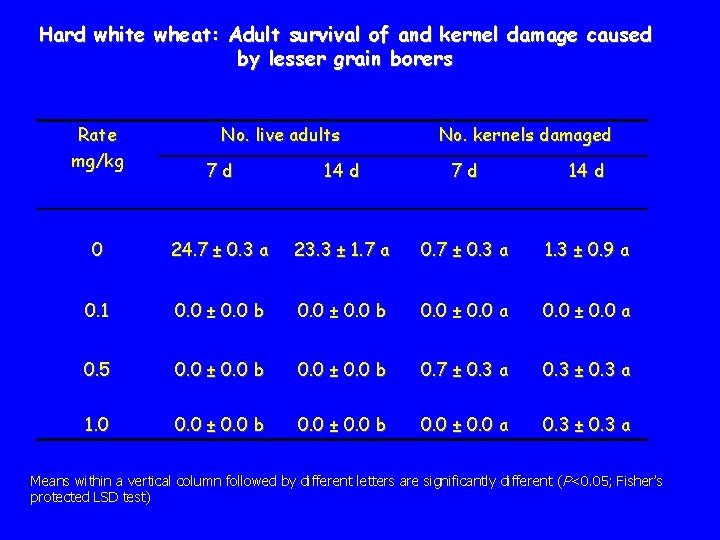
Hard white wheat: Adult survival of and kernel damage caused by lesser grain borers Rate mg/kg No. live adults No. kernels damaged 7 d 14 d 0 24. 7 ± 0. 3 a 23. 3 ± 1. 7 a 0. 7 ± 0. 3 a 1. 3 ± 0. 9 a 0. 1 0. 0 ± 0. 0 b 0. 0 ± 0. 0 a 0. 5 0. 0 ± 0. 0 b 0. 7 ± 0. 3 a 0. 3 ± 0. 3 a 1. 0 0. 0 ± 0. 0 b 0. 0 ± 0. 0 a 0. 3 ± 0. 3 a Means within a vertical column followed by different letters are significantly different ( P<0. 05; Fisher’s protected LSD test)
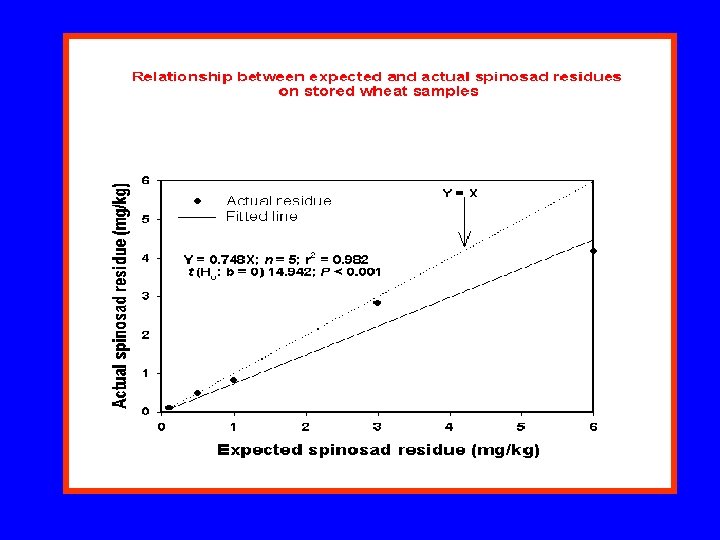
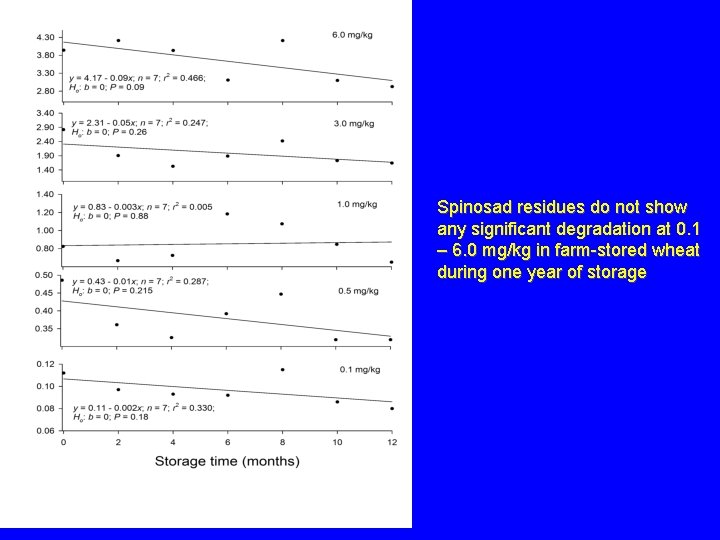
Spinosad residues do not show any significant degradation at 0. 1 – 6. 0 mg/kg in farm-stored wheat during one year of storage
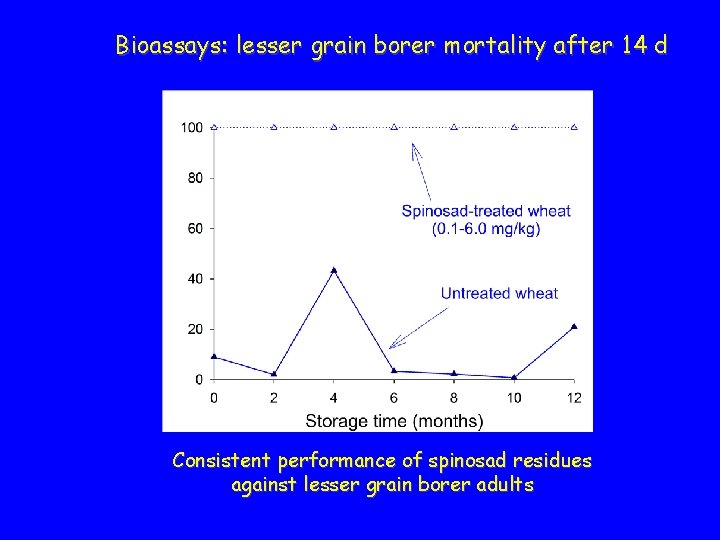
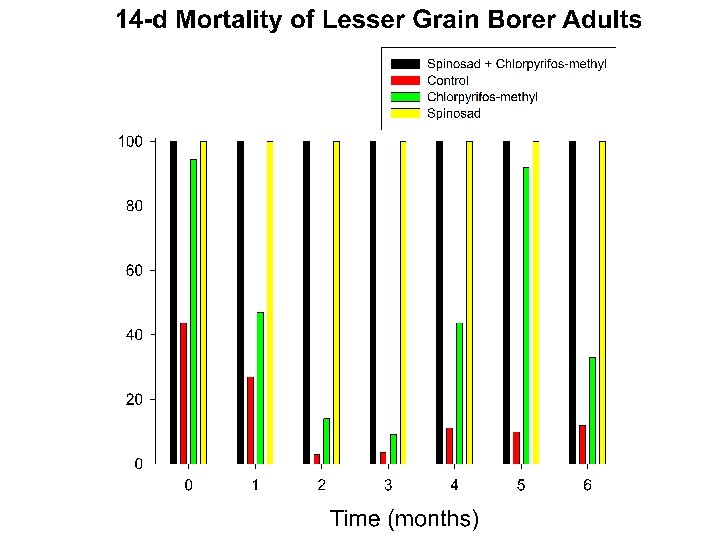
Bioassays: lesser grain borer mortality after 14 d Consistent performance of spinosad residues against lesser grain borer adults
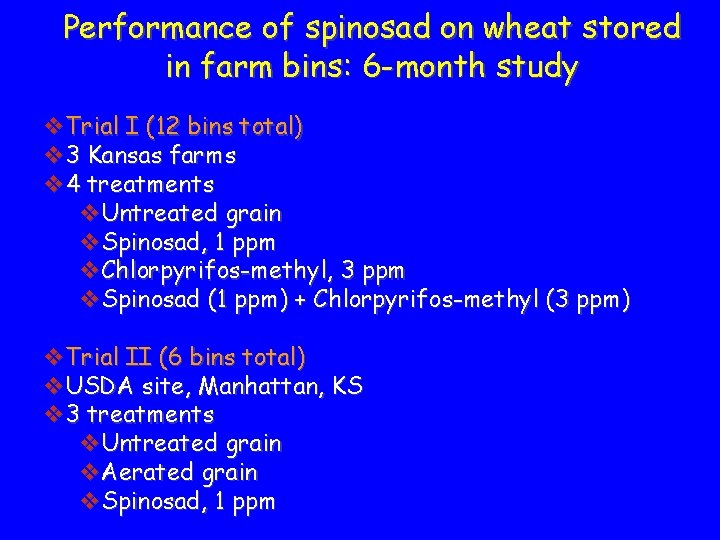
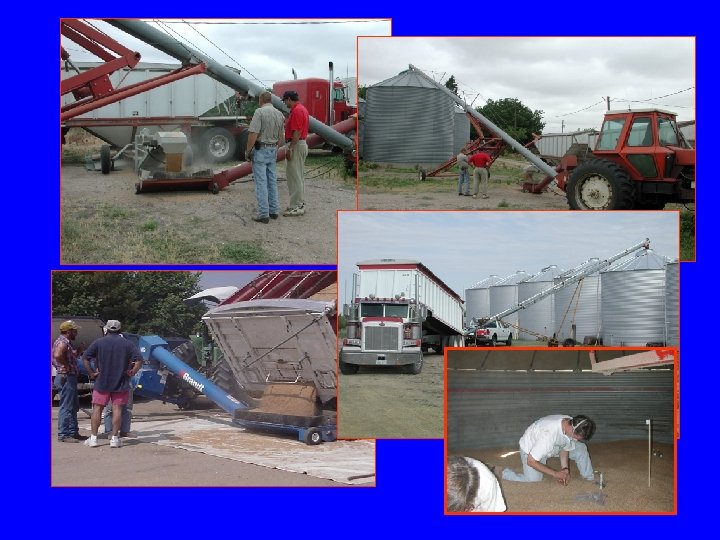
Performance of spinosad on wheat stored in farm bins: 6 -month study v. Trial I (12 bins total) v 3 Kansas farms v 4 treatments v. Untreated grain v. Spinosad, 1 ppm v. Chlorpyrifos-methyl, 3 ppm v. Spinosad (1 ppm) + Chlorpyrifos-methyl (3 ppm) v. Trial II (6 bins total) v. USDA site, Manhattan, KS v 3 treatments v. Untreated grain v. Aerated grain v. Spinosad, 1 ppm
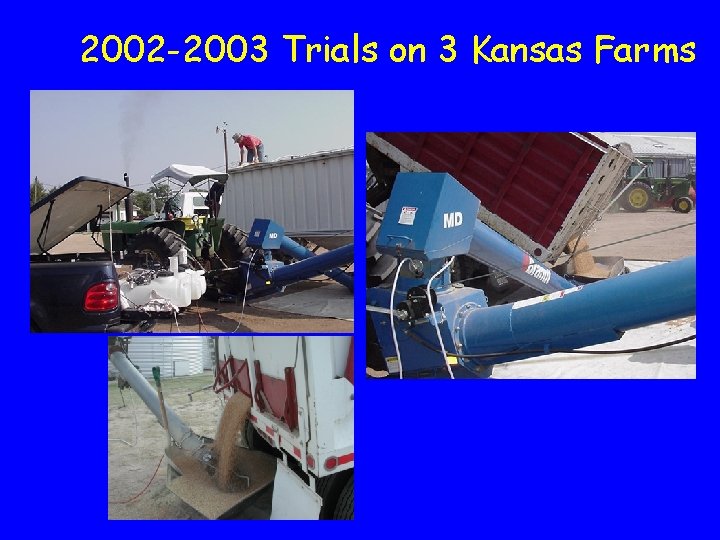
2002 -2003 Trials on 3 Kansas Farms
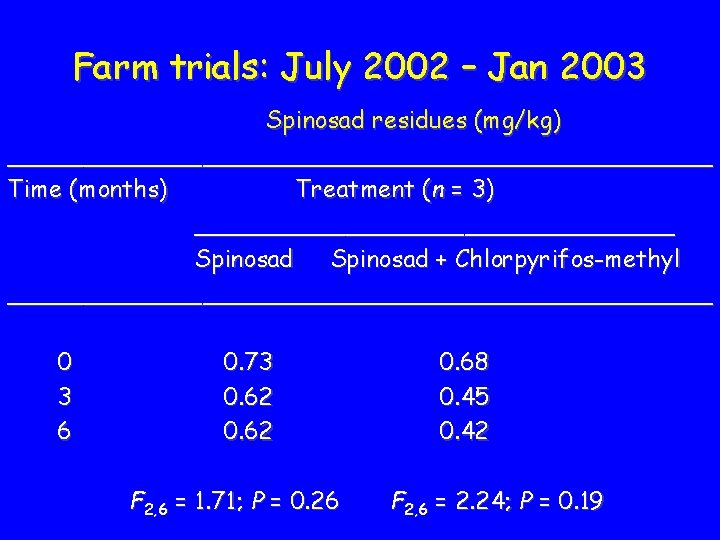
Farm trials: July 2002 – Jan 2003 Spinosad residues (mg/kg) ________________________ Time (months) Treatment (n = 3) ________________ Spinosad + Chlorpyrifos-methyl ________________________ 0 3 6 0. 73 0. 62 F 2, 6 = 1. 71; P = 0. 26 0. 68 0. 45 0. 42 F 2, 6 = 2. 24; P = 0. 19
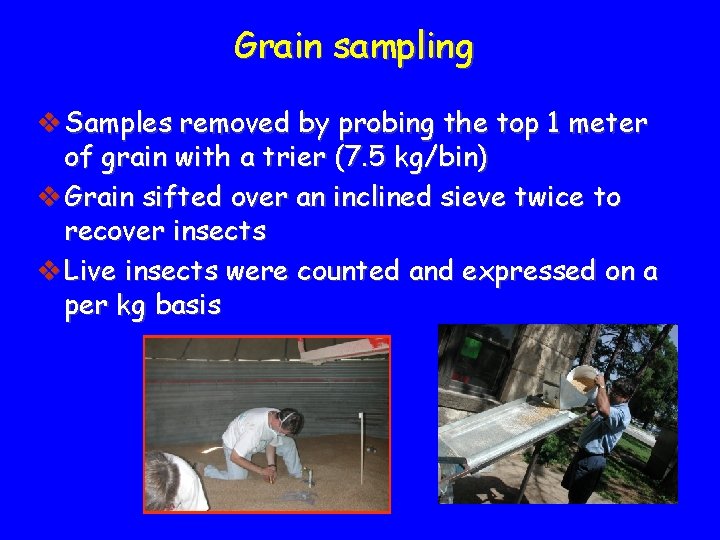
Grain sampling v Samples removed by probing the top 1 meter of grain with a trier (7. 5 kg/bin) v Grain sifted over an inclined sieve twice to recover insects v Live insects were counted and expressed on a per kg basis
Live insects include adults of the lesser grain borer, rusty grain beetle, red flour beetle, and sawtoothed grain beetle



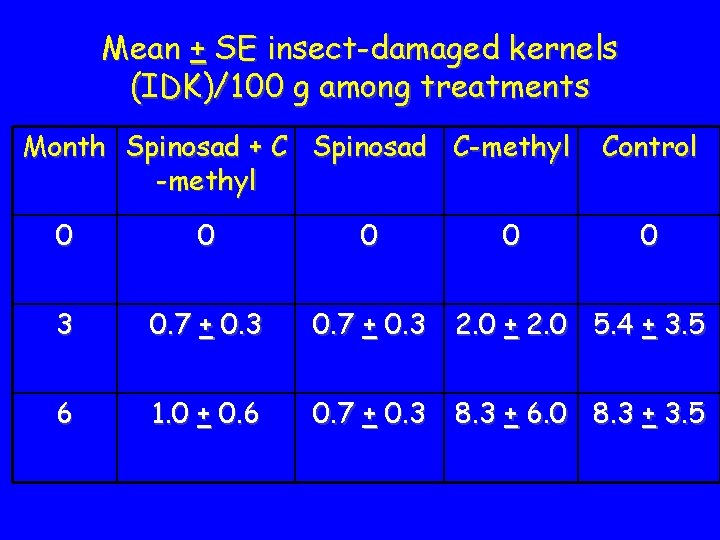
Mean + SE insect-damaged kernels (IDK)/100 g among treatments Month Spinosad + C Spinosad C-methyl 0 0 Control 0 0 0 3 0. 7 + 0. 3 2. 0 + 2. 0 5. 4 + 3. 5 6 1. 0 + 0. 6 0. 7 + 0. 3 8. 3 + 6. 0 8. 3 + 3. 5
Comparison of Spinosad and Aeration Flinn, P. W. , Bh. Subramanyam, & F. Arthur. 2004. Comparison of aeration and spinosad for insect suppression in stored wheat. Journal of Economic Entomology 97: 1465 -1473.
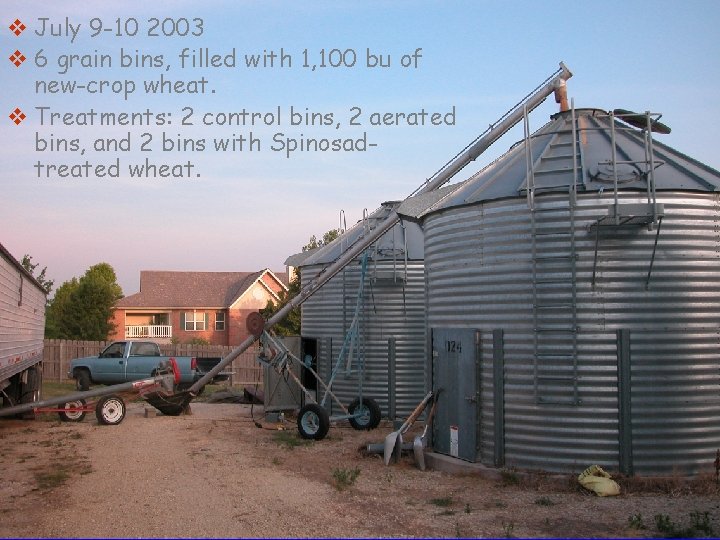
v July 9 -10 2003 v 6 grain bins, filled with 1, 100 bu of new-crop wheat. v Treatments: 2 control bins, 2 aerated bins, and 2 bins with Spinosadtreated wheat.
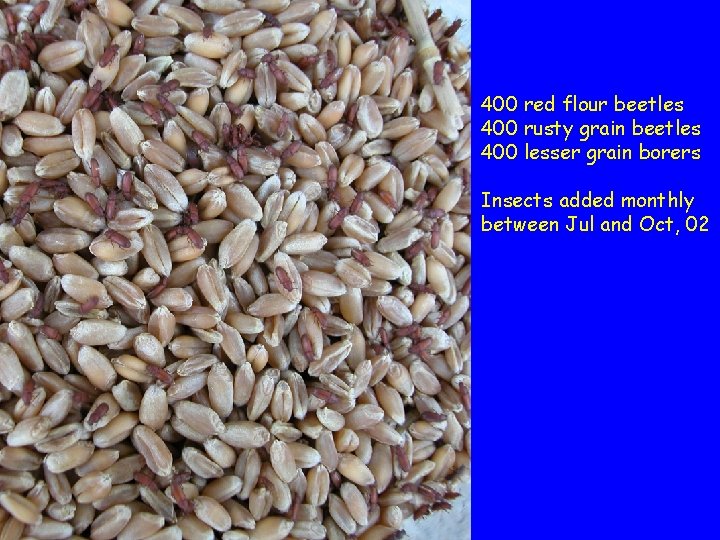
400 red flour beetles 400 rusty grain beetles 400 lesser grain borers Insects added monthly between Jul and Oct, 02
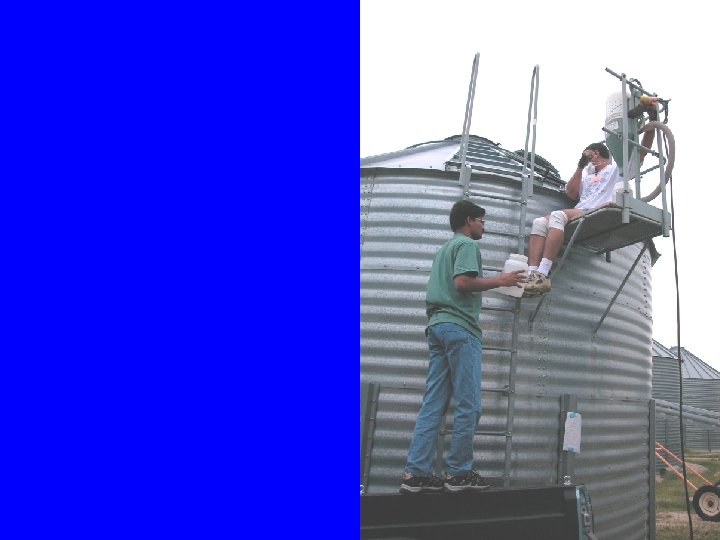




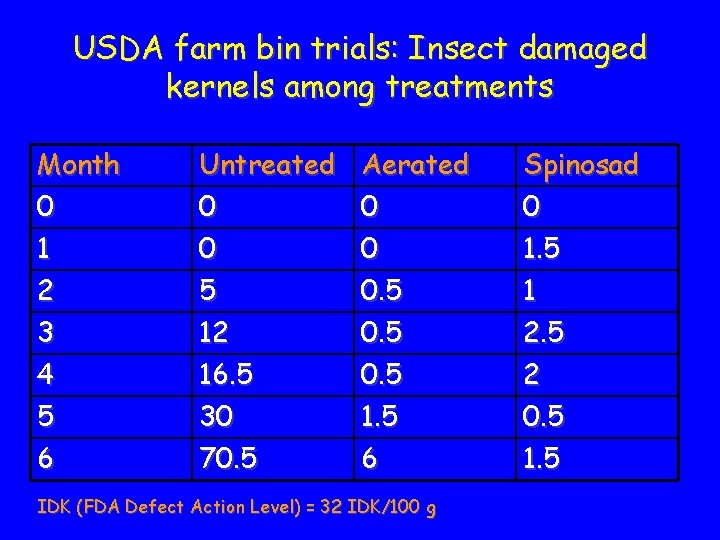
USDA farm bin trials: Insect damaged kernels among treatments Month 0 1 2 3 4 5 6 Untreated Aerated 0 0 5 0. 5 12 0. 5 16. 5 0. 5 30 1. 5 70. 5 6 IDK (FDA Defect Action Level) = 32 IDK/100 g Spinosad 0 1. 5 1 2. 5 2 0. 5 1. 5
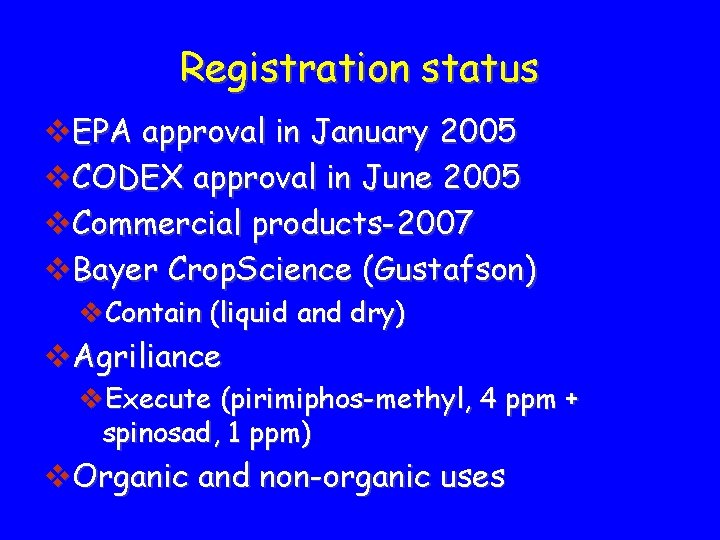
Registration status v. EPA approval in January 2005 v. CODEX approval in June 2005 v. Commercial products-2007 v. Bayer Crop. Science (Gustafson) v. Contain (liquid and dry) v. Agriliance v. Execute (pirimiphos-methyl, 4 ppm + spinosad, 1 ppm) v. Organic and non-organic uses
Conclusions v. Spinosad has broad spectrum of activity at 1 ppm against a range of species v. It is a reduced-risk insecticide v. It is stable on seeds-6 months to 2 years) v. Can be combined with other protectants
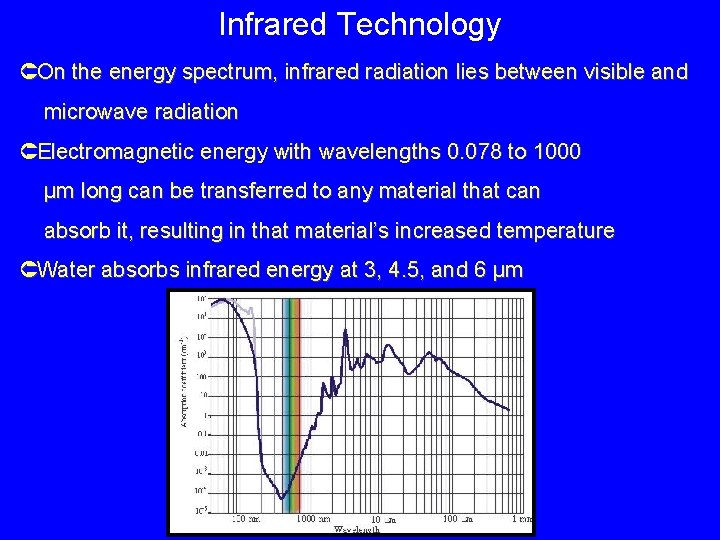
Infrared Technology ÛOn the energy spectrum, infrared radiation lies between visible and microwave radiation ÛElectromagnetic energy with wavelengths 0. 078 to 1000 μm long can be transferred to any material that can absorb it, resulting in that material’s increased temperature ÛWater absorbs infrared energy at 3, 4. 5, and 6 μm
Commercial Heater Specifications Û Dimensions: length 6. 1 m (20 ft); width, 61 cm (24 inches) Û Heater dimensions: 5. 5 m long and 25. 4 cm wide. There a total of 4 pairs of heaters above the conveyer Û Distance between heater surface and conveyer surface: 4. 4 cm (lowest point), 8. 9 cm (highest point) Û 7, 200 BTU/sq ft; 216, 000 BTU/h Û Grain flow rate: 1, 308 kg/h (2, 880 lb/h) [65 kg/3 min] Û Natural gas pressure: 9 cm water column (28 cm water column = 0. 4 psi) Û Grain treated in a single layer (0. 3 mm thick) Û Residence time of grain in the heating zone: 43 sec
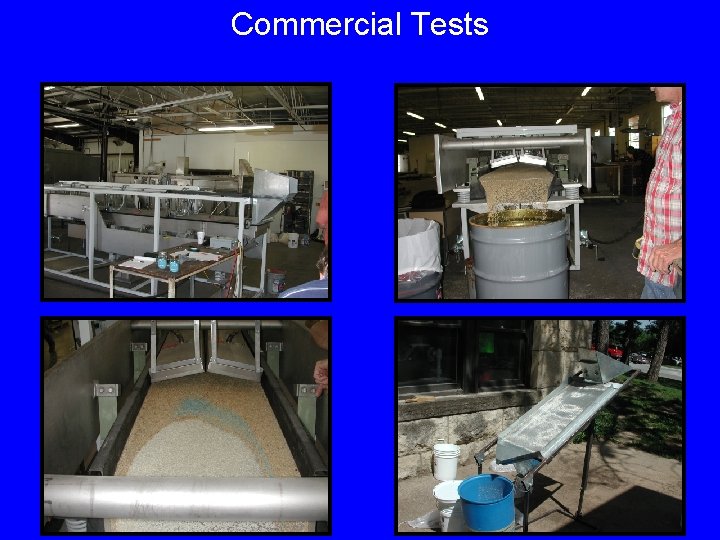
Commercial Tests
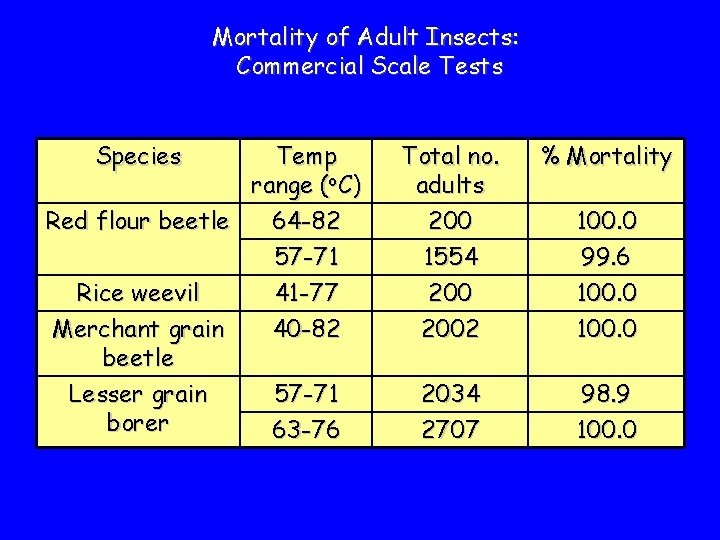
Mortality of Adult Insects: Commercial Scale Tests Species Temp range (o. C) Red flour beetle 64 -82 57 -71 Rice weevil Merchant grain beetle Lesser grain borer Total no. adults 200 1554 % Mortality 41 -77 40 -82 2002 100. 0 57 -71 63 -76 2034 2707 98. 9 100. 0 99. 6
Mortality of Lesser Grain Borer Larvae: Commercial Scale Tests
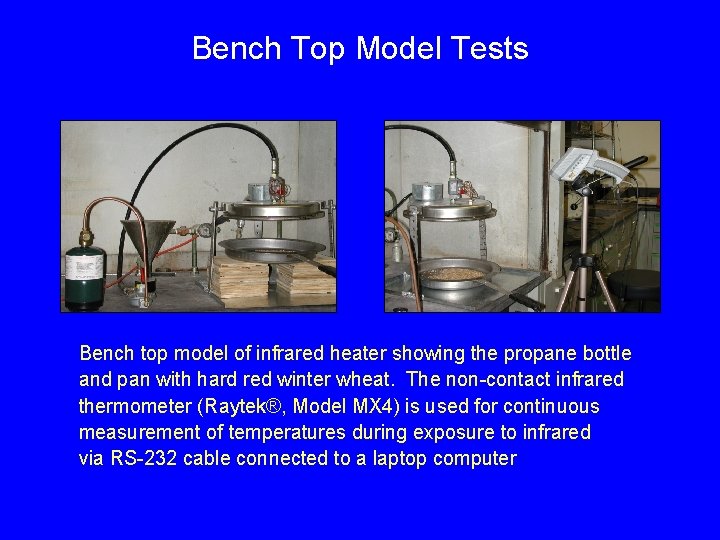
Bench Top Model Tests Bench top model of infrared heater showing the propane bottle and pan with hard red winter wheat. The non-contact infrared thermometer (Raytek®, Model MX 4) is used for continuous measurement of temperatures during exposure to infrared via RS-232 cable connected to a laptop computer
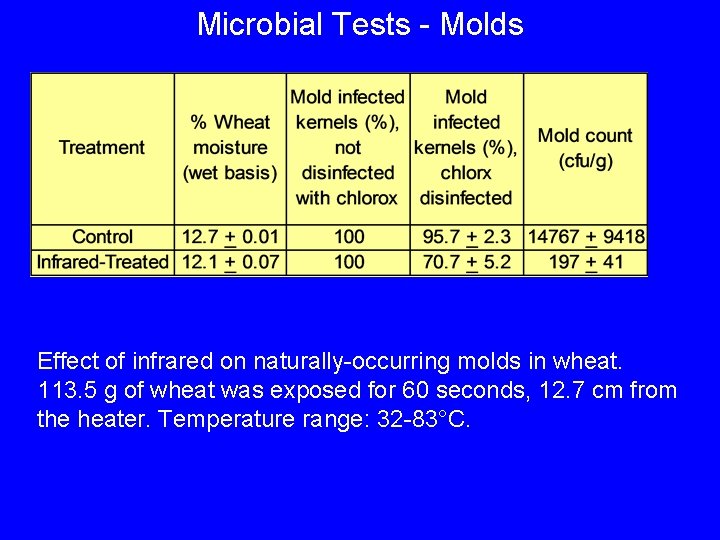
Microbial Tests - Molds Effect of infrared on naturally-occurring molds in wheat. 113. 5 g of wheat was exposed for 60 seconds, 12. 7 cm from the heater. Temperature range: 32 -83°C.
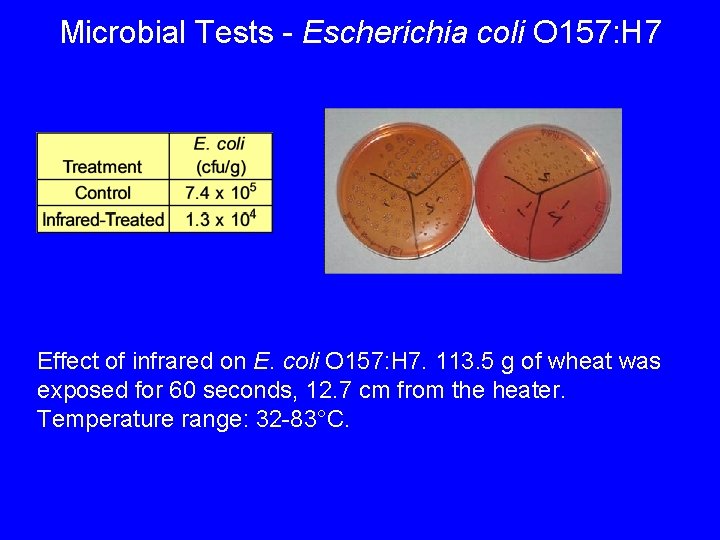
Microbial Tests - Escherichia coli O 157: H 7 Effect of infrared on E. coli O 157: H 7. 113. 5 g of wheat was exposed for 60 seconds, 12. 7 cm from the heater. Temperature range: 32 -83°C.

Thank you
- Slides: 49