
Storage management and caching in PAST Antony Rowstron
- Slides: 20
Storage management and caching in PAST Antony Rowstron and Peter Druschel Presented to cs 294 -4 by Owen Cooper
Outline • • PAST goals PAST api File storage overview File and replica diversion Replica management Caching Performance Discussion
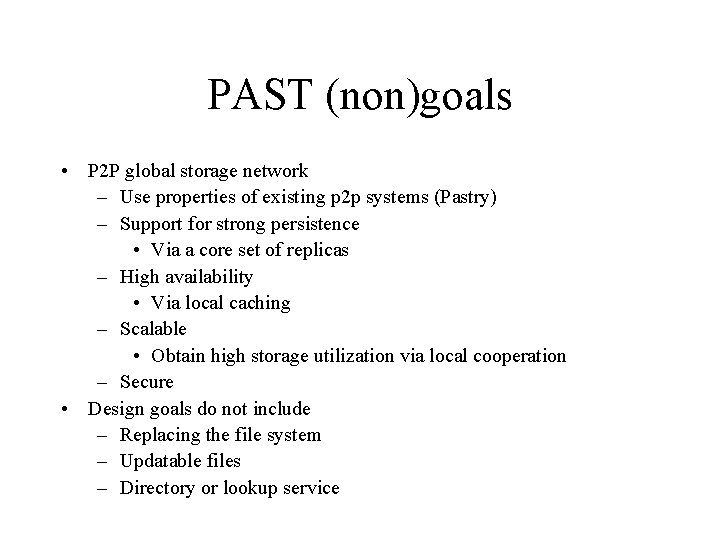
PAST (non)goals • P 2 P global storage network – Use properties of existing p 2 p systems (Pastry) – Support for strong persistence • Via a core set of replicas – High availability • Via local caching – Scalable • Obtain high storage utilization via local cooperation – Secure • Design goals do not include – Replacing the file system – Updatable files – Directory or lookup service
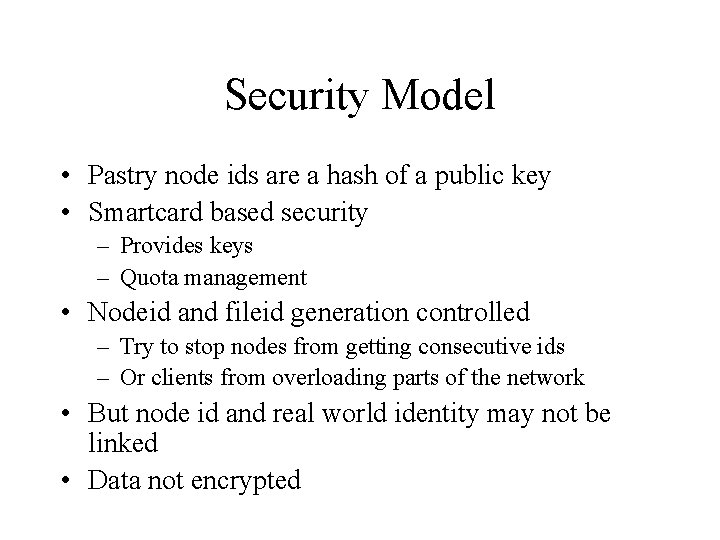
Security Model • Pastry node ids are a hash of a public key • Smartcard based security – Provides keys – Quota management • Nodeid and fileid generation controlled – Try to stop nodes from getting consecutive ids – Or clients from overloading parts of the network • But node id and real world identity may not be linked • Data not encrypted
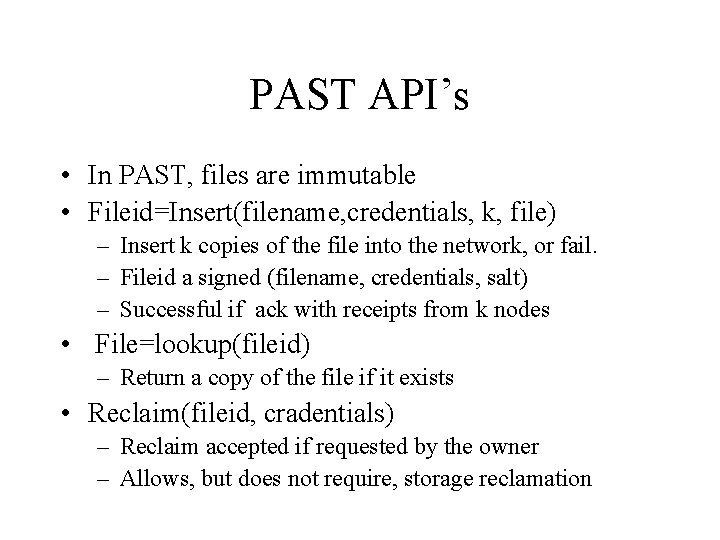
PAST API’s • In PAST, files are immutable • Fileid=Insert(filename, credentials, k, file) – Insert k copies of the file into the network, or fail. – Fileid a signed (filename, credentials, salt) – Successful if ack with receipts from k nodes • File=lookup(fileid) – Return a copy of the file if it exists • Reclaim(fileid, cradentials) – Reclaim accepted if requested by the owner – Allows, but does not require, storage reclamation
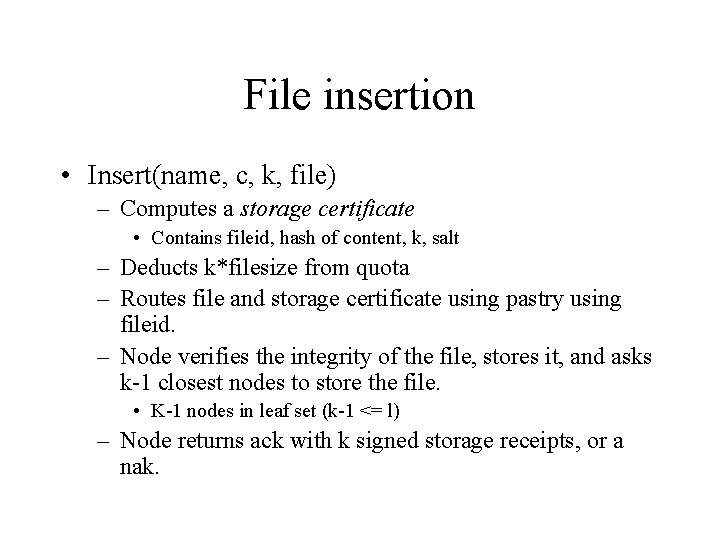
File insertion • Insert(name, c, k, file) – Computes a storage certificate • Contains fileid, hash of content, k, salt – Deducts k*filesize from quota – Routes file and storage certificate using pastry using fileid. – Node verifies the integrity of the file, stores it, and asks k-1 closest nodes to store the file. • K-1 nodes in leaf set (k-1 <= l) – Node returns ack with k signed storage receipts, or a nak.
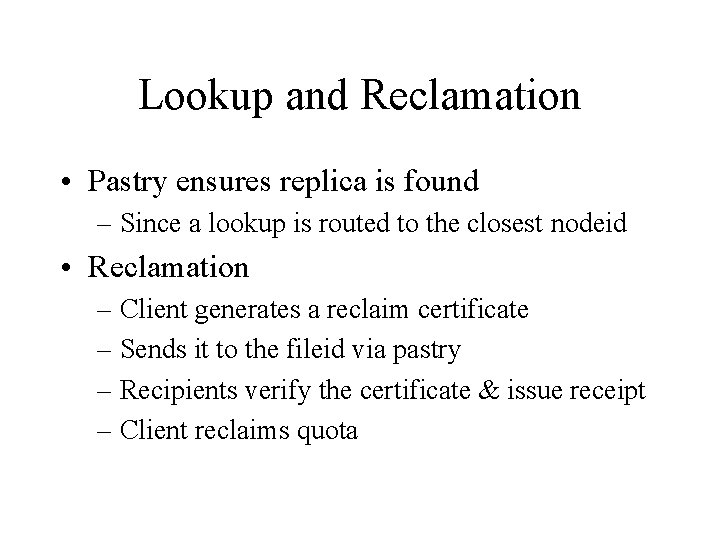
Lookup and Reclamation • Pastry ensures replica is found – Since a lookup is routed to the closest nodeid • Reclamation – Client generates a reclaim certificate – Sends it to the fileid via pastry – Recipients verify the certificate & issue receipt – Client reclaims quota
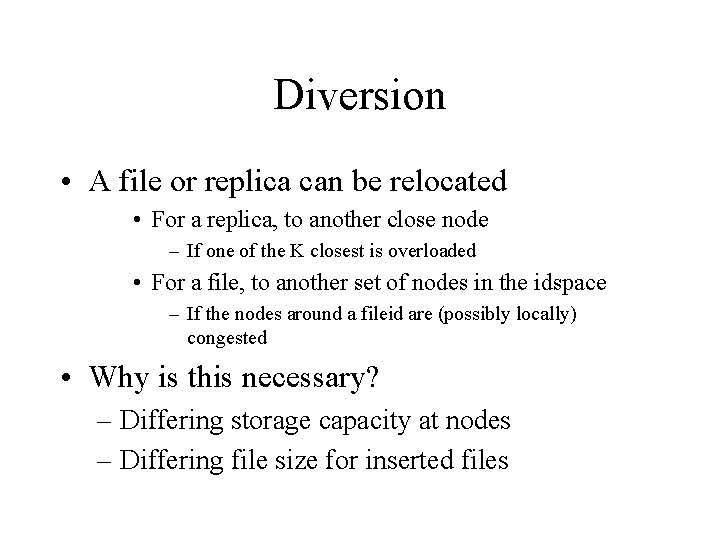
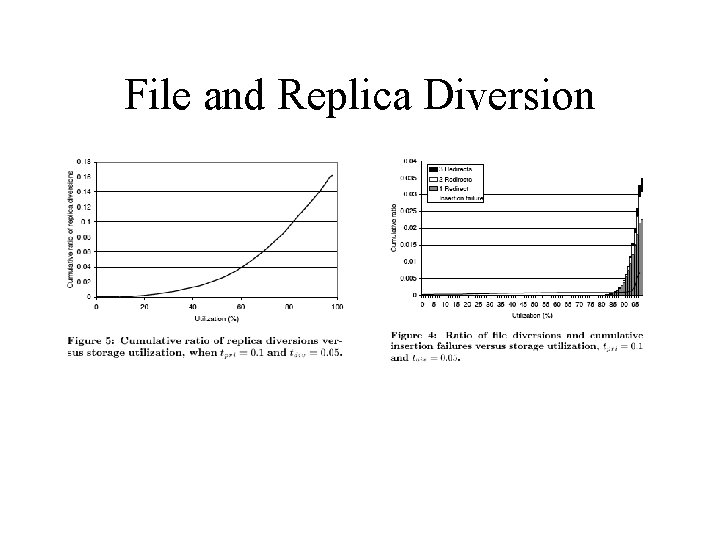
Diversion • A file or replica can be relocated • For a replica, to another close node – If one of the K closest is overloaded • For a file, to another set of nodes in the idspace – If the nodes around a fileid are (possibly locally) congested • Why is this necessary? – Differing storage capacity at nodes – Differing file size for inserted files
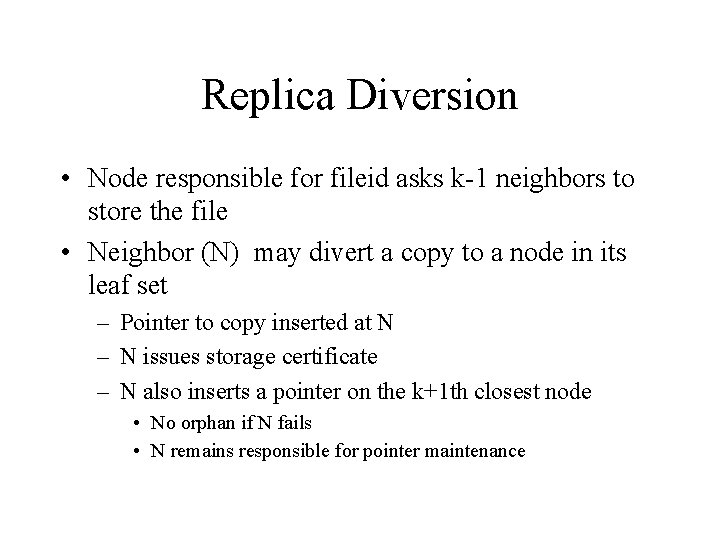
Replica Diversion • Node responsible for fileid asks k-1 neighbors to store the file • Neighbor (N) may divert a copy to a node in its leaf set – Pointer to copy inserted at N – N issues storage certificate – N also inserts a pointer on the k+1 th closest node • No orphan if N fails • N remains responsible for pointer maintenance
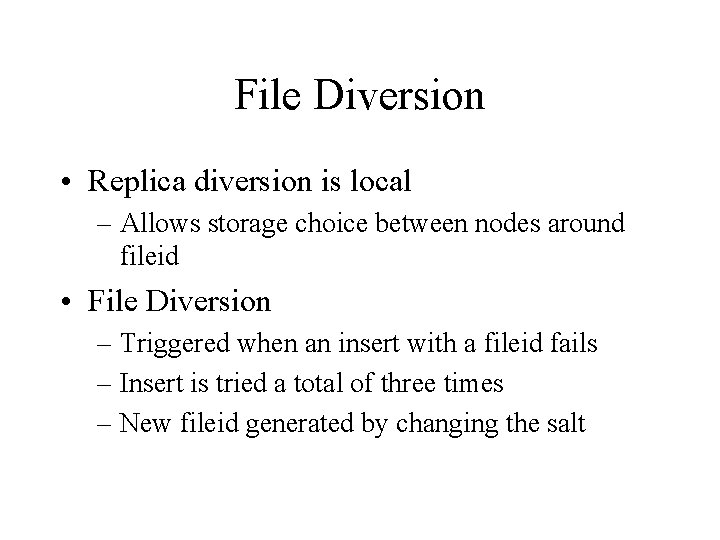
File Diversion • Replica diversion is local – Allows storage choice between nodes around fileid • File Diversion – Triggered when an insert with a fileid fails – Insert is tried a total of three times – New fileid generated by changing the salt
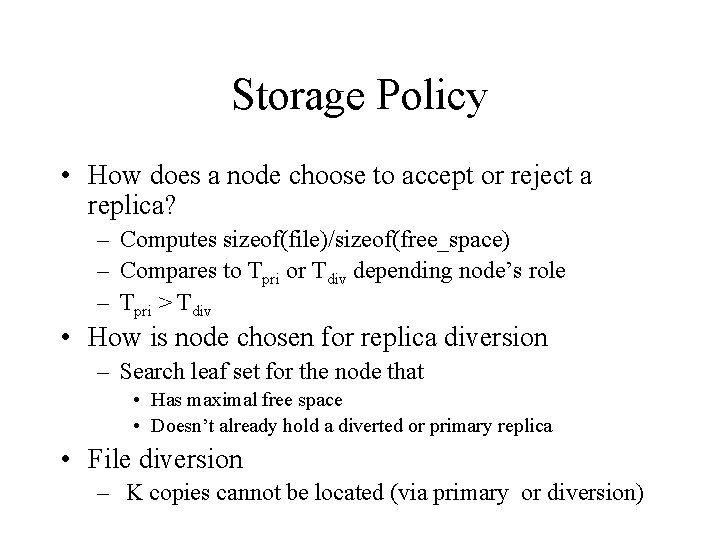
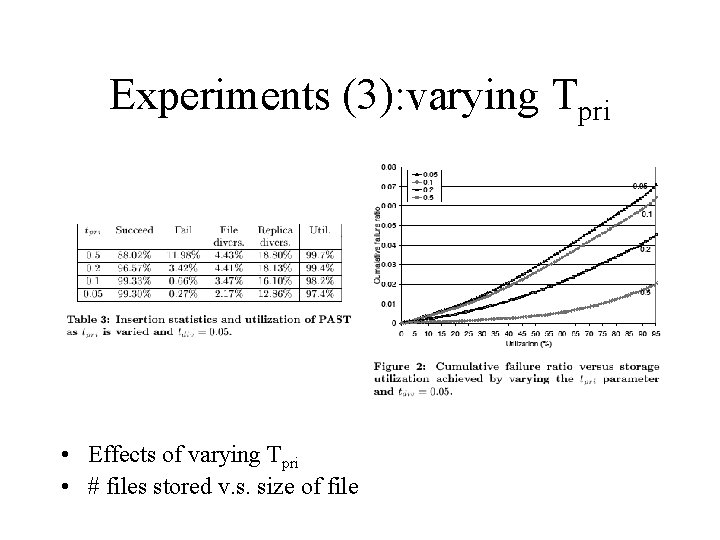
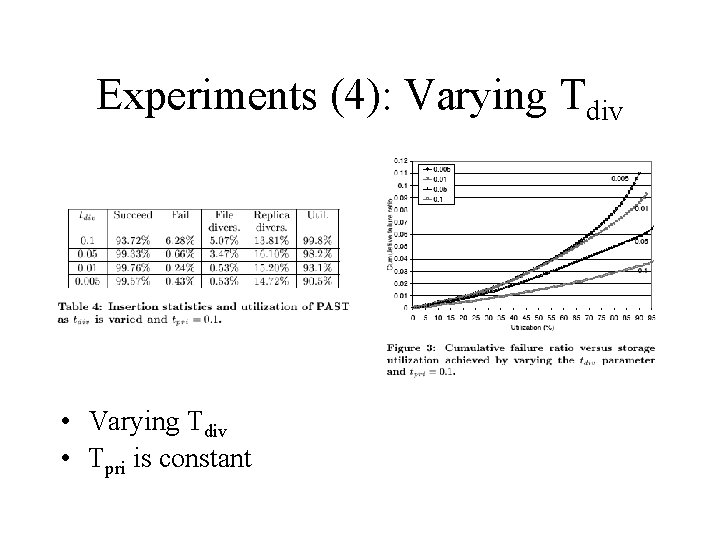
Storage Policy • How does a node choose to accept or reject a replica? – Computes sizeof(file)/sizeof(free_space) – Compares to Tpri or Tdiv depending node’s role – Tpri > Tdiv • How is node chosen for replica diversion – Search leaf set for the node that • Has maximal free space • Doesn’t already hold a diverted or primary replica • File diversion – K copies cannot be located (via primary or diversion)
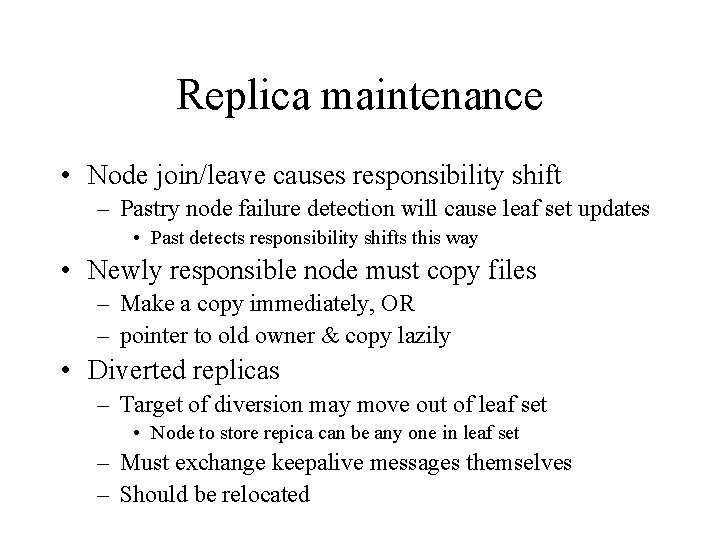
Replica maintenance • Node join/leave causes responsibility shift – Pastry node failure detection will cause leaf set updates • Past detects responsibility shifts this way • Newly responsible node must copy files – Make a copy immediately, OR – pointer to old owner & copy lazily • Diverted replicas – Target of diversion may move out of leaf set • Node to store repica can be any one in leaf set – Must exchange keepalive messages themselves – Should be relocated
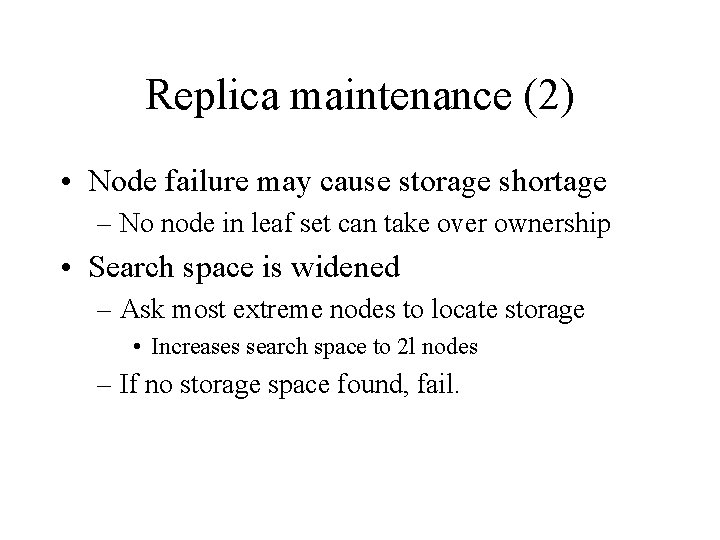
Replica maintenance (2) • Node failure may cause storage shortage – No node in leaf set can take over ownership • Search space is widened – Ask most extreme nodes to locate storage • Increases search space to 2 l nodes – If no storage space found, fail.
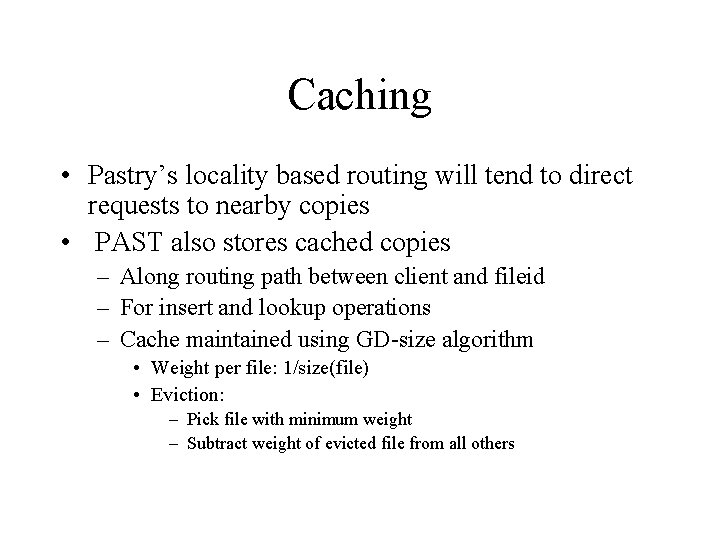
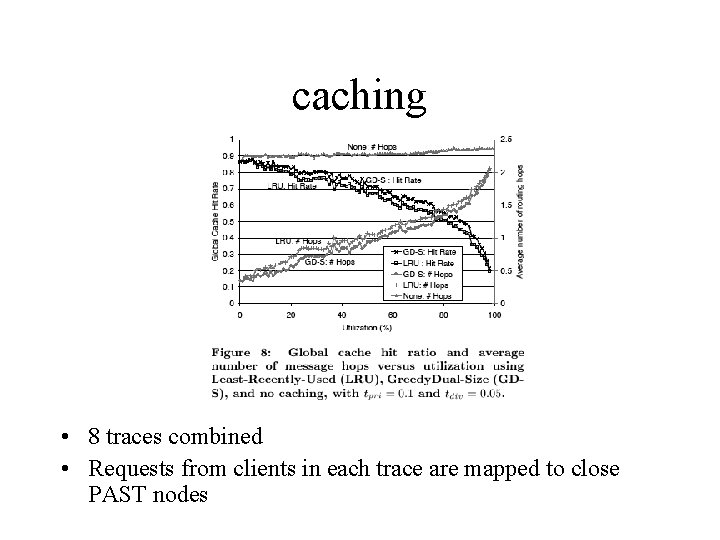
Caching • Pastry’s locality based routing will tend to direct requests to nearby copies • PAST also stores cached copies – Along routing path between client and fileid – For insert and lookup operations – Cache maintained using GD-size algorithm • Weight per file: 1/size(file) • Eviction: – Pick file with minimum weight – Subtract weight of evicted file from all others
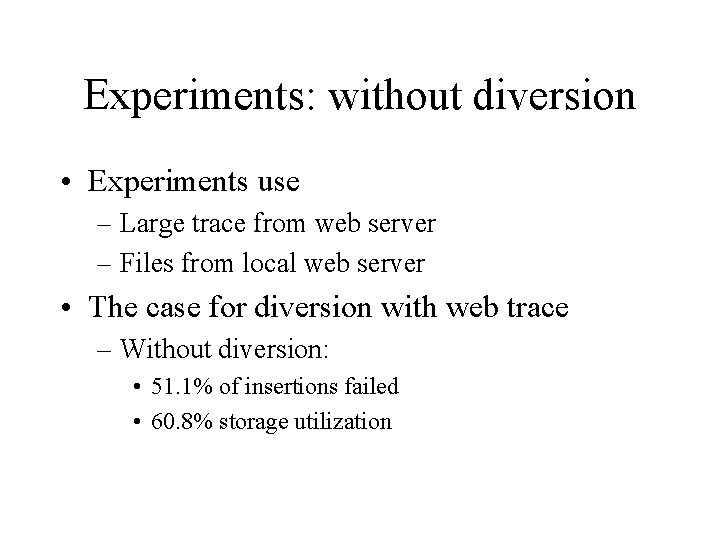
Experiments: without diversion • Experiments use – Large trace from web server – Files from local web server • The case for diversion with web trace – Without diversion: • 51. 1% of insertions failed • 60. 8% storage utilization
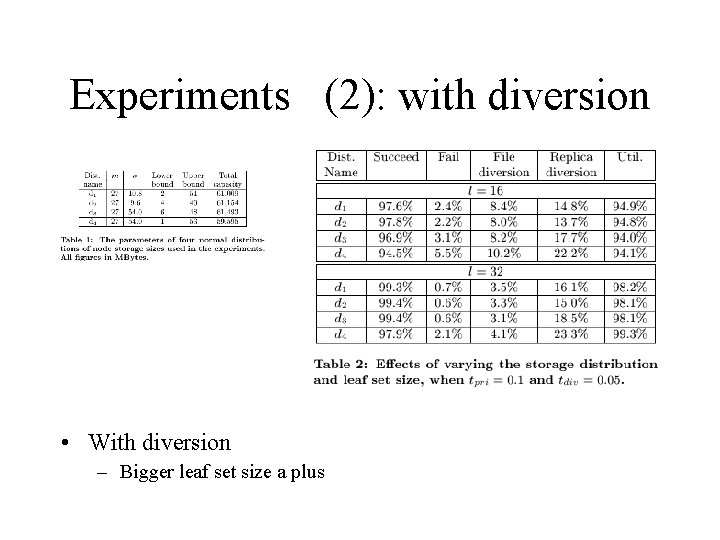
Experiments (2): with diversion • With diversion – Bigger leaf set size a plus
Experiments (3): varying Tpri • Effects of varying Tpri • # files stored v. s. size of file
Experiments (4): Varying Tdiv • Varying Tdiv • Tpri is constant
File and Replica Diversion
caching • 8 traces combined • Requests from clients in each trace are mapped to close PAST nodes