
Storage How we retain or keep the information

- Slides: 23
Storage How we retain or keep the information we have encode over time? ?
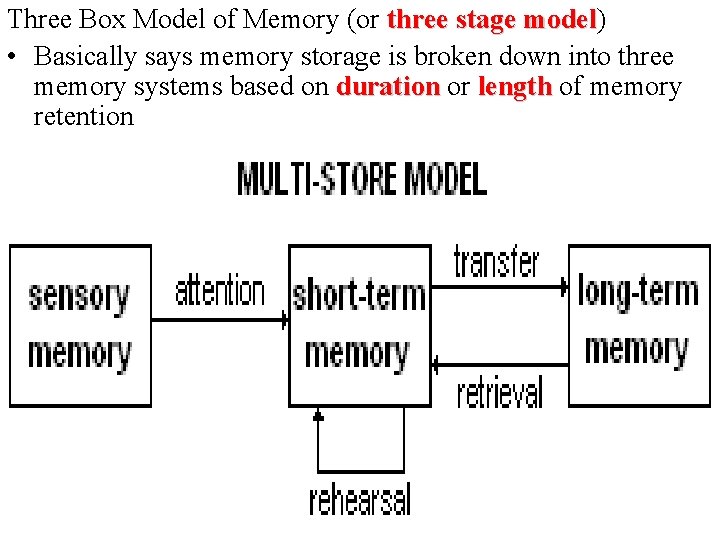
Three Box Model of Memory (or three stage model) model • Basically says memory storage is broken down into three memory systems based on duration or length of memory retention
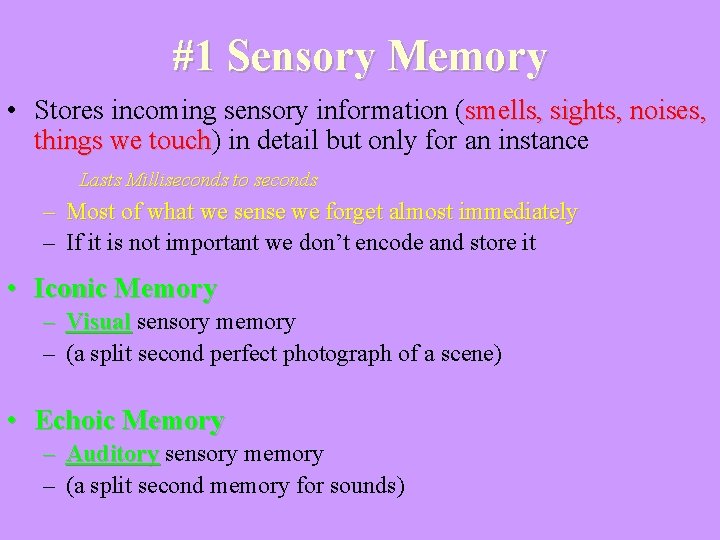
#1 Sensory Memory • Stores incoming sensory information (smells, sights, noises, things we touch) touch in detail but only for an instance Lasts Milliseconds to seconds – Most of what we sense we forget almost immediately – If it is not important we don’t encode and store it • Iconic Memory – Visual sensory memory – (a split second perfect photograph of a scene) • Echoic Memory – Auditory sensory memory – (a split second memory for sounds)
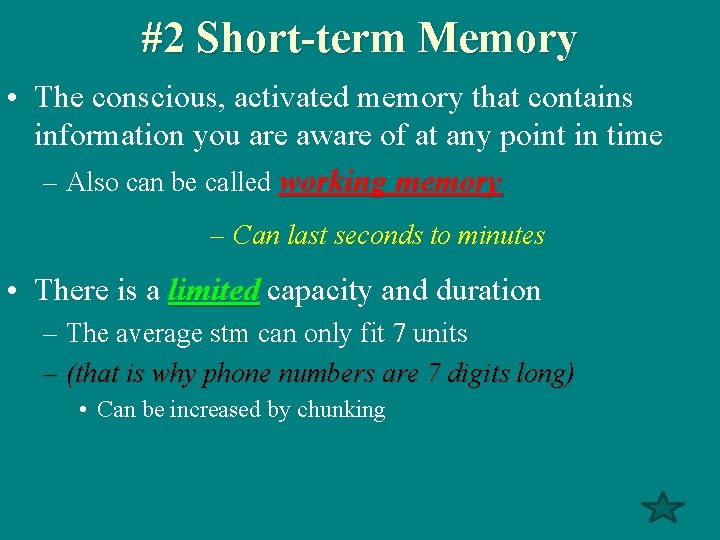
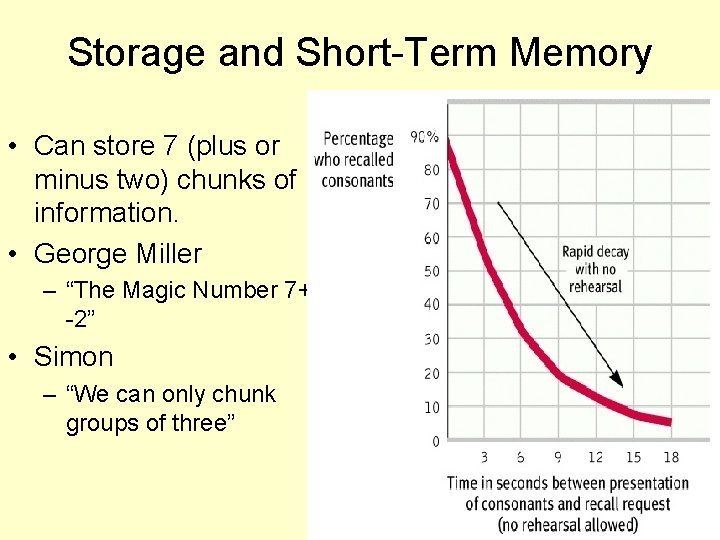
#2 Short-term Memory • The conscious, activated memory that contains information you are aware of at any point in time – Also can be called working memory – Can last seconds to minutes • There is a limited capacity and duration – The average stm can only fit 7 units – (that is why phone numbers are 7 digits long) • Can be increased by chunking
Storage and Short-Term Memory • Can store 7 (plus or minus two) chunks of information. • George Miller – “The Magic Number 7+ -2” • Simon – “We can only chunk groups of three”
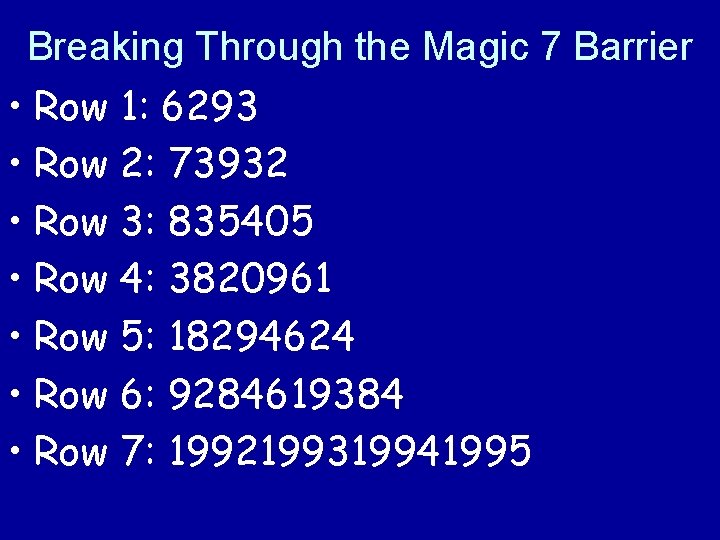
Breaking Through the Magic 7 Barrier • Row 1: 6293 • Row 2: 73932 • Row 3: 835405 • Row 4: 3820961 • Row 5: 18294624 • Row 6: 9284619384 • Row 7: 1992199319941995
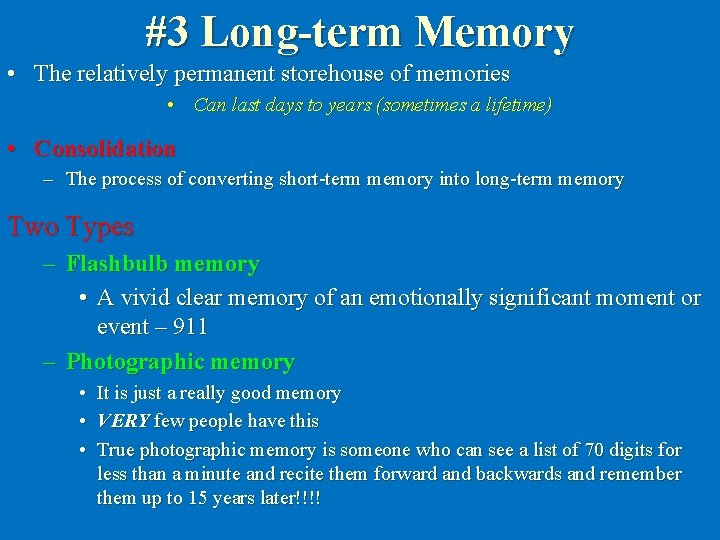
#3 Long-term Memory • The relatively permanent storehouse of memories • Can last days to years (sometimes a lifetime) • Consolidation – The process of converting short-term memory into long-term memory Two Types – Flashbulb memory • A vivid clear memory of an emotionally significant moment or event – 911 – Photographic memory • • • It is just a really good memory VERY few people have this True photographic memory is someone who can see a list of 70 digits for less than a minute and recite them forward and backwards and remember them up to 15 years later!!!!
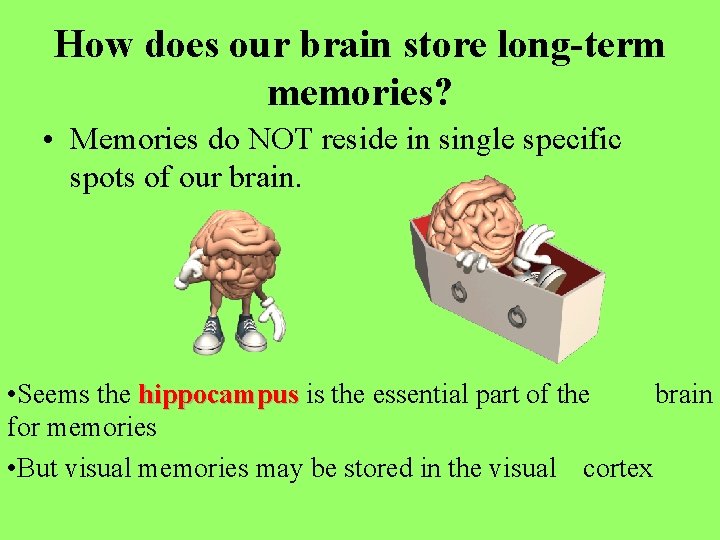
How does our brain store long-term memories? • Memories do NOT reside in single specific spots of our brain. • Seems the hippocampus is the essential part of the brain for memories • But visual memories may be stored in the visual cortex
Retrieval The getting of information and memories out of our heads How do we recall the information we thought we remembered and stored? Lets Jog Our Memory!!!!!!!
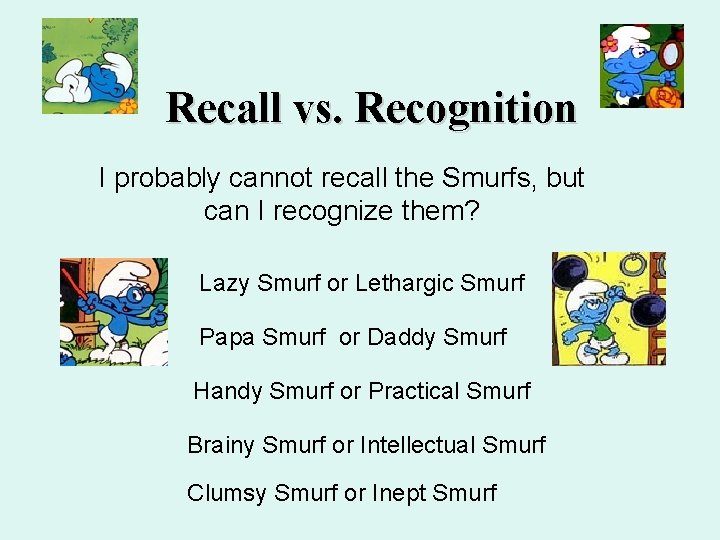
Recall vs. Recognition I probably cannot recall the Smurfs, but can I recognize them? Lazy Smurf or Lethargic Smurf Papa Smurf or Daddy Smurf Handy Smurf or Practical Smurf Brainy Smurf or Intellectual Smurf Clumsy Smurf or Inept Smurf
• Recall – Remembering without any external cues – The retrieving of information you learned earlier – What we usually think of as memory – Fill in the blank tests, short answer, essay • Recognition – The process of identifying information using external cues – Multiple choice and matching test questions
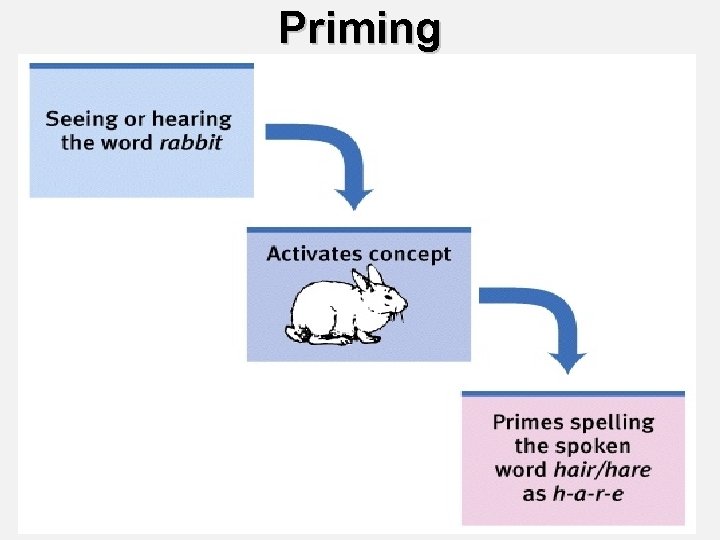
Memory is often triggered by… Retrieval Cues • Things that help us remember. – Pictures, smells, touches – Smell is usually the strongest • We often use a process called PRIMING • the activation of associations in our memory to help us retrieve information. • Recalling a particular word or memory becomes easier if another related word is recalled first • Example – thinking of me may help you remember a psychology concept or term
Priming
Our physical condition and mood affect our ability to retrieve memories The Pollyanna Principle
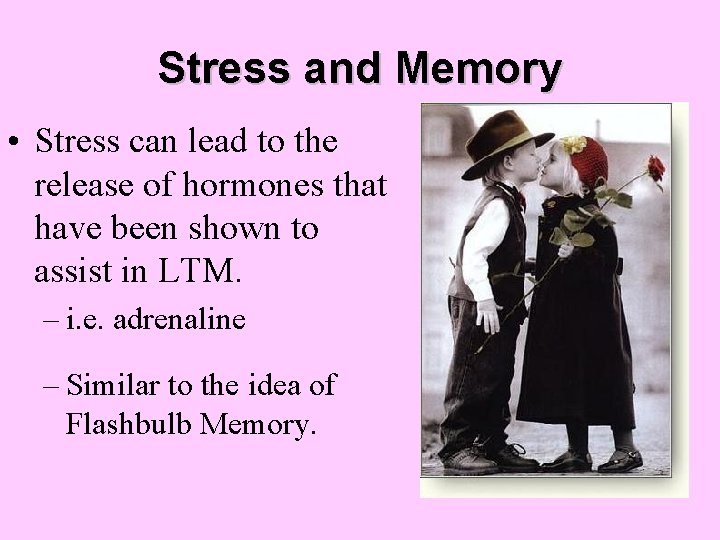
Stress and Memory • Stress can lead to the release of hormones that have been shown to assist in LTM. – i. e. adrenaline – Similar to the idea of Flashbulb Memory.
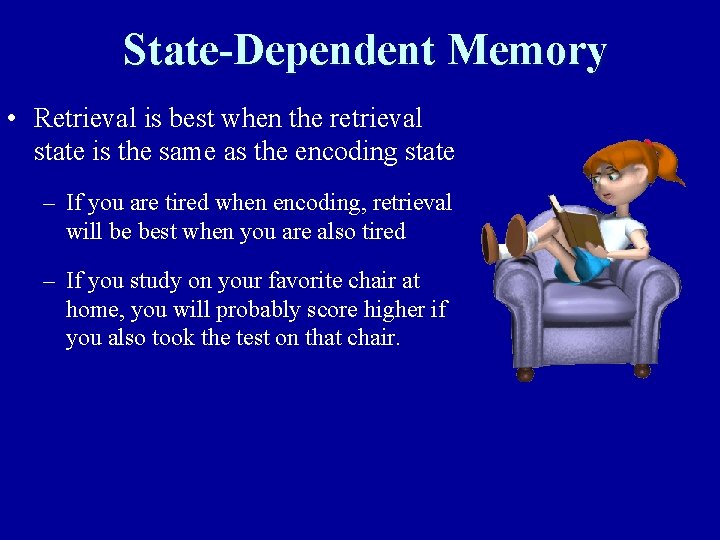
State-Dependent Memory • Retrieval is best when the retrieval state is the same as the encoding state – If you are tired when encoding, retrieval will be best when you are also tired – If you study on your favorite chair at home, you will probably score higher if you also took the test on that chair.
Mood-Congruent Memory • The tendency to recall experiences that are consistent with one's current good or bad mood. Example: If you are depressed, you will more likely recall sad memories from you past.
Types of Long Term Memories Declarative Memories Vs. Non-Declarative Memories and Prospective Vs. Retrospective Memory
Declarative Memories • Also called explicit memories – The memories that relate to facts and take effort to recall • Two types – Semantic Memory • Memory of facts and general information • State capitals or rules of a game – Episodic Memory • Memories of specific events – personal memories • Think of this like episodes of your life, like remembering your 16 th birthday
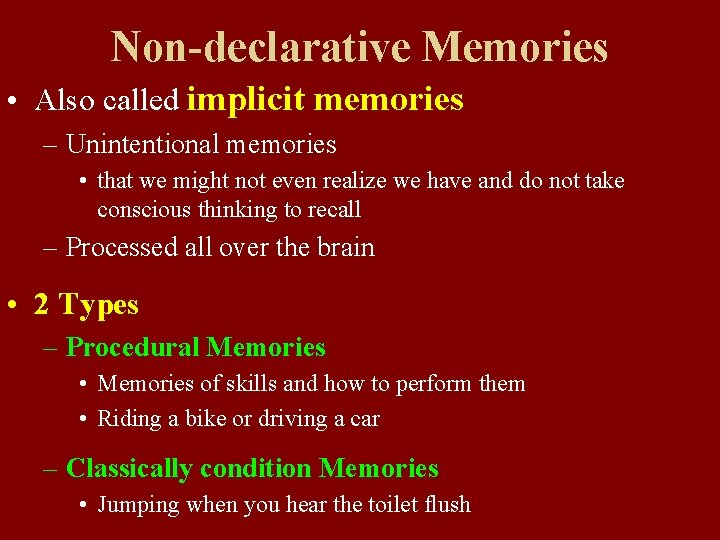
Non-declarative Memories • Also called implicit memories – Unintentional memories • that we might not even realize we have and do not take conscious thinking to recall – Processed all over the brain • 2 Types – Procedural Memories • Memories of skills and how to perform them • Riding a bike or driving a car – Classically condition Memories • Jumping when you hear the toilet flush
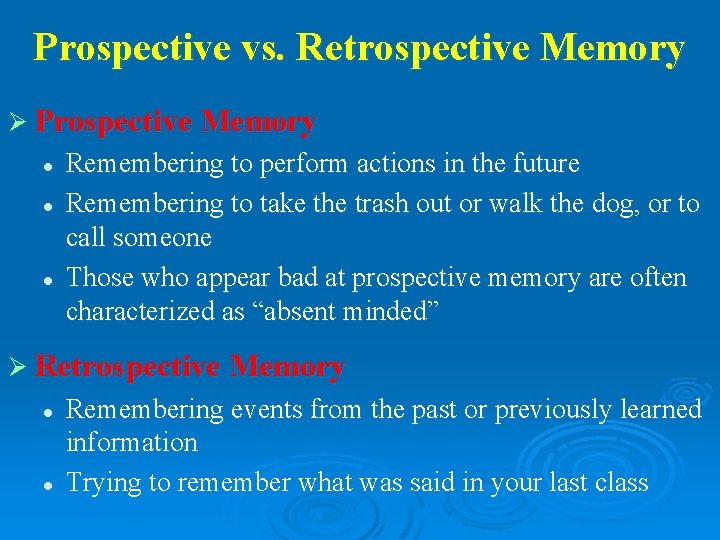
Prospective vs. Retrospective Memory Ø Prospective Memory l l l Remembering to perform actions in the future Remembering to take the trash out or walk the dog, or to call someone Those who appear bad at prospective memory are often characterized as “absent minded” Ø Retrospective Memory l l Remembering events from the past or previously learned information Trying to remember what was said in your last class