
Storage Handling and Preservation Best Practices Preservation time
Storage, Handling, and Preservation Best Practices
• Preservation time frame: – Short term – Medium term – Long term
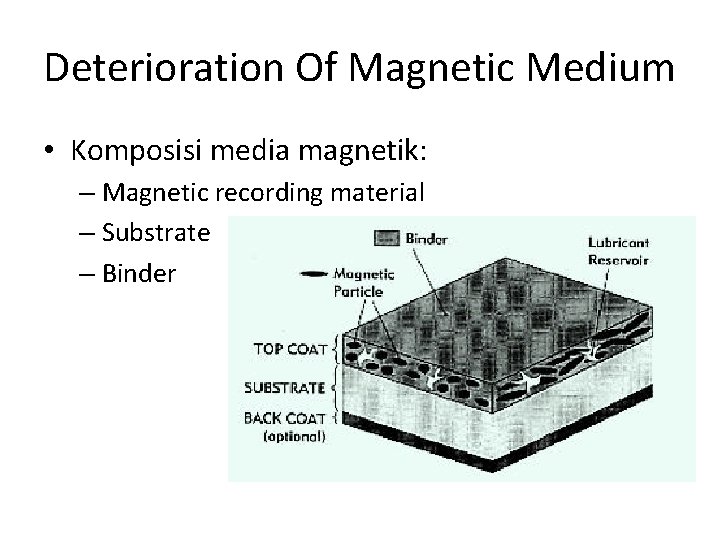
Deterioration Of Magnetic Medium • Komposisi media magnetik: – Magnetic recording material – Substrate – Binder

Magnetic Particle Instabilities • Partikel magnetik menyimpan informasi berdasarkan perubahan medan magnet. • Store the magnetic media in cooler temp
Substrate Deformation • Made of polyester film • Problem: Stress, aging, and improper rewinding • Store tapes in constant temp preventing it from expands and contracts
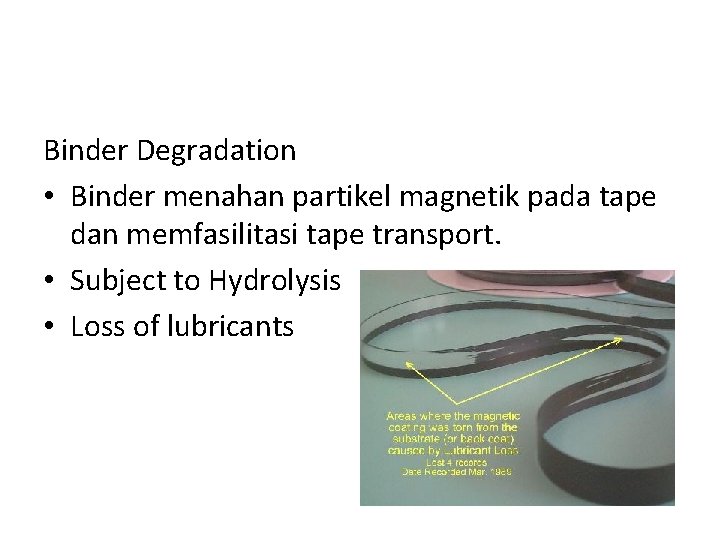
Binder Degradation • Binder menahan partikel magnetik pada tape dan memfasilitasi tape transport. • Subject to Hydrolysis • Loss of lubricants
• Optical Media?
Recommended Storage • Store magnetic tape in clean, controlled environment • 65 degrees Fahrenheit plus minus 3 degrees • Humidity 40% plus minus 5% • Two type of Storages: – Access – Archival
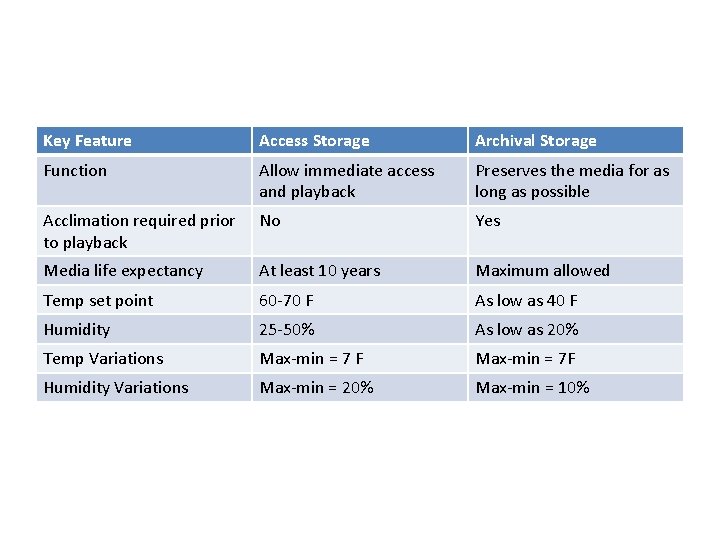
Key Feature Access Storage Archival Storage Function Allow immediate access and playback Preserves the media for as long as possible Acclimation required prior to playback No Yes Media life expectancy At least 10 years Maximum allowed Temp set point 60 -70 F As low as 40 F Humidity 25 -50% As low as 20% Temp Variations Max-min = 7 F Max-min = 7 F Humidity Variations Max-min = 20% Max-min = 10%
• Lower temp slows rate of decomposition • Lower humidity reduces binder hydrolysis (tape), and corrosion (tape/optical) • Stable temp and humidity reduce stress • Removing dust and debris, prevent loss of signal
Proper Care and Handling • Four term for media renewal: – Reformatting (ex. From EDCDIC to ASCII) – Copying (ex. 3480 tape to 3480 tape) – Converting (ex. 3 gp to mpg) – Migrating (wordstar to microsoft word)
Guide to the Care and Handling of Magnetic Tape • • • • Tape should be handled only in no smoking, no food, clean areas Do not put tape on the floor Do not drop or subject tape to sudden shock Keep tape away from magnetic fields Tape storage areas should be cool and dry Store vertically Use high quality cassettes, boxes and containers Return tape to the containers when not used Do not use general purpose adhesive tape Minimize tape handling Do not taouch the tape surface unless necessary Clean the tape path thoroughly Avoid contact with water
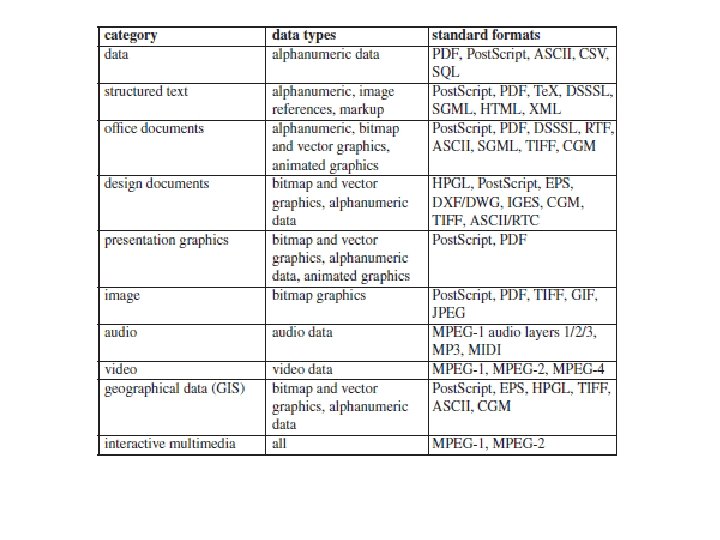
Preservation File Formats • Many organization are turning to formats popular on the WWW • HTML • XML • PDF
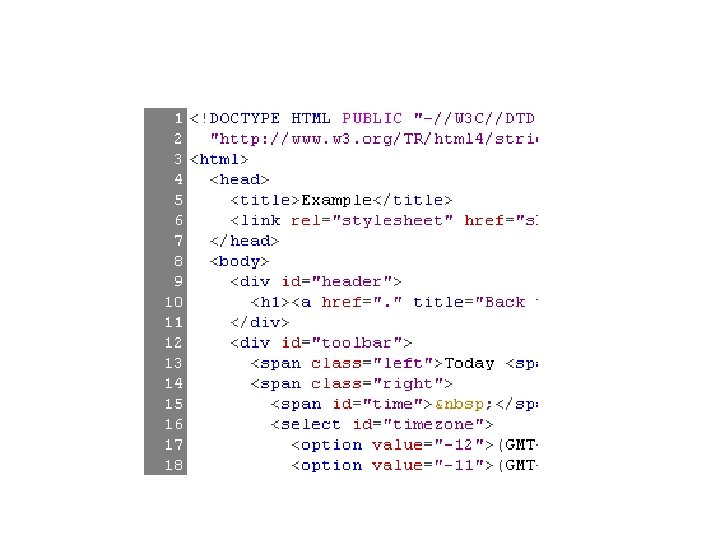
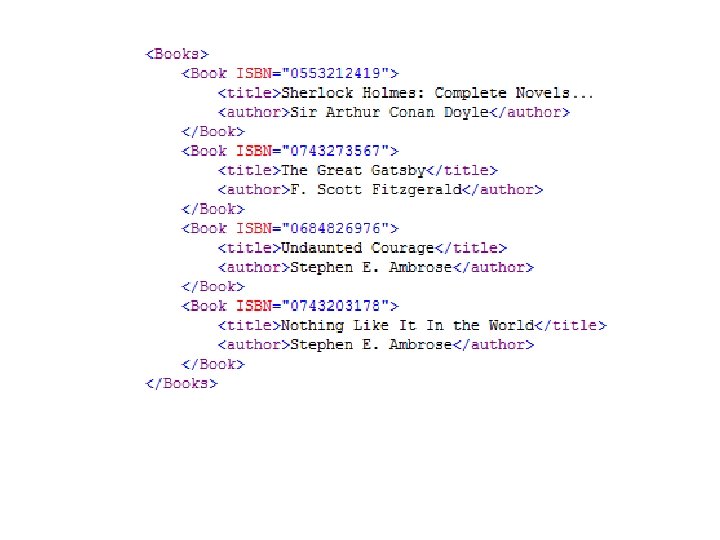
HTML • Wide avialability and potentioan for ongoing support. XML • Extensible Markup Language. • Universal format for structured document and data • Ex spreadsheet, address books, technical drawing, etc
PDF • Adobe Portable Document Format (PDF) • Universal format that preserves all of the fonts, formatting, colors, and graphics.
• Four keys to maximizing the longevity of digital information: 1. Choose the most stable technology 2. Choose the most stable format 3. Store record in the best environment possible 4. Implement proper care and handling procedures
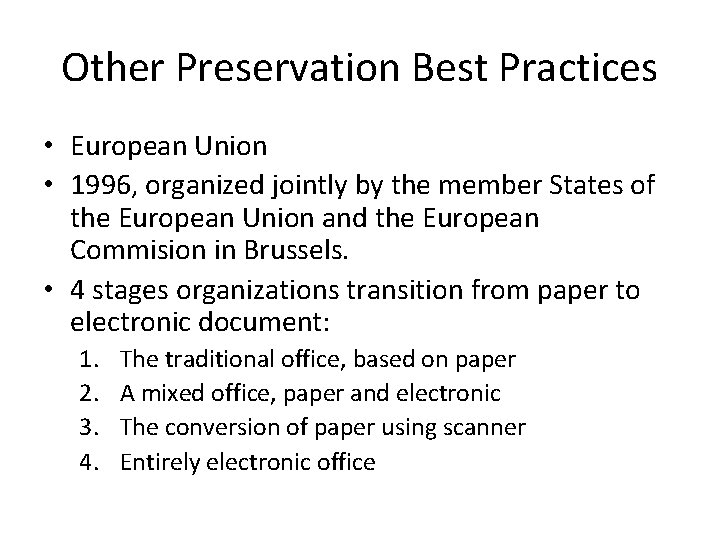
Other Preservation Best Practices • European Union • 1996, organized jointly by the member States of the European Union and the European Commision in Brussels. • 4 stages organizations transition from paper to electronic document: 1. 2. 3. 4. The traditional office, based on paper A mixed office, paper and electronic The conversion of paper using scanner Entirely electronic office
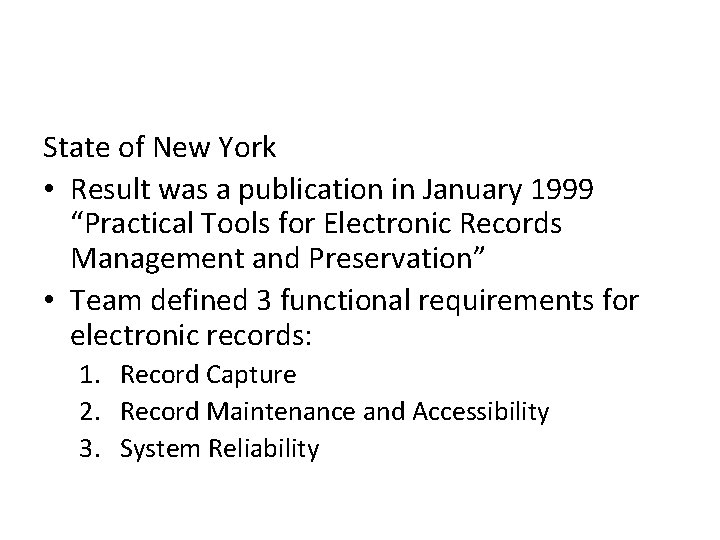
State of New York • Result was a publication in January 1999 “Practical Tools for Electronic Records Management and Preservation” • Team defined 3 functional requirements for electronic records: 1. Record Capture 2. Record Maintenance and Accessibility 3. System Reliability
Digital Media Migration • Typically, devices and media are replaced by better ones within a few years • They then become obsolete, since for lack of financial incentives their production and maintenance are discontinued • Soon, effort is required to connect the unsupported devices to up-to-date computers • Ex. migrate punch cards containing sociological research data into a hardware and software independent format
Refreshing Digital Media • create a perfect replica without changing either the format or a single bit of the content. • Refreshing is a preventive action taken in order to avoid losses of information due to physical effects, like de-magnetization of tapes.
• Migration to Other Digital Media • copies data between media that are of different physical, but of the same logical structure, is called replication. An example would be migration between a hard disk and a USB stick
• Migration to Nondigital Media • the most common and widely used strategies for long-term preservation • Unfortunately, paper and microfilm are not suitable for complex and compound documents such as databases, videos, or hypertexts. There is no direct way to transfer these data to nondigital media adequately • same is true for spreadsheets and other computationally enhanced documents.
• Migration by Transformation • content migration • Transforms documents into standard formats supported by current application programs. • compress the data in order to save storage (using, for instance, a zip program).
- Slides: 26