
STOP CHLAMYDIA PROGRAM Gloria Jones BSN Public Health
STOP CHLAMYDIA PROGRAM Gloria Jones, BSN, Public Health Nurse 550 S. Peoria Avenue, Tulsa, OK 74120 www. ihcrc. org
Initiating & Integrating CT Screening Activities into: n n Tulsa metro area: 86, 000 Indian people Clinic patients: 15, 000 per year Tulsa Public Schools has largest Indian pupil population in U. S. Comprehensive health services: n n n Medical Dental Optometry Behavioral Health Education
Chlamydia Program Challenges n n . 1% of patients lost to follow-up, due to unreliable phone number or address PHN makes three attempts for tracking & treating STIs n n Uncooperative condom use by partners n n Phone call Certified letter Home visit, leaving business card and need for follow-up appointment 2006 prior STI = 14 (averaging 2 to 5 re-exposures per qtr) 2007 prior STI = 17 (averaging 2 to 5 re-exposures per qtr) Anonymous and multiple partner encounters Contacts ineligibility for IHS services PHN refers partners to their closest health department
Chlamydia Program Enhancements n n n To promote timely treatments of STI’s a systemized approach is established PHN enters daily all pap results in a Stop Chlamydia & STI log book Lab ensures all positive Chlamydia results are sent to the PHN for patient tracking, DOT treatment, partner management & PHIDDO reporting Intensive case management resulted in 99. 9% of cases tracked & treated within 10 days of STI lab collection Quarterly PHN checks with pharmacy’s Azithromycin distribution list & performs chart audits for missed reported cases
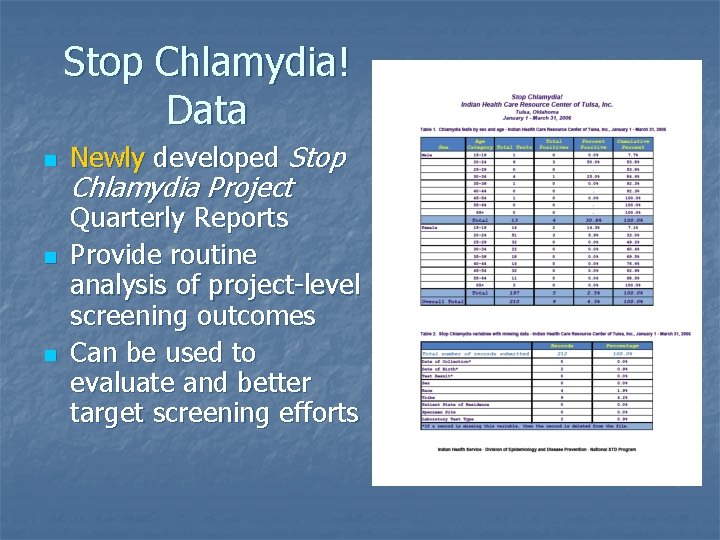
Stop Chlamydia! Data n n n Newly developed Stop Chlamydia Project Quarterly Reports Provide routine analysis of project-level screening outcomes Can be used to evaluate and better target screening efforts

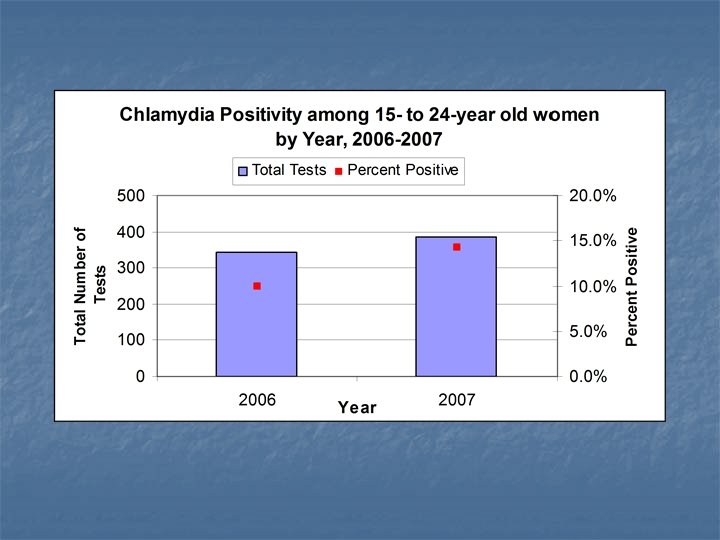
Chlamydia Positivity Among Females by Age Group, Indian Health Care Resource Center of Tulsa, Inc. 2006 n n n High positivity among youth No positivity found in older age groups Data could inform more effective targeting of services n Shift resources currently used to screen older groups to then screen increased numbers of at-risk groups
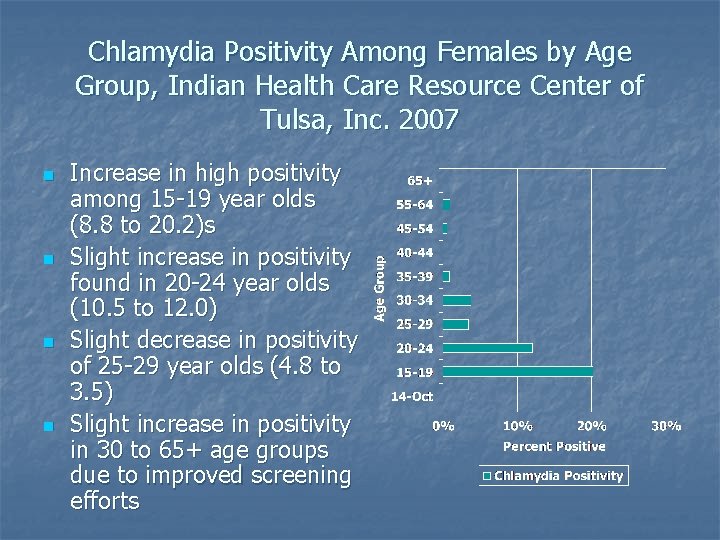
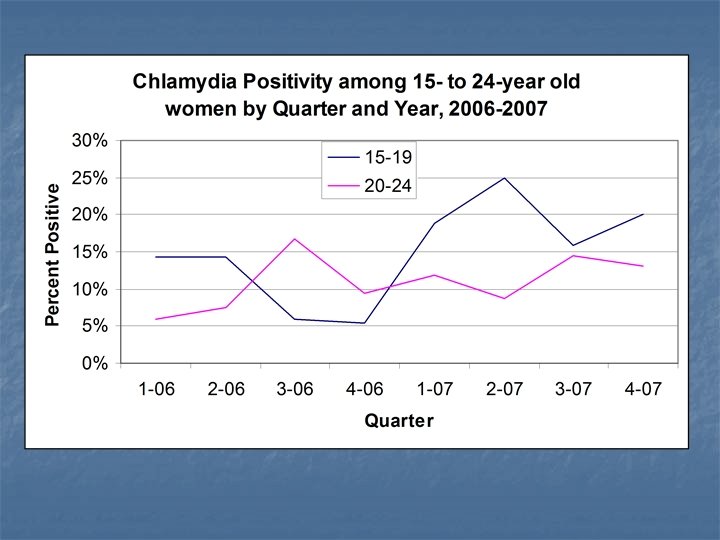
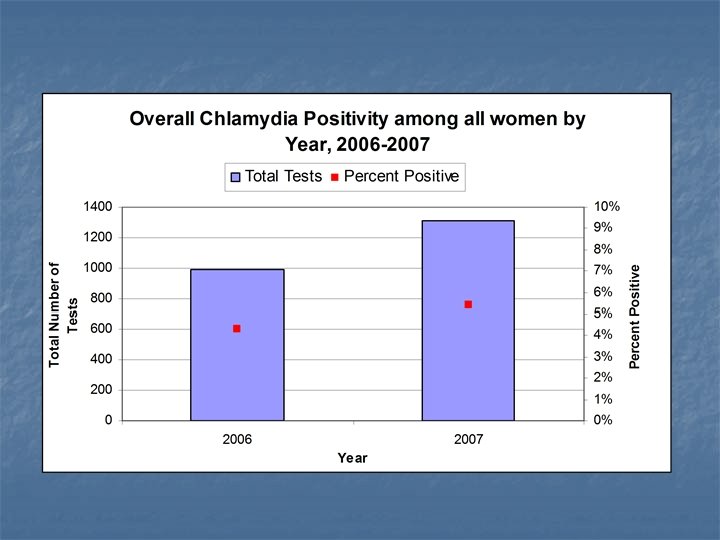
Chlamydia Positivity Among Females by Age Group, Indian Health Care Resource Center of Tulsa, Inc. 2007 n n Increase in high positivity among 15 -19 year olds (8. 8 to 20. 2)s Slight increase in positivity found in 20 -24 year olds (10. 5 to 12. 0) Slight decrease in positivity of 25 -29 year olds (4. 8 to 3. 5) Slight increase in positivity in 30 to 65+ age groups due to improved screening efforts
Practical, Consistent & Efficient Keys to Preventing Chlamydia in Indian Country: n n n Intensive case management Networking with health care providers, lab personnel, local & State Health Departments Continuous demographic updating of patient’s phone & address each visit Accessible screening & treatment services targeting the at risk age groups Distribution of STI/Prophylactic education
Q&A
- Slides: 12