
Stones Bones and Petroglyphs Review Sixth Grade Unit
Stones, Bones, and Petroglyphs Review Sixth Grade Unit 2 Week 3
Words to Know alcoves prehistoric decades pueblo obsidian trowels
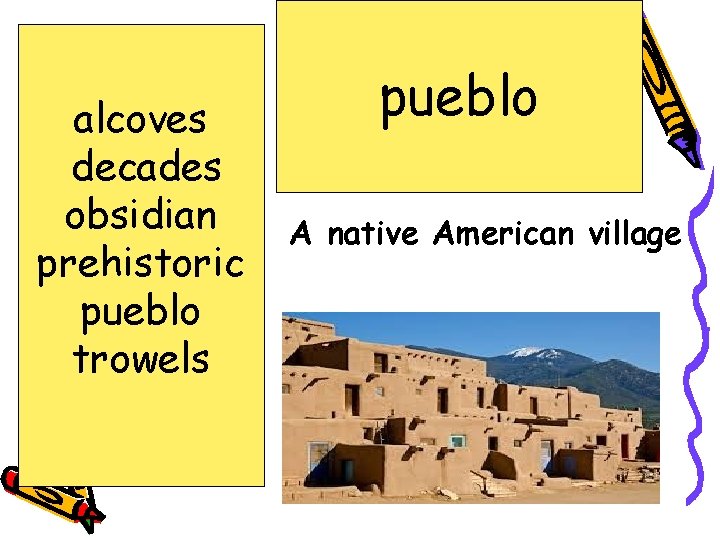
alcoves decades obsidian prehistoric pueblo trowels pueblo A native American village
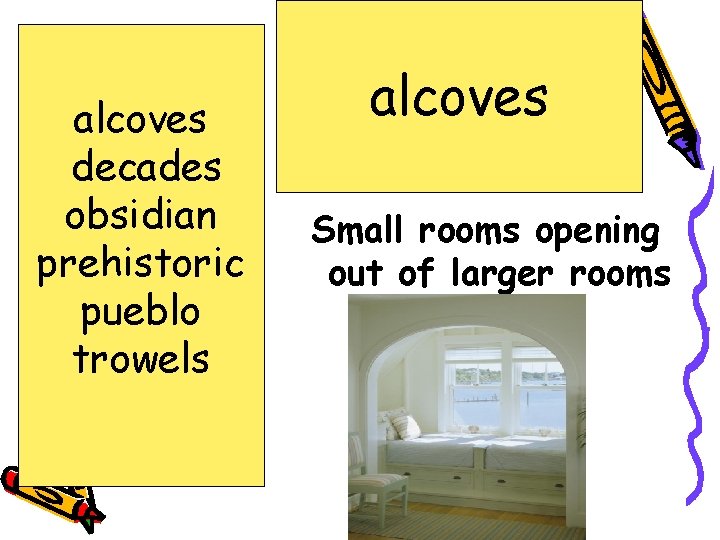
alcoves decades obsidian prehistoric pueblo trowels alcoves Small rooms opening out of larger rooms
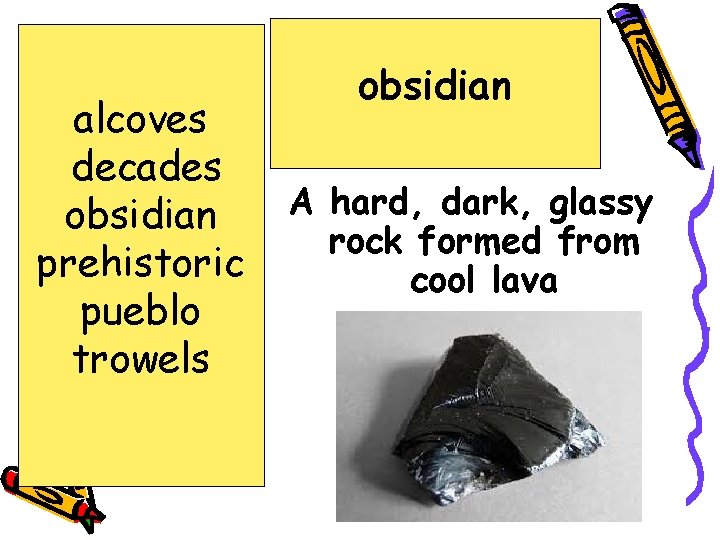
alcoves decades obsidian prehistoric pueblo trowels obsidian A hard, dark, glassy rock formed from cool lava
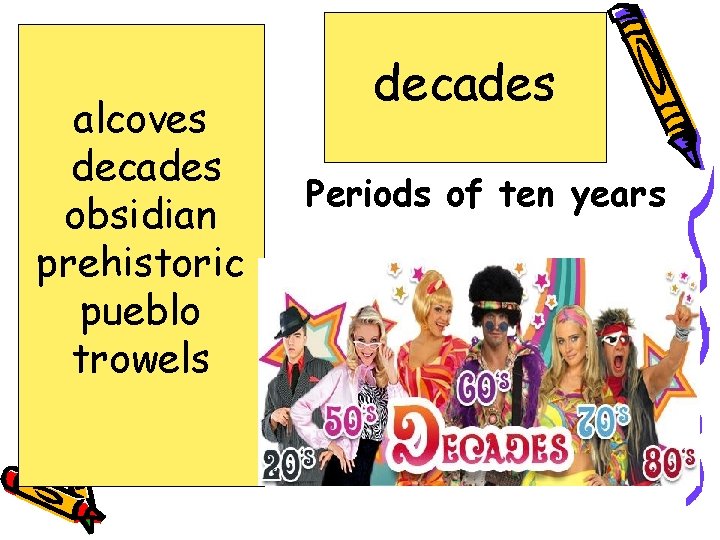
alcoves decades obsidian prehistoric pueblo trowels decades Periods of ten years
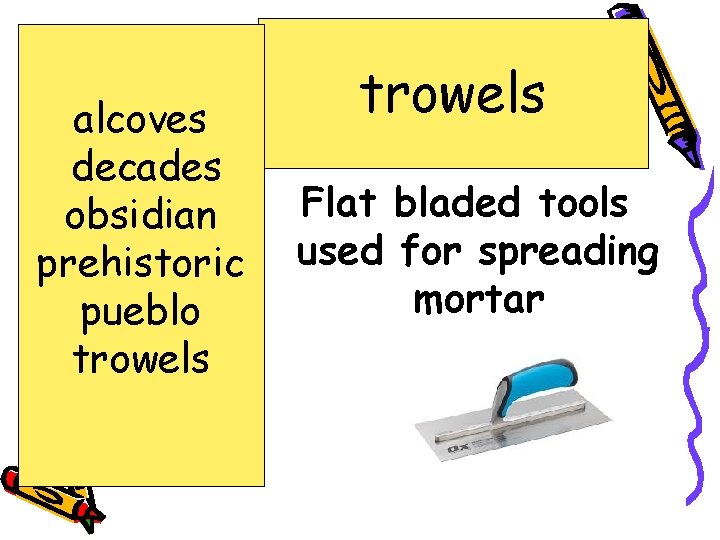
alcoves decades obsidian prehistoric pueblo trowels Flat bladed tools used for spreading mortar
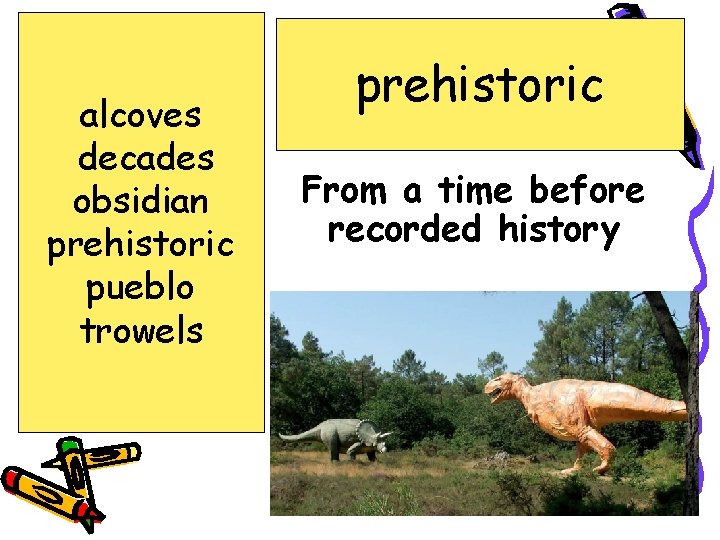
alcoves decades obsidian prehistoric pueblo trowels prehistoric From a time before recorded history

You’ve got it!
More Words to Know mesa Navajo pecans moccasins moose
More Words to Know • Many English words we use all the time originated in a language other than English includes many words that were borrowed from Spanish and Native American languages. For example, the word mesa means “table” in Spanish.
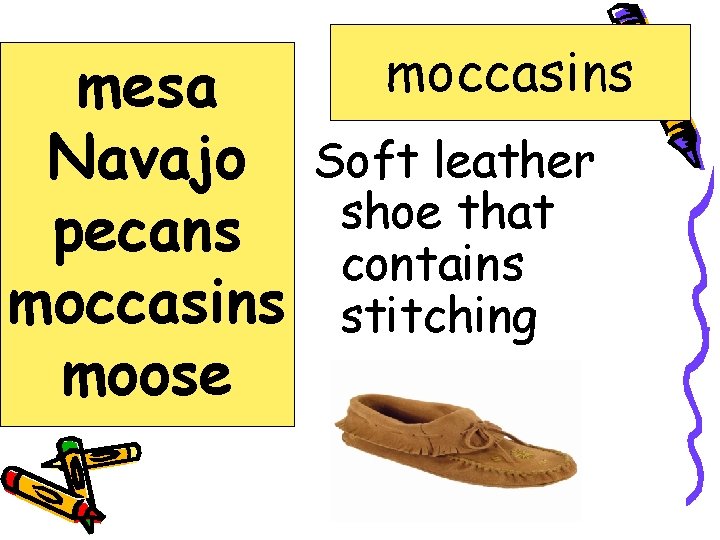
mesa Navajo pecans moccasins moose moccasins Soft leather shoe that contains stitching
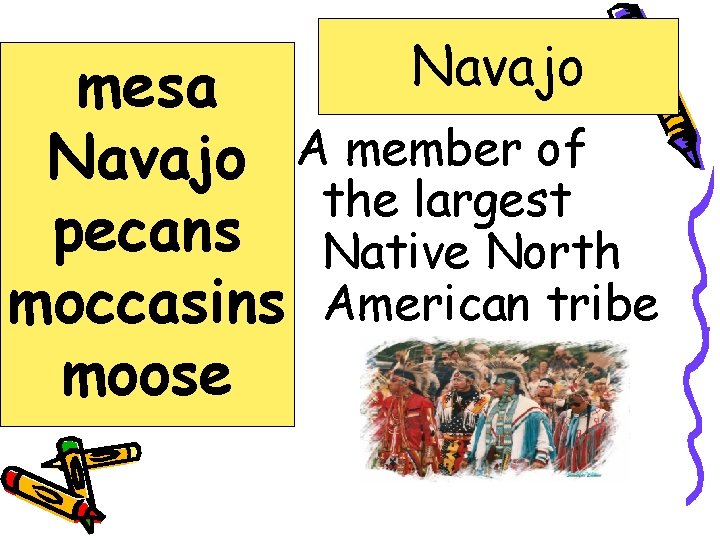
Navajo mesa Navajo A member of the largest pecans Native North moccasins American tribe moose
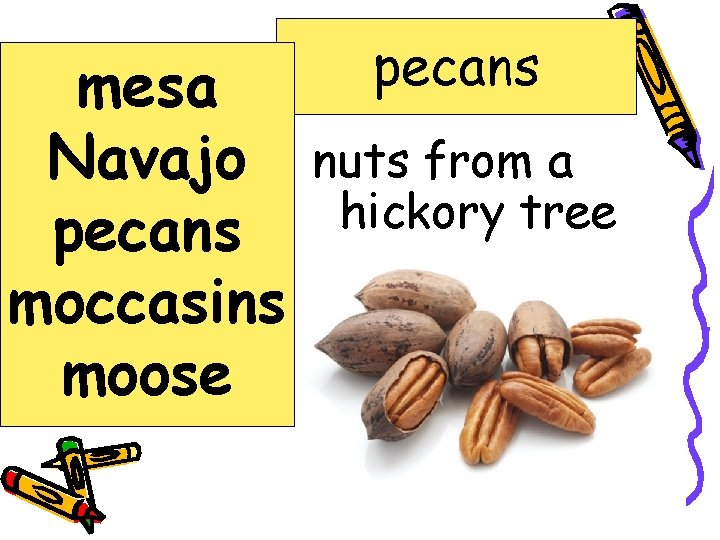
mesa Navajo pecans moccasins moose pecans nuts from a hickory tree
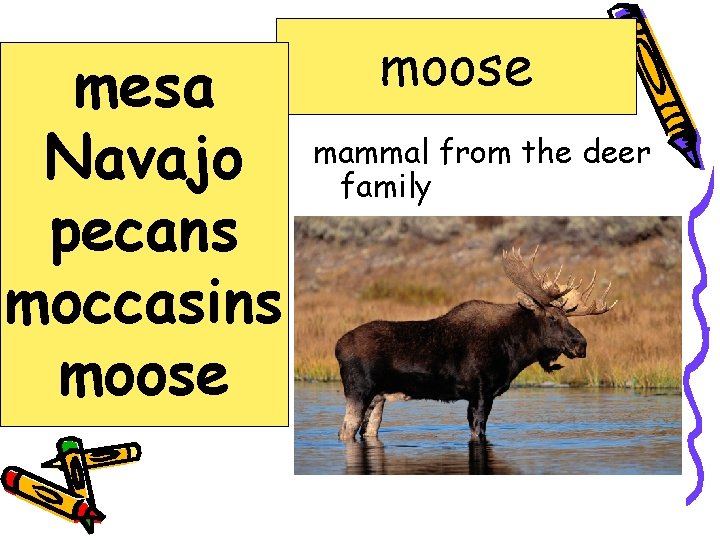
mesa Navajo pecans moccasins moose mammal from the deer family
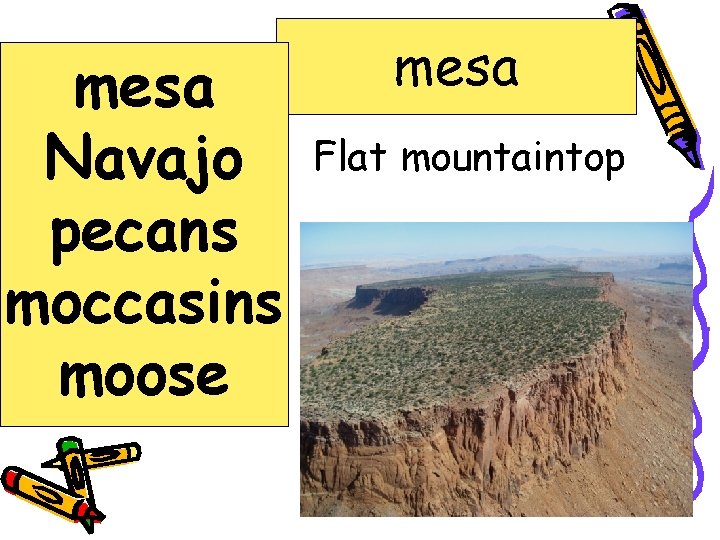
mesa Navajo pecans moccasins moose mesa Flat mountaintop
Comprehension Skill: Literary Elements Graphic Sources
Graphic Sources Includes maps, photographs, and time lines which show information visually.

Essay Question • Look Back and Write: (textbook 256) • The Pueblo left the regions where they had lived for centuries. Look back at page 255 to find the answer to the question Why did they leave? In your own words, write the answer that makes sense to Bill. Write whether you agree or disagree, based on your reading of the selection. Provide evidence to • support your answer.
- Slides: 19