
Stonehenge is surely Britains greatest national icon symbolizing
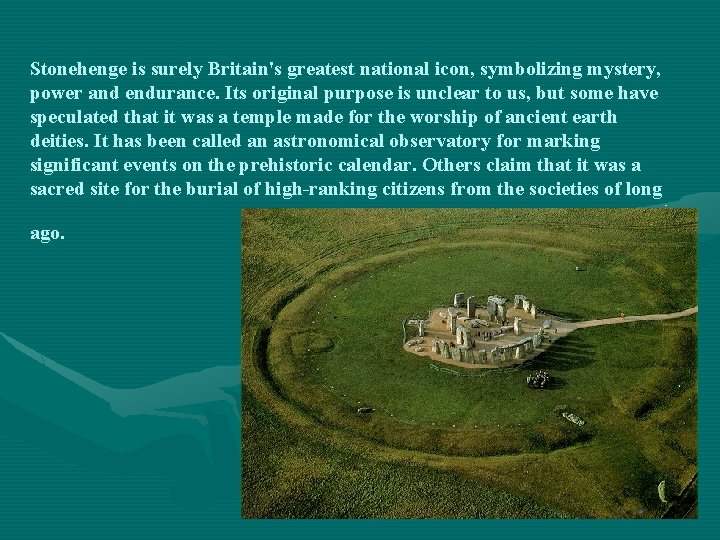
Stonehenge is surely Britain's greatest national icon, symbolizing mystery, power and endurance. Its original purpose is unclear to us, but some have speculated that it was a temple made for the worship of ancient earth deities. It has been called an astronomical observatory for marking significant events on the prehistoric calendar. Others claim that it was a sacred site for the burial of high-ranking citizens from the societies of long ago.
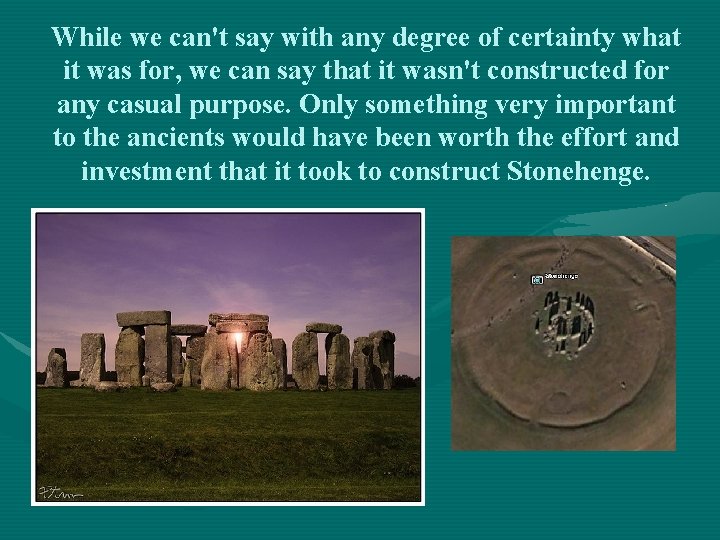
While we can't say with any degree of certainty what it was for, we can say that it wasn't constructed for any casual purpose. Only something very important to the ancients would have been worth the effort and investment that it took to construct Stonehenge.
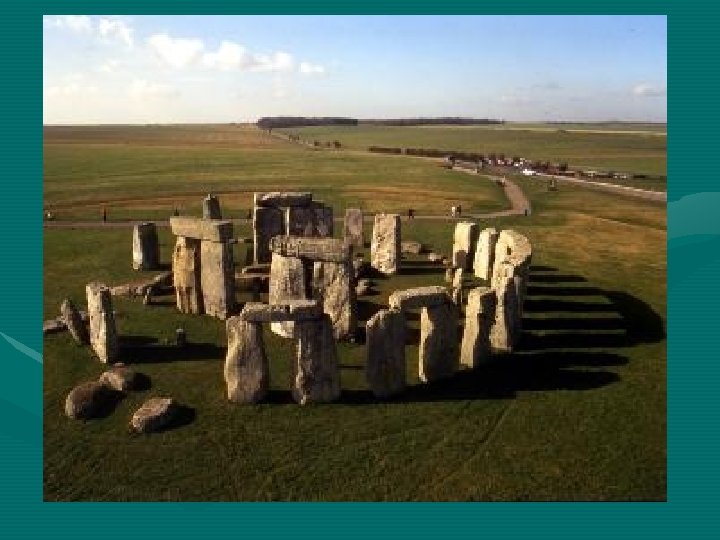
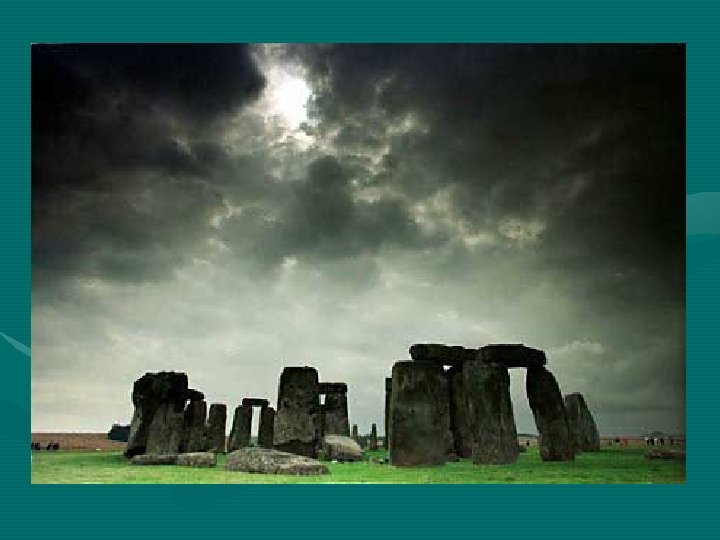
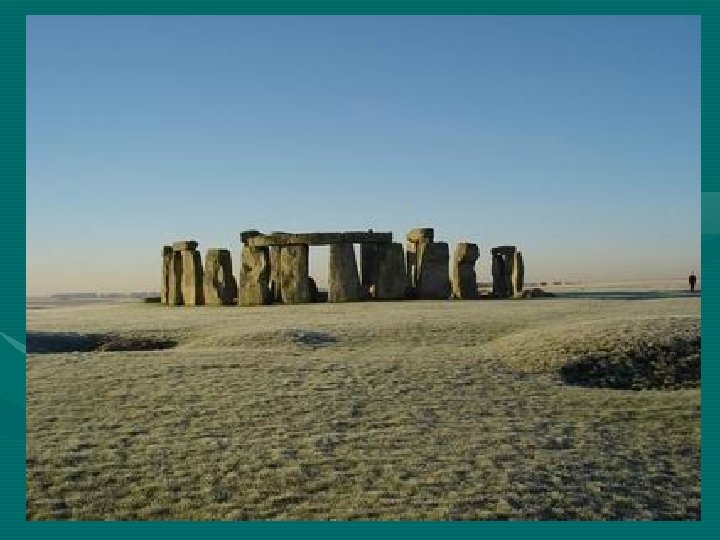
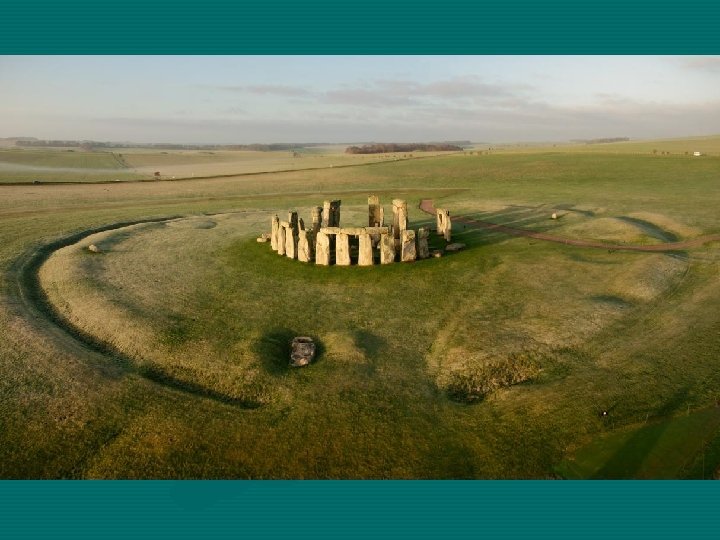
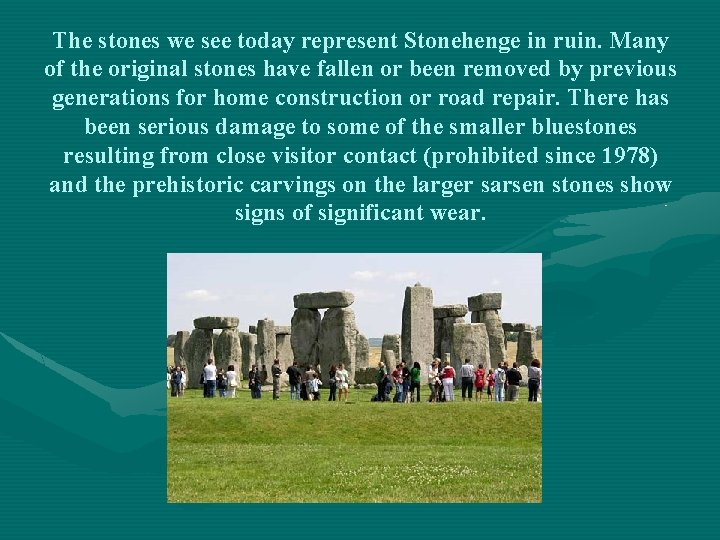
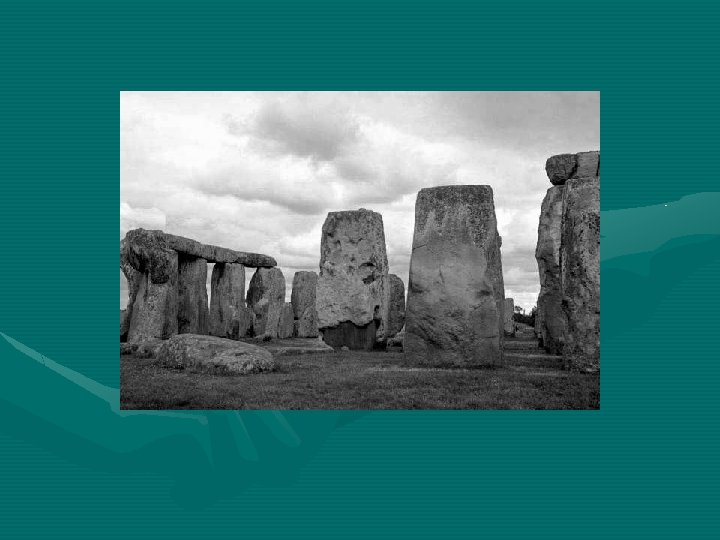
The stones we see today represent Stonehenge in ruin. Many of the original stones have fallen or been removed by previous generations for home construction or road repair. There has been serious damage to some of the smaller bluestones resulting from close visitor contact (prohibited since 1978) and the prehistoric carvings on the larger sarsen stones show signs of significant wear.
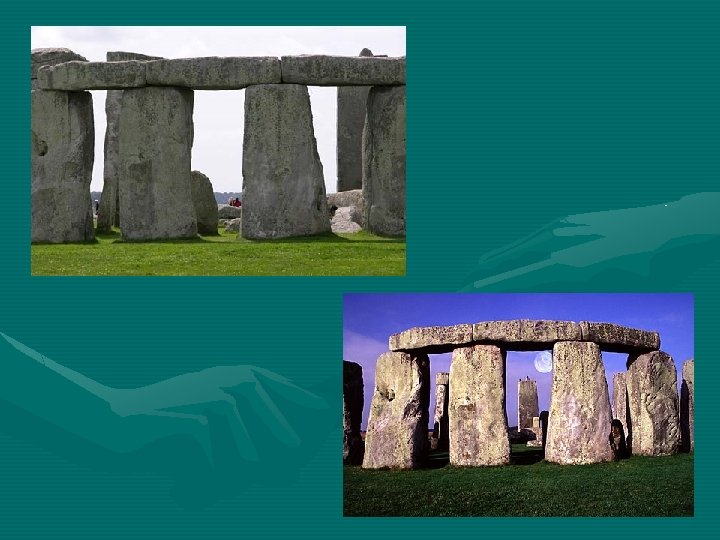
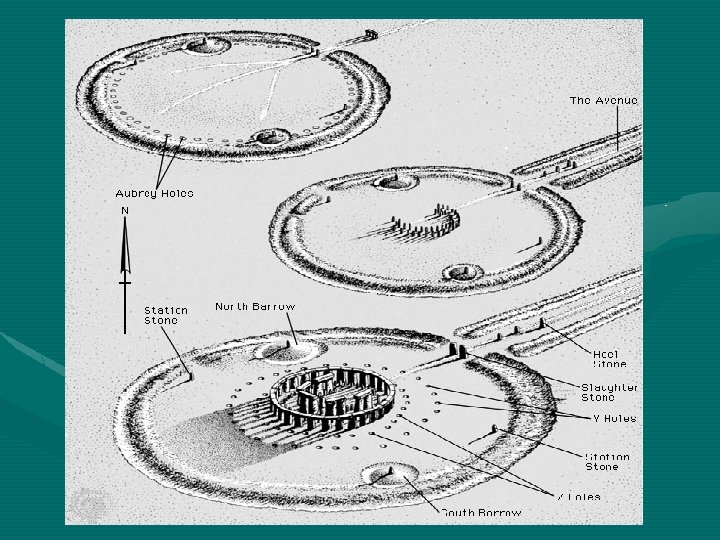
In its first phase, Stonehenge was a large earthwork; a bank and ditch arrangement called a henge, constructed approximately 5, 000 years ago. It is believed that the ditch was dug with tools made from the antlers of red deer and, possibly, wood. The underlying chalk was loosened with picks and shoveled with the shoulderblades of cattle. It was then loaded into baskets and carried away. Modern experiments have shown that these tools were more than equal to the great task of earth digging and moving.
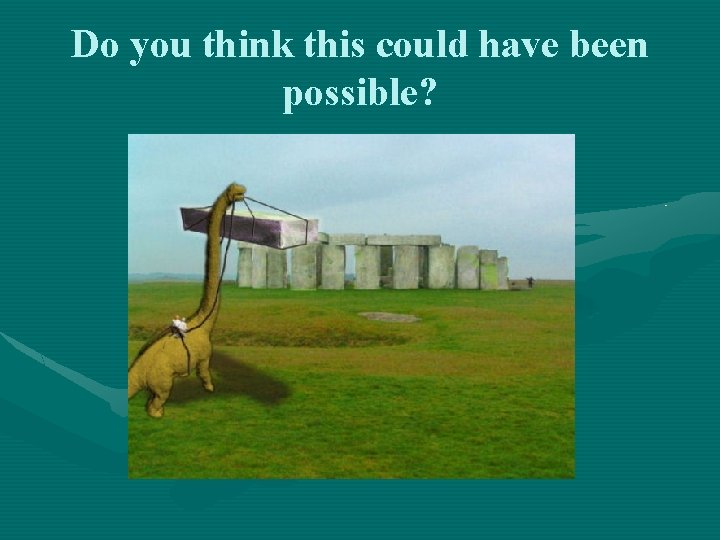
Do you think this could have been possible?
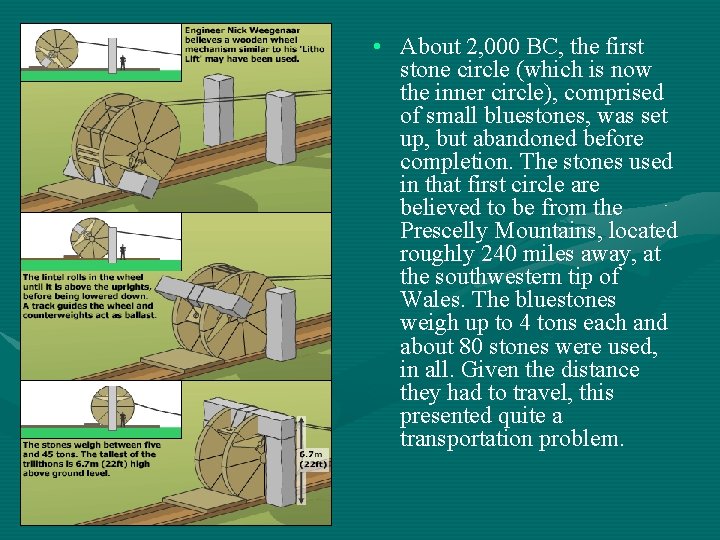
• About 2, 000 BC, the first stone circle (which is now the inner circle), comprised of small bluestones, was set up, but abandoned before completion. The stones used in that first circle are believed to be from the Prescelly Mountains, located roughly 240 miles away, at the southwestern tip of Wales. The bluestones weigh up to 4 tons each and about 80 stones were used, in all. Given the distance they had to travel, this presented quite a transportation problem.

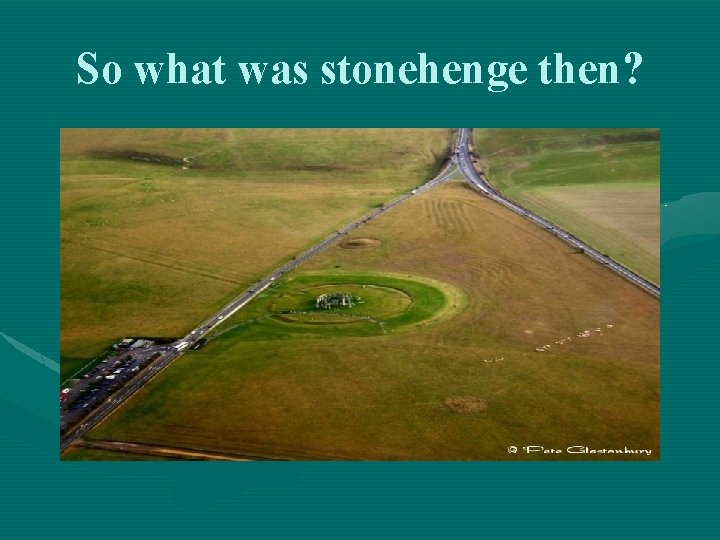
So what was stonehenge then?
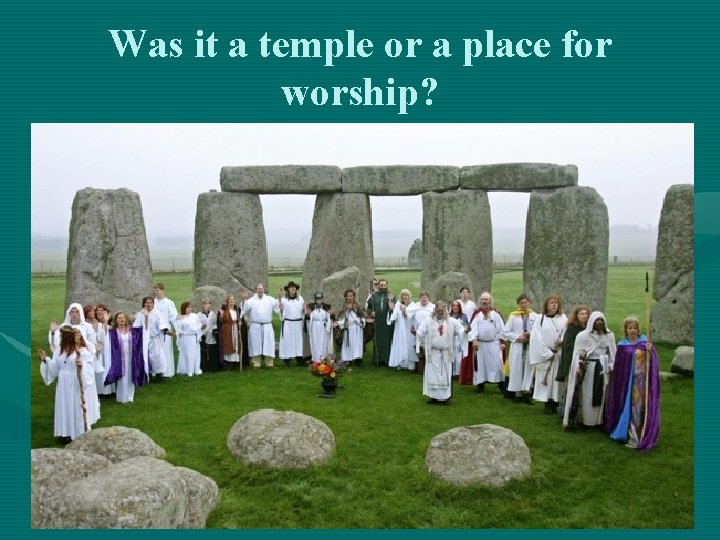
Was it a temple or a place for worship?
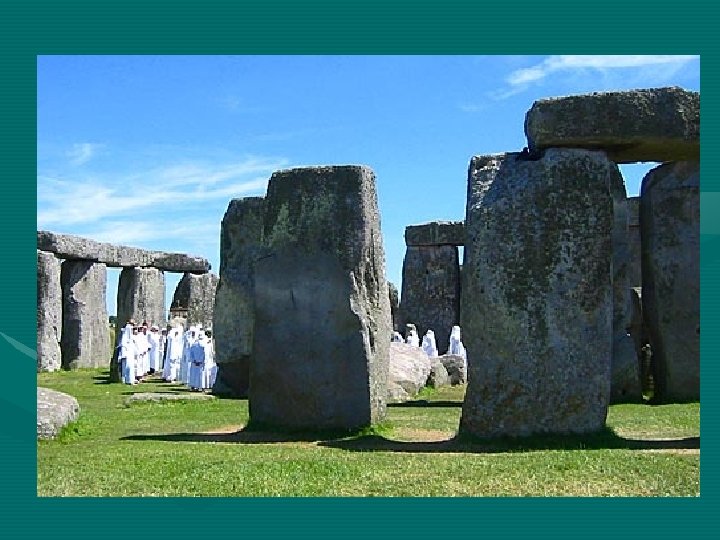
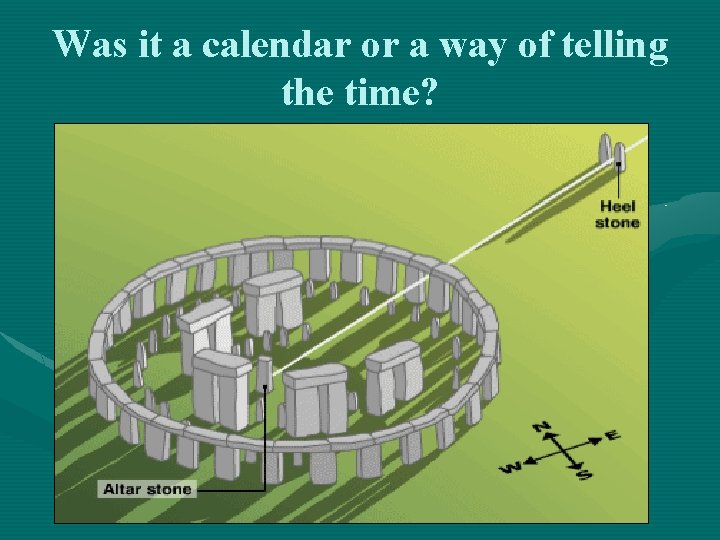
Was it a calendar or a way of telling the time?
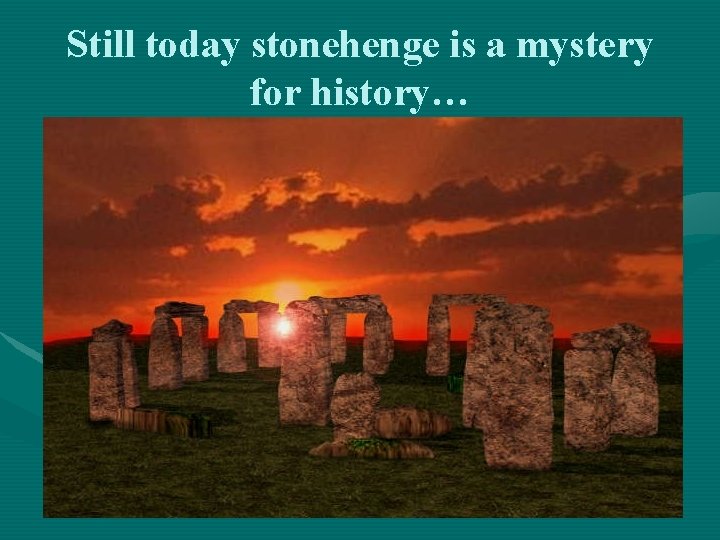
Still today stonehenge is a mystery for history…
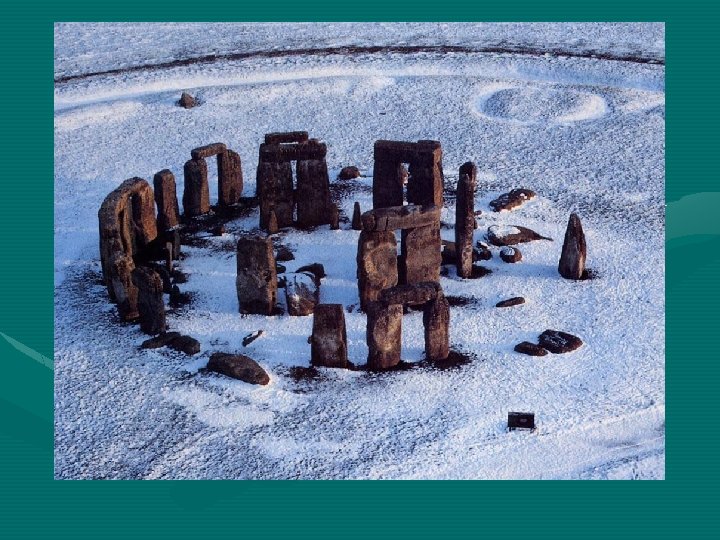
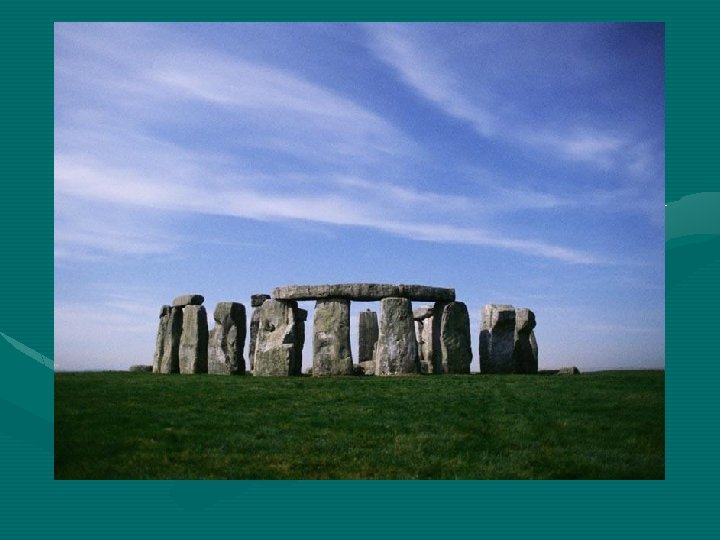
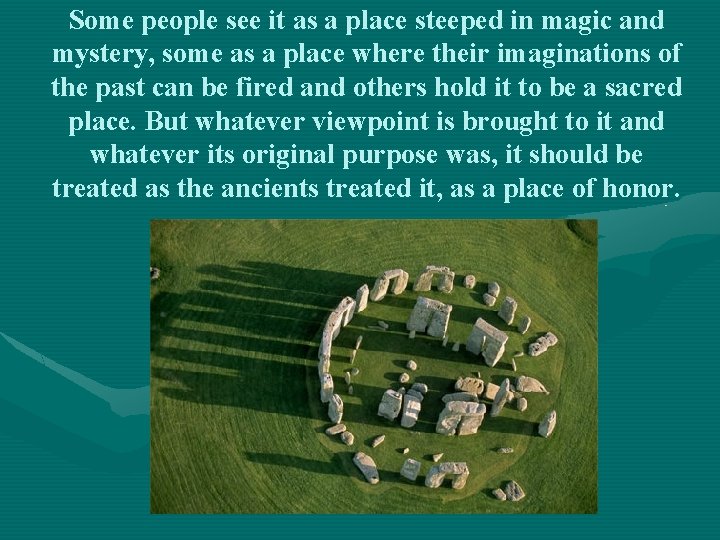
Some people see it as a place steeped in magic and mystery, some as a place where their imaginations of the past can be fired and others hold it to be a sacred place. But whatever viewpoint is brought to it and whatever its original purpose was, it should be treated as the ancients treated it, as a place of honor.
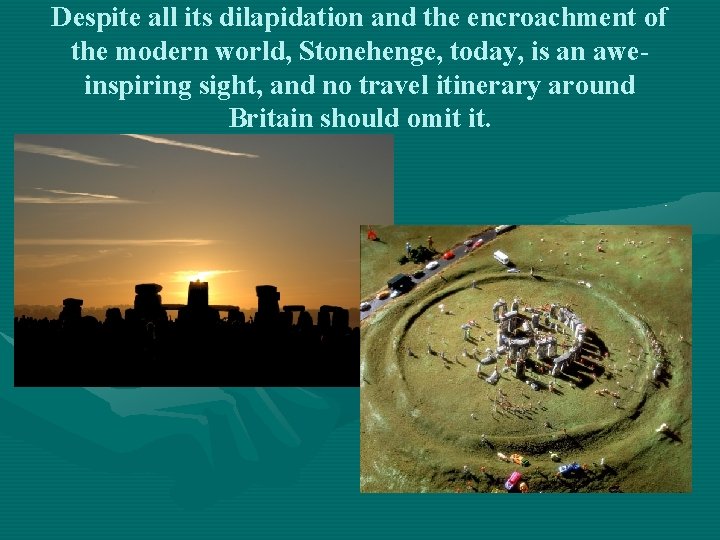
Despite all its dilapidation and the encroachment of the modern world, Stonehenge, today, is an aweinspiring sight, and no travel itinerary around Britain should omit it.
- Slides: 23