
Stone Tools Oldowan Acheulean Mousterian Levallois technique Upper
- Slides: 17
Stone Tools • Oldowan • Acheulean • Mousterian (Levallois technique) • Upper Paleolithic
Basic Concepts • Stone tools probably came after a long period of opportunistic tool use – Osteodontokeratic tradition • The key innovation of making a tool out of stone is the technique of chipping stones to create a chopping or cutting edge. • The best flakes were struck from crystalline stones such as basalt, quartz or chert, and the prevalence of these tools indicates that early humans had learned and could recognize the differences between types of rock.
Tool Traditions • Tradition: similarity of elements over space/time – Type of stone used – Technique – Size, shape, function of the tool Key concept: standardization
Tool Traditions • Oldowan – core & flake tools • Achulean – Hand axes • Mousterian (Levallois) – Secondary percussion & halfting
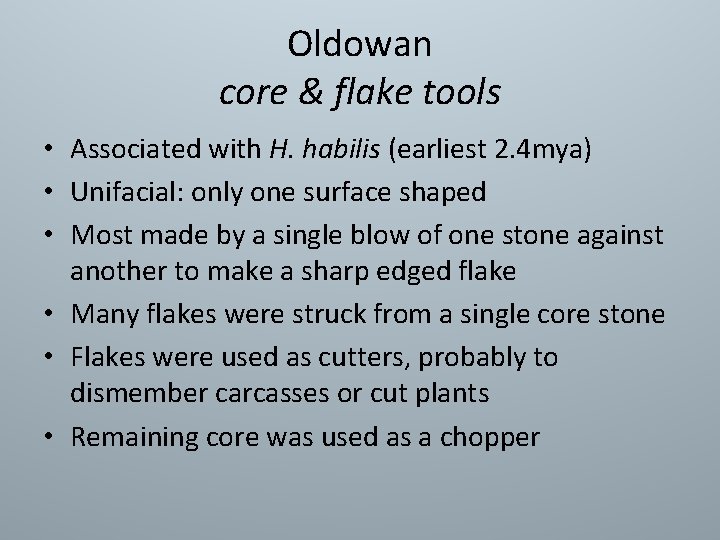
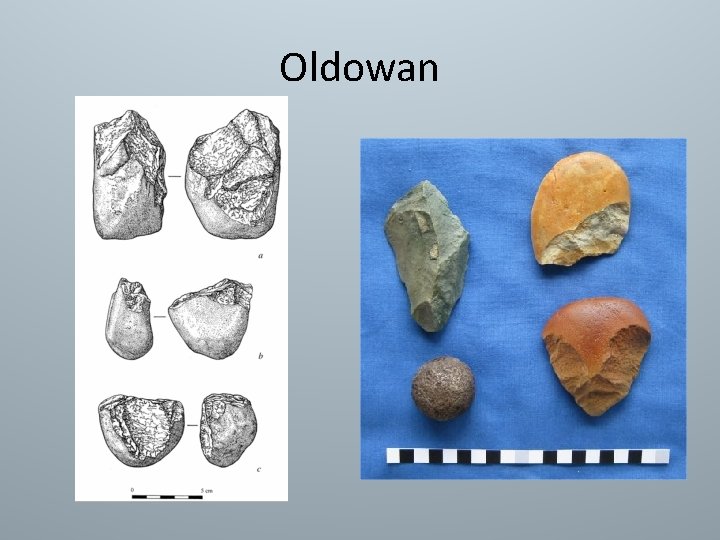
Oldowan core & flake tools • Associated with H. habilis (earliest 2. 4 mya) • Unifacial: only one surface shaped • Most made by a single blow of one stone against another to make a sharp edged flake • Many flakes were struck from a single core stone • Flakes were used as cutters, probably to dismember carcasses or cut plants • Remaining core was used as a chopper
Oldowan
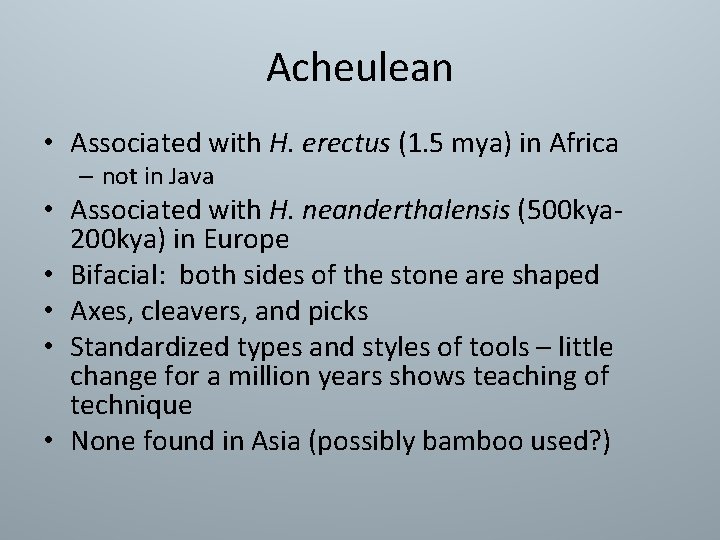
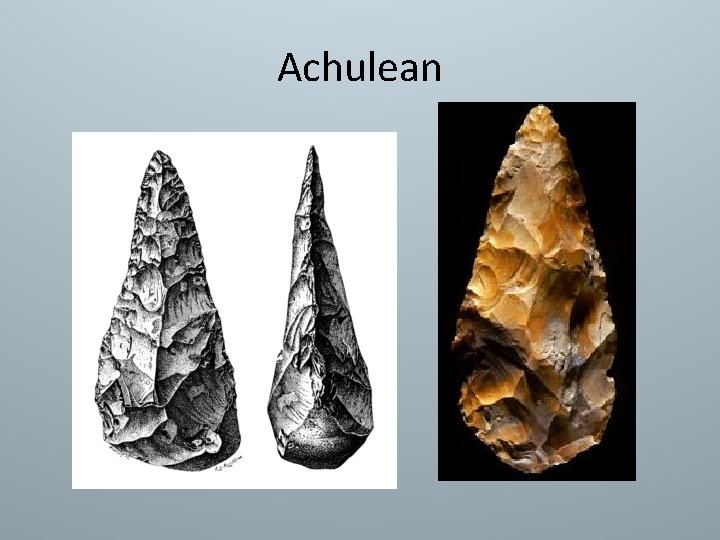
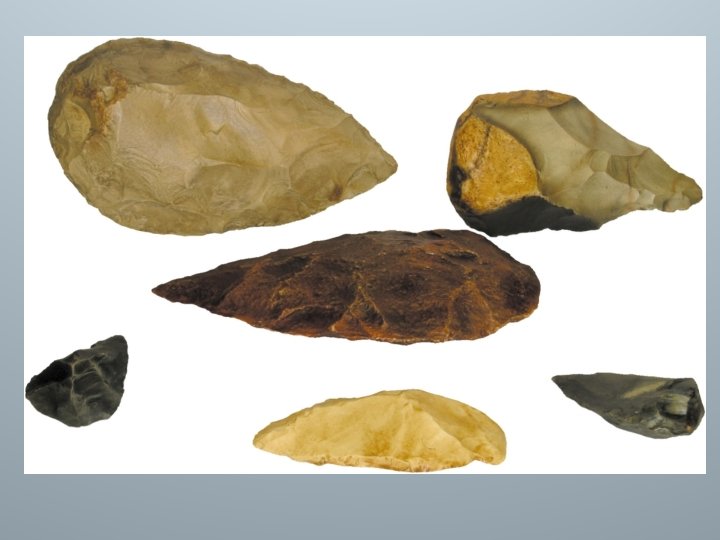
Acheulean • Associated with H. erectus (1. 5 mya) in Africa – not in Java • Associated with H. neanderthalensis (500 kya 200 kya) in Europe • Bifacial: both sides of the stone are shaped • Axes, cleavers, and picks • Standardized types and styles of tools – little change for a million years shows teaching of technique • None found in Asia (possibly bamboo used? )
Achulean
Mousterian (Levallois technique) • Associated with H. neanderthalensis and H. sapiens in Europe, Middle East, and Africa (200 kya-40 kya) • Levallois technique required a preliminary shaping of the stone core from which the actual blade is struck off • standardized explicit stages (basic core stone, rough blank, refined final tool). Variations in tool shapes could be produced by changes in the procedures at any stage. • Evidence of sharpening or re-shaping the edges of dull tools
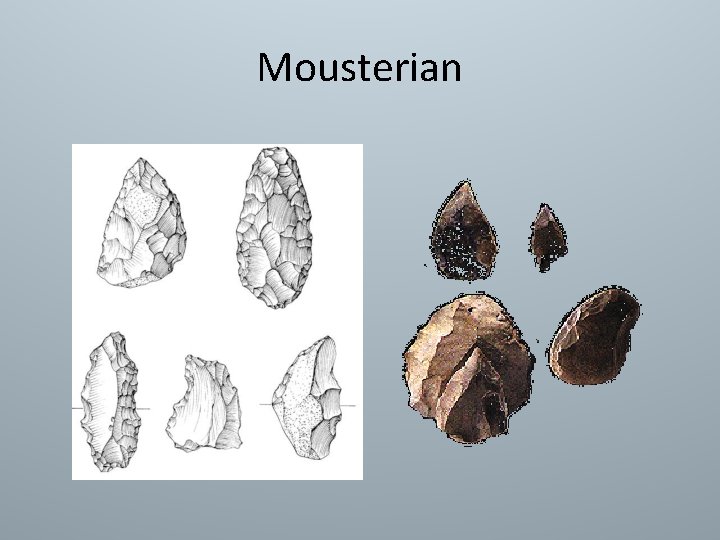
Mousterian • Flake tools – Notched – Serrated – Blades (twice as long as wide) – points • Scrapers • Variety of tools suggests increase in material possessions and cultural complexity
Mousterian
Levallois Technique • Core is prepared through a series of small flakes, to create a striking platform • Creates a flake that is sharp on all sides • Use of pressure flaking to create serrated edges
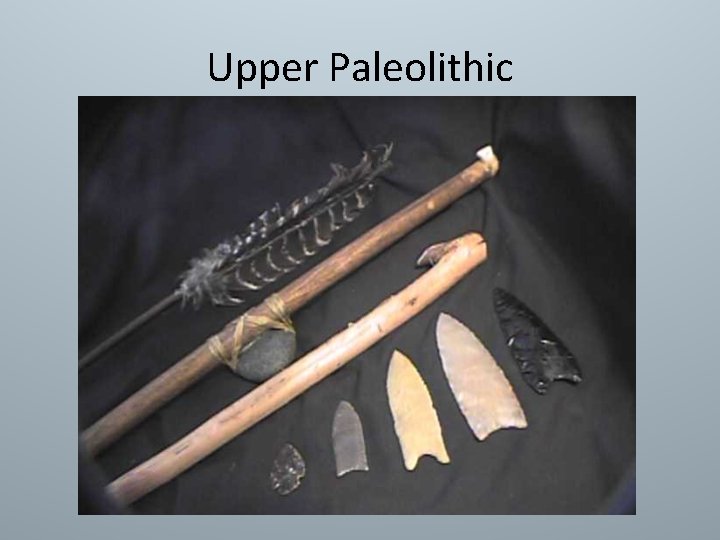
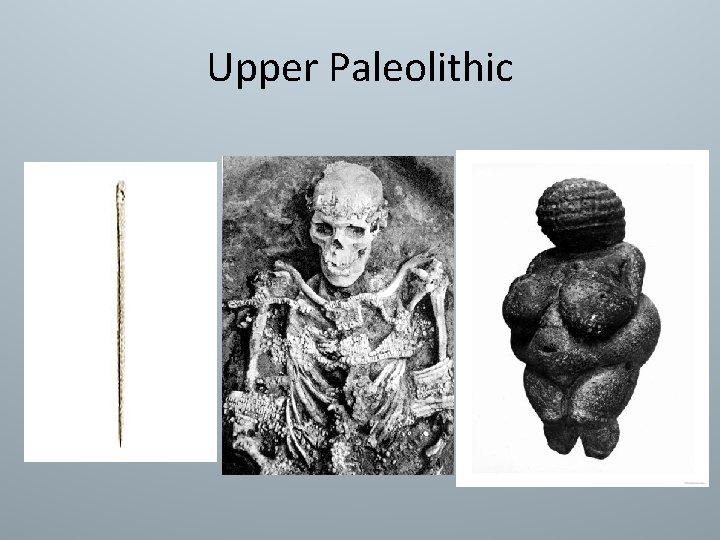
Upper Paleolithic • Associated with H. sapiens (40 kya-12 kya), and independently evolved in Africa/Europe and Asia • Large variety of tool forms, materials, and techniques (bone becomes common) • First use of heat-treated chert • Regional styles signify fine-tuning for different habitat requirements • First appearance of fish hooks, harpoons, spearthrowers, needles, beads, and figurines
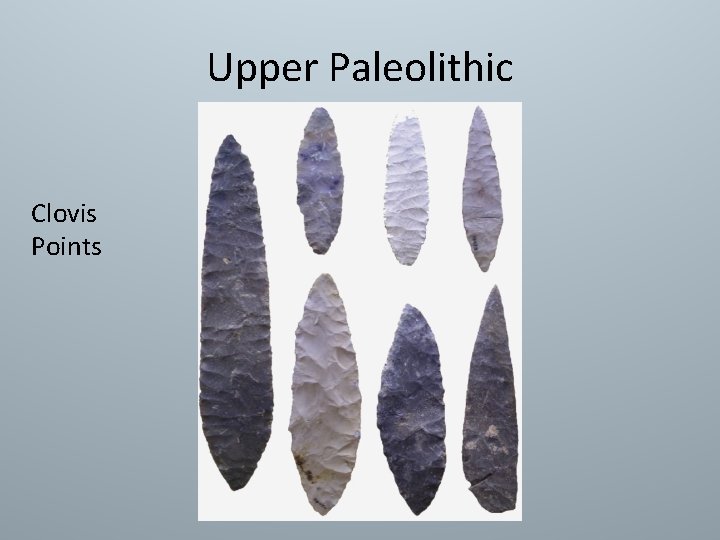
Upper Paleolithic Clovis Points
Upper Paleolithic
Upper Paleolithic